

Advances in Bioengineering and Biomedical Science Research(ABBSR)
ISSN: 2640-4133 | DOI: 10.33140/ABBSR
Impact Factor: 1.7

Research Article - (2020) Volume 3, Issue 2
Phytochemical Analysis and Antibacterial Potency against Pathogenic Bacteria of Aqueous and Alcoholic Extract of Ziziphus Mauritiana and Coriandrum Sativum
2Rajeev Gandhi College, Bhopal, Madhya Pradesh, India
Received Date: Apr 18, 2020 / Accepted Date: Apr 18, 2020 / Published Date: May 25, 2020
Copyright: ©Copyright: ©2020 Pallav Kaushik Deshpande, et al. This is an open-access article distributed under the terms of the Creative Commons Attribution License, which permits unrestricted use, distribution, and reproduction in any medium, provided the original author and source are credited.
Abstract
In present research we had selected two plant-Ziziphus mauritiana commonly known as Indian jujube (Ber) and Coriandrum sativum commonly known as coriander for the phytochemical screening and antimicrobial activity against Kliebsella pneumonia, Clostridium per fringes, Citrobacter freundii and Staphylococcus aureus bacteria. All the bacteria selected in this study are highly pathogenic and drug resistant. Phytochemical screening reveals that both the plants are rich in terms of phytoconstituents and potent against pathogenic bacteria.
Introduction
Herbal medicines are the staple of medical treatment in many developing countries like India and many Asian countries. Plants are now becoming the main source of therapeutics, however since ancient times and until the current era humans are using plants for medicinal properties. Although, pharmaceuticals (mostly synthetic drugs) are the dominant drugs in modern medicine, but phytomedicinal drugs (mostly plant derivatives) are becoming more popular. The WHO reported that, up to 80% of the world population is depends upon drugs derived from plants.
Phytochemical screening of the methanolic extract of root of Z.mauritiana reveals the presence of alkaloid, glycosides, volatile oil and saponins. Chloroform extract of leaves of Z.mauritiana shows highest amount of phenolic which shows antitumor and anticancer activities which was confirmed by confirms the presence of a natural Immunostimulatory in Ziziphus mauritiana. Different parts of coriander plant contain monoterpens, alpha pinene, limpene, Camphor, geranial, coriandrin, dihydrocoriandrin, flavonoids, and essential oil [1]. Which are responsible for various physiological effect in human health.
Material and methods
Collection of Plant Material
The leaves of Indian Jujube were collected from Barkatullah University, Bhopal. Coriander was bought from the local vegetable market. The plant material were then matched with the plates of natural wealth of India for identification followed by cleaning with fresh water then air dried before further processing.
Extraction of Plant Material
Soxhlet extraction is a very useful tool for preparative purposes in which the analyte is concentrated from the matrix as a whole or separated from particular interfering substances. In conventional Soxhlet, the sample in this case plant leaves of Indian jujube and leaves and stems of Coriander was washed , dried and crushed then placed in a thimble-holder and during operation is gradually filled with condensed fresh solvent (Ethanol and Water)from a distillation flask. When the liquid reaches an overflow level, a siphon aspirates the whole contents of the thimble-holder and unloads it back into the distillation flask, carrying the extracted analytes in the bulk liquid. This operation is repeated until complete extraction is achieved after six rounds of soxhlet cycle. After the completion extraction process the collected extract was dried at 50â?¦ C to achieve the desired consistency required for further use, extracted material was then stored in air tight container [2].
%Yield of Extract
After extraction, each cycle was analyzed for % yield. Yield of the extract is calculated in percentage by the formula % yield = wt of the extract / wt of the plant material × 100
Phytochemical Analysis of the Extracts Total Ash
Presence of ash in any drug (natural) is a limited factor which can interfere with the pharmacological properties of extract. During validation and formulations ash value must be in lower range, lower the ash value higher the potency of the extract. To determine total ash about 2 of the air-dried extract was placed in a crucible, extract was then spread in an even layer and ignited and gradually the temperature was increased to 450°C until it is white, indicating the absence of carbon. The content was cooled in a desiccator and weighed. Ash value can be calculated by using formula: - Ash value = Initial Weight – Final Weight × 100/ Initial weight.
Water Soluble Ash
The total ash obtained from 2g of extract was boiled with 25 ml of distilled water for 5 minutes. The insoluble matter was collected on an ash less filter-paper, washed with hot water and ignited to constant weight at low temperature. The weight of the insoluble matter was subtracted from the weight of total ash, represents the water soluble ash. The percentage of water soluble ash was calculated with reference to the air dried drug.
Acid Insoluble Ash
The total ash obtained was boiled with 25 ml of dilute hydrochloric acid for 5 minutes. The insoluble matter was collected on tarred grouch crucible, washed with hot acidulated water, ignited, cooled and weighed. The percentage acid insoluble ash was calculated with reference to the air dried drug.
Qualitative Detection of Phytochemical Constituents
Extracts were subjected to various chemical tests in order to determine the secondary plant constituents present by employing standard procedures as follows. (All the tests were done in triplicates) [2-4].
Test for Reducing Sugar
2 ml of extract was taken to which 5ml of (1:1) of Fehling’s solution A and Fehling’s solution B were added. The mixture was then boiled in the water bath for 5 minutes. Formation of brick red precipitate indicates the presence of free reducing sugars.
Test for Saponins
About 2 g of plant extract was mixed with 10 ml of distilled water and shaken vigorously for a stable persistent froth appearance of froth confirms the presence of saponins in the extract. Test for Tannins Two methods were used for conformation of tannins. 0.5 g of dried powdered sample was boiled in 20 ml of water in a test tube and then filtered. A few drops of ferric chloride was added and observed for brownish green black color. 2ml of plant extract was combined with 2ml of distilled water. 0.01 g lead acetate was added to this solution and shaken well. Development of white turbidity and precipitate indicates the presence of tannins.
Test for Alkaloids
Two methods were used to test for alkaloid in extract. First, extracts were dissolved in dilute HCL and filtered. The filtrate was then treated with Mayer’s reagent (potassium mercuric iodide). Formation of yellow colored precipitate indicates the presence of alkaloids. Second filtrate was treated with Wagner’s reagent (iodide in potassium iodide). Formation of brown / reddish precipitate indicates the presence of alkaloids.
Test for Glycosides
Fehling’s solution A and B was diluted with distilled water and boiled for 1 min. To this clear blue solution, 8 drops of plant extract was added. After that it was mixed with 1 ml of Fehling’s solution and boiled in a water bath for 5 min. The formation of brick red precipitation indicates the presence of glycosides.
Thin Layer Chromatography
The TLC profiling was performed as per described by Biradar. The TLC plates were prepared by using Silica gel ‘G’ 30 gm. of silica gel was weighed and made to a homogenous suspension with 60 ml distilled water for two minutes, this suspension was then distributed over the plate which was air dried until the transparency of the layer disappeared. The plates were dried in hot air oven at 110°C for 30 mints and then stored in a dry atmosphere until to be used. Samples were prepared by diluting the crude extracts of ethanol and water with respective solvent and then applied usually 1-10μl volumes to the origins of a TLC plate 2cm above its bottom with the help of capillary tubes.
Development of the Chromatogram
After the application of the sample on the plate the plates were kept in TLC glass chamber (solvent saturated) than mobile phase was allowed to move through adsorbent phase up to 3/4th of the plate. TLC was performed for various phytoconstituents.
Screening of Antibacterial Activity
Preparation of Nutrient Agar Media and Nutrient Broth
Bacterial culture were maintained in NAM which is minimal essential media which can provide nutritional requirement to nearly all bacterial isolates that is why it is also known as Nutrient agar it consists of peptone, beef extract, sodium chloride and agar. This relatively simple formulation provides the nutrients necessary for the replication of a large number of non-fastidious microorganisms.
Composition of Nutrient Agar
Beef Extract:-5.0g, Peptone:-5.0g, Agar:-15.0g, NaCl:-1g, Distilled Water:-1000ml, pH should be 5.0-5.4 [5].
Preparation of Inoculum
For the preparation of inoculum 4-5 ml of broth was taken in the test tube and loop full of culture was suspended inside it and was kept in the incubator for 24 hours at 37â?¦C.
Maintenance of the Culture
Pure culture of Kliebsella pneumonia, Clostridium per fringes, Citrobacter freundii and Staphylococcus aureus were obtained from Department of biotechnology of Barkatullah University from slants and pure cultures were maintained.
Streak Plate Method
The streak plate method is a rapid qualitative isolation method. The techniques commonly used for isolation of discrete colonies initially require that the number of organisms in the inoculums be reduced. In the streaking procedure.
Plating and Inoculation
Firstly the NAM media was sterilized by autoclaving. Then the media is poured into a dry petri plate and allowed to cool down then with the help of a sterile inoculation loop streaking is done is used to obtain a pure microbial culture . The loop is sterilized by heating the loop in the blue flame of the Bunsen burner, between streaking different sections to maintain the sterility of the culture. The streaking process will dilutes out the sample that was placed in the initial region of the agar surface.
Preparation of Positive Control
Antibiotic drug Ciprofloxacin 500 mg used as control was dissolved in 2ml DMSO (Dimethyl sufloxide) to form a positive control was various antibacterial screening tests. Minimum Inhibitory Concentration All the bacterial strains were grown in Nutrient Agar Media. Inoculum for the MIC Assay was prepared by diluting the bacterial culture (24 hrs old and 100 µl) into 4 ml of Nutrient broth. The solution of the crude extract was prepared by dissolving it in DMSO in the ratio (1:2) after which different dilution series ranging from 10µl -100µl was poured in the broth containing bacterial cultures with the help of a micropipette. Similar procedure was done for the test of positive control which was treated with control drug, while negative control without any drug or extract was kept. After which culture were incubated for 24 hours at 37â?¦C .After 24 hrs the growth of the bacterial cultures was noted by turbidity of the broth containing bacterial culture and the extract and similarly controlled(both positive and negative) culture was also analyzed (these experiments were done in triplicates). The MIC was calculated as the lowest concentration of extract that inhibited the visible growth of the bacteria [5].
Well Diffusion Method
For In vitro antibacterial screening agar plates are made, then the bacterial cultures are poured with the help of a micropipette followed by spreading with the help of a spreader. After that small holes were punctured on the agar plates. In those wells extracts (both ethanol and aqueous) of different dilutions series ranging from 10µl -100µl were poured with the help of a micropipette and these plates were kept in the incubator for 24 hours at 37â?¦C. After incubation the growth of the bacteria is noted. The area near the well shows no growth that is called the zone of inhibition which means that the phytoconstituents present in the extract have the potency to inhibit the growth of the bacterial strains. The zone of inhibition is calculated with the formula πr2 (these experiments were also done in triplicate) [5].
Result and Discussion
Two plants Ziziphus mauritiana and Coriandrum sativum were selected and through soxhlation aqueous and ethanolic extracts were obtained.
The yield of extract of leaf of Ziziphus mauritiana was found to be more when ethanol was used as a solvent (15.9± 0.77 %) as compared to when water was used as a solvent (5.1 ± 1.3%) . The yield of extract of plant of Coriandrum sativum found to be more when water was used as a solvent (18.0±5.0 %) as compared to when ethanol was as a solvent (7.09±4.0%).
Ziziphus Mauritiana
% Yield of Extractc
Table 1: Result Showing% Yield of the Extract
|
S.No. |
SOLVENT |
METHOD |
YIELD OF EXTRACT (%) Ziziphus Mauritiana |
YIELD OF EXTRACT (%) Coriandrum sativum |
|
1. |
ETHANOL |
SOXHLATION |
15.9 ± 0.77 |
7.09±4.0 |
|
2. |
AQUEOUS |
SOXHLATION |
5.1 ± 1.3 |
18.0±5.0 |
Total Ash Value
Ash value of different extract was calculated and results of ash value is given in table 2.
Table 2: Total Ash Value
|
S.No |
EXTRACT |
TOTAL ASH VALUE (%) Ziziphus Mauritiana |
WATER SOLUBLE ASH (%) Ziziphus Mauritiana |
ACID INSOLUBLE ASH (%) Ziziphus Mauritiana |
TOTAL ASH VALUE in% Coriandrum sativum |
WATER SOLUBLE ASH in% Coriandrum sativum |
ACID INSOLUBLE ASH in% Coriandrum sativum |
|
1 |
ETHANOLIC |
0.72±0.1 |
0.24±0.06 |
0.19±0.01 |
0.36±0.02 |
0.15±0.05 |
0.14±0.06 |
|
2 |
AQUEOUS |
1.083±0.01 |
0.25±0.02 |
0.2±0.01 |
0.19±0.01 |
0.12±0.02 |
0.05±0.01 |
The total ash value was calculated 0.72±0.1%, 1.083±0.01% for the ethanolic and aqueous leaf extract respectively. The water soluble ash the values are 0.24±0.06%, 0.25±0.02% for ethanolic and aqueous extract respectively whereas acid insoluble ash are 0.19±0.01%, 0.2 ±0.01% for ethanol and aqueous leaf extract respectively.
Phytochemical Screening of Extracts
Table 3: Result of Phytochemical Analysis of Ethanolic and Aqueous Extracts of Ziziphus Mauritiana
|
S.NO |
PHYTOCHEMICAL COMPOUND |
ETHANOLIC EXTRACT |
AQUEOUS EXTRACT |
|
1 |
TANNINS (catholic) |
+ |
- |
|
2 |
VOLATILE OIL |
- |
- |
|
3 |
REDUCING SUGAR |
+ |
+ |
|
4 |
SAPONINS |
+ |
+ |
|
5 |
GLYCOSIDE |
+ |
- |
|
6 |
ALKALOID |
- |
- |
*+=present; - = absent.
The present study revealed that the ethanolic extract of leaf of Ziziphus mauritiana has tannins (catholic), reducing sugar, saponins, glycoside However, the aqueous extract of leaf of Ziziphus mauritiana contained reducing sugar and saponins (Table 3). Both the extracts showed the presence of rich variety of secondary metabolites. Glycosides are present in ethanolic extract while absent in aqueous.
TLC Profiling of Ethanol Extract and Aqueous Extract of Ziziphus Mauritiana
Results of TLC for ethanolic and aqueous extract are given in table 4 with two different sovent system.
Table 4: RF Values of ethanolic and aqueous extracts of Ziziphus mauritiana
|
S.No |
EXTRACTS |
Chloroform: Methanol: Water (7:3:1) |
Butanol: Water (1:1) |
|
1. |
ETHANOLIC |
0.2,0.5,0.7,0.8 |
0.9 |
|
2. |
AQUEOUS |
0.1,0.2 |
0.2,0.5,0.1 |
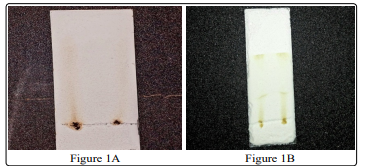
Figure 1A and 1B: TLC plates showing spots of the ethanol and aqueous extract respectively
The table given above revealed the various Retention factor (R.F) of different solvent system i.e., Chloroform: Methanol: Water (C: M: W) in the ratio (7:3:1) in ml 4 spots were observed in ethanolic extract and 2 spots were observed in aqueous extract and Butanol: Water (B: W) in the ratio (1:1) in ml 1 spot was observed in ethanolic extract and 3 spots were observed in aqueous extract. Ethanolic extract has more phytoconstituents than aqueous extract
Screening of Antibacterial Activity
The following table shows the minimum inhibitory concentration of ethanol and aqueous extract of Ziziphus mauritiana against different bacterial strains which was measured through turbidity method.
Table 5: Minimum Inhibitory Concentration of both the Extracts and Control Drug
|
S.No |
ORGANISM NAME |
ETHANOL EXTRACT(mg-ml) |
AQUEOUS EXTRACT(mg-ml) |
STANDARD DRUG (CIPROFLOXACIN)(mg-ml) |
|
1 |
Citrobacter Freundii |
** |
** |
17.5 |
|
2 |
Clostridium per fringes |
25 |
** |
15 |
|
3 |
Kliebsella pneumonia |
20 |
** |
10 |
|
4 |
Staphylococcus Aureus |
25 |
** |
20 |
**MIC could not be calculated since the organism showed resistance even at higher dose up to 100 mg-ml.
Bacterial culture were subjected to ethanolic and aqueous extract exposure at different concentrations. For antibacterial activity four pathogenic bacterial strains namely (Citrobacter freundii, Clostridium per fringes, Kliebsella pneumonia, and Staphylococcus aureus) were selected. Ethanolic extract has the lowest MIC value against Kliebsella pneumonia which is 20 mg-ml which indicates that it is very potent against Kliebsella pneumonia, however the aqueous extract showed no effect and MIC value could not be calculated even at higher dose up to 100mg-ml which confirms its non-potency against any of the bacterial strains se lected .While the control drug (Ciprofloxacin) showed most efficacy in all the bacterial culture and gives MIC value of 10mg-ml.
Result of Well Diffusion Method of Ethanol and Aqueous Extracts of Z.Mauritiana
The in vitro antibacterial activities of ethanol extract of Z.mauritiana is given in the table Table 6: Zone of Inhibition of Ethanolic Extract of Ziziphus Mauritiana
Table 6: Zone of Inhibition of Ethanolic Extract of Ziziphus Mauritiana
|
S.No |
Dose of extract in mg |
Area of zone in cm2 |
|||
|
Kliebsella pneumonia |
Staphylococcus Aureus |
Citrobacter Freundii |
Clostridium per fringes |
||
|
1. |
25 |
2.5±0 |
2.8±0.3 |
** |
2.5±0 |
|
2. |
30 |
3.1± 0 |
3.1±0 |
** |
2.8±0.3 |
|
3. |
35 |
3.4±0.3 |
4.9±0.4 |
** |
3.1±0 |
|
4. |
40 |
4.9±0.4 |
7±0 |
** |
4.2±1.1 |
|
5. |
45 |
5.3±0.8 |
7.5±0.5 |
** |
5.5±0 |
|
6. |
50 |
7.5±0.5 |
9±1 |
** |
7±0 |
|
7. |
55 |
8±1 |
11.3±1.2 |
** |
7.5±0.5 |
|
8. |
60 |
10.7±0.6 |
11.9±0.6 |
** |
8.5±0.5 |
|
9. |
65 |
14.55±2.05 |
12.15±0.35 |
** |
12.5±0 |
** No zone of inhibition was observed up to 100 mg
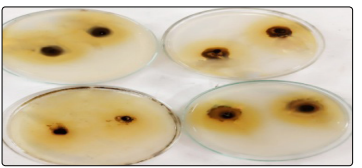
Figure 2: Agar plates showing susceptibility of Clostridium perfringes through zone of inhibition against ethanolic extract of Ziziphus mauritiana
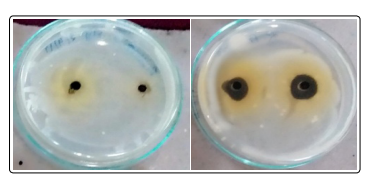
Figure 3: Agar plates showing susceptibility of Kliebsella pneumonia through zone of inhibition against ethanolic extract of Ziziphus mauritianaagainst positive control
As clearly seen in the table the ethanol extract of Ziziphus mauritiana leaves exhibited strong antibacterial activity against Staphylococcus Aureus (2.8±0.3 cm2, 3.1±0 cm2, 4.9±0.4 cm2, 7±0 cm2, 9±1cm2, 11.3±1.2 cm2, 11.9±0.6 cm2, 12.15±0.35 cm2) these are the area of zone of inhibition at (25 mg, 30mg, 35 mg, 40 mg, 45 mg, 50 mg, 55 mg, 60 mg, 65 mg) dose of extract respectively. Kliebsella pneumonia has (2.5±0 cm2, 3.1±0 cm2, 3.4±0.3 cm2, 4.9±0.4 cm2, 5.3±0.8 cm2, 7.5±0.5 cm2, 8±1 cm2, 10.7±0.6 cm2, 14.55±2.05 cm2) as the area of zone of inhibition at (25 mg, 30mg, 35 mg,40 mg, 45 mg,50 mg,55 mg, 60 mg, 65 mg) dose of extract respectively. and Clostridium perfringes has (2.5±0 cm2, 2.8 ±0.3 cm2, 3.1±0 cm2, 4.2±1.1 cm2, 5.5±0 cm2,7±0 cm2, 7.5±0.5 cm2, 8.5±0.5 cm2,12.5±0 cm2) as they are of zone of inhibition at (25 mg, 30mg, 35 mg,40 mg, 45 mg,50 mg,55 mg, 60 mg, 65 mg) dose extract respectively . Citrobacter Freundii showed no effect and showed no zone of inhibition even at higher dose of 100 mg.
The control drug (ciprofloxacin) was very effective against all the bacterial strains the results in terms of zone of inhibition against S.aureus, C. Perfringes, C. freundii, K. pneumonia are found to be 7.0 cm2, 19.6 cm2, 28.2 cm2, 38.4 cm2 respectively at the dose of 20 mg of the drug this dose was selected by reviewing various reported studies. Results confirms that S. aureus was least sensitive towards the control drug however K. pneumonia was most sensitive.
The aqueous extract of leaves of Ziziphus Mauritiana was not effective against all the four bacterial strains and showed no zone of inhibition even at higher dose up to 100 mg.
|
S.No |
EXTRACT |
TOTAL ASH VALUE in% |
WATER SOLUBLE ASH in% |
ACID INSOLUBLE ASH in% |
|
1 |
ETHANOLIC |
0.36±0.02 |
0.15±0.05 |
0.14±0.06 |
|
2 |
AQUEOUS |
0.19±0.01 |
0.12±0.02 |
0.05±0.01 |
The total ash value is was calculated 0.36±0.02 %, 0.19±0.01 % for the ethanol and aqueous leaf extract respectively. The water soluble ash values are 0.15±0.05% ,0.12±0.02% for ethanolic and aqueous extract respectively whereas acid insoluble ash are 0.14±0.06% , 0.05±0.01 % for ethanolic and aqueous extract respectively .
Phytochemical Screening of Extracts
Table 7: phytochemical analysis of ethanolic and aqueous extracts of Coriandrum sativum
|
S.No |
PHYTOCHEMICAL COMPOUND |
ETHANOLIC EXTRACT |
AQUEOUS EXTRACT |
|
1 |
TANNINS(catholic) |
+ |
- |
|
2 |
VOLATILE OIL |
- |
- |
|
3 |
REDUCING SUGAR |
- |
- |
|
4 |
SAPONINS |
+ |
+ |
|
5 |
GLYCOSIDE |
- |
- |
|
6 |
ALKALOID |
- |
- |
*+=present: - =absent.
The present study revealed that the ethanolic extract of plant of Coriandrum sativum contained, tannins (catholic), and saponins, however, the aqueous extract contains only saponins.
Table 8: RF values of ethanol and aqueous extracts ofCoriandrum sativum
|
S.No |
EXTRACTS |
Chloroform: Methanol: Water(7:3:1) |
Butanol: Water(1:1) |
|
1. |
ETHANOLIC |
R.F=0.83,0.33,0.58 |
R.F=0.22,0.33,0.11 |
|
2. |
AQUEOUS |
R.F=0.15,0.8,0.25 |
R.F=0.08,0.17,0.26,0.44 |
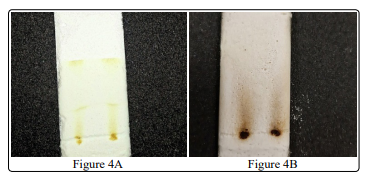
Figure (4A and 4B): TLC plates showing spots of the ethanol and aqueous extract respectively.
The given table revealed the various Retention factor (R.F) of different solvent system i.e., Chloroform: Methanol: Water (C: M: W) in the ratio (7:3:1) in ml 3 spots were observed in both ethanolic extract and aqueous extract and another solvent system was Butanol: Water (B: W) in the ratio (1:1) in ml 3 spots was observed in ethanolic extract and 4 spots were observed in aqueous extract.
TLC Profiling of Ethanol Extract and Aqueous Extract of Coriandrum sativum
Results of TLC for ethanolic and aqueous extract are given in table 10 with two different solvent systems.
Table 9: Minimum inhibitory concentration of both the extracts and control drug
|
S.No |
ORGANISM NAME |
ETHANOL EXTRACT(mg-ml) |
AQUEOUS EXTRACT(mg-ml) |
STANDARD DRUG (CIPROFLOXACIN)(mg-ml) |
|
1 |
Citrobacter Freundii |
55 |
40 |
17.5 |
|
2 |
Clostridium perfringes |
** |
10 |
15 |
|
3 |
Kliebsella pneumonia |
40 |
30 |
10 |
|
4 |
Staphylococcus Aureus |
40 |
10 |
20 |
**MIC could not be calculated since the organism showed resistance even at higher dose up to 100mg.
Screening of Antibacterial Activity
The following table shows the minimum inhibitory concentration of ethanolic and aqueous extract of Coriandrum sativum against different bacterial strains which was measured through turbidity method.
Bacterial strains were subjected to ethanolic and aqueous extract exposure at different concentrations. For antibacterial activity four pathogenic bacterial strains namely (Citrobacter Freundii, Clostridium perfringes, Kliebsella pneumonia, and Staphylococcus Aureus) were selected. Ethanolic extract on showed the lowest MIC value against Kliebsella pneumonia and Staphylococcus Aureus which is 40 mg -ml which indicates that is very potent against Kliebsella pneumonia and Staphylococcus Aureus. However the aqueous extract showed lowest value of MIC value against Clostridium perfringes and Staphylococcus Aureus which is 10 mg-ml. The control drug (Ciprofloxacin) showed most efficacy in all the bacterial culture and gives MIC value of 10 mg-ml.
Result of Well Diffusion Method of Ethanol and Aqueous Extracts of Coriandrum sativum
The in vitro antibacterial activity of ethanol and aqueous extracts C. sativum is given in the following tables:
Table 10: Zone of inhibition of ethanol extract of Coriandrum sativum
|
S.No |
Dose of extract in mg |
(Area of zone in cm2) |
|||
|
Kliebsella pneumonia |
Staphylococcus aureus |
Citrobacter freundii |
Clostridium Perfringes |
||
|
1. |
40 |
6±1 |
3.07±0.07 |
** |
** |
|
2. |
45 |
9.5±0.5 |
5.65±0.35 |
** |
** |
|
3. |
50 |
9.5±2.5 |
6.15±0.85 |
** |
** |
|
4. |
55 |
9.75±2.5 |
6.55±0.45 |
8±1 |
** |
|
5. |
60 |
10.25±2.25 |
9.55±0.65 |
8.06±1.05 |
** |
|
6. |
65 |
11.75±0.75 |
9.62±0.55 |
11.9±0.6 |
** |
**No zone of inhibition observed even at higher dose up to 100 mg
Table 11: Zone of inhibition of aqueous extract of Coriandrum sativum
|
S.No |
Dose of extract in mg |
(Area of zone in cm2) |
|||
|
Kliebsella pneumonia |
Staphylococcus aureus |
Citrobacter freundii |
Clostridium Perfringes |
||
|
1. |
30 |
1.9±1.2 |
2.4±0.9 |
0.78±0 |
0.2±0.08 |
|
2. |
35 |
2.2±0.6 |
5.3±0 |
1.3±0.61 |
0.8±0.3 |
|
3. |
40 |
2.5±0 |
8.0±0.9 |
1.4±0.6 |
1.1±0.3 |
|
4. |
45 |
2.8±0.8 |
8±1 |
1.6±0.8 |
1.5±0 |
|
5. |
50 |
4.1±0.4 |
10.1±0 |
1.8±0.7 |
1.7±1.4 |
|
6. |
55 |
7±0 |
13.1±0.6 |
3.1±0 |
2.4±0.7 |
|
7. |
60 |
9.1±2.1 |
13.8±1.3 |
3.7±0 |
3.14±0 |
|
8. |
65 |
10.2±2.2 |
16.5±1.4 |
4.9±0.4 |
5.3±0 |
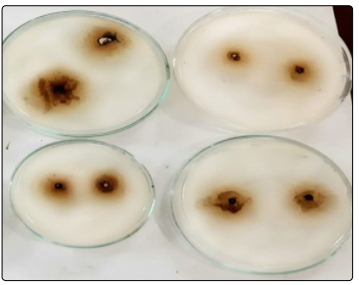
Figure 5: Agar plates showing susceptibility of Staphylococcus Aureus through zone of inhibition against ethanolic extract of Coriandrum sativum
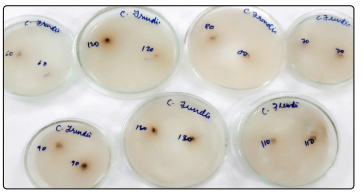
Figure 6: Agar plates showing susceptibility of Citrobacter Freundii through zone of inhibition against Aqueous extract of Coriandrum sativum
The ethanol extract exhibited the strongest antibacterial activity against K. pneumonia with area of zone (6±1 cm2, 9.5±0.2 cm2, 9.5±2.5 cm2, 9.75±2.5 cm2, 10.25±2.25 cm2, 11.25±0.75 cm2) at (40 mg, 45 mg, 50 mg, 55 mg, 60 mg, 65 mg) dose of the extract respectively . Followed by S. aureus which has (3.07±0.07 cm2, 5.65±0.35 cm2, 6.15±0.45 cm2, 9.55±0.65 cm2, 9.62±0.55 cm2) as the area of zone of inhibition at (40 mg, 45 mg, 50 mg, 55 mg, 60 mg, 65 mg) dose of the extract respectively. C. freundii showed minimum effect and has (8±1 cm2, 8.06±1.5 cm2, and 11.9±0.6 cm2) as the area of zone of inhibition at (55 mg, 60 mg and 65 mg) dose of extract respectively. C. freundii showed no effect at concentrations of 40 mg, 45mg and 50 mg. C. Perfringes showed no effect hence no zone of inhibition was observed as the organism showed resistance even at higher dose of 100 mg
The control drug (ciprofloxacin) was very effective against all the bacterial strains the results in terms of zone of inhibition against S.aureus, C. Perfringes, C. freundii, K. pneumonia are found to be 7.0cm2, 19.6 cm2, 28.2cm2, 38.4 cm2 respectively at the dose of 20 mg of the drug this dose was selected by reviewing various reported studies. . Results confirms that S. aureus was least sensitive towards the control drug however K. pneumonia was most sensitive.
The aqueous extract of C sativum also showed great effectiveness against all four bacterial strains maximum being against S. aureus which has (2.4±0.9 cm2, 5.3±0 cm2, 8.0±0.9 cm2, 8±1 cm2, 1.01±0 cm2, 13.1±0.6 cm2, 13.8±1.3 cm2 16.5±1.4 cm2) as the area of zone of inhibition at (30 mg, 35 mg, 40 mg, 45 mg, 50 mg, 55 mg, 60 mg and 65 mg) dose of extract respectively. Followed by K. pneumonia which has (1.9±1.2 cm2, 2.2±0.6 cm22.5±0 cm2, 2.8±0.8 cm24.1±0.4 cm2 7±0 cm2, 9.1±2.1 cm2 10.2±2.2 cm2) as they are of zone of inhibition at (30 mg, 35 mg, 40 mg, 45 mg, 50 mg, 55 mg, 60 mg and 65 mg) dose of extract respectively. C. Perfringes has (0.2±0.08 cm2, 0.8±0.3 cm21.1± 0.3 cm2 1.5±0cm2 1.7±1.4 cm2, 2.4±0.7 cm2 3.14±0 cm2 5.3±0 cm2) as the area of zone of inhibition at (30 mg, 35 mg, 40 mg,45 mg,50 mg,55 mg,60 mg and 65 mg) dose of extract respectively. C. freundii showed minimum effect with (0.78±0 cm2, 1.3±0.61 cm2, 1.4±0.6cm21.6±0.8 cm2.8±0.7 cm2, 3.1±0 cm2, 3.7±0cm2 4.9±0.4 cm2). This extract was the most effective among all the extracts tested.
Conclusions
Ethanolic as well as aqueous extract of Coriandrum sativum shows potency against bacterial isolates selected for study except ethanolic extract against Clostridium perfringes.
Ziziphus Mauritiana ethanolic extract was found to be non-effective against Citrobacter Freundii Bacterial isolates which were resistant against synthetic antibiotic drug like methicillin, cephalosporin ampillicin and oxytetracycline, the extracts showed potency against such bacterial isolates. Aqueous extract of Coriandrum sativum was effective against all the bacterial isolates taken, hence it can be said that it was the most effective extract against disease causing bacteria .Both the plants are indigenous in nature and possess the pharmacological as well as nutritional value place of crude extract purified extract with (reducing sugars, tannins, saponins, flavonoid, glycosides etc.) can lead to a potent drug replacement. These plants can be further exploited as potent alternative to current drug therapy against various ailments.
Acknowledgement
Present work is the part of research, completed at Department of Biotechnology, Barkatullah University, Bhopal.References
- Talmale S, Bhujade A, Patil M B (2015) Investigations into the Immunostimulatory Activities of the Compounds Isolated from Zizyphus mauritiana .Journal of Clinical & Cellular Immunology 6: 1-7.
- Kokate CK (2005) a text book of practical Pharmacognosy. Val. Prakashan 5: 105-111.
- Harbone JB (1973) Phytochemical Methods 1973: 48 -189.
- Evans W C, Trease G E. (1989), Pharmacognosy 11th edition.
- Cappucino J, Sherman N (2006) Microbiology: A Laboratory Manual 6th edition. Dorling Kindersley (India) Pvt. Ltd.
- Zare sahneh M, Askarfarashah M, Ebrahimi Lx, Moradi k, Zare zardini H, et al. (2014) Biological activities of a new antimicrobial peptide from Coriandrum sativum. Journal of bioscience. 4: 89-899.
- Zargar Nattaj S, Tayyebi P, Zangoori V, Moghadamnia Y, Roodgari H, et al. (2011) The effect of Coriandrum sativum seed extract on the learning of newborn mice by electric shock: interaction with caffeine and diazepam. Psychology Research and Behavior Management 4: 13-19.
- ZekoviÄ?a Z, AdamoviÄ?b D, Ä?etkoviÄ?a G, RadojkoviÄ?a M, VidoviÄ?a S (2011) Essential oil and extract of coriander (Coriandrum sativum L.). Acta periodica technological 42: 1-288.
- Shrivastava DK (2017) Phytochemical Analysis of a Miracle Herb Coriander sativum. Indian Journal of Scientific Research 13: 9-14.
- Parmar P, Bhatt S, Dhyani S, Jain A (2012) Phytochemical Studies of the Secondary Metabolites of Ziziphus Mauritiana Lam. Leaves. International Journal of Current Pharmaceutical Research 4: 153-155.
- Rajeshwari U, Andallu B (2011) Medicinal benefits of coriander (Coriandrum sativum). Spatula 1: 51-58.
- Mehta S, Singh R P, Saklani P (2017) Phytochemical Screening and TLC Profiling of Various Extracts of Reinwardtia indica. International Journal of Pharmacognosy and Phytochemical Research 9: 523-527.