

Advances in Bioengineering and Biomedical Science Research(ABBSR)
ISSN: 2640-4133 | DOI: 10.33140/ABBSR
Impact Factor: 1.7

Research Article - (2021) Volume 4, Issue 3
Physiological Profiles of Hair and Scalp Conditions in Korea Population: Servey, Hairological Expert-Diagnosis and New Diagnostic Device
2Department of Beauty Art, 142 Bansong Beltway (Bansongdong), Busan 48015, Youngsan University, South Korea
Copyright: ©Copyright: ©2021 Hwa-Jung Choi, et al. This is an open-access article distributed under the terms of the Creative Commons Attribution License, which permits unrestricted use, distribution, and reproduction in any medium, provided the original author and source are credited.
Citation: Dong-Soon Park, Ji-Eun Koo, Soo-Yean Oh and Hwa-Jung Choi (2021) Physiological Profiles of Hair and Scalp Conditions in Korea Population: Servey, Hairological Expert-Diagnosis and New Diagnostic Device. Adv Bioeng Biomed Sci Res 4(3): 66-74.
Abstract
few results of measurement contents or inaccuracy of results or inconvenience of use. In this study, two hundreds and forty Korea participants from whole South Korea were enrolled, conducted servey by self-questionnaire, diagnosed scalp type by hairological expert and diagnosed systemically hair and scalp conditions by APM PRO200 device. As the results, women is 70.7% and <20 ages were 99 (41.3%). The most subjects treated with shampoo 1 time per day (65.4%) and didn’t have the dyeing (80.0%). The most frequent was A scalp type (41.7%) in hairological expert-diagnosis. The subjects of 46.3% had mild damage of hair cuticle, good exposure of sclap’s vessel (87.1%), good hair density (78.3%), hair loss status of W type (68.3%), sensitive hair pore status (26.3%), good hiar thickness (91.7%), bad corneous of scalp (47.5%) and scalp status (22.9%) status in diagnosis by APM PRO200 device. In anaysis of relationship between self-questionnaire and physiological profiles of hair and scalp conditions diagnosed by APM PRO200 device, exposure of scalp’s vessel, hair loss status and hair pore status showed significant difference by sex and cuticle status, hair density, hair pore status, corneous of scalp and scalp status showed significant difference by age. Therefore, the diagnosis of hair and scalp conditions can be really facilitated by the APM PRO200 device.
Keywords
Diagnosis; Hair; Scalp, APM PRO200Introduction
Hair is a unique characteristic possessed on all mammals [1]. In humans hair is a unique feature, but main functions of hair are in protection of the humans skin from mechanical injury and to facilitate homeothermy; eyelashes, for example, block somethings entering the eyes, while scalp hair blocks sunlight and physical damage to the circumference of head [2, 3]. Hair also has a sensory function, improving the perception of the skin for something stim¬uli, and subserves sexual roles and social communication, con¬sidering the psychological impact on life-quality showed in hair disorders such as hair loss [4]. In particular, a significantly higher superiority of personality disorders in peoples with androgenetic alopecia regarding the superiority of diagnoses on hair loss in the most population have been reported [5].
The appearance of an individual’s hair is said to be reflective of in-ternal health. Navigating the various diagnosis of trichodystrophies can be very complex; this contribution offers a question-by-ques¬tion guide to making the correct diagnosis in subjects [6]. The hair of patients that the hair is not growing is fragile and breaks easily, or their hair volume is diminished and balding [7]. Patients with monilethrix frequently are born with normal hair, but their hair is changed in the first few months with short and fragile hair [8]. Trichorrhexis invaginata usually shows in infancy but may show initially in the eyebrows [9]. Loose anagen syndrome classically shows in a two-year-old people with blonde hair but can present in subjects with other hair colors, and the hair can favorably be pulled from the scalp skin [10].
Human scalp exhibits unique characteristics such as the highest density in hair follicles (200 hair/cm²) and an important sebum production (casual level of 150 lg/cm²) related with a unique resi¬dent microorganisims [11]. The presence of numerous hairs makes scalp a hidden region for consumers or researchers. Apart from work on unique disorders such as alopeci, a study on normal hu¬man scalp is scarce because of a blind site for measurements with device [12].
Intrumental machines equipped with cameras with high-magni¬fication lenses have been widely used to diagnose a patient’s or customer’s scalp [13]. In diagnosis of scalp or hair, most doctors or experts manually record the condition on the scalp and the process is slow and inconviniences the patients or customers [14]. So far, many study related with hair or scalp in korea have been focusiong on hair loss. Furethermore, few device to diagnose and analyze precisely and systemically hair or scalp of Korean was develp. Therefore, a new system for tracking the diagnostic divice for the scalp of patients or custumer will be further need to seek a higher performance and conviniences in actual situations.
In this study, APM PRO200 device for diagnosis and analysis of hair and scalp conditions was developed at Aram Huvis Co., Ltd. To obtain presentative data of South Korea against hair and scalp conditions, two hundreds and forty Korea participants from whole South Korea were enrolled in the study. They conducted servey by self-questionnaire and diagnosed type of scalp, scalp and hair sta¬tus by hairological expert. The subjects also were diagnosed and analyzed systemically hair and scalp conditions by APM PRO200 device. The relationship between self-questionnaire and physio¬logical profiles of hair and scalp conditions diagnosed by APM PRO200 device were analyzed. The correlation betweem scalp type by hairological expert-diagnosis and scalp status diagnosed by APM PRO200 device analyzed by Person correlation coefficient.
Materials and Methods
Study Design
Experimental system to diagnose hair and scalp conditions showed at Fig. 1. A total of 240 Korean, aged all, were enrolled in this study. This study was performed at 7 universities with deparment of beauty science representing 7 provinces in South Korea from september 2020 to december 2020 (Fig. 2). The method of the study was explained to the volunteers, and then the written informed consent was obtained. Before diagnosis on hair and scalp conditions by APM PRO200 device, the servey against particiants was conducted by self-questionnaire (Table 1). Type of scalp, sclap and hair status of them were diagnosed by hairological expert-diagnosis (Table 1).
Table 1. Contents of self-questionnaire, hairological expert-diagnosis and diagnosis by APM PRO200 device
|
|
Contents |
|
Self-questionnaire |
Dermographic characteristics (sex and age) |
|
Hospital diagnosis (scalp related disease, content of scalp diagnosis and product to improve scalp) |
|
|
Self-diagnosis of scalp (type of scalp, oily content, corneous, trouble/pimple, sensitivity, itch, fever, pain, consciousness of hair loss, heredity and stiff neck and shoulder) |
|
|
Life pattern (drug taking longtime, nutrients taking longtime, allergy, frequency and kinds of meal a day, diet, drinking, smoking, exercise and sleeping) |
|
|
Life diagnosis of women (menstrual cycle, menstrual quantity and experience of delivery) |
|
|
Management of hair and scalp (frequency of shampoo, cycle of permanent wave and cycle of dyeing) |
|
|
Used shampoo |
|
|
Hairological expert |
Type of scalp |
|
Scalp status (scalp status, scalp pore, scalp oily, scalp fever, scalp corneous, scalp corneous status, scalp trouble, scalp smell, scalp inflammation, dandruff and number of pore losing hair) |
|
|
Hair status (damage of hair, hair crumble and quantity of white hair) |
|
|
APM PRO 200 device |
Hair loss status, cuticle status, exposure of scalp’s vessel, hair density, hair pore status, hair thickness, corneous of scalp and scalp status |

Figure 1. Experimental system to diagnose hair and scalp con-ditions. Two hundreds and forty Korea participants from whole South Korea were conducted servey by self-questionnaire, diagnosed scalp type by hairological expert and diagnosed systemically hair and scalp conditions by APM PRO200 device
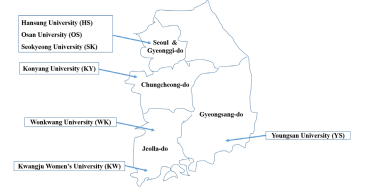
Figure 2. Prepresentative 7 universities possessing department of beauty science in 7 provinces of South Korea. A total of 240 Ko¬rean in South Korea from september 2020 to december 2020 were enrolled in this study.
For further analysis on scalp type diagnosed by hairological ex-pert-diagnosis, we asked a blinded hairological expert to catego-rize 6 scalp types from A to F. The A and B types were classified into A-1, A-2 and A-3 for A type and B-1, B-2 and B-3 for B type. The C type was classified into C-1 and C-2. The scalp taxonomy wea used to classify scalp type by hairological expert in South Korea (Table 2).
Table 2. The scalp taxonomy classified by hairological expert in South Korea.
|
Scalp type |
Scalp subtype |
||
|
Code |
Characteristic |
Code |
Characteristic |
|
A |
Itch and oily |
A-1 |
Prosperous oily |
|
|
|
A-2 |
Prosperous oily and inflammation |
|
|
|
A-3 |
Seborrheic |
|
B |
Dry and corneous |
B-1 |
Dry |
|
|
|
B-2 |
Dry and scatter of corneous |
|
|
|
B-3 |
Atopy |
|
C |
Trouble (pimple) |
C-1 |
Erytherma in hair follicles |
|
|
|
C-2 |
Folliculitis |
|
D |
Sensitivity |
|
|
|
F |
Normal |
|
|
|
E |
Hair loss |
|
|
The hair and scalp conditions by using of APM PRO200 device were diagnosed and analyzed (Fig. 3). The APM PRO200 was equipped with dual camera sensor of 1/4 inch color complimentary metal oxide semiconductor (CMOS, 5 mega pixel) × 1 camera sensor. The sensor pixel was total 5,038,848 pixels and effective pixel was 4,915,200 pixels. The image capture size was video graphics array (VGA) resolution (640 × 480). The divice possessed nine measurement mode of customer face, hair loss status, scalp status, hair density, corneous of scalp, exposure of scalp’s vessel, hair thickness, hair pore status and cuticle status. The magnification of camera differed from measurement contents (Table 3).
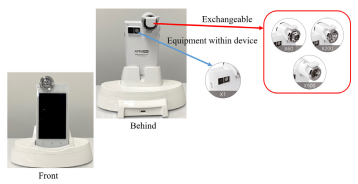
Figure 3. Photography of APM PRO200 device. The APM PRO200 was equipped with dual camera sensor of 1/4 inch color complimentary metal oxide semiconductor (CMOS, 5 mega pixel) × 1 camera sensor. The sensor pixel was total 5,038,848 pixels and effective pixel was 4,915,200 pixels. The image capture size was video graphics array (VGA) resolution (640 × 480). The div-ice possessed nine measurement mode of customer face, hair loss status, scalp status, hair density, corneous of scalp, exposure of scalp’s vessel, hair thickness, hair pore status and cuticle status.
Table 3. Magnification of camera in APM PRO200
|
Model of camera |
Magnification |
Measurement content |
|
Equipment within device |
× 1 |
Customer face and hair loss status |
|
202 |
× 60 |
Scalp status, Hair density, corneous of scalp and exposure of scalp’s vessel |
|
203 |
× 200 |
Hair thickness and hair pore status |
|
204 |
× 500 |
Cuticle status |
The various physiological profiles in hair and scalp was evaluated by APM PRO200 device (Fig. 3). We were participated all subjects without exlusion criteria. The eight measurement contents were hair loss status, scalp status, hair density, corneous of scalp, expo¬sure of scalp’s vessel, hair thickness, hair pore status and cuticle status except for customer face (Table 3).
Measurements of Physiological Parameters
The participatiants were subjected to a one-time physiological properties’ measurement. The measurement was conducted by a well-trained and experienced expert under standardized condition (temperature of 19°C–24°C and relative humidity of 60%–65%). All participants were in the measurement room for at least 15 minutes before the measurement for acclimatization. Each measurement were made by three readings. All measurements conducted at the same area.
Imaging System
Imaging of the hair and scalp was carried out during the measurements on the scalp surface. Scalp or hair images were acquired us- ing an camera equipped with a high-magnification lens providing VGA 640 × 480 image capture size.
Analysis of Relationship between Self-Questionnaire and Physio-logical Profiles of Hair and Scalp Conditions Diagnosed by APM PRO200 Device
Self-questionnaire and diagnosis of scalp by hairological expert contained many contents. Thus, our team selected partial data and it was demorgraphic characteristics (sex or ages), management of hair and scalp by subjects (frequency of shampoo or cycle of permanent wave or cycle of dyeing), type of scalp diagnosed by hairological expert and physiological profiles of hair and scalp conditions diagnosed by APM PRO200 device because our study is extabilishment of representative data against hair and scalp conditions by APM PRO200 device to overcome subjective diagnosis by expert.
The difference between demorgraphic characteristics (sex or ages) and physiological profiles of hair and scalp conditions diagnosed by APM PRO200 device was analyzed by χ2-test.
Correlation Analysis Between Scalp Type by Hairological Ex-pert-Diagnosis and Scalp Status Diagnosed by APM PRO200 De-vice
The scalp type by hairological expert-diagnosis and scalp status diagnosed by APM PRO200 device were analyzed by Person cor-relation coefficient.
Statistical Analysis
Statistical analysis was performed using SPSS for Windows, ver-sion 18.0 (SPSS Inc., Chicago, IL, USA). The data were analyzed separately for man and women participants as the preliminary analysis revealed statistically significant difference in outcomes between genders. Categorical data was expressed as proportions. The difference or correlation between two categorical data was an-alyzed using chi-squared test. P value of less than 0.05 was consid-ered to be statistically significant.
Results
Analysis of Self-Questionnaire
Only two categories (demorgraphic characteristics and manage-ment of hair and scalp by subjects) among the many self-ques-tionnnaire was showed because of many data (Table 4). The 240 subjects had the following presentations: man, 72 (30.3%); wom-en, 168 (70.7%). Less than 20 ages were 99 (41.3%), 30-40 ages were 90 (37.5%) and over 50 ages were 51 (21.3%). In analysis of management of hair and scalp, the most subjects treated with shampoo 1 time per day (157, 65.4%) and the other subjects (83, 34.6%) treated with shampoo another interval (Table 5). One hun-dred forty-eight (61.7%) sjubects didn’t have permanent wave, their 29.2% had permanant wave 1-3 times per year and the other subjects had permanent wave over 4 times per year. The subjects of 80% didn’t have the dyeing and 25.0% subjects had dyeing over 7 times per year.
Table 4. Demorgraphic characteristics
|
|
|
N |
% |
|
Sex |
Man |
72 |
30.0 |
|
Women |
168 |
70.0 |
|
|
Age |
<20 |
99 |
41.3 |
|
30-40 |
90 |
37.5 |
|
|
>50 |
51 |
21.3 |
|
|
Total |
240 |
100.0 |
|
Table 5. Analysis on management of hair and scalp
|
|
|
N |
% |
|
Frequency of shampoo |
1 time per day |
157 |
65.4 |
|
Etc. |
83 |
34.6 |
|
|
Cycle of permanent wave |
Nothing |
148 |
61.7 |
|
1-3 times per year |
70 |
29.2 |
|
|
> 4 times per year |
22 |
9.2 |
|
|
Cycle of dyeing |
Nothing |
80 |
33.3 |
|
1-3 times per year |
58 |
24.2 |
|
|
4-6 times per year |
42 |
17.5 |
|
|
> 7 times per year |
60 |
25.0 |
|
|
Total |
240 |
100.0 |
|
Anaysis of Scalp Type Diagnosed By Hairological Ex-pert-Diagnosis
Of all the subjects, the most frequent was A scalp type, (100, 41.7%), most of which were A-1 scalp type, while A-3 scalp type were 8.8% (Table 6). Sixty-eight subjects (28.3%) were B scalp type and 16.3% among them was B-1 scalp type. C scalp type showed 2.1%. D, E and F scalp types were 6.7%, 11.3% and 10.0%, prespectively.
Table 6. Scalp type diagnosed by hairological expert-diagnosis
|
Scalp type |
Scalp subtype |
N |
% |
N |
% |
|
A |
A-1 |
44 |
18.3 |
100 |
41.7 |
|
A-2 |
35 |
14.6 |
|||
|
A-3 |
21 |
8.8 |
|||
|
B |
B-1 |
39 |
16.3 |
68 |
28.3 |
|
B-2 |
23 |
9.6 |
|||
|
B-3 |
6 |
2.5 |
|||
|
C |
C-1 |
1 |
0.4 |
5 |
2.1 |
|
C-2 |
4 |
1.7 |
|||
|
D |
16 |
6.7 |
16 |
6.7 |
|
|
E |
27 |
11.3 |
27 |
11.3 |
|
|
F |
24 |
10.0 |
24 |
10.0 |
|
|
Total |
240 |
100.0 |
240 |
100.0 |
|
Physiological Profiles of Hair And Scalp Conditions Di- agnosed by APM PRO200 Device
Of the 240 subjects who had access to the scalp and hair diagno-sis in 2020, 111 subjects (46.3%) had mild damage of hair cuticle while 106 subjects (44.2%) had good condition of hair cuticle (Ta-ble 7). The exposure of sclap’s vessel showed the following pre-sentations: bad, 17 (7.1%); middle, 14 (5.8%); Good, 209 (87.1%). Thirty-one of subjects showed bad status against hair density (12.9%), 21 subjects (12.9%) showed mild hair density and the other (78.3%) showed good status on hair density. In hair loss sta¬tus, most of them possessed W type (164, 68.3%) and 26.3% of them showed sensitive hair pore status and then the next showed oily hair pore status (52, 21.7%). The most of subjects showed good hiar thickness (220, 91.7%). The corneous of scalp showing bad status was 114 subjects (47.5%) and the corneous of scalp showing good status was 106 subjects (44.2%). In diagnosis of scalp status, 22.9% of them was inflammatory status and the next was sensitive status (22.1%). Furethermore, the representative images captured and saved by APM PRO200 device showed in fig. 4
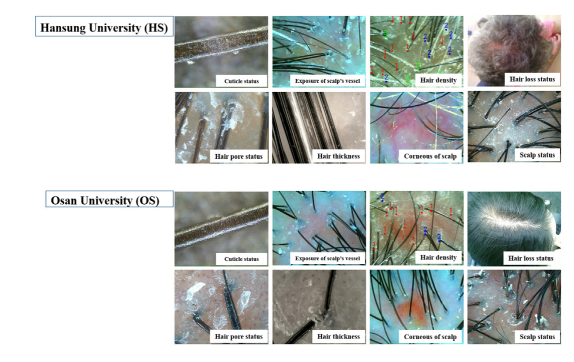
Figure 4. Representative images recorded by APM PRO200 de-vice. Scalp or hair images were acquired using an camera equipped with a high-magnification lens providing VGA 640 × 480 image capture size.
Table 7. Physiological profiles diagnosed by APM PRO200 device
|
Physiological profiles |
Status |
N |
% |
|
Cuticle status |
Bad |
23 |
9.6 |
|
|
Mild |
111 |
46.3 |
|
|
Good |
106 |
44.2 |
|
Exposure of scalp’s vessel |
Bad |
17 |
7.1 |
|
|
Mild |
14 |
5.8 |
|
|
Good |
209 |
87.1 |
|
Hair density |
Bad |
31 |
12.9 |
|
|
Mild |
21 |
8.8 |
|
|
Good |
188 |
78.3 |
|
Hair loss status |
M |
63 |
26.3 |
|
|
O |
6 |
2.5 |
|
|
C |
7 |
2.9 |
|
|
W |
164 |
68.3 |
|
Hair pore status |
Dandruff |
10 |
4.2 |
|
|
Dry |
42 |
17.5 |
|
|
Good |
37 |
15.4 |
|
|
Inflammation |
32 |
13.3 |
|
|
Oily |
52 |
21.7 |
|
|
Seborrhea |
4 |
1.7 |
|
|
Sensitivity |
63 |
26.3 |
|
Hair thickness |
Bad |
1 |
0.4 |
|
|
Mild |
19 |
7.9 |
|
|
Good |
220 |
91.7 |
|
Corneous of scalp |
Bad |
114 |
47.5 |
|
|
Mild |
20 |
8.3 |
|
|
Good |
106 |
44.2 |
|
Scalp status |
Dandruff |
10 |
4.2 |
|
|
Dry |
32 |
13.3 |
|
|
Good |
39 |
16.3 |
|
|
Hair loss |
12 |
5.0 |
|
|
Inflammation |
55 |
22.9 |
|
|
Oily |
26 |
10.8 |
|
|
Seborrhea |
13 |
5.4 |
|
|
Sensitivity |
53 |
22.1 |
|
Total |
240 |
100 |
|
Anaysis of Relationship Between Self-Questionnaire and Physiological Profiles of Hair and Scalp Conditions Diagnosed by APM PRO200 Device
In analysis of relationship between physiological profiles of hair and scalp conditions diagnosed by APM PRO200 device and sex, exposure of scalp’s vessel, hair loss status and hair pore sta-tus showed significant difference by sex (p<.001 for exposure of scalp’s vessel and hair loss status, p<.05 for hair pore status and Table 8). The good status of exposure of scalp’s vessel for man was 52 persons (72.2%) and it for women was 157 persons (93.5%) and then the women was higer than that of man (Table 8). Furethermore, M for most man among the hair loss status was 58 persons (80.6%) and W for most women was 163 persons (97.0%). Finally, most man showed sensitivity for hair pore status (41.7%) and most women exhibited oily for it (23.2%).
Table 8. Analysis of relationship between sex and physiological profiles
|
Physiological profiles |
Sex |
Total |
χ2 (p) |
||
|
Man |
Women |
||||
|
Cuticle status |
Bad |
4 (5.6%) |
19 (11.3%) |
23 (9.6%) |
5.967 (.051) |
|
Mild |
28 (38.9%) |
83 (49.4%) |
111 (46.3%) |
||
|
Good |
40 (55.6%) |
66 (39.3%) |
106 (44.2%) |
||
|
Exposure of scalp’s vessel |
Bad |
10 (13.9%) |
7 (4.2%) |
17 (7.1%) |
20.776*** (.000) |
|
Mild |
10 (13.9%) |
4 (2.4%) |
14 (5.8%) |
||
|
Good |
52 (72.2%) |
157 (93.5%) |
209 (87.1%) |
||
|
Hair density |
Bad |
14 (19.4%) |
17 (10.1%) |
31 (12.9%) |
4.243 (.120) |
|
Mild |
7 (9.7%) |
14 (8.3%) |
21 (8.8%) |
||
|
Good |
51 (70.8%) |
137 (81.5%) |
188 (78.3%) |
||
|
Hair loss status |
M |
58 (80.6%) |
5 (3.0%) |
63 (26.3%) |
213.347*** (.000) |
|
O |
6 (8.3%) |
0 (0.0%) |
6 (2.5%) |
||
|
C |
7 (9.7%) |
0 (0.0%) |
7 (2.9%) |
||
|
W |
1 (1.4%) |
163 (97.0%) |
164 (68.3%) |
||
|
Hair pore status |
Dandruff |
2 (2.8%) |
8 (4.8%) |
10 (4.2%) |
14.481* (.025) |
|
Dry |
10 (13.9%) |
32 (19.0%) |
42 (17.5%) |
||
|
Good |
7 (9.7%) |
30 (17.9%) |
37 (15.4%) |
||
|
Inflammation |
8 (11.1%) |
24 (14.3%) |
32 (13.3%) |
||
|
Oily |
13 (18.1%) |
39 (23.2%) |
52 (21.7%) |
||
|
Seborrhea |
2 (2.8%) |
2 (1.2%) |
4 (1.7%) |
||
|
Sensitivity |
30(41.7%) |
33 (19.6%) |
63 (26.3%) |
||
|
Hair thickness |
Bad |
1 (1.4%) |
0 (0.0%) |
1 (.4%) |
3.854 (.146) |
|
Mild |
8 (11.1%) |
11 (6.5%) |
19 (7.9%) |
||
|
Good |
63 (87.5%) |
157 (93.5%) |
220 (91.7%) |
||
|
Corneous of scalp |
Bad |
39 (54.2%) |
75 (44.6%) |
114 (47.5%) |
4.801 (.091) |
|
Mild |
2 (2.8%) |
18 (10.7%) |
20 (8.3%) |
||
|
Good |
31 (43.1%) |
75 (44.6%) |
106 (44.2%) |
||
|
Scalp status |
Dandruff |
4 (5.6%) |
6 (3.6%) |
10 (4.2%) |
6.411 (.493) |
|
Dry |
7 (9.7%) |
25 (14.9%) |
32 (13.3%) |
||
|
Good |
8 (11.1%) |
31 (18.5%) |
39 (16.3%) |
||
|
Hair loss |
5 (6.9%) |
7 (4.2%) |
12 (5.0%) |
||
|
Inflammation |
16 (22.2%) |
39 (23.2%) |
55 (22.9%) |
||
|
Oily |
7 (9.7%) |
19 (11.3%) |
26 (10.8%) |
||
|
Seborrhea |
4 (5.6%) |
9 (5.4%) |
13 (5.4%) |
||
|
Sensitivity |
21 (29.2%) |
32 (19.0%) |
53 (22.1%) |
||
|
Total |
72 (30.0%) |
168 (70.0%) |
240 (100.0%) |
||
|
*:p<.05, **:p<.01, ***:p<.001
|
|||||
Table 9 showed analysis of relationship between physiological profiles of hair and scalp conditions diagnosed by APM PRO200 device and age. The results showed significant difference between age and cuticle status, hair density, hair pore status, corneous of scalp and scalp status (p<.05, **:p<.01 and ***:p<.001). In rela-tionship between age and cuticle status, 20 ages and 30-40 ages showed good cuticle status for 43.4% and 50.0%, respectively. The most of all ages showed good hair density with significant difference. The >20 ages showed dry for hair pore status (25.3%), 30-40 ages was oily for it (31.1%) and <50 ages showed sensitive hair pore status (37.3%). In corneous of scalp, The most of all ages showed bad corneous of scalp (47.5%), the <20 ages was good corneous of scalp (57.6%) and 30-40 ages and >50 ages were bad corneous of scalp (46.7% and 76.5%, respectively). Inflammatory scalp status in <20 ages was 28.3% amd scalp status of 30-40 ages and >50 ages were sensitivity (25.6% and 25.5%, respectively).
Table 9. Analysis of relationship between age and physiological profiles
|
Physiological profiles |
Age |
Total |
χ2 (p) |
|||
|
<20 |
20-30 |
>50 |
||||
|
Cuticle status |
Bad |
16 (16.2%) |
2 (2.2%) |
5 (9.8%) |
23 (9.6%) |
12.779* (.012) |
|
Mild |
40 (40.4%) |
43 (47.8%) |
28 (54.9%) |
111 (46.3%) |
||
|
Good |
43 (43.4%) |
45 (50.0%) |
18 (35.3%) |
106 (44.2%) |
||
|
Exposure of scalp’s vessel |
Bad |
6 (6.1%) |
8 (8.9%) |
3 (5.9%) |
17 (7.1%) |
3.766 (.439) |
|
Mild |
3 (3.0%) |
6 (6.7%) |
5 (9.8%) |
14 (5.8%) |
||
|
Good |
90 (90.9%) |
76 (84.4%) |
43 (84.3%) |
209 (87.1%) |
||
|
Hair density |
Bad |
6 (6.1%) |
7 (7.8%) |
18 (35.3%) |
31 (12.9%) |
35.218*** (.000) |
|
Mild |
4 (4.0%) |
12 (13.3%) |
5 (9.8%) |
21 (8.8%) |
||
|
Good |
89 (89.9%) |
71 (78.9%) |
28 (54.9%) |
188 (78.3%) |
||
|
Hair loss status |
M |
25 (25.3%) |
28 (31.1%) |
10 (19.6%) |
63 (26.3%) |
|
|
O |
1 (1.0%) |
3 (3.3%) |
2 (3.9%) |
6 (2.5%) |
|
|
|
C |
0 (0.0%) |
3 (3.3%) |
4 (7.8%) |
7 (2.9%) |
|
|
|
W |
73 (73.7%) |
56 (62.2%) |
35 (68.6%) |
164 (68.3%) |
|
|
|
Hair pore status |
Dandruff |
3 (3.0%) |
3 (3.3%) |
4 (7.8%) |
10 (4.2%) |
27.009** (.008) |
|
Dry |
25 (25.3%) |
11 (12.2%) |
6 (11.8%) |
42 (17.5%) |
||
|
Good |
13 (13.1%) |
11 (12.2%) |
13 (25.5%) |
37 (15.4%) |
||
|
Inflammation |
17 (17.2%) |
11 (12.2%) |
4 (7.8%) |
32 (13.3%) |
||
|
Oily |
20 (20.2%) |
28 (31.1%) |
4 (7.8%) |
52 (21.7%) |
||
|
Seborrhea |
1 (1.0%) |
2 (2.2%) |
1 (2.0%) |
4 (1.7%) |
||
|
Sensitivity |
20 (20.2%) |
24 (26.7%) |
19 (37.3%) |
63 (26.3%) |
||
|
Hair thickness |
Bad |
0 (0.0%) |
0 (0.0%) |
1 (2.0%) |
1 (.4%) |
4.598 (.331) |
|
Mild |
6 (6.1%) |
8 (8.9%) |
5 (9.8%) |
19 (7.9%) |
||
|
Good |
93 (93.9%) |
82 (91.1%) |
45 (88.2%) |
220 (91.7%) |
||
|
Corneous of scalp |
Bad |
33 (33.3%) |
42 (46.7%) |
39 (76.5%) |
114 (47.5%) |
26.598*** (.000) |
|
Mild |
9 (9.1%) |
10 (11.1%) |
1 (2.0%) |
20 (8.3%) |
||
|
Good |
57 (57.6%) |
38 (42.2%) |
11 (21.6%) |
106 (44.2%) |
||
|
Scalp status |
Dandruff |
4 (4.0%) |
4 (4.4%) |
2 (3.9%) |
10 (4.2%) |
32.919** (.003) |
|
Dry |
17 (17.2%) |
7 (7.8%) |
8 (15.7%) |
32 (13.3%) |
||
|
Good |
14 (14.1%) |
13 (14.4%) |
12 (23.5%) |
39 (16.3%) |
||
|
Hair loss |
3 (3.0%) |
1 (1.1%) |
8 (15.7%) |
12 (5.0%) |
||
|
Inflammation |
28 (28.3%) |
23 (25.6%) |
4 (7.8%) |
55 (22.9%) |
||
|
Oily |
11 (11.1%) |
13 (14.4%) |
2 (3.9%) |
26 (10.8%) |
||
|
Seborrhea |
5 (5.1%) |
6 (6.7%) |
2 (3.9%) |
13 (5.4%) |
||
|
Sensitivity |
17 (17.2%) |
23 (25.6%) |
13 (25.5%) |
53 (22.1%) |
||
|
Total |
99 (41.3%) |
90 (37.5%) |
51 (21.2%) |
240 (100.0%) |
|
|
|
*:p<.05, **:p<.01, ***:p<.001 |
||||||
Pearson Correlation Analysis Scalp Type by Hairological Expert-Diagnosis and Scalp Status Diagnosed by APM PRO200 Device
The scalp status (Dry and scatter of corneous, Dry, Normal, Hair loss, Prosperous oily and inflammation, Prosperous oily, Seborrhe¬ic and Sensitivity) among the 8 physiological profiles diagnosed by APM PRO200 device was consistent nearly with scalp type by hairological expert-diagnosis (Dandruff, Dry, Good, Hair loss, Inflammation, Oily, Seborrhea and Sensitivity, Table 10). Therefore, the scalp type by hairological expert-diagnosis and scalp status diagnosed by APM PRO200 device compared by Pearson correla¬tion analysis. In Table 10, the scalp type and scalp status showed low correlation (r = 0.2348056).
Table 10. Pearson correlation analysis of scalp type by hairologi-cal expert-diagnosis and scalp status diagnosed by APM PRO200 device
|
|
Scalp type |
Scalp status |
|
Scalp type |
1 |
|
|
Scalp status |
0.1348056 |
1 |
Therefore, scalp type diagnosed by hairological expert-diagnosis is standard index in South Korea. However, the index didn’t show more various results than that of scalp diagnosed by APM PRO200 device. Furthermore, our system tracks the diagnostic area during the examination using images. The proposed device has broad an¬alytic area, can detect the analytic region faster, is a conventional method for the user and can obtain objective data with images. Therefore, in future study, we plan to research methods to improve the accuracy and speed of our system by addition sensors and to apply artificial intelligence (AI).
Discussion
Hair is a unique character of mammalians, where hair shafts pos¬sess a number of different functions such as collection of senso¬ry information and protection against environmental changes and social communications [15]. As huam hair is one of the physical characters which is easier to change in length, color or shape, peo¬ple within any society has an unique idea of beauty [16]. Most people possesses an estimated total number of 5 million hair fol¬licles (HF), HF of 80,000–150,000 are located on the scalp [17]. The scalp is that part of the skin which extends from the eyebrows to the nape of the neck [18].
The chemical components of the hair or scalp skin shaft can be easily changed by environmental conditions, such as ultraviolet (UV) radiation, heat, humidity, and chemical agents [19]. Chemi-cals using in bleaching or waving break the disulfidebonds in the keratin of hair and also induce hair damage [20].
The office dermatologist or physicians may often be confronted with customers presenting a wide range of different hair and scalp disorders, ranging from rare congenital hair fiber abnormaliities, pattern loss, chronic effluvium, or indeed simply the effects of chronic weathering [21]. Generally, hair and scalp disorders given hair’s important role in determining self-image, social perception, and psychosocial functioning, the psychological impact of such conditions may be high. For that reason, hair and scalp disorders can prove distressing for both men and women.
The use of artificial intelligence device may be another method of broadening the use of dermatology or hairology expertise. A differential diagnosis is a ranked list of diagnoses that is used to plan treatments in the common setting of diagnostic ambiguity in dermatology, and can capture a more comprehensive assessment of a clinical case than a single diagnosis [22].
In aticle, a total of 240 Korean subjects enrolled from 7 universi-ties with deparment of beauty science representing 7 provinces in South Korea from september 2020 to december 2020 conducted servey by self-questionnaire, diagnosis of sclap and hair status by hairological expert and APM PRO200 diagnostic device. Furether- more, a detailed scalp and hair inspection and diagnosis system, named APM PRO200, is manufactured for use in hair scalp diag¬nosis. The manufactured system is composed of a portable scalp and hair imaging camera with various magnification. In this study, man was 72 (30.3%) and women is 168 (70.7%). Less than 20 ages were 99 (41.3%), 30-40 ages were 90 (37.5%) and over 50 ages were 51 (21.3%). In analysis of management of hair and scalp, the most subjects treated with shampoo 1 time per day (65.4%), 148 (61.7%) sjubects didn’t have permanent wave and 80% of them didn’t have the dyeing. In analysis of scalp type diagnosed by hairological expert-diagnosis, the most frequent was A scalp type (41.7%), 68 subjects (28.3%) were B scalp type and C scalp type showed 2.1%. D, E and F scalp types were 6.7%, 11.3% and 10.0%, prespectively.
In physiological profiles of hair and scalp conditions diagnosed by APM PRO200 device, 111 subjects (46.3%) had mild damage of hair cuticle, the most of exposure of sclap’s vessel was good (87.1%), 188 subjects (78.3%) showed good hair density, most of them possessed hair loss status of W type (68.3%). 26.3% of them showed sensitive hair pore status. The most of subjects also showed good hiar thickness (91.7%) and the corneous of scalp showing bad status was 114 subjects (47.5%). In diagnosis of scalp status, 22.9% of them was inflammatory status and the next was sensi¬tive status (22.1%). In anaysis of relationship between self-ques¬tionnaire and physiological profiles of hair and scalp conditions diagnosed by APM PRO200 device, exposure of scalp’s vessel, hair loss status and hair pore status showed significant difference by sex and cuticle status, hair density, hair pore status, corneous of scalp and scalp status showed significant difference by age. In Pearson correlation analysis between scalp type by hairological expert-diagnosis and scalp status diagnosed by APM PRO200 de¬vice, the scalp type and scalp status showed low correlation (r = 0.2348056).
Therefore, scalp type diagnosed by hairological expert-diagnosis is standard index in South Korea. However, the index didn’t show more various results than that of scalp diagnosed by APM PRO200 device. Furthermore, our system tracks the diagnostic area during the examination using images. The proposed device has broad an¬alytic area, can detect the analytic region faster, is a conventional method for the user and can obtain objective data with images. Therefore, in future study, we plan to research methods to improve the accuracy and speed of our system by addition sensors and to apply artificial intelligence (AI).
Conclusions
To obtain presentative and objective data of South Korea against hair and scalp conditions, 240 Korea participants from whole South Korea were enrolled in the study. They conducted servey by self-questionnaire and diagnosed scalp type by hairological expert and diagnosed and analyzed systemically hair and scalp conditions by APM PRO200 device. The proposed a new device can track the data used to diagnose scalp skin and hair. This system comprises changeable cameras for capturing images of the scalp or hair and a diagnostic device to capture the various region of head of the customer. In Pearson correlation analysis between scalp type by hairological expert-diagnosis and scalp status diagnosed by APM PRO200 device, several limits of hairological expert-diagnosis re- vealed. Therefore, the future of hair and scalp diagnostic device will be the development of more efficient and accurate according to consumers’ needs and concerns.
Acknowledgement
This study was supported by a grant from Ministry of SMEs and Startups, South Korea (No. S2137014)Conflict of interest
The authors have declared no conflict of interest.References
- Buffoli B, Rinaldi F, Labanca M, Elisabetta Sorbellini, Anna Trink, et al. (2014) The human hair: from anatomy to physiology. Int J Dermatol 53: 331-341.
- Harrison JL, Davis KD (1999) Cold-evoked pain varies with skin type and cooling rate: a psychophysical study in humans. Pain 83: 123-135.
- Maderson PF (2003) Mammalian skin evolution: a reevalua-tion. Exp Dermatol 12: 233-236.
- Randall VA (2001) Is alopecia areata an autoimmune disease? Lancet 358: 1922-1924.
- Maffei C, Fossati A, Rinaldi F (1994) Personality disorders and psychopathologic symptoms in patients with androgenetic alopecia. Arch Dermatol 130: 868-872.
- Alok Vij, Wilma F Bergfeld (2015) Trichodystrophies: A hair-raising differential diagnosis. Clin Dermatol 33: 613-621.
- Itin PH, Fistarol SK (2005) Hair shaft abnormalities-clues to diagnosis and treatment. Dermatol 211: 63-71.
- Leitner C, Cheung S, de Berker D (2013) Pitfalls and pearls in the diagnosis of monilethrix. Pediatr Dermatol 30: 633-635.
- Boussofara L, Ghannouchi N, Ghariani N, Denguezli M, Col-andane Belajouza, et al. (2007) Netherton’s syndrome: The importance of eyebrow hair. Dermatol Online J 13: 21.
- Dhurat RP, Deshpande DJ (2010) Loose anagen hair syndrome. Int J Trichol 2: 96-100.
- Jönsson EH, Bendas J, Weidner K, Johan Wessberg, HåkanOlausson, et al. (2017) The relation between human hair follicle density and touch perception. Sci Rep 7: 2499.
- Florence P, Cornillon C, D’arras MF, Flament Frédéric, Pan-hard Ségolène, et al. (2013) Functional and structural age-related changes in the scalp skin of Caucasian women. Skin Res Technol 19: 384-393.
- Rajabi Estarabadi A, Vasquez Herrera NE, Martinez Velasco MA, J Tsatalis, SH Verne, et al. (2020) Optical coherence tomography in diagnosis of inflammatory scalp disorders. J Eur Acad Dermatol Venereol 34: 2147-2151.
- Hong HG, Nam GP, Lee HC, Kang Ryoung Park, Sung Min Kim, et al. (2014) New system for tracking a device for diagnosing scalp skin. Sensors (Basel) 14: 6516-6534.
- Araújo R, Fernandes M, Cavaco Paulo A, Andreia Gomes (2011) Biology of human hair: know your hair to control it. Adv Biochem Eng Biotechnol 125: 121-143.
- Cruz CF, Costa C, Gomes AC, Teresa Matamá, Artur Cavaco Paulo, et al. (2016) Human hair and the impact of cosmetic procedures: a review on cleansing and shape-modulating cosmetics. Cosmetics 3: 26.
- Krause K, Foitzik K (2006) Biology of the hair follicle: the basics. Semin Cutan Med Surg 25: 2-10.
- Hayman LA, Shukla V, Ly C, Katherine H Taber (2003) Clinical and imaging anatomy of the scalp. J Comput AssistTo-mogr 27: 454-459.
- Louis JK, Qu X, Edward TB (2000) Oxygen radicals from photoirradiated human hair: an ESR and fluorescence study. J Cosmet Sci 51 169-182.
- Signori V, Lewis DM (1997) FTlR investigation of the damage produced on human hair by weathering and bleaching processes: implementation of different sampling techniques and data processing. Int J Cosmet Sci 19: 1-14.
- Tosti A, Gray J (2007) Assessment of hair and scalp disorders. J Investig Dermatol Symp Proc 12: 23-27.
- De A, Sarda A, Gupta S, Sudip Das (2020) Use of artificial intelligence in dermatology. Indian J Dermatol 65: 352-357.