

Advances in Bioengineering and Biomedical Science Research(ABBSR)
ISSN: 2640-4133 | DOI: 10.33140/ABBSR
Impact Factor: 1.7

Review Article - (2018) Volume 1, Issue 3
Pharmacological Benefits of Cumin (Cuminum Cyminum)
Received Date: Dec 14, 2018 / Accepted Date: Dec 20, 2018 / Published Date: Dec 28, 2018
Copyright: ©Copyright: ©2018 Nida Tabassum Khan. This is an open-access article distributed under the terms of the Creative Commons Attribution License, which permits unrestricted use, distribution, and reproduction in any medium, provided the original author and source are credited.
Abstract
Cumin (Cuminum Cyminum) is known by several names such as jeera, haravi, caraway, etc. and is well known for its anti-inflammatory, antiseptic, antioxidants and antimicrobial properties. It is used as a natural remedy for the treatment of numerous ailments such as digestive tract discomforts, nausea, constipation, bloating, dyspepsia and flatulence. Seeds of cumin are heavily consumed in Indian cooking because of its aroma and flavor however over consumption is associated with numerous health related side effects.
Keywords
Anti-inflammatory, Antioxidants, Constipation, Belching, Folate, Lutein-zeaxanthinIntroduction
Cumin (Cuminum Cyminum) is native to Asian regions and is known by several names such as jeera, haravi, caraway, krishnajraka, etc [1]. It was formerly cultivated in Mediterranean regions, Iran, India and Pakistan [2]. Cumin is well known for its anti-inflammatory, antiseptic, antioxidants and antimicrobial properties [3,4]. Cumin is a fruit of its herb but when it dries becomes a seed and is a source of iron, calcium and magnesium [5,6]. It is used as a natural remedy for the treatment of numerous ailments such as digestive tract discomforts, nausea, constipation, bloating, dyspepsia and flatulence [7-9]. Seeds of cumin is heavily consumed in Indian cooking because of its aroma and flavor however over consumption is associated with health related side effects such as belching and gastric problems and heartburns [10,11].Cumin Herb
Cumin plant is a 15-50 cm heighted herbaceous annual plant which is cultivated annually mostly in the month of February to March [12]. It has thread-like leaflets along with white roots [13]. The stems bear reddish white flower and possess oval shaped schizocarp [14]. Cultivation of cumin requires a fertile well drained soil and temperature of around 30°C [15]. In addition the cumin plant is drought resistance [16].
Dietary Importance of Cumin
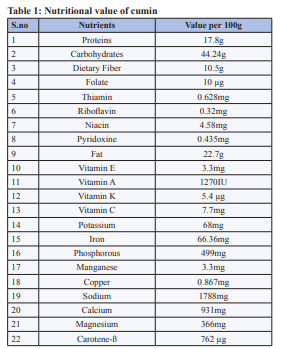
Several nutrients that are present in cumin has been summarized in Table 1 which is given below [17-21].
|
23 |
Zinc |
4.8mg |
|
24 |
Lutein-zeaxanthin |
448 µg |
Medicinal Uses of Cumin
Following are some therapeutic uses of Cumin seeds:
Treatment of Anemia
Cumin seed is enriched source of iron which is required for the synthesis of hemoglobin [22]. Therefore cumin seeds fulfill the daily iron requirement of an adult to prevent symptoms of anemia.
Treatment of Insomnia
Some research studies have revealed that cumin oil possesses hypnotic and sedative properties which help insomniac patients in relieving fretfulness and tension to get better sleep [23].
Treatment of Diabetes
Cumin helps in decreasing hypoglycemia and high blood glucose level by stimulating the secretion of hormone insulin in diabetic patients [24].
Treatment of Acne and Skin Problems
Since cumin seeds possess antimicrobial and antioxidant property. In addition contains high concentration of Vitamin E and several essential minerals. Therefore it could be used to treat moderate acne and mild skin problems [25].
Treatment of Piles
Piles, also known as hemorrhoids could be treated using cumin seeds since it has high fiber content and act as a natural laxative. Therefore it promotes easy bowl removal by reducing constipation [26].
Treatment of Seasonal Cold
Cumin’s oil act as a disinfectants and helps in treating common cold and fever caused by viral infections [27].
Treatment of Asthma and Respiratory Tract Infections
Consumption of cumin seeds helps in removal of phlegm and reduces mucus deposition in respiratory tract [28]. Therefore it is effective against respiratory problems such as asthma and bronchitis because of its anti-congestive nature [29].
Promotes Digestion
Cumin seed extracts helps in stimulating proper digestion by reducing acidity and enhancing enzyme activity for better digestion [30]. It also helps in relieving stomach ache and abdominal pain [31].
Promotes Lactation
As cumin contains a considerable amount of iron, it increases the secretion of milk from the mammary glands and helps build strength postnatal [32].
Promotes Hair Health
Cumin seed extracts deeply nourished hair roots and reduces hair loss [33]. Since it is enriched with proteins and carbohydrates which is required for healthy hair growth it also prevents the occurrence of dandruff [34].
Enhances Immunity
Besides being antimicrobial, cumin seeds are an enriched source of antioxidants and essential mineral ions that reinforces the immune system to fight infection [35].
Reduces High Blood Pressure
Since cumin contains 68nmg of potassium which is required to maintain a normal blood pressure in the body by regulating the concentration of sodium ions [36].
Reduces Mensuration Pain
Menstrual cramp is easily reduced by consuming small amount of cumin seeds since it is anti-inflammatory and anti-spasmodic [37].
Reduces Liver Problems
Cumin promotes bile secretion and stimulates detoxification of harmful substances in order to keep our liver healthy [3].
Reduces Aging
Besides being inflammatory, cumin also possesses antioxidant property therefore it stops premature ageing [38].
Reduces Cognitive Disorders
Symptoms of cognitive disorders such as Alzheimer’s disease and dementia could be reduced in such patients using cumin in their diet [39].
Side Effects of Cumin
Besides being used as therapeutic, over consumption of cumin has harmful health effects which are as follows:
1. Over consumption of cumin leads to digestive and gastric problems [40].
2. Overdose of cumin can interfere with the normal functions of our kidney and liver [41].
3. In lactating mothers it reduces the secretion of milk if consumed in high quantity [6].
4. It is advisable not to take cumin in diet before any surgery [42].
5. Because of its narcotic properties, it is recommended to lower cumin intake because it causes nausea, mental clouding and drowsiness [43]. In addition could lead to low blood sugar level and heavy bleeding during mensuration [5].
Conclusion
Cumin besides being heavily consumed in Mediterranean cooking, it has many therapeutic uses such as in boosting immunity, red blood cell synthesis, enhancing digestion, promoting lactation and healthy hair growth etc. However over consumption might lead to ill health effects.References
- Gohari AR, Saeidnia S (2011) A review on phytochemistry of Cuminum cyminum seeds and its standards from field to market. Pharmacognosy Journal 3: 1-5.
- Kafi M (2006) Cumin (Cuminum Cyminum): production and processing.
- Kaur D, Sharma R (2012) An Update on Pharmacological Properties of Cumin. International Journal of Research in Pharmacy and Science 2: 14.
- Dua A, Gaurav G, Balkar S, Mahajan R (2013) Antimicrobial Properties of Methanolic Extract of Cumin (Cuminum Cyminum) Seeds. International Journal of Research in Ayurveda and Pharmacy 4: 104-107.
- Sowbhagya HB (2013) Chemistry, technology, and nutraceuticalfunctions of cumin (Cuminum cyminum L): an overview. Critical reviews in food science and nutrition 53: 1-10.
- Johri RK (2011) Cuminum cyminum and Carum carvi: An update. Pharmacognosy reviews 5: 63.
- Gachkar L, Yadegari D, Rezaei MB, Taghizadeh M, Astaneh SA, et al. (2007) Chemical and biological characteristics of Cuminum cyminum and Rosmarinus officinalis essential oils. Food chemistry 102: 898-904.
- Li R, Jiang ZT (2004) Chemical composition of the essential oil of Cuminum cyminum L. from China. Flavour and fragrance journal 19: 311-313.
- Gagandeep, Dhanalakshmi S, Mendiz E, Rao AR, Kale RK (2003) Chemopreventive effects of Cuminum cyminum in chemically induced forestomach and uterine cervix tumors in murine model systems. Nutrition and cancer 47: 171-180.
- Sharma RA, Steward WP, Gescher AJ (2007) Pharmacokinetics and pharmacodynamics of curcumin. In The molecular targets and therapeutic uses of curcumin in health and disease. Springerpp. 453-470.
- Craig WJ (1999) Health-promoting properties of common herbs. The American journal of clinical nutrition 70: 491s-499s.
- Moghaddam M, Pirbalouti AG (2017) Agro-morphological and phytochemical diversity of Iranian Cuminum cyminum accessions. Industrial crops and products 99: 205-213.
- Ilyas M (1980) Spices in India: III. Economic Botany 34: 236-259.
- Kumar S, Saxena SN, Mistry JG, Fougat RS, Solanki RK, et al. (2015) Understanding Cuminum cyminum: An important seed spice crop of arid and semi arid regions. Int J Seed Spices 5: 1-19.
- De Guzman CC, Siemonsma JS (1999) Plant resources of South-East Asia. Backhuys Pub 13.
- Sharma AK, Tewari JC (2009) Arid zone forestry with special reference to Indian hot arid zone. Forests and Forests Plants. Eolss Publishers Company 90-130.
- El-Ghorab AH, Nauman M, Anjum FM, Hussain S, Nadeem M (2010) A comparative study on chemical composition and antioxidant activity of ginger (Zingiber officinale) and cumin (Cuminum cyminum). Journal of agricultural and food chemistry 58: 8231-8237.
- Sowbhagya HB, Suma PF, Mahadevamma S, Tharanathan RN (2007) Spent residue from cumin–a potential source of dietary fiber. Food chemistry 104: 1220-1225.
- Milan KM, Dholakia H, Tiku PK, Vishveshwaraiah P (2008) Enhancement of digestive enzymatic activity by cumin (Cuminum cyminum L.) and role of spent cumin as a bionutrient. Food Chemistry 110: 678-683.
- Platel K, Srinivasan K (2000) Stimulatory influence of select spices on bile secretion in rats. Nutrition Research 20: 1493-1503.
- Al-Jasass FM, Al-Jasser MS (2012) Chemical composition and fatty acid content of some spices and herbs under Saudi Arabia conditions. The Scientific World Journal 2012: 859892.
- Silja VP, Varma KS, Mohanan KV (2008) Ethnomedicinal plant knowledge of the Mullu kuruma tribe of Wayanad district, Kerala. NISCAIR Publications 7: 604-612.
- MnifS, Aifa S (2015) Cumin (Cuminum cyminum L) from traditional uses to potential biomedical applications. Chemistry and biodiversity 12: 733-742.
- Chaudhary N, Husain SS, Ali M (2014) Chemical composition and antimicrobial activity of volatile oil of the seeds of Cuminumcyminum L. World Journal of Pharmacy and Pharmaceutical Science 3: 1428-1441.
- Aburjai T, Natsheh FM (2003) Plants used in cosmetics. Phytotherapy Research: An International Journal Devoted to Pharmacological and Toxicological Evaluation of Natural Product Derivatives 17: 987-1000.
- Sarkar P, DH LK, Dhumal C, Panigrahi SS, Choudhary R (2015) Traditional and ayurvedic foods of Indian origin. Journal of Ethnic Foods 2: 97-109.
- Singh RK, Sureja AK (2006) Centurion women and diverse knowledge systems. NISCAIR Publications 5: 413-419.
- Salem ML (2005) Immunomodulatory and therapeutic properties of the Nigella sativa L. seed. International immunopharmacology 5: 1749-1770.
- Demissew S (1993) A description of some essential oil bearing plants in Ethiopia and their indigenous uses. Journal of essential oil research 5: 465-479.
- Esiyok D, Otles S, Akcicek E (2004) Herbs as a food source in Turkey. Asian Pacific Journal of Cancer Prevention 5: 334-339.
- Aggarwal H, Kotwal N (2009) Foods used as ethno-medicine in Jammu. Studies on Ethno-Medicine 3: 65-68.
- Sayed NZ, Deo R, Mukundan U (2007) Herbal remedies used by Warlis of Dahanu to induce lactation in nursing mothers. NISCAIR Publications 6: 602-605.
- Rani B, Maheshwari RK (2014) Natural antioxidants and their intrinsic worth for wellbeing. Global Journal of Medical Research 13: 7-B.
- Bakhru HK (1992) Herbs that heal: natural remedies for good health. Orient paperbacks.
- Sultan MT, Buttxs MS, Qayyum MMN, Suleria HAR (2014) Immunity: plants as effective mediators. Critical reviews in food science and nutrition 54: 1298-1308.
- Aruna K, Sivaramakrishnan VM (1996) Anticarcinogenic effects of the essential oils from cumin, poppy and basil. Phytotherapy research 10: 577-580.
- Lev E, Amar Z (2002) Ethnopharmacological survey of traditional drugs sold in the Kingdom of Jordan. Journal of Ethnopharmacology 82: 131-145.
- Sultana S, Ripa FA, Hamid K (2010) Comparative antioxidant activity study of some commonly used spices in Bangladesh. Pakistan Journal of Biological Sciences 13: 340.
- Rathore SS, Saxena SN, Singh B (2013) Potential health benefits of major seed spices. Int J Seed Spices 3: 1-12.
- Niggemann B, Grüber C (2003) Side-effects of complementary and alternative medicine. Allergy 58: 707-716.
- Özbek H, Öztürk M, Öztürk A, Ceylan E, Yener Z (2004) Determination of lethal doses of volatile and fixed oils of several plants. Eastern Journal of medicine 9: 4-6.
- Al-Snafi AE (2016) The pharmacological activities of Cuminum cyminum-A review. IOSR Journal of Pharmacy 6: 46-65.
- Shah AH, Qureshi S, Tariq M, Ageel AM (1989) Toxicity studies on six plants used in the traditional Arab system of medicine. Phytotherapy Research 3: 25-29.