

Toxicology and Applied Pharmacology Insights(TAPI)
ISSN: 2641-0451 | DOI: 10.33140/TAPI

Research Article - (2021) Volume 4, Issue 2
Petroleum Refinery Hazardous Emissions
Received Date: Aug 26, 2021 / Accepted Date: Sep 15, 2021 / Published Date: Sep 22, 2021
Copyright: ©Copyright: ©2021 Paul T E Cusack. This is an open-access article distributed under the terms of the Creative Commons Attribution License, which permits unrestricted use, distribution, and reproduction in any medium, provided the original author and source are credited
Citation: Paul T E Cusack (2021) Petroleum Refinery Hazardous Emissions. Toxi App Phar Insig 4: 36-38.
Abstract
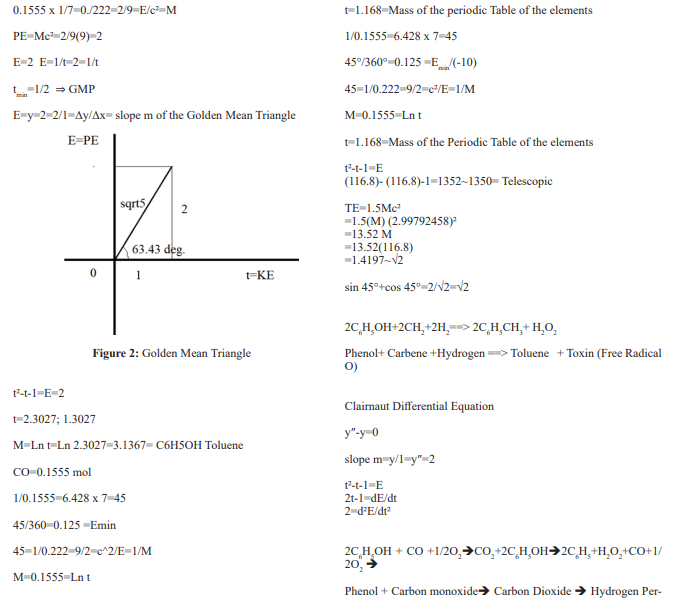
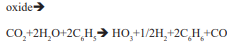
Oil Refineries are known to pollute the air with their emissions, besides polluting water with their effluent. In this paper we consider the main chemicals that are in atmospheric pollution from refineries. We see that the toxin hydrogen peroxide results that has been shown to cause cancer and nervous system diseases. The same techniques can be used on other emitters such as pulp mills and power plants.
Keywords
Petroleum Refineries; Atmospheric Pollution; Organic Chemicals; At Math.
Introduction
Petroleum Refineries process raw crude oil into 3 categories of products:
1. Fuel products
2. Nonfuel products (asphalt)
3. Petrochemicals They have atmospheric pollution.
For each ton of crude processed in CPCL, the emissions are according to Table 1. They also ex- haust VOC’s, Toxic Organics & Heavy metals, Carcinogenic Dan- gerous dust that causes disabling lung disease. (Asthma.)

Figure 1: Oil Refinery Exhaust
|
Exhaust |
Molar mass (g/mol) |
Exhaust per ton of crude |
Moles |
|
SO2 |
64.07 |
40(10-6) |
1.60175 |
|
NO2 |
46.01 |
450 (10-6) |
0.1022 |
|
CO |
28.01 |
180(10-6) |
0.1556 |
|
C6H6 |
78.11 |
80 mg/l |
97.637 |
|
C6H5CH3 |
92.14 |
0.35 kg |
0.263 |
|
C8H10 |
106.165 |
1.4 kg |
0.07583 |
|
C6H5OH |
94.11 |
300 mg/L |
0.3137 |
|
|
|
|
0.1555 moles |
Conclusion
AT Math is another tool that can be used to discern disease such as cancer and nervous system diseases.
References
- Haridoss S (2017) Effect of Air Pollutants and Its Emission Control Strategies in Petroleum Refineries. Journal of Indus- trial Pollution Control 33: 1019-1023.
- Paul TE C (2018) Hydrogen Peroxide and Cancer. Open Acc J Oncol Med 2: 139-140.
- Paul TE Cusack (2020) Sugar and Ecoli: Diseases of the Ner- vous System. Journal of Brain and Neurological Disorders 2(1)