

Journal of Veterinary Health Science(JVHS)
ISSN: 2831-3887 | DOI: 10.33140/JVHS
Impact Factor: 0.762

Research Article - (2022) Volume 3, Issue 1
Pedagogical Intervention to Improve Didactics through Science and Innovation
2Department of Medicine University of Sonora, Mexico
3Department of Psychology, University of Sonora, Mexico
4Department of Sports Sciences, University of Sonora, Mexico
5Department of Sports Sciences, University of Sonora, Mexico
6Department of Engineering, University of Sonora, Mexico
Received Date: Dec 14, 2021 / Accepted Date: Dec 21, 2021 / Published Date: Jan 05, 2022
Copyright: ©Copyright: ©2022 Antonio Jesús Pérez Sierra, et al. This is an open-access article distributed under the terms of the Creative Commons Attribution License, which permits unrestricted use, distribution, and reproduction in any medium, provided the original author and source are credited.
Citation: Antonio Jes
Abstract
The main objective of the article is to analyze the pedagogical intervention to improve didactics through science and innovation in the teaching-learning process of Sports Sciences and Physical Activity. The research presented is mixed, the study is descriptive, based on a non-experimental design. The participating subjects were intentionally selected, confirmed by the 31 eighth-semester students of the degree in Physical Culture and Sports of the University of Sonora, 16 of them are related to the female gender (51.62%), the other students are men 15 (48.38%). Of the eight teachers, five are women (62.5%), while three are men (37.5%). The methods applied were observation, questionnaire, document review, inclusion criteria and statistical analysis verifying the levels of reliability and validity of the data, which gave us a confidence interval of (90%), the SPSS version 23 program to determine the statistics presented in the materials and methods to deepen the importance of the art of teaching and integrating science and innovation as part of the structural categories that make up the didactics such as: contents, objectives, methods, means and evaluation for the well-being of the quality of education.
Keywords
Pedagogical Intervention, Didactics, Science, Innovation.
Introduction
In these two decades of the twenty-first century, the world has changed in a vertiginous way, where teachers and students need to adapt to these social and academic transformations to solve the problems that allow them to make academic, labor and research transitions, based on science and innovation as alternative forms for the scientific and technological advances of progress in educational systems, even more so for university students.
From the above analysis, we can ask the following question: What is the role of pedagogical intervention in improving didactics through science and innovation? To answer this question, it is important to plan, organize and structure a complex system to modify the teaching-learning process; as well as pedagogical intervention to improve didactics; through structural components such as: objectives, contents, methods, middle didactic strategies of teaching, evaluation.
In this sense, over time this pedagogical intervention to improve didactics has changed to offer a transformative, creative, and innovative teaching-learning process, which must be carried out in an orderly and methodical manner, to describe the actions of each discipline in a particular way, within them, it implies perfecting the theories and practices to discover and sustain the pedagogical intervention to improve didactics, in accordance with science and innovation.
In this sense, Bunge (2017) , proposes that [8]:
The theory of theory consists of the method, by the theory of knowledge (epistemology) lies in a clear refutation of the theories through the observation of nature and experimentation that constitute the essence and success, of the scientific method (p. 3).
For Pierre & Pollán, (1979), "many teachers do not teach their classes from educational research, where they accompany educational disciplines or at least the disciplines traditionally recognized as (pedagogical, didactic and sociological) of education" (p. 2) [28].
On the other hand, science, and innovation to improve didactics is a path of pedagogical intervention of relevance to constitute a scientific and critical reflection with the aim of efficiently solving the development and improvement of the mission of education [25].
In addition to this, the processes of production and application of knowledge are currently used to explain the role of science and innovation, seeking a common good for educational development [13].
In this regard, in the field of education where there are multiple opportunities to develop science based on the method and innovation in the teaching field, teachers must take advantage of opportunities to teach more dynamic classes that break paradigms and schemes, starting from pedagogical intervention to improve didactics through science and innovation, according to the practice experience of each teacher.
According to Pérez and Zagalaz (2001), as they state that [27]:
The logical analysis of the behavior of human civilization in the modern inevitably leads us to science, technology, and research as a bulwark of advancement to provide on a greater or lesser scale all spheres of social life of the upper and higher middle education (p. 1).
It is important to emphasize that the didactic and methodological process of pedagogical intervention to improve didactics through science and innovation, starts from the correct direction of the teacher for a comprehensive training of future professionals, considering their needs, from the specific social context of the students.
In this sense, the pedagogical intervention to improve didactics through science and innovation the ways to improve the teaching-learning process must seek new forms of teaching to modify certain social and educational needs respond to more complex processes for the integral formation of learners, complying with the pillars of education (coexist to be, know-how, know how to share and know).
Teachers must be trained to offer more significant results in science and innovation and to develop new theories on the structural components that make up the teaching-learning process; in other words, a paradigm shift in pedagogical intervention such as objectives, contents, methods, didactic strategies mean of teaching, evaluation.
Pedagogical Intervention to Improve Didactics
According to the Ministry of Public Education (SEP, 2009), it considers that "educational research has sought to specify solid knowledge; because its realization implies the incorporation and mobilization of specific knowledge to develop in the competences of the students, which are based on knowledge, skills, values of the consequences of attitudes" (p. 4) [22].
Teachers as decisive agents in the change of didactics from real pedagogy; in addition to proposing the elements of knowledge of the subjects that the faculties of sciences have as a determining element that influences the progress of teaching in an effective way for the educational quality [21].
Indeed, science and innovation are achievements that have contributed to improving the educational practices of teachers in the development of teaching-learning that students are trained and develop, based on the methods of science; for the complex and dynamic changes it has produced.
Education in our country has made important changes in curricula and programs, where science is linked to teaching for the development of didactic and pedagogical work in educational institutions, which aim to transmit the complete cluster of knowledge based on science and innovation to improve didactics, where we must transmit complex information to students to understand the phenomena of the target reality, how they affect the daily lives of human beings.
In addition to these social changes, teachers must rely on pedagogical and didactic science, according to the vocation and professionalism to teach in their educational practice, research to develop practical skills to verify and understand the significant learning expected by students.
In this regard, "from this set of reforms and changes, the most controversial are related to the evaluation process on the performance of teaching work, especially if it is a question of changing and innovating in practice in the classroom" [6].
Didactics
Didactics has several concepts, judgments, and structured reasoning capable of generating new ideas to teach from the brain of the subject who learns, complying with certain criteria of scientific rationality, integration of essential elements, such as the crankcase of the objectives and the use of methods that are significant, to transmit the contents from the cognitive, affective and emotional.
According to Abreu et al. (2017), they propose that [1].
The main exchange has focused on the origins of the conditions of the object of study of science, its structural categories of didactics, laws, principles, its pillars, evolution, its general or disciplinary character and its relationship with Pedagogy, Didactics, and methodologies. (p. 81).
All educational institutions should have the responsibility to foster and promote science and educational innovation as a well-being of pedagogical intervention to improve didactics.
It is important that teachers participate in the construction of new didactic knowledge, providing possible solutions to the problems posed by teaching in pedagogical interventions to improve didactics through science and innovation [7].
The following table expresses the aspects that make up the scientific character of the pedagogical intervention to improve the didactics.
Table 1: Scientific Nature of the Pedagogical Intervention to Improve Didactics
|
Scientific Character |
Pedagogical Intervention to Improve Didactics |
|
Object |
Teaching-learning process. |
|
Laws |
The dialectical unity between content, objective, and method as guiding categories of the teaching-learning process. |
|
Pillars |
Link theory with practice, according to the pillars of education (being, knowing how to do, knowing how to share and live knowledge). |
|
Principles |
The principles are necessary for pedagogical intervention for the implementation of the teaching-learning process and the application of science and innovation to improve didactics. |
|
Rules |
From the usual to the, from the known to the unknown, from the simple to the complex. |
|
Components of the teaching-learning process |
Objectives, contents, methods, forms, middle didactic strategies of teaching, evaluation. |
As Arteaga et al. (2016) argue, in conceiving that[4].
The teaching of science has the indispensable duty to prepare the human being for the time he has left to live, this is not obtained only by imparting knowledge of the contextual environment; but the sea applicable to science to solve the problems of social life. (p. 169).
That is, the teaching-learning process must be designed by the academic and research components with the aim of solving the problems that affect the pedagogical intervention to improve didactics through science and innovation, where it is intended to train and develop integral students as future competent professionals.
Understand the importance of teaching as a determining component to publicize the knowledge of science, which influences scientific advances derived from research and innovations to improve didactics in pedagogical intervention [10].
Didactics is the discipline that makes up the teaching act of transmitting teaching, in an accessible and affordable way, so that students learn, understand, and address the most pressing problems of the teaching-learning process, according to structural categories, even from a peculiar disciplinary training prior to the constitution of education and pedagogy [11].
The sciences cover various levels of student approach, the structure with which their experiences and learning activities are being formed, constitutes a guide to innovation in the educational context, they hope to improve the teaching process to change the teaching process its relationship with Mexican education, considering that science has managed to contribute to improving the educational practices of teachers, depending on the development of the teaching-learning process.
The teaching of science in education, where it seeks to consistently justify the set of problems that are systematically manifested so that teachers are facilitators and promoters of an excellent teaching-learning process of the educational context; thus, improve learning activities, which broaden the perception of the different phenomena that occur during the teaching-learning process; thus, to construct an analysis of a representation, synthesis, reflection and interpretation closer to reality.
Can we ask ourselves the questions if teachers rely on science to better optimize teaching in classes? How do teachers take advantage of science and innovation to improve didactics through their pedagogical intervention?
With respect to the questions raised, teachers have the responsibility to contribute more efficiently, effectively and effectively, to achieve the purposes of making available the foundations of theoretical, empirical and methodological knowledge, giving a primary place to research, this promotes the search for new alternatives so that there is greater reliability and validity of the methods in the awakening and interest and interest from students, through pedagogical intervention to improvisers through science and innovation.
The innovative initiative that characterizes teachers and unfortunately retracts from the programs taught that, although flexible, the creativity of those who implement in schools is limited to transmitting content to students.
Didactics has innumerable structured concepts, judgments and reasoning capable of generating new ideas for integral teaching, such as the crankcase of objectives and the use of methods, as primary ways of transmitting content from the cognitive, affective, and emotional.
It is understood that didactic innovation refers to changes in the teaching-learning process and these may be related to changes in the curricular content; in addition, of the structural categories of didactics such as: objectives, contents, methods, forms, didactic strategies of secondary education, evaluation [19].
Science
To speak science is to refer to the main support of human activity to transform reality that can be investigated from the theoretical and empirical methods of human reasoning to give answers to hypotheses; through the different scientific methods, and to be able to make decisions to advance in cultural and artistic thought as the basis of analytical, reflective, critical, humanistic and constructivist instruction of the art of teaching
We can refer to two equivalents on "science is not only knowledge, but the expression and systematics of this Monserrat (1987) [24]. Thus, for Zimmy (1961) [33]. "science is the organized set of knowledge gathered with the use of systematic observation" cited by Albert, 2007, p. 11) Science seeks truth with the relationship between the epistemological, ontological, axiological, and methodological, this link allows teachers to apply their knowledge to obtain better results in the field of pedagogical intervention to improve didactics [2].
Science allows us to make decisions to accept or reject scientific theories based on the results of empirical methods such as: observation, experiment, measurement, survey, questionnaire, interview, which are conceived as important empirical methods, real science proposes models of scientific development that explain changes in paradigm theories. Based on theoretical methods such as: analysis-synthesis, inductive-deductive, modeling, systemic, theoretical-deductive, and historical-logical.
In this regard, García (2008), "it is certainly expressed that the idea of a method that contains firm principles, immovable to carry out scientific activity with the results of research" (p. 194) [14].
Science has led modern societies to live scientific advances that cover all unthinkable areas, from medicine, agriculture, nuclear energy to technological advances, this is where we need to intervene, seek, and suggest new knowledge for the science of analysis, synthesis, reflection and interpretation and criticism, to make the educational context more dynamic and divergent in the Universities of Sports and Activity Sciences Physics.
The science that seeks the truth are the axiological, creative, and innovative aspects indispensable for pedagogical and didactic problems for the solution of the educational context, which is reflected as complex process to propose varied responses to didactic improvements.
Innovation
Teachers have a responsibility to continually transform our teaching practice; from the new changes in the educational context to improve didactics and encourage in our students a creative, flexible thinking, with perspectives of analysis, assessment, and interpretation, and above all with the necessary depth to understand the phenomena of social needs.
As Ezpeleta (2004) proposes, "science and innovation mean that for decades studies have changed in the education sector, he points out that innovation and teaching practice are more likely to succeed when they have emerged from the schools themselves" (p. 404) [12].
When we talk about innovation it is important that we want an improvement to change the common welfare environment, which refers to an innovator for an innovator, or change for change.
With respect to Sánchez (2005), he stated that [29]:
The objective is to improve the process of intentionality of the teaching-learning process with a clear purpose for all of us to improve the efficiency, effectiveness, and effectiveness of the quality of the educational process, through science and innovation in the application of methods and strategies that will solve the set of planning and organization problems at the didactic level. (p. 640).
From the position of Margalef and Arenas (2006), "innovation is the creation of something unknown, the perception of what is created as something new and the assimilation of something as new" (p. 14) [20].
Educational innovation is much more related to technologies, and teaching strategies, and does not refer to changes in the educational context to raise awareness about the importance of science and innovation in the performance of class structuring structuring planning structures, with a didactic and methodological basis based on information and communication.
For Tierney & Lanford (2016), they report that [31]:
Higher education is currently facing global forces that require innovative research, innovative pedagogies, and innovative organizational structures. For these reasons, we suggest that a theoretical understanding of innovation is imperative for the continued development of higher education in the twenty-first century (p. 1).
Considering, as Carbonell (2001) puts it, "by defining innovation as a series of interventions, decisions change attitudes, ideas, cultures, contents, models and pedagogical practices" [9].
Innovation implies something new for someone and that the novelty of the sea assimilated for the common welfare of the educational system (p. 9). To quote González and González (2017a), "innovation entails changes that lead to the transformation of the object to improve educational practice" [15]. In other words, innovation can be defined as a determining element for educational, scientific, and socioeconomic development at national and international level in search of better solutions for the well-being of school management and the quality of teaching performance efficiently; it is therefore decisive to achieve the success of the teaching-learning process, in which innovation plays a leading role from the cognitive, socio-affective dimensions for creation and improvement [18].
We believe that science and innovation are necessary tools that guarantee the quality of teaching work, these fundamentals give us a relationship between the knowledge they establish at the different levels of teaching in the educational system, in essence the Sports Sciences and Physical Activity.
The objective of this article is to analyze the pedagogical intervention to improve didactics through science and innovation of the teaching-learning process of Sports Sciences and Physical Activity.
Materials and Methods
The research we propose is quantitative and qualitative, the type carried out is descriptive, based on a non-experimental design, it is intended to deepen the pedagogical intervention to improve didactics through science and innovation of the teaching-learning process of teachers during their area of action; in addition, to know the perception of the students the degree in Sports Sciences and Physical Activity.
The Participating Subjects
The participants for this research are the 31 students of the bachelor’s degree in Physical Culture and Sport of the University of Sonora, corresponding to the eighth semester, composed of 16 correspond to the female gender for the (51.62%), and 15 remaining students, which are of the male gender for the (48.38%). The eight teachers, five belong to the female gender for (62.5%), and three to the male gender for (37.5%). The selected population was intentional, for more information check Table 2.
Table 2: Participating Subjects and Gender
|
Table 2: Participating Subjects and Gender |
Participating subjects |
Gender |
% |
||
|
F |
M |
F |
M |
||
|
Students |
31 |
16 |
15 |
51.62 |
48.38 |
|
Teachers |
8 |
5 |
3 |
62.5 |
37.5 |
Document Review
The different documents reviewed were used to know and deepen if there are aspects related to the research topic; also to determine the level of knowledge of pedagogical intervention to improve didactics through science and innovation. This allowed us to establish adaptations in the different components of the teaching-learning process, the redesign of these structural categories of didactics such as (objectives, contents, methods, means, organizational procedures and evaluation), to adjust, adjustments and corrections in (study plan, descriptive letters, or programs; as well as in didactic planning).
The Observation Guide
This instrument was implemented with the aim of verifying the pedagogical intervention of teachers during the teaching-learning process. It facilitated the collection of data, provided us with valuable information for analysis and interpretation and reflection; in addition, to observe how teachers perform by applying science and innovation to improve didactics in pedagogical practice.
The evaluation scale was used, which is described without continuation.
Always Comply (5):
Corresponds to teachers who meet the parameters of the activities presented in the observation guide, and one corresponds to the object of study, science, and innovation to improve didactics in pedagogical intervention.
Sometimes they comply (3):
When teachers begin to expose their ideas about science and innovation, but do not conclude satisfactorily to expose their ideas exponentially to improve didactics in pedagogical intervention.
Do Not Comply (1):
Correspond to teachers on very little occasion I use some of the indicators that seem reflected in the observation guide.
Questionnaire
The questionnaire was applied to the students with the aim of checking if the teachers who teach the classes and effectively comply with science and innovation to improve didactics during the teaching-learning process, contains six items with dichotomous questions yes or no. The results were determined by means of the percentage calculation.
Key Informants
Make the decision by the research team that all people with the academic degree of Doctor of Science in Education, with more than 15 years of experience, were selected as specialists or key informants in the subject, we modified the instruments applied in the diagnostic stage, these readjustments were made in a coherent way to check the variables and indicators of the instruments, according to the research hypothesis.
Statistical Analysis
It was used with the aim of specifying the data of reliability and validity with the statistical program SPSS version 23, according to the mean statisticians, standard deviation, coefficient of variation, level of confidence to know the dispersion of the mean values and with a confidence level of (90%), performed on the 31 students and the eight teachers investigated.
Inclusion Criteria
We had the directors and teachers of the Department of Sports Sciences and the Academy of Psychopedagogy who provided us with their consents.
Procedures
It is important that the directors, teachers, and students identify us with prior notice to carry out an affective and cordial climate in a previous meeting. The times were carried out every three months, for two years with the group students and teachers research motives; in addition, the instruments were applied under the same natural conditions so as not to affect this research process. It is essential to highlight the protection of the code of ethics and consent.
The research instruments were applied at three times during the 2017-201 school year [3].
In a first stage of the piloting, it was used to adjust and reduce errors in terms of applicability of the instruments; In addition, an approach was carried out to verify the level of acceptance by the subjects investigated. In the diagnostic stage, the validity and reliability of the key informants was confirmed; in addition to knowing and collecting the significant levels of the data. In the final stage, we apply the research instruments and corroborate the results obtained with the diagnostic phase, then we verify that the results are similar, with a minimum of error and a confidence interval of (90%).
Results
Below are the most relevant findings, according to the techniques applied corresponding to the observation and the questionnaire.
In Figure 1, you can see the percentage results of the 31 student participants investigated, by their respective genders. In relation to the female gender correspond to (51.62%); while the (48.38%) is related to the male gender.

Figure 1: Participating Subjects of Students by Gender
Related to figure 2, it is possible to specify the results of the gender of the teachers, where the (62.5%) belong to the female gender. The (37.5%), is associated with male gender.
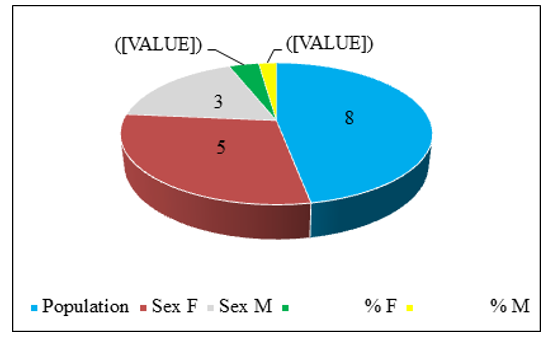
Figure 2: Participating Subjects of Teachers by Gender
The most significant results obtained in the observations made by seven of the teachers are presented, they always comply orienting and emphasizing the objectives of the class in their pedagogical interventions. The objectives are projected as a guiding and directing category; also, as a future action of aspiration of orientation, in accordance with the socially programmed objectives, which the student makes his own consciously.
In relation to whether teachers use the methods of science during classes in their pedagogical interventions, five of these always comply with these activities so essential for science by virtue of the complex and dynamic changes they have produced. In this regard, Oviedo (2012) emphasizes, "this set of new challenges configures a new scenario conducive to innovation and the development of new initiatives by teachers" (p. 14) [26].
As for whether teachers are innovative throughout the teaching-learning process in their classes, five teachers always comply. The pedagogical intervention to improve didactics must be an innovative organization, dedicated to the correct use of innovative methods as an assertive, leading, creative personal attribute, with concrete actions and objectives, as a need to face the needs given in the teaching-learning process [30].
On the other hand, if teachers apply the pedagogical principles of didactics during their interventions in their classes, five always comply, in accordance with the ethical principles, responsibility, perseverance, which contribute to the strengthening of the personal emotional, spiritual, and corporal growth of the students of the Degree in Physical Culture, of the University of Sonora (UNISON).
About whether teachers use the structural categories of didactics during their pedagogical interventions, six teachers always comply with the objective components, contents, methods, forms, didactic strategies didactic means, evaluation. They lead to a better performance of the pedagogical intervention.
Table 3 : Results of Observation During the Pedagogical Intervention to Improve Didactics
|
No |
Activities to observe |
They always comply (5) |
Sometimes they comply (3) |
Does not comply (1) |
|
1 |
Teachers guide and emphasize the objectives of the class in their pedagogical interventions. |
7 |
1 |
0 |
|
2 |
Teachers relate the contents to science during classes in their pedagogical interventions. |
4 |
3 |
1 |
|
3 |
Teachers use the methods of science during classes in their pedagogical interventions. |
5 |
2 |
1 |
|
4 |
Teachers link theory with praxis, according to the pillars of education in their pedagogical interventions. |
4 |
4 |
0 |
|
5 |
Teachers are promoters of analysis, synthesis, reflection, and interpretation to improve didactics in pedagogical work. |
3 |
3 |
2 |
|
6 |
Teachers develop cultural, artistic, constructivist and humanist thinking using the scientific method in their pedagogical interventions. |
4 |
4 |
0 |
|
7 |
Teachers are innovative throughout the teaching-learning process in their pedagogical interventions during their classes this section is linked to the vision of the University of Sonora. |
5 |
3 |
0 |
|
8 |
Teachers apply the pedagogical principles of didactics during their interventions in their classes according to the mission of the Universidad Sonora. |
5 |
3 |
0 |
|
9 |
Teachers use the structural categories of didactics during their pedagogical interventions. |
6 |
2 |
0 |
|
10 |
Teachers promote scientific and innovative culture in students through their pedagogical interventions. |
4 |
3 |
1 |
According to the results of the statisticians applied to the observations of the eight teachers, the population mean is 4.7 with the required normality, for a standard deviation in relation to the mean value 1.16; that is, according to the classes observed in general, teachers always comply with the structural categories of didactics such as: objectives, contents, methods, forms, didactic strategies, didactic means, evaluation. In addition, the confidence level is (90%), with a coefficient of variation is 0.25. Check in Table 3.

Figure 3: Statistical Results of Observations at the Stage at the Final Stage
According to the most significant results found related to the questionnaire applied to the students of the Bachelor of Physical Culture, we detected that (0.58%), of the students investigated consider that teachers do not always apply science in the contents of their class subjects.
The answers offered by the students in question number two on, if teachers tend to promote analysis, synthesis, reflection, and interpretation to improve subjects during classes so (0.52%), state that during their classes it is possible to perform analysis, synthesis, reflection, and interpretation to improve subjects during classes.
In question three of the questionnaire, we found that teachers are innovative during the application of their classes during their intervention of the teaching-learning process with the (0.52%).
In relation to question four asked to those investigated, we found the following results (0.52%), expressed those teachers do not contribute to promoting scientific and innovative culture through their pedagogical interventions, being considered an interesting fact, because science allows us to make decisions to accept or reject scientific theories based on the results that are significant.
As a result of question five of the questionnaire, they provided us with the following data (0.55%), they answered that teachers do not promote scientific culture, for this reason, this perception that students have would allow us to make decisions in accepted ways to advance in the cultural and historical thinking that corresponds to live in this XXI century.
Finally, the students provide us with their criteria, if the teachers apply the objectives, methods, didactic strategies, teaching means and evaluation in an accepted way the (0.52%) expressed that the teachers do comply with the structural components of the teaching-learning process.
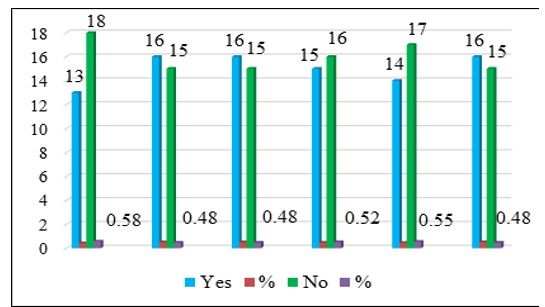
Figure 4: Statistical Results of the Questionnaire at the Stage in the Final Stage
Discussion
Many of the teachers investigated during their pedagogical intervention do not apply science, seen in this way this work does not seek to guide the importance of science and innovation as a change to improve the attitude in the agents that participate in the teaching-learning process, allowing the emergence of new ideas, answers and perspectives, as the needs and difficulties that we are going to look for in the university complex context where we are located [15].
Pedagogical intervention is unavoidable in scientific disciplines, in particular didactics, contribute to the contribution not only of knowledge in the field of education, but they must also promote teaching and learning as an essential means to transmit science and innovation.
In this regard, pedagogical intervention is the intentional action that develops in the educational task to comply with the structural categories of didactics such as objectives, contents, methods, forms, didactic strategies didactic means, evaluation to justify the foundations of knowledge, according to the operation pedagogical intervention to improve didactics through science and innovation [32].
Such broad issues tend to dimension the role of statements that have to do with the "duty to be" effective, efficient and effective teacher within the classroom in search of the desired educational quality; in this sense, it may happen that teachers lack resources of science as a paradigm of knowledge and innovator and leave behind traditional and reproductive teaching, where science and innovation for pedagogical intervention, contribute to develop a dynamic process and provide the quality of teaching.
It is important to analyze the relationship between science and innovation, as the role attributed to didactic activities within the innovative process to improve didactics in pedagogical intervention, for many innovators is to invent something new for us to improve, propose, solutions that favor designing a relationship with the theoretical and empirical methods of educational science, propose new didactic resources involving individually and in groups students so that they manifest their perspectives of analysis, reflection, may or may not be innovation (p. 21) [5].
For this reason, teachers and educational authorities work for the well-being of development and the integral formation of students, with the purpose of improving didactics in pedagogical interventions, to carry out a reform from didactic planning based on science and innovation to redirect educational quality.
In other words, the mission of the University of Sonora is to train integral and competent professionals with high quality and relevance, nationally and internationally, linked to teaching with the generation, as well as the application and transfer of knowledge and technology (p. 53) [23].
Conclusions
By way of conclusion, we can affirm that pedagogical interventions are alternatives to improve didactics through science and innovation, being a way that teachers have to propose new ways to promote in students a change of a culture of knowledge; in addition to having a teaching-learning process with a scientific character, according to the structural categories of didactics.
Pedagogical interventions provide solutions for teaching work as a significant means in the integral formation of students, based on the theoretical and empirical methods of science to improve the teaching-learning process.
References
- Abreu, O., Gallegos, M.C., Jácome, J. G., & Martinez, R. J. (2017). Didactics: Epistemology and Definition in the Faculty of Administrative and Economic Sciences of the Technical University of Northern Ecuador. University education, 10(3), 81-92.
- Albert, M. J. (2007). Educational research. Editorial. Mc Graw Hill.
- Arias Monge, M., & Navarro Camacho, M. (2017).Epistemology, science and scientific education: premises, questions and reflections to think science culture. Actualidades Investigativas en Educación, 17(3), 774-794.
- Arteaga, E.,Arteaga, L.A., & Del Sol, J. L. (2016). The teaching of science in the new millennium. Challenges and suggestions. Journal of the University and Society,8(1),169–176.
- Barraza, A. (2005). A conceptual understanding of educational innovation. Journal of Educational Innovation, 5(28), 19-31.
- Benitez, L. (2016). Evaluation and pedagogical intervention in teacher training. A reflective action in the classroom. IE Journal of Educational Research by REDIECH, 7(12), 42-51.
- Briscoe, C. (1991). Dynamic interactions between beliefs, role metaphors, and teaching practices: a case study of teacher change. Science Education, 75(2), 185-199.
- Bunge, M. (2017). The scientific approach. Revista Cubana de Salud Pública, 43(3),1-29.
- Carbonell, S. J. (2001). The adventure of innovating. Change in school. Revista de Pedagogía, 24(71), 469-473.
- De Longhi, A. L., Ferreyra, A, Paz, A., Bermúdez, A., Solís, M., Vaudagna, E., Cortez, M., Lozano, L., & Parietti, M. (2004). Innovative teaching strategies for the teaching of natural sciences in school. UNIVERSITAS. Editorial. University Scientist of Córdoba.
- Diaz, A. (1998). Research in the field of didactics. Historical models. Educational profiles. Scientific Journals of Latin America, (80), 1-21.
- Ezpeleta, J. (2004). Educational innovations. Reflections on contexts in its implementation. Revista Mexicana de Investigación Educativa, 9(21),403-424.
- Fernández, I., Vega, J., & Gutierrez, A. (2011). Science and Innovation. A complex and evolutionary relationship. Arbor Journal Science, Thought and Culture, 187(752), 1077-1089.
- Fourez, G. (2008). How knowledge develops. Epistemology from a socio-constructivist approach. Editorial. Narcea.
- Fuertes, C. (2014). Teaching proposals for the teaching of Social Sciences in Higher Education. Revista de la Facultad de Educación de Albacete, 29(2), 141-157.
- Garcia, L. (2008). Epistemological approach to the concept of science: a basic proposal by Kuhn, Popper, Lakatos & Feyerabend. Scaffolding Magazine, 4(8), 185-202.
- González, J. J. & González, A. (2017 a, b). Educational innovation and its scientific dissemination. Thematic collection. Editorial. Catholic University of Murcia, 1-166.
- Guerra, K., Pérez, R., & Fornet, E. (2014). Proposal of a technology for the management of innovation projects in the territorial system of science and innovation inCuba. Revista Cubana de Información en Ciencias de la Salud, 25(4),367-381.
- Macanchí, M. L., Orozco, B.M., & Campoverde, M. A. (2020). Educational, pedagogical and didactic innovation. Conception for practice in higher education. Revista Universidad y Sociedad, 12(1), 396-403.
- Margalef, L., & Arenas, A. (2006). What do we mean by educational innovation? a purpose of curriculum development. Educational Perspective Magazine, Teacher Training, (47),13-31.
- Mellado, V. (1996). Conception and practices in the classroom of science teachers, in initial training of primary and secondary. Journal of Research and Didactic Experiences 14(3), 289-302.
- Mexico. Ministry of Public Education (2009). Primary Basic Education Curriculum. Curriculum. Test stage. Editorial. SEP.
- Mexico. University of Sonora. (2017). Institutional Development Plan 2017-2021. Commitment to academic quality, institutionalization and sustainable development of society. Editorial. University of Sonora.
- Monserrat, J. (1987). Evolutionary epistemology and theory of science. Editorial. University of Comillas.
- Ortiz, E.A. (2015). Evaluate the scientific impact on educational research through a case study. Electronic Journal of Educational Research, 17(2), 89-100.
- Oviedo, P. E. (2012). Innovate teaching. Strategies derivedfrom research.
- Perez, A., and Zagalaz, M. L. (2001). Creativity course for Physical Education teachers. Magazine EFDeportes, 6 (31), 1-1.
- Pierre, J., & Pallán, C. (1979). Research in Education: Its importance for politics. Journal of Higher Education (32),1-17.
- Sánchez, J.M. (2005). Institutional educational innovation and its impact on schools in Castilla-La Mancha. REICE. Revista Iberoamericana sobre Calidad, Eficacia y Cambio en la Educación, 3(1), 638-664.
- Sánchez, M., Escamilla, J., & Sánchez, M. (2018). ¿What is innovation in higher education. Academic reflections on educational innovation. (Presentation). Perspectives of educational innovation in universities in Mexico: Experiences and reflections of RIE 360. Editorial. RIE 360
- Tierney, W. G., & Lanford, M. (2016). Conceptualization of innovation in higher education. In M.B. Paulsen (Ed.), Higher Education: Manual of Theory and Research.
- Touriñán, J.M. (2011). Educational Intervention, Pedagogical Intervention and Education: The PedagogicalPerspective. Portuguese Journal of Pedagogy, 283-307.
- Zimmy, G. H. (1961). Method in experimental psychology. Editorial. Ronal Press.