

Advances in Bioengineering and Biomedical Science Research(ABBSR)
ISSN: 2640-4133 | DOI: 10.33140/ABBSR
Impact Factor: 1.7

Research Article - (2019) Volume 2, Issue 3
Nootropic and Anti-Stress Effects of Allium Cepa Bulb and Quercetin in Male Mice
22 Department of Food and Biomedical Engineering, NED University of Engineering and Technology, Karac, Pakistan
3Department of Statistics, Bahauddin Zakariya University, Multan, Pakistan
4Department of Veterinary Sciences, Bahauddin Zakariya University, Multan, Pakistan
5Department of Biomedical Engineering, Sir Syed University of Engineering and Technology, Karachi, Pakistan
Received Date: May 14, 2019 / Accepted Date: May 21, 2019 / Published Date: May 28, 2019
Copyright: ©Copyright: ©2019 Noreen Samad, et al. This is an open-access article distributed under the terms of the Creative Commons Attribution License, which permits unrestricted use, distribution, and reproduction in any medium, provided the original author and source are credited.
Abstract
Allium cepa L (A.cepa; onion) is a traditional nutraceutical and medicinal plant that contains phenolics and flavonoids that have potential anti-inflammatory, anti-cholesterol, anticancer, and antioxidant properties. Quercetin is a plant-derived flavonoid found in fruits, vegetables, leaves and grains. It also has antioxidant, anti-inflammatory and antidepressant effects. The present study is aimed to investigate the anti-stress and nootropic effects of A.cepa bulb and quercetin in mice. Animals were divided into control and 2 test groups. Control mice were received drinking water while test groups were treated with suspension of grinded onion bulb in water (200 mg/kg; test group 1) and intraperitoneal injection of quercetin dissolved in ethanol (20mg/kg/ ml; test group 2) daily for 14 days. Behavioral activities of animals were monitored 14 days post administration of A.cepa and quercetin. Antidepressant effects were measured by forced swimming test (FST). Anxiolytic effects were monitored by using light dark activity (LDA) test and elevated plus maze (EPM) test and memory functions were assessed by morris water maze (MWM) test. Results showed that both A.cepa bulb and quercetin increased time spent in light box and open arm of LDA and EPM, exhibited anxiolytic effect than control group. A significant increase in immobility time was observed in FST in test groups than control suggesting antidepressant like effects. Moreover, nootropic effect were assessed by MWM showed significant increased in latency escape while observing short and long term memory for both test groups than control. It is suggested that both A.cepa and quercetin have anti-stress and nootropic effects.
Keywords
Allium cepa, Quercetin, Depression, Anxiety, Memory function
Introduction
A person can incident a number of emotionally affecting stresses in daily life including acute stress such as exposure to noise, crowd, or public appearance to chronic stress like persistent financial dilemma, ongoing work stress, or aloneness. Many studies have reported stress as a predisposing and precipitating factor of deficits [1,2]. On the other hand, it is generally accepted that stressful events are very well remembered [3,4]. Studies with short term exposure to stress have been shown to facilitate learning and memory performance both in animals and humans [5-7]. This increase in memory performance has been ascribed to hormones (such as; corticotropin releasing factor, adrenocorticotropic hormone, corticosteroid) and neurotransmitters (such as; serotonin) released under stress condition. The activated sympathetic nervous system and hypothalamic-pituitary-adrenal (HPA) axis cause a deluge of arousal that is thought to result in memory association following the exposure of stress condition [8].
Stress is one of the most important causative factors in the stimulation of intracellular pathways leading to the increased free radical generation. The oxidative stress resulting from increased intracellular reactive oxygen species, such as superoxide, hydrogen peroxide, and hydroxyl radicals, disturbs homeostasis within the neurons and can lead to cell death [9]. Many studies have shown that restraint stress induces increased lipid peroxidation and increased or decreased antioxidant enzyme activities in different brain regions of rodents depending on the severity and duration of immobilization stress protocol [6,10-12]. The central nervous system has traditionally been considered as a target site for free radical damage because brain contains abundant lipid content and consumes high amount of oxygen [13].
The psychological deficits associated with stressful events may be alleviated using therapeutic strategies involving medicinal and dietary phyto-antioxidants. One such neutraceutical is Allium cepa (A.cepa; onion) which is widely cultivated in number of Asian countries. A.cepa, a bulbous plant of genus Allium has potential to reduce the risk of various chronic diseases, such as cardiovascular, cancer, asthma, diabetes, stress etc [14,15]. Shri and Bora reported significant neuroprotective potential of A.cepa in ischaemia reperfusion injury induced in mice [16]. Most of these pharmacotherapeutic effects of A.cepa have been attributed to the presence of various phytoconstituents such as flavonoids, organonosulphur compounds and anthocyanins [17-21].
Quercetin (3,5,7,3’,4’-pentahydroxyflavone) is a flavonoid that possesses free radical scavenging properties found in a number of plant-based foods, including red onions, tea, apples, capers, broccoli, parsley, lovage, berries, and red grapes [22,23]. Quercetin has beneficial effects on human health for its broad pharmacological properties, such as anti-inflammation, antidepressant and antioxidation and can protect from oxidative injury by its ability to modulate intracellular signals and promote cellular survival [24-26]. Quercetin has been reported to improve motor coordination and anxiety, decrease the proliferation of microglia and increase the number of astrocytes in lesion core in a 3-nitropropionic acid-induced rat model of Huntington’s disease [27]. In addition, quercetin has been shown to protect against amyloid-β-induced oxidative damage in animal models of Alzheimer’s disease [28]. Furthermore, it has been reported that quercetin has protective effects against cerebral ischemic injuries [29,30].
The present study is aimed to evaluate the anti-stress and nootropic effects of A.cepa bulb suspension at dosage (200 mg/kg) and quercetin (20 mg/kg) in male mice. This dose and duration was selected because antioxidant property of A.cepa and quercetin has been documented previously [25,31].
Material and methods
Thirty male Albino Wistar mice weighing 20 ± 2 g purchased from University of Lahore, Lahore, Pakistan were used in the study. The animals were housed individually to avoid social interaction effect under a 12 h light-dark cycle (light on at 6:00 h) and controlled room temperature (22 ± 2 °C) with free access to cubes of standard rodent diet [A control diet (4.47 kcal/g) containing 25% fat, 50% carbohydrate, and 25% protein] and tap water. Before starting experimental work, animals were subjected to 1 week of acclimation period and to various handling procedures in order to reduce the stress of novelty and handling [32]. All experiments were approved by Animal Resource Facility, University of Lahore, Lahore-Pakistan, and Institutional Ethical Committee and performed in strict accordance with National Institute of Health Guide for Care and Use of Laboratory Animals (Publication No. 85-23, revised 1985).
Drug Preparation
Fresh red onion were dried in shed and then grinded and used as suspension in water at a dose of 200 mg/kg. Quercetin (20 mg/ kg) dissolved in water and administered to experimental animals. Quercetin was purchased from Sigma Aldrich (U.S).
Treatment Schedule
Animals were randomly divided into three groups (n=10) and treated for 14 days respectively: (1) Control group (water treated) (2) A.cepa (treated with watery suspension of A.cepa (200mg/kg)) (3) Quercetin (20 mg/kg; intraperitoneally). Animals were treated with their respective treatment daily for 2 weeks from 0900 to 1300 h. At the end of treatment animals were subjected to behavioral analysis.
Elevated plus maze (EPM) test and light dark activity (LDA) test were performed to measure anxiety. Forced swimming test was performed to determine depression. Morris water maze test was conducted to assess cognitive abilities. All experiments were carried out between 0900 and1600 h.
Behavioral Analysis
Morris Water Maze (MWM) Test
Morris Water Maze (MWM) test was performed to examine the effects on spatial memory. Spatial memory was determined by noting the latency time (time in seconds taken by the rats to reach a non-visible platform). It is a circular pool of water with a diameter of 45 cm, height of 37 cm, and depth of 12 cm. The pool is a metal cylinder painted white on the inner surface. The escape platform is also made of metal cylinder with flat metallic top having a surface diameter of 8 cm, and it is placed 2 cm below the surface of water during water maze training. The pool is filled with water (23±2 °C) which was made opaque with milk in order to obscure the platform to allow proficient tracking of the swim paths of the rats [33]. In our experiment, we have assessed learning acquisition, the reference (long-term) memory and working (short-term) memory in terms of latency to locate the escape platform. The test is based on two phases: the training phase and the test phase. Memory functions of rats were tested by noting down the retention latency. The cut off time was 2 min for each session. Initially, the training session was performed during which each rat was placed into the water in such a way that their face was towards the wall of the tank. Each animal was given 120 s to find and mount onto the hidden platform by using distal extra maze cues. Cues must be visible and useful to rats. They must be far enough to require the rat to use spatial analysis, rather than association, to solve the task. If the rat located the platform it was allowed to stay on it for 10 s. Time on the platform must be sufficient for them to feel the location and to see the exact position. If it failed to locate the platform during the allocated time, then it was guided gently onto the platform. The test consisted of three trials: training, STM (short-term memory) and LTM (long-term memory). After training of animals learning acquisition was tested immediately by noting the initial latency (IL; the time taken by each rat to relocate the hidden platform immediately after training). STM was assessed 60 min after training session, and LTM was measured after 24 h of training [34].
Light-Dark Activity (LDA) Test
The test was conducted in a locally-made compartment box [35]. The compartment of equal size (26x26x26 cm), with an access (12x12 cm) between the compartments, differed in their sensory properties. Walls of on compartment were light (transparent) and other dark (Black). A rat placed in this box expected to pass more time in the dark compartment. To determine the activity a rat was introduced via the dark compartment of the box. Time spent in the light compartment was monitored for a cut off time of 5 minutes.
Elevated Plus Maze (EPM) Test
Anxiety was assessed by EPM according to the method as described by Naqvi, et al. [36]. The apparatus used in the present study was consisted of two closed arms and two open arm s with same dimensions (50 × 10 cm). Close arms were enclosed by 40 cm high walls. The arms were connected with a central square (10 × 10 cm) to give the apparatus a plus sign appearance. The maze was elevated 60 cm above the floor. To monitor the activity, rats were individually placed in the central square facing an enclosed arm and the time spent in open arm was recorded for 5 minutes.
Forced Swimming Test (FST)
The FST apparatus comprised of a glass tank with 56 cm height and 30 cm width, which contained water at the height of 22 cm and temperature of 25 °C. In this glass tank animals were individually forced to swim for 5 min. The height of water was selected so that animal was prevented from touching the bottom of the glass tank and also to prevent its escape from the glass tank. The FST is commonly used as standard pharmacological model for evaluating depression like symptoms in rats [37]. When the rats are placed in an inescapable chamber which is filled with water then the development of the state of immobility reflects the cessation of persistent escape directed behavior. In this test animal’s swimming behavior was monitored which can be defined as movement throughout the swim chamber (glass tank). The immobility time was monitored. The animal is considered immobile when it makes no further attempts to escape and only tries to keep its head above the water.
Statistical Analysis
The results are presented as mean ± SD for ten animals in each group. Data on MWM, LDA, EPM and FST was analyzed by one-way (ANOVA). Post hoc analysis was performed by Tukey’s test. P values < 0.05 were taken as significant.
Results
Figure 1 shows immobility time in force swimming test in animals treated with A.cepa and quercetin. Data analyzed by one-way ANOVA showed significant (F2,27=6.00 P<0.05) difference between control and test (A.cepa and quercetin) groups. Tukey’s test showed that immobility time was decreased in both A.cepa and quercetin treated animals than water treated control animals
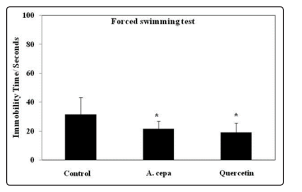
Figure 1: Immobility time in force swimming test in animals treated with A.cepa and quercetin. Values are mean + S.D. (n=10). Significant differences by Tukey’s test: *P<0.05 from control animals following One way ANOVA
Figure 2 shows time spent in light compartment in light dark activity box in animals treated with A.cepa, and quercetin. Data analyzed by one-way ANOVA showed significant (F2,27=35.55 P<0.05) difference between control and test (A.cepa and quercetin) groups. Tukey’s test showed that entries in light box were increased in both A.cepa and quercetin treated animals than control.
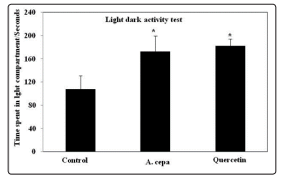
Figure 2: Time spent in light box in animals treated with A.cepa and quercetin. Values are mean + S.D. (n=10). Significant differences by Tukey’s test: *P<0.05 from control animals following One way ANOVA
Figure 3 shows the time spent in the open arm of elevated plus maze in animals treated with A.cepa and quercetin. Data analyzed by one- way ANOVA showed significant (F2,27=31.83 P<0.05) difference between control and test (A.cepa and quercetin) groups. Tukey’s test showed that time spent in open arm was increased in both A.cepa and quercetin treated animals than control.
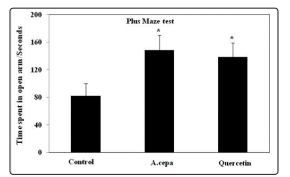
Figure 3: Time spent in open arm in animals treated with A.cepa and quercetin. Values are mean + S.D. (n=10). Significant differences by Tukey’s test: *P<0.05 from control animals following One way ANOVA
Figure 4 shows MWM activity in vehicle, A.cepa and quercetin. The MWM activity is expressed as time to find the hidden platform performed immediately after training (acquisition, Figure 4a), after 1 h (short term memory, Figure 4b) and after 24 h (long term memory). Result of acquisition (training) analyzed by one way ANOVA exhibited a non-significant effect (F2,27=2.89 P>0.05) of both A.cepa and Quercetin. One way- ANOVA for short term memory showed significant effect (F2,27=18.309 P<0.05) of both tests. Long term memory was analyzed by one-way ANOVA showed significant effects (F2,27=50.29 P<0.05). Post hoc analysis by Tuckey’s test showed that pre-administration of A.cepa and quercetin enhance the memory and comparably decreased the time to reach to hidden platform in during acquisition. Whereas, in short term memory escape latency was significantly reduced in A.cepa and quercetin treated animals than control. A.cepa and quercetin also decreased the time to reach to hidden platform during 24 hrs time.
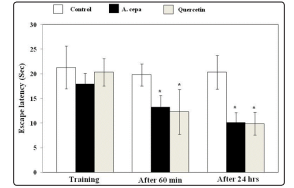
Figure 4: Effect of A.cepa and quecein on memory of mice. Values are mean + S.D. (n=10). Significant differences by Tukey’s test: *P<0.05 from control animals following One way ANOVA

Discussion
Plants, that are the part of human diet and are often used as alternative medicines, provide numerous ingredients which might interact functionally with different organ systems in human body. Among these plant-derived compounds are flavonoids which recently have attracted interest because of their biological activities to human health, also because of their influence on central nervous system effects [38]. The influence of flavonoids on anxiety, depression, nociception, learning and memory processes has been reported [39-42]. The purpose of the present study is to evaluate the anti-stress and nootropic effects of A.cepa and quercetin following repeated administration in male mice.
We employed FST to find out antidepressant like effects. The immobility displayed by rodents when subjected to an unavoidable stress such as forced swimming is thought to reflect a state of despair or lowered mood, which is thought to reflect depressive illness in humans [43]. Additionally, immobility time has been shown to be reduced by treatment with antidepressant drugs [44]. However subsequent studies has been showed that food, foodstuff and their active bioactive component when tested on FST, decreased the immobility time and produced antidepressant like effects [6,43,45,46]. The present study has shown that A.cepa and quercetin significantly reduced the immobility time in FST after repeated administration to rats at a dosage of 200 mg/kg and 20mg/kg of body weight respectively for 14 days (Figure 1). One of the major functional ingredients in A.cepa is flavonoids, especially quercetin glycosides [47]. Several studies have proposed an antidepressant-like effect of such quercetin glycosides as hyperoside, isoquercitrin and rutin from the results of FST studies [48-50]. Additionally, quercetin glycosides are mostly hydrolyzed into their aglycons by mucosal and bacterial enzymes in the intestines, and are then converted to conjugated metabolites during the absorption process. This conversion during absorption may indicate that the active metabolites responsible for the antidepressant- like effect of quercetin glycosides are the conjugated forms rather than the glycosides themselves [51]. Moreover, quercetin metabolites have recently been found in the brain tissues of rodents after their oral administration [52]. These facts strongly suggest that the quercetin glycosides in onion at least partly contributed to the antidepressant-like effect of onion.
FST has been reported to induce such behavioral and physiological effects as activation of the HPA axis and an increase in the plasma corticosterone levels [53,54]. Pretreating rat with the antidepressant drugs, desipramine and imipramine, which significantly reduced immobility in FST and attenuated the FST-associated elevation of the blood corticosterone levels [44,54]. Although in the present study we did not estimate the plasma corticosterone levels but the observed results validated that quercetin and other flavonoid present in 200mg/kg dosage of A.cepa and alone quercetin with 20mg/kg in the present study (Figure 1) have similar effects on FST with their potential antioxidant mechanism which are involved in the attenuation of hyperactivity of HPA-axis and produce antidepressant effects. Exposure to the elevated plus-maze and light-dark activity test induces behavioral and physiological effects in rodents consistent with fear/anxiety [55]. Our results showed that time spent in the light compartment (Figure 2) and open arm (Figure 3) is equally increased in A.cepa and quercetin treated animals than vehicle, suggesting anxiolytic effects.
Exposure to the elevated plus-maze and light-dark transition test activate the HPA-axis and increased the circulating levels of corticosterone [55]. Besides benzodiazepine derivatives, flavonoid compounds have shown anxiolytic effects in experimental models associated with increase in the anxiety behavior [56]. Recently it has been reported that methanolic extract of A.cepa at dosage 200mg/kg and 400 mg/kg significantly increased time spent in the light compartment and open arm [57]. In addition, the anxiolytic-like behavior of quercetin has been recently reported in a literature and was reported to reduce the anxiogenic-state induced by cadmium intoxication [58]. In fact, from the pharmacological targets of flavonoids involving their ability to interact with the GABAA receptors, key-receptors in the anxiety regulation [59,60]. It is suggested that both A.cepa and quercetin not only have antioxidant effects and attenuate the hyperactivity of HPA-axis but also interact with various receptors in the nervous system for anxiolytic effects.
Recently, polyphenolic compounds have received considerable attention since they have been shown to protect neurons against a variety of experimental neurodegenerative conditions including cognitive deficit [61]. Moreover, mice administered with quercetin supplements showed increased learning and memory function in healthy mice when compared to untreated mice [62]. However, quercetin (500 mg/day) administration for 12 weeks failed to exhibit a significant effect on neurocognitive functioning in humans, raising concern the clinical translation of results from in vitro and in vivo animal studies [63]. Quercetin enhanced the spatial memory in aged and ethanol intoxicated mice through it antioxidant and scavenging properties [64]. Mohammadi, et al. (2014) reported that quercetin alleviated the deleterious effects of chronic stress on learning and memory in rats, improving its cognitive deficit by suppressing the oxidative stress and plasma corticosterone level. Recently Park, et al. (2015) reported that ethyl acetate fraction from A.cepa could be efficacious in improving cognitive function. Recently, A.cepa is also involved in enhancing memory deficits in animals exposed to aluminium chloride by inhibition of acetylcholine esterase. Figure 4 demonstrated that both A.cepa and quercetin have nootropic effects by inhibition of acetylcholine esterase and hyperactivation of HPA-Axis followed by their potential antioxidant mechanism
Conclusion
Taking into consideration the above-mentioned findings, both A.cepa and quercetin acts not only as a powerful antioxidant but also have nootropic, antidepressant and anxiolytic properties, and most notably, has a close interaction with the activation of HPA-axis, up-regulation of acetylcholine esterase, which can be one of the target mechanisms to protect cognitive deterioration, and stress-like behaviors. In addition, the present study also highlights the fact that stressful events can be useful for daily life as it can increase the memory function and this ability can be more enhanced by the supplementation of A.cepa and quercetin [65-67].References
-
- Checkley S (1996) The neuroendocrinology of depression and chronic stress. Br Med Bull 52: 597-617.
- Goyal R, Anil K (2007) Protective effect of alprazolam in acute immobilization stress-induced certain behavioral and biochemical alterations in mice. Pharmacol Rep 59: 284-290.
- Haider S, Naqvi F, Batool Z, Tabassum S, Sadir S, et al. (2015) Pretreatment with curcumin attenuates anxiety while strengthens memory performance after one short stress experience in male rats. Brain Res Bull 115: 1-8.
- Emad S, Qadeer S, Sadaf S, Batool Z, Haider S, et al. (2017) Attenuation of stress induced memory deficits by nonsteroidal anti-inflammatory drugs (NSAIDs) in rats: Role of antioxidant enzymes. Pharmacol Rep 69: 300-305.
- Oitzl MS, Reichardt HM, de Joels M, Kloet ER (2001) Point mutation in the mouse glucocorticoid receptor preventing DNA binding impairs spatial memory. Proc Natl Acad Sci 98: 12790-12795.
- Haider S, Tabassum S, Perveen T (2016) Scopolamine-induced greater alterations in neurochemical profile and increased oxidative stress demonstrated a better model of dementia: A comparative study. Brain Res Bull 127: 234-247.
- Cahill L, Gorski L, Le K (2003) Enhanced human memory consolidation with postlearning stress: interaction with the degree of arousal at encoding. Learn Mem 10: 270-274.
- Joëls M, Pu Z, Wiegert O, Oitzl MS, Krugers HJ (2006) Learning under stress: how does it work? Trends Cogn Sci 10: 152-158.
- Uttara B, Singh AV, Zamboni P, Mahajan RT (2009) Oxidative stress and neurodegenerative diseases: a review of upstream and downstream antioxidant therapeutic options. Curr Neuropharmacol 7: 65-74.
- Atif F, Yousuf S, Agrawal SK (2008) Restraint stress-induced oxidative damage and its amelioration with selenium. Eur J Pharmacol 600: 59-63.
- Ahmad A, Rasheed N, Chand K, Maurya R, Banu N, et al. (2012) Restraint stress-induced central monoaminergic& oxidative changes inrats & their prevention by novel Ocimumsanctum compounds. Indian J Med Res 135: 548-554.
- García-Fernández M, Castilla-Ortega E, Pedraza C, Blanco E, Hurtado-Guerrero I, et al. (2012) Chronic immobilization in the malpar1 knockout mice increases oxidative stress in the hippocampus. Int J Neurosci 122: 583-589
- Halliwell B, Gutteridge JMC (1985) Oxygen radicals and the nervous system. Trends Neurosci 8: 22-26.
- Stajner D, Varga IS (2003) An evaluation of the antioxidant abilities of Allium species. Acta Biologica Szegediensis 47: 103-106.
- Gabler NK, Ostrowska E, Sterling SJ, Jones RB, Tatham BG, et al. (2005) Consumption of raw brown onions variably modulate plasma lipid profile and lipoprotein oxidation in pigs fed a high-fat diet. J Sci Food Agric 85: 154-160.
- Shri R, Bora KS (2008) Neuroprotective effect of methanolic extract of Allium cepa L. on ischemia and reperfusion-induced cerebral injury. Fitoterapia 79: 86-96.
- Cook NC, Samman S (1996) Flavonoids-chemistry, metabolism, cardioprotective effects, and dietary sources. J Nutr Biochem 7: 66-76.
- Kris-Etherton PM, Hecker KD, Bonanome A, Coval SM, Binkoski AE, et al. (2002) Bioactive compounds in foods: their role in the prevention of cardiovascular disease and cancer. Am J Med 113: 71S-88S.
- Dorsch W, Wagner H (1991) New antiasthmatic drugs from traditional medicine? Int Arch Allergy Appl Immunol 94: 262-265.
- Fitzpatrick DF, Hirschfield SL, Coffey RG (1993) Endothelium-dependent vasorelaxing activity of wine and other grape products. Am J Physiol 265: 774-778.
- Goldman IL, Kopelberg M, Debaene JE, Schwartz BS (1996) Antiplatelet activity in onion (Allium cepa) is sulfur dependent. Thromb Haemost 76: 450-452.
- Nishimuro H, Ohnishi H, Sato M, Ohnishi-Kameyama M, Matsunaga I, et al. (2015) Estimated daily intake and seasonal food sources of quercetin in Japan. Nutrients 7: 2345-2358.
- Guo Y, Mah E, Davis CG, Jalili T, Ferruzzi MG, et al. (2013) Dietary fat increases quercetin bioavailability in overweight adults. Mol Nutr Food Res 57: 896-905.
- Kobori M, Takahashi Y, Sakurai M, Akimoto Y, Tsushida T, et al. (2016) Quercetin suppresses immune cell accumulation and improves mitochondrial gene expression in adipose tissue of diet-induced obese mice. Mol Nutr Food Res 60: 300-312.
- Haleagrahara N, Radhakrishnan A, Lee N, Kumar P (2009) Flavonoid quercetin protects against swimming stress-induced changes in oxidative biomarkers in the hypothalamus of rats. Eur J Pharmacol 621: 46-52.
- Stewart LK, Soileau JL, Ribnicky D, Wang ZQ, Raskin I, et al. (2008) Quercetin transiently increases energy expenditure but persistently decreases circulating markers of inflammation in C57BL/6J mice fed a high-fat diet. Metabolism 57: S39-S46.
- Chakraborty J, Singh R, Dutta D, Naskar A, Rajamma U, et al. (2014) Quercetin improves behavioral deficiencies, restores astrocytes and microglia, and reduces serotonin metabolism in 3-nitropropionic acid-induced rat model of Huntington’s Disease. CNS Neurosci Ther 20: 10-19.
- Pocernich CB, Lange ML, Sultana R, Butterfield DA (2011) Nutritional approaches to modulate oxidative stress in Alzheimer’s disease. Curr Alzheimer Res 8: 452-469.
- Chang HC, Yang YR, Wang PS, Wang RY (2014) Quercetin enhances exercise-mediated neuroprotective effects in brainischemic rats. Med Sci Sports Exerc 46: 1908-1916.
- Lei X, Chao H, Zhang Z, Lv J, Li S, et al. (2015) Neuroprotective effects of quercetin in a mouse model of brain ischemic/ reperfusion injury via anti-apoptotic mechanisms based on the Akt pathway. Mol Med Rep 12: 3688-3696
- Singh T, Goel RK (2015) Neuroprotective effect of Allium cepa L. in aluminium chloride induced neurotoxicity NeuroToxicology 49: 1-7
- Bocarsly ME, Barson JR, Hauca JM, Hoebel BG, Leibowitz SF, et al. (2012) Effects of perinatal exposure to palatable diets on body weight and sensitivity to drugs of abuse in rats. Physiol Behav 107: 568-575
- Haider S, Tabassum S, Ali S, Saleem S, Khan AK, et al. (2011) Age-related decreases in striatal DA produces cognitive deficits in male rats. J Pharm Nutri Sci 1: 20-27
- Haider S, Khaliq S, Tabassum S, Haleem DJ (2012) Role of Somatodendritic and postsynaptic 5-HT1A receptors on learning and memory functions in rats. Neurochem Res 37: 2161-2166
- Samad N, Haleem DJ (2009) Behavioral and neurochemical profile of m-CPP following exposure to single restraint stress in rat. Acta Neurol Belg 109: 24-31
- Naqvi F, Haider S, Batool Z, Perveen T, Haleem DJ (2012) Sub-chronic exposure to noise affects locomotor activity and produces anxiogenic and depressive like behavior in rats. Pharmacol Rep 64: 64-69
- Porsolt RD (1981) Behavioral despair. In ‘‘Antidepressants: Neurochemical, Behavioral and Clinical Perspectives,’’ eds. Enna SJ, Malick JB and Richelson E, Raven Press, New York 121-139
- Fernandez SP, Wasowski C, Loscalzo LM, Granger RE, Johnston GA, et al. (2006) Central nervous system depressant action of flavonoid glycosides. Eur J Pharmacol 539: 168-176
- Joshi D, Naidu PS, Singh A, Kulkarni SK (2005) Protective effect of quercetin on alcohol abstinence-induced anxiety and convulsions. J Med Food 8: 392-396
- Bhutada P, Mundhada Y, Bansod K, Ubgade A, Quazi M, et al. (2010) Reversal by quercetin of corticotrophin releasing factor induced anxiety- and depression-like effect in mice. Prog Neuropsychopharmacol Biol Psychiatry 34: 955-960
- Machado DG, Bettio LE, Cunha MP, Santos AR, Pizzolatti MG, et al. (2008) Antidepressant-like effect of rutin isolated from the ethanolic extract from Schinus molle L. in mice: evidence for the involvement of the serotonergic and noradrenergic systems. Eur J Pharmacol 587: 163-168
- Nassiri-Asl M, Moghbelinejad S, Abbasi E, Yonesi F, Haghighi MR, et al. (2013) Effects of quercetin on oxidative stress and memory retrieval in kindled rats. Epilepsy Behav 28: 151-155
- Sakakibara H, Yoshino S, Kawai Y, Terao J (2008) Antidepressant-like effect of onion (Allium cepa L.) powder in a rat behavioral model of depression. Biosci Biotechnol Biochem 72: 94-100
- Ishola IO, Akinleye MO, Oduola MD, Adeyemi OO (2016) Roles of monoaminergic, antioxidant defense and neuroendocrine systems in antidepressant-like effect of Cnestis ferruginea Vahl ex DC (Connaraceae) in rats. Biomed Pharmacother 83: 340-348
- Caccia S (2005) Antidepressant-like components of Hypericum perforatum extracts: An overview of their pharmacokinetics and metabolism. Curr Drug Metab 6: 531-543
- Elkhayat ES, Alorainy MS, El-Ashmawy IM, Fat’hi S (2016)Potential Antidepressant Constituents of Nigella sativa Seeds. Pharmacogn Mag 12: S27-S31.
- Sakakibara H, Honda Y, Nakagawa S Ashida H, Kanazawa K (2003) Simultaneous determination of all polyphenols in vegetables, fruits, and teas. J Agric Food Chem 51: 571-581
- Butterweck V, Jurgenliemk G, Nahrstedt A, Winterhoff H (2000) Flavonoids from Hypericum perforatum show antidepressant activity in the forced swimming test. Planta Med 66: 3-6.
- Butterweck V, Nishibe S, Sasaki T, Uchida M (2001) Antidepressant effects of Apocynum venetum leaves in a forced swimming test. Biol Pharm Bull 24: 848-851.
- Noldner M, Schotz K (2002) Rutin is essential for the antidepressant activity of Hypericum perforatum extracts in the forced swimming test. Planta Med 68: 577-580.
- Murota K, Terao J (2003) Antioxidative flavonoid quercetin: implication of its intestinal absorption and metabolism. Arch Biochem Biophys 417: 12-17.
- Paulke A, Schubert-Zsilavecz M, Wurglics M (2006) Determination of St. John’s wort flavonoid-metabolites in rat brain through high performance liquid chromatography coupled with fluorescence detection. J Chromatogr B Analyt Technol Biomed Life Sci 832: 109-113.
- Racca S, Spaccamiglio A, Esculapio P, Abbadessa G, Cangemi L, et al. (2005) Effects of swim stress and alpha-MSH acute pre-treatment on brain 5-HT transporter and corticosterone receptor. Pharmacol Biochem Behav 81: 894-900.
- Connor TJ, Kelliher P, Shen Y, Harkin A, Kelly JP, et al. (2000) Effect of subchronic antidepressant treatments on behavioral, neurochemical, and endocrine changes in the forced-swim test. Pharmacol Biochem Behav 65: 591-597.
- Rodgers RJ, Haller J, Holmes A, Halasz J, Walton TJ, et al. (1999) Corticosterone response to the plus-maze: high correlation with risk assessment in rats and mice. Physiol Behav 68: 47-53.
- Gutierres JM, Carvalho FB, Schetinge MR, Marisco P, Agostinho P, et al. (2014b) Neuroprotective effect of anthocyanins on acetylcholinesterase activity and attenuation of scopolamine-induced amnesia in rats. Int J Dev Neurosci 33: 88-97.
- Pitchaiah G, Anusha VL, Hemalatha CH, Anil Kumar Y, Sravani K (2015) Anxiolytic and anticonvulsant activity of methanolic extract of allium cepa Linn (Onion) bulbs in Swiss albino mice. J Pharmacol Pharmacognosy 4: 131-135.
- Abdalla FH, Schmatz R, Cardoso AM, Carvalho FB Baldissarelli J, de Oliveira JS, et al. (2014) Quercetin protects the impairment of memory and anxiogenic-like behavior in rats exposed to cadmium: possible involvement of the acetylcholinesterase and Na(+),K(+)-ATPase activities. Physiol Behav 135: 152-167.
- Griebel G, Perrault G, Tan S, Schoemaker H, Sanger DJ (1999) Pharmacological studies on synthetic flavonoids: comparison with diazepam. Neuropharmacology 38: 965-977.
- Salgueiro JB, Ardenghi P, Dias M, Ferreira MB, Izquierdo I, et al. (1997) Anxiolytic natural and synthetic flavonoid ligands of the central benzodiazepine receptor have no effect on memory tasks in rats. Pharmacol Biochem Behav 58: 887-891.
- Baydas G, Reiter RJ, Yasar A, Tuzcu M, Akdemir I, et al. (2003) Melatonin reduces glial reactivity in the hippocampus, cortex, and cerebellum of streptozotocin-induced diabetic rats. Free Radical Biol Med 35: 797-804.
- Liu J, Yu H, Ning X (2006) Effect of quercetin on chronic enhancement of spatial learning and memory of mice. Sci ChinaSer C Life Sci 49: 583-590.
- Broman-Fulks JJ, Canu WH, Trout KL, Nieman DC (2012) The effects of quercetin supplementation on cognitive functioning in a community sample: a randomized, placebo-controlled trial. Ther Adv Psychopharmacol 2: 131-138
- Ashrafpour M, Parsaei S, Sepehri H (2015) Quercetin improved spatial memory dysfunctions in rat model of intracerebroventricular streptozotocin-induced sporadic Alzheimer’s disease. Natl J Physiol Pharm Pharmacol 5: 411-415.
- Mohammadi HS, Goudarzi I, Lashkarbolouki T, Abrari K,Salmani ME (2014) Chronic administration of quercetin prevent spatial learning and memory deficits provoked by chronic stress in rats. Behav Brain Res 270: 196-205.
- Park SK, Jin DE, Park CH, Seung TW, Guo TJ, et al. (2015) Ameliorating effects of ethyl acetate fraction from onion (Allium cepa L.) flesh and peel in mice following trimethyltin-induced learning and memory impairment. Food Res Intl 75: 53-60.
- Bonan CD, Spanevello R (2014) Anthocyanins restore behavioral and biochemical changes caused by streptozotocin-induced sporadic dementia of Alzheimer’s type. Life Sci 96: 7-17.