

Advances in Nanoscience and Nanotechnology(ANN)
ISSN: 2640-5571 | DOI: 10.33140/ANN
Impact Factor: 0.9

Research Article - (2025) Volume 9, Issue 2
Next-Generation Greywater Treatment: MBR Technology and its Applications-A Case Study
2Membrane & Separation Technology Division, CSIRCG&CRI, Kolkata-700032, India
3Department of Civil Engineering, Swami Vivekananda University, Kolkata-700121, India
Received Date: Aug 14, 2025 / Accepted Date: Sep 12, 2025 / Published Date: Sep 18, 2025
Copyright: ©©2025 Somendra Nath Roy, et al. This is an open-access article distributed under the terms of the Creative Commons Attribution License, which permits unrestricted use, distribution, and reproduction in any medium, provided the original author and source are credited.
Citation: Pandit, S., Majumder, S., Roy, S. N., Ghosh, S. (2025). Next-Generation Greywater Treatment: MBR Technology and its Applications - A Case Study. Adv Nanoscie Nanotec, 9(2), 01-08.
Abstract
Yes, it is possible! Greywater is non-industrial wastewater generated from household works like dishwashing, laundry and bathing. Before decay, it was just an imagination of treating wastewater and reusing it, but in today's scenario, this is happening for treatment of greywater for non-potable or potable purposes. According to the researchers, it is anticipated that one out of every three people would encounter water scarcity by the year 2030 or by the same period, there will be around 2.7 billion people on the planet. Governments and citizens have become more conscious of the issue in recent years. Authorities’ in-charge of water management handles the issue of water security and poses several concerns. Reduced cost measures increased awareness of water usage, as well as the installation of water-saving devices. Rain water collection and greywater treatment systems are viewed as possible alternatives, particularly in developing nations, where water constraint is more prevalent.
The current study was done to reuse the waste (grey) water from the main canteen at Adamas University and use it for drinkable purposes utilizing membrane bioreactor (MBR) technology. Total wastewater generated daily from the university canteen is 12,200 L. This was recorded, and physicochemical characteristics like BOD5 , DO, COD, TDS, oil and grease, MPN, TOC, and others were analyzed. With various sludge doses, a bio-reactor setup was created in which the most organic matter was breaking down. Low-cost clay alumina based 19 channels configuration with TiO2 -coated UF ceramic membranes developed at CSIR-CGCRI was used in this study. Greywater that has been treated had a pH of 7.9. Oil and grease (99%); turbidity (99%); COD (99%); suspended solids (99%); BOD (99%); E. coli, total coliform; the efficacy of removal for all of the factors with the ultrafiltration membrane was as follows. Excellent results have been obtained from the permeate sample, which states that all the values of physicochemical parameters have successfully been reduced and when compared with the raw samples, clearly indicates that the treated water may be used for non- potable purposes and is within WHO-permissible limits. Grey water treatment is adopted in India at many colleges, schools, and residential buildings. So, let's have a look over “Next-Generation Greywater Treatment: MBR Technology and its Applications - a Case Study”.
Keywords
Grey Water, MBR, Bio Reactor, Optical Density, Ceramic Membrane
Treatment of Wastewater from Adamas Universitys Main Canteen
Gray water recovery and reuse have recently gained traction as a viable solution to the world's water shortage, particularly in regions with expanding urbanization and development. Grey water refers to all domestic water waste that is used regularly, except for bathroom waste, which is compared to the wastewater from showers, hand washing, clothes washers, dishwashers, and kitchen sinks [1]. The principal benefit of reusing grey water is that it is a huge source with a low organic matter. To summarize, grey water releases up to 70–80% of the total wastewater produced by a home daily, although it only comprises 30% of the organic matter and has a lower pathogen and hazardous microbe concentration [2]. For a single household, there are recognized treatment procedures that grey water might be used for, such as car washing, gardening, and irrigation systems for non-food crops, fire safety, and other types of construction to promote the conservation of potable water. Grey water reuse might save 15–38% of water and be used for a variety of purposes. Accordingly, the issue of greywater recovery and reuse has attracted huge attention due to potable water deficiency and sustainability of water management as well as protection of the environment. A few treatment options include biological and physiochemical treatment, wetland treatment, membrane bioreactor, flow anaerobic treatment, bio-film reactor, moving bed bio-film reactor [1-4]. The main canteen (Figure.1) is open throughout the week so, works like dishwashing, floor cleaning, etc. are done at regular interval of time from this activities consumption of freshwater is increasing whereas if this discharged water (Figure. 2) can be treated and send back to the canteen for such non-potable purposes, then it would be a sustainable step towards reducing the fresh water consumption along with it. Grey water has many effects on our environment as these are directly discharged into the environment has both long-term and shortterm environmental and human health consequences. Pollution of the soil and groundwater as well as crop damage is caused by high boron, sodium, or surfactant concentrations. Greywater has nutrients which may also cause problems. Furthermore, environmental accumulation of heavy metals and micro pollutants may cause toxicity through the food chain, causing ecological imbalance and having a deleterious impact on humans [1].

Figure 1: Main Canteen of Adamas University Canteen
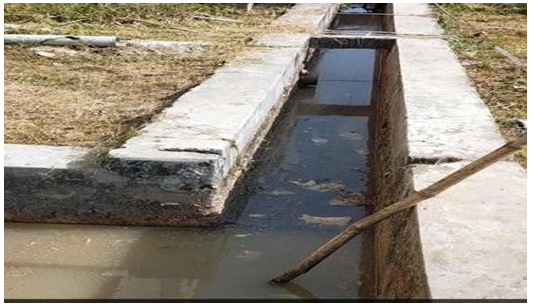
Figure 2: Discharge Point of Canteen
Moving towards the Methodology
First of all, the work was started with a brief survey on work done and water consumed by the canteen, almost 12200 litres of water is discharged every day. This water was collected at the peak time (12 pm- 2 pm), and all the physicochemical parameters were checked which is shown in Figure. 3.
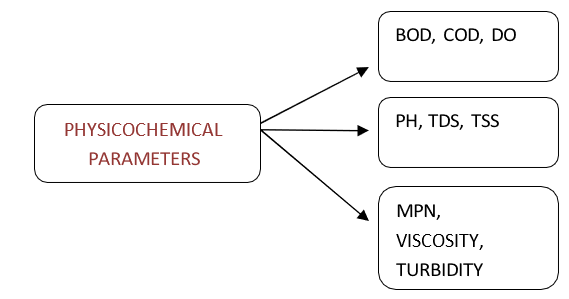
Figure 3: Checked Physicochemical Parameters
After a details study done on physicochemical parameters, the second step is biological treatment as the wastewater treatment is done with MBR (Membrane Bio-Reactor) and this biological treatment process is much more important in the full methodology (Figure. 4). This method is much different and unique from another method as it's a combination of both biological treatment and membrane filtration.

Figure 4: Principle of MBR
The membrane bioreactor consists of two primary parts as shown in Figure. 5 where for biodegradation of waste compounds viz. biological unit is responsible and for physical separation of treated water from the mixed liquor membrane module is required. Various options are introduced for greywater treatment like simple treatment (coarse filtration and disinfection), chemical system (photocatalysis, electro-coagulation, coagulation, etc,), Biological system (biological aerated filter, rotating biological contractor, and membrane bioreactors), and natural system (construction of wet lands).
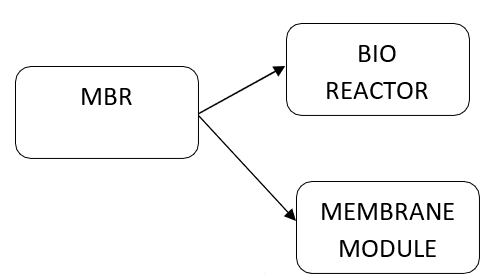
Figure 5: The Membrane Bioreactor (MBR) Consists of Two Primary Parts
Types of MBR Setup
Two types of MBR set up in which one is side stream Figure.6(a) and the other one is submerge MBR [Figure.6(b)]. Here we have used the side stream MBR set up for the experimental purpose.

Figure 6: (a) Side Stream MBR (b) Submerge MBR
What is Membrane Technology?
Membrane technology has been adopted by all the engineering approaches into day’s scenario. In the field of wastewater treatment membrane technology is getting important because with the help of ultra/microfiltration possibilities for removal of particles, colloids and macromolecules are more. So, this is more efficient and sustainable for the treatment of wastewater. A membrane can be defined as a thin layer of semi-permeable material which is used in solute separation as transmembrane pressure is applied across the membrane. In the present work, ceramic membrane is used, ceramic membrane consists of solid layers of metal oxide (e.g., palladium, silver, zirconia, alumina, titania, etc.), It has a lifecycle of up to 20 years which may be used in potable water treatment, food and dairy industry, chemical industry, etc. Flat sheet, hollow fibre, multichannel tubular element, and monolithic are some of the forms in which ceramic membranes are available [3]. Classification of pressure-driven membranes and schematic illustrations of their operation is according to the pore size as shown in figure 7.
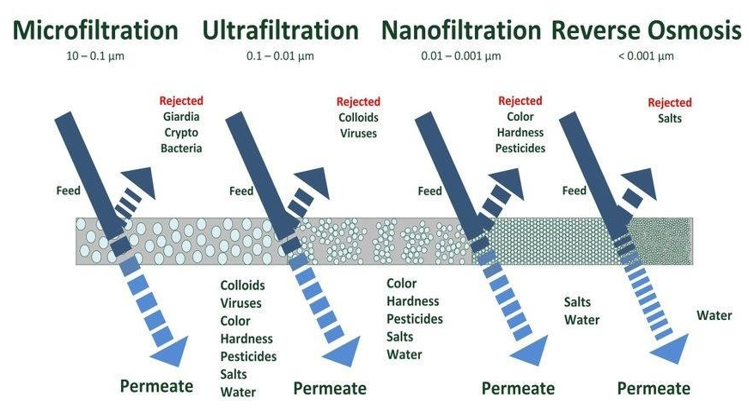
Figure 7: Classification of Pressure Driven Membranes and Schematic Illustrations of Their Operation are According to the Pore Size
After completing all the procedures, the last step is filtration with a ceramic membrane as shown in Figure. 8 to obtain the pure permeate water.
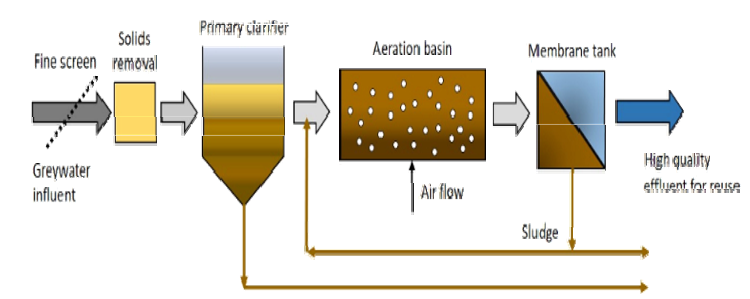
Figure 8: Schematic Diagram of Greywater Treatment with MBR Bio-Reactor (MBR) Technology [4]
As of now around 300 working in different parts of the world, Japan utilizes mostly this technology which are being used for water reusing in their locality. In India, MBR technology is now being used as CSIR-CG&CRI, Kolkata has developed their indigenous ceramic membrane technology After reading the above content, the question may arise in the reader's mind why membrane technology? Why not the conventional technology or any other? What advantages we are getting from this. So, the advantages of using ceramic membrane are as follows as shown in Figure. 9
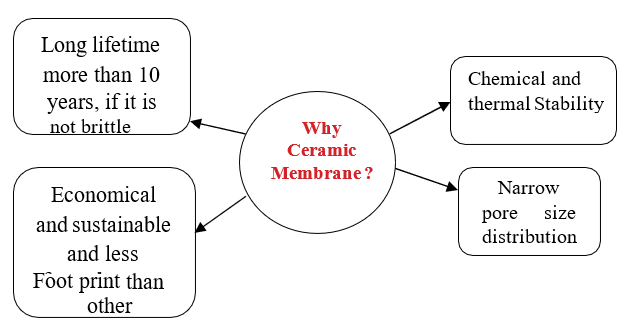
Figure 9: Schematic Diagram Showing Advantages of Using Ceramic Membrane
MBR is an alluring and plausible innovation for on-site treatment applications. Predictable supplement expulsion is conceivable with the MBR technology. MBR is more effective in treating wastewaters that are challenging for conventional biological treatment systems. In India MBR technology is adopted by many industries now a day as depicted in Table 1 for its superior performances within a little space.
|
|
MBR Technology |
Other technology |
|
MLSS membrane fouling |
low |
High |
|
Membrane flux |
Low |
High |
|
Recirculation energy |
Low |
High |
|
Scanning requirement |
Low |
High |
|
Footprint |
Low |
High |
|
Effluent quality |
High |
Low |
|
Energy required |
Moderate |
High |
Table 1: MBR is More Effective in Treating Wastewaters that are Challenging for Conventional Biological Treatment Systems
Working on Bioreactor
In this stage, a certain amount of grey water sample was mixed with activated sludge that was collected from STP (Sewage Treatment Plant, New Town, Kolkata). From this bacterial growth, the Optical Density (OD) vs. Time curve (Figure. 10) was also estimated which is necessary to determine the working efficiency of microorganisms present in the sample.

Figure 10: Optical Density Observation of Microbial growth
As per Figure. 10, the growth of microorganisms is stable at first but not uniform when the sludge dose is 0.25 ml, and towards the end of 24 hours, growth is diminishing. Like the 0.5 ml sludge dosage, growth increases initially but then declines over time. However, when the 1.0 ml sludge dose is administered, growth resumes after 21 hours of decline. Consequently, the microorganisms' growth will continue to be vigorous and uniform at 1 ml of sludge dosing [5- 6]. In this step, three sets were done with different concentrations of sludge, and with regular time intervals. Optical Density (OD) was checked to see the growth of microbes using a double beam spectrophotometer with 600 wavelengths [2].
Filtrated Water Analysis
The objective of this study was to describe the chemical, physical, and biological characteristics of grey water. Table 2 provides an analysis of the pollution in grey water. As can be seen, the concentrations of organic matter, such as BOD5 and COD, are greater than average, and the concentrations of suspended particles, such as TSS, TDS, and turbidity are also higher than average. The range of certain parameters, including TOC, Viscosity, Oil & Grease, DO, MPN and Hardness was found to be excessive.
|
Parameters |
Before bioreactor |
After bioreactor |
After UF filtration |
|
pH |
5.3 |
8.1 |
7.9 |
|
DO (mg/l) |
2.5 |
5.4 |
5 |
|
EC (µs/cm) |
1003 |
150 |
100 |
|
COD (mg/l) |
4500 |
460 |
50 |
|
BOD (mg/l) |
892 |
110 |
15 |
|
TSS (mg/l) |
854 |
122 |
06 |
|
SALINITY (mg/l) |
521 |
64 |
52 |
|
O & G (g/l) |
8 |
1.6 |
0.002 |
|
MPN per 100 ml |
18 |
9 |
2 |
|
TURBIDITY (NTU) |
51 |
14.1 |
1 |
|
TOC (mg/l) |
190 |
35.19 |
8.64 |
|
HARDNESS (mg/l) |
312 |
68 |
51 |
Table 2: A Comparative Result Shows the Physicochemical Parameters of Raw Water, after Bio-Reactor Treatment and Permeates Water after UF Filtration
Since the COD in the raw water was 4500 mg/l, it must drop below the permitted level for the wastewater to be reused. It drops to 654 mg/l following the bioreactor treatment with a 40 mg/l sludge dosage, and after UF filtration, the COD is modified up to a minimum of 576 mg/l (fig. 10), which satisfies the WHO-permitted limit [7]. Consequently, the repurposed treated water can be utilized for non-potable uses. As greywater contains a significant quantity of organic matter, it should be properly examined and its BOD5 should be reduced to the absolute minimum before the wastewater is reused. BOD in raw water is 892 mg/l, drops to 45 mg/l in a bioreactor with a dosage of 40 gm/l of sludge, and drops to 31 mg/l after filtration as shown in Figure. 10. Considering this, it can be said that this effluent may be utilized for both potable and non-potable uses.
A comparative result has been tabulated as shown in Table 2 where it has been noticed that the physicochemical parameters data have been drastically reduced which complied with the data of WHO

Figure 10: Graphs shows Physicochemical Parameters of Raw Water, after Bio-Reactor Treatment and Permeates Water after UF Filtration
Figure 11 represents the physical appearance of raw water where the difference can be seen after bioreactor treatment and permeate of UF filtration; the transparency of filtered water is significantly higher than that of bio reactor treated water which conclude that this permeate water may be used for both potable and non-potable uses.

Figure 11: Physical Appearance of Raw Water, Bioreactor Treated Water and UF Filter Water
It has observed that the MBR technology with ceramic membrane works efficiently with comparison to other technology. This can be adopted in our university to return the treated water in the canteen for non-potable purposes. A step towards sustainable development!!
Conclusion
The primary objective of this study was to reuse wastewater from Adamas University's cafeteria in order to reduce the use of freshwater. In addition, wastewater discharges to neighboring water bodies have an impact on the local ecosystem and public health. First, every parameter in their raw water analysis data— BOD, COD, TDS, oil and grease, etc.—was extremely high. The filtrate water analysis shows a substantial shift in all the parameters, which fulfils the WHO permitted limit, defined for non-potable use, during the second treatment in the bioreactor. For example, BOD dropped from 892 mg/l to 45 mg/l, and the same was true for COD and TDS. 19 channel UF membrane modules with TiO2 coating were employed in the filtration process. The results of all necessary analyses, including FESCM, FTIR, and microbe identification, the low-pressure conditions occur in membranes' ability to nearly fully remove COD and turbidity is UF's most significant benefit. Based on both rejection efficiency and flux capacity, this MBR design proved to be the most effective for the treatment of graywater effluent of all those studied. The findings of this study may be helpful in determining the outcome of greywater post-treatment for Adamas University canteen for non-potable purposes, such as dishwashing, gardening, etc. Additional work can be done to use the raw water for drinkable purposes.
Acknowledgement
The authors heartily thank to the Director, CSIR-CGCRI, Kolkata and the Vice Chancellor, Adamas University, Kolkata for their kind permission. Permission is highly acknowledged for one-year M. Tech. thesis work done at CSIR-CGCRI, Kolkata for one of the author during 01/11/2021-31/10/2022 (CGCRI OM No. GC/R&A/ Permis/2021-22 (4) dated 23/11/2021). The authors also express their heartfelt gratitude to Mrs. Indrani Sarkar for her continuous encouragement throughout the research. Special thanks are extended to Hon’ble Sir Mr. Saurabh Adhikari, COO, Swami Vivekananda University, Kolkata, for his constant guidance and support.
References
- Majumdar, S., Sarkar, S., Ghosh, S., Bhattacharya, P., Bandyopadhyay, S., Saha, A., ... & Roy, S. N. (2018). New trends for wastewater treatment and their reuse using ceramic membrane technology: a case study. In Water Quality Management: Select Proceedings of ICWEES-2016 (pp. 339- 348). Singapore: Springer Singapore.
- Bandyopadhyay, S., Kundu, D., Roy, S. N., Ghosh, B., & Maiti, H. S. (2006). U.S. Patent No. 7,014,771. Washington, DC: U.S. Patent and Trademark Office.
- Kele, B., Wolfs, P., Tomlinson, I., Hood, B., & Midmore,D. (2005). Greywater reuse in a sewered area: design and implementation at research house.
- Laasri, L., Khalid Elamrani, M., & Cherkaoui, O. (2007). Removal of two cationic dyes from a textile effluent by filtration-adsorption on wood sawdust. Environmental Science and Pollution Research-International, 14(4), 237-240.
- Tolkou, A., Zouboulis, A., & Samaras, P. (2014). The incorporation of ceramic membranes in MBR systems for wastewater treatment: advantages and patented new developments. Recent Patents on Engineering, 8(1), 24-32.
- Bhattacharya, P., Sarkar, S., Ghosh, S., Majumdar, S., Mukhopadhyay, A., & Bandyopadhyay, S. (2013). Potential of ceramic microfiltration and ultrafiltration membranes for the treatment of gray water for an effective reuse. Desalination and Water Treatment, 51(22-24), 4323-4332.
- De Gisi, S., Lofrano, G., Grassi, M., & Notarnicola, M. (2016). Characteristics and adsorption capacities of low-cost sorbents for wastewater treatment: A review. Sustainable Materials and Technologies, 9, 10-40.