

Earth & Environmental Science Research & Reviews(EESRR)
ISSN: 2639-7455 | DOI: 10.33140/EESRR
Impact Factor: 1.6

Review Article - (2025) Volume 8, Issue 2
Mitigating Microplastic Contamination: Evaluating PET Water Bottles and the Role of PLA Plant-Based Bottles in a Circular Economy for Reduced CO2 Emissions
2Pacogreen, Kolkata, India
Received Date: Jun 22, 2025 / Accepted Date: Aug 04, 2025 / Published Date: Aug 11, 2025
Copyright: ©2025 Avirup Panja, et al. This is an open-access article distributed under the terms of the Creative Commons Attribution License, which permits unrestricted use, distribution, and reproduction in any medium, provided the original author and source are credited.
Citation: Panja, A., Panja, A. (2025). Mitigating Microplastic Contamination: Evaluating PET Water Bottles and the Role of PLA Plant-Based Bottles in a Circular Economy for Reduced CO2 Emissions. Earth Envi Scie Res & Rev, 8(2), 01-07.
Abstract
This study examines the environmental and public health challenges associated with microplastic contamination from PET water bottles and evaluates the potential of polylactic acid (PLA) as a sustainable alternative within a circular economy framework. Employing comprehensive data collection, sampling, and life cycle assessment (LCA) methodologies, the research compares the material properties, recyclability, and CO2 emission profiles of PET and PLA. Global indices, with a particular focus on India and West Bengal, are analyzed to determine microplastic release levels and the broader environmental implications of each material. Results indicate that while PET water bottles continue to contribute significantly to microplastic pollution and exhibit high CO2 emissions across their lifecycle, PLA offers advantages through its biodegradability and lower carbon footprint. The comparative analysis underscores PLA’s alignment with circular economy principles by promoting resource efficiency and sustainable waste management practices. Key findings suggest that transitioning from PET to PLA in water bottle production could substantially reduce environmental impacts and enhance public health outcomes. Overall, this research supports the adoption of PLA as a viable alternative for mitigating plastic pollution, fostering a more sustainable packaging industry, and contributing to global efforts to reduce greenhouse gas emissions.
Keywords
PLA, PET, Circular Economy, Environment, Sustainability
Introduction
Background and Motivation
The widespread use of plastic in bottled water packaging, particularly polyethylene terephthalate (PET), has become an integral component of worldwide convenience culture. PET, valued for its lightweight, durable, and clear characteristics, accounts for the vast majority of single-use beverage containers across the world [1]. According to Statista, more than 600 billion plastic bottles were consumed globally in 2021, and usage is anticipated to rise higher in the next years. However, this dependency has come at a high environmental and public health cost, most notably in the form of microplastics [2].
Microplastics, which are plastic particles smaller than 5 millimeters in size, have surfaced as a growing environmental problem [3].
Recent investigations have proven the existence of microplastics in bottled water, which are typically derived from the packaging material itself [2]. A 2018 study done by Orb Media in partnership with academics at the State University of New York at Fredonia discovered microplastics in 93% of tested bottled water samples from 11 distinct brands in nine countries [4]. On average, they found 240,000 microplastic particles per litre of PET bottles, highlighting the prevalence of this type of contamination [5].
The potential health risks posed by the ingestion of microplastics remain under rigorous scientific scrutiny. These particles can carry chemical additives and adsorb toxic environmental pollutants, raising concerns about bioaccumulation and long-term health implications [6]. Furthermore, the environmental persistence of PET, often taking hundreds of years to degrade, means that itsimpact extends far beyond its short period of utility [7].
In response to these concerns, over the years, attention has shifted towards biodegradable alternatives such as polylactic acid (PLA). Derived from renewable resources like corn starch or sugarcane, PLA is a bioplastic that offers favorable characteristics, including biodegradability, lower carbon emissions, and compostability under industrial conditions. Moreover, within a circular economy framework, PLA supports a regenerative model that emphasizes reduced resource input and closed-loop waste cycles [8]. This positions PLA as a compelling candidate to replace PET in select applications, particularly in the bottled water industry, where microplastic leaching is a growing issue.
Given the growing worries about plastic waste, resource depletion, and public health, this study looks into the shift from PET to PLA as a sustainable option. This study intends to add to the larger discussion on eco-innovation in plastic packaging by examining life cycle evaluations, material qualities, and environmental consequences.
Problem Statement
Articulation of the Challenges Posed by Microplastic Leaching from PET Bottles
Despite the widespread usage of PET in bottled water containers, its contribution to microplastic contamination has become more serious. PET bottles can disintegrate during the production, transit, and storage stages as a result of UV light exposure, mechanical stress, and temperature fluctuations, releasing microplastic pieces into the water [9]. This problem is compounded by frequent usage and inappropriate disposal, which increases PET's environmental imprint. Modern data trends show that over 583 billion PET bottles are produced each year, and it is estimated that by the end of 2030, PET bottled water consumption will double. This underscores the urgent need for a solution to this ongoing issue.
According to studies, microplastic leaching is not confined to the bottle body, but can also occur from caps and sealing components made of polypropylene or other polymer mixes. Found that microplastic contamination was greatest in bottles with screw tops, attributing particle presence to abrasion between the cap and the bottle neck while opening and closing [4]. Furthermore, the lack of effective end-of-life management solutions for PET adds to its buildup in terrestrial and aquatic environments, where it degrades physically but not biologically [10].
The problem is twofold: (1) decreasing microplastic exposure through bottled water, which is a direct intake channel for con- sumers, and (2) mitigating long-term environmental degradation caused by PET's resistance to natural breakdown. These problems are exacerbated in areas without strong recycling infrastructure, where plastic trash typically ends up in landfills or informal dis- posal sites. In India, for example, only around 60% of PET trash is recycled properly, with substantial regional variances [11]. This suggests that a significant amount of PET enters the environment each year, adding to soil and marine microplastic burdens.
As such, the primary issue addressed in this study is the ongoing leaching of microplastics from PET bottles, which poses both public health and environmental dangers. In light of this, it is critical to critically evaluate the suitability of bioplastics such as PLA as a replacement, assessing their comparative lifecycle impacts, recyclability, and potential to integrate into a circular economy model that prioritises decarbonisation, waste reduction, and material innovation [12]. The primary goal of this research is to critically analyse the environmental and health consequences of continuing to rely on polyethylene terephthalate (PET) bottles, as well as to investigate the viability and sustainability of polylactic acid (PLA) as an alternative. This study aims to evaluate the comparative benefits of PLA in tackling the dual concerns of microplastic pollution and carbon emissions while still adhering to the ideals of a circular economy.
The move from fossil-derived polymers, such as PET, to bio- based replacements is part of a larger reshaping of production and consumption systems. A circular economy emphasises resource efficiency, closed-loop material cycles, and minimal environmental impacts [13]. Within this paradigm, PLA provides a potential to decouple packaging from petrochemical inputs while also facilitating more sustainable waste management approaches, such as industrial composting and controlled biodegradation. Unlike PET, which is persistent in nature and frequently downcycled, PLA has the ability to reintegrate into the ecosystem with minimal residual influence if properly treated [13].
This study aims to comprehensively assess the comparative sustainability of polyethylene terephthalate (PET) and polylactic acid (PLA) bottles by analyzing their life cycle environmental impacts, including COâ?? emissions, energy and water consumption, and end-of-life waste management potential. It further seeks to quantify the extent of microplastic leaching from both materials using available empirical data, thereby evaluating the health and environmental risks associated with their usage. A central objective is to determine the compatibility of PLA with circular economy principles, focusing on renewable sourcing, industrial composting viability, and its integration into regional waste management systems. The feasibility of large-scale PLA adoption in place of PET is also examined in light of consumer behavior, market dynamics, regulatory frameworks, and technological scalability.
Microplastic Contamination in PET Bottles
The extensive usage of PET bottles has resulted in microplastic contamination in bottled water. A study in Kollam city, India, found microplastic concentrations ranging from 3 ± 1.73 to 9 ± 1.00 particles per litre among ten brands, with substantial variance between samples (p < 0.05). Previous research in China found an average of 72.32 ± 44.64 items/L of microplastic in bottled water compared to 49.67 ± 17.49 items/L in tap water, demonstrating greater contamination levels in PET-packaged water [14]. The origin of these particles has been traced back to both raw water sources and degradation of packaging materials, particularly mechanical abrasion of caps and seals. Raman microspectroscopy in Germany identified threaded caps as a primary release point for PET, PP, and PE fragments, which is exacerbated by repeated bottle opening and closing. Advanced imaging techniques have discovered up to 240,000 nanoplastic fragments per litre, with 90% less than 1 μm in diameter, highlighting the extent of nanoparticle pollution [2]. These micro- and nanoplastics can operate as vectors for persistent organic pollutants and viruses, providing potential dangers to human health and ecosystems, including endocrine disruption and toxic bioaccumulation.
PET: Properties and Environmental Impact
Polyethylene terephthalate (PET) is a thermoplastic polyester made from ethylene glycol and purified terephthalic acid sourced from refined crude oil and natural gas feedstocks [10]. The polymerisation process produces PET resin pellets, which are subsequently injected and stretch blow moulded into lightweight, transparent bottles valued for their mechanical strength and barrier qualities. PET resin manufacture uses 70-83 MJ/kg, and bottle fabrication adds 8.4-20 MJ/kg, resulting in GHG emissions of 0.034-0.046 kg COâ??-eq per 500 mL bottle, according to lifecycle evaluations [15]. End-of-life treatment and water freezing emit
0.01 and 0.0248 kg CO equivalents per litre, respectively [13]. A meta-analysis of LCA research found that PET bottles had a considerable climatic impact, with an average carbon footprint of 5.093 kg CO?eq per kilogramme. Although PET is widely recyclable, with a global recycling rate of approximately 33% in 2023, challenges such as contamination, downcycling, and limited market demand for recycled PET (rPET) constrain closed-loop circularity. Notably, it has been seen that rPET production reduces COâ?? emissions significantly by almost 79%, lowering the carbon footprint to 0.45 kg CO equivalent per kilogramme compared to
Introduction to PLA
Polylactic acid (PLA) is a biodegradable aliphatic polyester made from renewable biomass sources like maize starch or sugarcane. The process involves microbial fermentation of carbohydrates to lactic acid, followed by polymerisation by direct condensation or ring-opening of lactide monomers. PLA has a glass transition temperature of 55-60 °C and a melting point of 150-160 °C [16]. It has comparable tensile strengths (50-70 MPa) and Young's moduli (2-4 GPa) to PET, but has worse water vapour barrier characteristics. PLA degrades hydrolytically and enzymatically in industrial composting conditions (≥60 °C, high humidity) by microorganisms like Amycolatopsis sp., resulting in biomass and CO [17]. However, PLA degrades minimally in marine and soil environments, with no measurable mass loss after a year at 25 °C. PLA composites, including thermoplastic starch or natural fibres, have been created to improve mechanical toughness and degradation rates in packaging applications [17]
Circular Economy Principles in Plastics
The circular economy framework aims to decrease waste and pollution, reuse goods and resources, and regenerate natural systems. It has the potential to cut ocean-bound plastics by 80% and greenhouse gas emissions by 25% by 2040 [6]. Despite these 2.5 kg CO equivalent for virgin PET [15].
objectives, just 14% of plastic packaging is collected for recycling globally, resulting in a 95% loss of material value each year. PET can contribute to circularity through mechanical recycling to rPET and developing chemical recycling technologies [6]. However, the present infrastructure only recycles one-third of bottles, which are typically downcycled into lower-value items. PLA aligns with circular principles through its renewable feedstocks and potential for industrial composting or chemical depolymerisation back to lactic acid, as demonstrated by Zn(II)-catalyzed hydrolysis. However, the paucity of composting facilities and limited adoption, evidenced by Unilever's report that only 0.01% of its packaging is compostable, hampered PLA's full circular integration.
CO Emission Considerations
PET bottles have a carbon footprint of 5.093 kg CO-eq per kilogramme, which equates to 0.034-0.046 kg CO-eq per 500 mL bottle during manufacture alone, with extra emissions from treatment and refrigeration. Substituting rPET for virgin PET can cut emissions by up to 79%, demonstrating the relevance of recycling in decarbonisation efforts [18]. PLA bottles have much lower lifespan CO emissions than PET, with studies finding 22% less GHGs and 50-70% lower CO emissions compared to traditional polymers like polyethylene [7]. These findings suggest that transitioning from PET to PLA in bottled water applications could yield substantial reductions in the sector’s carbon footprint.
Recent Research on PLA and PET Bottles
Recent studies on the environmental performance of polyethylene terephthalate (PET) and polylactic acid (PLA) bottles have used empirical data gathering and sophisticated analytical approaches to determine sustainability and health risks. Researchers used diverse techniques, such as field sampling, global statistical analysis, and systematic LCA procedures, to identify variations in lifecycle performance, microplastic release, and total carbon footprint [18].
Data Collection and Sampling of PLA and PET
Data gathering methods for PET and PLA bottles have evolved to incorporate standardised sample processes to maintain consistency across different geographic locations and manufacturing batches. Researchers often use stratified sampling strategies, combining in-field water quality measurements with laboratory-based deterioration research [17]. Recent protocols, for example, involve collecting bottle samples from multiple points along the supply chain, including production, distribution, and end- of-life treatment phases, and using high-precision techniques like Raman spectroscopy, scanning electron microscopy (SEM), and Fourier-transform infrared spectroscopy (FTIR) to quantify microplastic content and detect chemical degradation markers [19]. In controlled trials, bottles of both materials are exposed to accelerated ageing tests to imitate real-world situations like as UV radiation exposure, temperature variations, and mechanical wear [20]. These controlled datasets serve as a basis for statistical comparison and have been pivotal in establishing a correlation between manufacturing methods, handling practices, and subsequent microplastic leaching.
Global Index of PLA and PET Bottles (India and West Bengal in Focus)
Global indexes evaluating the performance of PET and PLA packaging have been created to provide information on manufacturing efficiency, environmental effect, and end-user exposure [12]. Recent research has developed indices that incorporate a wide range of indicators, including raw material consumption, recyclability rates, carbon footprint, and microplastic contamination rates. With a focus on emerging countries such as India, and notably West Bengal, research has found major inequalities in recycling infrastructures, regulatory enforcement, and public knowledge of plastic waste management [12]. In India, while PET remains the dominating material in water packaging because to its low cost and established supply networks, controlled pilot studies show a progressive move towards PLA. Local efforts and public-private partnerships in West Bengal are promoting bio- based alternatives, leading to regional indices favouring reduced COâ?? emissions and higher biodegradability ratings [13]. These indexes use longitudinal data and cross-country comparisons to inform policy development and assist the transition to more sustainable packaging methods in various economic scenarios [13]. Pacogreen is one of the rising firms that has received a lot of attention in recent months. Industry innovators like Pacogreen play a critical role in accelerating the manufacture of PLA bottles and filling gaps in current recycling infrastructure, therefore enabling the shift to sustainable packaging. These efforts help ensure that the environmental benefits of PLA, such as reduced carbon emissions and biodegradability, can be effectively harnessed without overburdening current waste management systems by developing and implementing advanced technologies for the identification and separation of PLA from PET within recycling streams.
As a result, the participation of creative firms like Pacogreen is vital in combating the global plastic issue and promoting sustainable packaging solutions. The success of this shift will be dependent not just on discoveries in material science, but also on the proactive participation of systemic enablers. Pacogreen exhibits this dual function by not only offering PLA-based alternatives to traditional PET bottles, but also by creating the infrastructure required for successful PLA identification, sorting, and recovery in current recycling systems. This holistic methodology is entirely connected with circular economy concepts, establishing Pacogreen as a vital contributor to the decarbonisation of the bottled water business and the larger plastic packaging sector.
 |
Figure 2: Benefits of PLA Bottles
Microplastic Contributions of PLA and PET
Recent studies has quantified the microplastic contributions of both PET and PLA bottles. PET, despite its extensive use, has continuously been linked to greater levels of microplastic fragmentation, owing to its vulnerability to mechanical abrasion and chemical breakdown across several usage and disposal cycles [23]. Several studies have found that PET bottles can emit hundreds to thousands of microplastic particles per litre of water, with variations due to bottle design, cap composition, and local handling methods. In contrast, when processed under ideal circumstances, PLA has a reduced rate of microplastic release [7]. However, PLA's performance is heavily influenced by processing quality and environmental conditions; improper storage or exposure to high ambient temperatures may accelerate its degradation, though the resulting by-products are generally considered less persistent in the environment. Notably, recent comparative studies have highlighted the need of using rigorous sampling approaches to precisely measure these microparticulates, since changes in particle size distribution and chemical composition have a significant influence on their ecological and health consequences [7]
Life Cycle Assessment (LCA)
The use of Life Cycle Assessment (LCA) methodology has been a key component in assessing the environmental performance of PET and PLA bottles [21]. LCA studies provide a systematic framework for quantifying the environmental implications of each stage of a product's life cycle—from raw material extraction to production, use, and disposal. Recent LCA studies have concentrated on metrics like as energy consumption, greenhouse gas (GHG) emissions, water usage, and end-of-life waste management [11]. The LCA for PET shows high energy inputs for synthesis and moulding, with COâ?? emissions ranging from 0.034 to 0.046 kilogrammes per 500 mL bottle throughout manufacture [24]. Furthermore, when considering recycling inefficiencies and post-consumer handling, PET contributes significantly to the packaging sector’s overall carbon footprint. PLA's LCA metrics often indicate reduced direct COâ?? emissions during manufacturing, owing to its renewable feedstocks and lower energy requirements for polymerisation. Recent studies employing comparative LCAs show that PLA can reduce COâ?? emissions by 50-70% compared to PET, especially when end-of-life solutions like industrial composting are used appropriately [25]. However, these benefits are contingent on the creation of suitable waste management and composting infrastructures, as PLA degrading efficiency varies between environmental conditions. Furthermore, recent LCAs have included sensitivity analyses to highlight the importance of geographical variances in determining the net environmental advantages of converting from PET to PLA [25]. These comprehensive assessments collectively support the argument for a transition towards more sustainable bioplastic solutions, contingent on improvements in technological and infrastructural support.
Conclusion
This study presents a complete review of the comparative sustainability of PET and PLA bottles, emphasising the critical need for material innovation to minimise microplastic contamination and carbon emissions. PET bottles, while popular in the market, represent significant environmental and health problems due to their high GHG emissions and proclivity for microplastic discharge. PLA, on the other hand, appears to be a viable alternative, with fewer emissions, renewable sources, and the possibility for integration into circular economic frameworks via composting and chemical recycling.
However, realising the benefits of PLA requires significant systemic support, including infrastructure development, regulatory incentives, and consumer education. In places like India and West Bengal, where plastic waste management remains a concern, concerted policy and investment measures would be required to encourage the use of biodegradable packaging materials. Finally, the conclusions of this study call for a shift in material use and waste management in the bottled water sector. Promoting PLA as a sustainable option not only helps the environment, but it also coincides with larger public health aims and international commitments to climate action. Future research should concentrate on improving PLA formulations, increasing industrial composting capacity, and investigating hybrid policy approaches that promote sustainable consumer behaviour while facilitating industrial change.
Discussion
The comparative examination of polyethylene terephthalate (PET) and polylactic acid (PLA) bottles, based on life cycle assessment(LCA) methodology and empirical environmental performance measures, demonstrates a clear set of benefits associated with PLA use. PET is highly prized for its mechanical strength and clarity, but it has substantial environmental downsides, notably in terms of greenhouse gas emissions and microplastic leaching [19]. According to LCA studies, PET bottles emit 5.09 kg COâ??- equivalent per kilogramme of material during their life cycle [22]. Furthermore, during use and deterioration, PET bottles are prone to fragmentation into micro- and nanoplastics, which can persist in aquatic systems and pose dangers to human and environmental health.
In contrast, PLA has a significantly smaller carbon footprint, up to 70% lower than PET, due to its biobased origin and lower energy requirements during polymer production. Furthermore, PLA's capability for industrial composting and depolymerisation makes it more compatible with circular economy models [10]. Although its environmental advantages are limited by infrastructure constraints, particularly in terms of composting facilities, PLA nevertheless provides a more sustainable end-of-life trajectory than PET, which is frequently downcycled or insufficiently recycled. Notably, while both materials face technological and logistical challenges to achieve perfect circularity, PLA is more closely aligned with regenerative design principles since it allows for the reintegration of organic carbon into natural systems when correctly handled.
Interpretation of Key Findings
The major findings of this study highlight the crucial need to reconsider material choices in the bottled water sector. First, empirical data demonstrate that PET bottles contribute considerably to microplastic contamination, with commercial samples containing quantities of hundreds of particles per litre [13]. PLA, while not completely resistant to deterioration under suboptimal conditions, consistently produces fewer microparticles when made and handled in accordance with quality standards. Second, the LCA comparisons show a significant difference in environmental loads, with PLA's renewable source and lower GHG emissions providing substantial benefits to climate mitigation efforts [1].
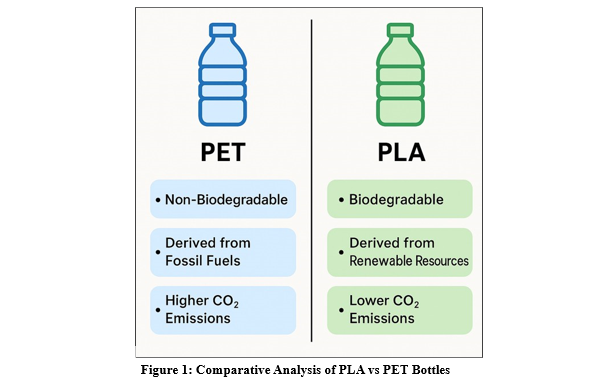
Importantly, the regional context, particularly in India and West Bengal, exposes differences in infrastructure that affect material performance and environmental results. PET recycling has become more established, yet it still suffers from inefficiency and leakage into uncontrolled waste sources. Meanwhile, PLA's environmental potential is underutilised due to the scarcity of industrial composting equipment [2]. These findings indicate that material replacement alone is insufficient; systemic changes in waste management and public awareness are required to fully reap the benefits of biodegradable alternatives (Figure 1).
Environmental and Health Implications
This comparative research has broad consequences for both the environment and public health. Microplastics derived from PET bottles pollute drinking water while also serving as vectors for toxic chemicals and microbes. Prolonged dietary exposure, particularly in vulnerable groups, raises concerns about inflammatory reactions,endocrine disruption, and long-term toxicological repercussions [26]. As microplastic concentrations rise in ecosystems, there is mounting evidence of negative impacts on aquatic biodiversity, which has consequences for food security and human nutrition.
From an environmental aspect, the presence of PET in terrestrial and marine systems perpetuates plastic pollution, degradingecosystem services and contributing to the worldwide plastic catastrophe. PLA, on the other hand, provides a biodegradable and lower-impact alternative, especially when combined with proper waste segregation and treatment infrastructure [23]. Moving to PLA in the bottled water industry might dramatically minimise environmental damage and help alleviate the rising load of plastic pollution.
Declarations
The Authors declare no conflict of interest.
Funding
Not Applicable
Figure and Table Index
References
- Desole, M. P., Aversa, C., Barletta, M., Gisario, A., & Vosooghnia, A. (2022). Life cycle assessment (LCA) of PET and PLA bottles for the packaging of fresh pasteurised milk: The role of the manufacturing process and the disposal scenario. Packaging Technology and Science, 35(2), 135-152.
- Ghosh, N., Sau, D., Hazra, T., & Debsarkar, A. (2025). Extraction and characterization of microplastics in biomined good earth fractions: assessment of urban and suburban landfill sites, India. Environmental Monitoring and Assessment, 197(5), 505.
- Waris Khan, M. G., & Ahmad, S. (2024). A review on emerging trends of plastics for food packaging in India. Engineering Headway, 11, 1-16.
- Mason, S. A., Welch, V. G., & Neratko, J. (2018). Synthetic polymer contamination in bottled water. Frontiers in chemistry, 6, 389699.
- Pereira, C. S. P. S. (2020). Magnetic Nanoparticles as a Strategy in Microplastics Recovery from Waters (Master's thesis, Universidade do Porto (Portugal)).
- Babaremu, K. O., Okoya, S. A., Hughes, E., Tijani, B., Teidi, D., Akpan, A., ... & Akinlabi, E. T. (2022). Sustainable plastic waste management in a circular economy. Heliyon, 8(7).
- Hu, X., & Chen, Y. (2024). Response mechanism of non- biodegradable polyethylene terephthalate microplastics and biodegradable polylactic acid microplastics to nitrogen removal in activated sludge system. Science of the Total Environment, 917, 170516.
- Guo, X., Yao, Y., Zhao, H., Chi, C., Zeng, F., Qian, F., ... & Lv, Y. (2021). Environmental impacts of functional fillers in polylactide (PLA)-based bottles using life cycle assessment methodology. Science of The Total Environment, 788, 147852.
- Winkler, A., Santo, N., Ortenzi, M. A., Bolzoni, E., Bacchetta, R., & Tremolada, P. (2019). Does mechanical stress cause microplastic release from plastic water bottles?. Water research, 166, 115082.
- Parolini, M., De Felice, B., Gazzotti, S., Sugni, M., & Ortenzi, M. A. (2024). Comparison of the potential toxicity induced by microplastics made of polyethylene terephthalate (PET) and polylactic acid (PLA) on the earthworm Eisenia foetida. Environmental Pollution, 348, 123868.
- Ding, Q., & Zhu, H. (2023). The key to solving plastic packaging wastes: Design for recycling and recycling technology. Polymers, 15(6), 1485.
- Das, A. B., & Gurung, C. A. (2021). Zero Waste Domestic Solid Waste Management Strategies Proposed for Siliguri Municipal Corporation, West Bengal, India. Appl. Ecol. Environ. Sci, 9, 988-997.
- Hossain, R., Islam, M. T., Shanker, R., Khan, D., Locock, K.E. S., Ghose, A., ... & Sahajwalla, V. (2022). Plastic waste management in India: Challenges, opportunities, and roadmap for circular economy. Sustainability, 14(8), 4425.
- Patil, S., Bafana, A., Krishnamurthi, K., & Sivanesan, S. (2024). Estimated exposure to microplastics through national and local brands of bottled water in Central India. Environmental Monitoring and Assessment, 196(3), 240.
- Bharadwaj, C., Purbey, R., Bora, D., Chetia, P., Duarah, R., Dutta, K., ... & Jayaramudu, J. (2024). A review on sustainable PET recycling: Strategies and trends. Materials Today Sustainability, 27, 100936.
- Shen, L., Worrell, E., & Patel, M. K. (2012). Comparing life cycle energy and GHG emissions of bioâ?ÂÃÃÂ??ÂÃÂ?ÂÂbased PET, recycled PET, PLA, and manâ?ÂÃÃÂ??ÂÃÂ?ÂÂmade cellulosics. Biofuels, bioproducts and biorefining, 6(6), 625-639.
- Walker, S., & Rothman, R. (2020). Life cycle assessment of bio-based and fossil-based plastic: A review. Journal of Cleaner Production, 261, 121158.
- Cisar, J., Drohsler, P., Pummerova, M., Sedlarik, V., & Skoda,D. (2023). Composite based on PLA with improved shape stability under high-temperature conditions. Polymer, 276125943.
- Tamburini, E., Costa, S., Summa, D., Battistella, L., Fano,E. A., & Castaldelli, G. (2021). Plastic (PET) vs bioplastic (PLA) or refillable aluminium bottles–What is the most sustainable choice for drinking water? A life-cycle (LCA) analysis. Environmental research, 196, 110974.
- Pinlova, B., Sudheshwar, A., Vogel, K., Malinverno, N., Hischier, R., & Som, C. (2024). What can we learn about the climate change impacts of polylactic acid from a review and meta-analysis of lifecycle assessment studies?. Sustainable Production and Consumption, 48, 396-406.
- Moretti, C., Hamelin, L., Jakobsen, L. G., Junginger, M. H., Steingrimsdottir, M. M., Høibye, L., & Shen, L. (2021). Cradle-to-grave life cycle assessment of single-use cups made from PLA, PP and PET. Resources, conservation and recycling, 169, 105508.
- BaÃÃÃÂ????dowska-Witos, P., Piasecka, I., Flizikowski, J., Tomporowski, A., Idzikowski, A., & Zawada, M. (2021). Life cycle assessment of two alternative plastics for bottleproduction. Materials, 14(16), 4552.
- Sipe, J. M., Bossa, N., Berger, W., von Windheim, N., Gall, K., & Wiesner, M. R. (2022). From bottle to microplastics: Can we estimate how our plastic products are breaking down?. Science of The Total Environment, 814, 152460.
- Louw, J. P. (2024). Techno-economic and life-cycle analysis of polyethylene, polyethylene furanoate and polyethylene terephthalate production in integrated sugarcane biorefineries.
- 25.Lonca, G., Lesage, P., Majeau-Bettez, G., Bernard, S., & Margni, M. (2020). Assessing scaling effects of circular economy strategies: A case study on plastic bottle closed-loop recycling in the USA PET market. Resources, Conservation and Recycling, 162, 105013.
- Agbasi, J. C., Egbueri, J. C., Pande, C. B., Khan, M. Y.A., Ighalo, J. O., Uwajingba, H. C., & Abba, S. I. (2025). Review of the potential effects and remediation strategies of microplastic pollutants in drinking water sources. Analytical letters, 58(5), 799-839.,
|
Features |
PET Bottles |
PLA Bottles |
Discussions |
References |
|
Raw Material Source |
Fossil-based (crude oil, natural gas) |
Renewable (corn starch, sugarcane) |
PLA promotes renewable sourcing, aligning with sustainable practices. |
Ghosh et al., 2025 |
|
Production Energy Requirement |
70–83 MJ/kg (PET resin) + 8.4–20 MJ/kg (molding) |
Lower energy requirement due to fermentation-based processes |
LCAs report lower energy inputs for PLA, dependent on technology and regional practices. |
Lonca et al., 2020 |
|
COâ?? Emissions |
0.034–0.046 kg COâ??-eq per 500 mL bottle during fabrication; overall ~5.09 kg COâ??-eq/kg |
50–70% lower lifecycle COâ?? emissions compared to PET |
Recycling PET to rPET can reduce emissions by up to 79%, whereas PLA’s benefits depend on industrial composting and effective waste management infrastructure. |
Guo et al., 2021 |
|
Microplastic Leaching |
High levels; hundreds to thousands of particles per liter due to mechanical and chemical wear |
Lower levels under optimal conditions; higher degradation rates if exposed to high temperatures |
Multiple studies indicate PET's higher risk of microplastic and nanoplastic release in water than PLA. |
Parolini et al., 2024 |
|
Recyclability & End-of- Life Options |
Widely recycled (global rate ≈33%) but downcycling is common; chemical recycling is emerging |
Industrial composting and chemical depolymerization possible; limited home composting available |
Recycling efficiency remains a major challenge for PET, whereas PLA requires complementary infrastructure for effective end-of-life management. |
Desole et al., 2022 |
|
Circular Economy Integration |
Partial integration through mechanical recycling; however, persistent waste due to downcycling |
Promising for circular models due to biodegradability and renewable origins, but hampered by limited facilities |
Global indices vary; key markets (e.g., India, West Bengal) highlight regional disparities affecting circular economy transitions for both materials. |
Babaremu et al., 2022 |
|
Health & Environmental Impact |
High potential for microplastic contamination; persistent pollutants; risk for bioaccumulation |
Lower microplastic risks when properly managed; degradation outcomes depend on environmental conditions |
Evidence from recent studies highlights PET’s significant contribution to microplastic pollution, while PLA offers a reduced environmental burden if managed properly. |
Hossain et al., 2022 |
Table 1: Comparative Analysis of PLA and PET Bottles Under Various Parameters