

Archives of Clinical and Medical Microbiology(ACMMJ)
ISSN: 2835-9968 | DOI: 10.33140/ACMMJ
Impact Factor: 1.0

Research Article - (2026) Volume 5, Issue 1
Microbial Succession During Box and Heap Fermentation of Cocoa beans (Theobroma cocoa) – Impacts on Nutrients and Chocolate Quality
2Michael Okpara University of Agriculture, Nigeria
3Umudike, Abia State, Nigeria
Received Date: Apr 21, 2026 / Accepted Date: Jan 20, 2026 / Published Date: Apr 29, 2026
Copyright: ©2026 Philippa C Ojimelukwe, et al. This is an open-access article distributed under the terms of the Creative Commons Attribution License, which permits unrestricted use, distribution, and reproduction in any medium, provided the original author and source are credited.
Citation: Ojimelukwe, P. C., Benneth, G. O., Akamadu, R. N. (2026). Microbial Succession during Box and heap fermentation of Cocoa beans (Theobroma cocoa)
Abstract
Cocoa beans (a mixture of 3 varieties) were subjected to heap and box fermentation processes, sun-dried and used to produce chocolate which was compared with chocolate from unfermented cocoa beans. The succession of microorganisms was determined during fermentation. Proximate composition, and phenolic content of samples and the sensory properties of produced chocolate samples were also determined. Bacterial count in both box and heap fermentations decreased with fermentation period. The temperature of the fermenting cocoa beans increased with fermentation period. pH reduced by the 4th day and later increased until day 8.Yeasts and Bacillus species dominated the fermenting mass initially. After 24 h Lactic Acid bacteria emerged, reached their peak at 72 h and decreased significantly after 96 h. Fermentation decreased the fat content by 16.5%, carbohydrate (20.5%), ash (9.3%) and crude fibre content (by 37.4%) but increased the protein content of the samples by 60.3%. Total increase in temperature was 6oC during the 8-day fermentation period. Yeasts, acetic acid bacteria, Bacillus species and lactic acid bacteria were the most predominant organisms responsible for the fermentations. Acetic acid bacteria played a greater role in heap fermentation, than in box fermentation. The fungal count in the box fermentation reduced from the 2nd day to the 4th day (1.47 for day 2, 0.47 for day 4). Fermented cocoa beans dried faster than the unfermented ones. Fermentation decreased the total phenol content (4.59-2.68 mg/g) and increased pH towards alkalinity (pH 5-33- 6.68). Chocolate produced from fermented cocoa beans was more acceptable to consumers than the unfermented sample in terms of sensory properties. Chocolate samples from heap fermentation were more astringent than samples from box fermentation.
Keywords
Cocoa Fermentation, Heap Fermentation of Cocoa, Box Fermentation, Mixed Cocoa Varieties, Microorganisms, Drying, Chocolate, Yeasts and Bacteria
Introduction
Cocoa is grown in West Africa, Central and South America and Asia. Although cocoa is largely produced in developing countries [1]. It is mostly consumed in industrialized countries, where most of it is processed for chocolate manufacture.In West Africa, Nigeria is the third largest producer of Cocoa. The sector is dominated by small scale farmers and is a very important source of livelihood for rural populations. Cultivated cacao may be classified into three groups: Forastero, Criollo, and Trinitario (which is a hybrid of Forastero and Criollo) [2]. Chocolate has many natural chemical components and possess many health benefits [3]. Challenges facing the processing of cocoa into chocolate are numerous and include the selection of starter cultures for cocoa fermentation,pulp removal methods to enhance microbial succession for effective fermentation,appropriate starter cultures suitable for the different cocoa varieties [4-7]. The quest for starter culture use in cocoa fermentation is facing a lot of challenges [8]. Yeasts; acetic acid bacteria ,Lactic acid ,while the role of Bacillus species is not very clear [9-15]. Fermentation and drying of cocoa seeds are the two most important processes that influence the quality of chocolate. The present research is designed to establish the most valuable microorganisms and drying period for heap and box cocoa fermentation for high quality chocolate production, irrespective of the cocoa variety used.
Material and Method
Materials and Preparation Techniques
The sample used for experiments was a mixture of different genotypes of Theobroma cocoa (Forastero, Trinitario and Criollo cultivars) and were purchased from retailers from Umuariaga, Umudike, near Umuahia, Abia State, Nigeria.


Figure 1a: Box Fermentation Figure 1b: Heap Fermentation
The cocoa pods were broken manually and the beans (enclosed in a mucilaginous material) were removed with a sterilized knife. The beans were heaped or put in a wooden box (see Figures 1a and 1b), covered with plantain leaves, and allowed to ferment for eight days. The fermenting mass was turned every 24 h and about 2.5g of samples was collected randomly and used for experiments (0 h to 192 h). Succession of microorganisms were determined on the 1st, 3rd, 5th, and 7th days. Collected samples were sealed in sterile bottles and transferred to the laboratory. Microbiological analyses were performed on the next day to the day of sample collection. The pH and temperature were recorded directly at 15 cm depth on the fermenting heap, with potable pH meter and thermometer.
Microbial Analysis
• Preparation of the Sample Extract for Microbial Analysis The method described by was used [16]. A quantity of 2.5g of the fermenting cocoa was collected and were properly homogenized in 22.5ml of normal saline (prepared by mixing 0.85g of Sodium chloride in 1litre of distilled water). This gave a stock with dilution strength 10-1. Further serial dilution was carried out to obtain 10-2, 10-3, 10-4, 10-5, and 10-6
• Preparation of Nutrient Media
Mann Rogosa Sharpe (MRS) Agar, Sabouraud Dextrose agar (SDA) and Nutrient agar were prepared according to the manufacturer’s instructions.
• Preparation of Saline
A quantity of 0.85g of sodium chloride was measured, and 1000ml of distilled water was added and mixed properly. It was then sterilized using the autoclave at 121oC for 15min.
• Growing of the Microorganisms on the Nutrient Media
Aseptically poured culture plates of Nutrient Agar (NA), MRS [Man Rogossa and Sharpe] and Sabouraud Dextrose Agar (SDA) were prepared in three triplicates. One (1) ml of extract from different dilutions were taken and inoculated into the poured plate by spread plate technique. The plates were cocked immediately and incubated at 37oC for 24-48 h. The process was repeated till the 8th day of fermentation.
• Determination of Microbial load, Morphology, and Colony characteristics of Probable Organisms.
At the end of the incubation period, the number of colonies of microbes growing in the plates were counted using a colony counter (PSF-5100, Japan). The morphological and biochemical characteristics of different colonies were determined using a microscope and by conducting routine biochemical and fermentation tests.
• Isolation of Microorganisms
The identified microorganisms were subcultured using a sterile loop and Bijou bottle containing slants of Nutrient Agar.
• Biochemical Tests
Biochemical tests were carried out to ascertain the probable identity of the individual organisms in the samples. The biochemical tests carried out are described as follows:
• Gram Staining
Bacteria were tested for Gram reaction using KOH (3% w/v) as described by [17].
• Indole Test
Glucose phosphate peptone water was added to a Bijou bottle and autoclaved at 121oC for 15min. After cooling, a sterile loop was used to inoculate enough organisms from the slant into the Bijou bottle. It was then incubated at 37oC for 24h. Then 2-3 drops of Kovac reagent were added and observed for colour change.
• Citrate Test
Simmon Citrate Agar (SCA) was prepared and autoclaved at 121oC for 15 min, slanted and allowed to dry. After which, the sterile loop was dipped into the Glucose Phosphate Peptone water containing the different organisms and scraped/spread on the surface of the Bijou bottle containing the SCA and stabbed into the agar. It was then incubated at 37oC for 24 h.
• Catalase and Oxidase Tests
Isolates were screened for the catalase enzyme reaction using 30 % (v/v) using hydrogen peroxide (H3410, Sigma) and for the oxidase reaction using an oxidase reagent (Biomerieux® 105, 55635), on a strip of filter paper (Whatman No. 4, Whatman Plc., Kent, UK).
• Carbohydrate Fermentation Test
The phenol red carbohydrate broth was prepared according to the manufacturer’s instruction and in three 100mm test tubes with 4-5ml of the Broth. A Durham tube was inversely put into the test tube to detect gas production and then autoclaved at 121oC for 15min and cooled to 45oC. The specific carbohydrate solution was prepared and added to the Broth. The organism was then inoculated using a sterilize loop and incubated at 35-37oC for 18-24h and checked for colour change.
Drying of the Cocoa Beans
The fermented and unfermented cocoa beans were sun-dried. Records of solar energy were taken using the Solar Power Meter, the wind speed using the Anemometer, the ambient temperature using the Lutron MHB-3825D were taken every 2 h for 4-5days. In open sun drying, the sample was kept at 8:00 AM on the sunny day and continued up to 6:00 PM and readings taken every 2h. The partly dried cocoa beans were wrapped in polyethylene cover and kept at room temperature. During drying, the weight of sample was determined at 2- hour intervals until it reached a constant weight.
Proximate Analysis
Proximate analysis was carried out on the dried cocoa seeds. The moisture content, crude protein, crude fibre, ash, and fat were determined using standard methods [18].
Determination of Total Phenolic Content
A quantity 0.2g of ground cocoa seed was mixed with 10ml of methanol and shaken thoroughly and filtered after 5 min. One (1) ml of the filtrate was added into a test tube with 1ml of neutral Ferric chloride (Fe3Cl) and 5ml distilled water. It was allowed to stand at room temperature (28±2oC) for 3-4h. The absorbance of the mixture was measured at 725nm using the spectrophotometer.
Production of Chocolate from Cocoa Beans
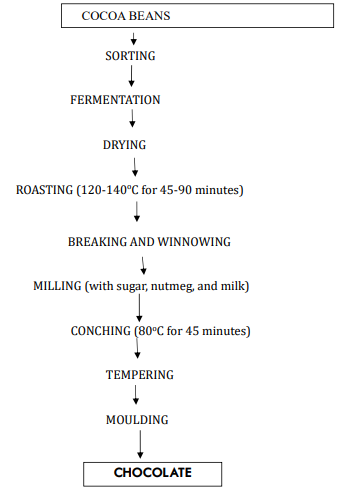
The method of was used [19]. After heap/box fermentation for 8 days, and sun-drying for 4-5 days until moisture content was reduced to about 55%; they were further dried at 60oC for 23 h to a moisture content of 6-7%, and then roasted at 120-140oC for 45-90 min. The cocoa beans were nibbled and winnowed to remove the shells and then ground using a grinding machine with the addition of sugar, milk, and nutmeg. It was then conched at 80oC for 45 minutes using a stone mill to give a velvet smoothness,tempered by stirring and cooled (Figure 2) [19]. The same procedure was followed skipping fermentation for the unfermented (control) cocoa seeds.
Sensory Evaluation
The sensory properties of prepared chocolate snacks were evaluated using a 9-point Hedonic scale (9=like extremely,1=dislike extremely as described by [20].. Twenty semi-trained panelists made up of students from College of Applied Food Science and Tourism, (CAFST) Michael Okpara University of Agriculture, Umudike, were randomly selected for the sensory evaluation of samples. Sensory properties (colour, flavour, texture, taste, texture, and general acceptability) of the chocolate samples were determined. The samples were presented at a serving temperature of about 40°C. All the products were presented in a dish labeled with appropriate 3-digit number codes. Each judge was given a glass of water at room temperature to rinse his/her mouth after tasting to avoid interference with the taste of the preceding products.
Experimental Design and Statistical Analysis
The experimental design was a Completely Randomized Block. The samples were analyzed for their moisture, crude fat, crude protein, ash, and carbohydrate content using a one-way analysis of variance.
Results and Discussion
pH and Temperature of Fermenting Cocoa Beans
Figures 3a and b show the changes in the pH and temperature of cocoa beans during heap and box fermentation. The initial temperature of about 29°C and increased to above 48°C by the 8th fermentation day. The box fermentation temperature was always slightly higher than the heap fermentation temperature. The pH of the fermenting cocoa beans for both box and heap fermentations decreased until the 4th day after which it increased until the 8th day. There were only slight variations in pH for both fermentation methods. The temperature ranged from (29oC on the first day to 50oC on the eight day for the heap fermentation and to 52 oC for box fermentation. Temperature for both box and heap fermentations increased as the fermentation time increased. The pH and acidity of fermented cocoa beans have been reported in different researches to influence both the taste and odour of the products [21]. Reported that the quality of the beans, which originally have a strong bitter taste, depends on the efficiency of the fermentation process; if it is overdone or inadequate, the flavour may not be appreciated by consumers [19]. The dried fermented cocoa beans had pH 6.65% (low acidity) while the unfermented cocoa beans had a lower pH of 5.33 (higher acidity).
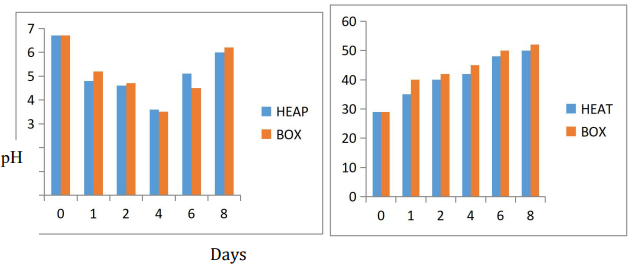
Figure 3: Changes in (a) pH and (b) Temperature During the Fermentation of Cocoa Bean
Drying of Cocoa Beans
Figures 4a and 4b show the changes in weight of the seeds in comparison with the sunlight intensity during the drying of fermented and unfermented cocoa beans. During the sun-drying of fermented cocoa seeds, atmospheric temperature ranged from 24.42 to 28.23oC, while relative humidity ranged from 72.43 to 73.78 and atmospheric pressure ranged from 848.9 to 999.5 hpa. For the unfermented cocoa seeds which took a longer drying time, temperature ranged from 29.08 to 31.68oC; relative humidity ranged from 66.60 to 70.73, while atmospheric pressure ranged from 999.7 to 1000.55 hpa.

Figure 4a: Intensity of Sunlight and Weight of Figure 4b: Intensity of Sunlight and Changes in
of Drying Fermented Cocoa Seeds. Weight of Unfermented Cocoa Seeds
Microbial Succession During Cocoa Fermentation
The changes in microbial population obtained from numeration during cocoa fermentation are shown on Tables 1a and 1b. The results revealed that at the beginning of fermentation, yeasts, and Bacillus spp were present with different levels of microbial load while Lactic Acid Bacteria strains emerged after 24 h of fermentation with bacterial load of 1.82 CFU/ml of cocoa beans and reached its peak after 72h. After 96 h, a decrease was observed. Yeasts population estimated at 1.95 CFU/ml increased rapidly to a maximum at 3.0 CFU/ml at 48 h. By the 3rd, 5th and 7th days, microorganisms on several media (SDA, MRS, and NA) became too numerous to count.
|
Medium |
Days |
Colonies |
Microbial load (cfu/ml) |
CODE |
Probable Organism |
|
|
1 |
|
|
|
|
|
SDA |
|
Two observable types of colonies (195 &125) |
1.95×10⁻² |
C |
Candida |
|
MRS |
|
Two colonies (182& 131) |
1.82×10⁻² |
E |
Lactobacillus |
|
NA |
|
Two colonies (29& 14) |
2.9×10⁻³ |
B |
Bacillus |
|
|
3 |
|
|
|
|
|
SDA |
|
More than one colony. Tntc [293 |
|
C |
Candida |
|
MRS |
|
At least 2 types of colonies (188& Tntc) |
1.8×10⁻³ |
E |
Lactobacillus |
|
NA |
|
259 |
2.5x10⁻³ |
B |
Bacillus |
|
|
5 |
|
|
|
|
|
SDA |
|
At least, 2 distinct colonies (200&151) |
|
D |
Pseudomonas |
|
MRS |
|
Tntc [288] |
|
E |
Lactobacillus |
|
NA |
|
Two observable colonies (270 & tntc) |
|
B |
Bacillus |
|
|
7 |
|
|
|
|
|
SDA |
|
Tntc [299] |
1.9×10⁻⁴ |
I |
Fungi |
|
MRS |
|
18 & 19 |
1.85×10⁻³ |
E |
Lactobacillus |
|
NA |
|
Tntc [86] |
|
B |
Bacillus |
|
Tntc = Too numerous to be counted; SDA =Sabourad Dextrose agar; NA = Nutrient agar; MRS = Mackonkey agar. |
|||||
Table 1a: Succession of Microorganisms During Heap Fermentation of Cocoa Seeds
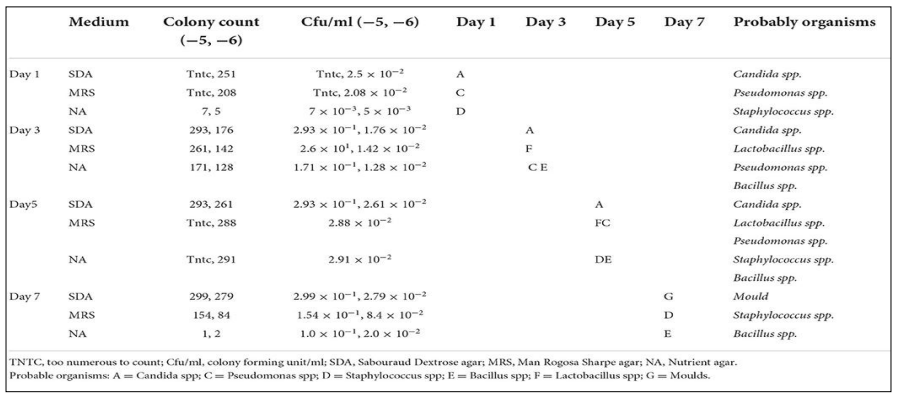
Table 1b: Succession of Microorganisms During Box Fermentation of Cocoa Beans [40]
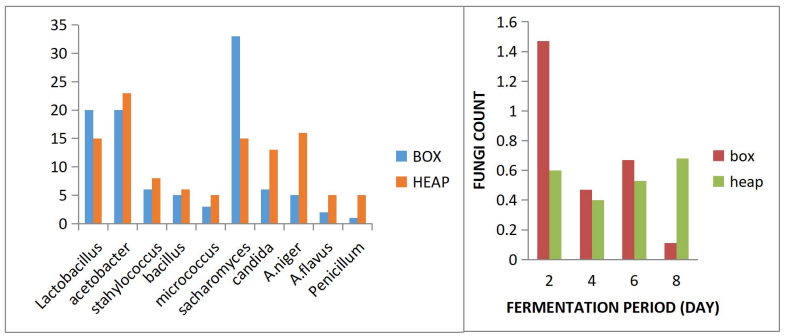
Figures : 5a (Microbial Count) and 5b (Fungal Count) of Heap and Box Fermented Cocoa Beans
Figures 5a and 5b show the bacterial and fungal counts of the fermenting cocoa beans. The fungal count for box fermentation decreased between day 2 and day 4; increased again on day 6 and was lowest on day 8. For heap fermentation, there was an initial decrease between day 2 and day 4 followed by a steady increase until day 8. The fungal load of the box fermented sample were 1.47 for day 2, 0.47 day 4; 0.67 on day 6 and on day 8, a further reduction was observed. Fungal counts in box fermentation were always higher than in heap fermentation, except for the 8th day. Saccharomyces species were the highest and Lactobacillus as well as Acetobacter played important roles. Acetobacter Lactobacillus and other fungi (Saccharomyces, Candida and Aspergillus niger), were high during heap fermentation.
Fungal species (Sacchaaromyces, Candida species, other fungi, Lactic acid bacteria and Bacilli contributed significantly to the fermentation of mixed cocoa beans. Previous studies had revealed that yeasts, lactic acid bacteria, acetic acid bacteria are the main microflora involved in spontaneous cocoa bean fermentation [14,22-24]. They produce ethanol, lactate, heat, and volatile precursors [25]. Noted the importance of acetic acid bacteria for cocoa fermentation [26]. The recurrent presence of Bacilli species could be because all three varieties of cocoa were being fermented together and there was periodic aeration. The present results for microbial succession during fermentation are at variance with those observed by some researchers in which yeasts, Lactic acid bacteria (LAB) and Acetic acid bacteria AAB) reached a peak at 24 h for yeast and LAB and at 72 h for AAB respectively. The results suggest that different cocoa varieties and qualities from different areas attract different microflora from the environment. The bacterial load of Bacillus estimated to 2.3CFU/ml at the beginning increased progressively to reach a peak (3.0 CFU/ml) at the end of the process, unlike the other microorganisms [27]. Many Bacilli spp. are thermo-tolerant [28]. Bacillus species and filamentous fungi can contribute to unpleasant flavors in fermented cocoa beans. Other organisms present during the fermentation were Pseudomonas spp which was found after 72 h of fermentation suggesting that it was not very important for the process and could result from contamination during heap fermentation, since the beans were turned after 24 h [29].
The yeast species associated with cocoa fermentation by researchers include Saccharomyces cerevisiae, Pichia kudriavzevii, and Hanseniaspora opuntiae [25,30]. Yeasts generate important precursors for acetate fermentation. Many yeast species contain pectinolytic enzymes and possess antifungal properties. They contribute significantly to the flavour of the cocoa bean, which develops further during the roasting stage. Free amino acids, peptides, and reducing sugars, serve as flavour precursors in fermented cocoa beans [31,32].
Decrease in the fermentation time of cocoa could be achieved by (a) the use of inoculums (b) reducing the pulp content (c) addition of external fermentation enzymes (d) adjusting the pH and temperature to enhance the fermentation process. The yeasts participate first, then the lactic acid bacteria (LAB) and, finally, the acetic bacteria (AAB) intervene [33]. New microbial species and functionalities are also associated with cocoa bean fermentations (Verce et al., 2021) [34]. Spore-forming bacilli of the genus Bacillus, filamentous fungi, two dominant bacterial species (Lactobacillus fermentum and Acetobacter pasteurianus), together with four yeast species (Saccharomyces cerevisiae, Hanseniospora thailandica, H. opuntiae and Pichia kudriavzevii), are the main bacterium-fungus association involved in the fermentation of cocoa in many regions [35]. Production of quality chocolate from cocoa bean will require the use of mixed starter cultures at the fermentation stage. Yeasts ;Lactic acid bacteria [42]; acetic acid bacteria and Bacillus species should be part of the mixed starter culture [36,37]. Modern techniques to understudy microbial communities during the fermentation of cocoa beans would accelerate the development of appropriate starter culture [38].
Turning of fermenting cocoa seeds was found to affect the aroma of the final product (Calvo et al., 2020) [39]. Fermenting cocoa turned every 24 h contained volatile compounds associated with fermented, bready, and fruity aromas. It favoured an aerobic en¬vironment which stimulated the rapid growth of Acetobacter pas-teurianus, Bacillus subtilis and diverse lactic acid bacteria (LAB) (e.g., Lactobacillus plantarum and Pediococcus acidilacti) and increased the production of ethyl acetate and 3-hydroxy-2-buta-none. When cocoa beans were turned every 48 h, they contained volatile compounds associated with floral, woody, sweet, fruity, and chocolate aromas. The samples turned every 48 h was dom¬inated by yeasts such as Hanseniaspora opuntiae, Pichia mans-hurica, and Meyerozyma carpophila, and contained metabolites such as phenylethyl acetate, 2-phenylacetaldehyde,3-methylbu-tanal, 2-phenylethyl alcohol, 2,3-butanedione, 3-methylbutanoic acid, and 2-methylpropanoic acid. Turning and fermentation time affect the microbial ecology of cocoa and the flavour of its product.
|
Sample |
Colony characteristics |
Gram Staining |
Indole Test |
Citrate Test |
Catalase Test |
Carbohydrate fermentation |
Probable Organism |
||||
|
Sucrose |
Xylose |
Lactose |
Mannitol |
Maltose |
|||||||
|
A |
Brown elevated, medium sized, with circular edges. |
-ve rod |
+ve |
+ve |
+ve |
+ve |
+ve |
+ve |
+ve |
+ve |
Pseudomonas spp |
|
B |
Small, light-green, elevated, with circular edges |
+ve rod |
-ve |
+ve |
+ve |
+ve |
+ve |
+ve |
+ve |
+ve |
Bacillus spp |
|
C |
Milk-coloured, medium-sized, elevated, circular edges |
-ve rod |
-ve |
-ve |
+ve |
+ve |
-ve |
+ve |
+ve |
+ve |
Candida spp |
|
D |
Large, cream-coloured, flat, circular edges |
-ve rod |
-ve |
-ve |
+ve |
+ve |
+ve |
-ve |
+ve |
+ve |
Pseudomonass Spp |
|
E |
Small, orange, elevated, irregular edges |
+ve rod |
-ve |
-ve |
+ve |
+ve |
+ve |
-ve |
+ve |
+ve |
Lactobacillllus Spp |
|
F |
Large, milk-coloured, dry, flat,star-shaped edges |
+ve rod |
-ve |
-ve |
+ve |
+ve |
+ve |
-ve |
+ve |
+ve |
Lactobacillus Spp |
|
G |
Large, cream-coloured, dry, flat, star-shaped edges |
+ve rod |
-ve |
-ve |
-ve |
+ve |
+ve |
+ve |
+ve |
+ve |
Bacillus spp |
|
H |
Small, pink, elevated, with circular edges |
+ve rod |
+ve |
+ve |
+ve |
+ve |
+ve |
+ve |
+ve |
+ve |
Pseudomonas Spp |
|
I |
Large, cream-coloured, elevated with bubbles, circular edges |
+ve cocci |
-ve |
+ve |
+ve |
|
|
|
|
|
Fungi |
|
J |
Light-cream, medium sized, elevated, with hairy irregular edges |
+ve cocci |
-ve |
-ve |
+ve |
|
|
|
|
|
Mould |
Table 2: Probable Identity of Microorganism Involved with the Formation of Cocoa Bean Seeds During Heap Fermentation
Sccharomyces spp played a more important role in box than in heap fermentation. The fungal population decreased by day 4 and increased again by day 6 before the final reduction by day 8. During heap fermentation more fungal species were involved. The fungal population reduced by day 4 and kept on increasing until day 8. Acetobacter, Lactobacillus and other fungi (Aspergillus niger, and Candida were more involved in heap fermentation.
|
Isolate |
Colony morphology |
Microscopy |
Biochemical |
Probable organism |
|||||
|
Motility |
Gram rxn |
Catalase |
Lactose |
Starch |
Citrate |
Oxidase |
|||
|
A
B
C
D
E
F
G
H
I
J |
Moist, cloudy in nutrient Agar, raised elevation with an irregular shape of 14mm. |
-ve |
+ve |
+ve |
+ve |
-ve |
+ve |
+ve |
Staphlococcus sp |
|
Has a yellow color with a raised elevation, round shape and dry consistency, 9mm |
+ve |
+ve |
-ve |
+ve |
+ve |
+ve |
-ve |
Lactobacillus sp |
|
|
6mm in size, rod shaped yellow convex oil-like organism |
+ve |
-ve |
+ve |
+ve |
+ve |
+ve |
-ve |
Acetobacter sp |
|
|
10mm rod shaped whitish umbonate organism, having a moist consistency |
+ve |
+ve |
+ve |
-ve |
+ve |
-ve |
-ve |
Bacillus sp |
|
|
18mm in size, irregularly shaped yellow organism, seen flat with a moist consistency |
+ve |
+ve |
+ve |
-ve |
-ve |
-ve |
+ve |
Micrococcus luteaus |
|
|
5mm elongate with a whitish appearance having a raised moist consistency |
-ve |
+ve |
-ve |
-ve |
+ve |
-ve |
-ve |
Saccharomyces sp |
|
|
20mm with an irregular dry pink flat elevation |
-ve |
+ve |
-ve |
+ve |
+ve |
-ve |
-ve |
Candida sp (pink yeast) |
|
|
9mm whitish in color with a dry raised filamentous consistency |
-ve |
+ve |
-ve |
-ve |
+ve |
-ve |
+ve |
Aspergilus flavus |
|
|
4mm, black with a dry raised filamentous consistency |
-ve |
+ve |
-ve |
-ve |
+ve |
-ve |
+ve |
Aspergilus Niger |
|
|
8mm seen dry green with a raised dry round shape |
-ve |
+ve |
-ve |
-ve |
+ve |
+ve |
+ve |
Penicillum sp |
|
Table 3: Microbial Identification of Isolates Common to Both Box and Heap Fermentation
Drying of Cocoa Seeds
The samples (about 671.80g of unfermented cocoa beans and 270g (each) of fermented cocoa bean heap and box) were sun- dried for total period of 4 days for unfermented and 3 days for fermented. During the drying of unfermented cocoa bean, the weight was initially at 671g decreased tremendously to 486g at 5pm the first day. It was steady until 4pm the 2nd day at 388.29g. It continued till 12pm the 4th day when it reduced slightly and maintained the weight at 323.21g.
The fermented cocoa which was at 270g initially reduced tremendously to 162g at the 2nd day. It reduced again the 3rd day to 154g, it then reduced and maintained its weight at 128g the last day (Figure 6).


(a) Fermented/dried (b) Unfermented/dried
Figure 6: Weight Changes in Cocoa Beans at Various Drying Periods
Total Phenol Content
The results of the total phenol content showed that sample B which is the unfermented cocoa seed contained the highest total phenol (4.59%) while sample A which is the fermented cocoa beans contained low phenol content (2.68). This is because, fermentation reduces the total phenol content in cocoa beans. During fermentation, phenol content of the beans decreases due to their diffusion out of the beans (through water release) and through further oxidation and condensation of the phenol compounds. It also reduces during drying of the cocoa beans [25].
Proximate, Sensory, and Quality Characteristics of Cocoa and Chocolate
The proximate composition of the cocoa bean is shown in Table 3. Sun drying reduced the moisture content to an average of 9.73% for the fermented cocoa bean and 6.66% for unfermented cocoa bean.
The chocolate made from fermented cocoa bean had higher protein content (9.01%) when compared to the chocolate from unfermented cocoa bean which was 3.85%. Table 3 also showed the result of the sensory evaluation carried out on the chocolate samples. Sample B (chocolate made from unfermented cocoa bean) had the least scores in all the parameters. There was significant difference (p<0.05) in taste and aroma between the samples and no significant difference (p>0.05) in texture, mouth feel, appearance, and general acceptability between the samples. The panelist remarked on the astringent and bitter taste of sample B (chocolate made from unfermented cocoa bean).
From the result, it is noted that the unfermented cocoa beans had higher fat content of 20.02% than the fermented cocoa beans with 11.71%. This corroborates with studies carried out by in Nigeria where fermentation was observed to decrease the fat content [40]. Crude fibre contents of the fermented cocoa beans were lower than the unfermented. As shown in the table, the increase in ash content of the fermented cocoa beans could be attributed to the dryness of the sample. Ash is an indication of mineral content of foods and has been shown by to be high in fermented cocoa beans [41]. Carbohydrate as shown in the figure had higher content of 61.62% in fermented cocoa beans than unfermented cocoa beans. The pulp from the beans were converted to sugars during fermentation. The pulp is reported to be rich in fermentable sugars notably glucose and fructose. While the sugar in unfermented cocoa bean is low (about 49.00%). This might be due to the breakdown of the reducing sugars into energy for the physiological and metabolic activities of the beans.
|
Sample |
Moisture |
Protein |
Fat |
Crude fibre |
Ash |
Carbohydrate |
|
A |
9.73±0.01 |
9.01±0.02 |
11.71±0.01 |
1.88±0.01 |
6.04±0.02 |
61.62±0.01 |
|
B |
6.66±0.01 |
3.85±0.01 |
20.02±0.01 |
14.98±0.01 |
5.49±0.01 |
49.00±0.01 |
|
|
Taste |
Texture |
Mouthfeel |
Appearance |
Aroma |
General acceptability |
|
Sample A chocolate |
6.67±1.85 |
5.81±1.17 |
6.10±1.95 |
5.95±1.60 |
7.00±1.18 |
7.00±1.04 |
|
Sample B chocolate |
4.81±1.86 |
5.00±1.64 |
4.95±1.40 |
4.86±2.26 |
4.62±2.20 |
5.29±1.38 |
|
Sample C |
7.55 ± 1.32 |
6.90 ± 1.07 |
7.60 ± 1.00 |
7.55 ± 1.19 |
7.75 ± 1.25 |
7.50 ± 0.80 |
|
|
Total phenol |
pH |
|
|
|
|
|
A |
2.68± 0.02 |
6.65± 0.01 |
|
|
|
|
|
B |
4.59± 0.01 |
5.33± 0.02 |
|
|
|
|
|
C |
2.80 ±0.15 |
6.59± 0.04 |
|
|
|
|
|
A=Heap fermented cocoa beans, B=unfermented cocoa bean, C = box fermented |
||||||
Table 3: The Proximate Composition, Sensory Properties, and Quality Characteristics of the Fermented and Unfermented Cocoa Beans
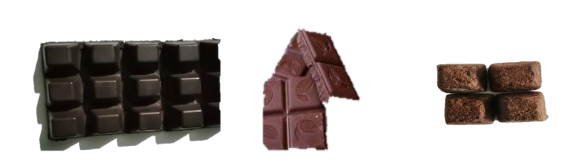
Plate 1: Chocolate Made Using Box, Heap Fermented And Unfermented Cocoa Bean
The moisture content of the samples was within the standard range to reduce the growth of both bacteria and moulds and improve the shelf stability of the products. Roasting was also responsible for the reduced moisture contents in the samples. Protein is formed from their degradation products during the fermentation process. Proteins make 10–15% of the dry weight of unfermented cocoa beans. The highest activity of these enzymes occurs shortly after bean death (24–48 h). Unfermented beans have a lower content of free amino acids then fermented beans. The ratio of free amino acids in unfermented beans depends mostly on the origin and type of the beans observed that fermented beans have a higher content of crude protein when compared with unfermented beans [21]. The crude fibre content of the sample decreased because of the activity of the fungus in the fermenting cocoa beans that secretes enzymes responsible for the biodegradation of the fibre component. The significant decline in the fibre content indicates reduced dietary fibre components such as cellulose, hemicelluloses, and lignin in fermented cocoa beans.
Chocolate made from fermented cocoa bean had a darker colour than the chocolate made from unfermented cocoa bean due to the prolonged enzymatic browning during the eight days fermentation (Rodriguez-Campos et al., 2012). The overall acceptability of the sample A (chocolate made from fermented cocoa bean) was higher than sample B (chocolate made from unfermented cocoa bean).
Conclusions
It is feasible to use inoculants to shorten the fermentation time of cocoa irrespective of the variety. Saccharomyces, Acetobacter, and Lactobacillus played major roles during heap and box fermentations of mixed varieties of cocoa. Other fungal species were more involved in heap fermentation (Aspergillus niger and Candida) than in box fermentation. Intermittent aeration favours the growth of Bacillus. Its persistent presence shows that it also plays an important role. Chocolate made from unfermented cocoa beans was rated inferior to chocolate made from fermented cocoa beans in terms of aroma and taste. Box fermented cocoa beans had better quality than heap fermented cocoa beans. Unfermented beans took a longer time to dry than the fermented ones. Saccharomyces, Acetobacter, Lactobacillus and bacillus are key microorganisms involved in the fermentation of all cocoa varieties and should be used as co-starter cultures. A fermentation period if 6 days is appropriate for natural fermentation of cocoa and should be shortened with the use of starter cultures. Production of quality chocolate from mixed cocoa varieties requires the use of mixed starter cultures from fungi, lactobacillus, acetobacter and spore forming Bacilli.
Author Contributions: GB and RA carried out the research. PO conceptualized the research, collated the data and wrote up the manuscript for publication.
Conflict of interest. The authors have no conflict of interest to declare.
References
- Cocoa Producing Countries. (2020).
- Cilas, C., & Bastide, P. (2020). Challenges to cocoa production in the face of climate change and the spread of pests and diseases. Agronomy, 10(9), 1232.
- Guzmán-Alvarez, R. E., Márquez-Ramos, J. G., Guzmán-Alvarez, R. E., & Márquez-Ramos, J. G. (2021). Fermentation of cocoa beans. Fermentation-Processes, Benefits and Risks, 127.
- Figueroa-Hernández, C., Mota-Gutierrez, J., Ferrocino, I., Hernández-Estrada, Z. J., González-Ríos, O., Cocolin, L., & Suárez-Quiroz, M. L. (2019). The challenges and perspectives of the selection of starter cultures for fermented cocoa beans. International Journal of Food Microbiology, 301, 41-50.
- Rahardjo, Y. P., Rahardja, S., Samsudin, Saidah, Dalapati, A., Amalia, A. F., ... & Syamsu, K. (2022, January). Aliterature review on cocoa fermentation techniques to shorten fermentation time. In IOP Conference Series: Earth and Environmental Science (Vol. 974, No. 1, p. 012111). IOP Publishing.
- Ramos, S., Salazar, M., Nascimento, L., Carazzolle, M., Pereira, G., Delforno, T., ... & Efraim, P. (2020). Influence of pulp on the microbial diversity during cupuassu fermentation. International Journal of Food Microbiology, 318, 108465.
- Papalexandratou, Z., Kaasik, K., Kauffmann, L. V.,Skorstengaard, A., Bouillon, G., Espensen, J. L., ... & Nielsen,D. S. (2019). Linking cocoa varietals and microbial diversity of Nicaraguan fine cocoa bean fermentations and their impact on final cocoa quality appreciation. International journal of food microbiology, 304, 106-118.
- Farrera, L., Colas De La Noue, A., Strub, C., Guibert, B., Kouame, C., Grabulos, J., ... & Teyssier, C. (2021). Towards a starter culture for cocoa fermentation by the selection of acetic acid bacteria. Fermentation, 7(1), 42.
- Delgado-Ospina, J., Triboletti, S., Alessandria, V., Serio, A., Sergi, M., Paparella, A., ... & Chaves-López, C. (2020). Functional biodiversity of yeasts isolated from Colombian fermented and dry cocoa beans. Microorganisms, 8(7), 1086.
- Chagas Junior, G. C. A., Ferreira, N. R., Andrade, E.H. D. A., Nascimento, L. D. D., Siqueira, F. C. D., & Lopes, A. S. (2021). Profile of volatile compounds of on-farm fermented and dried cocoa beans inoculated with Saccharomyces cerevisiae KY794742 and Pichia kudriavzevii KY794725. Molecules, 26(2), 344.
- Moreira, I., Costa, J., Vilela, L., Lima, N., Santos, C., & Schwan, R. (2021). Influence of S. cerevisiae and P. kluyveri as starters on chocolate flavour. Journal of the Science of Food and Agriculture, 101(10), 4409-4419.
- Qin, Z., Yu, S., Chen, J., & Zhou, J. (2022). Dehydrogenases of acetic acid bacteria. Biotechnology advances, 54, 107863.
- Wang, Y., Wu, J., Lv, M., Shao, Z., Hungwe, M., Wang, J., ... & Geng, W. (2021). Metabolism characteristics of lactic acid bacteria and the expanding applications in food industry. Frontiers in bioengineering and biotechnology, 9, 612285.
- Serra, J. L., Moura, F. G., de Melo Pereira, G. V., Soccol,C. R., Rogez, H., & Darnet, S. (2019). Determination of the microbial community in Amazonian cocoa bean fermentation by Illumina-based metagenomic sequencing. Lwt, 106, 229-239.
- Romanens, E., Leischtfeld, S. F., Volland, A., Stevens, M. J., Krähenmann, U., Isele, D., ... & Schwenninger, S. M. (2019). Screening of lactic acid bacteria and yeast strains to select adapted anti-fungal co-cultures for cocoa bean fermentation. International journal of food microbiology, 290, 262-272.
- Monica, C. (2006). District Laboratory Practice in Tropical Countries. 2nd Edn. Hong kong: SheckWah Tong Printing Press Ltd
- Lanyi, B. (1987). Classical and rapid identification methods for medically important bacteria: Method in microbiology Vol 19, ed: Colwell, R.R. and Grigorova, R. Published by Academic press Inc United States
- AOAC. 2012. Official Method of Analysis Association of Analytical Chemists. 19th Edition, Washington DC, 121-130.
- Asiedu, J. J. (1989). Processing tropical crops: a technological approach (pp. vi+-266).
- Iwe, M. O. (2010). Handbook of Sensory methods and analysis, 75-78. Enugu Nigeria Rejoint Communication Science Ltd.
- Adeyeye, E. I., Akinyeye, R. O., Ogunlade, I., Olaofe, O., & Boluwade, J. O. (2010). Effect of farm and industrial processing on the amino acid profile of cocoa beans. Food chemistry, 118(2), 357-363.
- ALMEIDA, S. D. F. O. D., Silva, L. R. C., JUNIOR, G. C.C., Oliveira, G., Silva, S. H. M. D., Vasconcelos, S., & Lopes, A. S. (2019). Diversity of yeasts during fermentation of cocoa from two sites in the Brazilian Amazon. Acta Amazonica, 49(1), 64-70.
- Viesser, J. A., de Melo Pereira, G. V., de Carvalho Neto, D. P., Favero, G. R., de Carvalho, J. C., Goés-Neto, A., ... & Soccol, C. R. (2021). Global cocoa fermentation microbiome: revealing new taxa and microbial functions by next generation sequencing technologies. World Journal of Microbiology and Biotechnology, 37(7), 118.
- De Vuyst, L., & Leroy, F. (2020). Functional role of yeasts, lactic acid bacteria and acetic acid bacteria in cocoa fermentation processes. FEMS Microbiology Reviews, 44(4), 432-453.
- Misnawi, J. Teguh, W. (2010). Cocoa chemistry and technology: Lambert Academic Publishing
- Vu-Thi, K. N., Nguyen, C. H., Tran, B. P., & Nguyen, T. H. A.N. G. (2022). Quality Assessment During the Fermentation of Cocoa Beans: Effects of Partial Mucilage Removal. Journal of Applied Sciences & Environmental Management, 26(8).
- Ouattara, H. G., & Niamké, S. L. (2021). Mapping the functional and strain diversity of the main microbiota involved in cocoa fermentation from Cote d’Ivoire. Food Microbiology, 98, 103767.
- Schwan, R. F., & Wheals, A. E. (2004). The microbiology of cocoa fermentation and its role in chocolate quality. Critical reviews in food science and nutrition, 44(4), 205-221.
- Fernández-Niño, M., Rodríguez-Cubillos, M. J., Herrera-Rocha, F., Anzola, J. M., Cepeda-Hernández, M. L., Aguirre Mejía, J. L., ... & González Barrios, A. F. (2021). Dissecting industrial fermentations of fine flavour cocoa through metagenomic analysis. Scientific Reports, 11(1), 8638.
- Chagas Junior, G. C. A., Ferreira, N. R., & Lopes, A. S. (2021). The microbiota diversity identified during the cocoa fermentation and the benefits of the starter cultures use: an overview. International Journal of Food Science and Technology, 56(2), 544-552.
- Mota-Gutierrez, J., Barbosa-Pereira, L., Ferrocino, I., & Cocolin, L. (2019). Traceability of functional volatile compounds generated on inoculated cocoa fermentation and its potential health benefits. Nutrients, 11(4), 884.
- Marseglia, A., Musci, M., Rinaldi, M., Palla, G., & Caligiani, (2020). Volatile fingerprint of unroasted and roasted cocoa beans (Theobroma cacao L.) from different geographical origins. Food Research International, 132, 109101.
- Soumahoro, S., Ouattara, H. G., Droux, M., Nasser, W., Niamke, S. L., & Reverchon, S. (2020). Acetic acid bacteria (AAB) involved in cocoa fermentation from Ivory Coast: species diversity and performance in acetic acid production. Journal of Food Science and Technology, 57(5), 1904-1916.
- Lima, C. O. D. C., Vaz, A. B., De Castro, G. M., Lobo,F., Solar, R., Rodrigues, C., ... & Góes-Neto, A. (2021). Integrating microbial metagenomics and physicochemical parameters and a new perspective on starter culture for fine cocoa fermentation. Food Microbiology, 93, 103608.
- Tigrero-Vaca, J., Maridueña-Zavala, M. G., Liao, H. L., Prado-Lince, M., Zambrano-Vera, C. S., Monserrate-Maggi, B., & Cevallos-Cevallos, J. M. (2022). Microbial diversity and contribution to the formation of volatile compounds during fine-flavor cacao bean fermentation. Foods, 11(7), 915.
- Copetti, M. V. (2019). Yeasts and molds in fermented food production: an ancient bioprocess. Current opinion in food science, 25, 57-61.
- Salazar, M. M. M., Alvarez, O. L. M., Castaneda, M. P. A., & Medina, P. X. L. (2022). Bioprospecting of indigenous yeasts involved in cocoa fermentation using sensory and chemical strategies for selecting a starter inoculum. Food Microbiology, 101, 103896.
- Viesser, J. A., de Melo Pereira, G. V., de Carvalho Neto, D. P., Rogez, H., Góes-Neto, A., Azevedo, V., ... & Soccol, C.R. (2021). Co-culturing fructophilic lactic acid bacteria and yeast enhanced sugar metabolism and aroma formation during cocoa beans fermentation. International journal of food microbiology, 339, 109015.
- Castro-Alayo, E. M., Idrogo-Vásquez, G., Siche, R., & Cardenas-Toro, F. P. (2019). Formation of aromatic compounds precursors during fermentation of Criollo and Forastero cocoa. Heliyon, 5(1).
- Obinze, S., Ojimelukwe, P. C., & Eke, B. A. (2022). Box fermentation and solar drying improve the nutrient composition and organoleptic quality of chocolate from cocoa beans. Frontiers in Sustainable Food Systems, 6, 1023123.
- Ieggli, C. V. S., Bohrer, D., Do Nascimento, P. C., & De Carvalho, L. M. (2011). Determination of sodium, potassium, calcium, magnesium, zinc and iron in emulsified chocolate samples by flame atomic absorption spectrometry. Food Chemistry, 124(3), 1189-1193.
- Calvo, A. M., Botina, B. L., García, M. C., Cardona, W. A., Montenegro, A. C., & Criollo, J. (2021). Dynamics of cocoa fermentation and its effect on quality. Scientific reports, 11(1), 16746.
- Díaz-Muñoz, C., Van de Voorde, D., Comasio, A., Verce, M., Hernandez, C. E., Weckx, S., & De Vuyst, L. (2021). Curing of cocoa beans: fine-scale monitoring of the starter cultures applied and metabolomics of the fermentation and drying steps. Frontiers in Microbiology, 11, 616875.
- Guehi, T. S., Zahouli, I. B., Ban-Koffi, L., Fae, M. A., & Nemlin, J. G. (2010). Performance of different drying methods and their effects on the chemical quality attributes of raw cocoa material. International Journal of Food Science and Technology, 45(8), 1564-1571.
- Gutiérrez-Ríos, H. G., Suárez-Quiroz, M. L., Hernández-Estrada, Z. J., Castellanos-Onorio, O. P., Alonso-Villegas, R., Rayas-Duarte, P., ... & González-Rios, O. (2022). Yeasts as producers of flavor precursors during cocoa bean fermentation and their relevance as starter cultures: a review. Fermentation, 8(7), 331.
- Huerta-Conde, J. A., Schorr-Galindo, S., Figueroa-Hernández, C., Hernández-Estrada, Z. J., Suárez-Quiroz, M. L., & González-Rios, O. (2021). Isolation of autochthonous microorganisms to formulate a defined inoculum for small-scale cocoa fermentation. Revista Mexicana de Ingeniería Química, 20(1), 239-256.
- Hamdouche, Y., Meile, J. C., Lebrun, M., Guehi, T., Boulanger, R., Teyssier, C., & Montet, D. (2019). Impact of turning, pod storage and fermentation time on microbial ecology and volatile composition of cocoa beans. Food Research International, 119, 477-491.
- Joel, N., Pius, B., Deborah, A., & Chris, U. (2013). Production and quality evaluation of cocoa products (plain cocoa powder and chocolate). American journal of food and nutrition, 3(1), 31-38.
- Pacheco-Montealegre, M. E., Dávila-Mora, L. L., Botero-Rute, L. M., Reyes, A., & Caro-Quintero, A. (2020). Fine resolution analysis of microbial communities provides insights into the variability of cocoa bean fermentation. Frontiers in Microbiology, 11, 650.
- Santander Muñoz, M., Rodríguez Cortina, J., Vaillant, F. E., & Escobar Parra, S. (2020). An overview of the physical and biochemical transformation of cocoa seeds to beans and to chocolate: Flavor formation. Critical reviews in food science and nutrition, 60(10), 1593-1613.
- Tigrero-Vaca, J., Maridueña-Zavala, M. G., Liao, H. L., Prado-Lince, M., Zambrano-Vera, C. S., Monserrate-Maggi, B., & Cevallos-Cevallos, J. M. (2022). Microbial diversity and contribution to the formation of volatile compounds during fine-flavor cacao bean fermentation. Foods, 11(7), 915.
- Viesser, J. A., de Melo Pereira, G. V., de Carvalho Neto, D. P., Vandenberghe, L. P. D. S., Azevedo, V., Brenig, B., ... & Soccol,C. R. (2020). Exploring the contribution of fructophilic lactic acid bacteria to cocoa beans fermentation: Isolation, selection and evaluation. Food Research International, 136, 109478.