

Journal of Novel Physiotherapies Research Reviews(JNP)
ISSN: 2771-7739 | DOI: 10.33140/JNP

Research Article - (2022) Volume 3, Issue 1
Methods And Means of Restorative Treatment in Case of Incorrect Positions of The Uterus Relative to The Horizontal Axis of The Small Pelvis
Received Date: Feb 10, 2022 / Accepted Date: Feb 17, 2022 / Published Date: Mar 03, 2022
Copyright: ©Copyright: ©2022 Konstantin Anatolyevich Bugaevsky. This is an openaccess article distributed under the terms of the Creative Commons Attribution License, which permits unrestricted use, distribution, and reproduction in any medium, provided the original author and source are credited.
Citation: Konstantin Anatolyevich Bugaevsky (2022) Methods and Means of Restorative Treatment in Case of Incorrect Positions of The Uterus Relative to The Horizontal Axis of The Small Pelvis. J Nov Psy 3(1): 26- 28.
Abstract
The article presents the results of a study relating to the practical application of methods and means of physical rehabilitation with incorrect positions of the uterus. An exemplary complex of physical exercises and rehabilitation methods is given
Keywords
Restorative Treatment, Gynecological Massage, Incorrect Positions of The Uterus, Adhesions, Rehabilitation
Abbreviations
• TPC - Therapeutic Physical Culture
Introduction
Today, gynecological pathology, actively affecting the level of female reproductive health, is one of the leading problems for many women in all over the world [1]. Among them are various options for incorrect positions of the uterus. This pathology leads to various types of ovarian-menstrual cycle disorders (hypomenstrual syndrome, algomenorrhea), often leads to female infertility, being its etiological uterine factor [2, 3]. It should be noted that incorrect positions of the uterus as such do not always require treatment. If they do not cause subjective complaints and functional disorders, then only the wrong position of the uterus is not an indication for treatment. The question of treatment may arise in the presence of symptoms such as pain, frequent and painful urination, urinary incontinence, disorders of the ovarian-menstrual cycle. Methods for treating abnormal positions of the uterus can be conservative and surgical. The relevance of the issues discussed in this article is due to the fact that today, in many women of reproductive age, among the variety of gynecological problems, a special place is occupied by the wrong position of the uterus, especially those formed relative to the horizontal plane [2]. The issues of restorative treatment and physical rehabilitation of violations of the position of the uterus along the horizontal axis are the least studied and, in our opinion, are undeservedly little used today both in obstetrics and gynecology, and in medical rehabilitation.
Aim
Present the results of the practical application of an exemplary set of methods and means of restorative treatment / physical rehabilitation in case of incorrect positions of the uterus in the horizontal plane.
The Objectives of the Study were:
1. Selection of an approximate set of methods and means of physical rehabilitation and rehabilitation treatment for this type of gynecological pathology.
2. Determining the degree of effectiveness of the selected rehabilitation complex at the outpatient stage of rehabilitation.
Material and Methods
A study on the use of an approximate set of methods for correcting a number of incorrect positions of the uterus was carried out on the basis and with the assistance of the gynecological department and the antenatal clinic of the municipal institution “Central City Hospital” in Nova Kakhovka, Kherson region, Ukraine. In the conditions of the antenatal clinic, all the patients who took part in the study, after a preliminary acquaintance with their medical records, underwent a general clinical examination, a gynecological examination, and an ultrasound examination. After studying the received materials, 3 groups (n=37) were formed. All of them were selected after their voluntary consent and explanation of the purpose and methods of the study to the patients. When conducting courses of gynecological massage, we adhered to the mandatory requirements for its implementation, proposed by I.I. Benediktov [4], taking into account the practical recommendations proposed by Schneiderman M.G. [5]. Also, in the process of correcting incorrect positions of the uterus, taking into account the identified additional pathology, we used complexes of therapeutic physical culture (TPC), the action of which was aimed not only at correcting the existing pathology, but also at strengthening the muscles of the pelvic floor, perineum, anterior abdominal wall [6, 7].
Result and Discussion
Normally, the bottom of the uterus does not go beyond the plane of the entrance to the small pelvis and an obtuse angle is formed between the body and the cervix, open forward. The uterus is tilted somewhat anteriorly, in connection with which its bottom is directed towards the anterior abdominal wall and has a bend between the neck and the body, forming an obtuse angle open anteriorly. This inclination of the uterus is called versio; under normal conditions, the uterus is tilted anteriorly - anteversio [3]. However, with a pathological inflection, this angle can be acute, open anteriorly (hyperanteflexio) or posteriorly (retroflexio). Thus, the normal position of the uterus in the pelvic cavity corresponds to anteflexio-anteversio. The normal position of the uterus in the pelvic cavity is shown in Fig.:
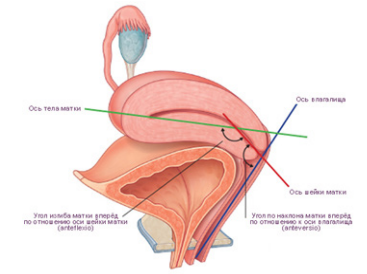
Figure 1: Normal position of the uterus (Taken from www. ginomedic.ru)
Of all the types of incorrect positions of the uterus, retrodeviation (posterior displacement, mainly retroflexion) and pathological anteflexia (hyperanteflexia) have the most important clinical significance. There are the following types of displacement of the uterus in the horizontal plane: displacement of the entire uterus (body and cervix) - antepositio, retropositio, dextropositio and sinistropositio, incorrect inclinations of the uterus - retroversio, dextroversio, sinistroversio and pathological inflection of the uterus. The displacement of the entire uterus can be in 4 forms -antepositio, retropositio, dextropositio and sinistropositio [3].
At the time of the complex of corrective and rehabilitation measures, with the use of gynecological massage, a specially selected type of therapeutic physical culture (TPC), all patients had a stable remission of existing chronic inflammatory processes, confirmed by clinical, laboratory and instrumental methods of examination. It was taken into account that physical therapy exercises are indicated in the case of acquired uterine deviations, as well as position anomalies complicated by non-rough inflammatory adhesions of the genital organs with surrounding tissues [8].
We identified 3 groups of patients with incorrect positions of the uterus. The first group (n = 14) included patients with retroflexion and retrodeviation of the uterus (n = 9), and patients (n = 9) with uterine deviation to the right or left. In the second group of patients (n = 11), there were women (n = 7), with retroflexion and retrodeviation of the uterus, and patients (n = 7), with uterine deviation to the right or left. The third group (n = 14) included patients with uterine deviation to the right or left (n = 11), and patients (n = 3) with retroflexion and retrodeviation of the uterus. All patients, in accordance with the requirements of the Helsinki Convention on the Protection of Patients’ Rights, gave their voluntary consent to participate in the ongoing study and apply methods and means of rehabilitation treatment to them.
Patients of all three groups underwent 20 sessions of gynecological massage every other day [4]. The cycle of sessions was carried out in the period after the completion of menstrual bleeding (in the intermenstrual period). The first session was usually conducted as an introductory diagnostic session and lasted from 5-7 to 10-15 minutes. In the first group (n = 12), there were patients from 22 to 32 years old, the average age was 27.6 ± 1.5 years. Treatment according to the existing pathology was 6.4 ± 1.3 years. 9 patients (75.00%) were diagnosed with retroflexion and retrodeviation of the uterus (retroversion et retrodeviatio submobilis et fixate), 3 (25.00%) patients were diagnosed with deviations of the body of the uterus to the right or left side (dextra et sinistra lateroversio et flexio). From the anamnesis, it was found that this pathology in patients of the first group is associated with a history of inflammatory processes of both specific and nonspecific etiology (adnexitis, metritis), spontaneous and artificial abortions in early pregnancy. Patients of this group underwent a course of exercise therapy in the form of a special set of exercises in isotonic and isometric modes according to the method of V. A. Epifanov (1989) [7].
To consolidate the result obtained, the patients were recommended, in the conditions of the office of the TPC antenatal clinic and / or in the conditions of sanatorium treatment, to apply a set of exercise TPC and special Kegel exercises to strengthen the muscles of the anterior abdominal wall and pelvic floor muscles [6, 8].
In the second group (n = 11), there were patients from 26 to 33 years old, the average age was 29.3 ± 1.3 years. Treatment according to the existing pathology was 4.2 ± 1.2 years. In 8 patients (72.73%), I degree of vaginal prolapse was diagnosed - prolapse of the anterior wall of the vagina, the posterior one, or both at once; in all cases, the walls do not go beyond the area of the entrance to the vagina. In 3 patients (27.27%), I was diagnosed with prolapse (omission) of the uterus, in which they noted a downward displacement of the uterine body, but the cervix was in the vagina.
Also, 7 (63.64%) patients were diagnosed with retroflexion and retrodeviation of the uterus (retroversion et retrodeviatio submobilis et fixate), and 4 (36.36%) patients of this group were diagnosed with an incorrect position of the uterine body in the form of its deviations to the side (dextra et sinistra lateroversio et flexio) in relation to the horizontal plane. Exercise therapy (TPC) was added to therapy, in the form of a set of special exercises for the muscles of the abdomen and pelvic floor, according to the method of Vasilyeva V.E. (1970), as well as special exercises according to the Kegel method, to strengthen the muscles of the pelvic floor [2]. In the third group (n = 14), there were patients from 23 to 32 years old, the average age was 28.2 ± 1.3 years. Treatment according to the existing pathology was 5.4 ± 1.6 years. In 11 patients (78.57%), tubal-peritoneal infertility was diagnosed against the background of chronic inflammatory processes of the pelvic organs, specific and non-specific etiology, with the development of an intense adhesive process, aggravated by the incorrect position of the uterine body in the form of its side deviations (dextra et sinistra lateroversio et flexio), 3 (21.43%) patients were diagnosed with retroflexion and retrodeviation of the uterus (retroversion et retrodeviatio submobilis et fixate) [1, 3, 4]. Sessions of gynecological massage in this group were the most intense (up to 25-30 minutes), which was determined by the presence of numerous adhesive formations, weakness of the ligamentous apparatus of the uterus and pelvic floor muscles. In this group, additionally, for more intensive development (stretching of adhesions), the initial positions of the patient in the knee-elbow, and especially in the knee-wrist positions were used [5, 8].
The patients of this group were prescribed a course of exercise therapy (TPC) according to the method of D.N. Atabekov, in the modification of F. A. Yunusov (1985) [5, 8]. The control gynecological examination and ultrasound showed obvious changes in the topography of the uterus and appendages, a decrease in the number of adhesive formations and adhesions, and strengthening of the pelvic floor muscles was noted. The patients were offered further rehabilitation measures in the conditions of the antenatal clinic’s exercise therapy (TPC) room and at the sanatorium-resort stage of rehabilitation.
Conclusion
With all the visible benefits of gynecological massage as a means of treatment and rehabilitation in gynecological practice, it must be used in a complex of methods of rehabilitation / physical rehabilitation and physiotherapy.
The approximate set of methods proposed by us for correcting incorrect positions of the uterus in the horizontal plane can be proposed for practical use at the outpatient and sanatorium stages of rehabilitation in patients of reproductive age with manifestations of vaginal wall prolapse, and with different variants of incorrect positions of the uterus, relative to its horizontal axis, of different etiologies.
Conflict of Interest
I have no conflict of interest.
References
- Abramchenko VV, Bolotskikh VM (2007) Therapeutic exercise in obstetrics and gynecology. St. Petersburg: “ELBI-SPb” 2007: 122-124.
- Shneiderman MG (2014) Obstetric and gynecological massage: a guide. Moskow. GEOTAR-Media 2014: 80.
- Benediktov II (1998) Gynecological massage and gymnastics. Nizhny Novgorod: NGMA Publishing House 1998: 124.
- Markova VS (2008) Gymnastics in the physical rehabilitation of women with irregular uterine positions. Slobozhansky science and sports bulletin 3: 103-106.
- Mirovich ED, Mityukov VA, Churilov AV (2009) Clinical and anatomical rationale for the use of restorative methods of physical rehabilitation and gynecological massage in case of incorrect positions and prolapse of the uterus / Pedagogy, psychology and biomedical problems of physical education and sports 5: 168-174.
- Peshkova OV, Markova VS (2007) Comprehensive physical rehabilitation of young women with irregular position of the uterus in an antenatal clinic. Slobozhansky science-sport 11: 143-147.
- Stepankivska OV, Shcherbina MO (2013) Gynecology. Kyiv: VSV “Medicine” 2013: 105-118.
- Susloparov LA, Lukin VA (1991) On the causes of normal and pathological positions of the uterus. Kyiv: RNMB 1991: 45.