

Journal of Agriculture and Horticulture Research(JAHR)
ISSN: 2643-671X | DOI: 10.33140/JAHR
Impact Factor: 1.12

Research Article - (2024) Volume 7, Issue 1
Measure and Compare Physiochemical Properties of Apples Cultivars (Red and Yellow) and Physiological Properties of Banana Fruit
2Department of Post-harvest Technology, Vietnam National University of Agriculture, Vietnam
Received Date: Jun 04, 2024 / Accepted Date: Jul 30, 2024 / Published Date: Aug 16, 2024
Copyright: ©Â©2024 Tolcha Techane Alemu, et al. This is an open-access article distributed under the terms of the Creative Commons Attribution License, which permits unrestricted use, distribution, and reproduction in any medium, provided the original author and source are credited.
Citation: Alemu, T. T., Oanh, V. T. K. (2024). Measure and Compare Physiochemical Properties of Apples Cultivars (Red and Yellow) And Physiological Properties of Banana Fruit. J Agri Horti Res, 7(1), 01-07.
Abstract
This study was conducted to understand changes of physicochemical properties of fruits of two apple cultivars (red and yellow) as influenced by stage of maturity and physiological properties of banana fruits. Results indicated that maturity stage at harvest significantly (P<0.05) affected quality of apple cultivars and banana fruits. The result of study showed red apple cultivar has higher TSS, diameter, weight and a-value while the yellow cultivar apple has higher firmness, b* and L*- values. Apple red cultivar showed higher diameter (65.9 mm), higher TSS (14.6%), L* (46) and a* (22) values and yellow apple cultivar depicted higher firmness 10.04 N and b* values (26.7). The study also depicted that, ripe banana exhibited higher intensity respiration CO2 and ethylene production compare to green banana. However, during storage conditions, the cold storage exhibited lower intensity respiration CO2 and ethylene production. Ripe banana showed maximum intensity respiration 7.6 CO2 (LCO2 /kg/h) and ethylene 7.4 μLC2 H4 /kg*h. However, during room temperature at 32oC and cold storage at 13oC temperature, bananas stored at room temperature revealed higher respiration 1.2 CO2 (LCO2 /kg/h) and 1.64 μLC2 H4 /kg*h ethylene compared with cold storage 0.9 CO2 (LCO2 /kg/h) and 1.1 μLC2 H4 /kg*h respectively. Thus, it can be concluded that the choice of fruit picking time (maturity stage) plays a key role in influencing the quality attributes of apple cultivar fruits. Further research is recommended on more quality parameters with different types of apple and banana varieties.
Keywords
Apple Cultivars, Banana, Maturity Stages
Introduction
The apple, (Malus domestica) is one of the pome (fleshy) fruits family Rosaceae and domesticated tree as well most widely cultivated tree fruits in the world. Apple (Malus domestica) is the valuable temperate climate fruits that is reportedly originated in many parts of Euro-Asia [1]. Harvesting fruits without optimum stage of maturity affect the physicochemical properties and other qualities parameters. Harvesting immature and over mature fruit is also serious cause of postharvest losses fruits [2]. Fruits harvested at advanced maturity are more prone to mechanical injury, having short storage life and greater susceptibility to pathogens and physiological disorders. Maturity at harvest is main factors determining quality and the rate of quality changes during postharvest handling and shelf life. The harvesting of fruits like apple at appropriate time and identify better cultivar are an important determinant for shelf life and quality [3]. Therefore, to maintain the general quality and physicochemical properties such as Diameter, weight, firmness, total soluble solid of Apple, identifying the correct stage of maturity, cultivar and harvesting at the appropriate time are critical issue [4].
Materials and Methods
The laboratory work was conducted in department of post-harvest technology, Vietnam national university of agriculture. During laboratory works for determination of basic physicochemical properties of apples cultivar (red and yellow) different materials were used. Some of them were listed below with their function.
Materials Used
Ripe and unripe Apple fruits……… as sample
Balance …………………………….to measure weight of samples
Beaker and graduate cylinder ……. to measure volume
Penetrometer…................................... to measure firmness
Refractometer…................................ to measure TSS
Digital Caliper …............................to measure size like Diameter
Petridish…......................... to hold juice of sample
Slicer.................................. Peel off a thin slice of the fruit skin for
firmness measurement
Bowl.................................... to hold water overflow during liquid
displacement methods
Tissue................................. to clean refractometer
Minolta Calorimeter…... to measure color
Methods for Determination of Physicochemical Proper-ties of Red and Yellow Apple Cultivar
Physicochemical changes were measured by using methods of [3,6].
Diameter
Size is an important physical attribute of fruits and vegetables particularly during sorting to separate foreign materials, grading fruits and vegetables and evaluating of food materials. One of the characteristics of size used for measure dimension of fruits is largest diameter which was directly measured by using digital caliper.
Weight
Weight is one of physical properties of fruits. The weight was measured directly by putting Apples (red and yellow) cultivar on digital balance.
Color
Color is also one of the best characteristics used for evaluating quality of fruits. This parameter was measured by using chroma meter (CR 400 -410 Japan). It was calibrated using the standard white plate (Y= 81.8, × =0.3215, y =0.3392). Three readings from left, middle and right part of the apple was taken. The color values expressed in terms of the L*, a* and b* values, where L*, light (0) to (100 black) a* indicates green (-60) and red (60) color and b* indicate yellow –60 and blue 60 color.
Volume of Sample (Apples)
It was measured by liquid displacement method through adding water into beaker. In this method first, weight of water and beaker was recorded together. Then by put and sample into beaker containing water, the water overflow into bowel. The water overflow into bowl was measured by using graduate cylinder. That volume was considered as volume of sample.
In other way we have taken beaker and filled with water. That means summation of mass of beaker and water equal with mass of beaker and water (mbw). During this experiment the temperature was 32oc. After that, we have put apple fruit water submerged without touching bottom or side of beaker. So, the combination of mass of water, beaker and fruit apple were considered as mass of beaker, water and fruit (mbwf). Therefore, by using mass of summation or total mbwf and mbf it is possible to calculate water displaced like below figure.

Density
Density of fruits was determined by dividing weight of water displaced by volumes of sample.
Firmness
This parameter was measured by using penetrometer by peel off a thin slice of the fruit skin and calibrating at zero. That is to avoid the interference of skin, fruits were peeled at the points where firmness was measured. The result from penetrometer as kgf, then values of result in kgf was divided for the product of πr2 where “r” is stand for radius then, firmness of apple was determined.

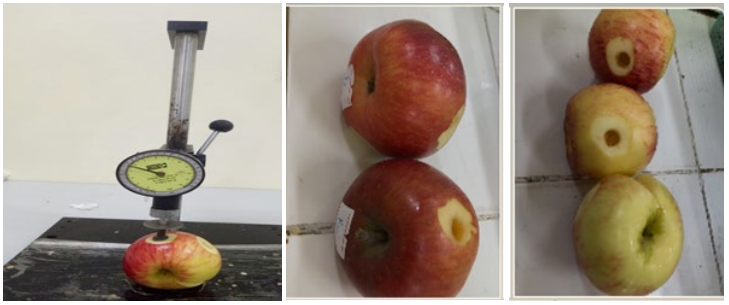
Figure 2: Measuring Firmness of Apple Fruit
Total Soluble Solids (TSS)
The total soluble solid content of an Apple was measured using digital refractometer (PAL-1, LRO3*2 Tokyo, Japan) at room temperature. During determination of this parameter, samples were cover by cotton clothes tissue and put in side of tighter and pressed to form juice. That juice was used for TSS determination.

Figure 3: Refractometer
Statistical Analysis
The data were statistically analysed using MS excel and results were express as mean + standard deviation.
Results and Discussion
Data Recorded for Red Cultivar Apple
|
Samples |
D(mm) |
Mass (g) |
mbwf-mbw(g) |
Vf(L) |
Pf(kg/l) |
|
Fruit 1 |
65.4 |
153.82 |
153.64 |
159 |
0.966289 |
|
Fruit2 |
66.45 |
153.05 |
152.9 |
117 |
1.306838 |
|
Average` |
65.9 |
153.4 |
153.3 |
138.0 |
1.1 |
Table 1
|
Samples |
L* |
a* |
b* |
Firmness (Kgf) |
Firmness (kg/cm2) |
TSS °Bx |
|
Fruit 1 |
45.14 |
22.38 |
17.2 |
5.1 |
6.5 |
15.9 |
|
Fruit2 |
46.83 |
21.55 |
20.62 |
8 |
10.2 |
13.2 |
|
F3 |
- |
- |
- |
6.5 |
8.3 |
14.7 |
|
Average |
46.0 |
22 |
18.9 |
6.53 |
8.3 |
14.6 |
Table 2
Raw data recorded for yellow cultivar apple
|
Samples |
D(mm) |
m(g) |
mbwf-mbw(g) |
Vf (L) |
Pf (kg/l) |
|
Fruit 1 |
62.5 |
139.73 |
143.77 |
106 |
1061.356321 |
|
Fruit2 |
61.2 |
139.83 |
136.7 |
113 |
1.209735 |
|
Fruit3 |
58.4 |
147.27 |
134.51 |
110 |
1.222818 |
|
Average |
60.7 |
142.3 |
138.3 |
109.7 |
1.262958 |
Table 3
|
Samples |
L* |
a* |
b* |
Firmness (kg/ cm2) |
TSS °Bx |
|
Fruit 1 |
51.83 |
19.82 |
24.77 |
9.9299809 |
12.1 |
|
Fruit2 |
67.97 |
10.18 |
31.79 |
10.1336728 |
12.6 |
|
Fruit3 |
60.66 |
19.2 |
23.54 |
10.0572884 |
11.3 |
|
Average |
46.2 |
16.4 |
26.7 |
10.04031 |
12 |
Table 4
Diameter
The effect of cultivar of Apple fruit on diameter showed in below figure 4. The result showed that, the red apple showed higher diameter than the yellow one.
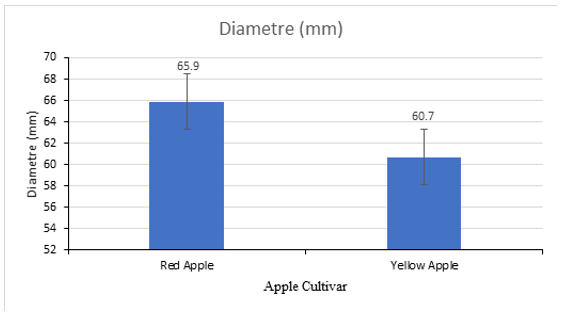
Figure 4: Effect of Cultivar Maturity on Diameter of Apple
According to Figure.4 above showed that, the higher diameter recorded for the red Apple cultivar and the lower for the yellow apple. The possible reason might be the full cuticle development of red apple cultivar with maximum diameter (65.9 mm) which prevents the shrinkage while the reason for the minimum apple yellow fruit diameter in (60.7 mm) might be less cuticle development respectively and because of red apple more ripped. Variety also may affect the diameter of fruits. The other reason may be because of cell enlargement and water content increased and make cell swell in red apple cultivar. The result agrees with the work of who were study effect of maturity stages and postharvest treatments on physical properties of apple during storage [3,4].
Weight, Weight of Water Displaced Volume, Volume and Density of Apple
The below Fig.5 showed that effect of apple cultivar on weight, volume and density of Apple. The result showed that the red apple cultivar has higher weight, weight of water displaced volume and lower density. This is might be due to fact that red apple cultivar riper than the yellow. It also might be increased in size and have more water during ripening. All this condition makes the red variety more weight and volume but low density, because of higher volume. This result supported with the work of who said that, the increased of weight during plant development [5].

Figure 5: Effect of apple cultivar maturity on weight, weight of water displaced, volume and density
Total Soluble Solids (TSS)
Fig. 6 below showed, effect of cultivar in terms of yellow and red on total soluble solids of Apple fruit. According to result implied, the red apple showed, higher TSS than the yellow one cultivar. This might be due to variety and rep apple cultivar riper than yellow and also due to the fact that as stage of maturity increased, the total soluble solids increased since there is degradation of polysaccharide and starch into sugar happened. It might be also because of breakdown of organic acid into sugar. It also may due to the increase in sugar content as acidity level in the fruit decrease in holding during ripening. The work of also implied and support this work in which firmness decreased while the total soluble solids kept increasing, which showed degradation of the pectin structural components while increasing soluble components [6].

Figure 6: Effect of Cultivar Maturity on TSS of Apple
Firmness
Firmness is one of the indicator fresh fruit quality. As the fruit matures and ripens, the flesh will become softer and thus fruit firmness/pressure testers or penetrometers have been developed to measure these changes. The below fig.7 showed that, yellow apple cultivar has higher firmness than the red one. This could be due to the reason behind the higher fruit firmness (10.04kg/cm2) in yellow apple might be due to yellow apple has low respiration rate and enzymatic activity also low as well due to Variety. The higher firmness also is due to the immature tissues of the fruit flesh, that is reportedly associated to the types of pectin fraction in the tissues whereas the concentrations of cellulose and hemicellulose structures remains unchanged with maturity and softening [3,7]. Therefore because of the degradation of cell wall and solubilization of pectin substances in yellow apple cultivar low, the higher firmness recorded.

Color
According to fig.8 below showed that, the higher color (60.2) values in terms of L* values was recorded for the yellow cultivar and the lower (46) for the red one. The higher a* values which is redness recorded for the red cultivar. In terms of yellowness, which is b* value the higher result recorded for yellow apple cultivar. The reason why L* value and b* values higher for yellow cultivar apple and higher a* values for red apple cultivar is might be due to the fact that nature characteristics of fruits and degree of ripening low. It also may be because of the yellow cultivar grow under shade and has higher L* value than red. This idea was supported by the work of [8].

Figure 8: Effect of apple cultivar maturity on color values
Conclusion
Cultivar can affect physicochemical properties of fruit like apple and identify better cultivar are an important determinant quality specially for determination of physicochemical properties. The recorded results showed that, red apple cultivar has higher TSS, diameter, weight and a-value while the yellow cultivar apple has higher firmness, b and L- values. Therefore, identification and determination of better cultivar and optimum maturity are very important to maintain general quality of fruits.
References
- Fetena, S., Shara, S., Anjulo, A., Gulie, G., & Yilma,B. (2014). Survey on Apple Production and Variety Identification in Chencha District of Gamo Gofa Zone, Southern Ethiopia, J. Agric. Food. Tech.
- Ingle, M., D'Souza, M. C., & Townsend, E. C. (2000). Fruit characteristics of'York'apples during development and after storage. Hort Science, 35(1), 95-98.
- Ganai, S. A., Ahsan, H., Tak, A., Mir, M. A., & Rather, A. H., et al. (2018). Effect of maturity stages and postharvest treatments on physical properties of apple during storage. Journal of the Saudi Society of Agricultural Sciences, 17(3), 310-316.
- Quamruzzaman, A. K. M., Islam, F., Akter, L., & Mallick,S. R. (2022). Effect of maturity indices on growth and quality of high value vegetables. American Journal of Plant Sciences, 13(7), 1042-1062.
- Karabulut, I., Gokbulut, I., Bilenler, T., Sislioglu, K., & Ozdemir, I. S. (2018). Effect of fruit maturity level on quality, sensory properties and volatile composition of two common apricot (Prunus armeniaca L.) varieties. Journal of food science and technology, 55, 2671-2678.
- Fikre, T., Gebre, A., & Leka, E. (2021). Physicochemical Changes of Apple (Malus domestica) Fruit Cultivars as Influenced by Maturity Stages and Postharvest Management Practices. Ethiopian Journal of Agricultural Sciences, 31(2), 87-104.
- Johnston, J. W., Hewett, E. W., & Hertog, M. L. (2002). Postharvest softening of apple (Malus domestica) fruit: a review. New Zealand Journal of Crop and Horticultural Science, 30(3), 145-160.
- Jing, C., Feng, D., Zhao, Z., Wu, X., & Chen, X. (2020).Effect of environmental factors on skin pigmentation and taste in three apple cultivars. Acta Physiologiae Plantarum, 42, 1-12.