

Journal of Agriculture and Horticulture Research(JAHR)
ISSN: 2643-671X | DOI: 10.33140/JAHR
Impact Factor: 1.12

Research Article - (2025) Volume 8, Issue 1
Management of Tomato Leaf Miner (Tuta absoluta Meyrick) (Lepidoptera: Gelechiidae) on Tomato (Solanum lycopersicum) through Integration of Botanical and Synthetic Insecticide in Fogera Irrigation Conditions, Northwestern Ethiopia
Received Date: May 03, 2025 / Accepted Date: Jun 10, 2025 / Published Date: Jun 23, 2025
Copyright: ©Â©2025 Adane Tesfaye Lema. This is an open-access article distributed under the terms of the Creative Commons Attribution License, which permits unrestricted use, distribution, and reproduction in any medium, provided the original author and source are credited.
Citation: Ayele, L, T., Lema, T, A. (2025). Management of Tomato Leaf Miner (Tuta absoluta Meyrick) (Lepidoptera:Gelechiidae) on Tomato (Solanum lycopersicum) through Integration of Botanical and Synthetic Insecticide in Fogera Irrigation Conditions, Northwestern Ethiopia. J Agri Horti Res, 8(1), 01-11.
Abstract
Tomato (Solanum lycopersicum L.) is the most popular vegetable crop grown in Ethiopia as well as in the world. The tomato leaf miner (Tuta absoluta Meyrick) (Lepidoptera: Gelechiidae) is an important insect pest affecting Solanaceae worldwide. Tuta absoluta has been a problem in tomatoes in Ethiopia since 2012. Since this insect pest is new to Ethiopia, various researches are paramount to develop effective management options. This study was intended to manage tomato leaf miner (T. absoluta) through integration of two botanical insecticides, Neem (Azadirachta indica) and garlic (Allium sativum L.) with a synthetic insecticide, Mercury 23 EC @ 0.14 ml, 0.28 ml and 0.42 ml conducted at Fogera plain, Northwest Ethiopia during irrigation season of 2022 and 2023. The experiment was evaluated in fourteen treatments and laid out in Randomized Complete Block Design (RCBD) with three replications. The tomato variety “Cochoro” was used as a test crop. The results findings revealed that the effect of an integration of botanicals with synthetic insecticide in reducing T. absoluta infestation, damage and yield loss were quite promising in all integrations. The treatments consisting of an integration of Neem, Garlic and Mercury 23 EC at three different concentrations (0.14 ml, 0.28 ml and 0.42 ml) performed best in this study. This was evident in lower mortality percentages, the lower infestation level of leaves and fruits, the higher marketable yield and lesser yield loss percent of Tomato plants. The yield loss due to T. absoluta was found 81.41%. The current study clearly showed that yield loss positively correlated with infestation of tomato by tomato leaf miner (T. absoluta). Treatments consisting of an integration of both Neem and Garlic with MERCURY 23 EC @ 0.28 ml can be recommended as the most effective and economical treatment for the management of the tomato leaf miner (T. absoluta) for the study area. Further trail of this work in different agro-ecological conditions and studies on the effects of the IPM package, used in the present study, on human, soil and environmental health is also recommended.
Keywords
Botanicals, Synthetic Insecticide, Integration, Tomato, Tuta Absoluta
Introduction
Tomato (Solanum lycopersicum Linnaeus) (Solanales: Solanace-ae) is one of the most significant horticultural vegetables crops cultivated worldwide for its considerable commercial and nutri-tional value [1]. In Ethiopia, tomato is the most important and widely grown vegetable for fresh consumption and as a source of income [2]. In the Fogera plain, Northwestern Ethiopia, tomato production for fresh market is a common practice in dry season us- ing irrigation for a long time. So, growers, merchants, consumers, intermediaries and transporter are highly benefited from this toma- to production in the areas. However, the productions in these areas do not meet the farmers and other producer demands due to manybiotic and abiotic constraints faced in their field productions. The notable constraints are insect pests and diseases which decrease yield and the quality of marketable fruits of tomatoes [3]. Tomato leaf miner (Tuta absoluta Meyrick) as first officially reported in Ethiopia for the first time in 2012 [4]. It invaded different parts of the country like Oroma, Tigiray, Amhara and Gambela [5]. Cur- rently, T.absoluta is a siginificant insect pest and cause yield loss of tomato about 78% and 92.33% in Ethiopia [6-7].
T. absoluta is a holo-metamorphic insect whose life cycle includes four developmental stages: eggs, larvae, pupae and adults, which are completed within 24 days at 27°C [8]. It has a high reproductive potential in a short period of time and can produce up to 12 generations per year if temperatures are favorable and also high adaptability to the new environment [9]. Tomatoes have been described as being the primary host for T. absoluta. However, this pest can also develop by feeding other solanaceous plants such as
potato, eggplant and tobacco [10]. Feeding damage to host plants is caused by larvae, which can attack at any stage of development from seedlings to adult plants. The larvae also invade the leaves and damage the mesophyll. This creates irregular mines and negatively affects the rate of photosynthesis [11]. Therefore, the present study was initiated with the objective to evaluate integrated use of A. indica and A. sativum with Mercury 23 EC to manage T. absoluta on tomatoes at fogera plain, Northwestern Ethiopia.
Materials and Methods
Description of The Study Area
The study was conducted at the Fogera National Rice Research and Training Centre in Northwestern Ethiopia during the 2022 dry season, utilizing irrigation. This region is geographically situated between 11° 57' 0" North latitude and 37° 35' 0" East longitude, with an altitude ranging from 1774 to 2410 meters above sea level (figure 2.1).
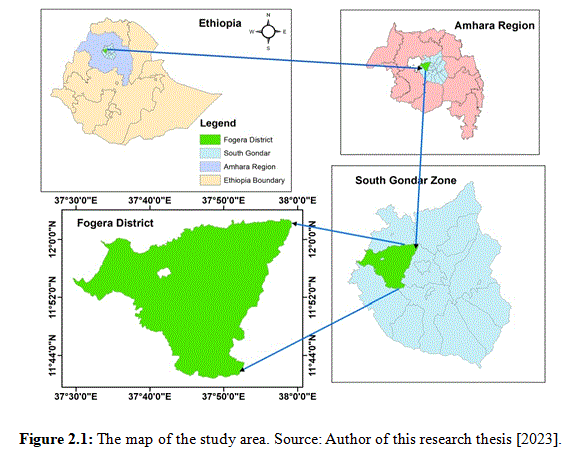
Figure 2.1: The map of the study area. Source: Author of this research thesis [2023].
Climatically, the district experiences an average annual temperature of 20.63 °C, with minimums around 13.17 °C and maximums reaching 28.08 °C. The area receives a mean annual rainfall of 1278.92 mm, according to data from the National Meteorological Service Agency (2022).
The major crops grown in the study area are rice, teff, hotpper and Niger seed during rainy season whereas during dry season chickpea and latyrus using residual moisture and tomato and onion using irrigation. The predominant soil types in the area are Vertisols and Fluvisols. These soils are characterized by textures of sandy clay and sandy loam, respectively [12].
Botanical Plant Collection and Extraction Methods
The botanical extracts used in this study, garlic (Allium sativum) and neem (Azadirachta indica), were prepared following methods adapted from [13].
Garlic (Allium sativum) Extract: Fresh garlic bulbs were purchased from a local market in Bahir Dar. To prepare the extract, 250 grams of fresh garlic cloves were finely chopped and then strained in a grinder. The chopped garlic was then soaked in 1 litter of distilled water for one hour. The mixture was thoroughly shaken just before application.
Neem (Azadirachta indica) Extract: Fresh, green neem leaves were collected from trees growing locally in Bahir Dar. To ensure cleanliness and prevent contamination, the leaves were first soaked in a 1% sodium hypochlorite solution and then washed three times with sterilized water to remove any potential diseases or insect infestations. The washed leaves were then ground into small pieces using a mortar and pestle. For the extract, 1.25 kg of fresh neem leaves were pounded and then soaked overnight in 5 litters of water. To enhance the effectiveness of the spray, 10 ml (one teaspoon) of liquid soap was added to the mixture to act as a sticker, helping the solution adhere better to plant surfaces.
Description of Experimental Materials
Cochero tomato variety was used as a test crop. The seeds were obtained from Amhara Regional agricultural Research Institute, Weramit Horticulture Research and Training center. The variety used for experiment is open pollinated, which requires 100-120 days to mature and has a yield potential of 45 tons/ha on research field and 13-17 tons/ha on farmer field that were released from
Melkasa Agricultural Research Center [14]. Garlic (Allium sativum) clove extract and neem (Azadirachta indica) leaf extract were used as botanical insecticides. MERCURY 23 EC a synthetic insecticide with three application rate was used in this experiment since it is the most available and selective insecticide against T. absoluta. It was purchased from Bahir Dar Pesticide shop.
Treatments and Experimental Designs
A Randomized Complete Block Design (RCBD) was used to lay out the experiment which consisted of fourteen (14) treatments with three replications. The treatments were A. indica, A. sativum, MERCURY 23 EC with rate (0.14 ml, 0.42 ml and 0.28 ml) and an integration of each together (Table 1).The net plot area of each treatment was 12 m2 (3 m x 4 m). The recommended intra - row spacing 0.5 m and inter - row spacing 1 m was maintained for all plots. The outer single rows at both sides of the plot and one plant at both ends of the rows were considered as border plants.
|
Treatment No |
Treatment combination |
|
1 |
Garlic + Neem |
|
2 |
Garlic |
|
3 |
MERCURY 23 EC @ 0.14 ml/L |
|
4 |
MERCURY 23 EC @ 0.42 ml/L |
|
5 |
Neem |
|
6 |
MERCURY 23 EC @ 0.28 ml/L |
|
7 |
Neem + MERCURY 23 EC @ 0.28 ml/L |
|
8 |
Neem + MERCURY 23 EC @ 0.14 ml/L |
|
9 |
Neem + MERCURY 23 EC @ 0.42 ml/L |
|
10 |
Garlic + MERCURY 23 EC @ 0.28 ml/L |
|
11 |
Garlic + MERCURY 23 EC @ 0.14 ml/L |
|
12 |
Garlic +MERCURY 23 EC @ 0.42 ml/L |
|
13 |
Neem + Garlic+ MERCURY 23 EC @ 0.28 ml/L |
|
14 |
Untreated check |
Table 1: List of Experimental Treatments
Experimental Procedures and Management of The Exper- iment
About 0.36g/plot seed rate of tomato was used. The seed of tomato was sown in flat seed bed having 2 m length and 1.2 m width (2.4 m2) for raising seedlings on October 10, 2022. The land was ploughed, harrowed and leveled on November and December, 2022 and allocated to plots measured (3 m x 4 m) with 31 m long and 27.5 m width. The seedling was transplanted into the experimental area on January 19, 2023 after 40 days manually. To ensure uniform plant population throughout the experiment, after three day of transplanting wilted and dried seedling were replaced by strong and vigorous seedlings.
Water was applied using furrow irrigation method at three days interval at early stage of the plants. Then, the frequency was in seven days interval and was stopped at physiological maturity a week before harvest [15]. 242 kg/ha NPS and 100 kg/ha Urea fertilizer were applied. NPS was applied fully at transplanting
while urea was applied in two splits, the first half percent a week after transplanting and the second half percent half month after transplanting. All other crop management practices were applied timely and uniformly to all plots as per the recommendation for tomato plant. Harvesting of tomato fruit was done after 90 day of transplanting.
Application of treatments was begin on February 18, 2023 after 30 days of transplantation when the T. absoluta infestation accumulated and exceeded the economic threshold (approximately 2 larvae per plant) using methods of [16]. Treatments were applied at 10 days intervals. When applying a treatment which consists of integrated packages, a spray schedule (sequential application) was designed. In which, A. indica and A. sativum were used in the early stages of the series; whereas, MERCURY 23 EC are the final component of the treatments. All treatments were applied before sunset using knapsack sprayer twice throughout the experiment.
Data Collected
Before treatment application number of live larva per plot and number of infested leaves per plants were recorded after 30 day of transplanting.
Number of Live larvae per plot: The numbers of live larvae per plot were recorded from each plot by counting after 9 days of treatment application. .
Number of Infested Leaves per Plants: The numbers of infested leaves from six randomly selected plants per plot were counted after 10 days of the last treatment applications for each plot.
Number of Tunneled Fruit per plant: The numbers of tunneled fruit from six randomly selected plants per plot were counted after 20 days of last treatment applications for each plot.
Marketable Yield (ton/ha): Fruits free from any visible damages were considered as marketable and were recorded per plot for each plot then weighed with analytical balance in kg and converted into hectare basis.
Yield Loss Estimation: Percent of yield loss was calculated by comparing yield in untreated plot with yield in treated plot by using methods of [17].
Yield loss  %
% = Potential yield − Actual yield/ Potential yield * 100
Note: Potential yield is a yield in treated plot whereas; yield in control considered as Actual yield.
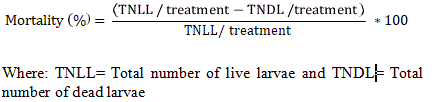
Percentage of Mortality: Mortality of larvae per plot after four exposure dates (3, 5, 7 and 10 days) of each spray, and the percentage of mortality was calculated by using the methods of [18].
Data Analysis
The data obtained were statistically analyzed using R-Statistics software version 4.3.1 [19]. The significance differences means, analysis of variance, and Duncan's Multiple Range Test (DMRT) of all treatments were done. Pearson's correlation coefficient method and linear regression analysis fitting regression equation Y= a + bx were used to examine associations between larval populations, infested leaves and tunneled fruit with marketable tomato yield and yield loss.
Results and Discussion
Effects of A. indica, A. sativum, MERCURY 23 EC with rate (0.14 ml, 0.42 ml and 0.28 ml) their integration on larvae mortality of Tuta absoluta
The analysis of variance revealed that the effects A. indica, A. sativum, MERCURY 23 EC with rate (0.14 ml, 0.42 ml and 0.28 ml) and an integration of each together were very highly significant (P < 0.001) and gave highest larvae mortality of T. absoluta. The highest mortality of T. absoluta larvae was recorded from an integration of MERCURY 23 EC rate 0.28 ml with A. indica, and A. sativum, (91.01% and 100%) for entire days of first and last spray, respectively. The lowest percentage of larval mortality (0.00%) was obtained from untreated check (Table 2and 3). This result was in accordance with the findings of [20]. Who reported highest larvae mortality by using neem extract with the standard insecticides. These results are also in conformity with the results of who recorded significantly higher larval mortality of T. absoluta recorded from Pyrethrin + garlic extract compared with the untreated check [21].
The integration of A. indica and A. sativum showed highest percentage of larvae mortality (71.69% and 89.74%) for entire days of first and last spray, respectively. Similar results were reported by [22]. Who reported that a higher mortality rate (76%) was recorded for the Garlic + Neem extract combination.
A. indica, had the highest larvae mortality percentage (64.71% and 77.35%) as compared to A. sativum (61.64% and 70.86%) for entire days of first and last spray, respectively. The present findings are in agreement with the findings with who reported that neem leaf extract showed the highest (67.47%) percentage mortality of T [18]. absoluta larvae as compared to garlic clove extract (60.36%). These result also in consistence with the findings of reported that neem leaf extract has highest larval mortality as compared to garlic clove extract [6].
MERCURY 23 EC gave highest larval mortality percentages of T. absoluta at rate (0.28 ml) (66.94% and 85.52%) and (0.42 ml) (68.84% and 89.32%) for entire days of first and last spray, respectively. But, the lowest larval mortality percentages (27.79% and 33.57%) were recorded with MERCURY 23 EC at rate 0.14 ml but highly significant as compared to untreated check (0.00%). These results were in harmony with who found that Emamectin benzoate and Chlorfenapry had excellent efficacy against T. absoluta and resulting in high mortality rate 98.74% and 84.89%, respectively [23]. Also, stated that the efficacy of Chlorfenapry and Emamectin benzoate against T. absoluta was high (mortality rate >90%) [24].
|
Treatments |
First spray |
||||
|
1DAS |
3DAS |
5DAS |
7DAS |
9DAS |
|
|
Garlic + Neem |
51.95f |
55.95fg |
63.68e |
69.31de |
71.69ef |
|
Garlic |
45.21h |
51.40i |
59.06h |
59.06i |
61.64f |
|
MERCURY 23 EC @ 0.14ml |
22.86i |
28.79 j |
29.12h |
27.79i |
27.79 j |
|
MERCURY 23 EC @ 0.42ml |
61.37d |
63.88e |
59.84f |
63.09g |
68.84fg |
|
Neem |
47.50gh |
52.46hi |
64.71e |
64.71fg |
64.71h |
|
MERCURY 23 EC @ 0.28ml |
56.70e |
59.60f |
57.33g |
60.51h |
66.94gh |
|
Neem + MERCURY 23 EC @ 0.28ml |
64.56d |
68.54d |
71.85c |
74.04c |
78.29cd |
|
Neem + MERCURY 23 EC @ 0.14ml |
50.01fg |
54.04gh |
60.28f |
66.93ef |
71.65ef |
|
Neem + MERCURY 23 EC @ 0.42ml |
74.80b |
78.73b |
80.62b |
83.44b |
84.26b |
|
Garlic + MERCURY 23 EC @ 0.28ml |
62.62d |
65.87de |
69.09d |
71.53d |
74.83de |
|
Garlic + MERCURY 23 EC @ 0.14ml |
49.16fg |
53.33ghi |
60.97f |
65.81f |
70.95fg |
|
Garlic +MERCURY 23 EC @ 0.42ml |
70.62c |
75.32c |
79.46b |
81.18b |
82.08bc |
|
Neem + Garlic+ MERCURY 23 EC @ 0.28ml |
81.14a |
86.08a |
90.13a |
91.01a |
91.01a |
|
Untreated |
0.00j |
0.00k |
0.00i |
0.00j |
0.00k |
|
SE (±) |
1.05 |
1.07 |
1.99 |
0.84 |
1.31 |
|
Mean |
52.75 |
56.71 |
59.98 |
62.74 |
65.15 |
|
CV (%) |
3.46 |
2..40 |
2.87 |
2.33 |
3.50 |
|
LSD |
*** |
*** |
*** |
*** |
*** |
Table 2: Mean Value of Larvae Mortality Percentage for Second Spray After 1, 3, 5, 7 And 9 Day of Spray
Note: LSD = level of significance difference, *** = highly significant (P<0.001); SE (±) = Standard error; CV = Coefficient of variation; means with in the same columns followed by the same letter (s) are not significantly different from each other.
|
Treatments |
Second Spray |
||||
|
1DAS |
3DAS |
5DAS |
7DAS |
9DAS |
|
|
Garlic + Neem |
75.50d |
80.23de |
82.68d |
86.62d |
89.74cde |
|
Garlic |
70.20e |
70.39i |
70.86g |
70.86g |
70.86h |
|
MERCURY 23 EC @ 0.14ml/L |
33.57g |
35.80j |
36.86h |
36.86h |
36.86i |
|
MERCURY 23 EC @ 0.42ml/L |
70.56e |
77.24fg |
82.77d |
86.86d |
89.32de |
|
Neem |
72.93de |
76.23gh |
77.35f |
77.35f |
77.35g |
|
MERCURY 23 EC @ 0.28ml |
63.77f |
74.89h |
78.26f |
82.27e |
85.52f |
|
Neem + MERCURY 23 EC @ 0.28ml |
80.72c |
84.57c |
86.36c |
90.40c |
91.68c |
|
Neem + MERCURY 23 EC @ 0.14ml |
75.83d |
79.88de |
83.04d |
87.12d |
89.53cde |
|
Neem + MERCURY 23 EC @ 0.42ml |
88.17b |
90.53b |
92.90b |
96.02b |
96.81b |
|
Garlic + MERCURY 23 EC @ 0.28ml |
79.71c |
81.30d |
83.75d |
87.78d |
90.21cd |
|
Garlic + MERCURY 23 EC @ 0.14ml |
75.91d |
78.54ef |
80.84e |
84.22e |
87.52ef |
|
Garlic +MERCURY 23 EC @ 0.42ml |
86.12b |
89.35b |
91.55b |
96.01b |
96.76b |
|
Neem + Garlic+ MERCURY 23 EC @ 0.28ml |
94.29a |
96.75a |
100.00a |
100.00a |
100.00a |
|
Untreated |
0.00h |
0.00k |
0.00i |
0.00i |
0.00j |
|
SE (±) |
1.13 |
0.71 |
0.55 |
0.7374 |
0.72 |
|
Mean |
69.09 |
72.38 |
74.80 |
77.31 |
78.73 |
|
CV (%) |
2.84 |
1.37 |
1.29 |
1.65 |
1.60 |
|
P-value |
*** |
*** |
*** |
*** |
*** |
Table 3: Mean Value of Larvae Mortality Percentage for Second Spray After 1, 3, 5, 7 And 9 Day of Spray
Note: P-value = Probability value, ***=highly significant (P < 0.001); SE (±) = Standard error; CV = Coefficient of variation; means with in the same columns followed by the same letter (s) are not significantly different from each other.
Effects of A. indica, A. sativum, MERCURY 23 EC with rate (0.14 ml, 0.42 ml and 0.28 ml and their integration on infestation of tomato leave by T. absoluta
The analysis of variance revealed that the effects of A. indica, A. sativum, MERCURY 23 EC with rate (0.14 ml, 0.42 ml and 0.28 ml and their integration were very highly significant (P < 0.001) and reduced infested leaves per plant. The lowest number of infested leaves per plant was recorded from A. indica, A. sativum, MERCURY 23 EC with rate (0.14 ml, 0.42 ml and 0.28 ml and their integrations. Whereas, the highest leave infestation was observed in untreated check (Table 4). These results were consistent with who reported that the highest number of infested leaves per plant was obtained from an untreated check and the lowest infestation of leaves was obtained from IPM package consisting of synthetic insecticides with other control methods also reported that tomato leaf infestation by T. absoluta was similarly reduced by using neem extract and standard insecticides [25&20]. A. indica and A. sativum had the highest effect on reducing number of infested leaves per plant. The highest number of infested leaves per plant (18.33) was found on A. indica application as compared to A. sativum (14.16). This is directly in line with the findings of who reported that the lowest percentage (30.59%) of infested leaves per plant was recorded in neem leaf extract followed by garlic extract (35.38%) [18].The present study agreed with who reported that application of azadirachtin reduced T. absoluta leaf invasion by 70–83% [22].
MERCURY 23 EC was very highly significant on the reduction of infested leaves per plant at rate 0.42 ml and 0.28 ml. This is directly in agreements with the findings of who found that both of Chlorfenapyr and Emamectin benzoate gave reduced values of infestation of tomato plant leaves by Tuta absoluta. Moreover, expressed that the damage of plant and leaves was decreased due to decrease of infestation of tomato leaf miner [28-29].
|
Treatments |
Before first spray |
After second spray |
|
Garlic + Neem |
22.55 |
8.55fgh |
|
Garlic |
23.16 |
18.33c |
|
MERCURY 23 EC @ 0.14ml |
22.44 |
25.44b |
|
MERCURY 23 EC @ 0.42ml |
22.17 |
10.16f |
|
Neem |
23.00 |
14.16d |
|
MERCURY 23 EC @ 0.28 ml |
22.55 |
12.05e |
|
Neem + MERCURY 23 EC @ 0.28 ml |
25.05 |
7.05hij |
|
Neem + MERCURY 23 EC @ 0.14 ml |
23.44 |
8.67fgh |
|
Neem + MERCURY 23 EC @ 0.42 ml |
23.39 |
5.61j |
|
Garlic + MERCURY 23 EC @ 0.28 ml |
23.94 |
8.00ghi |
|
Garlic + MERCURY 23 EC @ 0.14 ml |
22.61 |
9.39fg |
|
Garlic +MERCURY 23 EC @ 0.42 ml |
22.61 |
6.50ij |
|
Neem + Garlic+ MERCURY 23 EC @ 0.28 ml |
24.05 |
5.44j |
|
Untreated |
22.67 |
43.05a |
|
Mean |
23.11 |
13.03 |
|
CV (%) |
6.14 |
7.75 |
|
P-value |
Ns |
*** |
Table 4: Mean Value of Infested Leaves Per Plant Before First Spray and After Second Spray
Note: P-value = Probability value *** = highly significant (P < 0.001), ns = Non significant; CV = Coefficient of variation. Means with in the same columns followed by the same letter (s) are not significantly different from each other.
Effects of A. indica, A. sativum, MERCURY 23 EC with rate (0.14 ml, 0.42 ml and 0.28 ml and their integration on fruit infestation per plant by T. absoluta
The analysis of variance revealed that the effects of A. indica, A. sativum, MERCURY 23 EC with rate (0.14 ml, 0.42 ml and 0.28 ml and their integration were very high significant (P < 0.001) and reduced tunneled fruit per plant (Table 5). The lowest numbers of tunneled fruit were recorded in an integration of A. indica, A. sativum and MERCURY 23 EC with rate 0.28 ml . The highest number of tunneled fruit per plant were recorded from untreated check (15.33) followed by MERCURY 23 EC 0.14 ml (9.67). This result concur with who reported that the highest number of infested fruit was obtained from untreated check and the lowest fruit infestation was obtained from Integrated Pest Management (IPM) package consisting of synthetic insecticides with other controlling methods [2].
An integration of A. indica, A. sativum, MERCURY 23 EC with rate (0.14 ml, 0.42 ml and 0.28 ml are not significantly different from each other but highly significant from untreated check and observed the lowest number of tunneled fruit per plant. This result may be supported by the findings of several scientists who have studied the effectiveness of bio-rational integrated approaches in the control of tomato leaf miner and observed less fruit infestation [22,30&31]. A. indica has anti-feedant and repellent properties, and it was found to be relatively less toxic to beneficial organisms than other harmful synthetic pesticides, which made it an eco-friendly and effective substitute for IPM packages [35].
Both A. indica and A. sativum found that lowest number of infested fruit per plant. This study were consistent with those of who showed that the insecticidal activities of aqueous extracts of five local plants including neem (Azadirachta indica) and garlic (Allium sativum) plants reduced significantly the number of infested leaflets, the number of mines and the number of fruits infested by T. absoluta under greenhouse condition [26]. Similarly, the current results were in agreement with that showed that A. sativum and A. indica were reduced number of leaf infested and fruit tunneled per plants [6].
MERCURY 23 EC treatment was shown to be equivalent in minimizing tomato fruit damage caused by T. absoluta compared to untreated controls. These results were in correspondence with who reported that treatment with Emamectin benzoate insecticide was shown to effectively minimize T. absoluta damage on tomato fruit compared to untreated controls [32]. Similarly, reported that using Chlorfenapry gives promise result and low infested fruit per plant [33].
Effects of A. indica, A. sativum, MERCURY 23 EC with rate (0.14 ml, 0.42 ml and 0.28 ml and their integration on marketable yield of tomato
The analysis of variance revealed that the effects of A. indica, A. sativum, MERCURY 23 EC with rate (0.14 ml, 0.42 ml and 0.28 ml and their integration were very high significant (P < 0.001) and gained higher marketable yield of tomato (Table 5). Both A. indica (29.00 ton/ha) and A. sativum (28.36 tons/ha) gave highest marketable yield. The lowest marketable yield was recorded from untreated check (6.35 ton/ha) followed by MERCURY 23 EC at rate 0.14 ml (18.67 tons/ha).
Similar results by who evaluate the efficacy of extracts of three botanical including neem extract as alternative to synthetic insecticides against T. absoluta on reducing the number of infested plant per plot, number of active mines and percentage of infested fruits as well as increase yield was recorded [34]. The present result on the marketable fruit yield is supported by [35&6]. They were evaluated the combined efficacy of 12 bio-rational based IPM packages against the infestation of Tuta absoluta and reported that the highest marketable fruit yield was obtained.
On other hand, results of this study proved that plots treated with neem (29.00 ton/ha) gained the highest marketable yield. The results of present study are similar with the study of [18&30]. They reported that yield and yield attributes was directly increase with the decreased of infestation of tomato leaf miner during fruit setting and maturity stage of tomato also reported that the maximum reduction in larval population (65.26%) and a higher marketable yield (17.55 ton/ha) with using neem extract [36]. A study by showed that the plots treated with neem extract achieved the highest marketable yield [37]. The same results of yield increase with the use of neem were reported by Garlic extract were gave the highest marketable yield of tomato [38]. These were in line with who reported that garlic extract gave the highest marketable yield of tomato [39].
In this study, synthetic insecticides MERCURY 23 EC 0.42 ml (30.33 ton/ha) and MERCURY 23 EC 0.28 ml (29.10 ton/ha) investigated the highest yield of tomatoes, respectively. This result was consistent with the results of who found that Chlorfenapry and Emamectin Benzoate were most effective against T. absoluta and gained highest marketable yield of tomato [29].
Yield Loss Estimation caused by T. absoluta
In terms of yield loss, the analysis of variance revealed that the effects of botanical extract, synthetic insecticides and their integration were very high significant (P < 0.001) and yield loss caused by T. absoluta (Table 5). The lowest yield losses (<4.10 %) were recorded in the treated plots consisting of neem and garlic with MERCURY 23 EC 0.28 ml followed by neem with MERCURY 23 EC 0.42 (4.10%). The synthetic insecticides MERCURY 23 EC (Chlorfenapry 200 g/l + Emamectin Benzoate 30 g/l) at the concentrations of 0.28 ml and 0.42 ml showed the lowest yield loss followed by Neem (17.23%) and Garlic (19.10%), respectively. The highest yield loss (81.41%) was observed on untreated check followed by MERCURY 23 EC 0.14ml (47.98%).
So, the loss in marketable yield depends on the level of T. absoluta infestation. The present result might be supported by the findings made by who studied the effectiveness of the integrated bio- rational approach in the management of tomato leaf miner and reported that the bio-rational IPM approach was markedly superior to the conventional chemical method with only 2% yield loss as compared to 50% and 45% in the chemical control and untreated check, respectively [35]. This result was also in agreement with several scholar who reported that without control measures, T. absoluta can reduce tomato yield and fruit quality by up to 80– 100% by attacking leaves, flower stalks and especially fruit [40]. Therefore, these agree with the present study which showed yield losses of 81.41%.
|
Treatments |
No. of tunneled |
|
|
|
fruit/ plant |
Yield (ton/ha) |
Yield loss (%) |
|
|
Garlic + Neem |
1.33defg |
31.41cde |
10.42efg |
|
Garlic |
3.33c |
28.36g |
19.10c |
|
MERCURY 23 EC @ 0.14ml |
9.67b |
18.67h |
47.98b |
|
MERCURY 23 EC @ 0.42ml |
2.33cde |
30.33efg |
13.44de |
|
Neem |
2.67cd |
29.00fg |
17.23cd |
|
MERCURY 23 EC @ 0.28 ml |
2.33cde |
29.10fg |
17.19cd |
|
Neem + MERCURY 23 EC @ 0.28ml |
1.33defg |
32.57bcd |
7.06fgh |
|
Neem + MERCURY 23 EC @ 0.14ml |
2.00cdef |
31.14de |
11.19ef |
|
Neem + MERCURY 23 EC @ 0.42ml |
0.67fg |
33.76ab |
4.10hi |
|
Garlic + MERCURY 23 EC @ 0.28ml |
1.67defg |
31.85bcde |
9..15efgh |
|
Garlic + MERCURY 23 EC @ 0.14ml |
2.00cdef |
30.67def |
12.49def |
|
Garlic +MERCURY 23 EC @ 0.42ml |
1.00efg |
33.28abc |
5.03ghi |
|
Neem + Garlic+ MERCURY 23 EC @ 0.28ml |
0.33g |
35.06a |
~ |
|
Untreated |
15.33a |
6.53i |
81.41a |
|
SE (±) |
0.44 |
0.63 |
1.76 |
|
Mean |
3.28 |
28.69 |
18.27 |
|
CV (%) |
23.48 |
3.84 |
16.73 |
|
P-value |
*** |
*** |
*** |
Table 5. Mean Values for Tunneled Fruit Per Plant, Marketable Yield of Tomato in Tons Per Hectare and Yield Loss Percentage
Note: P-value = Probability value, *** = highly significant (P<0.001); SE (±) = Standard error; CV = Coefficient of variation; means with in the same columns followed by the same letter (s) are not significantly different from each other.
Correlation Between Live Larva, Infested Leave and Tunneled Fruit with Marketable Yield and Yield Loss Correlation analyses were conducted to determine the relationship between live larvae, infested leave and tunneled fruit with yield and yield loss. It was found that there was a very strong correlation between that parameter and showed a high significant (P < 0.001) correlation in all parameters. Positive correlations were found between live larvae, infested leaf and tunneled fruit with yield loss; whereas a negative correlation were found between those parameters with marketable yield of tomatoes (Table 6). Similar results were reported by who reported positive correlations were found between larvae population with yield loss; whereas a negative correlation were found between leave infestation with marketable yield of tomatoes[16]. These present result was also supported by who revealed that highly positive correlation was observed between the percentage of infested fruits and yield loss of tomato caused by tomato leaf miner (Tuta absoluta) [18]. The present results were also consistent with who indicated that tomato fruit damage due to leaf miners was significantly positively correlated with larvae population changes [41]. The present results were in line with who have shown positive correlation between the number of T. absoluta larvae and marketable yield loss of tomato [42]. Also, reported that as the larva population increases the marketable yield loss percent tends to increase and they have strong positive correlation [43].
|
Variable |
by Variable |
Correlation |
Significance level |
|
Marketable yield |
Infested leaves |
-0.9106 |
*** |
|
Marketable yield |
Live larvae |
-0.8926 |
*** |
|
Marketable yield |
Tunneled fruit |
-0.9395 |
*** |
|
Yield loss (%) |
Infested leaves |
0.9678 |
*** |
|
Yield loss (%) |
Live larvae |
0.9802 |
*** |
|
Yield loss (%) |
Tunneled fruit |
0.9068 |
*** |
Table 6: Correlation Between Yield and Yield Loss with Infested Leaves Tunneled Fruit and Live Larvae
Conclusion and Recommendation
This study effectively demonstrated that an integrated approach using Neem and garlic extracts with MERCURY 23 EC (0.28 ml) offers superior management options against the tomato leaf miner (Tuta absoluta). This combination achieved 100% larval mortality, minimal leaf (5.44%) and fruit (0.33%) infestation, the highest marketable yield (35.06 ton/ha), and negligible yield loss (<4.10%). Interestingly, Neem and garlic extracts alone performed nearly as well as the synthetic insecticide, highlighting their potential as eco-friendly alternatives. While all tested rates of MERCURY 23 EC significantly reduced T. absoluta infestation compared to untreated plots, the study also revealed a devastating 81.41% yield loss when the pest was left unchecked, underscoring the critical need for effective management. Ultimately, the research emphasizes that combining botanical and synthetic treatments can lead to exceptional pest management and significantly higher tomato yields.
References
1. Stoleru, V., Inculet, S. C., Mihalache, G., Cojocaru, A., Teliban, G. C., & Caruso, G. (2020). Yield and nutritional response of greenhouse grown tomato cultivars to sustainable fertilization and irrigation management. Plants, 9(8), 1053.
2. Awol Seid, A. S., Chemeda Fininsa, C. F., Mekete, T. M., Janssen, T., Decraemer, W., & Wesemael, W. M. L. (2019). Biodiversity of Meloidogyne spp. from major tomato growing areas of Ethiopia.
3. Amare, G., & Gebremedhin, H. (2020). Effect of plant spacing on yield and yield components of tomato (Solanum lycopersicum L.) in Shewarobit, Central Ethiopia. Scientifica, 2020(1), 8357237.
4. Retta, A. N., & Berhe, D. H. (2015). Tomato leaf miner– Tuta absoluta (Meyrick), a devastating pest of tomatoes in the highlands of Northern Ethiopia: A call for attention and action. Research Journal of Agriculture and Environmental Management, 4(6), 264-269.
5. Ayele, B. A., Muleta, D., Venegas, J., & Assefa, F. (2020). Morphological, molecular, and pathogenicity characteristics of the native isolates of Metarhizium anisopliae against the tomato leafminer, Tuta absoluta (Meyrick 1917)(Lepidoptera: Gelechiidae) in Ethiopia. Egyptian Journal of Biological Pest Control, 30, 1-11.
6. Shiberu, T., & Getu, E. (2018). Evaluation of bio-pesticides on integrated management of tomato leafminer, Tuta absoluta (Meyrick)(Gelechiidae: Lepidoptera) on tomato crops in Western Shewa of Central Ethiopia. Entomol. Ornithol. Herpetol, 7, 1-8.
7. Abebe, N. (2019). Review on integrated management of tomato leafminer, Tuta absoluta (Meyrick)(Lepidoptera: Gelechiidae) on tomato under field and glass house conditions. J Biol AgriHealth, 9(17), 7-13.
8. Poudel, A., & Kafle, K. (2021). Tuta absoluta; A devastating pest of tomato: a review. Int. J. Res. Appl. Sci. Biotechnol, 8, 193-197.
9. Desneux, N., Han, P., Mansour, R., Arnó, J., Brévault, T., Campos, M. R., ... & Biondi, A. (2022). Integrated pest management of Tuta absoluta: practical implementations across different world regions. Journal of Pest Science, 1-23.
10. Rwomushana, I., Beale, T., Chipabika, G., Day, R., Gonzalez- Moreno, P., Lamontagne-Godwin, J., ... & Tambo, J. (2019). Tomato leafminer (Tuta absoluta): impacts and coping strategies for Africa.
11. Oliveira, S. P. D. (2020). Effects of male quality on the reproduction of Tuta absoluta (Lepidoptera: Gelechiidae).
12. Desta, M. A., Zeleke, G., Payne, W. A., & Abebe, W. B. (2021). Temporal and spatial changes in crop patterns, use of inputs and hydrological alteration in the case of Fogera floodplain, Ethiopia. Ecologies, 2(4), 380-396.
13. Stoll, G. (2000). Natural Crop protection in the tropics: Letting information come to life (No. Ed. 2, pp. xi+-376).
14. MoA. (2004). Plant Variety Release, Protection and Seed Quality Control Directorate.
15. Getahun, D., Habtie, B., Getaneh, M., & Bikis, D. (2022). Performance of Tomato Varieties under Different Growing Conditions at Fogera and its Surroundings. Results of Crop Improvement and Management Research for.
16. Shiberu, T., & Getu, E. (2018). Determination of the economic threshold level of tomato leaf miner, Tuta absoluta Meyrick (Lepidoptera: Gelechiidae) on tomato plant under glasshouse conditions. Journal of Horticulture and Forestry, 10(2), 9-16.
17. Shiberu, T., & Getu, E. (2017). Estimate of yield losses due to T. absoluta Meyrick (Lepidoptera: Gelechiidae) on tomato crops under glasshouse and field conditions in Western Shewa of Central Ethiopia. International Journal of Fauna and Biological Studies, 4(5), 104-108.
18. Alam, M. J., Ahmed, K. S., Rony, M. N. H., Islam, N. E. T., & Bilkis, S. E. (2019). Bio-efficacy of bio-pesticides against tomato leaf miner, Tuta absoluta, a threatening pest of tomato. Journal of Bioscience and Agriculture Research, 22(02), 1852-1862.
19. R Core Team. (2023). R: A Language and Environment for Statistical Computing. Foundation for Statistical Computing, Vienna, Austria.
20. Buragohain, P., Saikia, D. K., Sotelo-Cardona, P., & Srinivasan, R. (2021). Development and validation of an integrated pest management strategy against the invasive South American tomato leaf miner, Tuta absoluta in South India. Crop Protection, 139, 105348.
21. Ngugi, C. N., Mbaka, J. N., & Muthengi, H. (2023). Evaluation of Selected Bio-insecticides on Tuta absoluta and Liriomyza trifolii on Tomato in Open Fields in Tharaka Nithi County, Kenya. East African Journal of Agriculture and Biotechnology, 6(1), 233-242.
22. El-Ghany, N. M. A., Abdel-Razek, A. S., Ebadah, I. M., & Mahmoud, Y. A. (2016). Evaluation of some microbial agents, natural and chemical compounds for controlling tomato leaf miner, Tuta absoluta (Meyrick)(Lepidoptera: Gelechiidae). Journal of Plant Protection Research, 56(4).
23. Abdelmaksoud, N. M., Abdel-Aziz, N. F., Sammour, E. A., Agamy, E. A. E. M., El-Bakry, A. M., & Kandil, M. A. H. (2020). Influence of insect traps and insecticides sequential application as a tactic for management of tomato leafminer, Tuta absoluta (Meyrick),(Lepidoptera: Gelechiidae). Bulletin of the National Research Centre, 44, 1-9.
24. Simmons, A. M., Wakil, W., Qayyum, M. A., Ramasamy, S., Kuhar, T. P., & Philips, C. R. (2018). Lepidopterous pests: Biology, ecology, and management. In Sustainable management of arthropod pests of tomato (pp. 131-162). Academic Press.
25. Sayeed, K.M., Islam, M.A., Yousuf, M. and Alam, M.J. (2021). Comparative potency of bio-rational insecticides based integrated pest management (IPM) approaches against tomato leaf miner (Tuta absoluta) under field condition. J. Tropical Agro-biodiversity. 2(1): 10-15.
26. Mahmoud, M. E., Mohammed, E. S., Mohamed, S. A., Khamis, F. M., & Ekesi, S. (2020). Development and implementation of a sustainable IPM and surveillance program for the invasive tomato leafminer, Tuta Absoluta (Meyrick) in Sudan. Athens Journal of Sciences, 7(3), 59-74.
27. Abd El-Ghany, N. M., Abdel-Razek, A. S., Djelouah, K., & Moussa, A. (2018). Efficacy of bio-rational insecticides against Tuta absoluta (Meyrick)(Lepidoptera: Gelechiidae) on tomatoes. Bioscience Research, 15(1), 28-40.
28. A Saad, A. F. S., Tayeb, E. L., Hassan, A. N. T., & Attia, H. G. (2020). IPM Strategy for Tuta absoluta on Tomatoes and Potatoes. Alexandria Science Exchange Journal, 41(APRIL- JUNE), 75-83.
29. Kandil, M. A. H., Sammour, E. A., Abdel-Aziz, N. F., Agamy, E. A. E. M., El-Bakry, A. M., & Abdelmaksoud, N. M. (2020). Comparative toxicity of new insecticides generations against tomato leafminer Tuta absoluta and their biochemical effects on tomato plants. Bulletin of the National Research Centre, 44, 1-13.
30. Adusei-Mensah, F., Inkum, E., Mawuli Agbale, C., & Eric, A. (2014). Comparative evaluation of the insecticidal and insect repellent properties of the volatile oils of Citrus aurantifolia (lime), Citrus sinensis (sweet orange) and Citrus limon (lemon) on Camponotus nearcticus (carpenter ants). International Journal of Novel Research in Interdisciplinary Studies, 1(2), 19-25.
31. Harbi, A., Abbes, K., & Chermiti, B. (2012). Evaluation of two methods for the protection of tomato crops against the tomato leafminer Tuta absoluta (Meyrick) under greenhouses in Tunisia. EPPO bulletin, 42(2), 17-21.
32. Kachave, D. R., Sonkamble, M. M. and Patil, S. K. (2020). Bio-efficacy of newer insecticides against tomato fruit borer (Helicoverpa armigera Hubner) and leaf miner (Tuta absoluta Meyrick). J Entomol Zool Stud. 8(3): 346-352
33. El-Aassar, M. R., Soliman, M. H. A., & Abd Elaal, A. A. (2015). Efficiency of sex pheromone traps and some bio and chemical insecticides against tomato borer larvae, Tuta absoluta (Meyrick) and estimate the damages of leaves and fruit tomato plant. Annals of Agricultural Sciences, 60(1), 153-156.
34. Bakheit, E. H., Taha, A. K., & Mahmoud, M. E. (2022). Bio- rationale Management of Tomato Leaf Miner, Tuta absoluta (Meyrick, 1917)(Lepidoptera: Gelechiidae) Using Extracts of Neem (Azadirachta indica A. Juss) Jimsonweed (Datura stramonium L) and Periwinkle (Vinca rosea L.). Athens Journal of Sciences, 9(3), 193-204.
35. Abd El-Ghany, N. M., Abdel-Razek, A. S., Djelouah, K., & Moussa, A. (2018). Efficacy of bio-rational insecticides against Tuta absoluta (Meyrick)(Lepidoptera: Gelechiidae) on tomatoes. Bioscience Research, 15(1), 28-40.
36. Srinivasan, G., & Dilipsundar, N. (2019). Evaluation of bio- efficacy of botanicals against tomato pinworm, Tuta absoluta (Meyrick, 1917). Pest Manag. Hort. Ecosyst, 25, 44-50.
37. Kona, N. E. M., Taha, A. K., & Mahmoud, M. E. (2014). Effects of botanical extracts of Neem (Azadirachta indica) and jatropha (Jatropha curcus) on eggs and larvae of tomato leaf miner, Tuta absoluta (Meyrick)(Lepidoptera: Gelechiidae).
38. Abbasi, P. A., Cuppels, D. A., & Lazarovits, G. (2003). Effect of foliar applications of neem oil and fish emulsion on bacterial spot and yield of tomatoes and peppers. Canadian journal of plant pathology, 25(1), 41-48.
39. Matendo, R. E., Nonga, H. E., George, B., Nabintu Bintu, N., Mwatawala, M. W., & Maerere, A. P. (2019). Controlling Tuta absoluta (Meyrick) by selected crude plant extracts in the laboratory and in the screen house.
40. El-Shafie, H. A. F. (2020). Tuta absoluta (Meyrick) (Lepidoptera: Gelechiidae): an invasive insect pest threatening the world tomato production. In Invasive species-introduction pathways, economic impact, and possible management options. IntechOpen.
41. Allache, F., Demnati, F., & Houhou, M. A. (2017). Population changes of Tuta absoluta (Gelechiidae) and fruit loss estimates on three tomato cultivars in greenhouses in Biskra, Algeria. Environmental & Experimental Biology, 15(4).
42. Rostami, E., Madadi, H., Abbasipour, H., Fu, J., & Cuthbertson, A. G. S. (2021). Assessment of Tuta absoluta yield loss in Iranian tomato crops. Journal of Asia-Pacific Entomology, 24(4), 1017-1023.
43. Bacci, L., da Silva, É. M., Martins, J. C., da Silva, R. S., Chediak, M., Milagres, C. C., & Picanço, M. C. (2021). The seasonal dynamic of Tuta absoluta in Solanum lycopersicon cultivation: Contributions of climate, plant phenology, and insecticide spraying. Pest Management Science, 77(7), 3187- 3197.