

Advances in Bioengineering and Biomedical Science Research(ABBSR)
ISSN: 2640-4133 | DOI: 10.33140/ABBSR

Impact Factor: 1.7

Case Report - (2019) Volume 2, Issue 2
Long-Lasting Response of Bone Metastases from RA223-Treated Breast Cancer: A Case Report
2Department of Oncology, Villa Sofia?Cervello Hospital, Palermo, Italy
3Macchiarella Clinic, Palermo, Italy
4Medical Oncology Unit, La Maddalena Clinic for cancer, Palermo, Italy
5Internal Medicine, Biomedical Department of Internal and Specialist Medicine, University of Palermo, Italy
Received Date: Jan 25, 2019 / Accepted Date: Jan 31, 2019 / Published Date: Feb 11, 2019
Copyright: ©Copyright: ©2019 Renato Patrizio Costa, et al. This is an open-access article distributed under the terms of the Creative Commons Attribution License, which permits unrestricted use, distribution, and reproduction in any medium, provided the original author and source are credited.
Abstract
Radium 223 dichloride (Ra223) is a novel first in class alpha emitting radiopharmaceutical that has been approved for the treatment of castration resistance prostate cancer with bone metastases. Radium 223 was demonstrated to improve overall survival and symptoms in patients with CRPC in ALSYMPCA trial. In our institution, a patient with breast cancer affected by osteolytic metastases was treated with off-label use of Ra223, after obtaining informed consent. Were administered six treatments of Ra223. The patient did not develop skeletal related events (SREs; i.e., radiation to bone, pathological fracture, spinal cord compression, surgery to bone), the major complications of bone metastases, up to now. Radium 223 has improved patient survival and it has eliminated bone pain whilst keeping hematological toxicity to a minimum. It is, to our knowledge, the first example of complete recovery of bone metastatic disease treated with Ra223, published to data. We have shown that Radium223 dichloride can be safely administered in hormone refractory bone metastases from breast cancer; Radium 223 may play a critical role in the management of breast cancer.
Keywords
Bone metastases, Breast cancer, Osteoblastic bone metastases, Osteolytic bone metastases, Radium 223Introduction
Radium 223 is a bone-seeking, alpha-emitting radionuclide which mimics calcium and emits high energy, the short range alpha-particles induces double-strand breaks in DNA, with a killing action on the surrounding cells [1]. Ra223 was introduced for the treatment of castration resistance prostate cancer based on the results of randomized controlled trial called ALSYMPCA, that showed a risk reduction for skeletal events and death and an improvement in sympatology [2-4]. The decay process of Ra223 is accompanied by gamma emissions; this permits the use of a gamma camera scintigraphy to get quantitative imaging of the radiopharmaceutical with 30-60 min acquisition times [5]. Using this technique, important biodistribution studies discovered that the preferential uptake of Ra223 was overlapping with images previously detected by technetium-99 scans, confirming that Ra223 was localized in tissues of bone formation of osteoblastic bone metastases [6]. Now-a-days, literature data refer effectiveness of Ra223 mainly on tumors with bones osteoblastic activity, such as prostate cancer. Phase 1 and 2 trials documented a clinical efficacy also in breast cancer patients with predominately bone disease, highlighting a reduction in alkaline phosphatase and other bone biomarkers [6,7]. To the best of our knowledge, here, we present another evidence of a possible activity of Ra223 in bone metastases arising from a patient with breast cancer.Case Report
In September 2010, a caucasian 52-year-old woman offered to our institution for a breast cancer on the left mammary region. The patient was surgically treated with a quadrantectomy with ipsilateral axillary lymph node dissection; the diagnosis reported an invasive poorly differentiated ductal carcinoma. According to the tumor, node, metastasis staging system, the tumor was defined as pT2, pN1, and M0. Pathological evaluation revealed that the tumor was positive for the hormone receptor (5% for estrogen and 80% for progesterone), and classified as negative according to HER2 histochemistry classification of breast cancers. The patient received an adjuvant therapy based on six cycles of CMF (cyclophosphamide, methotrexate and fluorouracil) protocol. Successively, Tamoxifenwas administered every day for 5 years. The patient resulted clinically stable until October 2011 when pain appeared in the sacral region. Bone metastases were confirmed in instrumental diagnostic tests and biopsy (ER 90%, PgR 45%, Her2-Neu neg). The patient received a therapy based on FASLODEX protocol and she underwent targeted radiotherapy on the sacral region at a dose of 33 Gy in February 2012 and on the right iliac wing at a dose of 36 Gy in 2014. In the same year, she started therapeutic schedule based on Denosumab and Examestane. In July 2016, RMN Whole body showed further progression of skeletal disease. In February 2017, to the evaluation of the nuclear physician, she reported pain in the posterior parietal right and in correspondence of the ipsilateral iliac wing. CT scan confirmed the absence of visceral lesions.
A bone scan with 99mTC-methylene diphosphonate confirmed neoplastic bone lesions placed both in right parietal-occipital in February 2017 (Figure 1). Other disease localizations documented were sacral region, iliac wings, right femur, some costal arcs bilaterally. F-18 fluorodeoxyglucose (FDG) Positron Emission Tomography (PET)/TC confirmed the sites of metastases highlighted in bone scan with 99mTC-methylene diphosphonate.
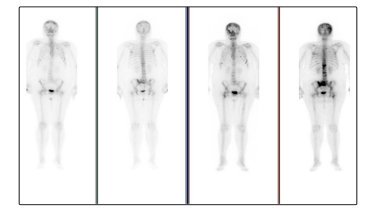
Figure 1: Basal bone scan performed in December 2016 (right) and follow up bone scan performed in February 2018 (left)
Since the patient refused any treatment and taking into account the bone disease, our multidisciplinary team evaluated a supplementary strategy with a possible bone-targeted agent targeting bone metastasis with Ra223. Additional goal was to select a therapy aiming to maintain the quality of life to avoid a new refuse of the patient for the therapy proposed. Based on Phase 2 clinical data, we decided to propose the off-label use of the radiopharmaceutical Ra223 [7]. The patient was instructed about the risks (as expected adverse events) and potential benefits of the therapy, the off-label use, as well as required precautions to be taken after Ra223 administration. A complete blood count and chemistry profile ensured that the patient was eligible for Ra223 therapy; subsequently, the agreement on informed consent for the off-label use was obtained. Hospital administration approved the authorization for the off-label use of Ra223 at February 2017. A total of six treatments were planned with a dose of 55 KBq/kg every 4 weeks according to Phase 2 data; the first administration of 4950 KBq of Ra223 was performed in March 2017. Four days later, the patient was assessed with a planar whole-body scintillation gamma-camera imaging (Ge Millennium MG, collimators LEHR, energy peak 82 kev + 154 kev, widht 20) to evaluate biodistribution of Ra223 and to gather planar imaging of skull, thorax, and pelvis. Images showed the preferential uptakeof Ra223 in gamma scintigrams overlapped the same osteolytic lesions previously identified by computed tomography (CT) and technetium-99 scans (Figure 2).
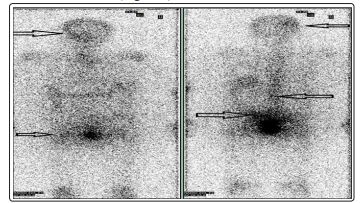
Figure 2: The evaluation of the deposit areas of radium 223 showed a perfect overlap with the regions of osteolysis previously detected by scintigraphy
After the first treatment, the patient reported total disappearance of pain and she had no side effects except for a slight decrease of Neutrophils. Were administered six treatments of Ra223 and the patient started to follow up. FDG PET-TC documented the disappearance of glucose metabolism in the known skeletal lesions in October 2017, to be referred to the treatment with Ra223 (Figure 3). Differently, bone scan with 99mTC-methylene diphosphonate still highlighted metastatic bone disease in March 2018, although reduced in extension and gradient. It is possible to affirm that FDG PET/TC has better sensitivity and specificity of in the post-treatment re-evaluation with Ra223 than bone scan with 99mTC-methylene diphosphonate.
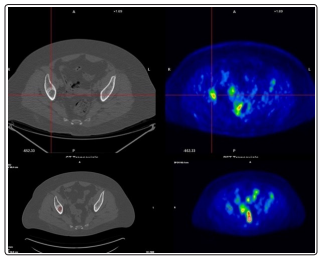
Figure 3: Comparison of the two FDG PET-TC scans (January 2017 and October 2017) shows no metabolic activity due to the current treatment
Conclusion
We have completed the treatment cycles of bone metastases (one administration every 28 days for 6 cycles) obtaining the immediate resolution of the painful symptoms, but especially the resolution of skeletal metastatic lesions. Our patient had good treatment compliance and she has not been revealed the presence of bone metastases or hematological complications. The patient did not develop skeletal related events (SREs; i.e., radiation to bone, pathological fracture, spinal cord compression, surgery to bone), the major complications of bone metastases, up to now. SREs increase patientsâ?? risk of hospitalization, the duration of hospital stays and the health care resource utilization; they also reduce performance status and quality of life (QOL). We have shown that Radium223 dichloride can be safely administered in hormone refractory bone metastases from breast cancer and we can say that Ra223 has improved patient survival and it has eliminated bone pain whilst keeping hematological toxicity to a minimum. It is, to our knowledge, the first example of complete recovery of bone metastatic disease treated with Ra223, published to data. Our preliminary experience shows that Ra223 may play a critical role to bone metastases in patients with breast cancerReferences
- Carrasquillo JA, O’Donoghue JA, Pandit-Taskar N, Humm JL, Rathkopf DE, et al. (2013) Phase I pharmacokinetic and biodistribution study with escalating doses of (2)(2)(3)Ra-dichloride in men with castration-resistant metastatic prostate cancer. Eur J Nucl Med Mol Imaging 40: 1384-1393.
- Carroll PR, Parsons JK, Andriole G, Bahnson RR, Castle EP, et al. (2016) NCCN Guidelines Insights: Prostate Cancer Early Detection, Version 2.2016. J Natl Compr Canc Netw 14: 509-519.
- AIOM 2016 – Prostate Cancer Guidelines 2017. http://www. aiom.it/C_Common/Download.asp?file=/$Site$/files/doc/ LG/2017_LGAIOM_Prostata.pdf.
- Parker C, Sartor O (2013) Radium-223 in prostate cancer. N Engl J Med 369: 1659-1660.
- Hindorf C, Chittenden S, Aksnes AK, Parker C, Flux GD (2012) Quantitative imaging of 223Ra-chloride (Alpharadin) for targeted alpha-emitting radionuclide therapy of bone metastases. Nucl Med Commun 33: 726-732.
- Nilsson S, Larsen RH, Fossa SD, Balteskard L, Borch KW, et al. (2005) First clinical experience with alpha-emitting radium-223 in the treatment of skeletal metastases. Clin Cancer Res 11: 4451-4459.
- Coleman R, Aksnes AK, Naume B, Garcia C, Jerusalem G, et al. (2014) A phase IIa, nonrandomized study of radium-223 dichloride in advanced breast cancer patients with bone-dominant disease. Breast Cancer Res Treat 145: 411-418.