

International Internal Medicine Journal(IIMJ)
ISSN: 2837-4835 | DOI: 10.33140/IIMJ
Impact Factor: 1.02

Research Article - (2025) Volume 3, Issue 2
Leadership Axiology Towards Nursing Care Documentation Performance: Literature Review
2Faculty of Humanitiesl, Universitas Airlangga, Jl. Dr.Ir.H.Soekarno, Mulyorejo, Kec. Mulorejo, Surabaya, East Java 60115, Indonesia
Received Date: Dec 22, 2025 / Accepted Date: Mar 20, 2025 / Published Date: Mar 25, 2025
Copyright: ©©2025 Titik Suhartini, et al. This is an open-access article distributed under the terms of the Creative Commons Attribution License, which permits unrestricted use, distribution, and reproduction in any medium, provided the original author and source are credited.
Citation: Suhartini, T., Pandin, M. G. R., Nursalam. (2025). Leadership Axiology Towards Nursing Care Documentation Performance: Literature Review. Int Internal Med J, 3(2), 01-06.
Abstract
Background: leadership is an activity that influences group activities. Leadership entails the capability to reach consensus on a shared objective. A leader carries out efforts to guide others in achieving specific goals. Leadership represents a relationship that significantly impacts the interactions between leaders and their followers. It is relatively challenging to generalize, as fundamentally, leadership involves someone shaping the behavior of others for a specific purpose. However, this does not imply that anyone who influences others for a purpose is classified as a leader. Documentation in nursing encompasses complete information regarding the patient’s health condition, nursing care activities, and the patient’s response to the care they receive.
Purpose: to elucidate the axiological perspective of leadership on the performance of nursing care documentation: literature review.
Method: literature review study utilizing databases from Google Scholar, PubMed, and ProQuest with the keywords “leadership” and “nurse performance. ”
Results: Leadership, when considered from an axiological standpoint, involves profound contemplation about the essence, purpose, and fundamental values that guide an individual in leading. The philosophical viewpoint emphasizes the moral and ethical dimensions of leadership, as well as how individuals perceive their responsibilities and relationships with others. Nurses play a crucial role in delivering nursing care, and every action that is planned or has been carried out is documented. The leader's role is vital as a role model for nurses and also acts as a motivator for nurses, thus potentially impacting nurse performance.
Conclusion: the axiology of leadership generates meaning, offers guidance, and leads with integrity. Leaders carry the responsibility not only for attaining practical objectives but also for cultivating a more equitable, harmonious, and humane world. This philosophical perspective serves as a reminder that leadership transcends mere action; it also encompasses being an exemplar for subordinates in enhancing nurse performance.
Keywords
Axiology, Leadership, Documentation, Nursing Care
Introduction
Nursing documentation is the written proof created by nurses as a record of the nursing care they provide during patient treatment. This proof is crucial for patients, nurses, and healthcare facilities, making it essential to document nursing care thoroughly and promptly after delivering any service to patients. Documentation in nursing encompasses complete details about the patient's health condition, nursing care activities, and the patient's reactions to the care they receive [1]. High-quality nursing documentation can enhance effective communication with other healthcare teams regarding patients and their care. Providing quality patient care, conducting nursing research, and educating require an effective nursing documentation process. Unrecorded nursing actions can adversely affect patient healthcare. Inadequate nursing documentation is linked to the prevention of medication errors that may endanger patients. Insufficient nursing documentation not only relates to suboptimal service but also exposes healthcare providers to lawsuits for errors in documentation implementation.
The thoroughness of nursing documentation is affected by nurses' performance in documentation. Elements that impact performance include individual factors, psychological factors, and organizational factors. Studies on elements influencing nursing care documentation indicate that nurses experience pressure when documenting nursing care due to time constraints, insufficient knowledge, organizational obstacles, difficulties in writing, and unsuitable documentation formats.
Leadership is the skill of influencing and utilizing others through obedience, trust, and respect to accomplish shared objectives. Leadership is also described as the capability to achieve aims by empowering the community. Move away from a culture that always initiates the transformation process and is more adaptable. Core elements of leadership consist of the non-commercial utilization of leaders, followers, individuals, influence, change, and the objectives to be attained. Hence, leadership can be broadly understood not merely as an individual’s capability but also as a process of interaction occurring within it. Leadership is an abstract concept, created by humans through the process of interacting with their surroundings. Leadership is a significant component in realizing organizational aims.
Leadership as a concept in managing an organization holds a strategic role, as it is fundamental to all organizational functions. Leadership is essential when there is a collaborative relationship in reaching organizational objectives. According to leadership refers to the process of motivating others to comprehend and concur on what needs to be accomplished and how tasks can be carried out effectively, along with facilitating individual and collective efforts to fulfill shared goals [2]. "According to leadership is the capacity to sway others, through either direct or indirect communication, aiming to encourage individuals to be understanding, conscious, and inclined to adhere to the leader's intent [3]. Siagian stated that the effectiveness of an individual’s leadership is ultimately evaluated based on decision-making ability as the primary standard. Leadership encompasses a focus on collective objectives. Leaders concentrate their energy on individuals working towards a common achievement. Generally, leaders and followers share the same objectives. The emphasis on shared goals underscores the necessity for leaders to collaborate with followers in attaining selected targets. Highlighting interdependence mitigates the chances of leaders acting coercively or unethically towards followers. It also enhances the likelihood of leaders and followers cooperating to reach shared benefits. Those who lead will be referred to as leaders, while those who follow will be known as followers. Both leaders and followers participate collaboratively in the leadership process. Leaders require followers, and followers rely on leaders.
Method
This research employs a literature review approach. The databases utilized as sources for literature include Google Scholar, Pubmed, and ProQuest. The search keywords for Indonesian language journals are "spirituality leadership style" and "performance of implementing nurses," while the keywords for English language journals are "Leadership" and "Nurse performance. " The criteria for article inclusion are publications from 2019 - 2024 within the last 5 years, full-text availability in either Indonesian or English, and quantitative research methodology.
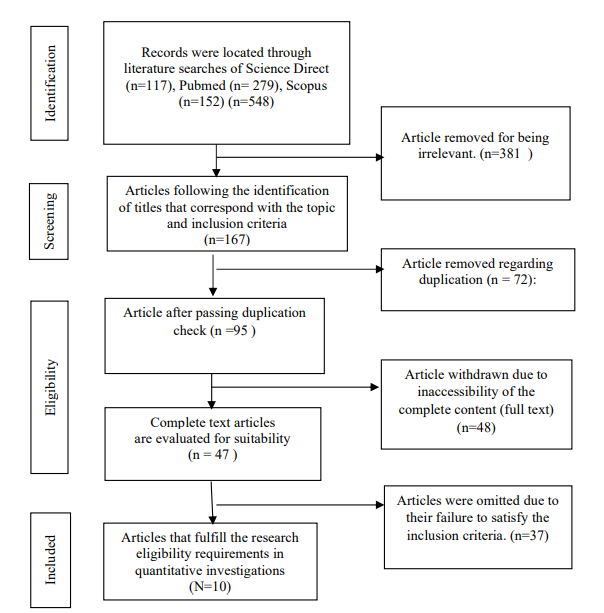
Table 1: Gambar 2.10 Literature Search Flow Diagram According to PRISMA
Results
According to the outcomes of journal searches from online databases, there are 10 articles that fulfill the inclusion criteria and can proceed with journal analysis. All research articles consist of quantitative studies employing quasi-experimental and cross- sectional designs and are research conducted in different countries.
|
No |
Nama Peneliti |
Tahun |
Nama Jurnal |
Judul Jurnal |
Ringkasan Hasil Penelitian |
|
1 |
Zaqhini et al |
2020 |
International Journal of Nursing Studies 1 |
The relationship between nurse managers’ leadership style and patients’ perception of the quality of the care provided by |
The findings of the research indicated that when nurses are content with their leadership, they experience reduced fatigue and tension in their interpersonal relationships, they exhibit a lower level of negative behavior, and consequently, patients express higher satisfaction with the quality of care delivered by nurses. nurses: Cross sectional survey |
|
2 |
Heryanoor, |
2021 |
Journal of |
Culture-Based |
The situational leadership framework for organizations has the |
|
|
Nursalam |
|
International |
Situational |
capability to improve nurse performance by 53. 4%. This improvement |
|
|
|
|
Dental and |
Leadership Model |
is linked to factors associated with internal leadership, individual |
|
|
|
|
Medical |
in Improving the |
nurses, job characteristics, and the organization's culture. Recent |
|
|
|
|
Research |
Organization Nurse |
findings concerning the situational leadership framework based on |
|
|
|
|
|
Performance |
organizational culture indicate that nurse performance is affected |
|
|
|
|
|
|
by internal leadership factors and individual nurse factors, which |
|
|
|
|
|
|
contribute positively to organizational culture, situational leadership, |
|
|
|
|
|
|
and performance. The innate traits of leaders (motivation and |
|
|
|
|
|
|
selfperception) as well as individual nurse characteristics (knowledge |
|
|
|
|
|
|
and expectations) can enhance performance by implementing a |
|
|
|
|
|
|
situational leadership strategy rooted in organizational culture that |
|
|
|
|
|
|
prioritizes innovation and risk-taking, attention to detail, results |
|
|
|
|
|
|
focus, people focus, team focus, assertiveness, and stability. Utilizing |
|
|
|
|
|
|
a situational leadership framework grounded in organizational |
|
|
|
|
|
|
culture is expected to improve performance in aspects such as caring, |
|
|
|
|
|
|
collaboration, empathy, responsiveness, courtesy, and sincerity. |
|
3 |
(Ansar Abbas, Muhammad Saud, Dian Ekowati and Indrianawati Usman, 2021) |
2021 |
Int. J. Productivity and Quality Management |
Servant leadership: a strategic choice for organisational performance. An empirical discussion from Pakistan |
The situational leadership model in an organization can enhance nurse performance by 53. 4%. This improvement is attributed to internal leadership elements, individual nurse characteristics, job features, and the culture of the organization. Recent research on the organizational culture-focused situational leadership model regarding nurse performance is influenced by internal leadership factors and individual nurse traits that positively impact organizational culture, situational leadership, and overall performance. Leaders' internal factors (motivation and self-image) and individual nurse attributes (knowledge and expectations) can boost performance by applying organizational culture-driven situational leadership based on innovation and risk- taking, detail orientation, result orientation, people orientation, team orientation, assertiveness, and stability. Implementing organizational culture- centered situational leadership will enhance performance through caring, collaboration, empathy, responsiveness, politeness, and sincerity. |
|
4 |
(Praptini Yulianti, 2019) |
2019 |
International Journal of Innovation, Creativity and Change |
Building Employee Creative Performance: through Person- Job Fit, Empowering |
Empowering leadership has a greater impact on enhancing creative self-efficacy than Person-job fit when viewed through the lens of DA-fit and SV-fit. Consequently, creative self-efficacy plays a significant role in affecting employee creative performance. The potential for creativity to flourish within an organization is influenced by the leader's role. By fostering employee self-efficacy toward creativity, empowering leadership will ultimately boost employee creative performance. |
|
5 |
(Dodot Adikoeswanto, Siti Nurjanah, Saparuddin Mukhtar, Anis Eliyana, *, 2024) |
2024 |
International Journal of Advanced and Applied Sciences |
Supportive leadership and voice behavior: The mediating role of work engagement |
Supportive leadership has a notable positive effect on the voice behavior of correctional officers and their level of work engagement, a notable positive effect of work engagement on the voice behavior of correctional officers, and a positive effect of supportive leadership on the voice behavior of correctional officers mediated by work engagement across all correctional offices in Aceh. |
|
6 |
Yetty Dwi Lestari et al |
2021 |
International Journal of Leadership in Education Theory and Practice |
Dynamic managerial capability, trust in leadership and performance: the role of cynicism toward change |
The results of this research suggest that confidence in leadership is a key element that impacts organizational performance. Consequently, it is essential to take trust in leadership seriously (Lines et al. , 2005) as it is crucial for creating a nurturing environment (Gravenhorst et al. , 2003) required for successful change initiatives. Notably, the findings also revealed that there was no meaningful difference |
|
7 |
(Yetty Dwi Lestari, Fiona Niska Dinda Nadia, Badri Munir Sukoco, David, Ahlstrom, Sunu Widianto, Ely Susanto, 2021) |
2021 |
International Journal of Leadership in Education Theory and Practice |
Dynamic managerial capability, trust in leadership and performance: the role of cynicism toward change |
The results of this research suggest that confidence in leadership is a key element that affects organizational performance. As a result, confidence in leadership must be taken seriously (Lines et al. , 2005) as it contributes significantly to creating a supportive atmosphere (Gravenhorst et al. , 2003) essential for the success of change initiatives. Curiously, the findings additionally revealed that there was no notable difference |
|
8 |
Alsadaan, N, et al |
2023 |
INQUIRY: The Journal of Health Care Organization, Provision, and Financing |
Impact of Nurse Leaders Behaviors on Nursing Staff Performance: A Systematic Review of Literature |
Nursing leadership plays a crucial role in shaping nurses' views on elements that affect their motivation to work. This influence can occur either directly or indirectly. Consequently, it is essential to have skilled nursing leaders to establish a practice environment that can nurture nurses' ability to attain success. In simpler terms, the connection between nursing leadership and nurse success is vital, and advancing leadership in the nursing field should be emphasized to reach the best possible patient outcomes. |
|
9 |
(Moghaddam et al, 2021) |
2021 |
BMC Nursing |
Nurses’ trust in managers and its relationship with nurses’ performance behaviors: a descriptive- correlational study |
Most nurses trust their head nurses and supervisors. The functional behaviors exhibited by most nurses were described as very good. There was no significant relationship between nurses' trust in head nurses and their functional behaviors, whereas the trust between nurses and supervisors did not significantly relate to nurses' functional behaviors. |
|
10 |
(Dluha Mafula, Nursalam, Tintin Sukartini, 2020) |
2020 |
Indonesian Nursing Journal of Education and Clinic |
Quality of Nursing Worklife Based on Caring Model for Improving Nurse Performance in Hospitals |
A sum of 25 indicators were identified as valid (outer loading value > 0. 5) with a variable diversity of 24. 43%, thus internal, social, environmental, operational, and administrative factors influence nurse performance both directly and indirectly through QNWL-based caring. |
Table 2: Literature Review Search Results
Discussion
Nursing care comprises a series of direct nursing practice activities for clients in different health care settings, and its implementation adheres to the principles of the nursing profession, serving as the foundation of nursing practice. Nursing theory is utilized to compile or model concepts in nursing, ensuring that this nursing model encapsulates the meaning of applying the nursing structure itself, enabling nurses to implement their roles effectively. There will always be a demand for optimal nursing care services within health care organizations. At present, there is a desire to transform the health care delivery system into a decentralized model. Enhancing education for nurses is anticipated to guide nursing services in alignment with societal issues, and a nursing practice model worthy of evaluation needs to be created.
Performance acts as a measure of the success of health services, reflecting the accountability of service institutions within the context of good governance. Various levels of service and nursing care in the health services sector are the central focus across the continuum of care. Initiatives aimed at enhancing the performance of clinical services are typically promoted by nurses by means of various activities such as quality control groups, adherence to nursing standards, problem-solving methodologies, and nursing audits. Future needs of organizations necessitate both individuals and institutions to uphold high-quality performance. The focus of organizational development is on the systematic advancement of behaviors to improve the organization, which can be accomplished through performance evaluations. The execution of nurse performance is significantly affected by leadership. Leaders play an essential role and bear responsibility in guiding nurses.
Leadership serves as an aspirational force, a creative spirit, and a moral authority capable of influencing members to alter their attitudes, thereby encouraging nurses to align with the leader’s wishes. Organizational behavior aligns with the desires and ambitions of the leader through the interpersonal influence exerted by leadership upon their subordinates. Leadership stands as a crucial factor in ensuring the smooth operation of hospital services since it forms the essence of organizational management. Within a hospital setting, the head of the department functions as a leader who directly oversees and interacts with the on-ground nurses to enhance performance, ultimately ensuring a satisfactory nursing service experience for patients. The axiological perspective on leadership examines the values that underpin and direct leadership. In the field of philosophy, axiology addresses values, including ethical (moral) and aesthetic (beauty) dimensions. Within the realm of leadership, axiology investigates the core values that inform a leader's decisions, actions, and interactions with those they lead.
The potential for creativity can be enhanced in an organization,contingent on the leader's role. Empowering leadership can enhance employees' self-efficacy regarding creativity and ultimately boost their creative performance. There exists a negative correlation between performance and commitment with service, alongside a positive correlation with gender. Performance reveals a significant link with age and marital status, which is presented as a correlation coefficient. When nurses are content with leadership, they experience reduced fatigue and tension in their interpersonal relations, leading to a decrease in negative behaviors, which in turn results in higher patient satisfaction with the care received from nurses. Trust in leadership constitutes a crucial element that influences organizational performance. Hence, trust in leadership must be treated with significance since it is essential in fostering a supportive environment required for successful change initiatives.
Conclusion
The value system of leadership in nursing encompasses the capability and expertise of a nurse leader to motivate other nurses under his/her oversight to perform their duties and responsibilities in delivering nursing care and services, ensuring that nursing objectives are met. Leadership in nursing constitutes the primary role of a nurse leader. The responsibilities and obligations of a nurse leader are neither minor nor insignificant. Their responsibilities are amplified due to their connection to an individual's safety. Within an institution like a hospital, the role of a leader extends beyond a mere position that administers and performs dedicated tasks; it also involves showcasing and executing tasks effectively and with accountability.
The role of nursing in a hospital is equally crucial in its function and contribution to the hospital's operations. In the nursing field, a competent leader can collaborate within a team to execute dedicated tasks proficiently and with complete commitment. This represents the dimension of leadership in nursing.
References
- Nursalam (2017) Nursing Management Applications in Professional Nursing Practice. 4th edn. Jakarta: Salemba Medika.
- Hasibuan, M.S. (2015). Basic Management, Definition, andProblems, Jakarta: Bumi Aksara.
- Gibson, J.L., J.M.Ivancecich, J.H.Donnelly, J. (2003) Organisasi, Perilaku, Struktur, Proses. Jakarta: Bina Rupa Aksara. Jakarta: Bina Rupa Aksara.
- Abbas, A., Saud, M., Ekowati, D., Usman, I., & Suhariadi,F. (2021). Servant leadership: a strategic choice for organisational performance. An empirical discussion from Pakistan. International Journal of Productivity and Quality Management, 34(4), 468-485.
- Alsadaan, N., Salameh, B., Reshia, F. A. A. E., Alruwaili,R. F., Alruwaili, M., Awad Ali, S. A., ... & Jones, L. K. (2023). Impact of nurse leaders behaviors on nursing staff performance: A systematic review of literature. INQUIRY: The Journal of Health Care Organization, Provision, and Financing, 60, 00469580231178528.
- Adikoeswanto, D., Nurjanah, S., Mukhtar, S., Eliyana, A., & Kamil, N. L. M. (2024). Supportive leadership and voice behavior: The mediating role of work engagement. International Journal of Advanced and Applied Sciences, 11(7), 39-48.
- Hadi-Moghaddam, M., Karimollahi, M., & Aghamohammadi,M. (2021). Nurses’ trust in managers and its relationship with nurses’ performance behaviors: a descriptive-correlational study. BMC nursing, 20, 1-6.
- Heryyanoor, H., Nursalam, N., Hidayat, A. A. A., Hidayat, T., Raziansyah, R., Zubaidah, Z., & Pusparina, I. (2021). Culture-Based Situational Leadership Model in Improving the Organization Nurse Performance. Journal of InternationalDental and Medical Research, 14(3), 1251-1259.
- Kadarisman (2017) Human Resource DevelopmentManagement. Jakarta: Raja Grafindo Rosada.
- Lestari, Y. D., Nadia, F. N. D., Sukoco, B. M., Ahlstrom, D., Widianto, S., Susanto, E., ... & Fauzi, A. M. (2024). Dynamic managerial capability, trust in leadership and performance: the role of cynicism toward change. International Journal of Leadership in Education, 27(6), 1420-1450.
- Maf'ula, D., Nursalam, N., & Sukartini, T. (2020). Quality of nursing worklife based on caring model for improving nurse performance in hospitals. Indonesian Nursing Journal of Education and Clinic (Injec), 5(2), 172-184.
- Yulianti, P., & Usman, I. (2019). Building employee creative performance: Through person job fit, empowering leadership, and creative self efficacy. International Journal of Innovation Creativity and Change, 9(8), 167-180.
- Lestari, Y. D., Nadia, F. N. D., Sukoco, B. M., Ahlstrom, D., Widianto, S., Susanto, E., ... & Fauzi, A. M. (2024). Dynamic managerial capability, trust in leadership and performance: the role of cynicism toward change. International Journal of Leadership in Education, 27(6), 1420-1450.