

Archivos de Ciencia e Investigación(ADCI)
ISSN: 3068-014X | DOI: 10.33140/ADCI


Review Article - (2026) Volume 2, Issue 1
Knowledge, Attitude, and Practice of Breast Self-Examination Among Female Health Care Professionals at Selected Hospitals in Hargeisa, Somaliland
 , Noura Jama Ali Abyan 2 , Hussien Abdi Ali 3 , Zainab Mohamed Ali 4 , Mustafe Mohamed Elmi 5 , Hodan Hussein Adam 6 and Najma Abdirahman Mohamed 7
 2Department of Medical Laboratory, Hargeisa Group Hospital, Somaliland, Hargeisa, Somalia
3Faculty of Health, New Generation University, Somaliland, Hargeisa, Somalia
4Department of Laboratory Science, Shaafi Hospital, Somaliland, Somalia
5Department of Statistics, Ministry of Planning and National Development, Hargeisa, Somaliland, Somalia
6Department of Laboratory, Manhal Multispecialty Hospital, Hargeisa, Somaliland, Somalia
7Department of Medical Laboratory Science, College of Natural and Applied Sciences, University of Hargeisa, Hargeisa, Somaliland, Somalia
Received Date: Mar 02, 2026 / Accepted Date: Apr 29, 2026 / Published Date: May 13, 2026
Copyright: ©2026 Mustafe Yusuf Said, et al. This is an open-access article distributed under the terms of the Creative Commons Attribution License, which permits unrestricted use, distribution, and reproduction in any medium, provided the original author and source are credited.
Citation: Said, M. Y., Abyan, N. J. A., Ali, H. A., Ali, Z. M., Elmi, M. M., et al. (2026). Knowledge, Attitude, and Practice of Breast Self-Examination Among Female Health Care Professionals at Selected Hospitals in Hargeisa, Somaliland. Arch Cienc Investig, 2(1), 01-06.
Abstract
Background: Breast cancer is a leading cause of cancer-related morbidity and mortality among women worldwide. Early detection through screening methods such as breast self-examination (BSE) is critical, particularly in low-resource settings where access to mammography is limited. Healthcare professionals play a key role in promoting breast cancer awareness, yet their own knowledge, attitudes, and practices of BSE in Somaliland remain understudied. This study aimed to assess the knowledge, attitudes, and practices regarding breast self-examination and to identify associated factors among female healthcare professionals at selected hospitals in Hargeisa, Somaliland.
Methods: An institution-based cross-sectional study was conducted from March to July 2025 among 171 female healthcare professionals (nurses, midwives, doctors, and pharmacy technicians) working in five hospitals in Hargeisa. Participants were selected using proportionate stratified random sampling. Data were collected using a structured, self-administered questionnaire assessing socio-demographic characteristics, knowledge (17 items), attitudes (10 Likert-scale statements), and BSE practices (10 items). Knowledge was categorized using Bloom's cut-off points, attitude by median split, and practice as good (≥6) or poor (<6). Bivariate and multivariate logistic regression analyses were performed to identify factors associated with BSE practice.
Results: The mean age of participants was 28.4 years (SD = 6.2). Overall, 67 (39.2%) had good knowledge, 39 (22.8%) had average knowledge, and 65 (38.0%) had poor knowledge. A favorable attitude toward BSE was observed among 93 (54.3%) participants. However, only 44 (25.7%) reported ever practicing BSE, and merely 30 (17.5%) demonstrated good practice. Among those who practiced, most used correct techniques. In multivariate analysis, good knowledge (AOR = 1.96, 95% CI: 0.95–4.02, p = 0.041), favorable attitude (AOR = 2.14, 95% CI: 1.01–4.54, p = 0.046), and prior training on BSE (AOR = 3.62, 95% CI: 1.65–7.93, p = 0.001) were significantly associated with BSE practice.
Conclusion: Despite moderate knowledge and favorable attitudes, BSE practice among female healthcare professionals in Hargeisa is low. Training, knowledge, and positive attitudes are key predictors of practice. There is an urgent need for targeted educational interventions and regular BSE training programs within healthcare institutions to improve personal screening behaviors and enhance community health education.
Keywords
Breast Self-Examination, Knowledge, Attitude, Practice, Healthcare Professionals, Somaliland, Breast Cancer, Early Detection
Introduction
Breast cancer remains one of the leading causes of cancer-related morbidity and mortality among women worldwide. Early detection is critical for improving survival outcomes and reducing disease burden. Several screening strategies have been developed to facilitate early identification of breast abnormalities, including mammography, clinical breast examination, and breast self-examination (BSE). Among these methods, breast self-examination is a simple, inexpensive, and non-invasive technique that allows women to proactively examine their own breasts for abnormal changes such as lumps, swelling, skin dimpling, or nipple discharge. Because BSE does not require specialized equipment or advanced medical infrastructure, it is considered a practical and accessible approach for increasing breast health awareness and promoting early detection, particularly in low- and middle-income countries where access to advanced screening services may be limited [1].
Globally, breast cancer is the most commonly diagnosed cancer among women. According to global cancer statistics, approximately 2.3 million new breast cancer cases and about 685,000 deaths were reported worldwide in 2020, highlighting the growing burden of the disease [2]. Although early detection through organized screening programs has significantly improved survival rates in high-income countries, many women in low- and middle-income countries (LMICs) continue to present with advanced stages of the disease. This is often attributed to limited access to screening services, low awareness of breast cancer symptoms, and delayed health-seeking behavior. In such settings, breast self-examination plays an important role in encouraging women to become familiar with their breast anatomy and recognize early warning signs that may require medical attention [3].
The burden of breast cancer is particularly concerning in sub-Saharan Africa, where the incidence of the disease has been increasing in recent decades. It is estimated that approximately 186,000 new breast cancer cases and more than 86,000 deaths occur annually in Africa [4]. Many women in the region are diagnosed at advanced stages of the disease due to limited screening programs, insufficient health education, and socio-cultural barriers that discourage timely medical consultation. As a result, improving awareness and promoting early detection practices such as breast self-examination have become important public health priorities across many African countries [5].
Healthcare professionals (HCPs) play a crucial role in promoting preventive health behaviors and educating the public. Female HCPs, in particular, are expected to serve as role models by demonstrating positive health practices, such as regular BSE. Their knowledge, attitudes, and personal screening practices can significantly influence their ability to educate patients and support community awareness programs. However, studies from several developing countries show that HCPs may themselves have knowledge gaps or inconsistent BSE practices. This has been attributed to factors like limited training, lack of confidence, heavy workload, or perceived low personal risk of breast cancer [6].
In Somaliland, reliable population-based cancer statistics remain limited due to the absence of a comprehensive national cancer registry. Nevertheless, hospital-based reports indicate that breast cancer is among the most frequently diagnosed cancers among women in the region [7]. Many cases are identified at advanced stages, suggesting that early detection practices and awareness of breast cancer symptoms may be insufficient. Although breast self-examination is widely recommended as a simple and cost-effective method for increasing breast health awareness, the extent to which healthcare professionals themselves possess adequate knowledge, demonstrate positive attitudes, and regularly practice BSE remains unclear in the local context.
Understanding the KAP of BSE among healthcare professionals is essential, as they are key agents in promoting community awareness and screening. Assessing these factors can identify gaps in training and preventive behaviors that may undermine health education efforts. Therefore, this study aimed to assess the knowledge, attitude, and practice (KAP) of BSE and identify associated factors among female healthcare professionals in selected hospitals in Hargeisa, Somaliland. The findings are expected to provide evidence for targeted educational programs, strengthen breast cancer awareness initiatives, and improve early detection practices among HCPs and the broader community.
Methods
Study Design and Setting
An institution-based cross-sectional study was conducted to assess the knowledge, attitudes, and practice of breast self-examination (BSE) and associated factors among female healthcare professionals. The study was carried out in selected hospitals in Hargeisa, Somaliland. Hargeisa is the capital city and the main commercial and administrative center of Somaliland.
Five hospitals were included: Hargeisa Group Hospital (HGH), Kaah Hospital, Gargaar Hospital, Needle Hospital, and Nageeye Hospital. HGH is the largest public referral hospital in Somaliland, while the others are major private facilities providing a wide range of services. These five hospitals were purposively selected as they employ a large and diverse proportion of the city's female healthcare workforce and serve a broad population from Hargeisa and surrounding areas. The study was conducted between March and July 2025.
Study Population and Eligibility Criteria
The study population comprised female healthcare professionals (nurses, medical doctors, midwives, pharmacy technicians, and laboratory technicians) directly involved in patient care at the selected hospitals.
Inclusion Criteria:
• All female healthcare professionals actively working in the selected hospitals during the data collection period.
• Those who provided written informed consent.
Exclusion Criteria:
• Healthcare professionals who were on leave or absent during the entire data collection period.
• Those who declined to participate.
Sample Size Determination
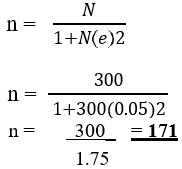
The sample size for this study was determined using Slovin's formula for finite populations. The total number of female healthcare professionals working in the selected hospitals was approximately 300; the marginal error was taken as 5%. Based on that assumption sample size was calculated as:
Where:
n = number of sampling
N = Total population size (300 female healthcare workers)
e = Marginal error (5%) Therefore, the final sample size for the study was 171 female healthcare professionals.
Sampling Technique
A proportionate stratified random sampling technique was used to select participants from the five hospitals to ensure fair representation from each facility. First, the total number of female healthcare professionals in each hospital was obtained from the hospital administration. The sample size for each hospital was then determined proportionally based on the total population of female healthcare professionals in each hospital. Participants within each hospital were selected using simple random sampling based on lists obtained from the human resource departments of the respective hospitals.
|
Hospitals |
Total female staff |
Sample size |
|
HGH |
180 |
102 |
|
Gargaar hospital |
50 |
29 |
|
Kaah hospital |
30 |
17 |
|
Needle hospital |
25 |
14 |
|
Nageeye hospital |
15 |
9 |
|
Total |
300 |
171 |
Table 1: Distribution of Study Participants by Hospital
Data Collection Instrument and Procedure
Data were collected using a structured, self-administered questionnaire. The questionnaire was developed in English based on a review of relevant literature on breast cancer awareness and BSE practices [8,9]. It was then translated into Somali and back translated into English by independent translators to ensure accuracy and cultural appropriateness. The final version was available in both English and Somali for participant preference. The questionnaire consisted of four main sections: Socio-demographic characteristics, Knowledge of breast cancer and breast self-examination, Attitudes toward breast self-examination, Practice of breast self-examination.
The knowledge section contained multiple items assessing participants' awareness of breast cancer risk factors, symptoms, and recommended practices of breast self-examination. The attitude section included Likert-scale statements measuring participants' perceptions and beliefs regarding breast self-examination. The practice section assessed participants' personal experience and frequency of performing breast self-examination and related behaviors. The questionnaires were distributed to selected participants after obtaining informed consent. Participants completed the questionnaires independently, and the completed questionnaires were collected by the researchers on the same day to ensure completeness.
Measurement of Study Variables
Knowledge, attitude, and practice (KAP) regarding breast self-examination (BSE) were assessed using structured questionnaire items. Knowledge:
Knowledge was assessed using 17 questions on breast cancer risk factors, symptoms, and BSE procedures. Each correct response was scored '1', while incorrect or 'don't know' responses were scored '0', yielding a total score range of 0 to 17. Based on Bloom's cut-off points, participants were categorized as having good knowledge (scores of 13-17, i.e., >80%), average knowledge (scores of 6-12), or poor knowledge (scores of <6). Attitude: Attitude toward BSE was assessed using 10 statements on a 5-point Likert scale (Strongly Disagree to Strongly Agree). Negatively worded statements were reverse-coded. Responses were assigned scores (Strongly Disagree = 0, Disagree = 1, Neutral = 2, Agree = 3, Strongly Agree = 4), providing a total possible score range of 0 to 40. Since there are no universally accepted cut-off points for attitude scales, the median score was used as a cut-off point: participants scoring above the median were categorized as having a favorable attitude, while those scoring at or below the median were categorized as having an unfavorable attitude.
Practice: Practice of BSE was assessed using 10 questions on performance and technique. Each appropriate response (e.g., "Yes" for performing a correct step) was scored '1', giving a total score range of 0 to 10. Participants scoring 6 or more (>60%) were categorized as having good practice, while those scoring less than 6 were categorized as having poor practice.
Data Quality Assurance
To ensure data quality, the questionnaire was pretested among a small group (n=15) of healthcare professionals working in a hospital not included in the main study. Feedback obtained from the pretest was used to improve the clarity and consistency of the questionnaire. In addition, the questionnaire was reviewed by experts in public health and clinical practice to ensure content validity. During data collection, the researchers closely monitored the process to ensure that questionnaires were properly completed. All completed questionnaires were checked for completeness and consistency before data entry.
Data Processing and Analysis
The collected data were coded, entered, and analyzed using the Statistical Package for the Social Sciences (SPSS) version 26. Descriptive statistics, including frequencies, percentages, means, and standard deviations, were used to summarize the socio-demographic characteristics and the KAP of participants. Inferential analysis was conducted to examine factors associated with BSE practice. Bivariate analysis using chi-square (X²) tests was first performed to identify associations between independent variables and the dependent variable (good BSE practice). Variables with a p-value < 0.05 in the bivariate analysis were included in a multivariate logistic regression model to determine independent predictors of good BSE practice. The strength of associations was presented using adjusted odds ratios (AOR) with 95% confidence intervals (CI). Statistical significance was set at p < 0.05.
Ethical Considerations
Ethical approval for the study was obtained from the Ethics Committee of the University of Hargeisa prior to the commencement of data collection. Permission was also obtained from the administrations of the selected hospitals. Participation in the study was voluntary, and informed consent was obtained from all participants before completing the questionnaire. Confidentiality and anonymity were ensured by not collecting personal identifiers, and the collected data were used solely for research purposes.
Results
Socio-Demographic Characteristics of Participants
A total of 171 female healthcare professionals participated in this study. Table 2 presents their socio-demographic characteristics. Of the participants, 78 (45.6%) were aged 18-25 years, and 62 (36.3%) were aged 26-35 years. Seven participants (4.1%) were aged 46 years and above.
Regarding educational status, 107 participants (62.6%) held a bachelor's degree, 35 (20.5%) had a master's degree, and 25 (14.6%) had diploma-level education. In terms of work experience, 67 participants (39.2%) had 3-4 years of experience, while 48 (28.1%) had less than three years of experience. Regarding professional category, 97 participants (56.7%) were nurses, 43 (25.1%) were midwives, 19 (11.1%) were doctors, and 12 (7.1%) were pharmacy technicians. Concerning marital status, 100 participants (58.5%) were single, and 48 (28.1%) were married.
|
Variables |
Category |
Frequency |
Percentage |
|
1. Age (years) |
18-25 |
78 |
45.6 |
|
26-35 |
62 |
36.3 |
|
|
36-45 |
24 |
14.0 |
|
|
46 above |
7 |
4.1 |
|
|
Total |
171 |
100.0 |
|
|
2. Educational Level |
Diploma |
25 |
14.6 |
|
Bachelor degree |
107 |
62.6 |
|
|
Master’s degree |
35 |
20.5 |
|
|
Others |
4 |
2.3 |
|
|
Total |
171 |
100.0 |
|
|
3. Experience of respondents |
0-2 |
48 |
28.1 |
|
3-4 |
67 |
39.2 |
|
|
5-6 |
30 |
17.5 |
|
|
7 above |
26 |
15.2 |
|
|
Total |
171 |
100.0 |
|
|
4. Professional role |
Nurse |
97 |
56.7 |
|
Doctor |
19 |
11.1 |
|
|
Midwife |
43 |
25.1 |
|
|
Pharmacy Techn. |
12 |
7.1 |
|
|
Total |
171 |
100.0 |
|
|
5. Marital status |
Single |
100 |
58.5 |
|
Married |
48 |
28.1 |
|
|
Divorced |
12 |
7.0 |
|
|
Widowed |
11 |
6.4 |
|
|
Total |
171 |
100.0 |
Table 2: Socio-Demographic Characteristics of Healthcare Professionals (N = 171)
Knowledge of Breast Self-Examination
Table 3 presents participants' knowledge of breast cancer and breast self-examination. Regarding BSE practice, 102 participants (59.6%) correctly identified that BSE should be performed monthly, and 98 (57.3%) knew that the recommended age to start BSE is 20 years. Additionally, 105 participants (61.4%) recognized that BSE can aid early detection of breast cancer, and 115 (67.3%) correctly indicated that BSE involves both inspection and palpation techniques.
Concerning risk factors, 97 participants (56.7%) identified family history as a risk factor, 92 (53.8%) identified smoking, 83 (48.5%) identified obesity, and 74 (43.3%) identified hormonal contraceptive use. Additionally, 109 participants (63.7%) correctly recognized that breast cancer risk increases with age, and 128 (74.9%) acknowledged that early detection improves survival outcomes.
Regarding breast cancer symptoms, 138 participants (80.7%) identified breast pain as a symptom, 135 (78.9%) identified breast swelling, 118 (69.0%) identified nipple discharge, and 110 (64.3%) identified breast lump. Furthermore, 121 participants (70.8%) recognized the importance of clinical breast examination by healthcare professionals, and 104 (60.8%) knew that BSE should include examination of the axillary region. Sixty-four participants (37.4%) reported having received formal training on BSE.
|
Knowledge Item |
Yes N (%) |
No N (%) |
Don’t Know N (%) |
|
1. Age to start BSE is 20 years |
98 (57.3) |
40 (23.4) |
33 (19.3) |
|
2. BSE should be performed monthly |
102 (59.6) |
52 (30.4) |
17 (9.9) |
|
3. BSE helps detect early breast cancer |
105 (61.4) |
45 (26.3) |
21 (12.3) |
|
4. BSE performed by inspection and palpation |
115 (67.3) |
37 (21.6) |
19 (11.1) |
|
5. A woman should consult a doctor after finding a breast lump |
115 (67.3) |
48 (28.1) |
8 (4.7) |
|
6. Family history is a risk factor |
97 (56.7) |
34 (19.9) |
40 (23.4) |
|
7. Smoking is a risk factor |
92 (53.8) |
45 (26.3) |
34 (19.9) |
|
8. Obesity increases breast cancer risk |
83 (48.5) |
57 (33.3) |
31 (18.1) |
|
9. Breast cancer risk increases with age |
109 (63.7) |
27 (15.8) |
35 (20.5) |
|
10. Hormonal contraceptive use may increase risk |
74 (43.3) |
41 (24.0) |
56 (32.7) |
|
11. Early detection improves survival |
128 (74.9) |
16 (9.4) |
27 (15.8) |
|
12. Breast lump as symptom |
110 (64.3) |
34 (19.9) |
27 (15.8) |
|
13. Breast pain as symptom |
138 (80.7) |
13 (7.6) |
20 (11.7) |
|
14. Nipple discharge as symptom |
118 (69.0) |
28 (16.4) |
25 (14.6) |
|
15. BSE should include the axillary region |
104 (60.8) |
22 (12.9) |
45 (26.3) |
|
16. Clinical breast examination should be performed by health professionals |
121 (70.8) |
18 (10.5) |
32 (18.7) |
|
17. Received formal training on BSE |
64 (37.4) |
107 (62.6) |
0 (0.0) |
Table 3: Knowledge of Healthcare Professionals Toward Breast Self-Examination (N = 171)
Attitude toward Breast Self-Examination
Table 4 presents participants' attitudes toward breast self-examination. Regarding the usefulness of BSE, 141 participants (82.5%) agreed or strongly agreed that BSE is useful for detecting breast cancer, and 140 (81.9%) agreed or strongly agreed that BSE should be promoted nationwide. Additionally, 133 participants (77.8%) agreed or strongly agreed that they would teach women about BSE, and 137 (80.1%) agreed or strongly agreed that healthcare professionals should serve as role models in practicing BSE.
Concerning the statement "Any woman can perform BSE," 134 participants (78.3%) disagreed or strongly disagreed. Regarding the statement "Breast cancer only affects old age," 73 participants (42.7%) disagreed or strongly disagreed, while 71 (41.5%) agreed or strongly agreed.
|
Attitude Statements |
Strng disagr N (%) |
Disagree N (%) |
Neutral N (%) |
Agree N (%) |
Strng agree N (%) |
|
1. BSE is useful for detecting breast cancer |
11 (6.4) |
8 (4.7) |
11 (6.4) |
86 (50.3) |
55 (32.2) |
|
2. BSE should be promoted nationwide |
10 (5.8) |
3 (1.8) |
18 (10.5) |
85 (49.7) |
55 (32.2) |
|
3. I will teach women about BSE |
6 (3.5) |
13 (7.6) |
19 (11.1) |
88 (51.5) |
45 (26.3) |
|
4. Any woman can perform BSE |
50 (29.2) |
84 (49.1) |
11 (6.4) |
15 (8.8) |
11 (6.4) |
|
5. Regular BSE reduces anxiety about breast cancer |
15 (8.7) |
24 (14.0) |
49 (28.7) |
62 (36.3) |
21 (12.3) |
|
6. Healthcare professionals should be role models in practicing BSE |
6 (3.5) |
8 (4.7) |
20 (11.7) |
87 (50.9) |
50 (29.2) |
|
7. Breast cancer screening should be part of routine women's health programs |
5 (2.9) |
7 (4.1) |
19 (11.1) |
92 (53.8) |
48 (28.1) |
|
8. Practicing BSE is a responsibility of female healthcare professionals only |
8 (4.7) |
11 (6.4) |
23 (13.5) |
83 (48.5) |
46 (26.9) |
|
9. There is no reason to do breast self-examination |
9 (5.3) |
17 (9.9) |
19 (11.1) |
72 (42.1) |
54 ( 31.6) |
|
10. Breast cancer only affects old age |
34 (19.9) |
39 (22.8) |
27 (15.8) |
26 (15.2) |
45 (26.3) |
Table 4: Attitudes Toward Breast Self-Examination Among Health Care Professionals (N = 171)
Practice of Breast Self-Examination
Table 5 presents the practice of breast self-examination among participants. Of the 171 participants, 44 (25.7%) reported ever having performed BSE, while 127 (74.3%) reported never having performed it. Among the 44 participants who practiced BSE, 33 (75.0%) reported performing it monthly, and 25 (56.8%) reported performing it a few days after menstruation. Regarding technique, 35 participants (79.5%) checked their breasts for visible changes, 38 (86.4%) followed a systematic palpation pattern, and 34 (77.3%) examined the axillary region. Additionally, 37 participants (84.1%) reported that they would seek medical consultation if an abnormality was detected, and 28 (63.6%) reported encouraging other women to practice BSE.
|
Practice Variable |
Yes N (%) |
No N (%) |
|
1. Ever practiced BSE |
44 (25.7) |
127 (74.3) |
|
2. Monthly BSE practice |
33 (75.0) |
11 (25.0) |
|
3. Performed after menstruation |
25 (56.8) |
19 (43.2) |
|
4. Performed in front of mirror |
31 (70.5) |
13 (29.5) |
|
5. Examined axillary region |
34 (77.3) |
10 (22.7) |
|
6. Followed correct palpation pattern |
38 (86.4) |
6 (13.6) |
|
7. Checked breasts for visual changes |
35 (79.5) |
9 (20.5) |
|
8. Applied different pressure levels |
29 (65.9) |
15 (34.1) |
|
9. Sought medical consultation if abnormality detected |
37 (84.1) |
7 (15.9) |
|
10. Encouraged other women to practice BSE |
28 (63.6) |
16 (36.4) |
Table 5: Practice of Breast Self-Examination Among Healthcare Professionals (N = 171)
Summary of KAP Results
Table 6 summarizes the overall knowledge, attitude, and practice of BSE among participants. Regarding knowledge, 67 participants (39.2%) had good knowledge, 39 (22.8%) had average knowledge, and 65 (38.0%) had poor knowledge. Concerning attitude, 93 participants (54.3%) had a favorable attitude toward BSE, while 78 (45.7%) had an unfavorable attitude. Regarding practice, 30 participants (17.5%) had good practice, and 141 (82.5%) had poor practice.
|
Variable |
Categories |
Frequency |
Percentage |
|
Knowledge |
|
67 |
39.2 |
|
|
|
39 |
22.8 |
|
|
|
65 |
38.0 |
|
Attitude |
|
93 |
54.3 |
|
|
|
78 |
45.7 |
|
Practice |
|
30 |
17.5 |
|
|
|
141 |
82.5 |
Table 6: Summary of Knowledge, Attitude and Practice (KAP)
Factors Associated with BSE Practice
Table 7 presents the logistic regression analysis of factors associated with BSE practice. Participants with good knowledge of BSE had higher odds of practicing BSE compared to those with poor knowledge (AOR = 1.96, 95% CI: 0.95-4.02, p = 0.041). Participants who had received training on BSE had higher odds of practicing BSE compared to those who had not received training (AOR = 3.62, 95% CI: 1.65-7.93, p = 0.001). Participants with a favorable attitude toward BSE had higher odds of practicing BSE compared to those with unfavorable attitudes (AOR = 2.14, 95% CI: 1.01-4.54, p = 0.046). Age, education level, professional role, and marital status were not significantly associated with BSE practice in the multivariate analysis.
|
Variable |
Category |
COR (95% CI) |
AOR (95% CI) |
P-value |
|
Knowledge |
Good |
2.41 (1.20–4.83) |
1.96 (0.95–4.02) |
0.041* 0.661 |
|
Average |
1.45 (0.66–3.18) |
1.20 (0.53–2.72) |
||
|
Poor (Ref) |
1 |
1 |
||
|
Attitude |
Favorable |
2.85 (1.36–5.98) |
2.14 (1.01–4.54) |
0.046* |
|
Unfavorable (Ref) |
1 |
1 |
||
|
Age |
36+ |
1.72 (0.78–3.80) |
1.45 (0.63–3.32) |
0.382 |
|
18 – 35 yrs. (Ref) |
1 |
1 |
||
|
Education |
Masters |
2.91 (1.02–8.32) |
2.24 (0.74–6.77) |
0.154 0.441 |
|
Bachelor |
1.80 (0.72–4.48) |
1.46 (0.56–3.81) |
||
|
|
Diploma (Ref) |
1 |
1 |
|
|
Professional Role |
Doctor |
3.10 (1.10–8.70) |
2.44 (0.79–7.55) |
0.121 0.546 0.693 |
|
Nurse |
1.52 (0.70–3.27) |
1.28 (0.57–2.88) |
||
|
Midwife |
1.33 (0.58–3.03) |
1.19 (0.50–2.81) |
||
|
Pharmacy Tech (Ref) |
1 |
1 |
||
|
Marital Status |
Married |
1.65 (0.79–3.44) |
1.29 (0.59–2.83) |
0.517 |
|
Unmarried (Ref) |
1 |
1 |
||
|
Training on BSE |
Yes |
4.80 (2.30– 10.01) |
3.62 (1.65–7.93) |
0.001* |
|
No (Ref) |
1 |
1 |
||
|
COR = Crude Odds Ratio; AOR = Adjusted Odds Ratio; CI = Confidence Interval; Ref = Reference category. * Significant at p < 0.05 |
||||
Table 7: Logistic Regression Analysis of Factors Associated with BSE Practice
Discussion
This study assessed knowledge, attitudes, and practice of breast self-examination among female healthcare professionals in Hargeisa, Somaliland. The findings revealed that although participants demonstrated moderate knowledge and generally positive attitudes toward BSE, actual practice was low. Knowledge level, attitude, and training on BSE were significantly associated with practice. A moderate proportion of healthcare professionals demonstrated adequate knowledge regarding breast cancer and BSE. Many respondents correctly identified common warning signs such as breast lumps, breast swelling, and nipple discharge, suggesting a basic understanding of clinical manifestations. Similar findings have been reported among healthcare professionals in Ethiopia, Ghana, and Nigeria, where participants demonstrated moderate awareness of breast cancer symptoms and early detection methods [8,10,11]. This level of knowledge may reflect exposure to medical education and clinical experience.
Despite good awareness of symptoms, knowledge gaps were identified regarding certain risk factors. A considerable proportion of respondents were unaware that hormonal and reproductive factors such as early menarche, late menopause, and family history are associated with increased breast cancer risk. These findings are consistent with research from several African countries where healthcare professionals demonstrated incomplete knowledge of breast cancer risk factors. Such gaps may limit healthcare workers' ability to provide comprehensive education and identify high-risk populations for targeted screening.
Regarding attitudes, the majority of participants demonstrated positive attitudes toward BSE and breast cancer prevention. Most respondents agreed that BSE is useful for early detection and should be promoted nationwide. Many indicated willingness to educate women about BSE and supported integrating breast cancer screening into routine women's health services. These findings align with studies from Kenya, Ghana, and Nigeria, where positive attitudes toward breast cancer screening were widely reported. Positive attitudes are particularly important as they influence willingness to promote preventive practices. Health behavior theories such as the Health Belief Model emphasize that individuals are more likely to adopt preventive behaviors when they perceive benefits and recognize disease risks. The favorable attitudes observed provide a strong foundation for promoting breast cancer awareness programs.
Despite positive attitudes, BSE practice was low. Only a minority reported performing BSE regularly according to recommended guidelines. This finding is concerning as healthcare professionals are expected to serve as role models for preventive health behaviors. Similar findings have been reported in several developing countries where BSE practice among healthcare workers was inadequate despite good knowledge and attitudes. The knowledge-practice gap may be influenced by lack of confidence, limited training opportunities, or perceived low personal risk of breast cancer. Compared with other African studies, BSE practice in this study appears lower. Studies from Ethiopia and Nigeria reported that approximately 40–60% of female healthcare workers practiced BSE. However, similarly low levels have been reported in resource-limited settings where awareness campaigns and training opportunities remain limited. These variations may reflect differences in training programs, awareness campaigns, and access to professional development.
Interestingly, among those who practiced BSE, many demonstrated appropriate techniques, including regular examination, visual observation, and axillary region checks. Most indicated they would seek medical consultation if abnormalities were detected. This suggests that those who practice possess good understanding of recommended techniques, though the low overall prevalence indicates many are not consistently applying their knowledge. Several factors were significantly associated with BSE practice. Training on BSE was the strongest predictor; healthcare professionals who received training were significantly more likely to practice BSE. This finding is consistent with previous research demonstrating that training programs improve screening behaviors. Training enhances not only knowledge but also confidence and skills required for correct technique.
Knowledge level was another important factor. Participants with good knowledge were more likely to practice BSE, supporting the established relationship between knowledge and preventive health behavior. Studies have consistently shown that increased knowledge about breast cancer is associated with higher screening rates. Improving knowledge may therefore play a critical role in promoting early detection.
Attitude toward BSE was also significantly associated with practice. Healthcare professionals with favorable attitudes were more likely to practice regularly, aligning with health behavior models suggesting that positive perceptions influence adoption of preventive behaviors [14]. Those who believe BSE is beneficial are more likely to incorporate it into personal health routines. These findings have important implications for public health in Somaliland. Breast cancer remains a major cause of cancer-related mortality. Early detection through screening significantly improves outcomes. However, access to mammography is limited in low-resource settings, making BSE a simple, low-cost strategy for increasing awareness and identifying abnormalities. Healthcare professionals play a vital role in educating women, so improving their KAP is essential for strengthening community-based awareness programs. Integrating breast cancer education into continuing professional development and organizing regular training workshops may improve both personal screening behaviors and capacity to educate patients effectively.
This study has several limitations. First, the cross-sectional design limits ability to establish causal relationships. Second, self-reported data may be subject to recall and social desirability bias. Third, the study was conducted in selected hospitals in Hargeisa, which may limit generalizability to other regions or populations. Despite these limitations, the study provides valuable insights into BSE among healthcare professionals in Somaliland and highlights important areas for intervention.
Conclusion
This study assessed the knowledge, attitudes, and practice of breast self-examination among female healthcare professionals working in selected hospitals in Hargeisa, Somaliland. The findings revealed that although healthcare professionals generally demonstrated moderate knowledge and favorable attitudes toward breast cancer prevention, the overall practice of breast self-examination was relatively low. In addition, the study identified knowledge level, training on breast self-examination, and attitude toward BSE as important factors associated with the practice of breast self-examination among healthcare professionals.
The findings highlight the need for strengthening breast cancer awareness and training programs within healthcare institutions.
Healthcare authorities and policymakers should prioritize continuous professional development programs focused on breast cancer education and screening practices. Regular training workshops, awareness campaigns, and integration of breast cancer education into healthcare curricula may help improve healthcare professionals' knowledge and confidence in performing breast self-examination. Furthermore, healthcare professionals should be encouraged to serve as role models by practicing breast self-examination themselves and educating women in the community about the importance of early detection of breast cancer.
References
- World Health Organization. (2023). Breast cancer: Early detection and screening.
- Sung, H., Ferlay, J., Siegel, R. L., Laversanne, M., Soerjomataram, I., Jemal, A., & Bray, F. (2021). Global cancer statistics 2020: GLOBOCAN estimates of incidence and mortality worldwide for 36 cancers in 185 countries. CA: A Cancer Journal for Clinicians, 71(3), 209–249.
- Gupta, S., Kumar, A., & Stewart, D. (2020). Breast cancer screening and early detection practices among women in low-and middle-income countries. BMC Women's Health, 20(1), 1–10.
- Bray, F., Ferlay, J., Soerjomataram, I., Siegel, R. L., Torre,L. A., & Jemal, A. (2021). Global cancer statistics 2020: GLOBOCAN estimates of incidence and mortality worldwide for 36 cancers in 185 countries. CA: A Cancer Journal for Clinicians, 71(3), 209–249
- Jedy-Agba, E., McCormack, V., Adebamowo, C., & Dos-Santos-Silva, I. (2020). Stage at diagnosis of breast cancer in sub-Saharan Africa: A systematic review and meta-analysis. The Lancet Global Health, 8(8), e1077–e1088.
- Abdulrahman, A., & Hassan, M. (2021). Factors influencing breast self-examination practices among female healthcare workers in developing countries. Journal of Public Health Research, 10(2), 145–152.
- Ismail, A., Ahmed, H., & Mohamed, S. (2022). Patterns of cancer cases reported in major hospitals in Somaliland: A retrospective review. East African Health Research Journal, 6(1), 45–52.
- Dagne, A. H., Ayele, A. D., & Assefa, E. M. (2019). Assessment of breast self-examination practice and associated factors among female health professionals in Ethiopia. International Journal of Breast Cancer, 2019, Article 4741359.
- Opoku, S. Y., Benwell, M., & Yarney, J. (2012). Knowledge, attitudes, beliefs, behavior and breast cancer screening practices in Ghana. West African Journal of Medicine, 31(3), 164–170.
- Azubuike, S. O., & Okwuokei, S. O. (2013). Knowledge, attitude and practices of women towards breast cancer in Benin City, Nigeria. Annals of Medical and Health Sciences Research, 3(2), 155–160.
- Mekonnen, B. D. (2020). Breast self-examination practice among female healthcare workers in Ethiopia: A systematic review and meta-analysis. PLOS ONE, 15(11), e0241961.
- Abay, M., Tuke, G., Zewdie, E., Abraha, T. H., & Grum,T. (2018). Breast self-examination practice and associated factors among women attending public health institutions in Ethiopia: A cross-sectional study. BMC Research Notes, 11(1), 1–7.
- Sserwanja, Q., Musaba, M. W., & Mukunya, D. (2022). Breast cancer screening practices among women in sub-Saharan Africa: A systematic review. BMC Public Health, 22(1), 123.
- Glanz, K., Rimer, B. K., & Viswanath, K. (Eds.). (2015). Health behavior: Theory, research, and practice (5th ed.). Jossey-Bass.