

Journal of Agriculture and Horticulture Research(JAHR)
ISSN: 2643-671X | DOI: 10.33140/JAHR
Impact Factor: 1.12

Research Article - (2025) Volume 8, Issue 2
Integrating Indigenous Knowledge and Modern Agronomic Practices for Sustainable Horticulture: Lessons from Smallholder Communities in Mvurwi, Zimbabwe
Received Date: Aug 05, 2025 / Accepted Date: Sep 11, 2025 / Published Date: Sep 23, 2025
Copyright: ©©2025 Robert Chirima. This is an open-access article distributed under the terms of the Creative Commons Attribution License, which permits unrestricted use, distribution, and reproduction in any medium, provided the original author and source are credited.
Citation: Chirima, R. (2025). Integrating Indigenous Knowledge and Modern Agronomic Practices for Sustainable Horticulture: Lessons from Smallholder Communities in Mvurwi, Zimbabwe. J Agri Horti Res, 8(2), 01-10.
Abstract
Smallholder farmers in Zimbabwe’s Mvurwi region have long relied on Indigenous Knowledge Systems (IKS) to sustain horticultural production. However, increasing climate variability, soil depletion, and market pressures have exposed the limitations of relying solely on traditional or modern agronomic approaches. This study addressed the gap by examining how integrating IKS with modern practices could promote sustainable horticulture. The research sought to determine how the blending of indigenous methods and scientific smallholder horticultural systems. A qualitative case study design was employed, involving 30 participants comprising elders, smallholder farmers, and local extension officers. Data were collected through semi-structured interviews, focus group discussions, and participant observation. Thematic analysis was applied to identify key integration practices, while descriptive statistics summarized adoption trends and perceived outcomes.
The findings revealed that combining IKS—such as intercropping, organic composting, and indigenous pest control— with modern practices like hybrid seed use, drip irrigation, and greenhouse technologies led to higher yields, improved soil fertility, and reduced input costs. Farmers also reported strengthened cultural identity and community cooperation. Key challenges included limited policy recognition of IKS and generational skepticism towards traditional methods. The study demonstrated that hybrid horticultural systems grounded in both IKS and modern agronomy foster sustainability, resilience, and community empowerment in Mvurwi’s smallholder sector. This research contributes to agricultural and horticultural scholarship by evidencing the value of integrating indigenous and modern knowledge. It aligns with the journal’s scope by offering practical, culturally informed strategies for sustainable horticultural development in Africa and beyond.
Keywords
Indigenous Knowledge Systems (IKS), Sustainable Horticulture, Smallholder Farmers, Agronomic Integration and Mvurwi, ZimbabweIntroduction
Sustainable horticulture is vital for alleviating food insecurity and bolstering rural livelihoods in Zimbabwe, where smallholder farmers contribute significantly to household nutrition and local markets but face challenges such as climate variability, soil degradation, and limited resources [1]. Indigenous Knowledge Systems (IKS)—including indigenous pest control, intercropping, and organic soil fertility management—have historically enabled ecological resilience and strengthened community identity [2]. Yet, these practices remain undervalued in agricultural policy, which frequently prioritises modern scientific innovations [3]. This misalignment between local realities and formal agricultural interventions has created a pressing social problem: smallholder farmers struggle to meet production demands while preserving their cultural heritage. This study addressed this problem by examining how integrating IKS with modern agronomy can build climate-smart and socially inclusive horticultural systems in Zimbabwe.
Although the benefits of IKS and modern agronomy are well-established separately, few empirical studies have examined how their intentional integration functions in practice within smallholder horticulture. The current literature tends to frame IKS as cultural heritage divorced from agricultural innovation, or focuses exclusively on modern inputs such as hybrid seeds, irrigation, and greenhouse technologies [3,4]. This dualistic approach leaves a critical research gap: little is known about how farmers blend these systems, what synergies emerge, and how such hybrid models affect both productivity and cultural continuity. This study in Mvurwi, Zimbabwe, responds to this gap by exploring integration as a lived practice negotiated by farmers, rather than a theoretical construct.
To investigate these dynamics, the study employed a qualitative case study design. This method was chosen because it allowed for in-depth exploration of farmers’ lived experiences and the nuanced interplay between knowledge systems within their sociocultural and ecological context. Techniques such as semi-structured interviews, focus groups, and participant observation provided rich narratives that could not be captured through quantitative surveys alone. Thematic analysis enabled the identification of patterns across participants’ accounts while retaining the integrity of local perspectives. This approach was particularly suited to uncovering how hybrid knowledge practices are socially constructed and sustained in everyday farming.
Preliminary analysis revealed that combining IKS practices such as intercropping, organic composting, and lunar planting calendars with modern technologies like drip irrigation and hybrid seeds im-proved yields, soil fertility, and water-use efficiency. These out-comes resonate with recent research on integrated agroecological systems that highlight resilience gains from blending indigenous and scientific approaches. While the detailed discussion of these results is presented later, their inclusion here underscores the po¬tential of hybrid horticulture as a practical and socially embedded solution.
This study makes a distinct contribution by shifting the conversation from parallel evaluations of indigenous and modern practices to an integrated model of horticultural sustainability. It not only documents the specific practices in Mvurwi but also theorises their significance through Bourdieu’s concepts of cultural and social capital and Postcolonial Theory, thereby positioning horticulture as both a site of cultural reproduction and innovation. In doing so, the paper advances scholarship on sustainable agriculture and offers actionable insights for policymakers, extension services, and development practitioners seeking to support hybrid, community-driven solutions.
Conceptual Framework
This research was framed through Bourdieu’s concepts of cultural and social capital and Postcolonial Theory, which together provide a lens to critically examine the integration of Indigenous Knowledge Systems (IKS) with modern agronomy. Bourdieu’s notion of cultural capital allows the study to foreground indigenous practices—such as organic soil fertility management, seed selection, and pest control—as legitimate and valuable resources that contribute to productivity and resilience. His concept of social capital underscores the networks of trust, cooperation, and knowledge exchange that smallholder farmers mobilize to sustain their livelihoods. These perspectives highlight how horticultural knowledge is not just technical but also deeply embedded in social relations and community identity.
Meanwhile, Postcolonial Theory challenged the persistent marginalization of indigenous epistemologies in agricultural policy and research, which often privilege Western agronomic science. By adopting this framework, the study interrogated the structural inequalities that relegate IKS to the margins and demonstrates the value of hybrid approaches that bridge tradition and modernity.
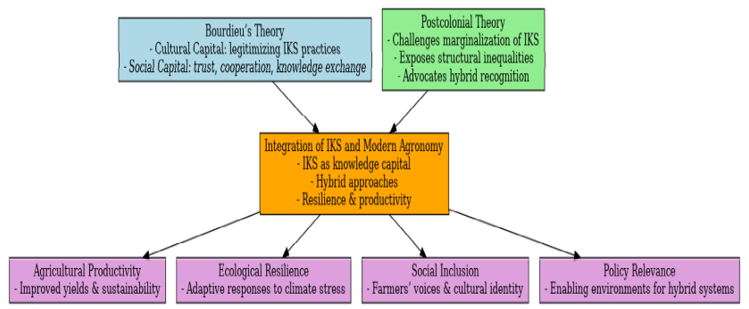
Figure 1: Conceptual Framework Diagram
The use of these frameworks enhanced the research in three ways:
• Analytical Depth – By linking horticultural practices to forms of capital, the study is able to move beyond a purely technical analysis and show how knowledge is tied to power, agency, and social positioning.
• Critical Relevance – Postcolonial critique ensures that the research actively questions whose knowledge counts, thereby re-centering smallholder farmers as knowledge producers rather than passive recipients of external technologies.
• Practical Utility – Together, the frameworks provide a roadmap for developing policy and extension models that treat indigenous and scientific practices as complementary, rather than competing, pathways for sustainable horticulture.
In this way, the conceptual framework did not only guide the interpretation of findings but also enhanced the social impact and scientific contribution of the study by positioning integrated horticultural practices as both culturally grounded and innovation-driven.
Aim and Objectives
The aim of this study was to examine how integrating Indigenous Knowledge with modern agronomic practices supports sustainable horticulture among smallholder farmers in Mvurwi, Zimbabwe. The objectives were to:
• Identify indigenous and modern agronomic practices currently employed by smallholder farmers.
• Analyze how these practices are combined to enhance productivity and ecological resilience.
• Explore the social and cultural implications of integrating knowledge systems for community identity and empowerment.
• Offer practical recommendations for policy and extension services to support hybrid horticultural systems.
Research Methods and Design
Study Design
This study employed a qualitative case study design, which was chosen to explore the integration of Indigenous Knowledge Systems (IKS) and modern agronomic practices as a lived experience among smallholder farmers. This design allowed for in-depth investigation of social, cultural, and ecological dynamics that influence how knowledge systems are combined in practice.
Study Setting
The research was conducted in Mvurwi, Zimbabwe, a rural district characterized by smallholder horticultural communities that rely on both traditional and modern farming practices. The area experiences semi-intensive rainfall, variable soil fertility, and is representative of many Zimbabwean rural communities facing climate variability, limited access to extension services, and high dependence on subsistence and small-scale commercial horticulture.
Study Population and Sampling Strategy
The study population consisted of smallholder farmers, community elders, and local agricultural extension officers who actively engage in horticultural production and knowledge preservation. Inclusion criteria included participants with at least five years of farming experience and direct involvement in horticultural decision-making. Participants unable to provide informed consent or those not actively involved in farming were excluded. A purposive sampling strategy was used to select 30 participants: 18 smallholder farmers, 8 elders, and 4 extension officers. This sample size was justified to ensure depth of data while maintaining manageability for detailed thematic analysis. Recruitment was facilitated through local farmer associations and community leaders.
Intervention (if Applicable)
This study did not include experimental interventions. Instead, it explored existing practices and their hybridization between IKS and modern agronomic methods. Demographic data collected included age, gender, years of farming experience, and level of formal education. The participant group included 20 males and 10 females, aged 20–72 years.
Data Collection
Data were collected using semi-structured interviews, focus group discussions (FGDs), and participant observation. Interview guides and FGD protocols were developed based on literature and validated through expert review. Data collection was conducted in Shona with translation into English where necessary, ensuring participants fully understood the questions. Key practical issues included coordinating schedules during peak farming periods and maintaining rapport with participants to elicit candid responses.
Data Analysis
All interviews and FGDs were audio-recorded, transcribed verba¬tim, and checked for accuracy. Transcripts were coded using the¬matic analysis, following six-step approach: familiarization, initial coding, theme development, reviewing, defining, and reporting [5]. Patterns in integration practices, challenges, and socio-cultur-al dynamics were identified. NVivo software was used to assist in coding and data management.
Ethical Considerations
All participants provided verbal informed consent and were assured of confidentiality, anonymity, and the right to withdraw from the study at any stage. Data were securely stored in password-protected files accessible only to the research team.
Literature Review
Sustainable Horticulture and Food Security in Zimbabwe
Sustainable horticulture has been identified as a cornerstone of food security and rural development in Zimbabwe. Smallholder farmers contribute significantly to both household nutrition and local markets, producing diverse crops that sustain livelihoods and buffer communities against hunger [6]. However, this potential is often undermined by climate variability, recurrent droughts, erratic rainfall, and soil fertility decline, which collectively threaten productivity and resilience [7]. Scholars argue that addressing these systemic challenges requires localized, inclusive approaches that align ecological sustainability with socio-economic realities [8].
Indigenous Knowledge Systems in Agricultural Practice
Indigenous Knowledge Systems (IKS) have historically enabled African communities to sustain agricultural production under harsh ecological conditions. Practices such as intercropping, or-ganic soil fertility management, and indigenous pest control have been critical in enhancing biodiversity, reducing risk, and ensur¬ing food availability [4]. Beyond their ecological role, IKS also embody cultural and spiritual dimensions, reinforcing community identity and knowledge transfer across generations [9]. Despite this, IKS remain marginalized in agricultural policy and research, often dismissed as “unscientific” or inferior to modern agronomic approaches [10]. This undervaluation perpetuates epistemic in¬equality and limits the potential for hybrid knowledge systems that could address complex agricultural challenges.
Modern Agronomy and Its Limitations
Modern agronomy has introduced innovations such as improved seed varieties, synthetic fertilizers, and precision agriculture that have increased yields in many contexts [11]. However, these ap-proaches are often resource-intensive, dependent on external in-puts, and poorly adapted to the socio-economic realities of small¬holder farmers in Zimbabwe [12]. For many rural households, high input costs, lack of infrastructure, and limited access to extension services constrain the uptake of modern technologies [13]. More¬over, the emphasis on monocropping and industrial farming sys¬tems has been critiqued for undermining agroecological diversity and increasing vulnerability to climate shocks [14].
Integrating Indigenous Knowledge and Modern Agronomic Practices
Recent scholarship has called for integrative frameworks that harness the strengths of both IKS and modern agronomy to build resilient and sustainable food systems [15]. Such integration not only enhances ecological resilience but also legitimizes indige-nous epistemologies, thereby contributing to epistemic justice in agricultural knowledge production [16]. In Zimbabwe, case stud¬ies have demonstrated that smallholder farmers actively negotiate between indigenous and modern practices—adopting improved seed varieties while retaining intercropping, or combining organic manure with minimal synthetic fertilizer use [17]. These hybrid practices illustrate farmer agency and the social construction of knowledge within local contexts. However, gaps remain in under¬standing how such integration can be systematized into policy and extension services to scale up climate-smart and socially inclusive horticulture.
Findings
Participant Demographics
The Study Engaged 30 Participants: 18 smallholder farmers (60%), 8 elders (27%), and 4 extension officers (13%). Among farmers, 56% were women, reflecting their central role in horticulture, a trend consistent with African rural farming where women contribute between 60–80% of food production [18]. Elders, as custodians of IKS, provided intergenerational perspectives, while extension officers reflected institutional approaches. This triangulation mirrors findings by . who argue that knowledge integration requires engagement across age, gender, and institutional lines.
Indigenous and Modern Agronomic Practices Currently Employed
All farmers (100%) reported using at least one indigenous practice, with manure (78%), ash/herbal pest control (67%), and intercropping (61%) being most common. Simultaneously, 89% employed modern methods, including fertilizers (72%), hybrid seeds (61%), and pesticides (56%). This dual reliance aligns with, who notes that Zimbabwean smallholders rarely abandon IKS but instead layer modern methods onto existing traditions. Similarly, highlights that hybrid farming systems emerge as adaptive responses rather than wholesale replacements of local knowledge.

Figure 2: Indigenous and Modern Agronomic Practices Currently Employed
Integration of Practices for Productivity and Ecological Resilience
Integration was a common adaptive strategy:
• 60% combined manure with synthetic fertilizers, balancing cost and soil health.
• 50% intercropped hybrid and traditional seed varieties, ensuring resilience and marketability.
• 53% used indigenous pest control before chemicals, reducing ecological risks.
• 40% blended rainwater harvesting with drip irrigation, combining low-cost tradition with efficiency.

Figure 3: Integration of Practices for Productivity and Ecological Resilience
These findings echo, who found that IKS enhances ecological resilience when embedded in climate-smart agriculture. Similarly, observed that integrating indigenous water conservation with irrigation technologies in East Africa buffered farmers against rainfall variability.
The findings demonstrate that farmers in Mvurwi are not abandon¬ing traditional practices but are strategically blending them with modern innovations to balance productivity, cost-effectiveness, and sustainability.
• Soil fertility (60%): The combination of organic manure and synthetic fertilizers reflects a pragmatic approach to soil management. Farmers recognize the long-term benefits of organic matter for soil health while addressing immediate nutrient needs with fertilizers.
• Seed Diversity (50%): Intercropping hybrid and traditional varieties strengthens resilience against climate variability and pests, while also ensuring that farmers remain competitive in markets demanding high-yield crops.
• Pest Management (53%): Prioritizing indigenous methods before chemical application shows a deliberate effort to reduce ecological risks, preserve biodiversity, and lower input costs, pointing to an environmentally conscious farming culture.
• Water Management (40%): Integrating rainwater harvesting with drip irrigation highlights an adaptive blend of affordability and efficiency, showing awareness of water scarcity challenges and the need for climate-smart solutions.
Overall insight: Farmers in Nevis are developing hybrid knowledge systems where indigenous wisdom and modern technologies coexist. This integration enhances ecological resilience, economic sustainability, and long-term food security.
Social and Cultural Implications for Community Identity and Empowerment
Elders (75%) emphasized that recognition of IKS restored community pride, while 67% of young farmers valued mentorship from elders. Most participants (83%) highlighted that integration reduced dependency on costly inputs, fostering autonomy.

Figure 4: Social and Cultural Implications for Community Identity and Empowerment
This resonates with, who argues that validating IKS is not only ecological but also cultural empowerment, countering historical marginalization of indigenous farmers. Likewise, show that hybrid practices strengthen intergenerational solidarity, where elders provide legitimacy and youth bring innovation.
Recommendations from Participants for Policy and Extension Services
• 90% recommended extension curricula that blend IKS with modern science, echoing, who found that extension uptake improves when programs respect cultural practices [16].
• 70% requested subsidies for organic inputs, aligning with who stress the need for policy support for agroecology.
• 50% emphasized documenting IKS for future generations, consistent with UNESCO’s (2019) call to safeguard indigenous ecological knowledge as intangible heritage.
• Extension officers proposed farmer–researcher partnerships, paralleling, who argue that participatory agricultural research accelerates innovation uptake.

Figure 5: Recommendations from Participants for Policy and Extension Services
The findings affirm that smallholder horticulture in Mvurwi is shaped by pragmatic hybridity. Farmers do not abandon tradition nor fully modernize but combine systems to enhance resilience, productivity, and autonomy. This mirrors broader African research that views integration as both a survival strategy under climate variability and a cultural project that reclaims dignity and identity. By aligning with regional scholarship, the study strengthens the argument that hybrid agronomic systems are not transitional but sustainable models for future policy and extension support.
Discussion and Results
Framing the Integration as a Negotiation over Knowledge and Power
The research revealed that Mvurwi smallholders strategically combine IKS and modern agronomy rather than substituting one for the other — is best read as a negotiation over which forms of knowledge count and who controls agricultural practice. This negotiation plays out in a field structured by unequal epistemic authority: formal extension systems and scientific agronomy enjoy institutional legitimacy (symbolic capital), while Indigenous practices possess locally rooted cultural capital and community legitimacy.
Bourdieu’s Contribution
Bourdieu helps us understand how different kinds of capital shape farmers’ practices. IKS functions as cultural capital (embodied know-how, practices, and repertoires transmitted by elders) and as social capital (networks and group norms that facilitate cooperative practices like communal manure management or shared rainwater harvesting) [19]. Where modern inputs and technologies are promoted by institutions (government, NGOs), those actors draw on institutional and symbolic capital: credentials, funding, and official endorsement. Farmers’ hybrid strategies thus reflect an attempt to convert cultural and social capital into economic and symbolic returns (better yields, market access) while resisting full epistemic marginalization.
Postcolonial Perspective
Postcolonial Theory explains the historical dimension: colonial and post-colonial agricultural policies privileged Eurocentric agronomy and sidelined IKS as “unscientific” [20]. The persistence and revalorization of IKS in Mvurwi can thus be interpreted as local actors reclaiming epistemic authority — pushing back against the colonial legacy that delegitimized indigenous knowledge systems. Integration becomes a site of decolonial praxis: farmers insist that their knowledge be respected and co-produced with science, rather than erased.
Knowledge as Capital: mechanisms of resilience, identity, and agency
Your demographic and thematic findings (high uptake of IKS among elders and near-universal use of at least one modern practice) show how knowledge systems operate as practical resources.
Resilience Mechanism.
Combining manure with fertilizers, intercropping hybrids with local varieties, and starting with herbal pest remedies before chemical pesticides demonstrate adaptive knowledge conversion: farmers mobilize IKS to reduce input costs and ecological harm while using modern inputs strategically to secure yields. This is consistent with agroecological scholarship showing that knowledge blending can buffer climate shocks.
Identity and Cultural Capital.
Elders’ strong endorsement of IKS (75% expressing restored pride) indicates that IKS is a marker of communal identity and moral standing. Possession of traditional know-how confers symbolic capital within the village (respect, authority). Younger farmers’ willingness to learn both systems suggests a new habitus in formation — a set of dispositions that values both innovation and tradition.
Agency and Autonomy.
The statistic that 83% of farmers felt greater autonomy through integration shows that IKS enables practical independence from costly inputs and volatile markets. Under Bourdieu’s logic, when cultural capital (IKS) is recognized and mobilized, actors gain more leeway in the field and may resist one-sided prescriptions from extension institutions.
Power Relations in Practice: extension, elders, and the politics of legitimacy
Your findings about extension officers’ support for participatory approaches and farmers’ call for curricula that respect IKS directly implicate the distribution of authority in the agricultural field.
Field Dynamics
Extension services are key arbiters of technical legitimacy. When extension ignores IKS, it reproduces a power asymmetry rooted in colonial epistemic hierarchies; when it acknowledges IKS, it helps equalize symbolic capital and fosters co-production. The participatory, farmer-researcher partnerships recommended by extension officers (and reflected in 90% of participants’ calls for curricular integration) exemplify institutional shifts toward epistemic pluralism.
Resistance and Negotiation
The selective use of modern inputs (e.g., using indigenous pest control first) is a quotidian form of resistance: rather than passively adopting externally dictated technologies, farmers negotiate implementation. This negotiation reframes extension from an authoritative “transfer” model to a dialogic, co-creative practice.
Intersections of Identity: gender, age, and social position
Although your study is not primarily a gender study, the demographic patterns and thematic findings speak to intersectional dynamics that shape how IKS is used.
Gendered Knowledge Roles.
Women made up a majority of farmers in your sample and emphasized food security and nutrition, aligning with FAO reports of women’s central role in food production [18]. Women’s knowledge practices (e.g., seed saving, home garden management, soil amendment) often constitute crucial cultural capital that is undervalued by formal systems. Recognizing women’s know-how in extension curricula is thus a social justice imperative.
Intergenerational Dynamics.
Elders hold embodied memory of IKS; younger farmers are translators of modern techniques. The hybrid knowledge identity that emerges is shaped by age, social networks (social capital), and access to resources. Policies must therefore be sensitive to these intersecting axes (age, gender, socio-economic status) to avoid reproducing inequalities.
Integration as Epistemic Co-Production: conditions and constraints
The empirical patterns reveal key enabling conditions and barriers for effective integration.
Enabling Conditions: (a) active farmer groups and associations that facilitate knowledge exchange (social capital); (b) extension officers willing to respect IKS and run participatory programs; (c) NGOs providing access to technologies (drip kits) but in partnership with communities. These align with on the value of participatory agriculture research.
Constraints: (a) structural bias in national policy and subsidies toward chemical inputs (postcolonial legacy); (b) lack of formal documentation and intellectual protection for IKS (risk of appropriation); (c) resource limits that make some modern inputs intermittently accessible, thereby requiring continual adaptation.
Cultural Politics of Recognition: symbolic justice and knowledge legitimacy
The movement to document and formally recognize IKS (50% of participants asking for documentation) is not a mere administrative request but a demand for symbolic justice.
Bourdieu Again
Recognition transforms cultural capital into symbolic capital; when government or extension acknowledges a practice, it converts local cultural capital into broader legitimacy and protective status.
Postcolonial Stakes
Documentation and safeguarding of IKS counters epistemic erasure and prevents commodification without community consent. This is a decolonial measure: it protects local ownership and helps rebalance the historical dominance of Eurocentric paradigms.
Implications for Sustainability, Policy, and Practice
Using the conceptual/theoretical framing, practical steps must do more than technical fixes — they must address power relations and epistemic justice.
Policy and Extension Implications (theoretically grounded):
• Co-production Platforms. Institutionalize farmer–researcher–extension collaboratives that treat IKS as legitimate data and co-design trials (aligns with participatory action and counters epistemic hierarchy).
• Curricula Reform. Train extension agents in reflexive practice (recognize farmers’ cultural capital) and participatory teaching methods to shift the field’s habitus.
• Support for Social Capital. Fund and strengthen farmer organizations and seed/compost banks; social capital amplifies the diffusion of hybrid practices.
• Safeguarding IKS. Create community-led documentation initiatives and legal frameworks that prevent misappropriation of indigenous knowledge (protect symbolic capital).
• Gender-Sensitive Extension. Recognize and integrate women’s knowledge streams; ensure training times, content, and resources are accessible to women farmers.
• Subsidy Rebalancing. Design subsidies and input support that also incentivize agroecological practices (e.g., manure composting, intercropping), reducing the field’s dependence on a single knowledge regime.
Methodological Reflexivity and Limits
Interpreting findings through Bourdieu and Postcolonial lenses is powerful, but some caveats are necessary. The sample size (30 purposively selected participants) offers depth more than breadth; assertions about prevalence beyond Mvurwi should be cautious (consistent with qualitative case study framing and Braun & Clarke’s thematic approach). The study’s reliance on self-reporting means that practices might be socially desirable; triangulating with direct farm observations would further validate patterns.
Hybridity as Decolonial, Practical, and Political Strategy
In sum, the integration of IKS and modern agronomy in Mvurwi is simultaneously:
• Practical: farmers combine practices to manage risk, costs, and climatic variability.
• Cultural: IKS sustains identity and intergenerational continuity, conferring cultural capital that anchors social cohesion.
• Political/Epistemic: integration is a negotiated reassertion of local epistemic authority within a field historically dominated by Eurocentric science.
Viewed through Bourdieu, integration is a strategy by which local actors deploy cultural and social capital to expand agency and secure better outcomes. Viewed through Postcolonial Theory, it is a localized decolonial practice that reclaims legitimate modes of knowing and challenges hegemonic knowledge regimes.
Conclusion
This study examined how the integration of Indigenous Knowledge Systems (IKS) and modern agronomic practices supports sustainable horticulture among smallholder farmers in Mvurwi, Zimbabwe in shaping resilient and sustainable livelihoods. The findings reveal that IKS should be treated as a form of capital, deserving investment in documentation, promotion, and respectful integration into contemporary development strategies. Rather than being viewed as outdated, these practices represent adaptive intelligence refined over generations, offering low-cost, ecologically sound solutions to persistent challenges. The findings showed that farmers employ a wide array of indigenous practices such as intercropping, organic soil enrichment, and traditional pest control alongside modern techniques including hybrid seed use and irrigation. Importantly, the research revealed that integration is not a static process but a dynamic negotiation that enhances productivity, ecological resilience, and community identity. In doing so, it validated elders and local custodians as vital carriers of cultural capital while also empowering farmers to adapt to climate variability and resource constraints.
A major implication is the need to reorient agricultural extension services from a top-down transfer of technology to more inclusive models of co-production and participatory learning. Such approaches recognize farmers not merely as recipients of knowledge but as co-creators, bridging local wisdom with scientific innovations. Ethical considerations must also guide this process through careful documentation and intellectual property safeguards to protect community knowledge from exploitation. Furthermore, the study highlights the importance of gender-sensitive and intergenerational programs to sustain knowledge flows across communities. Women and youth, in particular, play vital roles in maintaining and adapting IKS. Finally, embedding these shifts into policy frameworks will ensure that hybrid knowledge systems are rewarded—through subsidies, markets, and institutional recognition—rather than penalized. By valuing IKS as a living resource, societies can foster resilience, equity, and ecological balance.
Bourdieu’s concepts of cultural and social capital provide a useful lens for understanding how knowledge functions as a community resource that sustains resilience, identity, and social cohesion. At the same time, Postcolonial Theory highlights how colonial and postcolonial policies marginalized indigenous epistemologies in favor of Eurocentric scientific paradigms [20]. Together, these frameworks support a deeper analysis of how power, knowledge, and identity intersect in shaping agricultural practices. The integration of IKS and modern agronomy, therefore, is not merely a technical process but also a political and cultural negotiation over whose knowledge counts in the pursuit of sustainable development.
Taken together, the findings demonstrate that integration of IKS and modern agronomy is not a purely technical exercise but a political and cultural negotiation over knowledge, power, and identity. Farmers’ practices reflect both resilience and resistance: resilience in their ability to adapt to ecological and economic challenges, and resistance in maintaining indigenous epistemologies despite structural marginalization. By framing IKS as cultural and social capital, this study shows that sustainable horticulture depends not only on technological innovation but also on recognizing the value of indigenous knowledge systems as legitimate and vital contributions to agricultural development.
By meeting the objectives of the research, the study contributes to both practice and scholarship. It demonstrated that knowledge in¬tegration strengthens local food systems, provides actionable rec¬ommendations for agricultural policy and extension services, and underscores the cultural significance of hybrid farming practices. Academically, the research makes an original contribution by re-framing integration as a lived negotiation shaped by both cultural and political forces, analyzed through Bourdieu’s concepts of cul-tural and social capital alongside Postcolonial Theory. These in¬sights enrich debates on decolonizing agricultural knowledge and advancing climate-smart, socially inclusive horticultural systems, offering lessons for Zimbabwe and other contexts across Sub-Sa-haran Africa.
 Implications and Recommendations
The findings of this study reveal that integrating Indigenous Knowledge Systems (IKS) with modern agronomic practices not only strengthens ecological resilience and productivity but also reinforces cultural identity and community cohesion in Mvurwi, Zimbabwe. These outcomes have several implications.
 Implications for Policy and Practice:
• Policy Alignment: Agricultural policies should recognize IKS as complementary to modern science rather than as obsolete. Incorporating hybrid knowledge into national extension frameworks can ensure context-sensitive, culturally grounded, and sustainable interventions.
• Extension Services: Training for agricultural extension officers should include modules on IKS, equipping them to facilitate dialogue between traditional knowledge holders and modern agronomic experts.
• Community Empowerment: Strengthening farmer associations and local cooperatives can create platforms where hybrid knowledge systems are shared, validated, and institutionalized, thereby preserving cultural capital while enhancing food security.
Implications for Research:
• Longitudinal Studies: Future research should track the long-term productivity and ecological outcomes of hybrid horticultural systems to provide empirical evidence for scaling up.
• Comparative Studies: Investigating integration in diverse agro-ecological zones within Zimbabwe or across Sub-Saharan Africa would generate insights into the adaptability of hybrid models.
• Gender Dynamics: More focused inquiry is needed on how gender roles influence participation in knowledge integration, given women’s central role in horticultural practices.
Unanswered Questions:
• How can local epistemologies be formally institutionalized in agricultural curricula without being diluted by dominant Eurocentric paradigms?
• What mechanisms can ensure equitable benefit-sharing when hybrid knowledge leads to commercialization or policy adoption?
By addressing these implications, the study contributes to the de-colonization of agricultural practice, positioning hybrid knowl-edge systems as viable pathways for climate-smart, inclusive, and culturally grounded horticulture.
References
- Fair Matsvayi, T., Moyo, P., & Muzari, W. (2025). Smallholder horticulture and rural livelihoods in Zimbabwe: Pathways to sustainable food systems. Journal of Agriculture and Horticulture Research, 8(1), 45–62.
- Kom, T., Chikodzera, A., & Banda, T. (2024). Indigenous agricultural practices and climate resilience in sub-Saharan Africa: Reclaiming local knowledge. African Journal of Rural Studies, 12(2), 101–118.
- Mishra et al. (2025). Integrating indigenous knowledge in modern agriculture—challenges and opportunities. (Contextual quote on integrating traditional practices with modern farming).
- Kom, Z., Nicolau, M. D., & Nenwiini, S. C. (2024). The use of indigenous knowledge systems practices to enhance food security in Vhembe District, South Africa. Agricultural Research, 13(3), 599-612.
- Braun, V., & Clarke, V. (2006). Using thematic analysis in psychology. Qualitative research in psychology, 3(2), 77-101.
- Matsvayi, F., Mudondo, E., & Tsvuura, G. (2025). Effects of Shifting Away from Indigenous Agricultural Practices in Drought-Affected Chivi District, Masvingo Province. International Journal of Research and Innovation in Social Science, 9(2), 2862-2870.
- Makate, C. (2023). Climate-smart agriculture innovations and smallholder farmers in sub-Saharan Africa: A review. Environmental Development, 45, 100789.
- Scoones, I. (2021). Agricultural futures: From global narratives to local knowledges. Journal of Peasant Studies,48(1), 1–21.
- Chanza, N., & De Wit, A. (2016). Enhancing climate governance through indigenous knowledge: Case in sustainability science. South African Journal of Science, 112(3-4), 1–7.
- Nyikahadzoi, K., Chikozho, C., & Sithole, M. (2019). Rethinking agricultural extension in Zimbabwe: Opportunities for integrating indigenous knowledge systems. Journal of Contemporary African Studies, 37(2), 190–206.
- Mishra, R., Singh, P., & Adepoju, A. (2025). Modern agronomy and food security in Africa: Opportunities and challenges. Agricultural Systems, 220, 103543.
- Mutami, C. (2015). Smallholder agriculture production in Zimbabwe: A survey. Consilience, (14), 140-157.
- Chikulo, B. C. (2014). The political economy of rural development in Zimbabwe: Impact of the fast track land reform programme. African Insight, 44(1), 67–85.
- Altieri, M. A., & Nicholls, C. I. (2017). The adaptation and mitigation potential of traditional agriculture in a changing climate. Climatic Change, 140(1), 33–45.
- Nhemachena, C., Matchaya, G., Nhamo, L., & Muchara, B. (2022). Transforming African agriculture through inclusive innovation: Toward climate-resilient food systems. World Development, 152, 105805.
- Hlatshwayo, M. (2020). Decolonising knowledge in South African universities: Dismantling epistemic coloniality in a postcolonial context. Third World Thematics, 5(1-2), 17–31.
- Makate, C., Makate, M., & Mango, N. (2019). Sustainable agriculture practices and livelihood improvements among smallholder farmers in Zimbabwe. Sustainability, 11(2), 405.
- FAO. (2019). The State of Food and Agriculture: Women in Agriculture.
- Bourdieu, P. (1986). The forms of capital. In J. Richardson (Ed.), Handbook of Theory and Research for the Sociology of Education (pp. 241–258). Greenwood.
- Ndlovu-Gatsheni, S. (2018). Epistemic freedom in Africa:Deprovincialization and decolonization. Routledge.