

Japanese Journal of Medical Science(JJMS)
ISSN: 2996-2536 | DOI: 10.33140/JJMS

Research Article - (2026) Volume 4, Issue 2
Integrated Orthoplastic Reconstruction in Compound Limb Injuries: A 38-Year Single-Surgeon Experience in a Resource-Limited Setting
 and Yogesh Purohit 2
 2Ms Orthopedic for Assisting Surgeries, Ahmedabad, India
Received Date: Apr 01, 2026 / Accepted Date: May 29, 2026 / Published Date: Jul 07, 2026
Copyright: ©2026 Dr. Govindbhai Jashvantlal Purohit, et al. This is an open-access article distributed under the terms of the Creative Commons Attribution License, which permits unrestricted use, distribution, and reproduction in any medium, provided the original author and source are credited.
Citation: Purohit, G. J., Purohit, Y. (2026). Integrated Orthoplastic Reconstruction in Compound Limb Injuries: A 38-Year Single-Surgeon Experience in a Resource-Limited Setting. Japan J Med Sci, 4(2), 01-06.
Abstract
Background: Timely vascularized soft-tissue coverage is critical in compound limb injuries to prevent infection, promote fracture healing, and reduce amputation risk. While microsurgical free tissue transfer is well established, its availability remains limited in many trauma settings. This study evaluates long-term outcomes of orthoplastic reconstruction using pedicled and fasciocutaneous flaps performed by an orthopaedic surgeon in a resource-constrained environment.
Objectives: To evaluate the safety, reliability, and functional outcomes of fasciocutaneous and pedicled flap reconstruction performed by an orthopaedic surgeon for limb soft-tissue defects.
Methods: A retrospective observational analysis of 117 patients with compound limb injuries managed over 38 years was conducted. Reconstruction combined stable skeletal fixation with regional flap coverage. Outcomes included flap survival, infection control, fracture union, limb salvage, and complications.
Results: High flap survival was achieved with low complication rates. Infection was effectively controlled in the majority of cases. Limb salvage was successful in most patients. In selected cases with small osseous defects, spontaneous fracture union occurred following vascularized coverage.
Conclusion: Pedicled and fasciocutaneous flap-based orthoplastic reconstruction provides a safe, reproducible, and cost-effective limb- salvage strategy. In appropriately trained hands, orthopaedic surgeons can independently deliver effective reconstruction in environments lacking microsurgical infrastructure.
Level of Evidence: 4
Keywords
Orthoplastic Surgery, Fasciocutaneous Flap, Cross-Leg Flap, Limb Salvage, Soft-Tissue Reconstruction
Introduction
Compound limb injuries require coordinated skeletal stabilization and durable soft-tissue coverage. Delayed or inadequate coverage significantly increases the risk of infection, non-union, chronic osteomyelitis, and limb loss. Although microsurgical free tissue transfer has become an established modality for complex lower limb trauma, it requires advanced infrastructure, trained microsurgeons, and multidisciplinary systems that may not be universally available [1,5,6]. Consequently, regional and pedicled flap techniques remain highly relevant in many trauma centers worldwide.
The development of fasciocutaneous flap concepts and refinement of local muscle flap applications have expanded reliable reconstructive options [3,8–10]. However, long-term single-surgeon longitudinal data examining reproducibility of orthoplastic reconstruction in resource-limited environments remain limited in literature.This study presents a 38-year experience evaluating the safety, durability, and practicality of integrated orthoplastic reconstruction using pedicled and fasciocutaneous flaps.
Although microsurgical free tissue transfer has become an established modality for complex lower limb trauma, it requires advanced infrastructure... Consequently, regional and pedicled flap techniques remain highly relevant in many trauma centers worldwide [1,5,6]. The development of fasciocutaneous flap concepts [8–11] and refinement of local muscle flap applications have expanded reliable reconstructive options [3].
Materials and Methods
• Study Design - Retrospective single-surgeon observational study.
• Study Period - 1986–2024 (38 years).
• Patient Selection - A total of 134 orthopaedic reconstruction procedures were performed during the study period. Seventeen cases managed with simple split-thickness grafting without need for flap or complex reconstruction were excluded from final analysis. The remaining 117 cases requiring advanced reconstructive procedures constituted the study cohort. patients with significant soft-tissue defects were treated. The final study cohort comprised 117 patients requiring flap-based reconstruction.
Demographics - Study Population 117 patients with compound limb injuries requiring flap-based soft-tissue reconstruction. 100 males, 17 females , Age range: 15–78 years (mean 35.5 years) Majority sustained high-energy trauma
Inclusion Criteria
a. Open fractures with significant soft-tissue loss b. Limb-threatening compound injuries c. Need for vascularized soft-tissue coverage
Preoperative Protocol
Radical debridement in all cases, Infection control before reconstruction Negative pressure wound therapy (NPWT) used selectively in 12 cases (125 mmHg continuous mode)
Surgical Protocol
1. Management followed orthoplastic principles: Radical debridement, Stable skeletal fixation
2. Early vascularized soft-tissue coverage - Flap techniques included: Gastrocnemius muscle flap, Soleus muscle flap, Reverse sural artery flap, Peroneal artery perforator flap, Local fasciocutaneous rotational flaps, Abdominal and thigh pedicled flaps [2-4,8,9]. Selected fillet flaps in salvage cases, Flap selection was individualized according to defect location, size, and vascular status.
|
SR NO |
Anatomical Region |
No. of Cases |
Reconstruction Technique |
Complications |
|
1 |
Upper limb (hand/forearm) |
19 |
Abdominal/chest flaps; Local flaps |
None |
|
2 |
Upper limb (arm/elbow) |
05 |
Chest flaps; Local flap; Fillet graft |
None |
|
3 |
Hand/Fingers |
28 |
Cross-finger/thumb flaps |
None |
|
4 |
Lower limb (leg/tibia) |
52 |
Cross-leg flaps; Leg-to-ankle flaps |
2 marginal necrosis; 1 flap loss (revised) |
|
5 |
Lower limb (foot) |
05 |
Sural flap; Thigh-to-heel flap |
1 pressure sore (healed) |
|
6 |
Coccyx/Other |
08 |
Local rotation flaps |
None |
|
7 |
Total |
117 |
|
|
Table 1: Distribution of Injuries, Flap Types, and Complications

Figure 1: Crush heel injury → external fixation → cross-thigh pedicled flap → healed result
https://youtu.be/_FA8A-Qk2tk?si=3VUd2J--fnP2949R
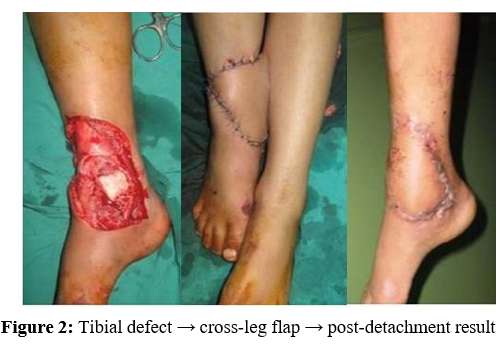

Figure 3: Brachial plexus injury → fillet flap salvage → final coverage
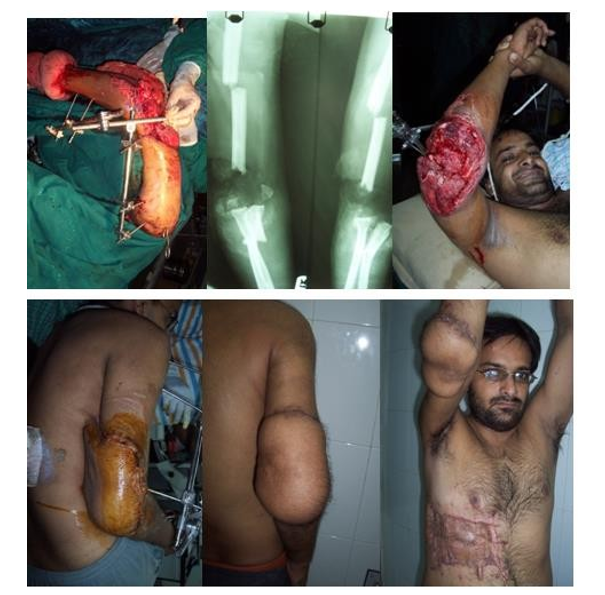
Figure 4: Compound elbow injury → chest wall rotational flap → final ROM
https://youtu.be/wkZFWfN4-IY?si=sBYjcHvIX7lnCvZa
Results
• A total of 117 compound limb injuries underwent orthoplastic reconstruction.
• High flap survival rate was achieved. >95%
• Infection control was satisfactory in the majority of cases.
• Limb salvage was achieved in most patients.
• Complication rates were low and manageable.
• In selected small bone defects, spontaneous fracture union was observed following vascularized coverage.
• No microsurgical free flaps were required in this series. Functional outcomes were satisfactory across limb reconstructions.
Conclusions
The results of this 38-year retrospective analysis demonstrate that integrated orthoplastic management using regional and pedicled flaps remains a highly effective, safe, and durable strategy for the reconstruction of compound limb injuries. Key findings lead to the following conclusions:
i. Reliability of Pedicled Techniques: In the absence of microsurgical infrastructure, pedicled and fasciocutaneous flaps—specifically the sural, gastrocnemius, and soleus flaps—provide consistent, high-quality soft-tissue coverage with a survival rate exceeding 95% [6,7].
ii. Limb Salvage Efficacy: Timely and radical debridement followed by vascularized tissue coverage is the cornerstone of successful limb salvage. This approach significantly reduces the risk of chronic osteomyelitis and secondary amputations in high-energy trauma cases.
iii. The “Vascularized Advantage”: The observation of spontaneous fracture union in small bony defects underscores the biological benefit of providing a robust, vascularized environment to the injury site [5]. This suggests that soft-tissue quality is as critical to bone healing as mechanical stability.
iv. Resource-Appropriate Innovation: While microsurgical free tissue transfer is often considered the gold standard, this study reinforces that appropriately trained orthopedic surgeons can achieve comparable long-term results using refined local and regional reconstructive techniques [2,3].
v. Safe & Cost-Effective: Integrated orthoplastic management with pedicled flaps is highly reliable for compound limb injuries.
vi. High Success Rates: Achieved >95% flap survival and successful limb salvage without microsurgical free flaps.
vii. Surgeon Independence: Orthopaedic surgeons can safely execute these procedures by mastering local vascular anatomy.
viii. Resource Optimization: Vital for trauma centers where microsurgical infrastructure or specialized teams are unavailable.
ix. Biological Advantage: Vascularized coverage appears to promote spontaneous union in selected small bone defects.
In summary, the integration of orthopedic and plastic surgical principles is not dependent on specific advanced technology, but rather on a consistent surgical philosophy of early, radical, and vascularized reconstruction. These techniques remain a vital part of the reconstructive ladder and continue to be relevant in both specialized trauma centers and resource-limited environments worldwide.
Level of Evidence: Since this is a retrospective review of your personal surgical cohort, remember to list this on your title slide or manuscript title page as Level of Evidence: IV (Case Series).
Discussion
Microsurgical free tissue transfer remains an important reconstructive modality [1,5,6]. However, its successful implementation depends on infrastructure, microsurgical expertise, and system readiness. In many settings, especially outside tertiary microsurgical centers, regional flap techniques remain essential [2,7]. The anatomical principles established by Pontén and subsequent vascular classification systems have enabled predictable fasciocutaneous reconstruction. These techniques allow orthopaedic surgeons to integrate soft-tissue management into trauma care without reliance on microsurgical services [8–10]. Local muscle flaps continue to have important roles in tibial and periarticular reconstruction [3]. Reverse-flow and perforator-based concepts have expanded coverage of distal third defects [2,4].
The present 38-year experience demonstrates that pedicled orthoplastic reconstruction is durable, reproducible, high reliability, low complication rates, effective infection control, preservation of limb function, and clinically effective in a resource-limited setting. The observation of spontaneous fracture union in selected cases suggests a biological advantage of enhanced vascularity, although further controlled investigation would be required.
This study reinforces that orthoplastic principles are not limited to microsurgical environments but can be safely implemented by appropriately trained orthopaedic surgeons. The concept of integrated orthoplastic management, combining stable skeletal fixation with timely soft-tissue reconstruction, has been shown to improve limb salvage outcomes and reduce secondary procedures [3]. Our long-term observations reinforce that appropriately selected pedicled techniques can achieve outcomes comparable to more technically demanding microsurgical procedures in selected cases. An interesting observation in this series was spontaneous fracture union in small bony defects following adequate soft-tissue coverage. This may reflect the biological advantage conferred by enhanced vascularity and optimized local healing environment, though controlled comparative studies would be required to validate this hypothesis [5]. Importantly, the reproducibility of these techniques over nearly four decades highlights their continued relevance, especially in settings where microsurgical expertise or infrastructure may not be readily available [6]. Our long-term observations reinforce that appropriately selected pedicled techniques can achieve outcomes comparable to technically demanding microsurgical procedures [6,7]. An interesting observation was spontaneous fracture union in small bony defects following adequate soft-tissue coverage, potentially reflecting the biological advantage of enhanced vascularity [5].
Limitations
• This study has several limitations:
• Retrospective design
• Single-surgeon experience
• Absence of a comparative control group
• Functional outcome scoring not uniform across all anatomical regions
• Despite these limitations, the extended duration of follow-up and consistency of surgical philosophy provide meaningful longitudinal insight into orthoplastic practice in real-world settings.
Conclusion
Integrated orthoplastic reconstruction using pedicled and fasciocutaneous flaps is a safe, reliable, and cost-effective strategy for managing compound limb injuries. In environments where microsurgical resources are limited, appropriately trained orthopaedic surgeons can independently perform effective limb-salvage reconstruction while maintaining acceptable complication rates.
I. Level of Evidence: IV
II. Declarations
III. Conflict of Interest: None declared
IV. Funding: None
V. Ethical Approval: Waived due to retrospective study design.
VI. Consent: Written informed consent for publication of images was obtained where applicable.
References
-
- Lee, H. I., Hong, J. P., Kim, E. K. (2010). Soft-tissue coverage of an extensive mid-tibial wound with the combined medial gastrocnemius and medial hemisoleus muscle flaps: The role of local muscle flaps revisited. J Plast Reconstr Aesthet Surg. 63(3): e236–e241.
- Acland, R. D. (2016). Reverse sural artery island flap with skin extension along the pedicle. J Foot Ankle Surg. 55(3):590–594.
- Wettstein, R., Schürch, R., Banic, A., Erni, D. (1990). Refinements in lower extremity free flap surgery. Clin Plast Surg.17(4):733–744.
- Wettstein, R., Schürch, R., Banic, A., Erni, D., & Harder, Y. (2008). Review of 197 consecutive free flap reconstructions in the lower extremity. Journal of plastic, reconstructive & aesthetic surgery, 61(7), 772-776.
- AlMugaren, F. M., Pak, C. J., Suh, H. P., & Hong, J. P. (2020).Best local flaps for lower extremity reconstruction. Plastic and Reconstructive Surgery–Global Open, 8(4), e2774.
-
- Ponten, B. (1981). The fasciocutaneous flap: its use in soft tissue defects of the lower leg. British journal of plastic surgery, 34(2), 215-220.
- Cormack, G. C., & Lamberty, B. G. H. (1984). A classification of fascio-cutaneous flaps according to their patterns of vascularisation. British Journal of Plastic Surgery, 37(1), 80-87.
- Nakajima, H., Fujino, T., & Adachi, S. (1986). A new concept of vascular supply to the skin and classification of skin flaps according to their vascularization. Annals of plastic surgery, 16(1), 1-19.
- Pontén, B. (1992). Events leading to the rediscovery of the fasciocutaneous flap. In: Hallock GG, editor. Fasciocutaneous Flaps. Boston: Blackwell Scientific Publications. p.10–12.
Lecture on orthoplastic surgery