

Advances in Bioengineering and Biomedical Science Research(ABBSR)
ISSN: 2640-4133 | DOI: 10.33140/ABBSR
Impact Factor: 1.7

Research Article - (2026) Volume 9, Issue 1
Influence of Visual Input and Occlusal Conditions on Static and Dynamic Postural Control in Female University Badminton Players
 , Yogetsu Bandor 2 , Kazumasa Sakai 3,4 and Takuya Fukui 5
 2Bando Dental Clinic, Ishikawa, Japan
3Kanazawa Gakuin University, Ishikawa, Japan
4Badminton Association of Japan, Tokyo, Japan
5Department of Sport Science, Kanazawa Gakuin University of Sport Science, Ishikawa, Japan
Received Date: Sep 07, 2026 / Accepted Date: Oct 02, 2026 / Published Date: Oct 14, 2026
Copyright: ©2026 Mutsumi Takahashi, et al. This is an open-access article distributed under the terms of the Creative Commons Attribution License, which permits unrestricted use, distribution, and reproduction in any medium, provided the original author and source are credited.
Citation: Takahashi, M., Bando, Y., Sakai, K., Fukui, T. (2026). Influence of Visual Input and Occlusal Conditions on Static and Dynamic Postural Control in Female University Badminton Players. Adv Bioeng Biomed Sci Res, 9(1), 01-09.
Abstract
Objective: The purpose of this study is to clarify the effects of vision and occlusion on static and dynamic balance control in badminton players.
Methods: Participants were 17 female badminton players (19.5±1.4 years). Static balance was measured with eyes open and eyes closed, using sway area (SA), sway path length per unit area (SPUA), and the Romberg ratio (RR) as evaluation indices. Dynamic balance was assessed using the cross-test, with the R/E value serving as the evaluation metric. Measurement conditions for static balance were the mandibular rest position (RP) and the centric occlusion (CO), whereas the evaluation indices for dynamic balance involved three conditions: these two plus the condition of no occlusal instructions (FR). Statistical analyses were performed to examine differences in static balance based on visual and occlusal conditions, as well as differences in dynamic balance based on occlusal conditions.
Results: Under CO conditions, SA values were significantly lower with eyes open. With the eyes open, compared to the RP condition, the SA was significantly lower and the SPUA was significantly higher in the CO condition. RR showed significantly higher values under the CO condition. The R/E value was highest under the FR condition.
Conclusions: This study indicated that, visual feedback contributes to postural control and that occlusion is advantageous in a static environment. Conversely, in a dynamic environment, it is suggested that the freedom of movement allowing for the unconscious and phasic switching between occlusion and jaw opening facilitates balance performance.
Keywords
Static Balance, Dynamic Balance, Jaw Position, Occlusion, Visual Function, Badminton, Postural control, Mandibular Position, Somatosensory Integration, Center of Pressure, AthletesIntroduction
Postural control refers to the neuromuscular processes by which humans maintain stable body positions under gravity, such as upright standing, sitting, and walking [1,2]. Postural control consists of two key components: postural orientation and postural stability. The former is defined as the ability to appropriately maintain the relative spatial positions of body segments such as the head, trunk, and limbs and the alignment of the body relative to gravity and the support surface in response to motor tasks and environmental factors. The latter refers to the ability to control the body’s center of mass relative to the base of support, preventing loss of balance and falls [1,3]. Visual, vestibular, and somatosensory systems are the three primary sensory systems supporting postural control, and postural control is achieved through the integrated processing of this sensory information within the central nervous system [4,5]. Postural control consists of two strategies: predictive postural control, a mechanism that anticipates a loss of balance caused by one's own movements and initiates muscle activity to stabilize posture in advance; and reactive postural control, a mechanism that reflexively and instantaneously restores balance in response to unexpected external disturbances [2,6].
Postural control focuses on the functions of internal systems and control mechanisms specifically the nervous system, sensory integration, and the anticipatory and reflexive adjustment of muscles and refers to the neuromuscular processes involved in maintaining a stable state [1,7]. On the other hand, balance ability focuses on physical capabilities and performance excellence such as maintaining the center of gravity, preventing falls, and executing tasks [1,8].
In other words, it is believed that humans achieve a high level of balance ability (performance) by constantly operating their postural control systems. Research on sensory input in postural control often investigates the underlying mechanisms by analyzing responses to external perturbations [9,10]. We have previously focused on somatosensory information in the maxillofacial region (i.e., jaw position and occlusion), which is one of the sensory inputs for postural control, and have investigated the differences in left-right balance of occlusal contact and the effects of occlusal correction by intraoral appliances on balance ability [11-13]. These studies revealed that individuals with better left-right occlusal balance tend to exhibit superior balance capabilities, regardless of whether or not they use an intraoral appliance, and that these characteristics vary depending on the athlete’s specific sport or event.
The purpose of this study is to clarify the effects of vision and occlusion on static and dynamic balance control in female university badminton players. The null hypothesis was that the static and dynamic balance control abilities of female university badminton players are not influenced by vision or occlusion.
Materials and Methods
Ethical Approval of Studies and Informed Consent
This study was conducted with the approval of the Ethics Committee of The Nippon Dental University School of Life Dentistry at Niigata (Approval No.: ECNG-R-325). Prior to participation, the purpose and significance of the study were fully explained to all participants, and their written informed consent was obtained.
Participants
Participants were 17 female university badminton players (mean age: 19.5±1.4 years) with no morphological or functional abnormalities in the stomatognathic system. Their mean duration of competitive experience was 12.3±2.3 years.
Exclusion criteria included
i. A history of orthopedic diseases within the past year, such as fractures or dislocations of the lower limbs or trunk, acute or chronic low back or lower extremity (hip, knee, and ankle) pain severe enough to hinder movement, and joint range-of-motion limitations; and
ii. Ongoing dental treatment or tooth loss, excluding third molars.
Measurement of static balance Static balance
was measured using a center of gravity sway meter (GRAVICORDER GS-7, Anima Corp., Tokyo) [11-13]. Following the manufacturer’s protocol, participants stood upright on the platform with both feet together (feet-closed stance), with the center of the plantar surface aligned with the reference mark. Participants were directed to keep their gaze fixed on a visual target located at eye level 2 m in front of them, while remaining relaxed in the mandibular rest position (RP) with no tooth contact. After recording for 30 seconds with eyes open, participants were instructed to close their eyes; to minimize the effect of the vestibulo-ocular reflex, recording under the eyes-closed condition was initiated approximately 20 seconds after the instruction (Figure 1). Subsequently, participants were instructed to occlude in centric occlusion (CO), and recordings were performed for 30 seconds under both eyes-open and eyes-closed conditions in the same manner.
The following parameters were utilized: sway area (SA) as an index of the magnitude of postural sway, sway path length per unit area (SPUA) as a measure of the delicacy of postural control, and the Romberg ratio (RR) to quantify the impact of visual input.

Figure 1: Measurement of Static Postural Stability Using a Center of Gravity Sway Meter
Measurement of Dynamic Balance
Dynamic balance was evaluated using the Cross test performed with a center of gravity sway meter (GRAVICORDER GS-7) [13-15]. The start positions required participants to stand naturally with both arms hanging at their sides. They were positioned on the platform with an open stance, maintaining a 5-cm distance between the inner borders of both feet, centered over the reference point. Gaze direction instructions were identical to those used during the static balance measurement. With quiet stance set as the baseline position, participants were instructed to shift their upper body smoothly over 3 seconds in each direction in the following sequence: forward, baseline, backward, baseline, left, baseline, right, and baseline (Figure 2). During the movement, participants were required to maintain heel contact with the platform. The trial conditions consisted of three mandibular positions the two previously evaluated for static balance along with a free position (FR) without specific jaw or occlusal instructions all performed with eyes open.
The R/E value was used as a dynamic balance parameter and was determined by dividing the rectangular area calculated by multiplying the maximum COP excursion in the anteroposterior direction by that in the mediolateral direction by the SA.
Figure 2: Measurement of Dynamic Postural Stability Using a Center of Gravity Sway Meter
Statistical Analysis
Statistical analyses were carried out using SPSS software (IBM SPSS Statistics 24.0, IBM Corp., Armonk, NY, USA). Normality was tested using the Shapiro-Wilk test, confirming that data for SA, SPUA, and RR for static balance as well as the R/E value across occlusal conditions for dynamic balance followed a normal distribution.
Two-way repeated-measures ANOVA was applied to analyze SA and SPUA data, after which paired t-tests were used for comparisons across visual and occlusal conditions. The effect of occlusal condition on RR was assessed using a paired t-test.
Prior to analyzing the R/E value, we compared the rectangular areas among occlusal conditions. Since data for the RP and FR conditions were not normally distributed, a Friedman test was conducted, which revealed no significant differences. Thus, we proceeded to analyze the effect of occlusal conditions on the R/E value. Mauchly’s sphericity test satisfied the assumption of sphericity, allowing a one-way repeated-measures ANOVA to be conducted, followed by Scheffe’s multiple comparison test.
Result
Figure 3 shows a representative recording of static center-of-gravity sway. Under both occlusal conditions, static sway tended to be greater with eyes closed than with eyes open.
Figure 4 shows the differences in SA according to visual and occlusal conditions. A significant difference attributable to visual condition was observed only under the CO condition, with SA being significantly lower during eyes opening than during eyes closed (P<0.01). Differences due to occlusal condition were found only under the eyes-opening condition, where SA was significantly lower in CO than in RP (P<0.01).
Differences in SPUA depending on visual and occlusal conditions are presented in Figure 5. No significant effect was associated with visual condition. Regarding occlusal conditions, a significant difference was observed exclusively under the eyes-opening condition—consistent with the SA results—where SPUA was significantly higher in CO (P<0.05).
Figure 3: An Example of Results from Static Center-of-Pressure Sway Analysis A: Mandibular Rest Position (RP), B: Centric Occlusion (CO)

Figure 4: Differences in Sway Area (SA) Based on Visual and Occlusal Conditions. RP: Mandibular Rest Position, CO: Centric Occlusion
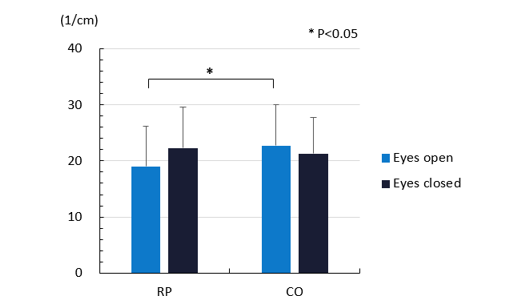
Figure 5: Differences in the Sway Path Length Per Unit Area (SPUA) Based on Visual and Occlusal Conditions
RP: Mandibular Rest Position, CO: Centric Occlusion
Figure 6 shows the differences in the RR for SA according to occlusal condition. The RR was significantly higher in CO than in RP (P<0.05).
A representative example of the dynamic postural sway recording is shown in Figure 7. Tendencies toward differences in both size and sharpness of the cross-shaped COP locus were observed across the occlusal conditions.
Figure 8 shows the differences in the R/E value according to occlusal condition. The R/E value was highest in FR, followed by CO and RP, with significant differences observed between RP and FR, as well as between CO and FR (P<0.01).

Figure 6: Comparison of Romberg Ratio (RR) of Sway Area (SA) based on Occlusal Conditions
RP: Mandibular Rest Position, CO: Centric Occlusio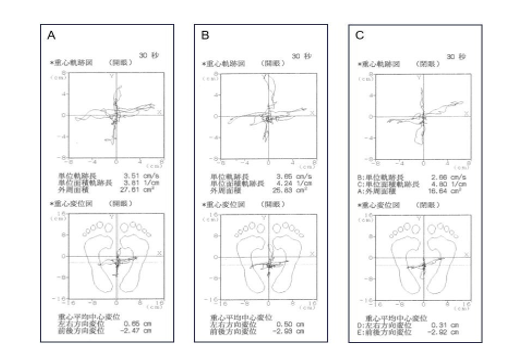
Figure 7: An example of results for dynamic center-of-pressure sway. A: Mandibular Rest Position (RP), B: Centric Occlusion (CO), C: Free Position (FR) without Specific Jaw or Occlusal Instructions

Figure 8: Comparison of R/E Values Based on Occlusal Conditions. RP: Mandibular Rest Position, CO: Centric Occlusion, FR: Free Position without Specific Jaw or Occlusal Instructions
Discussion
Our findings revealed that occlusal conditions affected static balance control in female university badminton players exclusively during eyes-open conditions. In addition, dynamic balance control peaked under the uninstructed jaw position and occlusal conditi on. Consequently, the null hypothesis was rejected.
Static balance control has been reported to decline due to internal noise and external perturbations, whereas it improves through the enhancement of internal factors [4,16]. Among these internal factors, jaw position and occlusion in the stomatognathic region contribute to somatosensory inputs for postural control, an area we have been continuously investigating. Among somatosensory inputs, the periodontal ligament, temporomandibular joint, and masseter muscle contribute to proprioception. If signals from these sensory receptors serve as internal stabilization factors, they are likely integrated into the central nervous system as accurate positional information, thereby facilitating the control of the body center of gravity. Moreover, a myofascial continuity exists between the craniometrical muscles, deep trunk muscles, and the musculature surrounding the hip, knee, and ankle joints [17]. It is suggested that head stabilization mediated by occlusion influences postural alignment and stabilization muscles throughout the body, which in turn impacts balance control [9,13]. Previous studies have demonstrated mutual interactions among sensory inputs for postural regulation. In this process, positive information from a single sensory source is believed to enhance signals from other modalities synergistically within sensory integration [2,4]. In the present study, both SA and SPUA were affected by occlusal conditions exclusively under the eyes-open condition. Specifically, static balance control was optimized when both visual input and occlusal proprioceptive input were present simultaneously. This is further supported by the significantly higher RR observed under the CO condition. In addition, our previous study reported that individuals with better left-right balance in occlusal contact tend to exhibit superior static balance control [13]. In the present study, prior evaluation of the participants' occlusal contact state using Dental Prescale revealed an average left-right difference in occlusal contact area of only 2.04%. Thus, it is speculated that the inclusion of a cohort with good occlusal contact balance may have influenced the interaction between visual and somatosensory inputs.
While various approaches are available to assess dynamic balance control, we employed the Cross-test using a center-of-gravity measurement system, a method shown to correlate with static balance performance [14,18-22]. The Cross-test is used to measure anticipatory postural control; its advantage lies in making balance capability easily assessable from the clarity of the center-of-gravity sway path, enabling both researchers and participants to readily evaluate their own performance [14]. Dynamic balance control affects movement adaptability and influences the ability to maintain trunk stability during actions such as walking and quick directional changes in sports [1,18]. Although postural control deteriorates under internal noise or disturbances, posture maintenance during motion is facilitated by head stabilization [23,24]. This suggests that temporary occlusal stabilization of head position could modulate physical force output. In the present study, dynamic balance control was highest under the FR condition, showing significant differences compared with the RP and CO conditions. Sustained occlusion under the CO condition potentially induced hypertonia or excess electromyographic activity across the cervical, scapular, and core muscle groups through the trigeminal system.
While such co-contraction facilitates fixation during static posture, it increases bodily stiffness during dynamic conditions, ultimately impairing the body's ability to smoothly accommodate postural perturbations and weight shifts. Furthermore, to maintain dynamic balance, head position is adjusted to stabilize the gaze; thus, continuous occlusion may lock the temporomandibular and atlanto-occipital joints, potentially inhibit fine head stabilization movements and reduce the mobility of the craniocervical region and spine [25-27]. When degrees of freedom in the craniocervical region are restricted, compensatory stress is exerted on the lower trunk and postural control system to absorb the sway [24,28]. This places an excessive burden on the lower extremities (hip, knee, and ankle joints) and disrupts the systemic kinetic chain, which likely resulted in the observed reduction in dynamic balance [1,17]. In contrast, the FR condition prevented excessive muscle tone and preserved the smooth transition between agonist and antagonist muscles during dynamic movement, which is thought to have enabled efficient control of the body center of mass.
Dynamic balance performance under the RP condition was also inferior to that under the FR condition, consistent with the findings for the CO condition. These findings reinforce the notion that intentionally constraining jaw position or muscle state that is, applying conscious or forced neuromuscular control inherently impairs dynamic postural stability. In other words, continuously focusing on jaw position or occlusal state imposes a demanding cognitive task on the subjects, resulting in a dual-task condition. To maintain dynamic balance, the central nervous system must process somatosensory inputs from the lower limbs and trunk alongside vestibular and visual information in real time, thereby adjusting posture unconsciously. However, allocating attentional resources to maintaining a fixed jaw position likely delayed sensory feedback processing for postural regulation. Additionally, consciously keeping the teeth apart could have caused co-contraction of the jaw elevator and depressor muscles. Furthermore, the conscious attempt to freeze the rest position likely increased tension in the cervical musculature, impeding fine head-and-neck adjustments much like in the CO condition. Under the FR condition, participants could relax and maintain joint mobility when force was unnecessary, while unconsciously contacting the teeth or stabilizing the jaw only at the precise moment of center-of-gravity displacement to ensure stability. This suggests that a flexible on/ off switching mechanism was operated most smoothly in this condition. The findings of this study suggest that for maintaining dynamic balance, a free jaw position which allows timely muscle contractions as needed is superior to continuous muscle activation. This indicates that during dynamic movements such as walking and athletic performance, utilizing reciprocal occlusion only at the "moment of impact" (e.g., landing or changing direction when center of gravity is perturbed) represents a natural movement strategy (i.e., phasic and reflexive occlusion). Therefore, it can be argued that the optimization of dynamic balance necessitates guaranteeing motor compliance, which allows for the automatic, phasic modulation between jaw closure and opening in response to ongoing movement, rather than constraining the mandible to a static condition (whether by constant tooth contact or deliberate separation).
This study has several limitations that require future study. First, the dynamic task employed was confined to a discrete postural control task assessing anticipatory postural adjustments. Consequently, the impact of mandibular position and occlusal states during more complex physical activities such as locomotion, rapid turns, and reactive postural control remains to be elucidated. Second, because muscle activity in the masticatory and cervical musculature was not quantitatively recorded using electromyography (EMG) across conditions, our inferences regarding the physiological impact of co-contraction on postural control remain speculative. Third, the potential occurrence of brief, subconscious occlusal contact under the FR condition could not be completely monitored or quantified.
Conclusion
The results of this study indicated that while occlusal contact advantageously provides "bodily fixation and rigidity" in a static environment, dynamic balance is maximized by "motor compliance and automation." Specifically, under dynamic conditions, eliminating intentional fixation or conscious constraints allows for the unconscious, phasic switching between occlusion and release only at the crucial moment required based on sensory feedback from the body. Therefore, to optimize postural control in athletic performance and daily activities, rather than "maintaining or fixing" the mandible in a specific state, it is paramount to ensure an "unconstrained, natural occlusal state" that can adapt flexibly according to the phase of movement.Acknowledgement
This work was supported by JSPS KAKENHI Grant Number JP23K10617References
- Guzmán-Muñoz, E., Montalva-Valenzuela, F., Garcia-Carrillo, E., Castillo-Paredes, A., López-Gil, J. F., Narrea Vargas, J. J.,... & Concha-Cisternas, Y. (2026). Postural balance and human movement: An integrative framework for mechanisms,assessment, and functional implications. Journal of Clinical Medicine, 15(7), 2588.
- Ivanenko, Y., & Gurfinkel, V. S. (2018). Human postural control. Frontiers in neuroscience, 12, 301583.
- Horak, F. B. (2006). Postural orientation and equilibrium: what do we need to know about neural control of balance to prevent falls?. Age and ageing, 35(suppl_2), ii7-ii11.
- Peterka, R. J. (2002). Sensorimotor integration in human postural control. Journal of neurophysiology, 88(3), 1097-1118.
- Itaya, A. (2015). Feedback system for sensory and postural control. J. Biomech, 39, 197-203.
- Aruin, A. S. (2006). The effect of asymmetry of posture on anticipatory postural adjustments. Neuroscience letters, 401(1-2), 150-153.
- Zindashti, N. J., Noamani, A., Vette, A. H., & Rouhani, H. (2025). A narrative review on dynamic postural stability and neuromuscular control of balance. Transactions of the Canadian Society for Mechanical Engineering, 49(3), 406-420.
- Pollock, A. S., Durward, B. R., Rowe, P. J., & Paul, J. P. (2000). What is balance?. Clinical rehabilitation, 14(4), 402-406.
- Marini, I., Gatto, M. R., Bartolucci, M. L., Bortolotti, F., Alessandri Bonetti, G., & Michelotti, A. (2013). Effectsof experimental occlusal interference on body posture: an optoelectronic stereophotogrammetric analysis. Journal of oral rehabilitation, 40(7), 509-518.
- Assländer, L., & Peterka, R. J. (2014). Sensory reweighting dynamics in human postural control. Journal of neurophysiology, 111(9), 1852-1864.
- Takahashi, M., Bando, Y., Fukui, T., Maruyama, A., & Sugita,M. (2023). Equalization of the occlusal state by wearing a mouthguard contributes to improving postural control function. Applied Sciences, 13(7), 4342.
- Takahashi, M., Bando, Y., Kitaoka, K., & Hata, K. (2023). Effect of wearing a mouthguard on physical ability is dependent on occlusal contact state: A study involving elite level female handball players. Dental Research and Oral Health, 6(04), 88.
- Takahashi, M., Bando, Y., Fukui, T., & Sugita, M. (2024). Light clenching differentially affects balance ability according to occlusal contact stability. Applied Sciences, 14(22), 10314.
- Takahashi, M., Bando, Y., & Fukui, T. (2024). Verification of relationship between static and dynamic balance using cross test trajectory diagram as indicator. Education, 14, 119-130.
- Takahashi, M., Bando, Y., & Fukui, T. (2025). Impact of Improved Feedforward Control on Flight Time in Trampoline Competitions. Advances in Physical Education, 15, 187-196.
- Lesinski, M., Hortobágyi, T., Muehlbauer, T., Gollhofer, A., & Granacher, U. (2015). Effects of balance training on balance performance in healthy older adults: a systematic review and meta-analysis. Sports medicine, 45(12), 1721-1738.
- Myers, T. W., & Myers, T. (2009). Anatomy trains: myofascial meridians for manual and movement therapists (Vol. 34). Amsterdam, The Netherlands: Elsevier.
- Mancini, M., & Horak, F. B. (2010). The relevance of clinical balance assessment tools to differentiate balance deficits. European journal of physical and rehabilitation medicine, 46(2), 239-248.
- Bell, D. R., Guskiewicz, K. M., Clark, M. A., & Padua, D.A. (2011). Systematic review of the balance error scoring system. Sports health, 3(3), 287-295.
- Moore, M., & Barker, K. (2017). The validity and reliability of the four square step test in different adult populations: a systematic review. Systematic reviews, 6(1), 187.
- Hirano, Y., Nitta, O. (2021). Motor imagery and motor function in older adults receiving preventive care for motor function. J Japan Health Sci, 24, 86-92.
- Fukuyama, K., & Maruyama, H. (2010). Relationships between the cross test and other balance tests. Phys. Ther. Sci, 25, 79-83.
- Hellmann, D., Giannakopoulos, N. N., Blaser, R., Eberhard, L., & Schindler, H. J. (2011). The effect of various jaw motor tasks on body sway. Journal of oral rehabilitation, 38(10), 729-736.
- IoniÈ?Ä?, C., Petre, A. E., Cononov, R. S., Covaleov, A., Mitoiu,B. I., & Nica, A. S. (2023). Methods of postural analysis in connection with the stomatognathic system. A systematic review. Journal of medicine and life, 16(4), 507-514.
- Takahashi, M., Bando, Y., & Fukui, T. (2023). Influence of Voluntary Clenching on Spinal Range of Motion Depends on Occlusal Contact State. Advances in Physical Education, 13(04), 234-243.
- Takahashi, M., Bando, Y., & Fukui, T. (2025). Effect of occlusion on range of motion of spinal alignment during trunk flexion varies depending on exercise habits. Journal of Spine Research and Surgery, 7(3), 85-90.
- Takahashi, M., Bando, Y., Fukui, T., et al. (2026). Impact of clenching on range of motion of hip joint and lumbar spine in rugby players. Fortune J Health Sci, 9, 36-41.
- Hellmann, D., Stein, T., Potthast, W., Rammelsberg, P., Schindler, H. J., & Ringhof, S. (2015). The effect of force-controlled biting on human posture control. Human movement science, 43, 125-137.