

Advances in Bioengineering and Biomedical Science Research(ABBSR)
ISSN: 2640-4133 | DOI: 10.33140/ABBSR

Impact Factor: 1.7

Research Article - (2022) Volume 5, Issue 2
Improving Timely Referrals by Implementing Lower Extremity Amputation Prevention Tool in an Suburban Wound Care Clinic
Copyright: ©Copyright: ©2022 Azam Tayyebi. This is an open-access article distributed under the terms of the Creative Commons Attribution License, which permits unrestricted use, distribution, and reproduction in any medium, provided the original author and source are credited.
Citation: Azam Tayyebi .(2022). Improving Timely Referrals by Implementing Lower Extremity Amputation Prevention Tool in an Suburban Wound Care Clinic. Adv Bioeng Biomed Sci Res, 5(2), 81-86.
Abstract
Background: Globally, every 30 seconds there is an amputation due to a non-healing diabetic foot ulcer (DFU). Research shows prevention programs such as utilizing a Lower Extremity Amputation Prevention (LEAP) tool could reduce DFU complications.
Local Problem: Impact DuPage (2013) reported that 8.1% of the DuPage population had diabetes, however 12% of the patients with diabetes have had no diabetic foot screening [1]. At a clinic located in DuPage County, the charts audit for the second half of 2017 indicated 55% compliance with documentation of diabetic foot exams.
Method: This quality improvement (QI) used four two-weeks Plan-Do-Study-Act cycles. Each cycle included tests of change (TOC) related to patient and team engagement, DFU screening, and referral for treatment. Data were analyzed using run charts and the impact of the interventions were measured. Intervention: Staff was engaged by a kickoff in-service, daily huddles, and weekly team meetings. A modified “Team Effectiveness Diagnostic” survey measured team engagement. Foot Care for a Lifetime was used as shared decision-making tool. Clinicians assessed patients with diabetes with the LEAP checklist and utilized referral log to track appropriate referrals. Results: At the end, patient and team engagement improved to 75% and 92% respectively; also all patients with DFUs were assessed by the LEAP tool (100%) and appropriate referrals (100%) were made. Conclusion: Team engagement was essential in the success of this QI. Patient engagement in the care of their DFU was empowering to patients. The team became better engaged with patients and patients reported more involvement in their own care.
Keywords
Diabetic Foot Care, Lower Extremity Amputation Prevention Tool, LEAP Tool, Diabetic Foot Ulcer, DFUImproving Timely Referrals by Implementing Lower Extremity Amputation
Prevention Tool in a Suburban Wound Care Clinic
The United States is facing increasing prevalence of type 2 di-abetes mellitus affecting more than 12% of adults (Centers for Disease Control and Prevention [CDC], 2017). Globally, ev-ery 30 seconds there is a lower extremity amputation due to non-healing diabetic foot ulcers (DFU). Up to 85% of ampu-tations in patients with diabetes are precipitated by DFUs. Ad-ditionally, 15-25% of people with diabetes will develop a DFU with a 50-70% recurrence rate which further compromises the patient’s health [2]. According to the International Working Group on the Diabetic Foot (IWGDF) guidelines, diabetic foot screening should be done yearly and persons identified as high-risk should have diabetic foot exams every one to six months [3]. DFUs are the tenth leading cause of death in Illinois. The financial impact of complications in DFU has been increasing. According to the American Podiatric Medical Association, every $1 invested in care of DFU results in $27 to $51 of saving for the health care system among patients with commercial insurance. For Medicare-eligible patients, every $1 invested in care by a podiatrist result in $9 to $13 of savings. The estimated average cost of each lower extremity amputation is $70,000 [4].
Available Knowledge
Incomplete foot exams and late identification of diabetic foot complications may delay appropriate care for patients who need vascular or podiatry interventions. In research conducted by Siersma et al and Sibbald et al, patients with DFUs were un¬employed (50-79%) or unable to work, contributing to a pro¬foundly impacted quality of life, financial hardships and loss of productivity [5, 6]. There are high mortality risks with ulceration (85%), and amputation increases the mortality risk by two folds in patients with diabetes. Thus multidisciplinary care is needed to care for patients with DFUs [7].
The clinicians at EWCC realized that there was a gap between guidelines and their practice, such as lack of documentation of a peripheral neuropathy exam (45%), and probe to bone on wound assessment (90%). Also, 60% of patients in this clinic with DFUs reported owning therapeutic diabetic foot wear, and only 17% had adequate glycemic control (A1c<7).
Rationale
Multidisciplinary approach to diabetic foot care can be based on the Chronic Care Model (CCM), which develops restructur-ing health care through interactions between health systems and communities. In addition, the CCM emphasizes data collection to improve health systems at patient level, clinical practice, and community level [8]. The Institute for Healthcare Improvement (IHI) Model is structured based on the tests of change, team-building, and data analysis for QI projects. The IHI model has been proven effective in change theory, staff satisfaction, and quality improvement in patient care [9]. Implementation of a standardized method of identification of abnormal diabetic foot exams was needed to improve the patient-centered, safe, and effective care and timely referral to podiatry or vascular services at EWCC. The aim of this project was to improved right care for diabetes patient with DFU to 90%, receiving diabetic foot exams and referrals to vascular or podiatry as appropriate, over a 90 day period. Right Care was measured by a combination of post survey scores, screening checklists, and referrals to improve outcome.
Methods
The EWCC is part of Edward-Elmhurst Health, a non-profit organization in the suburb of the Chicago metropolitan area, serving 25-40 patients daily, open week days. According to the Wound Expert, the electronic medical record used, DFUs were the second most prevalent wound treated at EWCC. The clinic employs two nurse practitioners, two physical therapists, four registered nurses, certified nurse assistants, a patient service rep¬resentative, and a clinic manager. Stakeholders in this project included all clinic staff, medical directors, clinic manager, and patients and their families and caregivers. Majority of patients seen have had various Medicare plans (62%), 36% commercial insurance plans, and 1% uninsured or waiting for Medicaid ap¬proval. English is the primary language of more than 95% of patients, followed by Spanish 4%, and other (1%). The clinic has access to various groups of vascular specialists and podiatrists in the same building, as well as locally.
Interventions
Throughout the eight weeks, four Plan-Do-Study-Act (PDSA) rapid cycles with tests of change (TOC) were conducted. The four main interventions were team engagement, patient engage¬ment, utilizing a specific tool for assessment of diabetic feet, and tracking referrals (Table 1). Various interventions including a kick off meeting, daily huddles, weekly team meetings, and mid-day huddles were employed to enhance team engagement. Team engagement was assessed weekly with a modified Team Effectiveness Diagnostic (TED) survey (Team Effectiveness Questionnaire, n.d.) [10]. The original TED survey has 45 ques¬tions divided into seven categories. Each week, one question from each category was placed in the modified survey (Linkert survey) and the score was calculated.
Table 1: Test of changes: The aim of this QI project was to improved right care for diabetes patient with DFU to 90%, receiving diabetic foot exams and referrals to vascular or podiatry as appropriate, over a 90 day period. at EWCC. Right Care was measured by a combination of post survey scores, screening checklists, and referrals to improve the outcome.
|
Intervention |
PDSA cycle 1 |
PDSA cycle 2 |
PDSA cycle 3 |
PDSA cycle 4 |
|
Teamwork/ engagement |
Daily huddle < 2 min |
Continue daily huddle, weekly team meeting with lunch |
Add mid-day daily huddle |
Add email to engage team |
|
Patient Engagement/ Experience of care |
Utilizing Diabetic Foot Care for Lifetime, shared decision-making (SDM) tool to engagement patient. |
New patients with DFU receive SDM tool by receptionist upon check-in to view. |
Expand SDM tool to all existing diabetic patient |
Expand SDM tool to patient with diabetes with no DFU |
|
Utilizing LEAP tool |
Implement LEAP Screening tool on initial visit |
Continue ramp with both NPs new patients |
Continue c LEAP Paper/ Electronic template in EMR, 1-1 education of providers |
Using LEAP tool to assess for abnormal foot exam on pt without DFU |
|
Referral tracking log (RTL) |
Implement RTL for new patients with abnormal diabetic foot exam |
Continue ramp with both NPs new patients |
Prepared referral prescription for vascular/podiatry, receptionist enters referral log |
Two APNs track their own referral in referral log book |
Patients with diabetes were identified based on diagnoses on the electronic medical record and/or diagnosis mentioned in the provider referral order. Diabetic Footcare for a Lifetime, developed by U.S. Department of Health and Human Services [USDHHS], was used as a shared decision-making (SDM) tool. This SDM tool had a multiple-choice question survey which was used to assess the patient’s engagement by the end of the visit. The LEAP tool developed by the Health Resources and Services Administration (HRSA, 1992) was used to examine diabetic feet and identify abnormal diabetic foot exams. The utilization of the LEAP checklist was measured as an indicator of improving standard of care in the clinic [11]. A simple table was created to track the referral to vascular or podiatry services when needed.
Study of Interventions
Data from each intervention except team engagement was col-lected twice weekly during the project and then recorded and graphed into Excel designed Run Charts provided by the IHI. The team engagement data was collected weekly per team re-quest. The trends in changes were identified at the end of each cycle, and a new TOC was implemented to meet the aim of this project [9]. Evaluation of the data made it possible to gauge changes, trends, and variation over time. Positive reinforcement was implemented to improve team work and team engagement for providing patient centered care.
Measures
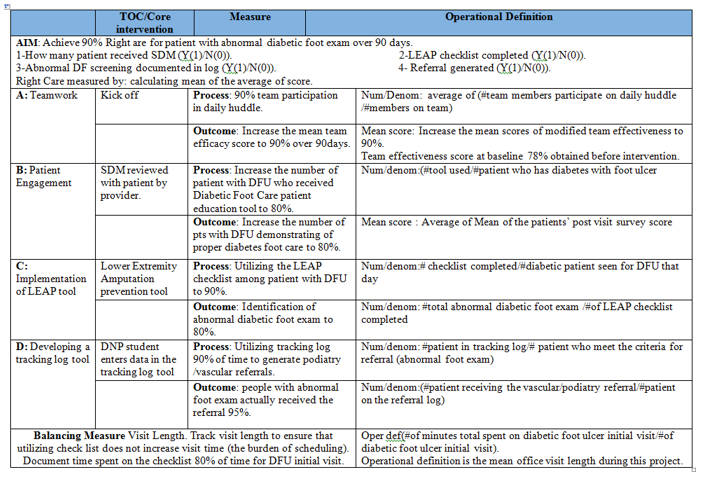
A retrospective chart audit was performed at the beginning of the project to identify areas for improvement. Outcome and process measures were calculated into data points for evaluation. Overall, this project included eight interventions and one balancing measure to assess whether the changes resulted in improvements in patient care. The operational definitions for process and out¬come of each nine measures are detailed in Table 2. The patient Engagement tool, a valid and reliable tool developed by USDH-HS, was used to measure patient confidence in diabetic foot care. Team engagement was evaluated by participation in daily hud¬dles, weekly meetings, and an average score on TED surveys, a valid and reliable survey. The LEAP tool is a valid tool devel-oped by HRSA with high reliability [10]. The balancing measure of the visit length was tracked to see whether improved changes increased visit length. Efforts were made to confirm the accuracy and completeness of data collection and necessary subsequent adjustments were integrated through subsequent PDSA cycleas.
Analysis
Run Charts, a dynamic view of the variation in one system over time, were utilized to analyze trends. Each Run Chart was carefully analyzed, and data from each cycle was used to guide future TOC, highlight variations to assist in decision making and create adjustments to interventions. Run Charts are the best tools to determine if the improvement strategies have had the desired effect [9]. The project meets federal guidelines for QI and did not involve human subject research, thus did not require review from the Institutional Review Board. No outside funding was received for this project. There was no conflict of interest iden¬tified by the author.
Result
Over 90 days, a median of 90% Right Care for diabetic foot exams was achieved (Figure 1). Interventions and small TOC were implemented during each two-week PDSA cycle, with the goal of meeting the aim. The balancing measure was the length of the initial visit of the patient with DFU, which was 75 min-utes at baseline. The goal was to sustain the length of the initial visit throughout the project, while implementing the four areas of change in the care of DFU. The visit length increased by 10 min in the first PDSA cycle, and then reduced to the baseline most of the time in the remaining cycles. There were only two outliers, patients with multiple ulcers, who required more time during initial visits (Table 2).
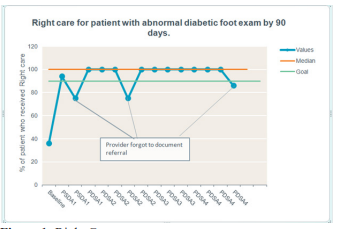
Figure 1: Right Care
1- How many patient received SDM (Y(1)/N(0)).
2- LEAP checklist completed (Y(1)/N(0)).
3- Abnormal DF screening documented in log (Y(1)/N(0)).
4- Referral generated (Y(1)/N(0)).
Right Care measured by: calculating mean of the average of score.
Team Engagement
Team engagement began with an initial kickoff in-service for the staff. The clinicians in the EWCC were encouraged to hand out the SDM tools to patients and utilize the LEAP tool for assess-ment. The team participation in daily huddles improved from 80% at the beginning of the first PDSA cycle, to 90% in the end of the fourth cycle. Team engagement interventions included daily huddles, weekly meeting, and weekly emails to discuss the QI progress. Staff completed a weekly team engagement survey to identify the opportunities for improvement in team perfor- mances. Average scores on the team engagement survey im-proved from 40% initially to 92% at the end of the 90-day project. Staff engagement and participation improved as the project continued, however, high census and training new staff temporarily affected the team engagement, and the score dropped to 72%. Overall, most of the team score was below the goal of 90% (Figure 2), indicating opportunity for improvement. Ideal huddle time in this clinic was 5-10 minutes in the beginning of the day (8am) and before lunch break, allowing staff to participate without interference with other obligations.
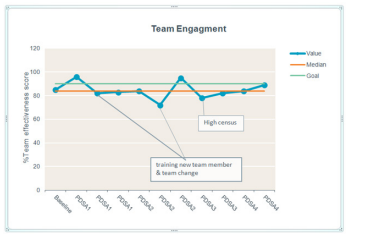
Figure 2: Team Engagement, The median for team engagement in daily huddles and team meeting was 92% above the goal of 90%.
Patient Engagement
Prior to the implementation of this project, every clinician ed-ucated and engaged patients in diabetic foot care according to their discretion, and a standardization of the process was needed. All clinicians were instructed to use the Diabetic Foot Care for Lifetime as a SDM tool. In the first cycle, there was zero participation, and by the end fourth cycle, 100% of patients were engaged by SDM. Patient engagement was assessed with the post education survey. Patient’s post visit survey baseline was 55%. As clinicians became more creative in engaging patients on diabetic foot care, the post survey scores improved, trending above median for the third and fourth cycles. The sequence of implementing SDM by the providers detailed in the Table 1. The trend of collected data illustrated in Figure 3.
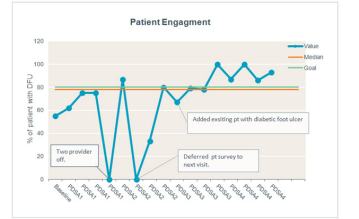
Figure 3: The median for patient‘s post survey score was 75%.
Utilizing LEAP Tool
Assessment of patients with DFUs was performed using LEAP checklist [Figure 4]. Utilizing a paper copy of the LEAP tool on assessment of DFUs started in first PDSA cycle with one pro-vider, followed by all providers in the second cycle. In the third PDSA cycle, utilizing the electronic version of LEAP was add¬ed to data collection, and in the final cycle, all diabetic patients were assessed by LEAP. A median of 100% indicated that the used of the LEAP tool was an acceptable choice by clinicians for DFU evaluation. Twenty new patients with DFU were assessed during this 90 days, 15 patients identified as having an abnormal diabetic foot exam.
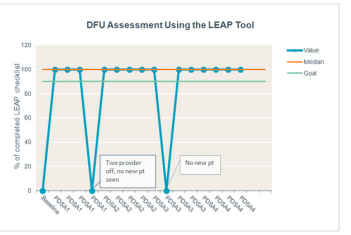
Figure 4: The median of assessment of Diabetic Foot Ulcer with LEAP tool was 100%.
Referral Tracking Log Utilizing referral tracking log was variable among the clinicians [figure 5]. In the first cycle, referral was tracked by one provider for one team, second cycle referral was tracked by one provider for both teams. In the third cycle, was tracked by another team members. In the fourth cycle, each clinician tracked their own team referral. Entering patients in the tracking log remained challenging for the team, who struggled with staffing and taking responsibility of updating the tracking log.
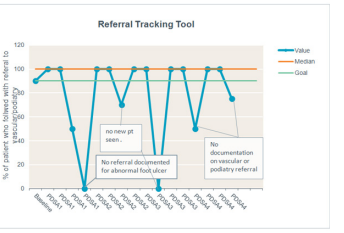
Figure 5: Tracking referral to vascular or podiatry
Discussion
Chart audits of patients with DFUs in the second half of 2017 confirmed the need for improvement in the quality of care for patients with DFU at EWCC. Chart audits results increased awareness, and identified the opportunities for improvement for DFUs’ treatment. The most successful components of the project were patient education and engagement on diabetic foot care, and team engagement. The LEAP tool served as an identifier of an abnormal diabetic foot exam. This QI project standard¬ized the diabetic foot exam, improved the clinicians’ skills, and facilitated communication between clinicians and primary care providers. Daily huddles and team meetings allowed a dialogue regarding team concerns, and fostered shared decision making among staff and leadership. Our team was able to create a culture of team work and dynamic communication.
Interpretation
It was apparent that all stakeholders buy-ins were critical in the success of this QI. Furthermore, it was essential to seek out the reasoning behind the disengagement of team members by active listening. This project facilitated discussion of the strengths and weaknesses among the team members.
Low census of new DFUs may have contributed to the perfect score in the utilization of the LEAP tool, and a high census may reduce the compliance of clinicians. This project improved as¬sessment and documentation of diabetic foot exams, improved timely referral for interventions needed to treat DFUs. Training new team members and inadequate staffing were major barriers to further the success of this project.
Limitations
The project can be easily implemented in other clinics, the ease-of-use interventions such as the SDM tool and LEAP tool increase the generalizability to other sites. The design of the project was geared towards a clinic with multiple staff, so a single provider clinic may not have enough time for both patient education and assessment using the LEAP tool in first visit, and may expand the patient education to the follow up visits. Imprecise delivery of the SDM tool and the LEAP checklist may result in missed opportunities to impact right care for diabetic foot exams. Effort was made to increase data reliability and re¬duce variation in data collection and chart audits by use of a single data collector. Patient’s perception, cultural beliefs, level of comprehension, and language barriers may have influenced data collection. Patients may not have wanted to discuss their diabetic foot history and number of previous ulcers, or may have answered questions falsely.
Conclusions
The aim of this QI project was achieved. Team members showed increased engagement in the EWCC. Going forward, the EWCC is planning to continue to use the component of the LEAP tool in assessment, documentation, and initiating referral of the DFUs. This project is sustainable because of the support of management and a deeply engaged team who have the shared desire to improve patient care in a practice with a culture that values improvement.
The support of the staff and management was essential in im- plementation of this QI. This project highlighted that team work not only improves patient care, but also enhances the clinician confidence in providing the safe, seamless, and personal care, which is the vision of Edward-Elmhurst Health.
References
- Impact DuPage. (2013) http://www.impactdupage.org/ index.php?module=indicators&controller=index&ac-tion=view&indicatorId=40&localeId=668
- Alavi, A., Sibbald, R. G., Mayer, D., Goodman, L., Botros, M., Armstrong, D. G., ... & Kirsner, R. S. (2014). Diabetic foot ulcers: Part I. Pathophysiology and prevention. Journal of the American Academy of Dermatology, 70(1), 1-e1.
- Bakker, K., Apelqvist, J., Schaper, N. C., & International Working Group on the Diabetic Foot Editorial Board. (2012). Practical guidelines on the management and prevention of the diabetic foot 2011. Diabetes/metabolism research and reviews, 28, 225-231.
- Carls, G. S., Gibson, T. B., Driver, V. R., Wrobel, J. S., Garoufalis, M. G., DeFrancis, R. R., ... & Christina, J. R. (2011). The economic value of specialized lower-extremity medical care by podiatric physicians in the treatment of diabetic foot ulcers.Journal of the American Podiatric Medical Association, 101(2), 93.
- Siersma, V., Thorsen, H., Holstein, P. E., Kars, M., Apelqvist, J., Jude, E. B., ... & Schaper, N. C. (2014). Health-related quality of life predicts major amputation and death, but not healing, in people with diabetes presenting with foot ulcers:the Eurodiale study. Diabetes Care, 37(3), 694-700.
- Sibbald, R. G., Ostrow, B., Lowe, J., Ayello, E. A., Alavi, A., Botros, M., ... & Smart, H. (2012). Screening for the high-risk diabetic foot: a 60-second tool (2012)©: diabetes. Wound Healing Southern Africa, 5(2), 72-82.
- Sloan, F. A., Feinglos, M. N., & Grossman, D. S. (2010). Receipt of care and reduction of lower extremity amputations in a nationally representative sample of US elderly. Health services research, 45(6p1), 1740-1762.
- Baptista, D. R., Wiens, A., Pontarolo, R., Regis, L., Reis,\W. C. T., & Correr, C. J. (2016). The chronic care model for type 2 diabetes: a systematic review. Diabetology & metabolic syndrome, 8(1), 1-7.
- Ogrinc, G. S. (2012). Fundamentals of Health Care Improvement: A Guide to Improving Your Patient's Care. Joint Commission Resources.
- Team Effectiveness Questionnaire. (n.d). Adopted from “Team Effectiveness Diagnostic” created by London Leadership Academy, Nation Health Service. https://www. cu.edu/sites/default/files/Team_effectiveness_question-naire.pdf
- Fitzgerald, R. H. (2012). Lower extremity amputation prevention. Podiatry Management, 31(5), 187-191.
- Agency for Healthcare Research and Quality. (2016). The six domains of health care quality. https://www.ahrq.gov/ professionals/quality-patient-safety/talkingquality/create/ sixdomains.html