


Research Article - (2022) Volume 6, Issue 1
Improving the Efficiency of Photoelectronic Converters
Received Date: Apr 07, 2022 / Accepted Date: Apr 25, 2022 / Published Date: Apr 27, 2022
Copyright: ©Copyright: Ã?©2022 Malko Natalie Yurevna. This is an open-access article distributed under the terms of the Creative Commons Attribution License, which permits unrestricted use, distribution, and reproduction in any medium, provided the original author and source are credited.
Citation: Malko Natalie Yurevna, (2022). Improving the Efficiency of Photoelectronic Converters. Stem Cell Res Int 6(1), 31-33
Abstract
The process of vital activity of any biological organism always requires energy, like any movement of a material object. The only known type of energy exchange in an atom is carried out through radiation – the absorption of a quantum of photon light. In our spatial dimension, there are multiple options for extracting this energy, options called resources. As long as some types of non-renewable resources occupy a finite volume - finite, and others known at the moment to science are either limited to infrastructure, or in the ratio of energy spent - received, do not make sense, science resorts to new searches for development in the field of energy, not only with the aim of maintaining vital activity but also maintaining a technological process that shows significant growth and correlates with the growth of consumer populations. However, it should be noted that, almost all energy resources require one or another preparation of them for the simplest form of the electromagnetic component. The only known and currently available resource of this type that can be used as efficiently as possible with minimal conversion is the Sun. The study of this approach to energy formation and energy consumption is engaged in a wide field of solar energy. One aspect of solar energy is studying the device of photoelectronic transducers (SOLAR) devices, which are the main element of solar cells. To use this type of resource, devices, photocells are used that give electromotive force (EMF) and current, under the influence of lighting. The direction of work is the consideration of new principles for the conversion and storage of solar energy, based on the revision of previous principles. which involve solving such problems with solar cells as efficiency - what is: the level of efficiency, the high cost of structures associated with the use of rare elements, for example, such as indium and tellurium and mainly the need to use large areas.
Keywords
X-radiation, Area Reduction, Increased Efficiency
Introduction
The degree of development of solar energy technology takes its basis mainly in the representation and degree of understanding of the basics of radiation theory and the physical principles of quan- tum theory. From which follows the selection of methods and means for creating systems that meet the conditions of practical application. Werner Heisenberg wrote in his remarkable book that: "the formal mathematical apparatus of quantum theory is already available to all, and its knowledge is much more widespread than the knowledge of the fundamental foundations [1]." Therefore, we decided to once again revise the basic physical principles of op- eration of devices that give electric propulsion (EMF) power and current under the action of lighting, to develop a new type of pho- tocell configuration that meets the needs of optimal use.
Theory. Calculation
The research carried out in the field of high-frequency electromag- netic radiation, namely its coherent states, based on the study of the unexcited state of quantum systems and the revision of some provisions with polarization made it possible to fundamentally de- velop the principle of optical activity [2].
φ = φ0Cl (1)
here φ0 is specific optical activity (the angle of rotation on the path that is equal to one and unit concentration C ). Where the quanti- tative measure is the angle φ of rotation of the polarization plane. The angle of φ0 depends on the wavelength, the temperature of the substance. This very angle of φ in a crystalline substance is defined by the formula: φ = φ0' ρ l , where ρ - is the density of the crystal- line substance; l is the path of light in the crystal. And the principle of optical path length, which consists in the product of the distance l traveled by light in an isotropic medium, by the refractive index n of the medium: L = ln. In an inhomogeneous medium, the sum of the product of the distances that successively pass monochromatic radiation in the direction of the beam in different media will be equal to the corresponding refractive indexes of these media:

Materials and Methods
Method 1: Metals of such groups as, in particular: Au, Ag, Cu, Pb, Sn, Al - were used in pure form with a minimum % of impurities. The experiment was conducted on each of the above metal sam- ples separately.
The metal is processed in the form of a plate with a thickness of 0.5 mm to 20 mm. The surface is brought by processing to the maximum reflectivity. Further, a sample of intrusive rock (gran- ites) with a dominant part of biotite inclusions: K (Mg, Fe) 3 [Si- 3AlO10] [OH, F] 2 and K [Al Si3O8] - Na [Al Si3O8] - Ca [Al 2Si2O8], mineral composition: Pl + Q + Bi, is processed in the form of tiles with a thickness of 10 mm and is polished without the use of various polishing mixtures. A metal plate is fixed on this granite base in such a way that it is possible to install a radio- graphic film between them, according to the type of "cassette". The radiographic film at this moment should be in the light of the insulating material, at the very moment of exposure and until the development. The parameters of the metal plate and the granite substrate were selected according to the size of the radiographic film and amounted to 30 × 40 mm. The radiographic film used in this experiment is high contrast, the sensitivity class of the film according to ISO 5799 is group D, the sensitivity range according to ISO 5799 corresponding to group D is from 14.0 to 28.0. The ra- diation quality for this film corresponds to the radiation reproduc- ibility conditions according to ISO 4037. This device is installed on the surface of the earth in such a way that the Sun relative to this plane is at an angle of 90â° or 45â°. The height of the installation above the ground varies from 10 cm to 2 m, the minimum expo- sure time is 60 seconds [3].
Method 1. 1: In the second case, the thin metal plate was replaced with a matte quartz glass with an external coating. The thickness of quartz glass is 10 mm. Metal spraying of the base is made by one of the elements described in the first method (Au, Ag, Cu, Pb, Sn, Al). The thickness of the metal spraying was 40 μm.
Outcomes
After an exposure of 60 seconds using successively three identi- cal copper plates of 0.5 mm on a granite substrate, the following X-rays were obtained in Fig. 1
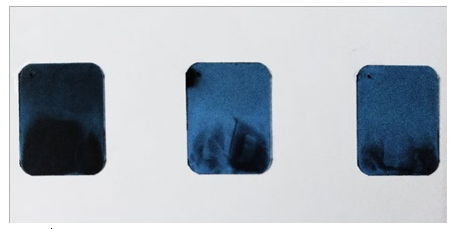
Figure 1: X-ray Images Using Copper
These images were taken in June, at 10:00 a.m. in the UTC + 2 UTC + 3 time zone, as well as a geographical definition: 52° 20' and 45 ° 20' north latitude and 22 ° 5' and 41 ° 15' east longitude, with moderate cloudiness of the atmosphere. In Fig. 2 shows imag- es with the same data in the autumn period in October, the first pic- ture (from left to right) and the second during the vernal equinox
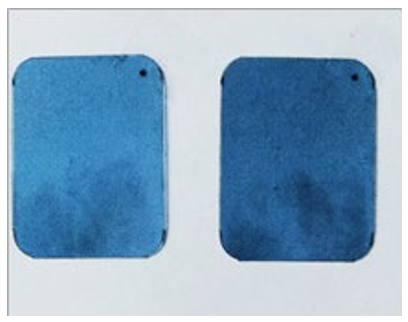
Figure 2: Results during the Vernal and Autumnal Equinoxes
In Fig. 3 images (from left to right first row): using a silver plate 0.5 mm thick, exposure time of 60 seconds in summer with high cloudiness - the first, the complete absence of cloudiness - the sec- ond; second row, using a lead plate 30 mm thick, exposure time 60 seconds in summer with high cloudiness – the first, complete ab- sence of cloudiness – the next three each exposure is made sequen- tially; the third row, this radiographic film is the first - exposed on a granite substrate in the absence of a metal plate, exposure time 5 minutes; the second is exposed on the back of a metal plate facing the Sun.
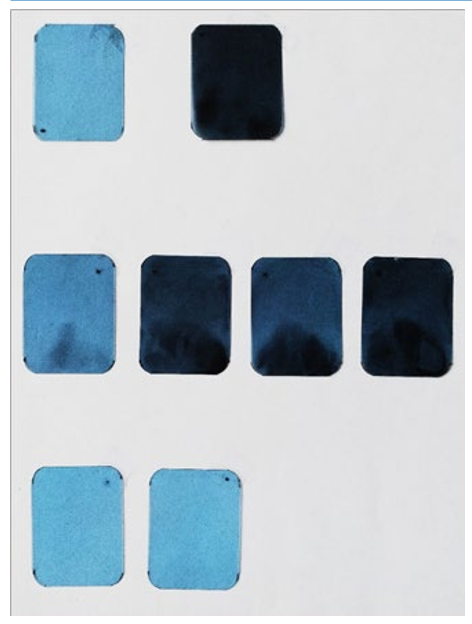
Figure 3: Results Using Silver Plate and Lead Plate
Discussion
The next method was used to obtain results that demonstrate the practical production of X-ray radiation from the Sun and are con- sidered both from the practical and theoretical sides. In the next work, it is planned to implement on the basis of this method struc- tures that convert and store this type of energy. Statistical analysis of the data of this experiment conventionally called "Behind the rainbow" shows that: considering the external photoelectric effect produced by solar radiation on a metal plate, the results from the placed X-ray film on the surface of the metal from the outside are completely absent. We can also say that the highest result of the film illumination is noted when this plane is located relative to the Sun at an angle of 90°, at an angle of 180° - there is no result of illumination. There is also a characteristic illumination of 1\2 of the film, which, with all the above variables of the experiment, remains constantly observable. The resulting series of the experi- ment, while maintaining all the conditions within the framework of the experiment itself, show the non-repeatability of the "pat- terns" of the images obtained. There was a daily correlation, where the maximum falls on the high standing of the sun, at the zenith of 90°, where the brightness of the horizontal surface is 100%. After astronomical sunset, a full minimum is noted. About the annual cycle, the increase falls from the vernal equinox to the autumnal equinox. Studies in winter under these territorial climatic condi- tions at this point are carried out. There was no significant differ- ence in the results using Method 1 and Method 1.1.
Findings
Based on this method, it is possible to obtain higher energies with a reduction in area, simplify production, use less expensive mate- rials and materials, the circulation of which from the point of view of ecology is the most acceptable [4]. For the most efficient con- version of solar energy according to the presented method, further research is expected to replace silicon structures with crystalline structures formed by various compounds with metals in particular: aluminum and iron.
References
- Werner Karl Heisenberg (1930). (Physical principles of quan- tum theory. BI University Pocketbook (Lectures University of Chicago, The Physical Principles of the Quantum Theory. Translators Eckart, Carl; Hoyt, F.C. Dover. ISBN 978-0-486- 60113-7
- Dirac, P. A. M. (1981). The principles of quantum mechanics (No. 27). Oxford university press.
- International Organization for Standardization. (1991). Pho- tography: Direct-exposing medical and dental radiographic film/process systems. Determination of ISO speed and ISO average gradient.
- Renewables - Fuels & Technologies - IEA