

International Journal of Botany and Horticulture Research(IJBHR)
ISSN: 2994-872X | DOI: 10.33140/IJBHR
Impact Factor: 0.98


Research Article - (2025) Volume 3, Issue 1
Impact of Eucalyptus Plantation on Soil Properties in West Ethiopia
2Department of Natural Resource Management, Dambi Dollo University, Dambi Dollo, Ethiopia
3Department of History and Heritage Management, Dambi Dollo University, Dambi Dollo, Ethiopia
Received Date: Nov 06, 2024 / Accepted Date: Dec 16, 2024 / Published Date: Feb 06, 2025
Copyright: ©©2025 Yohannes Shifera Daka, et al. This is an open-access article distributed under the terms of the Creative Commons Attribution License, which permits unrestricted use, distribution, and reproduction in any medium, provided the original author and source are credited.
Citation: Daka, Y. S., Geleta, Z. T., Demeke, M. (2025). Impact of Eucalyptus Plantation on Soil Properties in west Ethiopia. Int J Bot Hor Res, 3(1), 01-12.
Abstract
Eucalyptus is widely planted in farmland in the study area largely because of construction purpose and financial income. However, the impact of cultivating eucalyptus has become a significant concern due to its long-term effects on the environment. These effects include the drying up of water sources, changes in soil characteristics, depletion of soil nutrients and fertility, suppression of other plant species, decline in forest biodiversity, and reduced agricultural yields in agroforestry systems. Despite these consequences, eucalyptus plantations continue to expand on farmland in the study area, disregarding the negative effects on soil fertility and competition for crop land. Additionally, the increasing human population and demand for agricultural crops contribute to environmental degradation. Hence, this study was aimed to assess the effects of Eucalyptus camaldulensis on the physicical and chemical soil properties in western Ethiopia, particularly in Gidami district. The study employed a randomized complete block design (RCBD) and selected three farmlands with 50m by 50m eucalyptus plantations of similar age as experimental plots. Each plot was further divided into five sub-blocks, and sampling points were randomly assigned to each block. Soil samples were collected using an auger at five different distances from the trees (middle of the canopy, 5m, 10m, 15m, and 40m) and at two depths (0-15cm and 15-30cm). A total of 30 composite soil samples were prepared by mixing three sub-samples from each block, with the control group located at a distance of 40m from the trees. Soil physico-chemical analysis was conducted at Nekemt soil laboratory, and the data were analyzed using two-way analysis of variance (ANOVA) in SAS version 9.0. The study found that the effects of eucalyptus trees on soil bulk density, exchangeable acidity, organic matter, exchangeable base, organic carbon, and pH were insignificant at different distances and depths. However, soil moisture, pH, and cation exchange capacity (CEC) increased with increasing distance from the eucalyptus trees, while total nitrogen (N) decreased. Furthermore, surface soils (0-15 cm) had higher levels of total nitrogen, potassium (K), carbon (C), and organic matter compared to subsoils (15-30 cm) depth.
Keywords
Control Group, Eucalyptus Camaldulensis, Exotic Tree, Experimental Plot, Indigenous People, Physical and Chemical Soil Properties, Soil Fertility
Abbreviations and Acronyms
ANOVA: Analysis of Variance
BD: Bulk Density
CEC: Cation Exchange Capacity
CV: Coefficient of Variation
ENMSA: Ethiopian National Meteorological Services Agency
FAO: Food and Agriculture Organization
LSD: Least Significant Difference
MC: Moisture Content
NGO: Non-Governmental Organizations
RCBD: Randomized Complete Block Design
SOC: Soil Organic Carbon
SOM: Soil Organic Matter
Introduction
Throughout history, both indigenous and peasant peoples in various regions, including the global North and global South, have been engaged in tree planting. Trees hold significant cultural and practical value for these communities, serving purposes such as spiritual significance, the provision of nourishing fruits, cooking oils, medicinal properties, durable wood for construction, and other tools and materials [1]. In Ethiopia, the introduction of Eucalyptus took place in 1894/95 with the aim of addressing the country's fuel and construction wood shortages, particularly in Addis Ababa, which was experiencing rapid growth as the new capital city [2-4]. Eucalyptus trees are commonly integrated into various agricultural systems in the highlands of Ethiopia due to their ability to generate greater economic benefits compared to agricultural land used for crop production [5]. Eucalyptus has become a defining feature of the rural landscape in many parts of Ethiopia and an essential component supporting the livelihoods of smallholder farmers [5].
Ethiopia is currently home to the largest Eucalyptus plantation in East Africa and was one of the first countries to introduce the species. The two most important commercial Eucalyptus species in the country are Eucalyptus globulus (Baargamoo adii) and Eucalyptus camaldulensis (Baargamoo diimaa), while E. citriodora, E. regnans, E. saligna, and E. tereticornis are the most widely distributed species. Eucalyptus planting has shown an increase in various countries, including Ethiopia, and has contributed to raising living standards by providing construction materials, fuel wood, poles, and farm timber [4,6-11]. However, concerns about the potential negative environmental impacts of Eucalyptus planting have led to restrictions on planting them on croplands, stream banks, and catchment areas. Criticisms regarding the environmental effects of Eucalyptus are not exclusive to this genus but can be applied to any alien tree species planted in many countries. The arguments against Eucalyptus include soil nutrient depletion, water resource depletion, soil erosion, suppression of undergrowth, and allelopathic effects [12,13]. On the other hand, proponents of Eucalyptus highlight its fast growth, low maintenance requirements, adaptability to various ecological zones and poor environments, coppicing ability, resistance to environmental stress and diseases, ease of seed collection and storage, and lack of pre-sowing treatment requirements [4,14-16].
Studies conducted in China and Sudan have raised concerns about the expansion of Eucalyptus plantations, including the lowering of water tables, reduction of water availability for irrigation, nutrient depletion, and the formation of toxic exudates (allelochemicals) that negatively impact crop output [17,18]. In the Gidami district of Ethiopia, where the human population is increasing and environmental degradation is occurring, Eucalyptus plantations on farmland continue to expand without sufficient scientific data on the effects of Eucalyptus (E. camaldulensis) on selected soil physicochemical properties. Therefore, the goal of this study is to examine the impacts of Eucalyptus tree plantations on soil physicochemical properties in the Gidami district, providing valuable information for policymakers, land use planners, decision-makers, NGOs, and environmental protection agencies.
Materials and Methods
Description of the Study Area
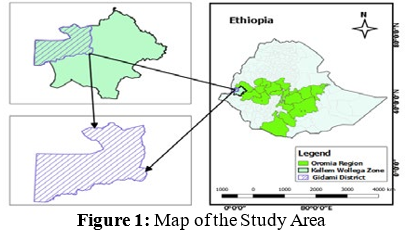
The study was conducted in western Ethiopia, particularly Gidami district. Gidami is far away 688 km from Finfinne (Ethiopia and Oromia capital city). Astronomically, it is situated between the coordinates of 80°38'0" N to 90°12'0" N Latitude and 340°10'0" E to 340°42'0" E longitude. It has an altitude ranging from 1500 to 2300 meters above sea level and covers a total land area of about 219,031 hectares. The district is characterized by different agroecological zones based on elevation, including Dega (highland/cold), Woyna dega (middle/moderate), and Kolla. These agroecological zones cover approximately 8%, 75%, and 17% of the district, respectively. The maximum temperature in the Gidami district ranges from 23 to 26°C, with an average annual temperature of 25.2°C. The lowest annual temperature varies from 7.6 to 19.8°C, with an average of 12.16°C. The district receives precipitation ranging between 941 to 1635 mm, and the rainfall pattern is unimodal. The rainy seasons are spring (March-May), summer (June-August), and autumn (September November) (ENMSA, 2019).
Sample Size Determination and Field Experimental Design
To determine the sample size and design the field experiment, three rural villages in the Gidami district, namely Kumbabi Shapi, Kellem, and Mole, were purposively selected. These villages were deliberately chosen based on factors such as time, budget, and the presence of abundant Eucalyptus tree plantations, making them representative of other villages in the district. Additionally, these villages have similar biophysical conditions. For the study on soil physicochemical properties, a randomized complete block design was employed with two treatments: distance and depth. Three experimental plots, each measuring 50m x 50m, were selected within Eucalyptus plantation forests. Each experimental plot, or farmland, was divided into 5 sub-blocks. The treatments (MC, 5m, 10m, 15m, and 40m) were randomly assigned to each sub-block on the lands of the three farmers. Within each sub-block, there were 10 individual Eucalyptus plantations spaced 1m x 1m (Figure. 2). Furthermore, three Eucalyptus trees were randomly selected from each block to be sampled. Ultimately, by combining three sub-samples within a sub-block, a composite sample was prepared.
Sampling Method
In order to examine the impact of Eucalyptus trees on soil physicochemical properties, various soil samples were collected. A screw auger was used to collect soil samples from five different points around the Eucalyptus tree. These sampling points included the middle of the canopy, as well as distances of 5m, 10m, 15m, and 40m from the tree. Soil samples were taken from two different depths, 0-15cm and 15-30cm, by carefully inserting a core sampler (with a diameter of 5.4cm and a height of 15cm) into the soil after removing the top 1 to 2cm of the surface. A total of 30 composite soil samples were collected by mixing three sub-samples obtained from the Eucalyptus plantation forest on the lands of three farmers. As a control group, soil samples were also taken at a distance of 40m from the Eucalyptus plantation [19]. The selected trees in the study were approximately the same age, and the farmlands chosen for soil sampling had been cultivated with similar crops in previous years. The collected soil samples were immediately packed in plastic bags and transported in ice boxes to prevent moisture loss. The physicochemical properties of the soil were analyzed in a soil laboratory.
Soil Sample Laboratory Analyses
Soil Moisture
The soil moisture content was determined using the gravimetric technique [20]. The collected soil samples were initially weighed using a sensitive balance and subsequently placed in an oven for 24 hours to remove moisture. After the drying process, the oven-dried soils were carefully taken out and allowed to cool before further analysis.Eventually, oven-dry basis moisture content percentage was then computed by using the formula:
Percentage Soil Moisture = (Weight of moist soil – Weight of oven dried soil * 100)/(Weight of oven dried soil)
Bulk Density (BD)
For estimating the bulk density of the soil, the core technique, recommended for undisturbed soils, was employed [20]. In this method, the soil underneath the core sampler was carefully removed, and the surrounding soil was excavated. A straight-edged knife was utilized to trim and clean both ends of the core sampler. The obtained core sample was then oven-dried at 105°C for 24 hours to ensure a consistent weight before further analysis. The BD of the soil was then calculated using the following formula: Bulk Density (g cm-3) = Wt. of soil core (oven-dry basis) (g)/ Vol. of soil core (cm-3)
PH
The pH of the soil was determined using a digital pH meter. To conduct the measurements, 10g of air-dried soil was transferred into 100 mL beakers, and 25 mL of distilled water was added, resulting in a 1:2.5 ratio of soil to water. Subsequently, the samples were placed on an automatic stirrer and gently swirled for 30 minutes to ensure proper suspension. Following the swirling process, the pH of the upper section of the suspension was measured using the digital pH meter.
Phosphorus
Phosphorus extraction was conducted following the method proposed by Olsen et al. Soil samples were extracted using a sodium bicarbonate solution at a pH of 8.5. Air-dried soil samples, sieved to less than 2mm (with an accuracy of 0.01g), were weighed at 5g and placed into 250 mL polythene shaker bottles, along with two blank and reference samples. Additionally, 100 mL of NaHCO3 solution was added to each bottle, which was then shaken for 30 minutes on a motorized shaker. After shaking, the mixture was filtered through Whatman No. 42 filter paper. For further analysis, 3 mL of the blank and sample solutions were pipetted into separate 25 mL volumetric flasks, followed by the addition of 3 mL of a mixed reagent. The resulting solutions were swirled and mixed. The absorbance of the solutions was measured at 882 or 720 nm using a spectrophotometer. Soil P (ppm or mg/kg soil) = (a-b) ×100/s × mcf Where: a = mg/L P in sample extract, b= mg/l P IN blank, s = Sample weight in gram (5g), mcf = moisture correction factor and100= mL of extracting solution
Organic Carbon
To estimate soil organic matter, the titration technique was employed. A 0.4g air-dried soil sample was transferred into a 500 mL Erlenmeyer flask, and 10 mL of 1N K2Cr2O7 solution was added to both the sample and the blank using a pipette. Next, 20 mL of concentrated H2SO4 was carefully added to the flask using a graduated cylinder in a fume hood, followed by shaking and allowing it to stand for 30 minutes. Subsequently, 200 mL of distilled water was added, and the mixture was allowed to cool. To continue the analysis, 10 mL of concentrated orthophosphoric acid and 0.5 mL of barium diphenylamine sulfonate indicator were added to the flask. The color of the solution was then titrated with ferric sulfate solution, separately for both the sample and the blank, until it turned purple or blue. After reaching this point, the ferric sulfate solution was dripped gradually until the solution changed color to green, and the titration continued until a light green endpoint was reached.
% C = N× (V1-V2)/S×0.39
Where: N = normality of ferrous sulfate solution (from blank titration), V1 = mL ferrous sulfate solution used for blank, V2 = mL ferrous sulfate solution used for sample, S = weight of air dry sample in gram. 3×10-3×100%×1.3 (3 = equivalent weight of carbon). % Organic matter = 1.724×% carbon
Total Nitrogen (TN)
The Kjeldahl method of wet digestion procedure, was utilized to determine the total soil nitrogen content [21]. For this analysis, 1g of air-dried soil sample was accurately weighed and placed into a 500 mL Kjeldahl flask, which included two blank solutions for reference. To initiate the digestion process, a mixture of 2g catalyst and 7 mL of H2SO4 was added to the flask, and the contents were thoroughly swirled. The digestion tubes, along with a rack and exhaust manifold, were then placed on a digestion block and allowed to digest for 3 hours at 3800. After digestion, the tubes were allowed to cool. Once cooled, 50 mL of distilled water was added to the samples, and the mixture was cooled once again. The acid digest was then transferred to macro-Kjeldahl flasks after rinsing with distilled water.
To proceed with the distillation step, 20 mL of boric acid solution was measured into an Erlenmeyer flask, corresponding to the number of samples. Two drops of indicator solution were added, and the flask was placed under the condenser. Additionally, 75 mL of 40% NaOH solution was poured into the neck of the distillation flask containing the digests. The solution was carefully mixed, and the filled 250 mL Kjeldahl distillation flasks were closed and heated for distillation. During the distillation process, the receiver flask solution was titrated with 0.1N H2SO4 from green to pink endpoint, while a stirrer bar was added to facilitate mixing. The magnet was then transferred using a magnetic rod to the next flask to be titrated.
Calculation
Let V be the volume of 0.1NH2SO4 used after correcting for the blank
N×V=meq of N/g of soil
N×V×14=mg of N per g of soil
N×V×0.014=g of N per g of soil
%N= (a-b)/s×N×0.014×100×mcf
Where: a = ml of H2SO4 required for titration of samples, b = ml of H2SO4 required for titration of blank, N= Normality of H2SO4 (0.1N), 0.014= meq weight of nitrogen in gram and mcf = moisture correction factor.
Exchangeable Base
We used ammonium acetate technique to estimate exchangeable base of soil. In a 250 mL beaker, a 5g soil sample was inserted, and 100 mL of ammonium acetate 1M pH 7.0 solutions was added. Soil samples were washed 8 times every 15 minutes with 25 mL of ammonium acetate. The volumetric flasks were then removed and refilled with distilled water.
Determination of Exchangeable K and Na by Flame Photometer
The original ammonium acetate leachate and the standard into flame and the transmittances of K and Na were measured at wavelength of 768 and 598 nm respectively.
Determination of Ca and Mg by EDTA Method
In a 250 mL Erlenmeyer flask, 10 mL of the ammonium acetate soil extract obtained from the exchangeable bases extraction was added, followed by 40 mL of distilled water to bring the volume up to 50 mL. A 2 mL KCN solution was added, and the solution was buffered to a pH of 10. A pinch of Eriochrome black T and a NaCl solution were also added. The extract solution was eventually titrated to a pure turquoise blue without any traces of red using 0.02 EDTA – disodium salt.
Exchangeable Acidity
In a funnel set in a 100 mL volumetric flask, 10g fine earth was transferred to dry filter paper. Two blanks were included. 10 portions of 10 mL and 1M KCl solution were added with 15 minutes interval to percolate soils. It takes two and half hours. The funnel was withdrawn when the last percolation was completed, and the volumetric flask was filled with 1M KCl solution and homogenized. After adding 5 drops of phenolphthalein solution titrated with 0.02MNaOH, a 25 mL aliquot was percolated into a 250 Erlenmeyer flask and then the color turns pink. 25 mL of aliquot of percolate into a 250 Erlenmeyer flask and 5 drop of phenolphthalein solution titrated with 0.02MNaOH the color turns to pink.
Statistical Analysis
After laboratory analyses completed, obtained data were subjected to statistical analysis. ANOVA was carried out by using SAS software version 9.
Results and Discussion
The Effect of Eucalyptus Tree on Soil Physical Properties
Soil Moisture
Significant differences in moisture content were observed in terms of distance and depth. The mean values showed an increasing trend from the effects of the Eucalyptus tree (Table 1). Specifically, the moisture content at the middle of the canopy, 5m, and 10m distances were significantly lower compared to the moisture content at 15m and 40m distances from the Eucalyptus tree (p<0.05). Additionally, the moisture content at the middle of the canopy was significantly lower than the moisture content at 10m, 15m, and 40m distances. Furthermore, the moisture content at 5m distance was significantly lower compared to the moisture content at 15m and 40m distances. Similarly, the moisture content at 10m distance was lower compared to the moisture content at 15m and 40m distances from the Eucalyptus tree. Notably, there was no significant variation in soil moisture content at 15m and 40m distances from the Eucalyptus tree. Additionally, no significant difference in moisture content was observed between the middle of the canopy and the 5m distance.
|
Treatment |
Distance from the tree (meter) |
||||
|
MC |
5 |
10 |
15 |
40 |
|
|
0-15 cm |
7.94000de |
18.6666bcde |
23.68666bc |
34.04333a |
44.87333a |
|
15-30 cm |
6.89000e |
14.3633cde |
24.2566bcd |
33.78333a |
44.20333a |
|
Mean |
|
|
27.64467 |
|
|
|
CV (%) |
|
|
16.95191 |
|
|
|
LSD |
|
|
5.6843 |
|
|
Table 1: Soil moisture content means for the interaction of distance and depth
Results connected by the similar letter are not significantly different to each other at α<0.05
The analysis of soil moisture content in the sampled soil showed significant differences (p<0.01) across all five distances from the Eucalyptus tree. the soil moisture content increased with increasing distance from the Eucalyptus tree. In the study area, the order of soil moisture content was as follows: moisture content at the middle of the canopy < 5m < 10m < 15m < 40m (Table 2).
|
No |
Treatment |
% soil moisture content |
|
1 |
MC |
7.415c |
|
2 |
5 m |
16.515d |
|
3 |
10 m |
23.972b |
|
4 |
15 m |
33.763a |
|
5 |
40 m |
34.558a |
|
|
Mean |
27.64467 |
|
|
CV(%) |
16.95191 |
|
|
LSD |
5.6843 |
Table 2: The mean % soil moisture content along distance from the tree
Results connected by the similar letter are not significantly different to each other at α <0.05
The soil moisture at the middle of the canopy was significantly lower compared to the moisture content at distances of 5m, 10m, 15m, and 40m from the Eucalyptus tree. However, the percentage of soil moisture was not significantly different (p < 0.05) between the two depths (0-15cm and 15-30cm). In other words, the soil moisture content on the surface and in the subsoil was almost similar.
In the study area, there is an increase in soil moisture with increasing distances from the Eucalyptus tree, as well as an interaction between distance and depth. Significant differences were detected, except for the depth factor. The soil moisture under the middle of the canopy and at a distance of 5m was significantly lower compared to the soil moisture at distances of 10m, 15m, and 40m, considering the interaction effect of distance and depth. Additionally, the soil moisture at a distance of 10m was lower than the soil moisture at distances of 15m and 40m from the Eucalyptus tree. The increase in soil moisture up to a distance of 15m may be attributed to the high root density of Eucalyptus trees, which enables them to efficiently harvest water for their rapid growth.
The water absorption capacity of Eucalyptus species can vary depending on their root system type, with some species having shallow roots while others are more deeply rooted. Eucalyptus species have shown the ability to adapt their water consumption based on water availability. Lima, cited in FAO, reported that the structure and depth of the root system are the main factors determining soil water absorption [22,23]. Jagger and Pender reported that Eucalyptus extracts five times more water from the 0-150cm depth compared to mustard [24]. At a distance of 10m from the Eucalyptus tree, a reduction of 47% in mustard yield and 3% in wheat yield was observed. According to Cao et al., cited in Albert, soil moisture in the topsoil (0-10cm depth) of Eucalyptus planting regions in China ranged from 20.2% to 30.5%, indicating low levels of moisture [3,25]. The impact of Eucalyptus trees on soil water content is a controversial issue, with claims that Eucalyptus trees absorb more water from the soil than any other tree type [26].
Consistent with Tilasshwork, it was found that moisture content near the Eucalyptus tree was significantly lower compared to moisture content further away during the wet monsoon period (p<0.01) [19]. However, this trend was not observed in Croton macrostachyus, which showed no significant variation in moisture content with increasing distance from the trees. Surprisingly, moisture content near the Eucalyptus stand did not differ statistically from moisture content near the C. macrostachyus stands at distances of 15m and beyond. In the Berg River catchment in the Western Cape Province of South Africa, Tererai et al. found that sites colonized by Eucalyptus camadulensis significantly reduced soil moisture compared to uncolonized sites in riparian soils during winter and spring [27].
Bulk Density (BD)
Significant variation was observed (p>0.05) when soil BD compared at different distances, depth, and interaction effect of distance and depth. BD under the middle of canopy, 5 m, 10 m, 15 m, and 40 m distance were in low range (1.0–1.3gcm-3). BD for surface soil layer (0-15 cm) and sub soil (15-30cm) were 1.115333gcm-3 and 1.142667gcm-3, respectively which was low in range. According to Birru et al., there was no significant variation in BD (gcm-3) between different land uses for soil depth of 0-20 cm and 20-40 cm [28]. However, in absolute value, arable land had the greatest BD of 1.11 g cm-3 and 1.24 g cm-3 in 0-20 and 20-40 cm soil layers, respectively. In addition to this, study made by Tilasshwork et al. on Koga irrigation watershed also found that soil BD at all depths and distances from E. camadulensis and C. macrostachyus stands is low, ranging from 1.0 to 1.1 g cm-3 [19]. For Eucalyptus spp. plantations in Australia, FAO observed an increase in soil BD from 0.58 mg m-3 to 0.70 mg m-3 [23]. This is in line with Fekadu et al., who showed that BD did not show significant variation between different land uses and soil depths in the Wondo Genet area of Ethiopia, with a range of (0.93-1.07 g cm-3).The BDs of soils under eucalyptus woodlots and soils under land use conversion from eucalyptus to croplands were similar; both had lower BDs than arable land at both soil levels [28]. In contrary, in Brazil, Ravina found that Eucalyptus species plantation (1.24 g cm-3) had a greater soil BD (1.24 g cm-3) than native forest (0.66 g cm-3) in the 0- 20 cm soil layer [29].
The Effect of Eucalyptus Globules Tree on Soil Chemical Properties
Soil pH (H2O)
In the study area, the soil pH was showed significant variation (p < 0.05) with distance to the Eucalyptus stand. In general, pH increases with distance from Eucalyptus tree (Table 3). PH was insignificant for soil depth and interaction of distance and depth at (p <0.05). But the top soil layer (0-15 cm) has lower pH than soil sub layer (15-30 cm) and moderately acidic. In the study area, soils under the middle of canopy (acidic) were significantly different from soil sampled at 5 m, 10 m, and 40 m distance (moderately acidic). Regarding soil chemical properties soil pH increased with distance from Eucalyptus trees. Soils under the middle of canopy were acidic; this may be due to release of certain chemicals through litter fall.
|
No |
Treatment |
PH-value |
|
1 |
MC |
4.97833c |
|
2 |
5 m |
5.16500ab |
|
3 |
10 m |
5.1883ab |
|
4 |
15 m |
5.21000 a |
|
5 |
40 m |
5.25667a |
|
|
Mean |
5.135667 |
|
|
CV (%) |
2.494125 |
|
|
LSD |
0.1554 |
Table 3: The means value of pH (H2O) in soil along distance from the tree
Results connected by the similar letter are not significantly different to each at α <0.05.
Cation Exchange Capacity (CEC)
The calculated CEC were significant (p <0.05) with distance from Eucalyptus tree. But CEC were insignificant (p <0.05) for soil depth and their interaction (Table 4).
|
No |
Treatment |
CEC (c mol/kg |
|
1 |
Mc |
23.450a |
|
2 |
5 m |
18.183b |
|
3 |
10 m |
27.717a |
|
4 |
15 m |
25.333a |
|
5 |
40 m |
29.283a |
|
|
Mean |
24.79333 |
|
|
CV (%) |
22.88352 |
|
|
LSD |
6.8819 |
Table 4: The mean value of CEC in soil along distance from the tree
Results connected by the similar letter are not significantly different to each other at α <0.05.
The CEC, under the middle of canopy and at 5 m, were in moderate range (12–25 c mol kg-) .while at 10 m, 15 m, and 40 m were in high range (25–40 c mol kg-1) when compared with standard. The mean value of cation exchange capacity increased with distance from Eucalyptus tree. Cation exchange capacities at 5 m distance were significantly (p < 0.5) lower than MC, 10 m, 15 m and 40 m distance. The calculated cation exchange capacity was significantly different with distance from Eucalyptus trees. As expected the calculated cation exchange capacity increased with distance from Eucalyptus tree. The first reason might be high nutrient up take by Eucalyptus and poor nutrient content of litter fall made lower nutrient closer to the Eucalyptus trees. According to the FAO, all fast-growing tree crops deplete the nutrients on a site, regardless of whether they are leguminous or not [30]. In Senegal, Jaiyebo discovered a lower concentration of exchangeable bases in Eucalyptus species plantations [31].
The second reason for increasing of CEC might be increased in soil pH due to lower allellophatic effects with distance which may lower the accumulation of total exchangeable acidity and increased basic cations. Low soil pH leads to low soil base saturation [16]. The abundance of positive charges in the soils beneath Eucalyptus has grown despite the increased soil organic matter level. Because of the loss in cation retention capacity, as well as the likelihood of an increase in the specific adsorption of anions such as phosphate and sulfate, such a pattern may have an impact on soil quality [32]. According to Bailey et al., as cited in Albert, acidification causes the depletion of soil base cations (e.g., K+, Mg2+, Ca2+) due to the replacement of the basic cations at the exchange site by Al3+ and H+ ions [3, 33].
The third reason might be lower soil colloid that adsorption basic cation due to lower decomposition of organic matter under the tree this may occur due to shading and allelopathic effects of Eucalyptus tree. Ravina reported that humus compounds, which are separated into humic and fulvic acids, and humins, which comprise nitrogen, sulphur, and phosphorus bound in the form of organic, dominate the composition of the SOM [29]. When compared to non-humic components such as cellulose, hemicelluloses, proteins, and lipids, the chemical makeup of these will result in a slower decomposition rate due to their stability. Monoculture plantation forestry can affect soil chemical characteristics in two ways: depletion of nutrients from the soil into tree components, and changes in chemical status of the soil surface when the litter layer and organic matter become dominated by one species [34]. Birru et al. reported that statistically there was no significant variation (P >0.05) between CEC of different land uses [28]. Similarly, Lalisa et al. reported that no significant variation was observed among CEC of the different land uses in the central highlands of Ethiopia [35]. This was also consistent with Yechale and Solomon who reported that statistically no significant variation between CEC of soils among the different land uses studied in the Hare river watershed, Ethiopia [36].
Soil Organic Carbon
As the soil analysis results indicated that there was highly significant variation (p < 0.05) in soil organic carbon at the soil layers of 0-15 and 15-30 cm (Table 5).
|
No |
Treatment |
%organic Carbon |
|
1 |
0-15 cm |
2.04000a |
|
2 |
15-30 cm |
1.64000b |
|
|
Mean |
1.840000 |
|
|
CV (%) |
13.37393 |
|
|
LSD |
0.2985 |
|
|
Mean |
24.79333 |
|
|
CV (%) |
22.88352 |
|
|
LSD |
6.8819 |
Table 5: The means value of % organic C content in soil depth
Results connected by the similar letter are not significantly different to each at α <0.05.
But with the distances and interaction of distance with depth, soil organic carbon were insignificant (p < 0.05). All the mean values along distances from the trees were moderate in range (1.60–1.79%) in soil organic carbon (SOC) and very high range (1.72–2.14%) organic carbon content for soil depth. The organic carbon in surface soil was higher than subsoil. SOC contents in the study area were significantly different for different soil depths. The content of organic carbon in the soil was 2.04 and 1.64 % on surface (0-15cm) and sub soil (15-30cm) respectively. The organic carbon on surface soil was higher than sub soil; this might be due to litter fall from Eucalyptus and crop residue which may cause an increased SOC. Study conducted in Swaziland by Singwane and Malinga found that soil organic matter (SOM) and soil organic carbon (SOC) content are strongly related to the soil beneath Pinus and Eucalyptus plantations. According to Ravina et al., the carbon content of SOM is typically around 50% [29].
Organic Matter
From organic carbon, organic matter was calculated. The analyses of organic matter showed insignificant difference (p<0.05) for distance and interaction effects of distance and depth. But the all the mean values of organic matter insignificantly decreases as distance far from Eucalyptus tree. Similarly, Tilasshwork found that Eucalyptus did not significantly affect soil organic matter content over a long distance [19]. Organic matter on surface soil (0-15cm) were significantly different (p<0.05) from subsoil (15-30cm) (Table 6).
|
No |
Treatment |
%organic matter |
|
1 |
0-15 |
3.5173a |
|
2 |
15-30 |
2.8273b |
|
|
Mean |
3.172333 |
|
|
CV (%) |
13.37599 |
|
|
LSD |
0.2985 |
|
|
Mean |
24.79333 |
|
|
CV (%) |
22.88352 |
|
|
LSD |
6.8819 |
Table 6: The means value of % organic matter content in soil depth
Results connected by the similar letter are not significantly different to each at α <0.05.
In disagreement with Baber et al. discussed soil organic matter decreased as distance increased from the Eucalyptus tree [37]. Fernando et al., on the other hand, found that SOM levels were substantially greater in eucalyptus-dominated soils than in pastures [38]. One of the main causes is the vast number of forest residues (leaves, branches, bark, and especially roots) left in the area. Calculated organic matter on surface soil (0-15 cm) were significantly lower than (p <0.05) sub soil (15-30 cm) in depth. In the study area organic matters on surface soil (0-15cm) were higher. The reason might be due to addition of organic matter on surface soil (0-15cm) through litter fall and crop residue. Agree with Birru et al., the largest amount of organic matter (3.65%) was found in the soil layer of 0-20 cm, followed by 3.07% at 20-40 cm soil layer and 2.71% at soil depth of 40-60 cm [28]. Similarly, Lelisa et al. also reported that with increasing soil depth the organic carbon content was found to be lower for homestead, cereal farm and woodlots (using eucalyptus soil) [35]. It is clear that topsoil has large accumulations of organic matter, where large amounts of root biomass and other plant debris can be found. This was also confirmed by Muluneh as cited in Birru who reported that with increasing soil depth down soil under eucalyptus showed a decrease in SOM (study made at Jufi site of Achefer district, Ethiopia) [28,39].
Phosphorus
The available phosphorus content of all soil samples were in low range (5-7 mgkg-1). The analysis of phosphorus showed that insignificant difference were observed in distance, depth and their interaction effects (p <0.05). All means p are similar with distance from Eucalyptus tree except at 40 m distance with the value of 7%. In disagreement with Tilasshwork, in this study, the estimated available P content was in the very low range (less than 5 mg kg-1) [19]. The increase with distance from the eucalyptus stand reveals a very big difference (P 0.001) in one-way ANOVA.
Soil Total N
The TN recorded was in down ward trend with distance from Eucalyptus tree (Table 7). The total nitrogen concentration at the MC, 5 m, 10 m, 15 m and 40 m distance were in medium range (0.15–0.25 %) when compared with the standard. At 40m distance % total N were significantly different (p <0.05) from MC, 5 m, 10 m, and15 m distance. The mean % of total N was lowest at 40 m distance while between the other mean values insignificance difference (p <0.05) were observed.
|
No |
Treatment |
%Total N |
|
1 |
Mc |
0.24500a |
|
2 |
5 m |
0.23667a |
|
3 |
10 m |
0.21000a |
|
4 |
15 m |
0.21000a |
|
5 |
40 m |
0.15500a |
|
Mean |
|
0.215000 |
|
CV(%) |
|
17.20860 |
|
LSD |
|
0.0449 |
Table 7: The % of total N mean value in soil along distance from eucalyptus globulus tree
Results connected by the similar letter are not significantly different to each at α <0.05
The total N content of soil in the study area decreased with distance from Eucalyptus tree. In the study area the % of total nitrogen content of soil at 40 m distance were lower than from middle of canopy, 5 m, 10 m and 15 m distance and total N contents at 40 m distance were low in range. The reason might be less addition of organic matter from crop residue than Eucalyptus tree; this made soil lower in organic matter at 40 m distance.
Overall, due to the increased amount of soil litter such as foliage, branches, and roots, forest systems have more soil organic matter than agricultural systems [22]. The total N content of soil might be depends on organic matter addition. According to Ravina organic matter is source of Nitrogen, phosphorus, sulfur and potassium [29]. While at the middle of canopy, 5, 10, and 15 m distances, addition of organic matter were observed but decreased with distance. The reason might be less nutrient up take of crops due to allellophatic effects closer to Eucalyptus. According to Ravina the allopathic effect of Eucalyptus decreased so that cereal crops may take-up high amount of N [29]. The second reason for the increase in total N in Eucalyptus trees could be the existence of more organic matter in the topsoil, whereas the low N content in cropland could be due to the high rate of decomposition on the surface soil of the plow and more N absorption of cereal crops [28]. According to the above author, the third reason for the high N content in eucalyptus woodlots could be related to low temperature and limited radiation reaching the soil surface, resulting in low NH3 - N volatilization. Under Eucalyptus in the study area the reason might be less nutrient up take from surface soil (0-15 cm) due to the older age Eucalyptus developed tap root system take nutrient deeper. According to Selamyhun, cited in Birru et al., fine roots (10 mm diameter) accounted for 80% of total root mass per unit area after eight years, and they mostly extend to > 20 m of lateral distance and a depth of 60–100 cm in adjacent croplands in the Nit soils of Ethiopia's central highlands [28]. Similarly, Tilashwork found that as the distance from the eucalyptus stand increased, so did the soil macronutrient status [19]. Cupressus and Eucalyptus soils were determined to have the lowest nutrient concentration in general (mainly low nitrogen). Alemie also found that in Ethiopia soil total N concentration decreased under Eucalyptus species plantations [40]. Lisanework and Michelsen provide empirical evidence that depletion of soil nutrient under Cupressus and E. globulus is compared to indigenous juniper and natural forest soils [41].
The percentage (%) of total N contents of surface soil (0-15 cm) were showed significant variation (p<0.05) from sub soil depth (15-30 cm). The % total N content for both depth (0-15 and 15-30 cm) were in medium range. % Total N content on surface soil was higher than subsoil in the study area (Table 9).
|
No |
Treatment |
% total N |
|
1 |
0-15 cm |
0.24733a |
|
2 |
15-3015- 30 cm |
0.18267b |
|
Mean |
|
0.215000 |
|
CV(%) |
|
17.20860 |
|
LSD |
|
0.0449 |
Table 8: The means value of % total N content in soil depth
Results connected by the similar letter are not significantly different to each at α <0.05.
There was high N content on surface soil (0-15cm) than sub soil (15-30cm). More N in the topsoil under Eucalyptus trees could be attributed to a considerable amount of root biomass in deeper or subsurface soil layers, as well as the addition of organic matter through crop residues at a greater distance [28]. Davidson also revealed that a significant proportion of plant nutrients are contained in foliage that is periodically returned to the soil [12]. The other reason might be leftover of N from fertilizer application. Lemma et al. found that afforesting farmland with exotic trees increased total N, in surface soil in Belete forest, which is part of government afforestation programme [42].
Relationship between Selected Soil Physicochemical Properties
Correlation analysis was done to establish relationship between the selected soil physico-chemical properties. The pearson correlations between organic matter and soil bulk density is about -0.4692, which indicate that there is moderate negative relationship between variables. The correlation between organic matter and pH is 0.5467, the relationship between these variables is moderately positive, which indicates that, as organic matter increased, PH increased and bulk density decreased. The correlation between CEC and exchangeable acidity is -0.2819 which indicates that there is weak negative relationship between CEC and exchangeable acidity. As exchangeable acidity increased CEC decreased. The correlation between organic matter and total N is 0.2455, which indicates that there is weak positive relationship between the variables as organic matter addition increased total N content of soil increased.
Conclusion and Recommendation
The experimental finding on effects of Eucalyptus tree on soil physicochemical properties in the study area showed that due to Eucalyptus plantation on farm land, soil physico-chemical properties such as soil bulk density, organic matter (distance), organic carbon (distance), exchangeable base (Ca++, Mg++, Na+, K+) and phosphorus did not vary within soil in the study area whereas soil moisture, pH, and CEC increase significantly along distance from Eucalyptus tree. The total N significantly decrease further from Eucalyptus tree and K+, organic matter, and organic carbon significantly lower in sub soil (15-30) than surface soil (0-15cm).
From the perspective of research findings the following recommendations are conveyed. Eucalyptus species should not be planted near farm area to guarantee environmental sustainability and food security. It is preferable to conduct additional research in order to identify less resource-intensive Eucalyptus species. Moreover, most of the controversy over eucalyptus trees is due to the lack of universality of data and information available regarding all aspects of the eucalyptus tree. The ecological, economic and social aspects, both positive and negative, must be widely disseminated. As many studies have shown that the net contribution of eucalyptus to soil through litter fall is likely to be positive on degraded hillsides and wastelands. Eucalyptus trees also have good potential for retaining topsoil on degraded sloppy areas; it is better to plant Eucalyptus on hillside and degraded land. Currently, Ethiopia has established policy concerning the plantation forest, Gidami district agricultural office should implement the policy and discourage Eucalyptus plantation, and initiate planting of multipurpose trees and maintain food security and environmental sustainability.
Research should be conducted on agricultural crop that resist effect and/or adapt adverse impact of Eucalyptus trees. According to reviewed literatures Eucalyptus have so many problems not only on soil physicochemical properties but also on crop productivity. Crop production near eucalyptus plantation forest decreased due to is allellopathic effects in many regions including in Ethiopia. According to many literatures and experimental results, it has been clearly shown that in order to sustain and improve the physico-chemical properties of the soil in eucalyptus forests, the nutrient balance must be strictly controlled, mainly through lightly planting, fertilizing, silvicultural treatment, and liming and crop residue management to prevent depletion of soil nutrient and plant deficiency [43-58].
Acknowledgments
We acknowledge daily workers for their unconditional support in the process of field data collection and as well as soil laboratory technicians who kindly spared their time and effort for determining soil bulk density, soil PH value, N content, K content, P content and soil carbon content.
References
- Overbeek, W., Kröger, M., & Gerber, J. F. (2012). An overview of industrial tree plantation conflicts in the global South: conflicts, trends, and resistance struggles.
- Breitenback, F. (1961). Exotic Trees in Ethiopia: Ethiopian Forestry Review No. 2. Addis Ababa.
- Mensah, A. K. (2016). Effects of eucalyptus plantation on soil physico-chemical properties in Thiririka sub-catchment, Kiambu County, Kenya. A Master’s Thesis, School of Pure and Applied Sciences of Kenyatta University.
- FAO (1979). Eucalyptus for planting. FAO forestry and forest products study No.11. FAO, Rome.
- Mulugeta, L. (2010, September). Growing eucalypt by smallholder farmers. In Eucalyptus species, management, history, status and trends in Ethiopia. Proceedings from the conference held in Addis Ababa.
- Teketay, D. (2000). Facts and experiences on Eucalypts in Ethiopia and elsewhere: Ground for making life informed decisions. Walia, 2000(21), 25-46.
- Jagger, P., & Pender, J. L. (2000). The role of trees for sustainable management of less-favored lands: the case of Eucalyptus in Ethiopia.
- Getahun, A. (2003). Eucalyptus farming in Ethiopia: the case for eucalyptus woodlots in the Amhara region.
- Ong, C. (2003, June). Policy brief on eucalyptus dilemma in Kenya. In RELMA forum on eucalyptus dilemma, Nairobi (Vol. 10).
- Munishi, P. K. T. (2007). The eucalyptus controversy in Tanzania. In TAF Annual General Meeting (AGM) 23rd–24th.
- Teshome, T. (2009). Is Eucalyptus ecologically hazardous tree species. Ethiopian e-Journal for Research and Innovation Foresight (Ee-JRIF), 1(1).
- Davidson, J. (1989). The eucalypt dilemma: arguments for and against eucalypt planning in Ethiopia.
- FAO ( 1988). The Eucalypt Dilemma. FAO, Rome. for making wise and informed decision. Workshop on Eucalyptus Dilemma held on 15 November 2000 at Ghion Hotel, Addis Ababa. Forum on Eucalyptus Dilemma, Nairobi, 5th June 2003
- Hailu, Z. (2002). Ecological impact evaluation of Eucalyptus plantations in comparison with agricultural and grazing land-use types in the highlands of Ethiopia. na.
- Mekonnen, Z., Kassa, H., Lemenh, M., & Campbell, B. (2007). The role and management of eucalyptus in Lode Hetosa district, Central Ethiopia. Forests, Trees and Livelihoods, 17(4), 309-323.
- AWETO*, A. O., & Moleele, N. M. (2005). Impact of Eucalyptus camaldulensis plantation on an alluvial soil in south eastern Botswana. International journal of environmental studies, 62(2), 163-170.
- Lane, P. N., Morris, J., Ningnan, Z., Guangyi, Z., Guoyi, Z., & Daping, X. (2004). Water balance of tropical eucalypt plantations in south-eastern China. Agricultural and Forest Meteorology, 124(3-4), 253-267.
- El-Amin, E. A., Diab, I. E., & Ibrahim, S. (2001). Influence of Eucalyptus cover on some physical and chemical properties of a soil in Sudan. Communications in soil science and plant analysis, 32(13-14), 2267-2278.
- Chanie, T., Collick, A. S., Adgo, E., Lehmann, C. J., & Steenhuis, T. S. (2013). Eco-hydrological impacts of Eucalyptus in the semi humid Ethiopian Highlands: the Lake Tana Plain. Journal of Hydrology and Hydromechanics, 61(1), 21-29b.
- Kolay, A. K., & Kolay, A. K. (2002). Basic concepts of soil science. New Age International (P) Limited, Publishers.
- Bashour, I. I., & Sayegh, A. H. (2007). Methods of analysis for soils of arid and semi-arid regions (p. 119). Rome, Italy: Food and agriculture organization of the United Nations.
- de Paula Lima, W. (1993). Environmental impact of eucalyptus. EdUSP.
- FAO (2011). Eucalyptus in East Africa: Socio-economic and environmental issues (No. 46/E) (pp. 1–42). Rome, Italy.
- Jagger, P., & Pender, J. L. (2015). The role of trees for sustainable management of less-favored lands.
- Cao, Y., Fu, S., Zou, X., Cao, H., Shao, Y., & Zhou, L. (2010).Soil microbial community composition under Eucalyptus plantations of different age in subtropical China. European Journal of Soil Biology, 46(2), 128-135.
- FAO (2009). Eucalyptus in East Africa: The Socio-economic and Environmental issues. Report to FAO Forestry and Wildlife Programme in Africa.
- Tererai, F., Gaertner, M., Jacobs, S. M., and Richardson,D. M. (2014). Eucalyptus Camaldulensis. The performance of Eucalyptus hybrid clones and local landraces in various agro-ecological zones in Kenya.
- Yitaferu, B., Abewa, A., & Amare, T. (2013). Expansion of eucalyptus woodlots in the fertile soils of the highlands of Ethiopia: could it be a treat on future cropland use?. Journal of Agricultural Science, 5(8), 97.
- Ravina da Silva, M. (2014). Impact of Eucalyptus plantations on pasture land on soil properties and carbon sequestration in Brazil.
- FAO (1985). The ecological effects of Eucalyptus. FAO Forestry Paper No.59. FAO, Rome.
- Jaiyeoba, I. A. (1998). Changes in soil properties related to conversion of savannah woodland into pine and eucalyptus plantations, Northern Nigeria. Land Degradation & Development, 9(3), 207-215.
- Sanchez, P. A., & Uehara, G. (1980). Management considerations for acid soils with high phosphorus fixation capacity. The role of phosphorus in agriculture, 471-514.
- Bailey, S. W., Horsley, S. B., & Long, R. P. (2005). Thirty years of change in forest soils of the Allegheny Plateau, Pennsylvania. Soil Science Society of America Journal, 69(3), 681-690.
- Kassie, M., Pender, J., Yesuf, M., Köhlin, G., & Mulugeta,E. (2009). The role of soil conservation on mean crop yield and variance of yield-evidence from the Ethiopian Highlands. rapport nr.: Working Papers in Economics 408.
- Duguma, L. A., Hager, H. E., & Sieghardt, M. O. (2010). Effects of land use types on soil chemicalproperties in smallholder farmers of central highland Ethiopia. Ekológia (Bratislava. Ekologia, 29(1), 1-14.
- Kebede, Y. E. C. H. A. L. E., & Raju, S. A. J. (2011). Effect of land use/land cover change on soil properties in the Hare River Watershed, Ethiopia. The Ecoscan, An International Quarterly Journal of Environmental Sciences, 5, 69-74.
- Baber, S., Ahmad, M. F., & Bhatti, A. (2006). The effect of Eucalypts camaldulensis on soil properties and fertility. Journal of agricultural and biological science, 1(3), 47-50.
- Leite, F. P., Silva, I. R., Novais, R. F., Barros, N. F. D., & Neves, J. C. L. (2010). Alterations of soil chemical properties by eucalyptus cultivation in five regions in the Rio Doce Valley. Revista Brasileira de Ciência do Solo, 34, 821-831.
- Muluneh, M. (2011). Eucalyptus plantations in the highlands of Ethiopia revisited: A comparison of soil nutrient status after the first coppicing. Master thesi. Mountain forestry program institute of forest ecology. University of natural resources and life sciences, Vienna, Austria.
- Alem, S., Woldemariam, T., & Pavlis, J. (2010). Evaluation of soil nutrients under Eucalyptus grandis plantation and adjacent sub-montane rain forest. Journal of Forestry Research, 21(4), 457-460.
- Lisanework, N., & Michelsen, A. (1993). Allelopathy in agroforestry systems: the effects of leaf extracts of Cupressus lusitanica and three Eucalyptus spp. on four Ethiopian crops. Agroforestry systems, 21, 63-74.
- Lemma, B., & Olsson, M. (2006). Soil δ15N and nutrients under exotic tree plantations in the southwestern Ethiopian highlands. Forest Ecology and Management, 237(1-3), 127-134.
- Demessie, A., Singh, B. R., Lal, R., & Strand, L. T. (2012). Leaf litter fall and litter decomposition under Eucalyptus and coniferous plantations in Gambo District, southern Ethiopia. Acta Agriculturae Scandinavica, Section B-Soil & Plant Science, 62(5), 467-476.
- Asnake, A. (2002). Growth Performance and Economics of Growing Eucalyptus Camaldulensis by Smallholder Farmers of Amhara Region: The Case of Gondar Zuria District North Gondar, Ethiopia (Doctoral dissertation, Swedish University of Agricultural Sciences).
- Binkley, D., Dunkin, K. A., DeBell, D., & Ryan, M. G. (1992). Production and nutrient cycling in mixed plantations of Eucalyptus and Albizia in Hawaii. Forest Science, 38(2), 393-408.
- Chapuis-Lardy, L., Contour-Ansel, D., & Bernhard-Reversat,F. (2002). High-performance liquid chromatography of water-soluble phenolics in leaf litter of three Eucalyptus hybrids (Congo). Plant Science, 163(2), 217-222.
- Wirtu, D. (1998). The Economics of growing Eucalyptus globulus (Labill.) on the highlands of Oromiyaa, Ethiopia: with special reference to Intoto and Chancho areas. Ethiopian MSc in Forestry Programme Thesis Works (Sweden), (34).
- Jobbagy, E. G., & Jackson, R. B. (2001). The distribution of soil nutrients with depth: global patterns and the imprint of plants. Biogeochemistry, 53, 51-77.
- Binkley, D., & Fisher, R. F. (2019). Ecology and management of forest soils. John Wiley & Sons.
- Friis, I. (1995). Flora of Ethiopia and Eritrea, Myrtaceae, In: Edwards S., MesfinTadasse&grandison soil physico-chemical and microbiological properties. Soil Research, 50:167-176.
- Selassie, E. M. W. (1998). The forest resources of Ethiopia past and present. Walia, 1998(19), 10-28.
- Michelsen, A., Lisanework, N., & Friis, I. B. (1993). Impacts of tree plantations in the Ethiopian highland on soil fertility, shoot and root growth, nutrient utilisation and mycorrhizal colonisation. Forest ecology and management, 61(3-4), 299-324.
- Research and technology center, A.C..(1999). Sustainable plantation of high yield eucalyptus. New forest 17,129-143.
- Robson, A. D., & Abbott, L. K. (1989). The effect of soil acidity on microbial activity in soils. Soil acidity and plant growth, 139-165.
- Sanginga, N., & Switt, M. J. (1992). Nutritional effects of Eucalyptus litter on the growth of maize (Zea mays). Agriculture, ecosystems & environment, 41(1), 55-65.
- Bashour, I. I., & Sayegh, A. H. (2007). Methods of analysis for soils of arid and semi-arid regions (p. 119). Rome, Italy: Food and agriculture organization of the United Nations.
- Kebebew, Z. (2002). Profitability and household income contribution of growing Eucalyptus globules (Labill.) to smallholder farmers: the case of the central highlands of Oromiya, Ethiopia.