

Journal of Chemistry: Education Research and Practice(JCERP)
ISSN: 2578-7365 | DOI: 10.33140/JCERP
Impact Factor: 1.64

Research Article - (2026) Volume 10, Issue 1
Impact of a Flipped-Classroom Teaching Method on Student Learning and Performance in an Undergraduate Intermediate Organic Chemistry Course
Received Date: Dec 24, 2025 / Accepted Date: Jan 27, 2026 / Published Date: Jan 30, 2026
Copyright: ©2026 Hamad H. Al Mamari, et al. This is an open-access article distributed under the terms of the Creative Commons Attribution License, which permits unrestricted use, distribution, and reproduction in any medium, provided the original author and source are credited.
Citation: Al Mamari, H. H., Hassan, S. I.(2026). Impact of a Flipped-Classroom Teaching Method on Student Learning and Performance in an Undergraduate Intermediate Organic Chemistry Course. J Chem Edu Res Prac, 10(1), 01-13.
Abstract
Switching from a traditional lecture-based format to a flipped classroom teaching method in an undergraduate intermediate organic chemistry course has significantly improved student learning and performance. At Sultan Qaboos University, ensuring consistent academic progress for chemistry majors in their degree programs is crucial. Failure to pass the course has caused delays in graduation, especially for Education and Applied Chemistry majors. High and persistent failure rates led to a shift from the traditional instructor-centered, lecture-based classroom to a flipped, student-centered approach. This inverted classroom method resulted in notable improvements in student learning. Consequently, the percentages of A and B grades reached record highs, while the F grade decreased from a 25% failure rate to as low as 2%. Additionally, the course GPA rose to a comfortable 2.66 out of 4.00. The flipped classroom approach not only enhanced student learning and performance but also strengthened students’ sense of responsibility, accountability, and independence, fostering greater autonomy in their learning. This report highlights the significant impact of flipped-classroom teaching methods in improving student learning and performance.
Keywords
Flipped Classroom, Inverted Classroom, Traditional Teaching, Out of Class Resources, In-Class Resources
Introduction
University education is usually delivered through instructor- centered, lecture-based instruction. The traditional teaching method dates back to school days, when knowledge is first introduced in the classroom, and most learning occurs outside the classroom through practice and problem-solving. Lower cognitive levels of learning, such as knowledge and comprehension, are acquired in the classroom, while higher-level skills, such as analysis and evaluation, are developed outside [1]. Since most learning happens outside the classroom through practice and problem-solving, swapping these events was proposed. This means dedicating class time to problem-solving and practice, while outside the classroom, students encounter knowledge through reading materials such as textbooks, lecture notes, and recorded lectures. As a result, flipped or inverted classroom teaching methods emerged as active learning strategies to maximize educational outcomes. Traditional activities, such as lectures, are replaced by tasks typically performed outside the classroom, including practice exercises, problem-solving sets, assignments, and other activities.
Through active student engagement in class, problem-solving, and discussions with fellow classmates and their instructor, learning can be enhanced [2]. While the lecture- based instruction is centred and dependent on the instructor, the flipped-classroom teaching methods are student or learner-centred [3-8]. The active learning method revolves around the idea that class time may not be best used for direct instruction but instead utilized in problem-solving or higher levels of thinking. Thus, maximizing practice and learning opportunities for students in class. The success of the flipped- classroom teaching methods depends on the availability of reading resources such as textbooks, lecture notes, and recorded lectures outside the classroom. Students should be able to read on the topic before class and, ideally, watch recorded lectures as videos on a suitable platform [9-11]. To devote class time to practice, problem sets should also be made available. Students should have access to such problems before class to make an efficient attempt and use them in the active-learning dedicated classroom [12,13]. Inverting the classroom at the university level, using flipped-classroom teaching methods, is mainly found in humanities and social studies (non-science disciplines or fields) [14,15]. Relatively, flipping the classroom in sciences is less common. Switching from a traditional instructor- centred classroom to an inverted flipped classroom is not a straightforward process. In fact, changing teaching methods can be a daunting task for students and instructors alike. Fears about adopting a new teaching/learning method and the uncertainties linked to it naturally arise and develop. Students may not feel comfortable taking full responsibility and accountability for knowledge encounter outside the scheduled class time. Dedicating time to such an event outside the class can be challenging. Indeed, reading can be more difficult than watching videos or recorded lectures [16-18].
Fears or uncertainties about implementing a flipped classroom teaching method extend to instructors as well. Concerns include the method’s design, its actual implementation, and the associated failure risk. While flipping classrooms may bring the noble advantage of maximizing learning, it may not always be a panacea for all educational problems and difficulties. Just like other sciences, chemistry is an applied science. Practice and problem- solving are key and integral to efficient learning and success in chemistry courses. The notion and application of the flipped classroom in chemistry courses are well known [19-25]. Flipped- classroom teaching methods have also been reported in organic chemistry.
Previous Work on the Use of the Flipped-Classroom Teaching Method in Organic Chemistry Courses
To simplify organic chemistry and make it more engaging for students, active learning strategies, such as flipped-classroom teaching methods, have been used in organic courses. In an introductory organic chemistry course for non-chemistry majors, a semi- flipped classroom teaching method was employed [26]. The method had course contents delivered before class in the form of videos, and recorded lectures were reported.
A flipped-classroom teaching method was employed at an introductory organic chemistry course. The method comprised video lectures as pre- class resources, warm-up quizzes, and 10-20-minute mini lectures [27]. Clickers have been used in a general chemistry course [28]. The method employed the use of clickers and also the Assessment and Learning in Knowledge Spaces (ALEKS) online learning system to complete homework outside the classroom. Resources for outside-class activities were Khan Academy videos, Wolfram CDF Interactive Tutorials, Norton Chem Tours Interactive Tutorials, and an Online quiz (Blackboard Course Management System). A flipped-classroom teaching method has been adopted in a large- enrollment organic chemistry course. The method employs short videos via the course management system as resources; outside the classroom, class time was devoted to problem-solving and practice.29 The students’ attitudes toward the active learning method were measured using the “Attitude toward the Subject of Chemistry Inventory Version 2 (ASCIv2)” [29].
Undergraduate learning assistants (ULA) were used as a strategy in teaching an introductory organic chemistry course [30]. In addition, a flipped classroom teaching method was employed in an organic chemistry course that relies on problem-solving through “portfolio exercises” [31]. Online lectures and short quizzes were used in an organic chemistry course as pre-class activities, and students used smartphones to answer the questions [32]. Flipped-classroom teaching methods have been employed in three organic chemistry courses: a second-year organic chemistry course, a third-year organic spectroscopy course, and a third-year organic chemistry laboratory course [33]. The methods employed didactic materials such as monographs, tutorials, presentations, and exercises, which were made available to students in the Moodle platform as pre- class activities. A free online annotation software (Perusall) was used to support a flipped organic chemistry course triggered by the COVID-19 pandemic [34]. Flipping the classroom in the organic spectroscopy course is also reported to include videos recorded by the instructor via the Explain Edu app and posted on the Blackboard learning management system [35]. A flipped classroom teaching method was used in an undergraduate organic chemistry course to facilitate higher-order learning [36]. A survey using The Activity Engagement Survey (AcES) was administered, suggesting that students who achieved lower scores on the in-class activities had lower levels of emotional and cognitive engagement and were less likely to work in collaborative groups. Flipped-classroom teaching methods rely on recorded lecture videos as a primary source of knowledge encounter outside the classroom. The impact of lecture capture videos on student learning in upper-level descriptive inorganic chemistry courses is reported [37]. Question-embedded videos (QEVs) have been incorporated in Flipped-classroom teaching methods to enforce problem solving and feedback while watching videos [38]. The great advance was found to be more effective in maximizing learning in comparison with passive narrative videos [39]. The power of question-embedded videos is demonstrated by their efficiency relative to textbook reading. Despite reported applications of flipped classrooms in university- level chemistry and organic chemistry, reports of the inverted classroom in intermediate organic chemistry courses are rare.
Intermediate Organic Chemistry Course Under Study
In an undergraduate BS in chemistry program at Sultan Qaboos University, an intermediate organic chemistry course (Chem4422, Organic Chemistry II) is a core course for chemistry majors. The course is required for Chemistry majors from different majors within the College of Science and the College of Education, Science Education. Given that the university’s language of instruction is English, the course is delivered in English. The course presents itself as a prerequisite for a heterocyclic chemistry course in the Chemistry BS degree of Chemistry majors. Also, it is the last organic chemistry course for Applied Chemistry majors in the College of Science and Chemistry majors from the College of Education, Science Education. Therefore, this course is vital to all chemistry majors mentioned.
The prerequisite for the course is Chem3322, Organic Chemistry I, a core introductory organic chemistry course in the BS in Chemistry degree plan. The course textbook is “Organic Chemistry” by John McMurry, which is issued to registered students free of charge by the university. The book is also made available as a soft copy on the course page in Moodle, the Sultan Qaboos University educational and E-learning platform. Please refer to the course outline in the supporting information for details. The course is a continuation of Chem3322, organic chemistry I, previously taken, and is a prerequisite for it. The course covers the chemistry of benzene and other functional groups, including alcohols, phenols, ethers, epoxides, thiols, sulfides, aldehydes, ketones, carboxylic acids, nitriles, and carboxylic acid derivatives such as acid halides, acid anhydrides, esters, and amides.
In the course, crucial organic chemistry reaction types are covered as key learning goals. Examples include electrophilic aromatic substitution, nucleophilic aromatic substitution, nucleophilic substitution, elimination, nucleophilic addition (1,2-addition and 1,4-addition (conjugate addition)), nucleophilic acyl substitution, and α-substitution reactions of carbonyl compounds via enolates, enols, and enamines. The course also covers the chemistry of amines and anilines. The course assessment comprises assignments, Class Quizzes, Test 1, Test 2, and a Final Examination, each with a weight of 5%, 5%, 20%, 20%, and 50%, respectively. Please refer to the course outline in the supporting information for details.
Incentives for Flipping the Classroom in The Intermediate Organic Chemistry Course
Over the years, it has been observed that student performance in the course is low. Certain students struggle in the course to understand and comprehend the organic chemistry principles contained. The result had been a high failure rate in the past three semesters, the pre-intervention period before flipping the classroom. Specifically, the failure rates in Fall 2022, Spring 2023, and Fall 2023 semesters were alarming: 24%, 21%, and 25%, respectively (Table 1). Also, the A and B rates are not high either.
|
Entry |
Entry |
Fall 2022 |
Spring 2023 |
Fall 2023 |
|
1 |
Class Size |
70 |
70 |
56 |
|
2 |
Assignments/5.0 |
4.1 |
4.3 |
4.2 |
|
3 |
Class Quizzes/5.0 |
2.4 |
3.1 |
2.9 |
|
4 |
Test 1/20.0 |
9.4 |
11.1 |
11.3 |
|
5 |
Test 2/20.0 |
10.5 |
11.9 |
9.8 |
|
6 |
Final Examination/50.0 |
27.3 |
21.7 |
25.0 |
|
7 |
Total/100.0 |
53.8 |
51.8 |
53.0 |
|
8 |
A grade |
9% |
11% |
9% |
|
9 |
B grade |
24% |
10% |
30% |
|
10 |
C grade |
21% |
33% |
18% |
|
11 |
D grade |
20% |
24% |
18% |
|
12 |
F grade |
24% |
21% |
25% |
|
13 |
GPA/4.00 |
1.80 |
1.61 |
1.81 |
Table 1. Grading Results of Chem4422, Organic Chemistry II, Over Recent Academic Years
Given the low performance of students in the intermediate organic chemistry course, as demonstrated by the low A and high F rates and the low GPA outlined above, the traditional lecture-based teaching method used in the course was inverted to a flipped classroom teaching method in Spring 2024 and Fall 2024 semesters [40]. The flipped-classroom teaching method reported herein differs from the previously adopted methods. The flipped classroom method employed is distinct with simple resources. Neither graduate teaching assistants nor undergraduate learning assistants (ULA) were involved. No special or sophisticated software or programs, or interactive platforms (vide supra) were used. In the flipped classroom method reported herein, pre- class resources included the course-designated textbook, instructor lecture notes, and videos recorded by the instructor and uploaded to a dedicated Facebook account. In- class activities were entirely student-centred and devoted to problem-solving and practice. To the best. We report herein an incredibly successful flipped-classroom teaching method in an intermediate organic chemistry course in an undergraduate Chemistry degree (BS) at Sultan Qaboos University.
Methods
The course reported herein, Chem4422, Organic Chemistry II, is a core course for undergraduate chemistry majors; Chemistry and Applied Chemistry majors from the Department of Chemistry, College of Science, and Science Education Chemistry majors from the College of Education. The course is structured in a three-credit- hour, three- contact-hour format. It is timetabled as two classes, each of a duration of one hour and 20 minutes. Please refer to the course outline in the supporting information for details.
Design of Flipped Classroom
Due to low A and B rates and high failure rates in Chem4422, Organic Chemistry II (vide supra), a flipped classroom teaching method was envisioned. In this course, in the traditional lecture- based, instructor-led, and instructor-centered classroom, students tend to be generally passive. Student-instructor interactions in class were limited to a few students. Also, very few students pay regular visits to their instructors during scheduled and known office hours. These pose minimal opportunities for learning. Therefore, it was envisaged that engaging students in in-class active learning through practice and problem-solving could enhance their learning and performance. En route to an inverted classroom in Chem4422, resources for outside-classroom and inside-classroom activities must be identified, determined, and, more importantly, made available and accessible. In the design of the flipped-classroom teaching method, the course structure and coverage remained unchanged. In the process, students were informed in advance of the transition to a flipped classroom teaching method. Information and details about the method were provided in the course outline and discussed in the first class of the semester, Week 1. In addition, the plan for implementing and delivering the flipped- classroom teaching method was made clear to students. Students are made aware of the critical importance of preparing for in-class activities before class. This includes reading the course textbook and watching the instructor-made videos. Emphasis was also placed on the efficient use of class time for problem-solving and practice. They are educated on the importance of independence and responsibility towards their learning and comprehension of the course topics. They are also educated on proper time management for course tasks without compromising their expectations in other courses.
Towards the careful and efficient design of the flipped classroom for the course, key out-of-class and in-class resources were identified. The course textbook was identified as a key outside- class resource for knowledge encounter through reading before the scheduled class time. Dedicated intermediate organic chemistry recorded lectures and videos were also recognized as crucial resources outside the classroom. The availability and accessibility of organic chemistry videos on specific platforms are also realized. The instructors were convinced that home-made videos would be more appealing to our students.
The instructor had already established a dedicated chemistry YouTube channel for the purpose of disseminating chemistry knowledge. In addition, new videos on the course topics were recorded by the course instructors and made available and accessible. Videos covering the course sections and topics as per the course outline/textbook were recorded and made available on a dedicated Facebook page in the instructor’s Facebook account. Additional organic chemistry videos recorded were made available through the instructor’s YouTube channel. Please refer to the course outline for details. End-of-chapter problems were chosen to be an in-class resource for problem-solving and practice. Students were also referred to previous assignments, class quizzes, and previous exams as other resources for in-class activities.
Resources Outside the Classroom
• Course textbook
• Students watch instructor-recorded relevant videos on the instructor’s Facebook
• Students watch instructor-recorded relevant videos on the instructor’s YouTube channel on the sections to be practiced in the upcoming class
Resources Inside the Classroom
• End-of-chapter problems
• Previous assignments
• Previous class quizzes and exams
Activities Outside the Classroom
• Students read relevant sections in the course textbook to be practiced in the upcoming class
• Students read relevant lecture notes on the sections to be practiced in the upcoming class
• Students watch instructor-recorded relevant videos in the instructor’s Facebook account on the sections to be practiced in the upcoming class.
The course textbook (please see the Supporting Information for details) is issued free of charge to students by the university at the beginning of the semester. It was made available as a soft copy on Sultan Qaboos University’s educational platform, Moodle, which is used to upload course materials and resources to students. House-made organic chemistry videos were considered a key resource for gaining knowledge before class. Videos on various course topics were recorded and produced. They are then uploaded to a course-dedicated Facebook page within the instructor’s account. The videos on the course Facebook page were organized by section, per the course outline and the course textbook. Please refer to the Supporting Information for details. In addition, students are referred to additional basic and intermediate organic chemistry videos on the instructor’s dedicated chemistry YouTube channel. A wide range of organic chemistry videos is available on the YouTube channel. Examples of organic chemistry reactions available include videos on electrophilic addition, nucleophilic substitution, elimination, electrophilic aromatic substitution, nucleophilic aromatic substitution, nucleophilic addition (direct 1,2- addition and conjugate 1,4-addition), and nucleophilic acyl substitution. Other videos are on topics such as aromaticity and important reactions such as the Aldol reaction, Michael addition, Claisen reaction, Stork reaction, and Robinson annulation. The channel serves as an important resource for basic and intermediate organic chemistry knowledge that students should benefit from. Watching the videos recorded by their instructor helps students get familiar, comfortable, and acquainted with their instructor’s teaching style and standards. On the instructor’s YouTube channel, basic and intermediate organic chemistry videos ranged from 3 to 34 minutes.
Activities Inside the Classroom
• Students are split into groups of 4-5 students
• Ask groups to solve a specific problem in a given period of time. The time allocated depends on the problem’s length and/ or complexity. Emphasis is placed on group discussions and engagement of all students.
• At the end of the time given, volunteers from the groups are invited to solve problems in front of the class.
• Interactions are encouraged between students within the individual group and/or other groups and the instructor.
• Instructor’s feedback on the students’ answers and discussions is given.
• If necessary, mini-lectures of about 5-10 minutes long are given to help consolidate, enhance student learning, and highlight take- home messages.
The flipped classroom is centred on the learner or the student. Students come to class prepared, having read the textbook and lecture notes made available to them (vide supra). In addition, they come having watched the relevant video in the course page on Facebook account and having watched the relevant background video in the instructor’s YouTube channel. In class, students were split into small groups of 4-5. They are then asked to practice selected problems in a specific amount of time. The problems range from the problem sets or practice handouts given in the preceding class and made available on Moodle before class (vide supra).
Students engage in group discussions where they actively interact with each other. During the group discussions, groups develop and sustain interactions with their instructors. Student-student and student-instructor interactions improve students’ intrapersonal and interpersonal skills, enhancing learning. At the end of the allocated time, volunteers are invited to discuss problems in front of the class. Discussions with fellow students across the class are encouraged. In the process, students achieve a deeper understanding and learning with rich insights in organic chemistry principles and topics. Students find the activity very beneficial in enhancing learning as concepts were made across. In the student-led discussion, organic chemistry principles in question are connected with previous or basic organic chemistry and even general chemistry principles. In certain cases, after the discussion and finalizing solutions/ answers to the problems practiced in class, the instructor needed to give short/mini lectures. The purpose was to emphasize certain aspects and principles of organic chemistry and to highlight key take- home messages. Links and connections among various organic chemistry principles were also critical in certain instances, particularly during transitions between functional groups.
For a better, more solid understanding and comprehension of organic chemistry, emphasis is placed on the importance of thinking of organic chemistry as a single unit rather than subunits or separate topics. For example, alkenes can be prepared from alcohols and vice versa. Alcohols can be converted into alkyl halides, which can be used as precursors to alkenes and carboxylic acids through Grignard carboxylation. Alcohols are connected to ketones and other carboxylic acid derivatives, and so on. Students find such mini-lectures very useful at the end of the active learning event. After coverage of a topic or chapter is completed through the flipped-classroom teaching method, an assignment is given to students to attempt, submit within a week, and receive back after marking. Students are given around seven assignments by the end of the 15- week semester. Also, students are given class quizzes once every two weeks. Two in- semester exams were administered in the semester: Test 1 in Week 7 and Test 2 in Week 13. The course also comprises a final comprehensive exam in Week 16 (please refer to the course outline in the Supporting Information for details). All exams, including the in- semester tests and the final examination, were closed-book. The designed flipped classroom teaching method was implemented and applied in two consecutive semesters, Spring 2024 and Fall 2024, for two different cohorts.
Results
Gratifyingly, the adopted flipped-classroom teaching method discussed above greatly motivated students towards the organic chemistry course. Students gradually developed a strong interest in the course, combined with enthusiasm and excitement about its topics. As they understood and adapted to the flipped-classroom teaching method, they gradually became comfortable with it. They responded favourably to the newly adopted teaching method. As a pleasant consequence of flipping the classroom, attendance has improved compared to previous semesters when traditional teaching was employed. On the other hand, it is natural to observe that some students showed resistance to the method. This is especially the case given the challenges associated with flipped- classroom teaching methods, such as time management and the lack of responsibility for the initial encounter with knowledge through reading and video watching.
Assignments and Class Quizzes
The course comprises assignments worth 5% of the grade weight. The course instructor prepared assignments in four different forms, consisting of questions from outside the textbook and given as separate handouts. Students were given a week to attempt a given assignment and hand it in to their instructor. Assignments are marked by the instructor and returned to students with marks and comments. Students benefit from comments and mistakes in assignments and find this essential learning tool indispensable for their efficient learning.
Class Quizzes are another assessment component in the course, which accounts for 5%. Class quizzes are prepared by the course instructor and administered every other week. They are short, one-page quizzes that can be completed in 10 minutes. Given the homework nature of assignments, the results obtained in Spring 2024 and Fall 2024 (flipped-classroom period) are comparable to those obtained at the pre-intervention period, Fall 2022, Spring 2023, Fall 2023 (traditional teaching). The effects of the adopted flipped classroom teaching method are more apparent in Class Quizzes. The averages of Class Quizzes in Spring 2024 and Fall 2024 are 4.5/5.0 and 4.0/5.0, respectively (Table 2), relative to 2.4/5.0, 3.1/5.0, and 2.9/5.0 in Fall 2022, Spring 2023, and Fall 2023 semesters, respectively.
|
|
Fall 2022 |
Spring 2023 |
Fall 2023 |
Spring 2024 |
Fall 2024 |
|
Assignments/5.0 |
4.1 |
4.3 |
4.2 |
4.5 |
4.0 |
|
Class Quizzes/5.0 |
2.4 |
3.1 |
2.9 |
3.7 |
3.6 |
Table 2. Averages of Assignments and Class Quizzes at the Flipped-Classroom Pre-Intervention and Post- Intervention Periods
Test 1 and Test 2 Results
In addition to Assignments and Class Quizzes, the course comprises two in-semester exams, called Test 1 and Test 2. The former is administered in Week 7, while the latter is administered in Week 13. Test 1 covers the first three chapters/topics in the course according to the course textbook “Organic Chemistry” by John McMurry: chemistry of benzene (Chapter 16), alcohols/ phenols (Chapter 17), and ethers/epoxides/thiols/sulfides (Chapter 18). Test 2 covers the chemistry of aldehydes and ketones (Chapter 19), carboxylic acids and nitriles (Chapter 20), and carboxylic acid derivatives (Chapter 21). Test 1 and Test 2 are administered as closed-book exams.
Test 1 results were very pleasing to the course instructors. To our delight, the Test 1 average for the first semester of the flipped- classroom teaching method in Spring 2024 was 13.5. This average is clearly higher than the Test 1 averages obtained at the flipped- classroom pre-intervention period (traditional lecture-based teaching), Fall 2022, Spring 2023, and Fall 2023 semesters (Table 3). The Test 1 average obtained in the Spring 2024 semester was sustained in Fall 2024, the second flipped-classroom semester, reaching a high score of 13.3. These Test 1 averages are the highest in the course and notable. They demonstrate the effectiveness of the flipped-classroom teaching method.
|
|
Fall 2022 |
Spring 2023 |
Fall 2023 |
Spring 2024 |
Fall 2024 |
|
Test 1/20.0 |
9.4 |
11.1 |
11.3 |
13.5 |
13.3 |
|
Test 2/20.0 |
10.5 |
11.9 |
9.8 |
12.4 |
14.0 |
Table 3. Averages of Assignments and Class Quizzes at the Flipped-Classroom Pre-Intervention and Post- Intervention Periods
Final Examination Results
The final examination of Chem4422, Organic Chemistry II, is administered in Week 16 or Week 17 in the 15-week semester. The examination is 50% worth, comprehensive, covering all course chapters stipulated in the course outline and discussed earlier (vide supra). The final examination average obtained in Spring 2024, the first semester of flipping the classroom in the course, was 29.1 (Table 3). This average is higher than those obtained before the flipped-classroom teaching method was adopted (Table 3). The final examination average continued to rise to 31.2 in Fall 2024, the second semester of the flipped-classroom teaching method, reaching the highest final examination average in the course in recent years (Table 3). This is emphatic evidence of the effectiveness of the flipped-classroom teaching methods.

Table 4. Final Examination Averages of the Flipped-Classroom Pre-Intervention And Post-Intervention Periods
Chart 1 below illustrates the Chem4422 assessment results of all assessment components of assignments, class quizzes, Test 1, Test 2, the final exam, and the total, before adopting the flipped- classroom teaching method and after.
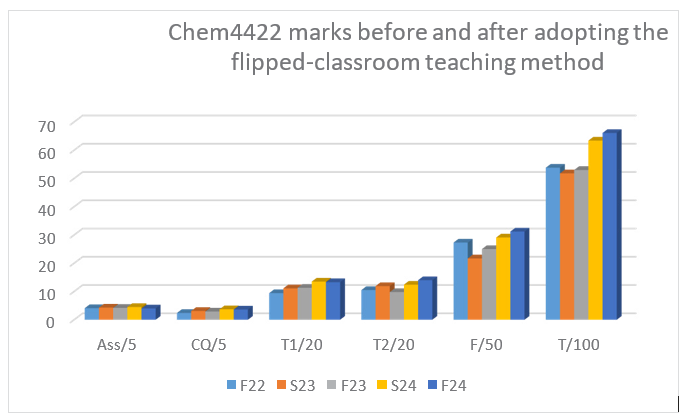
Chart 1. Chem4422 results of assessment components before the flipped-classroom teaching method and after. The effect of flipping the classroom in the course is clearly shown in the chart.
Grades
Based on the outstanding results of Class Quizzes, Test 1, Test 2, and the Final Examination obtained during the flipped-classroom teaching period, the total marks were calculated. The total marks obtained in Spring 2024 and Fall 2024 were 63.4 and 66.1, respectively (Table 5). These are significantly higher than those obtained at the pre- flipped classroom period. Notably, the highest total average obtained in Fall 2024 is outstanding. With the total marks for the course over the two semesters in hand, grades were assigned. In the grade assignment event, the same grade cut-offs used before flipping the classroom were adopted. Grades A, B, C, D, and F were assigned accordingly. The percentage of A grades in Spring 2024 was 18%, significantly higher than the previous semester, which preceded the inverted classroom method. In Fall 2024, the percentage of the A grade continued to rise, reaching a peak of 22%. This is double the A rates obtained previously. In Spring 2024 and Fall 2024, the B grade percentage rose to 35% and 39%, respectively. The results of the F grades are stunning.
The F rate in Spring 2024 plummeted to a record low of 2%, and in Fall 2024, it fell to 2%. This is, by all means, remarkable. The plunge from a 25% failure rate in previous lecture-based teaching semesters to 2% in the flipped classroom semesters is just incredible. Moreover, the course GPA significantly increased from 1.81 in Fall 2023 to 2.55 and 2.66 in Spring 2024 and Fall 2024 semesters.
|
|
Fall 2022 |
Spring 2023 |
Fall 2023 |
Spring 2024 |
Fall 2024 |
|
Total/100.0 |
53.8 |
51.8 |
53.0 |
63.4 |
66.1 |
|
A |
9% |
11% |
9% |
20% |
22% |
|
B |
24% |
10% |
30% |
35% |
39% |
|
C |
21% |
33% |
18% |
29% |
22% |
|
D |
20% |
24% |
18% |
15% |
15% |
|
F |
24% |
21% |
25% |
2% |
2% |
|
GPA |
1.80 |
1.61 |
1.81 |
2.55 |
2.66 |
Table 5. Total Marks and A, B, C, D, and F Grades in Chem4422, Organic Chemistry II, at the Flipped- Classroom Pre- Intervention andPost-Intervention Periods
Chart 2 below illustrates the Chem4422 grades before adopting the flipped-classroom teaching method and after.
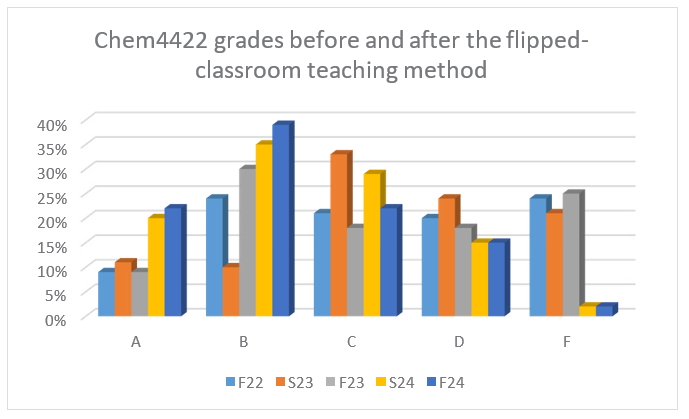
Chart 2. Chem4422 grades before the flipped-classroom teaching method and after
The incredible results of Chem4422, Organic Chemistry II obtained in flipped-classroom semesters are summarized below (Table 6).
The course GPA results before and after the flipped-classroom teaching method are summarized in Chart 3 below.
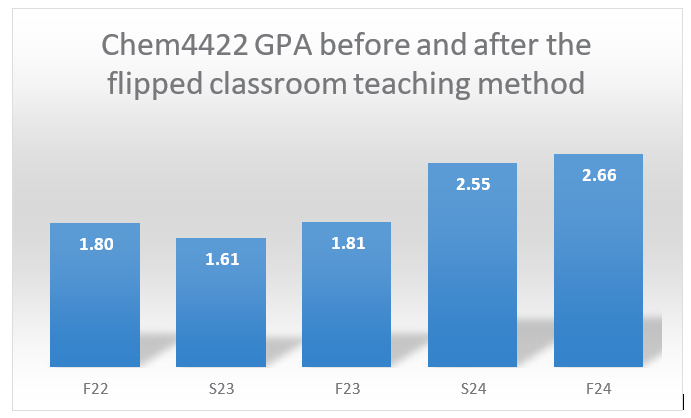
Chart 3. Chem4422 GPA before the flipped-classroom teaching method and after.
|
Entry |
Entry |
Spring 2024 |
Fall 2024 |
|
1 |
Class Size |
82 |
46 |
|
2 |
Assignments/5.0 |
4.5 |
4.0 |
|
3 |
Class Quizzes/5.0 |
3.7 |
3.6 |
|
4 |
Test 1/20.0 |
13.5 |
13.3 |
|
5 |
Test 2/20.0 |
12.4 |
14.0 |
|
6 |
Final Examination/50 |
29.1 |
31.2 |
|
7 |
Total/100 |
63.4 |
66.1 |
|
8 |
A grade |
20% |
22% |
|
9 |
B grade |
35% |
39% |
|
10 |
C grade |
29% |
22% |
|
11 |
D grade |
15% |
15% |
|
12 |
F grade |
2% |
2% |
|
13 |
GPA/4.00 |
2.56 |
2.66 |
Table 6. Grades of Chem4422, Organic Chemistry II, in Spring 2024 and Fall 2024 Semesters
Students’ Feedback/Satisfaction
The classroom in the intermediate organic chemistry course, Chem4422 was flipped in Spring 2024 and Fall 2024 semesters. It was crucial to receive students’ feedback and the level of their satisfaction. Toward that end, a questionnaire comprising 12 Yes/No questions and 13 rating questions about the method was prepared by the course instructor. The questionnaire was uploaded by the course instructor to the Sultan Qaboos University E-Learning/ educational platform, Moodle. Moodle is the Sultan Qaboos University E-learning platform and is managed by the university. The questionnaire was made available for registered students on the course Moodle page for three weeks. In the response options, the respondent type was chosen to be anonymous. Selected questionnaire results are listed below (Table 7). For a complete list of the questionnaire questions and students’ answers, please refer to Table S7 in the Supporting Information. The results reveal that the majority of students (68%) believe that the flipped- classroom teaching method is generally better than the traditional teaching method. Also, 70% of students believe that the flipped classroom teaching method is more effective than the traditional teaching method. The results of the flipped-classroom key outside- class resources are gratifying. The majority of students (73%) found the videos available in the course page on Facebook easily accessible, and the vast majority (90%) found them useful. Most students (65%) found that learning organic chemistry is better with the flipped classroom teaching method than with traditional teaching. The vast majority (93%) of students found that they acquired independence skills in learning, while 85% found that the method taught them problem-solving skills. The majority of students (88%) found that they became more responsible in their learning of organic chemistry when using the flipped-classroom teaching method. These results clearly indicate students’ favorable perception of the adopted flipped- classroom teaching method.
|
Entry |
Question |
Yes |
No |
|
1 |
Is the flipped-classroom teaching method generally better than the traditional |
68% |
32% |
|
|
teaching method? |
|
|
|
2 |
Is the flipped-classroom teaching method more effective than the traditional |
70% |
30% |
|
|
teaching method? |
|
|
|
3 |
Was the course textbook useful to you in your preparation for the flipped- |
65% |
35% |
|
|
classroom classes? |
|
|
|
4 |
Were the available videos on Facebook easily accessible? |
73% |
27% |
|
5 |
Were the available videos on Facebook useful to you in your preparation for the |
90% |
10% |
|
|
flipped-classroom teaching classes? |
|
|
|
6 |
Is your learning of organic chemistry better using the flipped-classroom method |
65% |
35% |
|
|
than the traditional teaching method? |
|
|
|
7 |
Did the flipped-classroom teaching method train you in becoming an independent learner? |
93% |
7% |
|
8 |
Did the flipped-classroom teaching method teach you problem-solving skills? |
85% |
15% |
|
9 |
Did you become more responsible towards your learning of organic chemistry |
88% |
12% |
|
|
using the flipped-classroom teaching method? |
|
|
Table 7. Selected questions and their Yes/No Percentages from a Questionnaire Given to Chem4422 Students (Fall 2024) on Moodle
In addition to the Yes/No surveys above, the questionnaire included rating questions of the flipped-classroom teaching method from 1 to 5, where 1 is the lowest score and 5 is the highest. Results of selected rating questions appear below (Table 8). For a complete list of the questionnaire questions and students’ answers, please refer to Table S8 in the Supporting Information. Students were strongly in favour of the effectiveness of the flipped-classroom teaching method. The method’s resources for out-of-class activities were strongly acknowledged by students, especially the usefulness of the videos, as evidenced by 45% choosing the highest rating category. Other factors, such as the instructor’s role and group discussions, were also favourably acknowledged. Remarkably, the vast majority of students believed that they achieved a high level of responsibility as a result of flipping the classroom in the course.
|
Entry |
|
1 |
2 |
3 |
4 |
5 |
|
1 |
Rate the effectiveness of the flipped-classroom teaching method from 1 to 5 |
0% |
10% |
38% |
33% |
20% |
|
2 |
Rate the usefulness of the textbook in your preparation for the flipped-classroom classes from 1 to 5. |
8% |
10% |
35% |
25% |
23% |
|
3 |
Rate the usefulness of the available videos in your preparation of the flipped-classroom classes from 1 to 5. |
0% |
13% |
18% |
25% |
45% |
|
4 |
Rate the instructor's role in the flipped-classroom classes from 1 to 5. |
3% |
8% |
28% |
28% |
35% |
|
5 |
Rate in-class group discussions towards effective learning in the flipped-classroom classes from 1 to 5. |
3% |
18% |
23% |
35% |
23% |
|
6 |
Rate the level of responsibility you gained from the flipped-classroom classes from 1 to 5. |
0% |
5% |
18% |
30% |
48% |
Table 8. Selected Rating Questions from a Questionnaire Given to Chem4422 Students (Fall 2024) on Moodle
The rating results above are indicative of the students’ satisfaction of the flipped- classroom teaching methods adopted.
Challenges and Limitations
The flipped-classroom teaching method offers many advantages. The teaching strategy is to devote class time to practice rather than to lectures, which can be watched or read before class. Reading textbooks, lecture notes, or class materials can be done outside the classroom and as frequently as needed. The same principle applies to encountering the topic through video-watching outside the classroom. In doing so, students/learners develop a level of independence, responsibility, and accountability towards learning outside the classroom. A key benefit of the flipped-classroom teaching method is providing learners with in-class opportunities for practice and problem-solving. In-class practice requires preparation not only to acquire knowledge but also to practice beforehand. In doing so, students and learners engage in a wide range of student- centered, learning-enriching activities. The outcome is enhanced learning and, consequently, performance.
The flipped-classroom teaching has challenges and limitations. For the successful and efficient application of the method, proper videos on the course topics should be provided and accessible to students/ learners. As mentioned above, house-made videos prepared by the course instructor should generally be more suitable for students. The instructor’s comfort and willingness, coupled with the technical requirements, may pose a challenge. This resource could also pose a limitation related to internet availability, coverage, and accessibility in certain areas. A universal challenge in flipped classrooms is time management and a perceived heavy workload resulting from the flipped-classroom teaching method. For course material to be read and its relevant videos to be watched outside the classroom, proper time management is needed. Obviously this skill varies from one student to another. Another challenge is cultural. Students are used to instructor-led and lecture-based teaching since elementary school. Changing the teaching method to a student-centered format that requires preparation outside the classroom and independence may not be well received.
Conclusion
Teaching an intermediate core organic chemistry course at Sultan Qaboos University has been inverted from a traditional, lecture- based, instructor-centred teaching method to a flipped classroom approach. The course is required for chemistry majors, Chemistry and Applied Chemistry from the College of Science, and Science Education Chemistry from the College of Education. Flipping the teaching mode was triggered by low A and B rates and high F rates, which reached 25% per semester during the pre-intervention period: Fall 2022, Spring 2023, and Fall 2023. The classroom was flipped in the subsequent Spring 2024 and Fall 2024 semesters. The adopted flipped-classroom teaching method used textbook readings and instructor-prepared house videos as out-of-class resources to engage with knowledge and course materials before scheduled class times. The class time was devoted to active learning, including practice, problem-solving, and higher-order thinking activities. Despite the inherent challenges of flipped- classroom teaching methods, flipping the classroom in the course was well received by our students. It fostered their autonomy in learning and consolidated their abilities and skills in independence, responsibility, and accountability. The considerable autonomy skills our students achieved led to remarkable results. The A grade has increased significantly to 18% and 22% in the Spring 2024 and Fall 2024 semesters, respectively, doubling the rates observed in the pre-intervention period. The F rates have remarkably plummeted to record lows of 1% and 2% in the flipped-classroom period. Concomitantly, the course GPA has risen significantly to 2.55 and 2.66, respectively. The pleasant outcome of the flipped- classroom teaching method is a demonstration of the active learning method’s power and effectiveness in enhancing students’ learning and performance. This report sets the stage for the application of flipped classrooms in other chemistry courses at different levels.
References
- Anderson, L. W., & Krathwohl, D. R. (2001). A taxonomy for learning, teaching, and assessing: A revision of Bloom’s taxonomy of educational objectives: complete edition. Addison Wesley Longman, Inc..
- Lage, M. J., Platt, G. J., & Treglia, M. (2000). Inverting the classroom: A gateway to creating an inclusive learning environment. The journal of economic education, 31(1), 30- 43.
- Bergmann, J., & Sams, A. (2012). Flip your Classroom: Reach Every Student in Every Class Every Day (International Society for Technology in Education, Washington).
- Akçayır, G., & Akçayır, M. (2018). The flipped classroom: A review of its advantages and challenges. Computers & Education, 126, 334-345.
- Hawks, S. J. (2014). The flipped classroom: now or never?.AANA journal, 82(4).
- Tucker, B. (2012). The flipped classroom. Education next, 12(1), 82-83.
- Mok, H. N. (2014). Teaching tip: The flipped classroom.Journal of information systems education, 25(1), 7.
- Altemueller, L., & Lindquist, C. (2017). Flipped classroom instruction for inclusive learning. British Journal of Special Education, 44(3), 341-358.
- Alvarez, B. (2011). Education Digest: Essential Readings Condensed for Quick Review. 77 (8), 18-21.
- L. S. Green, Lib. Technol. Rep. 2019, 55, 11-16.
- Ozdamli, F., & Asiksoy, G. (2016). Flipped classroom approach. World Journal on Educational Technology: Current Issues, 8(2), 98-105.
- J. C. Bean, (2011). Engaging Ideas, the Professor’s Guide to Integrating Writing, Critical Thinking and Active Learning in the Classroom, 2nd Edition; Jossey-Bass: San Francisco, California, USA.
- Ambrose, S. A., Bridges, M. W., DiPietro, M., Lovett, M. C., & Norman, M. K. (2010). How learning works: Seven research-based principles for smart teaching. John Wiley & Sons.
- Blair, E., Maharaj, C., & Primus, S. (2016). Performance and perception in the flipped classroom. Education and information Technologies, 21(6), 1465-1482.
- C. Rotellar and J. Cain, Am. J. Pharm. Edu. 2016, 80(2),Article 34.
- J. M. Campillo-Ferrer and P. Miralles-MartínezHumanit. Soc.Sci. Commun., 2021, 8, 176.
- Chou, C. P., Chen, K. W., & Hung, C. J. (2021). A Study on Flipped Learning Concerning Learning Motivation and Learning Attitude in Language Learning. Front Psychol.2021a; 12: 753463.
- Sun, Y., Zhao, X., Li, X., & Yu, F. (2023). Effectiveness of the flipped classroom on self-efficacy among students: A meta- analysis. Cogent education, 10(2), 2287886.
- King, A. (1993). From sage on the stage to guide on the side.College teaching, 41(1), 30-35.
- L. Abeysekera and P. Dawson, (2025) High. Educ. Res. Dev. 34 (1), 1-14.
- M. I. Baig and E. Yadegaridehkordi, Int. J. Educ. Technol.High Educ. 2023, 20:61.
- M. Kettle, Phys. Educ. 2013, 48(5), 593-596.
- Herreid, C. F., & Schiller, N. A. (2013). Case study: case studies and the flipped classroom. Journal of college science teaching, 42(5), 62-66.
- Davies, R. S., Dean, D. L., & Ball, N. (2013). Flipping the classroom and instructional technology integration in a college-level information systems spreadsheet course. Educational Technology Research and Development, 61(4), 563-580.
- Bancroft, S. F., Jalaeian, M., & John, S. R. (2021). Systematic review of flipped instruction in undergraduate chemistry lectures (2007–2019): Facilitation, independent practice, accountability, and measure type matter. Journal of Chemical Education, 98(7), 2143-2155.
- Rein, K. S., & Brookes, D. T. (2015). Student response to a partial inversion of an organic chemistry course for non- chemistry majors. Journal of Chemical Education, 92(5), 797-802.
- J. Fautch, J. M. (2015). The flipped classroom for teaching organic chemistry in small classes: is it effective?. Chemistry Education Research and Practice, 16(1), 179-186.
- Eichler, J. F., & Peeples, J. (2016). Flipped classroom modules for large enrollment general chemistry courses: a low barrier approach to increase active learning and improve student grades. Chemistry Education Research and Practice, 17(1), 197-208.
- Mooring, S. R., Mitchell, C. E., & Burrows, N. L. (2016). Evaluation of a flipped, large-enrollment organic chemistry course on student attitude and achievement. Journal of Chemical Education, 93(12), 1972-1983.
- Jardine, H. E., & Friedman, L. A. (2017). Using undergraduate facilitators for active learning in organic chemistry: A preparation course and outcomes of the experience. Journal of Chemical Education, 94(6), 703-709.
- C. Caroline Cormier and B. Voisard, Frontiers in ICT, 2018,4, article 30.
- Broman, K., & Johnels, D. (2019). Flipping the class– University chemistry students’ experiences from a new teaching and learning approach. Chemistry Teacher International, 1(1), 20180004.
- J. Fernández Arteaga, J., Remón Ruiz, P., González Delgado,J. A., & Guzmán Ríos, D. (2021). Flipped Classroom Teaching in Organic Chemistry in the Context of CLIL. Journal of Higher Education Theory & Practice, 21(13).
- Sigmon, A. J., & Bodek, M. J. (2022). Use of an online social annotation platform to enhance a flipped organic chemistry course.
- Dehghan, S., Horan, E. M., & Frome, G. (2022). Investigating the impact of the flipped classroom on student learning and enjoyment in an organic chemistry course. Journal of Chemical Education, 99(7), 2512-2519.
- Holloway, L. R., Miller, T. F., da Camara, B., Bogie, P. M.,Hickey, B. L., Lopez, A. L., ... & Eichler, J. F. (2024). Using flipped classroom modules to facilitate higher order learning in undergraduate organic chemistry. Journal of chemical education, 101(2), 490-500.
- Ranga, J. S. (2022). Investigating the impact of course content usage on student learning in upper-level chemistry courses. Journal of chemical education, 99(4), 1563-1570.
- Pulukuri, S., & Abrams, B. (2021). Improving learning outcomes and metacognitive monitoring: Replacing traditional textbook readings with question-embedded videos. Journal of Chemical Education, 98(7), 2156-2166.
- Torres, D., Pulukuri, S., & Abrams, B. (2022). Embedded questions and targeted feedback transform passive educational videos into effective active learning tools. Journal of Chemical Education, 99(7), 2738-2742.
- A. M. Persky and J. E. McLaughlin, Am. J. Pharm. Edu. 2017, 81(6), Article 118.
- A. M. Persky, J. L. Kirwin and C. J. Marasco, Curr. Pharm. Teach. Learn. 2014, 6(1), 1-9.
- F. S. Ferreri and S. K. O’Connor, Am. J. Pharm. Educ. 2013, 77(1), Article 13.