

Archivos de Ciencia e Investigación(ADCI)
ISSN: 3068-014X | DOI: 10.33140/ADCI


Review Article - (2025) Volume 1, Issue 1
How and when Virtual Technologies Can Help Bridge the Sex and Gender Gap in STEM Careers: Some Considerations
Received Date: Apr 15, 2025 / Accepted Date: May 23, 2025 / Published Date: Jun 26, 2025
Copyright: ©Ã?©2025 Victoria d. Chamizo. This is an open-access article distributed under the terms of the Creative Commons Attribution License, which permits unrestricted use, distribution, and reproduction in any medium, provided the original author and source are credited.
Citation: Chamizo, V. D. (2025). How and when Virtual Technologies Can Help Bridge the Sex and Gender Gap in STEM Careers: Some Considerations. Arch Cienc Investig, 1(1), 01-11. https://doi.org/10.33140/ADCI.01.01.11
Abstract
Although the largest gender differences in cognitive abilities are in verbal and language skills, where there is a clear female advantage, this difference is not much talked about, and these skills are largely mastered throughout primary and secondary education. In spatial abilities, where boys tend to outperform girls, the opposite is true. Traditionally, spatial abilities have not been part of the school curriculum, although their importance is now widely discussed because of their relevance to STEM careers. Moreover, the gap between boys and girls in these abilities increases with age, a crucial stage being adolescence (where false beliefs, stereotypes, are so important and damaging). This huge deficiency during compulsory schooling, so detrimental to girls, needs to be remedied. The purpose of this article is to highlight this all too often neglected issue, calling for social action to ensure that women have the same opportunities and access to science and technology as men. The article includes concrete suggestions, appealing to the enormous possibilities of virtual technology, which could play an important role in this respect.
Keywords
Sex Differences, Gender Differences, STEM Careers, Virtual Technologies, Games, Educational Materials
The Relevance of STEM Careers Today
There are no doubt that technical and scientific careers, STEM (science, technology, engineering and mathematics) disciplines, are crucial today. This is because they are the ones that are building the future and have the best prospects for growth; consequently, they are the best paid and where the most jobs are available [1]. Unfortunately, however, women are under-represented in these careers, especially, in physics, engineering and computer science, the so-called PEC disciplines, as shown in Figure 1 [2,3]. Why is this the case? Answering this question is not easy. Multiple studies have presented evidence that biological, social, and environmental factors can be important contributors to the under-representation of women in STEM disciplines-this is why both terms, sex and gender, are used in the manuscript (i.e., when referring to biological causes, sex is the correct term; when referring to socio-cultural causes, gender). This is also the case for some other groups, such as students of colour or those from more disadvantaged homes. However, the most difficult group to understand is women, for the contrasts found in it [4,5]. This is certainly bad news when it comes to equality in the technology sector, where it is so important to incorporate the female point of view in product design and implementation in order not to repeat mistakes and stereotypes of the past.
One study addressed the above question by investigating how gender is related to the attainment of a PEC degree through the distribution of achievements, and its results were surprising [3]. In this work, a model with three general factors was introduced to explain the larger gender differences in participation in computer science, engineering and physics (i.e. PEC degrees) compared to biology, chemistry and mathematics: (a) masculine cultures that signal a lower sense of belonging to women than men, (b) a lack of sufficient early experience with computer science, engineering, and physics, and (c) gender gaps in self-efficacy (i.e., unjustified doubt of one's own ability and capacity to be able to carry out a specific task). The distinction between men and women in these disciplines was found to be very different according to the distribution of achievements. Particularly striking was the result that a large number of medium and even low achieving males chose PEC careers. This finding was explained by referring to some inadvertent factor acting in a way that attracted males with average or even low intellectual performance to PEC, while repelling females with the same characteristics, and referred to a masculine culture. At this point, a question inevitably arises: can effective interventions be developed to correct this situation and when should action be taken? Fortunately, the answer to the first question is yes, and the second question begins to be addressed in the next section.
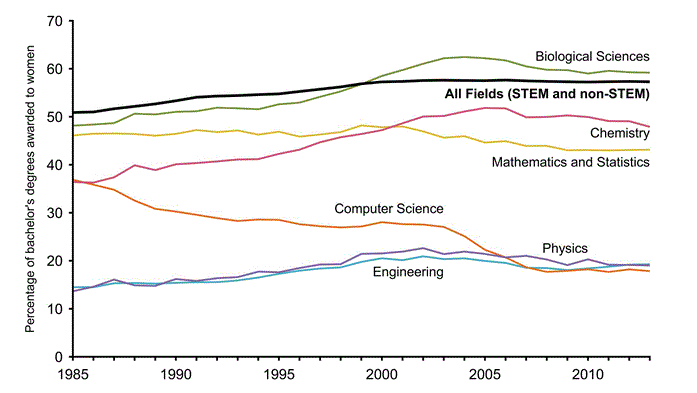
Figure 1: Percentage of bachelor's degrees awarded to women in STEM fields from 1985-2013. SOURCE: National Science Foundation, National Center for Science and Engineering Statistics, Integrated Science and Engineering Resources Data System (WebCASPAR), https://webcas- par.nsf.gov (Authors: Cheryan et al. [3]. Graphic reproduced with permission of APA).
The present paper highlights initiatives that have taken place in the last twenty years, mainly in the United States, as they have pioneered many aspects of this controversial topic [6-8]. A classical review focuses on primary engineering education (i.e., kindergarten through age 12 -which is often abbreviated as K-12 or P-12), although their findings and conclusions can be applied to STEM disciplines in general [7]. The authors posed three initial questions for students in this age group: Question 1, what are students’ knowledge, skills, and attitudes about engineering and technology? Question 2, what are effective methods of teaching P-12 engineering? Question 3, what are the benefits of P-12 engineering education? After reviewing 263 studies, published between January 2000 and June 2021, the authors came to ten key conclusions, with particular emphasis on two of them. Firstly, that for students to pursue STEM careers, it is important to awaken their interest as early as kindergarten. Secondly, that all their findings and conclusions require additional support from the students’ parents and their environment. Otherwise, efforts may be in vain. In summary, the article is a good "recipe book" that should always be kept in mind when developing curricula, both in primary and secondary education, as well as in the preparation of working material for both students and teachers .
Spatial Abilities and their Importance in STEM Disciplines
It is now widely accepted that one of the cornerstones of STEM careers is spatial abilities and spatial thinking, a topic that is not addressed in school curricula, as highlighted by the US National Research Council's report Learning to think spatially [9-16]. This report describes the situation as a "major blind spot" in education (p. 7) [13]. It makes specific recommendations, justifying itself by stating that "The premise of this report is the need for systemic educational change. Fundamental to this is a national commitment to the goal of spatial literacy. Spatial thinking must be recognized as a fundamental and necessary part of the K-12 educational process /. / Without explicit attention to it, we will not be able to fulfill our responsibility to prepare the next generation of students for life and work in the 21st century" (p. 10) [13]. Although these recommendations are widely considered in a number of countries, they are unfortunately neglected in many others, where spatial abilities and spatial thinking are still absent in compulsory education.
For many years it was believed that spatial abilities were immutable (i.e., you either had them or you didn't). However, according to a rigorous meta-analysis reviewing 217 empirical papers we now know that this is not true, spatial abilities are not fixed [14]. These skills are not only malleable, but also durable and often generalizable to each other (i.e., training in one specific spatial ability can improve performance in one or more other ones that have not been trained [15]. There are many spatial abilities (from pencil-and-paper tests to real-world navigation tasks) that are related to the visualization, manipulation and transformation of objects and places in a two-dimensional or three-dimensional space. There are also many ways to measure them. But unfortunately, there is no agreement among researchers either on their number or on how to measure or even name them. Two main ones are spatial visualization and orientation (also called navigation). In addition, the speed of mental rotation (MR) has often been considered to be a third spatial ability [16]. All of them with a wide range of variations. Spatial visualization is the ability to mentally manipulate objects, frequently abstract ones, in three-dimensional space. It is assessed using tests that create visual patterns (different forms or shapes), sometimes quite complex, with high accuracy, and with which one can perform different operations, such as mentally rotating them, decomposing a shape into its parts or recombining the latter into a new pattern. The tests that use MR images stand out [17-19].
For example, a widely used material are the Purdue Spatial Visualisation Tests: Visualisation of Rotations (PSVT:R), developed by Guay [17]. This test measures the ability to visualize rotations. It consists of 30 questions in which first a three- dimensional object is shown with its original perspective and a rotation of it. Next, another object and five different rotations are shown, and the student must choose the rotation that matches the example given. Only one of the five options are correct. An example of the PSVT:R test is presented in Figure 2.
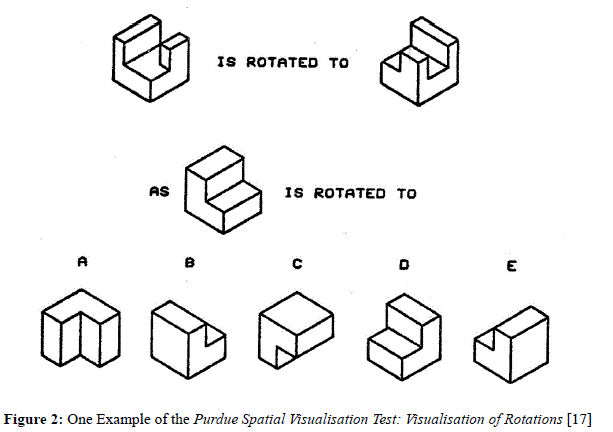
1. study how the object on the top line of the question rotates, 2. mentally imagine what the object shown on the middle line of the question looks like when rotated in exactly the same way, and 3. select from among the five drawings (A, B, C, D or E) presented on the bottom line of the question the one that matches the rotated object on the middle line. (In the example in Figure 2 only drawing D matches the required rotation). Importantly, a recent paper [20] has presented a revised version of the PSVT:R and the Mental Rotation Test (MRT), called the Virtual Reality Mental Rotation Assessment (VRMRA), to assess mental rotation based on virtual reality. As the authors state, the VRMRA reimagines traditional mental rotation assessments in a room-scale virtual environment and uses hand tracking and gamification elements to try to create an intuitive and engaging experience for participants. The results of this study suggest that the VRMRA is likely a more accurate tool to assess mental rotation ability in comparison to traditional instruments which present the stimuli in a 2D format. The VRMRA is publicly accessible and can be found on GitHub at: https:// github.com/krisdl024/VRMRA-application.
Orientation or navigation refers to the ability of organisms to navigate [21]. It is often argued that there are two main types of navigation: allocentric and egocentric [22-24]. Allocentric or spatial navigation is characterized by the ability of organisms to navigate using distal cues, like landmarks located at some distance from the organism. This type of navigation involves the hippocampus, entorhinal cortex and surrounding structures. On the other hand, egocentric navigation is characterized by the ability of organisms to navigate using both proximal cues (cues used to pinpoint a location, like a beacon) and internal cues (such as feedback from limb movements in terms of speed, direction, tums and tum sequence). This type of navigation involves the dorsal striatum (composed of the caudate nucleus and the putamen) and other related structures. As will be seen in section 4, the use of one or another part of the brain has important implications.
The Importance of Putting Theory and pedagogy before Technology: Some Challenges
Since spatial thinking and spatial abilities are necessary knowledge for students to succeed in STEM disciplines, one question that needs to be asked is what is the best theoretical framework for teaching them. The constructivist approach is currently the most widely used learning theory [25-26]. Its fundamental assumption is that knowledge is a function of how the learner creates meaning from his or her experiences, together with information provided by his or her environment. Thus, the learning environments in which learners are situated are crucial. Virtual Learning Environments (VLEs) are now widely used in education [27-29]. They are digital tools that function as educational spaces hosted on websites. VLEs allow for the application of ‘blended learning’, thus combining online educational material with more traditional teaching. Through collaborative classroom activities, stimulating environments and VLEs encourage students to integrate new information with their prior knowledge, reflecting deeply and critically on what they have learned and discussing it with their peers. In addition, students are encouraged to learn constantly and about several topics at the same time. For example, if they are learning how the French researcher Louis Pasteur discovered penicillin, they will simultaneously learn about history, biology, medicine, geography etc. VLEs also allow learners to learn at a distance, ‘E-learning’ (exclusively distance learning and online education), which is so important in cases of difficult learning or for people living in isolated contexts [30-31]. Equally important is the gamification of learning activities (i.e., adding game design elements to more traditional learning), such as the use of dynamic videos with interactive elements to capture and maintain learners' attention and motivation [32]. Furthermore, there is no doubt that interconnecting learners through VR/AR/ MR networking offers a very promising challenge for the future. Thanks to virtual and augmented reality, teachers are not limited to the space of a classroom. With VR students can virtually explore the whole world!
Constructivism has often been seen as a process of creating conditions that encourage learner participation in their learning process. According to an influential article, the four essential features of constructivism are: eliciting prior knowledge, creating cognitive dissonance, application of new knowledge with feedback, and reflection on learning [33]. This theory proposes a new way of teaching to replace the typical passivity of students, so common in traditional education. Moreover, it is becoming increasingly clear that different virtual technologies can be used as essential tools in this new way of teaching, thanks to the fact that they are becoming more and more affordable [34-35]. In summary, as a large number of studies show virtual technologies can not only improve learners' cognitive abilities, but also increase their motivation, which can have a direct impact on their performance in the learning process. Particularly important is their impact in the spatial domain [27, 36-42].
As far as future teachers are concerned, constructivist ideas need to be introduced in teacher training courses, as well as in the training of those who develop support material, especially with regard to the teaching of STEM disciplines. Without adequate preparation of teachers, as well as good support material for their future teaching, the recommendations proposed by this theory are very difficult to implement. A major challenge is to prepare teachers and educators to understand and take advantage of the resources of new technologies, always bearing in mind that technology must be a tool at the service of pedagogy and not the other way around. It has even been claimed that teacher training is the key to achieving gender parity in STEM fields! [43].
As important as the question of the best theoretical framework to promote learning is the question of what are the best techniques to promote lasting and transferable learning [44-46]. It has been argued that there is fairly widespread agreement in highlighting techniques involving remedial practice (practice tests), distributed or spaced practice (the opposite of mass practice) and elaborative study (as opposed to mere memorization), although the use of these techniques does not guarantee better results in the short term [46]. Equally important are the type of goals students adopt (short-term goals, such as passing an exam, versus long-term goals, which imply a greater interest in acquiring lasting and transferable knowledge), the effort and time they devote to a given task, students' beliefs about their intellectual ability (their self- efficacy) and their self-control, in order to keep any anxiety they may experience at bay.
Perhaps the biggest challenge is the attitude and preparation of parents and educators, as well as the use of good complementary virtual material, in addition to that already available in traditional teaching. For K-12, activities such as puzzle and construction games, interaction with three-dimensional environments (ideal with virtual reality and augmented reality), mind and concept maps, drawing and design applications that allow the creation and manipulation of 3D models, and interactive online activities (such as geometry games and simulations) should be highlighted. All these activities foster spatial abilities. In any case, always prioritizing pedagogical goals and strategies when integrating technology in primary and secondary education.
Considerations That Educators and Game and Learning Material Designers Need to Know About Women to Help Them to Foster Their Spatial Abilities
There may be a lack of dialogue between basic research (psychologists and educators) and designers of games and support materials for both teachers and learners using new technologies (VR, AR and MR), and it could be beneficial for all to try to integrate these perspectives. Several studies have shown that mental rotation practice improves spatial abilities and that women tend to benefit more than men (using a mobile phone, through robotics- based instruction, through a mixed reality and Holo-mental-based training module, using 3D visual objects and eye movement analysis, playing the digital game Tetris, using a puzzle game, using 3D tangible objects [47-54, respectively]. For a review using 3D visualization [55]. Unfortunately, however, many educators point out that there is a lack of didactic material involving the rotation of 3D objects. There is no doubt that the development of fun and stimulating school and out-of-school games and materials (both for personal computers and mobile phones) would benefit adolescent girls in particular, as well as everyone else, in the development of their spatial abilities. The following game (https://www.tvokids. com/preschool/games/sandy-math-shapes) is a great example for preschoolers, who interact with the video game to make sandcastles on the beach while inadvertently practicing mental rotations. For the older ones, what a great game it would be to present the 100 most beautiful buildings in the world [56], rotating in all possible ways, and for the players to guess which building it is in each presentation, as well as to place it in its corresponding country! (And for teenagers, instead of buildings, for example the presentation of manga figures, which are more attractive to them -for free figures see http://www.elmundodekenneos.com/).
The development of this type of material and similar fun and stimulating games is very important if the sex and gender gap in all STEM disciplines is to be eradicated [57]. Since the main goal of this paper is to try to contribute to narrowing this gap, four considerations are presented hereafter, in the hope that they will help in this regard. The examples below have a solid grounding in basic experimentation, most of them with both human and non-human (rodent) subjects, although the emphasis is on work with human participants. As will be seen, it would be desirable for women and girls to selectively practice some spatial abilities, which will often involve ‘putting aside’ their own predispositions. This is not easy, as ‘predispositions’ are likely to share properties with so-called ‘habits’. A habit can be considered an action that an organism performs automatically in a given situation due to continued practice, without direct reference to the goal of the action and are difficult to eradicate [58].
Consideration 1: Women and men Tend to Represent Their spatial Environment Differently
In a much-quoted article published in 1998 [59], the authors suggested that women focus on factors related to personal and concrete representations of the environment (e.g., left-right and landmarks), whereas men focus on abstract factors related to a Euclidean representation of the environment (e.g., geometric properties of the environment such as distances, angles and cardinal points).
In other words, they referred to a clear sexual dimorphism in the spatial domain, with men performing better when using Euclidean information, while women performing better when using information about landmarks or visual features [60,61]. In addition, the study also showed that when people give navigation instructions to others, men use more cardinal directions, such as north or south (i.e., spatial navigation), and women use more topological/landmark descriptions, such as buildings and other visual objects along a route, as well as left and right turns (i.e., route-based navigation). This implies that women tend to use a list of places (i.e. list learning), which is distinct from spatial navigation [59-63]. Learning a list may be a good strategy for solving a navigation task, but it is not a spatial solution (although it is undoubtedly a demonstration of the good memory that many women have! [16,64]). Route-based navigation relies on remembering specific turns when a person comes to certain signs (e.g., turn left at the "Smith's Shoe Store" placard, then right passing the "Eagle Restaurant", next right again at the three-spout fountain... etc.). That is, it is like a list made up of a set of specific rules that a person remembers and executes as he or she encounters certain signs or has walked a certain number of steps.
In another influential study, researchers wondered whether the differences they found in navigational ability between males and females were caused by differences in preferred strategy or by differences in spatial abilities [65]. Their participants were required to follow either landmark- or Euclidean-based instructions during a navigation task (either in the real-world, Experiment 1, or on paper, Experiment 2). The results showed that men performed best when using Euclidean information (distances and directions), whereas women performed best when using landmark information. This result has been replicated many times since then. The authors suggested that there is a systematic difference in the ability to use these two types of spatial information. Subsequent research by the same group of researchers has found that women rely on linguistic information more than men when navigating, regardless of the type of instruction [65,66].
Consideration 2: (Closely Related To The Previous Consideration). A Large and Healthy Hippocampus is Crucial When Solving Spatial Tasks and May also Delay the Onset of Alzheimer's Disease
The hippocampus plays a critical role in spatial and navigation tasks. Research in both humans and nonhuman participants has shown that the hippocampus is involved in Euclidean navigation strategies and in geometry learning, while a different part of the brain, the caudate nucleus, is more involved in rigid left-right turns and topographical strategies [67-69]. Men (Euclidean navigators) rely more on the hippocampus than women, while women (topographic navigators) rely more on the caudate nucleus than men [70,71]. The caudate nucleus is a brain structure heavily involved in procedural learning, a form of learning that is related to things we know how to do but do not do consciously (a typical example is the automatic behaviours observed in habits, such as gear changes performed by a skilled driver). It is now well known that the continued use of hippocampal-dependent navigation strategies (in the case of men) increases hippocampal grey matter; in contrast, when non-hippocampal-dependent strategies, such as the caudate nucleus, are used, the grey matter of the caudate nucleus increases at the expense of the hippocampal grey matter, which is reduced! [69]. In fact, it has been shown that women using non- hippocampal-dependent spatial strategies have less grey matter
in the hippocampus compared to women using hippocampal- dependent spatial abilities and to men [69]. These findings may help explain why women are more prone to Alzheimer's disease than men, as a large, healthy hippocampus helps slow Alzheimer's disease, while the opposite is true for a small hippocampus, which is often a predictor of Alzheimer's disease [70-75]. As suggested recently, sex and gender differences in the spatial domain may be explained, at least in part, by the possibility that men and women use different navigation strategies. Fortunately, the hippocampus is extremely flexible, and everyday experiences can alter it. For example, action video games can shrink hippocampal grey matter, an impact that depends on the use of the caudate nucleus in these games [76]. This work showed that 90 hours of action video games could decrease hippocampal size (its amount of grey matter), while spending the same amount of time playing real-time strategy video games (such as Super Mario or Rise of Nations) could have the opposite effect: increasing hippocampal grey matter [76].
Consideration 3. Women and men Tend to use Different Strategies in Mental Rotation Tasks
There are numerous variations of MR tests, both in terms of the stimuli presented (three-dimensional geometric shapes, letters, hands, numbers, various objects... all with different orientations) and in terms of how they are presented and exactly what the participants are asked to do. For example, after presenting pairs of images with different orientations, ask them to quickly decide whether or not they are the same figure; or after presenting a target figure and then multiple other figures with different orientations (only one of which is the same as the target figure), ask the participant to choose which of them matches the target figure... etc. In the case of picture pairs, the most frequent results show that the time to respond increases as the angle of rotation is greater and that males are faster than females (for a classic review and for a review with very young children, see [77,78]). MR with three- dimensional (3D) images is one of the most widely used tasks in spatial cognition research in the last fifty years, especially when measuring the speed of mental rotation. It is also where the largest sex differences have been observed. As has been shown, when 3D (instruments that use images with three dimensions: height, width and depth) and 2D (instruments that use images with two dimensions: height and width) mental rotation instruments are compared in the same study, the results in favor of men are usually higher for 3D tests -which are generally more difficult than 2D tests [15]. This result indicate that task difficulty is a factor in finding sex/gender differences in spatial tasks.
Although numerous investigations with human participants of various ages have shown that men tend to outperform women in the speed of mental rotation, several studies have questioned this argument. In one of them, sex differences were investigated as a function of stimulus material. Five types of stimuli (i.e., alphanumeric characters, PMA symbols, animal drawings, polygons and 3D cube figures) were used [79]. The results showed that polygons were the only material that produced substantial and reliable sex differences in mental rotation speed. Thus, the type of stimulus used in spatial tasks seems to be a critical variable when addressing sex and gender differences. Subsequent work by the same researchers replicated the previous results and, in addition, revealed that the sex effects reflected a difference in strategy, with women mentally rotating polygons in an analytical and fragmented way, while men using a holistic mode of mental rotation [80,81]. Given that the literature on sex differences in mental rotation has largely focused on differences in learning speed, there is no doubt that rotating a figure piecemeal must take longer than rotating it holistically. Consequently, anyone can ask the question: are men really superior or is it just an illusion? In any case, the summary of the review conducted with young children is worth considering [78]. The authors described their findings as follows, “These studies have produced many conflicting results, but several tentative conclusions can be drawn. First, MR may be operative in infants as young as 3 months of age. Second, there may be sex differences in MR functioning in infancy, generally in favor of boys, as there are in children and adults. Third, there appear to be multiple influences on infant MR performance, such as infant motor activity, stimulus or task complexity, hormones, and parental attitudes. We conclude by calling for additional research to further examine the causes and consequences of early life MR abilities”. In short, there are well-documented sex differences in MR from early childhood, but we are still far from understanding what they are due to, which requires further research.
Consideration 4: Women and Men appear to Respond Differently to Close and Distant Objects
It has been claimed that due to a selective pressure from the environment, males and females would have developed distinct navigation strategies to solve spatial problems, resulting in different abilities [82]. In humans this goes back to our ancestors, to the hunter-gatherer societies of the Upper Paleolithic era. During this period, men were mainly engaged in hunting, especially big game (thus covering a large territory), while women were more involved in gathering and caring for their offspring, all of which was carried out in places close to the base camp. Thus, men travelled over wider spaces than women. This is often called the hunter–gatherer hypothesis [83-84]. It has been suggested that these differences between men and women may also be due to attentional and imagery processes [85]. Following the hunter–gatherer hypothesis, in some works it was predicted that men would find it easier to perform tasks based on distant rather than near information, as it is this information that is most useful for accurately throwing a weapon and hunting animals [86-88]. Women, on the other hand, should find it easier to perform tasks based on proximate rather than distant information, as gathering wild fruits and hunting small animals takes place at a reachable distance, and infant care always takes place in close proximity.
To test their predictions, the results of two of these papers were particularly successful. One article contained two studies and addressed sex differences in motor control [87]. Participants performed a computerized tracking task using either distal hand muscle movements or proximal arm muscle movements, in a near (peri personal) space. On the basis that the directed throw uses the proximal muscles of the arm and is directed to the far space (extra personal), while the fine motor movement uses the distal muscles of the hand and is performed in the near space (peri personal), the authors expected a muscle x sex interaction, as it was assumed that women would perform better with the hand and men with the arm. As predicted, in both studies the authors found that women performed the tracking task better with the hand than with the arm, while the opposite was true for men, who performed the task better with the arm than with the hand. In the second paper, participants were asked to play a computer game [88]. They were presented with a 2-D representation of a 3-D scene in virtual space. A hovering toy UFO projected a spot of light onto a tabletop. The spaceship travelled towards its docking station on the table and docked in either a near or a far space, which were indicated by visual cues as the perspective of the table and chairs was altered. Before arriving at the docking station, the spacecraft became invisible and the participant had to press a key at the moment he or she believed the spacecraft arrived at the station. Two additional studies required participants to assemble jigsaw puzzles, seeing only their hands performing the tasks on a screen positioned in either near or far space. In all three studies an interaction between sex and space was found, with men performing better (more accurately or faster) in the far-space conditions and women performing better in the near-space conditions. According to the authors, these two papers, a motor study and a spatial localization study, confirm the predictions of the hunter/gatherer hypothesis and also help to better understand the nature of sex differences and their underlying neural basis. The authors claimed that far and near space are processed in the ventral and dorsal streams (two cortical regions often referred to as the ‘what’ and ‘where’ visual systems), and they further proposed that the two streams are sex-differentiated: the ventral ‘there’ system interacting with far space and being preferred by men, while the dorsal ‘here’ system interacting with near space and being preferred by women (for additional supporting research, with procedural improvements, [87-91].
An interesting model of hippocampal functioning predicts a dissociation between proximal and distal cues between males and females [92]. Following this model, sex differences arise from preferences for cues that provide either direction (i.e., distal cues, which are most preferred by males) or position (i.e., proximal cues, which are most preferred by females). Directional cues are distant objects that appear to remain stationary with respect to each other as an organism wanders about a specific terrain or virtual arena (e.g., like stars and mountains), while positional cues are close or local objects that are often used to pinpoint a location [93]. All the data in this section are consistent with the hypothesis that a sex difference in spatial cognition arises only when there is a sex difference in home range size: in people that difference arises largely because men hunted and women gathered [16,94].
A clear implication of these considerations is that girls and women should get out of their "comfort zone" (i.e., try not to use route-based navigation) and practice more Euclidean navigation strategies. Furthermore, even for health reasons (to delay the onset of Alzheimer's disease), they should play real-time strategy games to increase their hippocampus use when navigating. Likewise, it would be advisable for them to practice more holistic mental rotation (with specific instructions to pay attention to the shapes of the figures presented to them), since learning geometry or shapes is linked to a healthy hippocampus. Finally, physical activity and sports are also excellent allies.
Concluding Reflections
It is 60 years back that Alice S. Rossi asked the question “Women in science: Why so few? [95]. Since then, things have certainly changed, but not in all areas of science. In PEC careers, Rossi's question remains just as pertinent in Western countries: why so few? In attempting to answer this question, this review has focused on three main messages. Firstly, that the spatial abilities, that are so important in all STEM careers, can be developed through practice and exercise (although much more supporting teaching material is needed!).
It is worth noting that due to the growing influence of AI today, many authors advocate the acronym STEAM (where A stands for Arts) instead of STEM [96]. Since this article has addressed the issue of the underrepresentation of women in these disciplines, which is very limited or non-existent in the arts, the acronym STEM has been used throughout the paper.
Secondly, spatial abilities need to be somehow introduced into the school activities, preferably starting in kindergarten. Thirdly, that the enormous opportunities offered today by virtual technology to compensate for the sex and gender gap in these disciplines, a technology that is increasingly available to all, cannot be missed [97-100]. Fortunately, current technology and the possibilities offered by the metaverse are proving to be excellent tools for fostering spatial abilities. A recent meta-analysis highlights the importance of working with virtual technologies at preschool age because for these infants virtual technologies (such as Augmented Reality, AR) provide an exciting novelty, as well as a challenge that motivates and amuses them [99]. The ability of AR technology to integrate two-dimensional or three-dimensional objects in a real environment makes learning more interactive for students. However, as infants get older, there is a resistance that did not exist in earlier years and that often holds them back and intimidates them. This review concludes by reaffirming the importance of paying more attention to the use of virtual technologies to foster spatial abilities in preschoolers [99,100]. Finally, it is important to insist on the very ‘masculine’ environment that still prevails in several careers, such as in some engineering, and which is so detrimental to girls [3]. How long will this be allowed to continue? Without determined action by governments, relevant institutions, parents, educators and designers of games and learning materials, the problem will tend to perpetuate itself.
The content of the present work is particularly important with girls and their future in mind, as in many Western countries there is still a sex and gender gap in STEM careers (especially marked in PEC), which is proving very difficult to eradicate. However, in many Middle Eastern and Asian countries, the pattern is reversed: girls report higher interest and self-efficacy in STEM disciplines, as well as performing better in mathematics and science [101]. How can this be understood? To explain the results in Western countries, the authors of the paper appeal to the influence of parents and educators, as well as to the importance of ‘popular culture’ and the media; and to counteract the differences between boys and girls, they recommend training in spatial abilities, as well as value affirmation exercises. Furthermore, it should be added that VR/AR/MR networking (which allows for agile collaboration and communication), would certainly be particularly appropriate in this difficult issue of false beliefs and stereotypes of adolescent girls in Western countries, who often exclude themselves from STEM careers and in particular from PEC [101-103]. If they themselves can talk and interact with peers from other countries where girls outperform boys in these disciplines, they will surely seriously question their false beliefs. Empowering girls to visualize this new information can positively influence their ability to change their minds! [104]. In any case, it is imperative to give girls in Western countries the same opportunities as boys to enter adolescence and adulthood on equal terms. If we truly want equality in the technology sector, incorporating a female point of view in the design and implementation of products, we must act decisively. This will undoubtedly require a widespread effort in our society. Will it be possible to remedy the current situation? Time will tell
References
1. Calvo, C. (2024). Nosotras: el feminismo en la democracia. Editorial Planeta.
2. Hill, C., Corbett, C., & St Rose, A. (2010). Why so few? Women in science, technology, engineering, and mathematics. American Association of University Women.
3. Cheryan, S., Ziegler, S. A., Montoya, A. K., & Jiang, L. (2017). Why are some STEM fields more gender balanced than others? Psychological Bulletin, 143(1), 1.
4. Newcombe, N. S. (2020). The puzzle of spatial sex differences: Current status and prerequisites to solutions. Child Development Perspectives, 14(4), 251-257.
5. Tsigeman, E. S., Likhanov, M. V., Budakova, A. V., Akmalov, A., Sabitov, I., Alenina, E., ... & Kovas, Y. (2023). Persistent gender differences in spatial ability, even in STEM experts. Heliyon, 9(4).
6. Brophy, S., Klein, S., Portsmore, M., & Rogers, C. (2008). Advancing engineering education in Pâ?12 classrooms. Journal of Engineering Education, 97(3), 369-387.
7. Sneider, C. I., & Ravel, M. K. (2021). Insights from two decades of P-12 engineering education research. Journal of Pre- College Engineering Education Research, 11(2), 5.
8. Cyr, M., Miragila, V., Nocera, T., & Rogers, C. (1997). A Lowâ?Cost, Innovative Methodology for Teaching Engineering Through Experimentation. Journal of Engineering Education, 86(2), 167-171
9. Humphreys, L. G., Lubinski, D., & Yao, G. (1993). Utility of predicting group membership and the role of spatial visualization in becoming an engineer, physical scientist, or artist. Journal of Applied Psychology, 78(2), 250-261.
10. Shea, D. L., Lubinski, D., & Benbow, C. P. (2001). Importance of assessing spatial ability in intellectually talented young adolescents: A 20-year longitudinal study. Journal of Educational Psychology, 93(3), 604-614.
11. Wai, J., Lubinski, D., & Benbow, C. P. (2009). Spatial ability for STEM domains: aligning over 50 years of cumulative psychological knowledge solidifies its importance. Journal of educational Psychology, 101(4), 817-835.
12. Uttal, D.H.; Cohen, C.A. Spatial Thinking and STEM Education. In Psychology of Learning and Motivation; Ross, B.H., Ed.; Elsevier, 2012; Vol. 57, pp. 147–181 ISBN 978-0- 12-394293-7.
13. National Research Council (2006). Division on Earth, Life Studies, Board on Earth Sciences, Resources, Geographical Sciences Committee, ... & The Incorporation of Geographic Information Science Across the K-12 Curriculum. (2005). Learning to think spatially. The National Academies Press.
14. Uttal, D. H., Meadow, N. G., Tipton, E., Hand, L. L., Alden, A. R., Warren, C., & Newcombe, N. S. (2013). The malleability of spatial skills: a meta-analysis of training studies. Psychological bulletin, 139(2), 352-402.
15. Castro-Alonso, J. C., & Jansen, P. (2019). Sex differences in visuospatial processing. Visuospatial processing for education in health and natural sciences, Springer, pp. 81-110.
16. Mackintosh, N.J. IQ and Human Intelligence; 2nd ed.; Oxford University Press: Oxford, NY, USA, 2011; ISBN 978-0-19- 958559-5.
17. Guay, R. (1976). Purdue spatial visualization test: Purdue Research Foundation. West Lafayette, Indiana.
18. Shepard, R. N., & Metzler, J. (1971). Mental rotation of three- dimensional objects. Science, 171(3972), 701-703.
19. Vandenberg, S. G., & Kuse, A. R. (1978). Mental rotations, a group test of three-dimensional spatial visualization. Perceptual and Motor Skills, 47(2), 599-604.
20. Bartlett, K. A., Palacios-Ibáñez, A., & Camba, J. D. (2024). Design and validation of a virtual reality mental rotation test. ACM Transactions on Applied Perception, 21(2), 1-22.
21. Chamizo, V. D., & Rodrigo, T. (2022). Spatial orientation. In Encyclopedia of animal cognition and behavior (pp. 6592- 6602). Cham: Springer International Publishing.
22. Vorhees, C. V., & Williams, M. T. (2014). Assessing spatial learning and memory in rodents. ILAR journal, 55(2), 310- 332.
23. Kelly, D. M., & Gibson, B. M. (2007). Spatial navigation: Spatial learning in real and virtual environments. Comparative Cognition & Behavior Reviews, 2.
24. Thornberry, C., Cimadevilla, J. M., & Commins, S. (2021). Virtual Morris water maze: opportunities and challenges. Reviews in the Neurosciences, 32(8), 887-903.
25. Marougkas, A., Troussas, C., Krouska, A., & Sgouropoulou,
C. (2023). Virtual reality in education: a review of learning theories, approaches and methodologies for the last decade. Electronics, 12(13), 2832.
26. Jonassen, D. H. (1992). Evaluating Constructivistic Learnig.
Educational Technology, 31(9), 28-33.
27. Mantovani, F. (2001). 12 VR learning: Potential and challenges for the use of 3d environments in education and training. Towards cyberpsychology: mind, cognition, and society in the Internet age, 2(207), 2.
28. Carbonell-Carrera, C., & Saorin, J. L. (2017). Virtual learning environments to enhance spatial orientation. Eurasia Journal of Mathematics, Science and Technology Education, 14(3), 709-719.
29. Kuna, P., Hašková, A., & Borza, Ľ. (2023). Creation of virtual reality for education purposes. Sustainability, 15(9), 7153.
30. Jonassen, D., Davidson, M., Collins, M., Campbell, J., & Haag, B. B. (1995). Constructivism and computerâ?mediated communication in distance education. American Journal of Distance Education, 9(2), 7-26.
31. Tam, M. (2000). Constructivism, instructional design, and technology: Implications for transforming distance learning. Journal of Educational Technology & Society, 3(2), 50-60.
32. Nand, K., Baghaei, N., Casey, J., Barmada, B., Mehdipour, F., & Liang, H. N. (2019). Engaging children with educational content via Gamification. Smart Learning Environments, 6, 1-15.
33. Baviskar 1, S. N., Hartle, R. T., & Whitney, T. (2009). Essential criteria to characterize constructivist teaching: Derived from a review of the literature and applied to five constructivistâ? teaching method articles. International Journal of Science Education, 31(4), 541-550.
34. Gilakjani, A. P., Lai-Mei, L., & Ismail, H. N. (2013). Teachers' use of technology and constructivism. International Journal of Modern Education and Computer Science, 5(4), 49-63.
35. Requena, S. H. (2008). El modelo constructivista con las nuevas tecnologías: aplicado en el proceso de aprendizaje. RUSC. Universities and Knowledge Society Journal, 5, 2.
36. Fernandez, M. (2017). Augmented virtual reality: How to improve education systems. Higher Learning Research Communications, 7(1), 1-15.
37. Hamilton, D., McKechnie, J., Edgerton, E., & Wilson, C. (2021). Immersive virtual reality as a pedagogical tool in education: a systematic literature review of quantitative learning outcomes and experimental design. Journal of Computers in Education, 8(1), 1-32.
38. Al Farsi, G., Yusof, A. B. M., Romli, A., Tawafak, R. M., Malik, S. I., Jabbar, J., & Bin Rsuli, M. E. (2021). A Review of Virtual Reality Applications in an Educational Domain. International Journal of Interactive Mobile Technologies, 15(22), 99–110.
39. KamiÅ?ska, D., SapiÅ?ski, T., Wiak, S., Tikk, T., Haamer, R. E., Avots, E., ... & Anbarjafari, G. (2019). Virtual reality and its applications in education: Survey. Information, 10(10), 318.
40. Jensen, L., & Konradsen, F. (2018). A review of the use of virtual reality head-mounted displays in education and training. Education and Information Technologies, 23, 1515- 1529.
41. Conrad, M., Kablitz, D., & Schumann, S. (2024). Learning effectiveness of immersive virtual reality in education and training: A systematic review of findings. Computers & Education: X Reality, 4, 100053.
42. Bexson, C., Oldham, G., & Wray, J. (2024). Safety of virtual reality use in children: a systematic review. European journal of Pediatrics, 183(5), 2071-2090.
43. Fines-Neuschild, M., Hlavacek-Larrondo, J., & Arguin, J. F. (2024). Empowering educators: the key to achieving gender parity in STEM fields. Communications Physics, 7(1), 78.
44. Carpenter, S. K., Pan, S. C., & Butler, A. C. (2022). The science of effective learning with spacing and retrieval practice. Nature Reviews Psychology, 1(9), 496-511.
45. Tokuhama-Espinosa, T. (2015). The new science of teaching and learning: Using the best of mind, brain, and education science in the classroom. Teachers College Press.
46. Ruiz-Martín, H., Blanco, F., & Ferrero, M. (2024). Which learning techniques supported by cognitive research do students use at secondary school? Prevalence and associations with students’ beliefs and achievement. Cognitive Research: Principles and Implications, 9(1), 44.
47. Xu, S., Song, Y., & Liu, J. (2023). The development of spatial cognition and its malleability assessed in mass population via a mobile game. Psychological science, 34(3), 345-357.
48. Gonzálezâ?Calero, J. A., Cózar, R., Villena, R., & Merino, J. M. (2019). The development of mental rotation abilities through roboticsâ?based instruction: An experience mediated by gender. British Journal of Educational Technology, 50(6), 3198-3213.
49. Piri, Z., Kaplan, G., Cagiltay, B., & Cagiltay, K. (2024, June). Holomental: improving mental rotation ability with mixed reality. In Proceedings of the 2024 International Conference on Advanced Visual Interfaces (pp. 1-3).
50. Stark, P., Bozkir, E., Sójka, W., Huff, M., Kasneci, E., & Göllner, R. (2024). The impact of presentation modes on mental rotation processing: a comparative analysis of eye movements and performance. Scientific Reports, 14(1), 12329.
51. Haier, R. J., Karama, S., Leyba, L., & Jung, R. E. (2009). MRI assessment of cortical thickness and functional activity changes in adolescent girls following three months of practice on a visual-spatial task. BMC research notes, 2, 1-7.
52. Terlecki, M. S., Newcombe, N. S., & Little, M. (2008). Durable and generalized effects of spatial experience on mental rotation: Gender differences in growth patterns. Applied Cognitive Psychology, 22(1), 996-1013.
53. VanMeerten, N., Varma, K., Gravelle, M., Miller, N., Kraikul, E., & Fatemi, F. (2019, August). Evidence of a relationship between mental rotation skills and performance in a 3D puzzle game. In Frontiers in Education (Vol. 4, p. 82). Frontiers Media SA.
54. Hawes, Z., LeFevre, J. A., Xu, C., & Bruce, C. D. (2015). Mental rotation with tangible threeâ?dimensional objects: A new measure sensitive to developmental differences in 4â?to 8â?yearâ?old children. Mind, Brain, and Education, 9(1), 10-18.
55. Piri, Z., & Cagiltay, K. (2024). Can 3-dimensional visualization enhance mental rotation (MR) ability?: A systematic review. International Journal of Human–Computer Interaction, 40(14), 3683-3698.
56. Cowan, H. J. (2002). A Guide to the World's Greatest Buildings: Masterpieces of Architecture & Engineering. Fog City Press.
57. Wang, K. L., & Chen, H. L. (2024, July). Exploring the Impact of Digital Building Blocks on Spatial Self-efficacy in Adults of Different Genders. In International Conference on Innovative Technologies and Learning (pp. 23-32). Cham: Springer Nature Switzerland.
58. Dickinson, A. (1980). Contemporary animal learning theory (Vol. 1). Cambridge University Press.
59. Dabbs Jr, J. M., Chang, E. L., Strong, R. A., & Milun, R. (1998). Spatial ability, navigation strategy, and geographic knowledge among men and women. Evolution and Human Behavior, 19(2), 89-98.
60. Lövdén, M., Herlitz, A., Schellenbach, M., Grossman-Hutter, B., Krüger, A., & Lindenberger, U. (2007). Quantitative and qualitative sex differences in spatial navigation. Scandinavian Journal of psychology, 48(5), 353-358.
61. Saucier, D. M., Green, S. M., Leason, J., MacFadden, A., Bell, S., & Elias, L. J. (2002). Are sex differences in navigation caused by sexually dimorphic strategies or by differences in the ability to use the strategies?. Behavioral Neuroscience, 116(3), 403.
62. Ward, S. L., Newcombe, N., & Overton, W. F. (1986). Turn left at the church, or three miles north: A study of direction giving and sex differences. Environment and Behavior, 18(2), 192-213.
63. Johnson, W., & Bouchard Jr, T. J. (2007). Sex differences in mental abilities: g masks the dimensions on which they lie. Intelligence, 35(1), 23-39.
64. Rentz, D. M., Weiss, B. K., Jacobs, E. G., Cherkerzian, S., Klibanski, A., Remington, A., ... & Goldstein, J. M. (2017). Sex differences in episodic memory in early midlife: impact of reproductive aging. Menopause, 24(4), 400-408.
65. Saucier, D. M., Green, S. M., Leason, J., MacFadden, A., Bell, S., & Elias, L. J. (2002). Are sex differences in navigation caused by sexually dimorphic strategies or by differences in the ability to use the strategies?. Behavioral Neuroscience, 116(3), 403.
66. Saucier, D., Bowman, M., & Elias, L. (2003). Sex differences in the effect of articulatory or spatial dual-task interference during navigation. Brain and Cognition, 53(2), 346-350.
67. Bohbot, V. D., Del Balso, D., Conrad, K., Konishi, K., & Leyton, M. (2013). Caudate nucleusâ?dependent navigational strategies are associated with increased use of addictive drugs. Hippocampus, 23(11), 973-984.
68. Iaria, G., Petrides, M., Dagher, A., Pike, B., & Bohbot, V. D. (2003). Cognitive strategies dependent on the hippocampus and caudate nucleus in human navigation: variability and change with practice. Journal of Neuroscience, 23(13), 5945- 5952.
69. Sodums, D. J., & Bohbot, V. D. (2020). Negative correlation between grey matter in the hippocampus and caudate nucleus in healthy aging. Hippocampus, 30(8), 892-908.
70. Bohbot, V. D., Lerch, J., Thorndycraft, B., Iaria, G., & Zijdenbos, A. P. (2007). Gray matter differences correlate with spontaneous strategies in a human virtual navigation task. Journal of Neuroscience, 27(38), 10078-10083.
71. Konishi, K., & Bohbot, V. D. (2013). Spatial navigational strategies correlate with gray matter in the hippocampus of healthy older adults tested in a virtual maze. Frontiers in Aging Neuroscience, 5, 1.
72. Barnes, L. L., Wilson, R. S., Bienias, J. L., Schneider, J. A., Evans, D. A., & Bennett, D. A. (2005). Sex differences in the clinical manifestations of Alzheimer disease pathology. Archives of General Psychiatry, 62(6), 685-691.
73. Li, R., & Singh, M. (2014). Sex differences in cognitive impairment and Alzheimer’s disease. Frontiers in Neuroendocrinology, 35(3), 385-403.
74. Laws, K. R., Irvine, K., & Gale, T. M. (2016). Sex differences in cognitive impairment in Alzheimer’s disease. World Journal of Psychiatry, 6(1), 54.
75. Dahmani, L., Idriss, M., Konishi, K., West, G. L., & Bohbot, V. D. (2023), Sex differences in spatial tasks: Considering environmental factors, navigation strategies, and age. Front. Virtual Real. 4:1166364.
76. West, G. L., Konishi, K., Diarra, M., Benady-Chorney, J., Drisdelle, B. L., Dahmani, L., ... & Bohbot, V. D. (2018). Impact of video games on plasticity of the hippocampus. Molecular Psychiatry, 23(7), 1566-1574.
77. Voyer, D., Voyer, S., & Bryden, M. P. (1995). Magnitude of sex differences in spatial abilities: a meta-analysis and consideration of critical variables. Psychological Bulletin, 117(2), 250-270.
78. Johnson, S. P., & Moore, D. S. (2020). Spatial thinking in infancy: Origins and development of mental rotation between 3 and 10 months of age. Cognitive Research: Principles and Implications, 5(1), 10.
79. Jansen-Osmann, P., & Heil, M. (2007). Suitable stimuli to obtain (no) gender differences in the speed of cognitive processes involved in mental rotation. Brain and Cognition, 64(3), 217-227.
80. Heil, M., & Jansen-Osmann, P. (2008). Sex differences in mental rotation with polygons of different complexity: Do men utilize holistic processes whereas women prefer piecemeal ones?. Quarterly Journal of Experimental Psychology, 61(5), 683-689.
81. Hegarty, M. (2018). Ability and sex differences in spatial thinking: What does the mental rotation test really measure?. Psychonomic Bulletin & Review, 25, 1212-1219.
82. Jones, C. M., Braithwaite, V. A., & Healy, S. D. (2003). The evolution of sex differences in spatial ability. Behavioral Neuroscience, 117(3), 403-411.
83. Silverman, I., & Eals, M. (1992). Sex differences in spatial abilities: Evolutionary theory and data. In The adapted mind: Evolutionary psychology and the generation of culture; J .
H. Barkow, L. Cosmides, & J. Tooby (Eds.), (pp. 533–549). Oxford University Press.
84. Eals, M., & Silverman, I. (1994). The hunter-gatherer theory of spatial sex differences: Proximate factors mediating the female advantage in recall of object arrays. Ethology and Sociobiology, 15(2), 95-105.
85. Silverman, I., Choi, J., & Peters, M. (2007). The hunter- gatherer theory of sex differences in spatial abilities: Data from 40 countries. Archives of Sexual Behavior, 36, 261-268.
86. Sanders, G., & Perez, M. (2007). Sex differences in performance with the hand and arm in near and far space: a possible effect of tool use. Evolutionary Psychology, 5(4), 786–800.
87. Sanders, G., & Walsh, T. (2007). Testing predictions from the hunter-gatherer hypothesis—1: Sex differences in the motor control of hand and arm. Evolutionary Psychology, 5(3), 653– 665.
88. Sanders, G., Sinclair, K., & Walsh, T. (2007). Testing predictions from the hunter-gatherer hypothesis—2: sex Differences in the visual processing of near and far space. Evolutionary Psychology, 5(3), 666–679.
89. Goodale, M. A., & Milner, A. D. (1992). Separate visual pathways for perception and action. Trends in Neurosciences, 15(1), 20-25.
90. Stancey, H., & Turner, M. (2010). Close women, distant men: Line bisection reveals sexâ?dimorphic patterns of visuomotor performance in near and far space. British Journal of Psychology, 101(2), 293-309.
91. Sanders, G., Madden, A., & Thorpe, G. (2008). Task selection is critical for the demonstration of reciprocal patterns of sex differences in hand/arm motor control and near/far visual processing. Evolutionary Psychology, 6(2), 342–364.
92. Jacobs, L. F., & Schenk, F. (2003). Unpacking the cognitive map: the parallel map theory of hippocampal function. Psychological Review, 110(2), 285–315.
93. Chai, X. J., & Jacobs, L. F. (2009). Sex differences in directional cue use in a virtual landscape. Behavioral neuroscience, 123(2), 276–283.
94. Heying, H., & Weinstein, B. (2021). A Hunter-gatherer's Guide to the 21st Century: Evolution and the Challenges of Modern Life. Penguin.
95. Rossi, A. S. (1965). Women in science: Why so few? Social and psychological influences restrict women's choice and pursuit of careers in science. Science, 148(3674), 1196-1202.
96. Perignat, E., & Katz-Buonincontro, J. (2019). STEAM in practice and research: An integrative literature review. Thinking Skills and Creativity, 31, 31-43.
97. Iqbal, M. Z., & Campbell, A. G. (2023, October). Metaverse as tech for good: Current progress and emerging opportunities. Virtual Worlds, 2(4), 326-342.
98. Gaol, F. L., & Prasolova-Førland, E. (2022). Special section editorial: The frontiers of augmented and mixed reality in all levels of education. Education and Information Technologies, 27, 611-623.
99. Di, X., & Zheng, X. (2022). A meta-analysis of the impact of virtual technologies on students’ spatial ability. Educational Technology Research and Development, 70(1), 73-98.
100. Kuna, P., Hašková, A., & Borza, Ľ. (2023). Creation of virtual reality for education purposes. Sustainability, 15(9), 7153.
101. Reilly, D., Neumann, D. L., & Andrews, G. (2019). Investigating gender differences in mathematics and science: Results from the 2011 Trends in Mathematics and Science Survey. Research in Science Education, 49(1), 25-50.
102. Reilly, D.; Neumann, D.L.; Andrews, G. Gender Differences in Spatial Ability: Implications for STEM Education and Approaches to Reducing the Gender Gap for Parents and Educators. In Visual-spatial Ability in STEM Education; Khine, M.S., Ed.; Springer: Cham, CHE, 2017; pp. 195–224 ISBN 978-3-319-44384-3.
103. Reilly, D. Gender Differences in Educational Achievement and Learning Outcomes. In International Encyclopedia of Education(Fourth Edition); Tierney, R.J., Rizvi, F., Ercikan, K., Eds.; Elsevier: Amsterdam, NLD, 2023; pp. 399–408 ISBN 978-0-12-818629-9.
104. Chamizo, V. D. (2025). Closing the Gender Gap in Stem Careers: Fighting Stereotypes of Girls with VR.