

International Journal of Women's Health Care(IJWHC)
ISSN: 2573-9506 | DOI: 10.33140/IJWHC
Impact Factor: 1.011

Research Article - (2017) Volume 2, Issue 1
Hand Hygiene Effectiveness in Surgical Units in Salmaniya Medical Complex
Received Date: May 02, 2017 / Accepted Date: May 11, 2017 / Published Date: May 18, 2017
Copyright: ©Majeda Shaker Mahdi. This is an open-access article distributed under the terms of the Creative Commons Attribution License, which permits unrestricted use, distribution, and reproduction in any medium, provided the original author and source are credited.
Abstract
Hand hygiene is the primary measure in preventing and controlling health care-associated infections. World Health Organization (WHO) Guidelines have focused on staff awareness for the five moments and on improving compliance with hand hygiene; the objective of this study was to identify that HH is effective in surgical units of the secondary health care at one of the governmental hospital in the Kingdom of Bahrain.
Materials and Methods: Hand hygiene survey was conducted in surgical care units, from 26-11-2015 till 29-11- 2015. Questionnaire was distributed to all health care workers. Total participants are 150.
Results: Forty percent because of excess workload, thirty seven percent of the participants surveyed no disciplinary action for non-compliance and thirty six percent due to dryness and skin irritation.
Conclusion: The results of study survey will determine to start the strategy plan additional to that, continuous observation, monitoring, feedback and awareness education programs will improve HCW compliance to hand hygiene practices.
Keywords
HH (Hand Hygiene); HCW (Health Care Workers); HW (Hand Wash); HR (Hand Rub)
Introduction
The hand hygiene is a simple procedure and a critical patient safety practice, the transfer of microorganisms by the hands of HCWs has been identified as a main influence in the spread of hospital-acquired infections. However, the importance of hand hygiene is universally acknowledged by organizations such as the Joint Commission, World Health Organization (WHO) and Centers for Disease Control (CDC), which recommend hand hygiene practices and interventions to improve hand hygiene compliance.
Surgical In-patients units providing pre and post-operative care, surgery and wound care is common procedure in those units, Spreads of infection by surgical carrier must be well controlled and their hands should be free of germs, based on that, Proper hand hygiene is very important in reducing the bacterial loading and contamination of the surrounding skin.
Hand hygiene compliance audit conducted by Infection Control department in SMC, Based on direct observation using a WHO form for hand hygiene to assess HH compliance for five moments include (1) prior to patient contact, (2) prior to a clean or aseptic procedure, (3) after contact with body fluid, (4) after patient contact, and (5) after contact with the patient environment and the availabilities of cleanness materials such as soap, water and hand rub. Their attendance did not interrupt the schedules of the health workers as they provided care for patients, and the health workers in the surgical units were not aware of being observed. The results of hand hygiene compliance rate: overall compliance drop from 57% in the first quarter of the year to 33% in the second quarter (Report Refer to Infection control department in SMC/2015). Surgical Nurse Supervisors and surgeons with the coordination of infection control decided for informative training education program by planning surgical campaign for hand hygiene as this will improve the surgical staff compliance and awareness to hand hygiene.
The objectives of this study are:
• To identify the HH is effective in surgical units.
• To improve the awareness of HCW compliance to HH practices in surgical units.
Methods and Data Collection
A Hand Hygiene campaign was implemented for the first time in the governmental hospital by 2015.
The surgical units planned surgical campaign for hand hygiene on 30/11/2015, to improve awareness of surgical HCWs compliance for hand hygiene. Conducting study survey during surgical campaign is essential to attain the evidences that help the decision making for the promotional strategies influences HH practice effectiveness in surgical units of SMC.
A quantitative design survey conducted from 26-11-2015 till 29-11-2015.
For data collection, a simple question was prepared and 14 answers were listed, requesting the HCW to circle a maximum of 3 answers. The distribution implemented to all health care workers in surgical units in order to get accurate data that can be transformed to useful information. Total participants 150 involved Surgeons, Medical trainee students, nurses, students nurse and other health care workers and their participations was very positive.
During the campaign the results of the survey were presented to audiences and they were very interested in the outcomes.
To utilize the effectiveness of the campaign program demonstration of HW, HR and providing detector machine for testing hand hygiene after hand rub and suggestions book was kept for the surgical HCWs attendees to record their ideas and recommendation. In fact, their notes were very valid, appreciating and had cheerful words for organizing such informative and education training activities and some Doctors recommended involving patients as well in such program.

|
Less than 20 |
20-25 |
26-30 |
31-35 |
36-40 |
41 and above |
Total |
|
2 |
46 |
49 |
17 |
14 |
20 |
148 |
|
0.013 |
31% |
33% |
11% |
9% |
14% |
|
Figure 1
- 42% of the participant’s ages between 26-30 years old are the highest rate, 41% were between 20-25 years old and 16% were 31-35 years old. The study includes different ages of HCWs but the significant marks in this survey that all ages of surgical health team admit to be part in this study.

|
Female |
Male |
Total |
|
102 |
48 |
150 |
|
68% |
32% |
|
Figure 2
68% of the participants were females, 32% were male. The study has a mix of both genders, male and female.
The female rate is higher than male rate in this study.
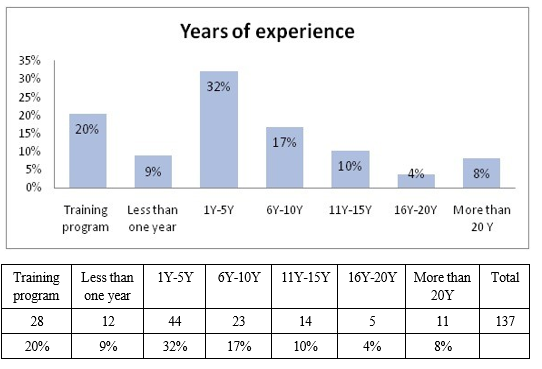
Figure 3
33% of respondents are between 1-5 years of experiences for HCWs is highest rate, than 25% between 6-10 years of experiences and19 % training program.
The years of experiences of HCWs are very important as this will help us to identify the exact causes that HCWs not comply with proper hand hygiene.
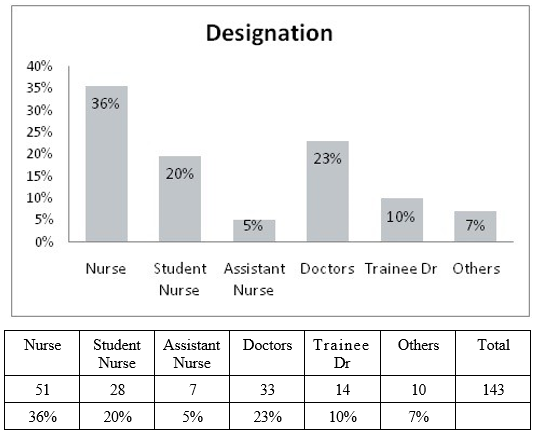
Figure 4
The survey consist all categories of health care workers in the surgical care units. The figure 4, designation shows most participants were nurses 54%, Doctors rate 32% and next student nurse rate 23%. The results displays that there are mix of HCWs titles in this study.
|
Excess Workload |
60 |
40% |
|
No disciplinary action |
55 |
37% |
|
Skin dryness & irritation |
54 |
36% |
|
Lack of Monitoring |
32 |
21% |
|
Have clean Hands |
30 |
20% |
|
Lack of reminders |
30 |
20% |
|
Shortage of Man power |
27 |
18% |
|
Sink Location |
27 |
18% |
|
No Ward Orientation |
26 |
17% |
|
No Hand Rubs |
24 |
16% |
|
Time consuming |
22 |
15% |
|
No Guidelines |
18 |
12% |
|
patients uncomfortable |
4 |
3% |
|
Not important |
2 |
1% |
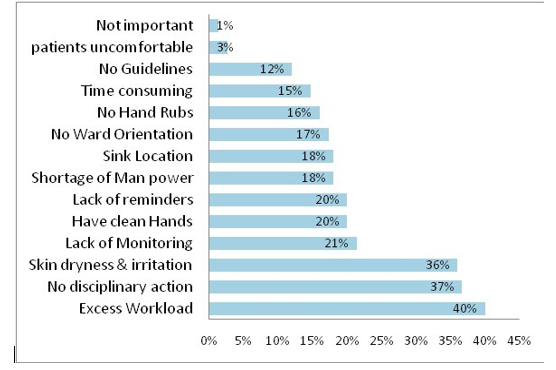
Figure 5
1- Excess work load
42% of members identified high workload adherence to hand hygiene practice and use of alcohol-based disinfectant low as HCWs believe saving life is most significant but HCWs should not be carrier of germs and spread infection, patient safety must be taken with high consideration. The staff must report to the nurse manger if there is a need to increase the rate of human resources during the excess work load, to utilize time work effectively and efficiently, also to notify hand hygiene Products are available, reachable and ready for use.
2- Skin dryness and irritation
37% of participants stated that skin reactions are associated with frequent hand washing include use of hot water, low atmospheric humidity (more common in winter months), failure to use hand lotion or cream, and automatically rough paper towels. The sheer force associated with donning and removing gloves may also contribute to dermatitis. Irritant contact dermatitis is the most common skin reaction. It causes dryness, irritation, itching, and sometimes cracking and bleeding. Damaged skin may change skin flora, resulting in more frequent colonization by Staphylococci and gram-negative bacilli.
3- No disciplinary action
34% of respondents agree that disciplinary actions should be part of a multi-branched approach to encourage and monitor hand hygiene compliance. It is necessary to define what types of disciplinary actions or penalties would be most effective.
4- Lack of reminders
21% HCWs indicated that lack of reminders affect the staff to be committed with 5moments. Nurse Managers of surgical units must remind staff members the need to perform hand hygiene if they observe a member of staff who fails to perform hand hygiene. Such reminders must be delivered politely to support all staff to achieve a high standard of patient care. Staff also has a responsibility to notify managers if hand hygiene Products are not reachable or need refilling. Use of some types of reminder techniques such as big posters, Role play or stickers can attract the staff attention for hand hygiene compliance.
5- Have clean Hands
21% staffs believed that their hands are clean since there are no clear mark of dirt visible on their hands, that means the hands of HCWs in surgical units are free of germs and they are safe care providers and for that reason the Attendance were astounded by the results provided by the detector machine on campaign day which easily detected gems on surgical employees’ hands.
6- Lack of monitoring
20 % HCWs accepted that the monitoring is very important in medical work place to guarantee compliance of proper hand hygiene in surgical units, regular auditing will identify the effectiveness and accomplishment process of education training. Hand hygiene Assessment tool/surgical units reformed (Reviewed 6types of international tools and come up with this tool) Refer to Appendix.
Conclusion
HH compliance rates among HCWs in surgical units were below the Bench mark.
Healthcare workers have reported several factors that may impact their commitment of HH practices because of patient needs taking priority, understaffing or overcrowding, forgetfulness and the HH products agents cause irritation and dryness.
Maintain patient’s safety by increasing the human resources, improving scientific awareness of proper hand hygiene.
Educate caregivers about infection rates, HH Compliance Report, and hand hygiene protocols [1-6].
Recommendations
• Collaboration of Health care workers with infection control unit for HH effectiveness in SMC.
• Regular education, training, monitoring &auditing will identify the effectiveness and accomplishment process (Liaison infection control in each unit) and using hand hygiene Assessment tool.
• Hand hygiene products must be evaluated regularly by Infection Control unit for dryness, irritation, itching, cracking and dermatitis.
• Types of disciplinary actions or penalties must be studied by high Authority for effective HH.
• Use some types of reminder techniques such as big posters, Role play or stickers that can attract the staff attention for hand hygiene effectiveness.
• Celebrate yearly the Global Hand hygiene Day 15Oct. Campaign should be planned by Doctors and nurses.
• Improve community awareness regarding hand hygiene via social media.
Please help US help â?ºYOUâ?º and your patient
Sex: ---------Age:------------- Designation: ------------Years of experience:
--------------
Please circle why you think Hand Hygiene is not optimum in Surgical Services (Maximum 3!)
• Not included in Ward Orientation.
• Shortage of Man power.
• Hand Hygiene is not important.
• It is time consuming.
• Excess Workload.
• I always have clean Hands.
• It causes dryness and skin irritation.
• Sink Location.
• Soap, Paper Towels and Hand Rubs are not available.
• Lack of Supervisor Monitoring.
• Guidelines are not available.
• No disciplinary action for non-compliance.
• Lack of reminders such as posters, training education program and colleagues.
• Examining patient after hand wash makes patients uncomfortable.
Hand hygiene Assessment Tool/Surgical unit Directorate ………….. Ward/Depart……………... Date…..……
Shift……… Auditor……... Accompanied by……..…. Start time. Finish time……..
*Health care workers (HCW) codes
|
1 |
Physicians |
6 |
Trained Practical nurse |
11 |
Physiotherapist |
|
2 |
Physician’s Assis- tant |
7 |
Medical Service Aide |
12 |
Radiology Tech |
|
3 |
Medical Student |
8 |
Nurse Student |
13 |
Dietitian |
|
4 |
Head Nurse |
9 |
Domestic Service |
14 |
Social Worker |
|
5 |
Registered Nurse |
10 |
Respiratory Therapist |
15 |
Other |
*5 moments for Hand hygiene * Hand Hygiene Action
1- Before touching patient ( Bef-Pat ) Hand wash (HW)
2- Before a procedure (Bef-Apr) Hand Rub (HR)
3- After a procedure or body fluid exposure risk (Aft.b.f) Gloves
4- After touching patient (Aft-t.Pt ) Missed
5- After touching patients surrounding (Aft-p.Sur) other

References
-
- CDC.gov (2009) General information on Hand Hygiene.Retrieved from Centers for Disease Control and Prevention.
-
- Elizabeth Pfoh MPH, Sydney Dy MD,MSc, and Cyrus Engineer PH. (2013). Making Health Care Safer II: An Updated Critical Analysis of the Evidence for Patient Safety Practices. Rockville : Agency for Healthcare Research and Quality (US).
- Hand Hygiene Policy (2010) Retrieved from NSW.gov.au.
- Lillis K (2015) Hospital Managers Can Help Drive Hand Hygiene Compliance. Retrieved from infectioncontroltoday. com
- Mathur P (2011) Hand hygiene: Back to the basics of infection control. Retrieved from ncbi.nlm.nih.gov.
- World Health Organization (2009) WHO Guidelines on Hand Hygiene in Health Care: a Summary. Retrieved from World Health Organization.