

Plant Biology Soil Health Journal(PBSHJ)
ISSN: 2996-2609 | DOI: 10.33140/PBSHJ

Research Article - (2023) Volume 1, Issue 1
Gender Participation of Orange Fleshed Sweet Potato Production Activities in FCT, Abuja, Nigeria
2Department of Agricultural Economics, Faculty of Agricul¬ture, University of Abuja, FCT, P.M.B. 117, Abuja, Nigeria
Received Date: Jun 08, 2023 / Accepted Date: Jul 10, 2023 / Published Date: Jul 10, 2023
Copyright: ©Â©2023 Samson Olayemi Sennugau, et al. This is an open-access article distributed under the terms of the Creative Commons Attribution License, which permits unrestricted use, distribution, and reproduction in any medium, provided the original author and source are credited.
Citation: Barnabas, T. M., Pam, H. D., Sennuga, S. O., Ajah, J., Fadiji, T. O., et al. (2023). Gender Participation of Orange Fleshed Sweet Potato Production Activities in FCT, Abuja, Nigeria. Plant Biol Soil Health J, 1(1), 01-10.
Abstract
Biofortified Orange Fleshed Sweet potato is rich in vitamin A and other minerals such as magnesium, phosphorus and copper. The analysis for this research was based on the field survey of OFSP farmers in the Federal Capital Territory, Abuja, Nigeria conducted in 2023. Critical research and rudimentary data collection were used to gather data. The data were analyzed using a descriptive statistics and chi-square. Based on the descriptive analysis, most of the farmers were small scale farmers having a mean farm size of 2.3 ha and average farm experience of 7.8 years. Most of the farmers were in their productive ages 50-59 years and married couple with 6-10 family size. Almost all the farmers were con- strained by conflicts with herd’s men and lack of finance (98.3% and 98.5% respectively). Furthermore, the farmers were also constrained by high cost of labour, vines and transportation, unable to sell produce, access to clean vine, distance to sources of storage facilities, access to land and thieves invasion of farm. Using a chi-square to analyze the level of farmer’s participation in OFSP production activities, male farmers were predominantly involved in site selection, bush clearing, burning, harvesting, transportation, processing, and marketing and land tillage while the female OFSP farm- ers were predominantly involved in sowing, weeding, and storage and fertilizer application.
Keywords
Gender participation, Orange fleshed sweet potato, production activities, FCT, OFSP
Introduction
Orange Flesh Sweet Potato (Ipomea batatas) a dicotyledonous plant from morning Glory family (Convolvvulaceae) is a bio-fortified crop that was first developed as a global effort in controlling Vitamin A deficiency. It is a starch staple crop that contains ascorbic acid and amino acid (lysine) which is usually deficient in cereal diets. The variety grows in tropical and sub-tropical areas. This root crop produces large amount of food per unit time and area during rainy seasons and tolerates dry season and produces higher yield in less fertile soil more than many crops [1, 2].
Orange fleshed potato is a vegetable with sweet and carrot like taste; it’s starchy and tuberous. It yields better quality on well drained, light, sandy loam or silt loam soils. OFSP variety was first developed in the world in the year 1995 by conventional breeding and its root was used in the alleviation of vitamin A deficiency in countries such as Guatemala in the 1990s [3]. Originally, there was a great reliance on white or yellow fleshed sweet potatoes in Sub-Saharan Africa which are more common but contains lower beta- carotene content compared to Orange Fleshed Sweet potato. OFSP cultivars were introduced in Africa, some were tried and grown in Kenya which includes KENSPOT-3, KENSPOT-4, KENSPOT-5K abode (NASPOT 10-0), vitea, simama, pumpkin, Japanese, Kakamega 4, local check, NASPOT 9-0, vindolotamu and vitamin A [4]. China has the highest yield of 18t/ha. The yield is relatively low in Africa having 4.7t/ha whereas Asia excluding China and Latin America yield 8.6t/ha and 7.4t/ha respectively.
In Nigeria, Governments research institute and Universities were involved in the research on Sweet potatoes. The basic research institutes involved in the research of sweet potato are: National Root Crop Research Institute (NRCRI) Umudike and International Institute for Tropical Agriculture (IITA) Ibadan. IITA has the national mandate to conduct research involving genetic improvement, production, processing, storage improvement and marketing of root and tuber crops that are of economic importance [5]. The known varieties of sweet potatoes were registered by Cr. Hahn and were letter registered by NCRI in 2001 although the varieties were all white fleshed sweet potatoes (NACGRAB, 2014). Since 1971, NCRI has been on the sweet potato research between 1972 and1974. The research activities carried out by NCRI were on germ plasm collection, pest and disease management, conservation and evaluation, post-harvest handling and processing, agronomic research and socio-economic benefits of sweet potato production.
The first OFSP that was released in Nigeria was in 2012 and called UMUSP0-1 (Umudike Sweet potato Orange one) known as King J. The name was given by Dr. Jan Low in April, 2013 in an annual meeting at Kigali Rwanda that was organized by International potato center (CIP) at the Rwanda Agriculture Board (RAB). King J. has a very high potential yield of 63.63 t/ ha. OFSP is a semi-erect plant with thick vine and very vigorous growth of dark green leaves. This variety of OFSP takes 120 days (4 months) to mature after planting and has outstanding characteristics of being resistant to sweet potato virus disease (SPVD) and tolerant to cylas spp weevil. It is light orange and contains 39% dry matter and could be consumed by man and animals. It contains: Total carotene of 7.12 µg/g fresh weight, 3.94% protein level, 19% starch, 39% dry matter. Another variety was released that year, 2012, UMUSPW-2. This is a white variety but was emphasized on orange fleshed sweet potato and seems to be kept in the background. UMUSPO-3 which is a deep orange fleshed variety was also released but not the same year with others due to the fact that members of National Varietal Release committee pointed out its yield was low in NRCRI [2]. The members argued yield alone was not a criterion for releasing a variety. It has a distinctive deep orange fleshed color with a purple creeping vine, heart shape leaf with yield potential of 31.4/ ha and takes 3-4 months to mature after planting and it is also tolerant to cylas spp weevil and sweet potato virus disease (SPVD). Although it has a very high yield, members of NVRC prevented the released due to adequate data on the released. Dr. Jude Njoku and Amadi in 2011 conducted an experiment on the “Adaption Trial of Orange Fleshed sweet Cultivars of sweet potato in Rainforest and Guinea Savannah of Nigeria which led to the released of this variety in the following year 2013 which yielded 9.0t/ha in Umudike and 40.9t/ha in Nassarawa state because it was properly presented stating all its high benefits including the non-genetically modified color. This variety of OFSP is carrot-like when consumed both the skin and the interior part is consumed. The variety is said to be natural because it is not genetically modified neither is there any gene insertion from carrot. It nutrient contents includes; 28.70% dry matter, 13.16% starch of fresh roots, 5.6% crude protein, 2.0% crude fiber, 1.7% fat content, 1.5% Ash content. 21.15% flour yield and beta carotene of 20.83 µg/100g. It has egg yolk deep orange color flesh which indicates Vitamin A content. This variety was named “Mother; s delight” by Dr. Jude Njoku in 2013.
Another variety called UMUSPO-4 which is also called SOLO GOLD was released in 2018 and potential yield of 25.61 t/ ha. Its leaves are purple and the dry matter content is higher than UMUSOP-3, this variety is resistant to sweet potato virus disease complex in a hotspot area. Dr. Nwankwo has more than 700 breed of OFSP hybrid genotypes in his collections and six purple fleshed sweet potatoes hybrid genotypes at different evaluation stages for release to communities in Nigeria [6].
Cultivation of orange fleshed sweet potato
Orange fleshed potato is a vegetable with sweet and carrot like taste; it’s starchy and tuberous in nature. It yields better quality on well drained, light, sandy loam or silt loam soils. It requires a moderate temperature of 21-60ºc. It requires a well distributed rainfall 75-150 cm and can be sole crop and intercropped with other crop such as maize, orchard crops with aim of land and profit maximization. It can tolerate drought to some extent but do not withstand water logging. A well-drained loam and clay loam soil are good for sweet potato cultivation. Heavy clayey soil prevents storage root development as a result of compactness but sandy soil encourages long cylindrical pencil like root. Sweet potatoes thrive on acidic soil having a PH of 5.5-6.5 where as higher PH causes pox and scurf disease and lower PH level causes aluminum toxicity therefore sweet potato is sensitive to salinity and alkalinity. OFSP does not require much fertilizer to grow but could be applied on soils that are not rich in nutrients and is advisable to apply organic fertilizer than an inorganic one. The planting material used for OFSP is vine cutting.
Utilization of orange fleshed sweet potato (value chain)
Orange fleshed sweet potato is an important food crop if widely cultivated and consumed would go a long way in reducing level of malnutrition in children. It is beneficial to people who are down with illness like diabetes, cancer, anthriris, stomach ulcer; other functions include reduction of stress, eye sight improvement, boost fertility and help to prevent illness. This crop requires fewer input compared to the white potato and less labour not excluding its tolerant to marginal growing conditions than any other crop. There is need to adopt the cultivation and consumption of this food and cash crop because it contains beta-carotene which specifies the presence of vitamin A and 125 g of this root crop would give the required quantity the body needs for development. This food crop boosts the immune system and help to prevent serious condition like early onset blindness. Every parts of the crop is consumed from the root to the leaves and the chaff from processing (the skin which is healthy and prescribed for treatment of ulcer) and its early maturity date (3-4months) makes it more resistance to many common pests that affects other crop in Nigeria. The leaves of OFSP contains chlorogenic acid, aphenolic compound that suppresses obesity in man [7]. Apart from vitamin A, the crop is also rich in vitamin B, c and other minerals such as phosphorus, calcium, potassium, iron, magnesium, copper, nitrogen and zinc than what is contained in vegetables.
OFSP root can be eaten fresh with the skin like carrot which is medicinal for ulcer patient. It can be grinded and smash into flour to make chin chin, juice or OFSP is grated and mashed into powder which is also known as puriee. OFSP can be used for both domestic and industrial purpose in producing chinchin, bread, chips, crips, cakes, flour, juice and other bakery product. In Asian countries, sweet potato prickles and cubes are produced commercially and are known for B-carotene rich property. Some OFSP roots are grown in Idonesia (Beta 1 and Beta 2) are high in moisture content and are not consumed directly as root but in derivative form which is therefore processed and serve as functional ingredients. OFSP puriee are used as ingredients in food processing for more than 3 decades, OFSP could serve as ingredients in the US [8].
Comparisons between OFSP varieties and non-OFSP varieties
Orange Fleshed Sweet Potato has a sweet taste than the white or yellow fleshed potato and they are love by children. It has higher nutritional value compared to other varieties. OFSP variety is also more important than other varieties of sweet potato in taste, yield and early maturity.
The disadvantages of OFSP to non- OFSP is its genetic characteristics of been susceptible to root rot, pest and disease which is a general problem to sweet potatoes and drought. Vine scarcity is another disadvantage of OFSP which may be as a result of its susceptibility to drought and comparable pricing difficult which may result heavy losses for the farmers.
Research Objectives
The broad objective for this study is the level of gender involvement in orange fleshed sweet potatoes production activities. The specific objectives are to:
• Describe the socio-economic characteristics of orange fleshed sweet potatoes farmers in FCT.
• Ascertain the level of gender involvement in orange fleshed sweet potatoes production activities in FCT.
• Ascertain the reasons for gender participation in the production activities of orange fleshed sweet potatoes.
• iv. Identify the constraints faced by orange fleshed sweet potatoes farmers residing in Federal Capital Territory (FCT).
Hypothesis
Hypothesis was drawn from the above objective.
Hο: There is no significant difference between male and female orange fleshed sweet potatoes farmers in production activities.
Methodology
Description of the Study Area
The study was carried out in FCT, Federal Capital Territory Abuja. Abuja is the capital Territory of Federal Republic of Nigeria which is located within longitude 9.07°N and 7.6°E and latitude 80.28' and 80.54' North of the Equator occupying 1769squareKm. The city of Abuja experiences double of thunderstorm [9]. The Tropical continental air mass iscold, dusty and dry due to its Saharan origin while the Tropical maritime air mass is often warm and moist because it originate from Atlantic Ocean [10]. Abuja is made up of six (6) Area council's which includes; Abuja municipal, Abaji, Bwari, Gwagwalada, Kuje and Kwali. Abuja has a rich soil for Agricultural practices and good equitable climate that is neither too hot nor cold. All year round FCT experiences two weather conditions in a year which includes; rainy season which begins from March and runs through October and the dry season which begins from October and ends in March. Within this period, there is hamarttan occasioned by the North east trade wind with a dusty Haze and intense coldness and dryness. Therefore rainy seasons begin from April and ends in October. The major crops cultivated include yams, beans, maize, millet and sorghum. The territory has an area of 2,824 square mile and estimated population of 3,652,000 from the last population census in 2006 which was 1,406,239. The population comprises of Koro, Afo, Gwandara, Ganagana, Gwari and Bassa ethnic groups, Hausa and Fulani also live in the area. An important feature of this area is the frequent occurrence of squall lines heralded by the thunderstorm, lightening, strong winds and high intense rainfall.
Sampling Technique and Sample Size
The sample frame for the study covers 60 male and 60 female OFSP farmers residing in the FCT. The sample size was from households that engage in OFSP production activities in Federal Capital Territory (FCT).
Gwagwalada and Kwali Area council were purposely selected from the six zones in FCT in the first stage. Two wards were purposely selected from Gwagwalada area council and one ward was purposely selected from Kwali Area council. Two cells were randomly selected from each zone. Multi stage sampling technique was used to select the sample size for this study.
The sampling design for this study was based on the zoning pattern of Federal Capital Territory Abuja-Agricultural Devel-opment Project. Gwagwalada zone and Kwali zone were select¬ed from the six zones in the first stage. Two (2) blocks from Gwagwalada zone and one block from Kwali zone were selected in the second stage, which include; Paiko-kore and Dobi from Gwagwalada zone; and Kilankwa from Kwali zone because of the high population of OFSP farmers in the selected blocks. In the third stage, two (2) villages were selected from each of the blocks giving a total of six (6) villages which includes: Paiko-kore, Passo, Kwalita, Pete, Kilankwa 1&2 and Sheda 1&2. 20 farmers were randomly selected from each of the villag¬es to make up 120 respondents (7.27% of 1650 OFSP farmers). Therefore 120 respondents who are OFSP farmers were used as the sample size of the study. 120 respondents include; 60 male and 60 female OFSP farmers.
Method of Data Collection
Primary data was collected for this study. A well-structured questionnaire was administered to 120 OFSP farmers (men and women) to collect the primary data. Quantitative data was used for this study. Primary data that was collected was based on socio-economic characteristics of OFSP farmers such as sex, age, marital status, household size, farming experience etc.
Data Analysis
The tools that were employed for data analysis include descrip- tive statistics and chi-square.
Objective one: The use of descriptive statistics was used to describe the socio-economic statistics of the respondents. The tools include; frequencies, percentages and mean.
Objective two: The use of chi-square was used to analyze the level of gender involvement in the production of OFSP production activities by comparing independent variables
Objective three: The use of descriptive statistics was used to determine the reasons for gender participation in OFSP production.
Objective four: The use of descriptive statistics was used to identify the constraints faced by OFSP farmers in the production of OFSP.
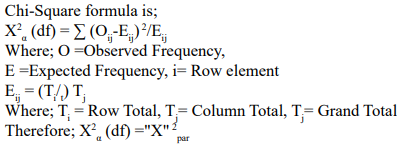
Hypothesis: Chi-square test was used to test the hypothesis. Chi-Square formula is;
Results and Discussion
Socio Economic Characteristics of Orange Fleshed Sweet Potato (Ofsp) Farmers in the Study Area
The age distribution of the Orange Fleshed Sweet Potatoes (OFSP) farmers is shown in Table 1. The result revealed that majority of the male OFSP farmers were between the ages of 50-59 years with an average age of 50 years. This showed that they were no longer in their active age. This is in agreement with the report of Adepoju, Fafau, Sanusi and Onabamiji (2017) which stated that OFSP adopters had a mean age of 51.52 years and are not in their active age. Majority of the female OFSP farmers were between the ages of 40-49 years with average of 46 years; this showed that they are in their productive age. The age limits is in accordance with the findings of Onyegbula (2017) and Jane, Ifeoma and Ifeanyi (2020) which stated that OFSP farmers were in their productive and economic age since the age group is 40- 49. However, the mean age of the male was relatively higher than their female counterparts.
Table 1 presents the marital status of OFSP farmers. It revealed were involved there could be a high chance of large household size that may substitute farm labour. Table 1 also revealed the farming experience of OFSP farmers. Experience Exposes one to primitive cultural practices and better understanding of OFSP production. The result showed that majority 67.5% of the overall OFSP farmers had 6-10years farm experience, while the least percentage 14.2% of the farmers had more than ten (10) years farm experience. Since many of the farmers had 6-10 years of experience, they may be pessimistic in trying new techniques of production.
Farming experience indicates practical knowledge acquired. The mean farming experience of the entire sample size is 4.67 and it is in support of the findings of [11]. The result further revealed that more female farmers (80%) had higher farming experienced than their male counterparts (55%).
Majority 46.7% of the total OFSP farmers had tertiary education and 26.7% (32) farmers had completed secondary school. This indicates that majority of the farmers had formal education and would be able to receive, decode and comprehend relevant information and adopt innovation because education plays a major role in the adoption of innovation, improved technology and increases the awareness and reception of improved variety than uneducated farmers [12, 13]
|
Variables |
Male Freq. |
(%) |
Female Freq. |
(%) |
Total |
(%) |
|
|
Age (years) |
|
|
|
|
|
|
|
|
20-29 |
2 |
3.3 |
3 |
5.0 |
5 |
4.2 |
|
|
30-39 |
6 |
10.0 |
12 |
20.0 |
18 |
15.0 |
|
|
40-49 |
18 |
30.0 |
26 |
43.3 |
44 |
36.7 |
|
|
>49 |
34 |
56.6 |
19 |
31.7 |
53 |
44.2 |
|
|
Mean |
50 |
|
46 |
|
48 |
|
|
|
Marital Status |
|
|
|
|
|
|
|
|
Married |
50 |
83.3 |
40 |
66.7 |
90 |
75 |
|
|
Single |
3 |
5.0 |
7 |
11.7 |
10 |
8.3 |
|
|
Divorce |
2 |
3.3 |
2 |
3.3 |
4 |
3.3 |
|
|
Separated |
1 |
1.7 |
13 |
21.7 |
39 |
32.5 |
|
|
Widow/widower |
4 |
6.7 |
8 |
13.3 |
12 |
10 |
|
|
Years of OFSP Farming Experience |
|||||||
|
1-3 |
14 |
23.3 |
8 |
13.3 |
22 |
18.3 |
|
|
6-10 |
33 |
55 |
48 |
80 |
81 |
67.5 |
|
|
>10 |
13 |
21.7 |
4 |
6.7 |
17 |
14.2 |
|
|
Mean |
7.9 |
|
7.7 |
|
7.8 |
|
|
|
Educational Level |
|
|
|
|
|
|
|
|
No formal education |
7 |
11.7 |
10 |
16.7 |
90 |
14.2 |
|
|
Primary school |
7 |
11.7 |
8 |
13.3 |
15 |
12.5 |
|
|
Secondary school |
15 |
25 |
17 |
28.3 |
32 |
26.7 |
|
|
Tertiary institution |
31 |
51.7 |
25 |
41.7 |
56 |
46.7 |
|
|
Household Size |
|
|
|
|
|
|
|
|
1-5 |
20 |
33.3 |
24 |
40.0 |
44 |
36.7 |
|
|
6-10 |
33 |
55.0 |
32 |
53.3 |
65 |
54.2 |
|
|
>10 |
7 |
11.7 |
4 |
6.7 |
11 |
9.2 |
|
|
Mean |
6.9 |
|
6.3 |
|
6.6 |
|
|
|
Farm Size (ha) |
|
|
|
|
|
|
|
|
1-2.9 |
50 |
83.3 |
52 |
86.7 |
102 |
85.0 |
|
|
3-4.9 |
9 |
15.0 |
8 |
13.3 |
17 |
14.2 |
|
|
>4.9 |
1 |
1.7 |
0 |
0.0 |
1 |
0.8 |
|
|
Mean |
2.3 |
|
2.3 |
|
2.3 |
|
|
Source: Field survey, 2023
Table 1: Socio Economics Characteristics of OFSP Farmers
The report revealed that more male farmers had completed secondary and tertiary education compared to the female farmers (25%, 51.7% and 28.3%, 41.7% respectively). This simply implies that male counterparts had higher rate of adopting a new technology on improved potato [14]. Although Orinda (2013) stated that sweet potato is termed “ferminist crop” because men were not interested in the root since they were not sold. The possible reasons for a lower percentage of female farmers could as a result of poor access to production resources, socio-cultural factor, poor decision power and norms of the society [15].
The Table 1 also revealed the household sizes of each farmer. The overall majority farmers 54.2% had between 6-10 household sizes. The overall household size mean was 6.6 for both male (6.9) and female (6.3) farmers. This indicated that the majority of the overall farmers had fairly large household size which simply indicates the availability of man power (labour force) for OFSP production, hence the need for hired labour is likely to be reduced. This is in agreement with Adepoju, Raufu, Sanusi and Onabamiji (2017) which reported that OFSP adopters had fairly large household size ranging between 4-6 household sizes. [16]. Mignouna, Rusike, Mutsabazi and Senkondo (2014) that household size also plays important role in adoption of technology and innovation.
Majority (85%) of the total OFSP farmers had 1-2.9 ha of land for cultivating OFSP which include male and female farmers respectively. More male farmers (15%) compared to their female counterparts (13.3%) had between 1-2.9 hectares of land. The farm size is an important factor in crop production which determines the output or income. It indicates the chances at which the respondents would produce OFSP on the field and increased interest for its perceived health benefit. The result also indicated the overall mean farm size is 2.3ha for both male and female (2.3 for each) and it agrees with the result of Bose, Jatbong, Danwaka and Dalhatu (2020). Ahmad, Ortmann, Wale, Darroch and Lawi (2017) reported that in his research majority of the farmers are small-scale farmers. Farmers might have cultivate OFSP on a small plot because of poor knowledge on OFSP benefit and difficulty in selling produce [17].
Land Tenure System
The result in Table 2 describes the kind of land tenure system that OFSP farmers were involved in. This showed that majority of the farmers 29.2% farmers used family land, 28.3%farmers inherited the land, 22.5% purchased the land, 10.8% farmers acquired the land on lease while 5% indicated that they used communal land and finally the least farmers 4.2% indicated that the land belongs to the government.
|
|
Male |
|
Female |
|
Total |
|
|
Land tenure system |
Freq |
% |
Freq |
% |
Freq |
% |
|
Purchase |
7 |
11.7 |
20 |
33.3 |
27 |
22.5 |
|
Leased |
3 |
5.0 |
8 |
13.3 |
13 |
10.8 |
|
Inherited |
23 |
3.3 |
11 |
18.3 |
34 |
28.3 |
|
Communal |
2 |
3.3 |
4 |
6.7 |
6 |
5.0 |
|
Family land |
20 |
33.3 |
15 |
25.0 |
35 |
29.2 |
|
Government land |
3 |
5.0 |
2 |
3.3 |
5 |
4.2 |
Source: Field survey, 2023
Table 2: Land tenure system practiced the farmers
|
|
Male |
|
Female |
|
|
Total |
|
|
Fertilizer |
Freq. |
(%) |
Freq. |
(%) |
Freq. |
|
(%) |
|
Yes |
10 |
16.7 |
8 |
13.3 |
18 |
|
15.0 |
|
No Agrochemical Yes |
50
13 |
83.3
21.7 |
52
20 |
86.7
33.3 |
102
33 |
|
85.0
27.5 |
|
No |
47 |
78.3 |
40 |
66.7 |
87 |
|
72.5 |
Source: Field survey, 2023
Table 3: Farmers Application of Agrochemicals
The result also revealed that 33.3% male and 2.5% female farmers used family land while 38.3% male and 18.3% female farmers inherited the land. However, majority of the land used for cultivation were family or inherited land. This corroborates with the report of the World Bank and federal ministry of agriculture and rural development (2016) that most of the land owners inherited their land or used family land. National Bureau of statistics indicated that majority of the land used for production in Sub-Saharan Africa are either family or inherited. 33.3% female and 11.7% male farmers purchased their land while more13.3% female than 8.3% male farmers acquired theirs by lease. This explains that more women acquired their land by purchase and leased compared to men and it is in agreement with who discovered that family or inherited land is the most prevalent among male farmers. 6.7% female and 3.3% male farmers made used of communal land while 5% male farmers 3.3 % female farmers made use of government land [18].
The overall majority 85% of the OFSP farmers did not apply fertilizer while 15% farmers applied fertilizer. The result further revealed that there was no distinct difference of fertilizer application between the male and female farmers. Fertilizer tends to increase the output of the crop. The result implies that low input result to poor production. Among the male category, 90% farmers did not apply fertilizer while 10% farmers apply fertilizer. Meanwhile, the female category had the highest percentage 86.7%of farmers who did not apply fertilizer while 13.3% apply fertilizer. Farmers indicated that high cost of fertilizer and the nutritic value of OFSP could be the possible reasons for not applying fertilizer.
The result also revealed that 87% of the sample size and did not apply agrochemicals in 2022 while 27.5% applied agrochemicals. The result further reveals that among the male counterparts, 78.3% farmers said “No” to agrochemical application while 21.7% farmers indicated “Yes” to agrochemicals application. Among the female counterparts, 66.7% (40) farmers indicated “No” to agrochemical application while 33.3% farmers said “Yes” to agrochemical. This implies that majority of the farmers including the male and female category did not apply agrochemicals and this could be as a result of large household size to do farm labour.
Membership of Organizations
The result in Table 4 indicates that 63.3% of the overall OFSP farmers were members of the cooperative society while 36.7% of the respondents were not members of cooperative society. This simply implies that the farmers were prone to access farm inputs and incentives which could in turn improve the productivity of the crop. This corroborates with the findings of that out of the majority of sweet potatoes farmers who were members of the cooperative society had access to credit [19].
|
|
Male |
|
Female |
|
||
|
|
Freq |
(%) |
Freq |
(%) |
Total |
(%) |
|
OFSP producers association Yes |
15 |
25.0 |
20 |
33.3 |
35 |
29.2 |
|
No |
45 |
75.0 |
40 |
66.7 |
85 |
70.8 |
|
Cooperative society Yes |
36 |
60.0 |
40 |
66.7 |
76 |
63.3 |
|
No |
24 |
40.0 |
20 |
33.3 |
44 |
36.7 |
|
Source: Field survey, 2023 |
|
|
|
|
|
|
Table 4: Membership of Organizations
The result also revealed that in the male category, 60% farmers were members of the cooperative society while 40% farmers were not members of cooperative society. In the female category, 66.7% farmers were members of the cooperative society while 33.3% farmers were not members of the cooperative society. Since more male farmers compared to female were members of cooperative society; this imply that more male farmers have access to credit and farm inputs than female farmers. Majority of the farmers who belongs cooperative society indicated that they were members of market women association.
The result further revealed the membership to OFSP producers association. 70.8% of the OFSP farmers were not members of OFSP producers association while 29.2% were members of OFSP producers association. Majority of both male and female farmers (75% and 66.7% respectively) were not members of OFSP producers association while 25.0 %and 33.3% were members of the producers association. This implies that farmers may have poor knowledge in the nutritive value, poor access to technologies and information related to OFSP. This is in accordance to the findings of who reported that due to poor membership in OFSP production but despite the high involvement of members in cooperative society, they may lack information or technologies related to OFSP as the cooperative society is in a local setting [20].
Furthermore, the result on OFSP producers association revealed that in the female category, 33.3% were members of cooperative society while 66.7% were not members the association. In the male category, 25% farmers were members of OFSP producers association while 75% farmers were not members of the association. Female farmers had higher membership percentage compared to male farmers which indicated the interest of female farmers to OFSP production than the male counterparts. This finding is in support of Orinda (2013) which reported that sweet potato is majorly done by women in Nigeria [21].
Level of Gender Involvement in OFSP Production Ac-tivities
To measure the level of gender participation in orange fleshed sweet potato production activities a 3 point likert scale (always =3, sometimes =2, never =1) was adopted. Table 5 reveals the mean values for site selection (male mean = 2.95, female mean = 2.75),bush clearing (male mean = 2.92, female mean = 2.25), burning (male mean = 2.07, female mean = 2.02), harvest (male mean = 3.00, female mean = 2.88), transportation (male mean 2.92= , female mean = 2.82), processing (male mean = 2.40, female mean = 2.37), marketing(male mean = 2.92, female mean = 2.78), sowing (male mean = 2.90 , female mean = 2.97), weeding (male mean = 2.85, female mean = 2.88), storage (male mean = 2.58, female mean = 2.63), fertilizer application (male mean = 1.13, female mean = 1.15) and land tillage(male mean = 2.83, female mean = 2.58). Agbarevo and Okringo (2019) stated that sweet potato is the major arable crop that is promoted by National Root crops Research Institute Umudike to encourage farmer’s adoption and participation because of its nutritional and economic benefit [21].
|
Production activities |
Male Mean |
Female Mean |
Significance |
|
Site selection |
2.95 |
2.75 |
0.004*** |
|
Bush clearing |
2.92 |
2.25 |
0.000*** |
|
Burning |
2.07 |
2.02 |
0.765 NS |
|
Land tillage |
2.83 |
2.58 |
0.001*** |
|
Sowing |
2.90 |
2.97 |
0.272 NS |
|
Weeding |
2.85 |
2.88 |
0.789 NS |
|
Fertilizer application |
1.13 |
1.15 |
0.901 NS |
|
Harvest |
3.00 |
2.88 |
0.013** |
|
Transportation |
2.92 |
2.82 |
0.178NS |
|
Storage |
2.58 |
2.63 |
0.338 NS |
|
Marketing |
2.92 |
2.78 |
0.065 NS |
|
Grand mean |
2.62 |
2.51 |
|
*** Significant at 0.01; ** Significant at 0.05; NS Not significant
Source: field survey, 2023
Table 5: Level of gender participation
The result also revealed that there was a significant difference in gender participation in site selection (male mean = 2.95, female mean = 2.75), bush clearing (male mean = 2.92, female mean = 2.25), land tillage (male mean = 2.83, female mean = 2.58) and harvest (male mean = 3.00, female mean = 2.88). This implies that male farmers were predominantly involved in site selection, bush clearing, burning, harvest, transportation, processing, marketing and land tillage in the study area. More male farmers were involved in land tillage and it is in agreement with the report of that men were more involved in tillage in the study area [23]. More male were actively involved in harvesting but this is in disagreement with the result of that female farmers were more involved in harvest in the study area [24]. Although there was no significant difference in burning, sowing, weeding, fertilization application, transportation, storage and marketing activities in OFSP production; however the male OFSP farmers were relatively more involved in bush burning (male mean = 2.07, female mean = 2.02), transportation (male mean 2.92=, female mean = 2.82) and marketing (male mean = 2.92, female mean = 2.78). On the other hand, the female farmers were relatively more involved in sowing (male mean = 2.90, female mean = 2.97), weeding (male mean = 2.85, female mean = 2.88), storage (male mean = 2.58, female mean = 2.63) and fertilizer application (male mean = 1.13, female mean = 1.15). The result corroborates with the findings of that Nigerian women play major roles in key farming operations such as planting, weeding and harvesting [25].
Reason for Cultivating Orange Fleshed Sweet Potato
The reason for cultivating OFSP varies from person to person. Table 6 revealed that 70.0% farmers planted OFSP for both family and commercial purpose, 38.3% farmers planted OFSP for its health benefits, 25% farmers planted OFSP for family consumption, 58.3% farmers planted OFSP for only itscommercial purpose and 8.3 % farmers planted OFSP to secure farm land. The result further revealed that in the male category, 33.3% farmers planted OFSP for both family and commercial purpose. The result is in support of the findings of that the willingness to sell OFSP was serve as the encouraging factor for farmer’s participation in OFSP production [26].
|
Male |
|
Female |
|
||
|
Freq |
(%) |
Freq |
(%) |
Total |
(%) |
|
Variables |
|
|
|
|
|
|
commercial purpose 15 |
25 |
20 |
33.3 |
35 |
58.3 |
|
Family consumption 10 |
16.7 |
5 |
8.3 |
15 |
25.0 |
|
Both commercial and family 20 |
33.3 |
22 |
36.7 |
42 |
70.0 |
|
secure farm land 3 |
5 |
2 |
3.4 |
4 |
3.3 |
|
Health benefits 12 |
20 |
11 |
18.3 |
27 |
22.5 |
Source: field survey, 2023
Table 6: Reasons for cultivating OFSP
Some farmers planted OFSP for its health benefits (20 %), 25% farmers planted OFSP only its commercial purpose, 16.7% farmers planted OFSP for family consumption, 5% farmers planted OFSP to secure farm land. While female category, 36.7% farmers planted OFSP for both family and commercial purpose, 18.3% farmers planted OFSP for its health benefits, 8.3% farmers planted OFSP for family consumption, 33.3% farmers planted OFSP for only its commercial purpose and 3.4 % farmer planted OFSP to secure farm land.
Constraints Faced by OFSP Farmers in Production
Table 7 revealed that the farmers were constrained by conflicts with herdsmen(98.3%), lack of finance (97.5%), high cost of labour (96.7%), high cost of vine (94.2%), access to clean vine (88.3%), thieves invasion (88.3%), lack of storage facilities (84.2%), high cost of transportation (83.3%), distance to source of vines (75.8%) and unable to sell produce (73%). This report is in agreement with Adesina, Abdulrasheed, Okoye, Ekah, Anedo and Afuape (2016) who reported that the major constraints OFSP farmers faced were inadequate capital and high cost of vine. This result showed that lack of access to land (54.2%) and unable to sell produce (60.8%) were the least problem faced by OFSP farmers. This is an agreement with the report of which reported that OFSP vines and roots were more expensive than white fleshed sweet potato (WFSP) [27]
Male Female
|
|
Freq. |
(%) |
Freq. |
(%) |
Total |
|
Constraints |
|
|
|
|
|
|
Lack of finance |
58 |
98.3 |
59 |
96.7 |
117 |
|
lack of access to land |
29 |
60.0 |
36 |
48.3 |
65 |
|
High cost of transportation |
52 |
80.0 |
48 |
86.7 |
100 |
|
Unable to sell produce |
44 |
48.3 |
29 |
73.3 |
73 |
|
Lack of storage facilities |
52 |
81.7 |
49 |
86.7 |
101 |
|
Thieves invasion of farm |
52 |
90.0 |
54 |
86.7 |
106 |
|
Conflicts with herdsmen |
60 |
96.7 |
58 |
100.0 |
118 |
|
High cost of vine |
56 |
95.0 |
57 |
93.3 |
113 |
|
Access to clean vine |
52 |
90.0 |
54 |
86.7 |
106 |
|
Distance to source of vines |
47 |
73.3 |
44 |
78.3 |
91 |
|
High cost of labour |
58 |
96.7 |
58 |
96.7 |
116 |
*Multiple responses
Source: Field survey, 2023
Table 7: Constraints faced by OFSP farmers
Farmers were actively involved in the OFSP production activities ranging from land tillage to land clearing and weeding down to processing and marketing.
The study encourages the participation of both male and female farmers in orange fleshed sweet potato production because of its multidimensional benefits and potential of attaining food security in various household and the nation (Nigeria) [28-36].
Conclusion
The study concluded that level of participation of male is higher than the female farmers although both male and female farmers were actively involved in the OFSP production activities ranging from land tillage to land clearing and weeding down to processing and marketing. Some major problems faced by the farmers were conflicts with herdsmen, thief’s invasion, high cost of labour, and poor access to clean vines, lack of storage facilities and lack of access to land. Hence, gender participation needs to be eradicated at the gross level the female farmers although both male and female farmers were actively involved in the OFSP production activities ranging from land tillage to land clearing and weeding down to processing and marketing.
Recommendations
The study encourages the participation of both male and female farmers in orange fleshed sweet potato production because of its multidimensional benefits and potential of attaining food security in various household and the nation (Nigeria).
• The need to combat malnutrition among large populace of Nigeria pregnant women and children below five years of age, therefore the government should enact policy to encourage OFSP production.
• Government should enact policy that will enable female to easily acquire land which will encourage them to plant orange fleshed sweet potato.
• Government should create adequate security for the farmers to combat the problems of conflicts with herdsmen and thief’s invasion Research institute should be adequately funded to produce enough orange fleshed sweet potato so that people can have easy access to clean vines and reduction in the cost of the vines. Men and women farmers should be encouraged to join cooperative society and OFSP producers association so that they can enjoy the benefits it provides.
References
- Woolfe, J. A. (1992). Sweet potato: an untapped food resource. Cambridge University Press.
- Iheonu, M. E., Sennuga, S. O., Ezike, D. N., Funso, O., & Bankole, A. O. L. (2023). Communication Methods' Efficacy in Getting Smallholder Farmers to Embrace Orange Fleshed Sweet Potato (OFSP) Technology in Gwagwalada, FCT, Nigeria. Direct Research Journal of Agriculture and Food Science, 11(3), 67-77.
- Talsma, E. F., Melse-Boonstra, A., & Brouwer, I. D. (2017). Acceptance and adoption of biofortified crops in low-and middle-income countries: a systematic review. Nutrition reviews, 75(10), 798-829.
- Low, J. W., Mwanga, R. O., Andrade, M., Carey, E., & Ball, A. M. (2017). Tackling vitamin A deficiency with biofortified sweetpotato in sub-Saharan Africa. Global food security, 14, 23-30.
- Nwosu, K.I. (2012). Agriculture rebirth for improved production in Nigeria.A key note paper that was presented at the 39th annual conference of the Agriculture Society of Nigeria, University of Benin, Nigeria.
- Nwankwo, I.I.M., Ikoro, A.I., Akinbo, O.K., Okeagu, O.D. and Korieocha, J.N., (2019). History of Development and Impact of Orange Fleshed Sweet potato varieties in Nigeria-A Review.International Journal of Agricultural Research, Sustainability, and Food Sufficiency (IJARSFS). 6(4):386-401
- Williams, D. J., Edwards, D., Hamernig, I., Jian, L., James, A. P., Johnson, S. K., & Tapsell, L. C. (2013). Vegetables containing phytochemicals with potential anti-obesity properties: A review. Food Research International, 52(1), 323-333.
- Ginting, E., & Yulifianti, R. (2015). Characteristics of noodle prepared from orange-fleshed sweet potato, and domestic wheat flour. Procedia Food Science, 3, 289-302.
- Ochei, M. C., Orisakwe, I. C., & Oluleye, A. (2015). Spatial, seasonal and inter-seasonal variations of thunderstorm frequency over Nigeria. African Journal of Environmental Science and Technology, 9(12), 810-833.
- Akinsanola, A. A., & Ogunjobi, K. O. (2014). Analysis of rainfall and temperature variability over Nigeria. Global Journal of Human-Social Science: B Geography, geo-sciences, environmental disaster management, 14(3), 1-17.
- Chah, J. M., Anugwa, I. Q., & Nwafor, I. M. (2020). Factors driving adoption and constraining the non-adoption of biofortified orange fleshed sweet potatoes (OFSP) among farmers in Abia State, Nigeria. Journal of Agriculture and Rural Development in the Tropics and Subtropics (JARTS), 121(2), 173-183.
- Mbanaso, E. O., Agwu, A. E., Anyanwu, A. C., & Asumugha, G. N. (2012). Assessment of the extent of adoption of sweetpotato production technology by farmers in the southeast agro-ecological zone of Nigeria. Journal of Agriculture and Social Research (JASR), 12(1), 124-136.
- Sanusi, M. K., Tijani, S. A., & Akinsokeji, O. A. (2016). Level of utilisation of modern processing technologies among Shea butter processors in Kwara State, Nigeria. Nigerian Journal of Rural Sociology, 16(2202-2019-1115), 39-45.
- Adeola, R. G., Ogunleye, K. Y., & Adewole, W. A. (2019). Adoption intensity determinants for improved sweet potato varieties among farmers in Nigeria. International Journal of Agricultural Management and Development (IJAMAD), 9(1047-2019-3477), 203-211.
- Mignouna, B., Manyong, M. Rusike, J. Mutabazi, S. and Senkondo, M. (2011). Determinants of adopting.Imazapyr-Resistant maize Technology and it's impacts on household income in Western Kenya. AgBioforum. 14(3): 158-163.
- Mbanaso, U., Chukwudebe, G., & Atimati, E. (2015). Nigeria's evolving presence in cyberspace. The African Journal of Information and Communication, 2015(15), 106-113.
- Alalade, O. A., Oladunni, O. A., Adisa, R. S., Olayode, O. O., & Paul, A. B. (2019). Effect of value addition on farm income of sweet potato farmers in Kwara State, Nigeria. Journal of Agricultural Extension, 23(4), 92-98.
- Ekenta, C., Mohammed, A. B., Afolabi, O. K., & Owolagba,E. F. (2012). Maize in Livestock Foods in Kogi State: Analysis of Livestock Food Security Gap.
- Bergh, K., Orozco, P., Gugerty, M. K., & Anderson, C. L. (2012). Sweet potato value chain: Nigeria. Evans School Policy Analysis and research (EPAR). Brief, (220).
- Babatunde, R. O., Omoniwa, A. E., & Adeniyi, A. E. (2019). Orange fleshed sweet potatoes (OFSP) and productivity: the case of smallholders in Kwara State, Nigeria. Agricultura Tropica et Subtropica, 52(3-4), 105-111.
- Orinda, M. A. (2013). Analysis of factors influencing sweet potato value addition amongst smallholder farmers in Rachuonyo South District, Kenya (Doctoral dissertation, Egerton University).
- Agbarevo, M. B., & Okringbo, J. I. (2020). Effect of Technologies of National Root Crops Research Institute, Umudike on Poverty Reduction among Farmers in Umuahia Agricultural Zone, Abia State. Journal of Community & Communication Research, 5(1), 84-90.
- Nnaji, J. O., Okonkwo, K. E., Abdulshakur, M. M., Yusuf, A. A., & Olanipekun, O. A. Comparative Analysis of Gender Participation in Rice (Oryza Sativa) Production Inenugu State, Nigeria.
- Ani, E. I. (2013). Africa and the prospects of deliberative democracy. South African Journal of Philosophy, 32(3), 207-219.
- Adedayo, A., & Tunde, A. M. (2013). Challenges of women in urban agriculture in Kwara State, Nigeria. Sustainable Agriculture Research, 2(526-2016-37773).
- Adesina, B. A., Abdurrasheed, M. D., Okoye, A. C., Ekah, E. O., Anedo, E. O., & Afuape, S. (2017). Farmers’ willingness to pay for quality orange fleshed sweetpotato (OFSP) vines in North Central Nigeria: A case of Benue and Nasarawa States. Nigeria Agricultural Journal, 48(1), 110-121.
- Chilala, A., & Kajoba, G. M. (2017). Diffusion of orange fleshed sweet potatoes by smallholder farmer households in Petauke Distric, Zambia. American Journal of Environmental Protection, 5(1), 13-19.
- Adepoju, A.A, Raufu, M.O, Sanusi, W.O and Onabamji,O.A (2017). The Effect of Bio-fortified Orange Fleshed Sweet Potato A doption on Farming Household Welfare in Osun State Nigeria. International Journal of political science and Development. 5(4):145-155.
- Kaguongo, W., Ortmann, G., Wale, E., Darroch, M., & Low,J. W. (2012). Factors influencing adoption and intensity of adoption of orange flesh sweet potato varieties: Evidence from an extension intervention in Nyanza and Western provinces, Kenya. African Journal of Agricultural Research.
- Akinbile, C. O. (2010). Behavioural pattern of upland rice agronomic parameters to variable water supply in Nigeria. Journal of Plant Breeding and Crop Science, 2(4), 073-080.
- Bose, A. A., Jatbong, J. N., Danwanka, H. A., & Dalhatu, A. (2020). Factors influencing gross income on sweet potato production in Toro local government area of Bauchi State, Nigeria. International Journal of Agricultural Research and Food Production, 5(2), 18-35.
- Jenkins, M., Shanks, C. B., Brouwer, R., & Houghtaling, B. (2018). Correction to: Factors affecting farmers’ willingness and ability to adopt and retain vitamin A-rich varieties of orange-fleshed sweet potato in Mozambique. Food Security, 10, 1521-1523.
- Nwakor, F. N. (2021). Assessment of the Level of Orange Fleshed Sweet Potato Production among Small Scale Women Farmers in Abia State, Nigeria. Nigeria Agricultural Journal, 52(3), 325-331.
- Bamiro, O. M., & Aloro, J. O. (2013). Technical efficiency in swamp and upland rice production in Osun State. Scholarly Journal of Agricultural Science, 3(1), 31-37.
- Onyegbula, C. B. (2017). Rice farmers perception of effects of climate change on rice development stages in Niger State. Journal of Agricultural Extension and Rural Development, 9(2), 14-19.
- World Bank. (2019). Employment in agriculture (% of total employment)(modeled ILO estimate).