

Biomedical Science and Clinical Research(BSCR)
ISSN: 2835-7914 | DOI: 10.33140/BSCR
Impact Factor: 1.7

Research Article - (2025) Volume 4, Issue 2
From Sacred to Secular Heresy: Parallel Mechanisms of Control in Religious and Medical Institutions
Received Date: May 01, 2025 / Accepted Date: May 29, 2025 / Published Date: Jun 12, 2025
Copyright: ©©2025 Julian Ungar-Sargon. This is an open-access article distributed under the terms of the Creative Commons Attribution License, which permits unrestricted use, distribution, and reproduction in any medium, provided the original author and source are credited.
Citation: Ungar-Sargon, J. (2025). From Sacred to Secular Heresy: Parallel Mechanisms of Control in Religious and Medical Institutions. Biomed Sci Clin Res, 4(2), 01-16.
Abstract
The transformation of healing from a sacred art to biomedical science has paralleled the secularization of Western society, yet the mechanisms by which medical orthodoxy maintains dominance bear striking resemblance to those employed by religious institutions throughout history.
This paper examines the thesis that medical heresy represents merely a secularized form of religious heresy, with state and professional institutions employing similar punitive mechanisms to those historically used by ecclesiastical authorities.
We conducted a comparative historical analysis of control mechanisms employed by religious institutions (particularly during the Inquisition period) and contemporary medical establishments, utilizing Brian Martin's framework for understanding dissent and heresy in medicine, integrated with original research on healing practices and theological perspectives.
Our analysis reveals systematic parallels between religious and medical orthodoxy enforcement, including: (1) definitional control over truth claims, (2) institutional training and credentialing systems, (3) economic sanctions and career restrictions, (4) legal prosecution mechanisms, (5) social marginalization techniques, and (6) ideological hegemony maintenance. These mechanisms operate to suppress alternative healing modalities in ways that mirror historical suppression of religious dissent.
Medical heresy functions as secularized religious heresy, with state licensing authorities and professional organizations wielding powers analogous to those once exercised by ecclesiastical courts. This analysis has profound implications for understanding healthcare freedom, practitioner autonomy, and patient choice in healing modalities.
Keywords
Medical Orthodoxy, Heresy, Institutional Control, Alternative Medicine, Healthcare Regulation, Religious Authority
Introduction
In the annals of human knowledge, few transformations prove as revealing as the evolution of a single word across centuries of institutional power. The Greek term hairesis 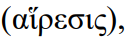 derived from haireisthai meaning "to choose," originally carried no pejorative connotation. It simply denoted "a line of belief and action which a man had chosen for himself" [1]. In the New Testament itself we read of the hairesis of the Sadducees, the Pharisees, and the Nazarenes (Acts 5:17; 15:5; 24:5), where it was perfectly acceptable to speak of the hairesis of Plato to mean nothing more than those who were Platonist in their thought and philosophy.
Yet this benign term for "choice" underwent a profound metamorphosis, transforming from a neutral descriptor of philosophical schools into a capital crime warranting death by fire.
The first known usage of the term 'heresy' in a civil legal context was in 380 by the "Edict of Thessalonica" of Theodosius I, marking the moment when religious dissent became not merely theological error, but civil crime [2]. This transformation reveals far more than semantic evolution—it exposes the systematic construction of institutional control mechanisms that persist across domains and centuries.
As I have previously described "the Cartesian split between mind and body, between sacred and profane, has created artificial boundaries that constrain our understanding of healing" [3]. Yet the parallels between religious and medical orthodoxy suggest that these boundaries may be less about philosophical necessity and more about institutional control. The mechanisms that once burned heretics at the stake have evolved, but their essential function remains: to maintain institutional monopoly over domains of human knowledge and experience deemed too important to leave to individual choice
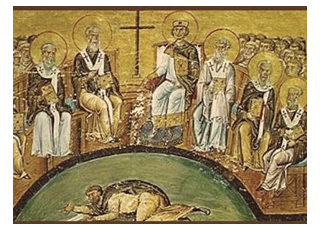
This paper argues that medical heresy represents merely a demythologized form of religious heresy, with state licensing authorities and professional medical organizations wielding powers remarkably similar to those once exercised by ecclesiastical courts. Through comparative analysis of historical and contemporary control mechanisms, we demonstrate that the transformation from religious to medical orthodoxy represents not a fundamental change in institutional behavior, but rather a secularized continuation of ancient patterns of knowledge control

Historical Foundations of Institutional Control
The historical trajectory from religious to medical authority reveals consistent patterns of institutional dominance. Religious groups built the first hospitals in Western civilization during the fourth century for care of the sick unable to afford private medical care. For the next thousand years until the Reformation and to a lesser extent until the French Revolution, it was the religious establishment that built hospitals, provided medical training, and licensed physicians to practice medicine [4]. This seamless transition from religious to secular medical authority suggests continuity rather than rupture in institutional control mechanisms.
By 1233, Pope Gregory IX created permanent judges delegate (inquisitores dati ab ecclesia), entrusting the mission of judging heretics to the Dominicans, who divided their duties with the Franciscans on a geographical basis. Life imprisonment was prescribed for the repentant and capital punishment for the obdurate, after they were handed over to the secular authorities [5]. This institutional framework established precedents for permanent tribunals dedicated to orthodoxy enforcement—a model that finds contemporary expression in medical licensing boards and professional disciplinary committees.
The medieval Church's definition of heresy proved remarkably prescient of modern medical orthodoxy concerns. Bishop of Lincoln, Robert Grosseteste, defined heresy as "an opinion chosen by human perception, created by human reason, founded on the Scriptures, contrary to the teachings of the Church, publicly avowed, and obstinately defended." The fault was in the obstinate adherence rather than theological error, which could be corrected [6]. Replace "Scriptures" with "peer-reviewed literature" and "Church" with "medical establishment," and Grosseteste's definition becomes a perfect description of how medical heresy is understood today.
Medical Orthodoxy and Control Mechanisms
Contemporary medical orthodoxy employs sophisticated mechanisms for maintaining dominance that parallel historical religious control. The dominant beliefs about how health research should be conducted are derived from the biomedical model of human health. The beliefs are maintained by traditions developed in support of the orthodox model and by power relationships [7]. This systematic control operates through multiple channels that Martin identifies in his seminal analysis of medical dissent and heresy [8].
American orthodox medicine consolidated its professional authority in the early 20th Century on the basis of its unbiased scientific method. The centerpiece of such a method is a strategy for identifying truly effective new therapies, i.e., the randomized clinical trial (RCT) [9]. Yet this apparent objectivity masks deeper control mechanisms. The blinding necessary for a proper placebo-controlled RCT therefore introduces an epistemic bias into orthodox medicine: therapeutic successes that rely upon a direct link between knowing and healing, such as placebo effects, are discarded in favor of therapeutic successes that rely upon an indirect link between knowing and healing, such as pharmacological interventions [9].
State Control and Licensing Mechanisms
The legal framework governing medical practice reveals the state's role in enforcing medical orthodoxy through licensing mechanisms that mirror historical ecclesiastical authority. For over 120 years, the Supreme Court has upheld the principle that states may regulate the practice of medicine and determine what is and is not lawful. In Dent v. West Virginia, the State of West Virginia refused a license to Frank Dent, a member of the "eclectic" sect of physicians who incorporated botanical remedies into medicine [10]. This landmark case established state authority to define legitimate healing practice, effectively creating secular heresy tribunals.
Jurisdiction differs concerning which branches of alternative medicine are legal, which are regulated, and which (if any) are provided by a government-controlled health service or reimbursed by a private health medical insurance company [11]. This regulatory framework operates as a systematic exclusion mechanism, limiting patient access to alternative healing modalities through legal and economic barriers.

The historical trajectory from religious to medical authority reveals consistent patterns of institutional dominance. Religious groups built the first hospitals in Western civilization during the fourth century for care of the sick unable to afford private medical care. For the next thousand years until the Reformation and to a lesser extent until the French Revolution, it was the religious establishment that built hospitals, provided medical training, and licensed physicians to practice medicine [4]. This seamless transition from religious to secular medical authority suggests continuity rather than rupture in institutional control mechanisms.
By 1233, Pope Gregory IX created permanent judges delegate (inquisitores dati ab ecclesia), entrusting the mission of judging heretics to the Dominicans, who divided their duties with the Franciscans on a geographical basis. Life imprisonment was prescribed for the repentant and capital punishment for the obdurate, after they were handed over to the secular authorities [5]. This institutional framework established precedents for permanent tribunals dedicated to orthodoxy enforcement—a model that finds contemporary expression in medical licensing boards and professional disciplinary committees.
The medieval Church's definition of heresy proved remarkably prescient of modern medical orthodoxy concerns. Bishop of Lincoln, Robert Grosseteste, defined heresy as "an opinion chosen by human perception, created by human reason, founded on the Scriptures, contrary to the teachings of the Church, publicly avowed, and obstinately defended." The fault was in the obstinate adherence rather than theological error, which could be corrected [6]. Replace "Scriptures" with "peer-reviewed literature" and "Church" with "medical establishment," and Grosseteste's definition becomes a perfect description of how medical heresy is understood today.
Contemporary Challenges to Medical Orthodoxy
Current research reveals increasing recognition of medical orthodoxy's limitations. The primary goal of medicine, whether CAM or orthodox is to provide better patient care and improved well-being. Unfortunately, the classification of medicine into orthodox or mainstream western medicine and unorthodox, which includes Complementary and Alternative Medicine (CAM) and Traditional Medicine (TM) has created a long standing debate [12]. This classification system serves to maintain boundaries between acceptable and unacceptable healing practices, functioning as a contemporary form of orthodoxy-heresy distinction. In my examination of "The Crisis of Language in Therapeutic Spaces," I suggested how "conventional clinical discourse" fails "when working with patients with chronic neurological disease whose experiences resist categorization or exceed the boundaries of diagnostic language."¹³ His clinical observations suggest that "patients experiencing profound spiritual crises, existential uncertainties, or trauma that defies articulation often struggle against the very linguistic frameworks intended to facilitate healing [13]."
Martins Model of Medical Dissent and Heresy
Brian Martin's framework for understanding dissent and heresy in medicine provides crucial analytical tools for examining the parallels between religious and medical orthodoxy [8]. Martin identifies four distinct modes of truth-seeking based on assumptions about cooperation versus conflict and unitary versus plural truth:
Quadrant I: Orthodoxy versus Dissent/Heresy - assumes conflict over truth, assumed to be unitary. These conditions help account for the viciousness of many struggles, which are win-lose: if there is only one truth, then every other viewpoint must be wrong.
Quadrant II: Competition/Market Struggle - assumes multiple truths while retaining a conflict orientation, characteristic of a "market of modalities."
Quadrant III: Cooperative Tolerance - combines cooperation with an assumption of a plurality of truths, where researchers and practitioners help each other develop greater insights on a range of perspectives.
Quadrant IV: Cooperative Search for Truth - describes the ideal world of scientific research, in which researchers cooperate in a search for truth, though this is far from what is usually found in actual practice.

Figure 1: A Classification of Modes of Search for Truth in Terms of Assumptions about Cooperation/Conflict and Unity/Plurality of Truth. The Four Quadrants are Labelled I Through IV Clockwise from Upper Right (from Martin 8)
Martin's analysis reveals that medical controversies typically operate within Quadrant I dynamics, mirroring the historical religious orthodoxy-heresy model. This framework illuminates why challenges to medical orthodoxy encounter such fierce resistance—they threaten not merely specific beliefs but entire institutional structures built upon claims to exclusive truth.

Methods of Domination in Medical Research
Martin identifies specific mechanisms by which medical orthodoxy maintains its dominance [8]:
State Power: Licensing of practitioners, health insurance systems, and legal restraints
Training: Medical education as enculturation and indoctrination process
Restriction on Entry: Examinations and credentialing that screen out challengers
Career Opportunities: Jobs, salaries, status, and positions of influence
Research Resources: Funding allocation and institutional access
Editorial Control: Journal publication and advertising power
Incentives: Prizes, payments, and professional recognition
Belief System: Hegemonic ideas about proper methodology and theory
Peer Pressure: Social influence from colleagues and respected figures
These mechanisms operate as an integrated system of control, creating what Martin terms "unified domination" when all methods align to support the same orthodox position.
Methods of Active Marginalization
Corresponding to each method of domination, Martin identifies mechanisms of active marginalization [8]:
State Attacks: Government raids and prosecution of alternative practitioners
Deregistration: Revocation of medical licenses
Career Blockages: Denied promotions and blocked appointments
Resource Denial: Withdrawn funding and institutional access
Editorial Rejection: Publication barriers and media exclusion
Disincentives: Economic penalties and professional isolation
Ideological Exclusion: Systematic dismissal of alternative frameworks
Social Ostracism: Professional and personal isolation
Definitional Control Over Truth Claims
Both religious and medical orthodoxies exercise primary control through definitional authority—the power to determine what constitutes legitimate knowledge and practice. To say of professing Christians that they are heretics is not to say merely that they hold erroneous opinions, but to say that their opinions are so inconsistent with the fundamental teachings of the church as to imperil their salvation [14]. Similarly, medical orthodoxy designates alternative healing practices not merely as ineffective, but as dangerous to public health and professional integrity.
The transformation of healing from sacred art to biomedical science represents what we have identified as a fundamental paradigm shift that "inadvertently reduces patients to collections of symptoms and laboratory values" [15]. This reductionist framework serves a gate-keeping function analogous to religious orthodoxy's role in defining salvation requirements.
Definitional Control Over Truth Claims
Both religious and medical orthodoxies exercise primary control through definitional authority—the power to determine what constitutes legitimate knowledge and practice. To say of professing Christians that they are heretics is not to say merely that they hold erroneous opinions, but to say that their opinions are so inconsistent with the fundamental teachings of the church as to imperil their salvation [14]. Similarly, medical orthodoxy designates alternative healing practices not merely as ineffective, but as dangerous to public health and professional integrity.
The transformation of healing from sacred art to biomedical science represents what we have identified as a fundamental paradigm shift that "inadvertently reduces patients to collections of symptoms and laboratory values" [15]. This reductionist framework serves a gate-keeping function analogous to religious orthodoxy's role in defining salvation requirements.
Institutional Training and Credentialing Systems
Religious institutions developed sophisticated training systems to ensure orthodox transmission of knowledge and practice. Training to become a doctor is a process of enculturation and indoctrination. The heavy work-load of memorisation and intensive practical work discourages independent thinking. Future doctors and medical researchers are taught all about surgery, radiotherapy and chemotherapy, assumed to be the appropriate treatments, but seldom anything positive about nonstandard approaches [8].
This educational control mirrors historical ecclesiastical training, where Pope Gregory's original intent for the Inquisition was a court of exception to inquire into and glean the beliefs of those differing from Catholic teaching, and to instruct them in the orthodox doctrine. It was hoped that heretics would see the falsity of their opinion and would return to the Roman Catholic Church [16]. Medical education serves a similar function, systematically excluding alternative healing modalities while intensive training in orthodox approaches creates deep psychological investment in established methods.
Economic Sanctions and Career Restrictions
Both systems employ economic control as a primary enforcement mechanism. Historical religious authority controlled access to economic opportunities through guild systems, patronage networks, and property ownership. Property of those sentenced to life imprisonment or to death was handed over to the secular arm, but often the Church sought to derive some profit from the confiscated valuables [5].
Contemporary medical orthodoxy operates similar economic controls. Healthcare fraud. And not only are these the major areas of law involved in CAM regulation, they're also major components of what I call a legal audit of practices and policies [17]. Alternative practitioners face systematic economic marginalization through insurance exclusion, limited hospital privileges, and restricted prescribing authority. The key difference is that medical licensure, known as "unlimited" licensure, grants physicians broad leeway to diagnose and treat disease, whereas licensure for allied health professionals, known as "limited" licensure, carves out a narrower scope of practice [10].

Legal Prosecution Mechanisms
The legal apparatus supporting medical orthodoxy directly parallels ecclesiastical court systems. The first Inquisition was temporarily established in Languedoc (south of France) in 1184. The murder of Pope Innocent III's papal legate Pierre de Castelnau by Cathars in 1208 sparked the Albigensian Crusade (1209–1229). The Inquisition was permanently established in 1229 (Council of Toulouse), run largely by the Dominicans in Rome and later at Carcassonne in Languedoc [18].
Modern medical licensing boards function as secular inquisitions, with power to investigate, prosecute, and punish practitioners who deviate from orthodox standards. The patient sues, state medical board investigation. The board commences disciplinary proceedings and evaluates whether to sanction the physician and or revoke his license. Criminal liability, the physician could be prosecuted for aiding and abetting the unlicensed practice of medicine if the acupuncturist exceeded the scope of practice as well as negligent homicide if the patient died as a result [17].
Social Marginalization Techniques
Both systems employ sophisticated social marginalization to enforce compliance. In certain cases, as an additional punishment, the sanbenito had to be worn in public even after the release of the prisoner, exposing him to universal scorn and derision. After it was removed, it was generally hung up in the parish church of the delinquent accompanied by a fitting inscription, thus marking out the wearer and his family for lasting humiliation [5].
Medical orthodoxy employs analogous shaming mechanisms through professional isolation, peer pressure, and public discrediting. Martin notes that "peer pressure is the influence of co-workers, friends and respected figures in the profession. When everyone else believes and acts according to a single perspective, it can be extremely difficult to pursue a contrary path [8]."
Ideological Hegemony Maintenance
Perhaps most significantly, both systems maintain control through ideological hegemony—the ability to make their worldview appear natural and inevitable. Experimental design is the "gold standard" for research in the biomedical model. Beliefs about the superiority of experimental research have affected most types of health research. The role that methods assume in maintaining the orthodoxy is examined [7].
This methodological hegemony parallels religious orthodoxy's control over interpretive frameworks. For them, hairesis is false belief about human beings in relation to God: it endangers the soul by departing from orthodoxia, 'right thinking', and it must be inspired by human arrogance or by demonic deception [19]. Medical orthodoxy similarly frames alternative approaches as dangerous departures from scientific thinking, inspired by ignorance or fraud.
Integration with Healing Perspectives
My essays on healing provide possible insights into how orthodox- heresy dynamics operate in clinical practice. My "Sacred and Profane Space in the Therapeutic Encounter" reveals how "authentic healing emerges from recognizing the sacred-profane dialectic inherent in therapeutic encounters," yet this recognition is systematically excluded from orthodox medical education and practice [20].My clinical observations document a fundamental crisis in medical orthodoxy's capacity to address human suffering. In "The Crisis of Language in Therapeutic Spaces," I have described encountering "patients with chronic neurological disease whose experiences resist categorization or exceed the boundaries of diagnostic language [13]." These patients "experiencing profound spiritual crises, existential uncertainties, or trauma that defies articulation often struggle against the very linguistic frameworks intended to facilitate healing [13]."
This linguistic crisis parallels historical conflicts between religious orthodoxy and mystical experience. Just as ecclesiastical authorities struggled to control direct spiritual experience that bypassed institutional mediation, medical orthodoxy struggles with healing phenomena that transcend biomedical frameworks.
Hermeneutic Approaches to Medicine
In my "Hermeneutic Approaches to Medicine" I offered a framework for understanding how alternative healing modalities challenge medical orthodoxy's interpretive monopoly [21]. Drawing upon hermeneutic philosophy and phenomenology, I argued that "modern healthcare increasingly operates within a paradigm of scientific reductionism" that systematically excludes dimensions of healing that require interpretive rather than purely empirical approaches.
This hermeneutic perspective reveals why medical orthodoxy treats alternative healing as heretical—such approaches threaten not merely specific treatments, but the entire epistemological foundation upon which institutional authority rests.
In "The Absent Healer," I explored themes of absence and presence in healing encounters, drawing parallels between divine concealment in kabbalistic thought and the hidden dimensions of therapeutic relationships [22]. This work illuminates how medical orthodoxy's emphasis on visible, measurable interventions systematically excludes healing modalities that operate through presence, relationship, and spiritual dimensions.
The concept of the "absent healer" provides a powerful metaphor for understanding how institutional control mechanisms operate. Just as divine concealment in mystical traditions can paradoxically reveal deeper truths, the apparent absence of alternative healing from orthodox medicine may reveal the limitations of institutional frameworks that cannot accommodate mystery, relationship, or spiritual dimensions of healing.
In my "Evidence Distortion and Clinical Decision-Making" I documented how orthodox medicine's claim to evidence-based objectivity masks systematic biases that exclude alternative healing modalities [23]. I also claimed how "the cumulative impact of unprocessed grief" in healthcare providers affects clinical judgment, yet these psychological and spiritual dimensions of medical practice are systematically excluded from orthodox training and evaluation.
This evidence distortion operates as a form of epistemic violence against both practitioners and patients who seek healing approaches that acknowledge the full spectrum of human experience. The systematic exclusion of alternative evidence parallels historical religious authority's dismissal of mystical experience that could not be contained within orthodox theological frameworks.
The Persistence of Institutional Control Patterns
Our analysis reveals remarkable consistency in institutional control mechanisms across religious and medical domains, spanning centuries and cultural contexts. The transformation from religious to medical orthodoxy represents not a fundamental change in institutional behavior, but rather the successful adaptation of ancient control mechanisms to secular contexts.
This persistence suggests that institutional control patterns may be more fundamental to human organization than previously recognized. The same mechanisms that enabled religious institutions to maintain orthodoxy for centuries—definitional control, educational systems, economic sanctions, legal enforcement, social marginalization, and ideological hegemony—continue to operate in medical contexts with comparable effectiveness.
The parallel between religious and medical heresy raises profound questions about healthcare freedom and patient autonomy. If medical orthodoxy operates through mechanisms analogous to those used by historical religious authority, then healthcare regulation may be less about public safety and more about institutional control.
A substantial minority of Americans have religious beliefs against one or more medical treatments. Some groups promote exclusive reliance on prayer and ritual for healing nearly all diseases [24]. The state's response to such beliefs reveals the continuation of religious control patterns in medical contexts—the same authority structures that once enforced religious orthodoxy now enforce medical orthodoxy, often with comparable disregard for individual choice and autonomy.

The Role of State Power in Medical Orthodoxy
The state's role in enforcing medical orthodoxy through licensing mechanisms represents a crucial component of the religious- medical parallel. The Supreme Court disagreed, holding that "the power of the State to provide for the general welfare of its people authorizes it to prescribe all such regulations as in its judgment will secure or tend to secure them against the consequences of ignorance and incapacity, as well as of deception and fraud" [10].
This language precisely echoes justifications used by historical religious authorities for suppressing heresy. The state's claimed authority to protect citizens from "ignorance and incapacity" parallels the Church's claimed authority to protect souls from spiritual error. Both claims rest on institutional assertions of superior knowledge and benevolent intent that mask underlying power dynamics.
Epistemological Implications
The parallel between religious and medical orthodoxy suggests deeper epistemological questions about the nature of knowledge and institutional authority. Both systems claim access to exclusive truth while systematically marginalizing alternative ways of knowing. This pattern suggests that orthodoxy-heresy dynamics may be inherent to institutional structures rather than specific to particular domains of knowledge.
Our hermeneutic approach offers a potential framework for transcending these limitations [21]. By recognizing healing as interpretive practice that requires multiple ways of knowing, his work points toward post-orthodox approaches that might accommodate both rigorous inquiry and respect for diverse healing traditions.
The clinical implications of recognizing medical orthodoxy as secularized religious orthodoxy are profound. We have described healing phenomena that "resist categorization or exceed the boundaries of diagnostic language" suggests that orthodox frameworks may systematically exclude precisely those dimensions of healing most crucial for addressing human suffering [13].
His work on grief integration in healthcare providers reveals how orthodox medicine's emotional stoicism parallels religious traditions that suppress direct experience in favor of institutional mediation [25]. Both systems may handicap healing capacity by excluding dimensions of human experience that cannot be controlled through institutional mechanisms.
Resistance and Alternative Frameworks
Martin's analysis of strategies for challengers provides insights into how alternative healing modalities might respond to orthodox suppression [8]. His identification of different strategic quadrants— from direct confrontation to cooperative tolerance—offers a framework for understanding why some alternative approaches succeed while others fail.
Our integrative approach exemplifies what Martin describes as Quadrant III strategies—cooperative tolerance that acknowledges multiple valid approaches to healing [26]. By maintaining professional credentials while exploring alternative frameworks, his work demonstrates possibilities for transcending orthodox- heresy dynamics through inclusive rather than exclusive approaches to knowledge.
This analysis has several important limitations. First, our comparative approach may overemphasize similarities while undervaluing significant differences between religious and medical institutions. Religious authority traditionally claimed divine sanction, while medical authority claims empirical validation—a distinction that may be more significant than our analysis suggests.
Second, our focus on control mechanisms may underestimate the legitimate public health functions served by medical regulation. While we argue that licensing systems operate as secular inquisitions, they may also provide genuine protection against dangerous or fraudulent practices.
Third, our analysis relies heavily on Martin's framework, which was developed specifically for medical contexts. While this framework proves remarkably applicable to religious contexts, it may not capture all relevant dimensions of religious authority structures.
Future research should explore several important directions. Comparative analysis of medical regulation across different cultural contexts could illuminate whether orthodox-heresy dynamics are universal or culturally specific. Longitudinal studies of practitioners who integrate orthodox and alternative approaches could provide insights into possibilities for transcending orthodox- heresy divisions.
Additionally, patient outcome studies comparing orthodox and alternative approaches could provide empirical evidence for evaluating the effectiveness of different healing modalities. Such research would need to address methodological challenges regarding the limitations of orthodox research paradigms for evaluating alternative approaches.

Conclusions
This analysis demonstrates that medical heresy functions as a secularized form of religious heresy, with state licensing authorities and professional medical organizations wielding powers remarkably analogous to those once exercised by ecclesiastical courts. The transformation from Greek hairesis meaning "choice" to a capital crime parallels the contemporary transformation of healing choice into regulated professional practice.
Six primary mechanisms operate in both religious and medical contexts to maintain orthodox control: (1) definitional authority over truth claims, (2) institutional training and credentialing systems, (3) economic sanctions and career restrictions, (4) legal prosecution mechanisms, (5) social marginalization techniques, and (6) ideological hegemony maintenance. These mechanisms create systematic barriers to alternative healing approaches that mirror historical barriers to religious dissent.
The persistence of these patterns across centuries and domains suggests that orthodoxy-heresy dynamics may be fundamental features of institutional organization rather than domain-specific phenomena. This recognition has profound implications for understanding healthcare freedom, practitioner autonomy, and patient choice in healing modalities.
Our clinical and theoretical work provides crucial insights into both the limitations of orthodox medical frameworks and possibilities for transcending orthodox-heresy divisions through integrative approaches that honor multiple ways of knowing.
His documentation of healing phenomena that exceed orthodox categories suggests that institutional control mechanisms may systematically exclude precisely those dimensions of healing most essential for addressing human suffering.
The clinical implications are significant. Recognition of medical orthodoxy as secularized religious orthodoxy suggests that healthcare regulation may be less about public safety and more about institutional control. This analysis supports calls for greater healthcare freedom, expanded patient autonomy, and regulatory frameworks that accommodate diverse healing traditions while maintaining appropriate safety standards.
Most fundamentally, this analysis suggests that the journey from Greek hairesis meaning "choice" to contemporary medical heresy reveals an enduring tension between individual healing autonomy and institutional control. The question facing alternative healers today is the same that faced philosophical schools in ancient Greece, early Christian sects, and countless knowledge traditions throughout history: Can genuine inquiry and healing choice survive institutional claims to exclusive truth?
The answer may depend not only on challenging specific policies or practices, but on recognizing and addressing the deeper institutional patterns that transform healing choice into regulated heresy. Only by understanding these patterns can we hope to create healthcare systems that serve human flourishing rather than institutional power.

Part II: The Contemporary Architecture of Medical Control
Part I of this analysis traced the transformation of Greek hairesis from "choice" to "crime," demonstrating how medieval religious control mechanisms evolved into contemporary medical orthodoxy enforcement. This historical analysis revealed six primary mechanisms by which both religious and medical institutions maintain orthodox control: definitional authority, institutional training, economic sanctions, legal prosecution, social marginalization, and ideological hegemony.
Part II extends this analysis to examine how these ancient patterns of control operate within contemporary institutional arrangements. Drawing on critical sociological frameworks, we demonstrate that medical institutions function as part of a broader apparatus of social control that includes jails and schools—ostensibly different institutions that share fundamental characteristics as "total institutions" dedicated to producing docile subjects rather than supporting human flourishing.
This contemporary analysis becomes particularly urgent given the profound crisis facing healthcare, where the promise of healing has been systematically subordinated to imperatives of social control, economic exploitation, and professional dominance. By understanding how medical institutions operate through mechanisms analogous to those of prisons and schools, we can better comprehend why alternative healing approaches face such systematic resistance and how transformative alternatives might be developed.
Theoretical Frameworks for Understanding Institutional Co- ercion
Goffman's Total Institutions
Erving Goffman's seminal analysis in "Asylums" provides foundational tools for understanding how ostensibly different institutions share fundamental characteristics that enable systematic control over human behavior and identity [27]. Goffman defines total institutions as "places of residence and work where a large number of like-situated individuals, cut off from the wider society for an appreciable period of time, together lead an enclosed, formally administered round of life."
The defining characteristics of total institutions include: the breakdown of barriers between different spheres of life; the conduct of all activities under institutional surveillance; the scheduling of all activities according to institutional rather than individual needs; and the coordination of all activities to fulfill institutional rather than personal goals. These features combine to produce what Goffman terms the "mortification of self"—a systematic process through which institutions strip away individual autonomy, dignity, and authentic identity.
This mortification operates through several interconnected mechanisms: role dispossession (removing individuals from their previous social identities), programming and identity trimming (forcing conformity to standardized institutional routines), contaminative exposure (subjecting individuals to degrading procedures that violate personal boundaries), and disruption of the relationship between individual actor and acts (ensuring that individuals cannot maintain continuity between authentic self- expression and institutional behavior).
The power of Goffman's analysis lies in its revelation that these mechanisms are not aberrations but constitutive features of how modern institutions maintain order and control. The apparent benevolence of medical institutions does not alter their fundamental structure as sites where individual agency is systematically dismantled in service of institutional imperatives.
Foucault's Disciplinary Power
Michel Foucault's genealogical analysis provides crucial tools for understanding how power operates not merely through overt coercion but through the production of knowledge, the organization of space, and the regulation of bodies [28,29]. Foucault demonstrates how modern institutions represent a transformation from spectacular punishment to subtle normalization, with the panopticon serving as a metaphor for disciplinary mechanisms that permeate contemporary institutional life.
Disciplinary power operates through three primary techniques: hierarchical observation (systems of surveillance that make individual behavior constantly visible to authority while rendering that authority invisible), normalizing judgment (creating standards of "normal" behavior against which individuals are constantly measured), and examination (combining observation and judgment to produce knowledge about individuals that can be used to classify, compare, and control them).
In medical contexts, Foucault's analysis of the "clinical gaze" reveals how patients are transformed from subjects with unique experiences of suffering into objects of medical knowledge [29]. This transformation operates through abstraction that removes individuals from their social context, reduces complex experience to discrete symptoms, and subordinates subjective understanding to professional medical authority. The clinical encounter becomes a site where patient autonomy and authentic self-expression are systematically subordinated to medical expertise and institutional requirements.
Szasz's Critique of Psychiatric Power
Thomas Szasz's radical critique in "The Myth of Mental Illness" provides essential insights into how medical institutions function as instruments of social control rather than healing [30]. Szasz argues that mental illness is not a medical condition but a moral and social judgment disguised as scientific diagnosis, with psychiatric institutions serving to control and punish individuals whose behavior violates social norms.
Szasz identifies several key mechanisms of psychiatric power: medicalization of deviance (transforming social and moral problems into technical medical issues), expansion of the therapeutic state (extending medical authority beyond genuine health issues to encompass broad areas of human behavior), and legitimation of involuntary treatment (justifying coercive interventions through medical rhetoric that would be considered assault in any other context).
This critique extends beyond psychiatry to illuminate how medical authority more broadly functions to legitimate social control. By transforming social problems into medical conditions, healthcare institutions can justify interventions that systematically violate individual autonomy while maintaining an appearance of benevolent concern for public health.
Prisons: The Paradigmatic Total Institution
The prison system provides the clearest example of institutional coercion, making visible mechanisms that operate more subtly in schools and hospitals. Contemporary scholarship on mass incarceration demonstrates how the carceral system functions not primarily to enhance public safety but to manage social contradictions generated by economic inequality and racial oppression [31].
Prisons operate through several interconnected mechanisms: artificial scarcity (isolation from family, community, and meaningful relationships), total surveillance (constant monitoring of movement, communication, and behavior), degradation rituals (strip searches, forced medical procedures, denial of privacy and dignity), and temporal disorientation (disruption of normal life rhythms and denial of meaningful future planning).
These mechanisms produce what has been termed "civil death"—a condition in which individuals are systematically stripped of their capacity for autonomous action and authentic self-expression. The apparent purpose of punishment or rehabilitation becomes secondary to the underlying function of producing docile subjects who accept their subordination to institutional authority.
Schools: The Disciplinary Apparatus
The modern educational system operates through mechanisms that parallel those of prisons while maintaining an ideology of liberation and opportunity. Paulo Freire's analysis reveals how schools function as "banks" where students are treated as empty vessels to be filled with predetermined knowledge rather than active subjects capable of critical thinking and creative expression [32].
The "banking model" of education operates through rigid hierarchies between teachers and students, fragmentation of knowledge into discrete subjects that prevent integrated understanding, and emphasis on passive reception rather than critical engagement. This produces students capable of reproducing authorized knowledge but incapable of questioning fundamental assumptions [33].
Contemporary developments in educational technology have extended these mechanisms through standardized testing regimes, digital surveillance systems, and pharmaceutical interventions for "learning disabilities" that medicalize resistance to institutional requirements. These innovations perfect the school's capacity to sort and rank students while maintaining an appearance of scientific objectivity and equal opportunity.
Medical Coercion Disguised as Care
The modern hospital system operates through mechanisms that parallel those of prisons and schools while maintaining an ideology of healing and care. Ivan Illich's comprehensive critique reveals how medical institutions have become iatrogenic—producing more illness than they cure through systematic medicalization of human experience and creation of dependency on professional intervention [34].
Medical institutions operate through several interconnected mechanisms: monopolistic authority over the definition of health and illness, artificial scarcity through professionalization of healing that transforms natural capacities into technical problems requiring expert intervention, and technological fragmentation that reduces integrated human experience to discrete organ systems and physiological processes.
The architecture of hospitals reinforces these mechanisms through spatial arrangements that maximize professional control while minimizing patient autonomy. Patient rooms are designed for surveillance and intervention rather than comfort or privacy, medical procedures occur in sterile environments that strip away personal identity and social connection, and visiting protocols ensure patients remain isolated from support networks and dependent on professional caregivers.
Shared Mechanisms of Institutional Control
Despite their ostensibly different purposes, jails, schools, and hospitals operate through remarkably similar mechanisms that reveal their common function as instruments of social control.
All three institutional types establish systems of constant observation that make individual behavior visible to institutional authority while rendering that authority invisible or naturalized. In prisons, this operates through guard towers, security cameras, and regular inspections. In schools, it functions through teacher supervision, administrative monitoring, and standardized testing. In hospitals, it works through nursing stations, medical rounds, and diagnostic surveillance.
This visibility serves not merely to gather information but to induce self-regulation and conformity. Individuals learn to monitor their own behavior according to institutional expectations, internalizing surveillance mechanisms that continue to operate even when direct observation is absent.
All three institutions establish control over time as a mechanism for regulating behavior and identity. Prisons operate through rigid schedules that determine when individuals eat, sleep, work, and socialize. Schools function through class periods, testing schedules, and academic calendars that fragment learning into discrete units. Hospitals work through visiting hours, medication schedules, and treatment protocols that subordinate individual rhythms to institutional efficiency.
This temporal regulation disconnects individuals from their natural rhythms and social relationships while creating dependency on institutional structure. The ability to determine how time is organized becomes a fundamental mechanism of power that shapes not only behavior but consciousness and identity.
Spatial Control
All three institutions organize space to maximize institutional control while minimizing individual autonomy and social connection. Prisons design cells and common areas to prevent escape while facilitating surveillance. Schools organize classrooms and hallways to direct movement and attention according to educational priorities. Hospitals arrange patient rooms and treatment areas to enable efficient medical intervention while maintaining professional authority.
This spatial organization operates as embodied ideology that shapes how individuals understand their relationship to authority, community, and their own agency. The experience of moving through institutional spaces teaches individuals to accept restrictions on their freedom as natural and necessary.
All three institutions implement systematic processes designed to transform individual identity according to institutional requirements. Prisons create "inmates" who learn to navigate complex social hierarchies and survival strategies of carceral life. Schools produce "students" who internalize competitive relationships and deference to authority. Hospitals generate "patients" who learn to experience their bodies and suffering through medical categories and professional interpretation.
These identity transformations involve fundamental changes in how individuals understand themselves and their capabilities. The institutional identity becomes a lens through which individuals interpret their experiences and possibilities, often long after direct contact with the institution has ended.
Production of Docility
All three institutions operate to produce what Foucault terms "docile bodies"—individuals who are skilled and useful but also compliant and non-threatening to institutional authority. This docility is not passive submission but active participation in one's own subordination through internalization of institutional values and priorities.
The production of docility operates through the combination of all previous mechanisms—surveillance creates self-regulation, temporal control establishes dependency, spatial organization embodies hierarchy, and identity transformation internalizes institutional authority. The result is individuals who experience their compliance not as coercion but as their own choice, making institutional control both more effective and more difficult to resist.
The analysis of institutional coercion becomes particularly urgent when applied to contemporary healthcare, where the promise of healing has been increasingly subordinated to mechanisms of social control, economic exploitation, and professional dominance. My own critique reveals how contemporary healthcare institutions perpetuate patterns of coercion that fundamentally contradict the relational, holistic nature of authentic healing processes [26].
Clinical iatrogenesis involves direct harm caused by medical interventions—adverse drug reactions, hospital-acquired infections, surgical complications, and diagnostic errors. However, the problem extends beyond technical failures to include systematic biases embedded in medical training and practice. My analysis reveals how Cartesian dualism creates fragmentation in trauma care, leading to misdiagnosis and ineffective treatment, particularly for complex trauma presentations [3].
Social iatrogenesis involves the medicalization of normal human experiences—grief, aging, childbirth, and spiritual crisis— transforming natural life processes into medical conditions requiring professional intervention. This operates through expansion of diagnostic categories, lowering of thresholds for medical intervention, and creation of new illness categories that correspond to pharmaceutical products rather than genuine health needs.
Cultural Iatrogenesis
Cultural iatrogenesis involves systematic undermining of individual and community capacities for self-care, mutual aid, and meaning-making in the face of suffering. Medical institutions establish monopolistic authority over the interpretation of bodily experience while delegitimizing alternative forms of healing knowledge and practice. This creates populations dependent on professional intervention for problems historically addressed through family, community, and spiritual resources.
The concept of the "therapeutic state" describes how therapeutic discourse has become a primary mechanism through which modern states exercise control over their populations. Medical authority provides legitimation for interventions that would be considered coercive in any other context but are justified through rhetoric of health, safety, and professional expertise.
This operates through medicalization of social and political problems, establishment of experts as primary arbiters of human experience, and creation of legal frameworks that enable coercive intervention while maintaining an appearance of benevolent concern for public health.
Toward Transformative Alternatives
In response to the crisis of contemporary healthcare, we propose a revolutionary alternative that transcends the coercive logic of institutional medicine while honoring the full complexity of human suffering and healing. This alternative vision draws on critiques of Cartesian dualism, integration of spirituality and music into clinical practice, and creation of therapeutic encounters that honor the full personhood of patients.
Central to this new vision is the practice of "deep listening"—a form of therapeutic attention that creates space for individuals to connect with their authentic experience and healing wisdom. Unlike the clinical gaze that abstracts and objectifies, deep listening involves a quality of presence that honors the patient's subjectivity while providing skilled support for self-discovery and healing. This practice represents a fundamental shift from the diagnostic model that seeks to classify and treat discrete conditions toward a hermeneutic approach that engages with the patient's experience as a "sacred text" requiring careful interpretation and respect [21].
Deep listening operates through several interconnected practices: encountering the patient as a unique individual rather than a representative of a diagnostic category, accepting the patient's experience without judgment while providing skilled support, and attending to bodily dimensions of experience that often contain essential information about healing needs.
This approach recognizes that authentic healing must address spiritual dimensions of human experience systematically excluded from biomedical practice. This integration does not involve imposing particular religious beliefs but creating space for individuals to access their own spiritual resources while receiving skilled support for healing processes.
Music serves as a particularly powerful medium because it engages multiple levels of human experience simultaneously—cognitive, emotional, somatic, and spiritual. Musical improvisation and listening can access healing resources not available through verbal intervention alone, while providing non-invasive means of supporting the body's natural healing processes [20].
The reconceptualization of therapeutic encounters as "liminal zones" where sacred and profane categories blend and transform offers healthcare practitioners a framework for creating environments that honor both technical and relational dimensions of healing. This approach requires attention to architectural design, ritual practices, and interpersonal dynamics that create conditions for authentic encounter rather than institutional efficiency [20].
Sacred space in therapeutic encounters emerges through the quality of attention and intention that practitioners bring to their work. This sacred dimension develops through contemplative practice— forms of meditation, prayer, and reflective inquiry that cultivate the practitioner's capacity for presence and compassion.
Principles for Transformative Healing Spaces
Drawing on the theoretical frameworks and practical innovations discussed throughout this analysis, we can identify several key principles that should guide the development of transformative healing spaces that transcend the coercive logic of institutional medicine while supporting authentic healing processes.
Principle 1: Radical Hospitality and Unconditional Welcome
Transformative healing spaces must begin with radical hospitality—a quality of welcome that honors the full dignity and worth of every individual regardless of their social status, diagnostic category, or ability to pay [35]. This hospitality operates as both a practical commitment and a spiritual discipline that creates conditions for authentic encounter.
Radical hospitality requires attention to how individuals are greeted, how intake processes are organized, and how the physical environment communicates respect and welcome. It also requires ongoing attention to how power dynamics and cultural assumptions may create barriers to authentic encounter for marginalized populations.
Principle 2: Integration of Multiple Ways of Knowing
Transformative healing spaces must create opportunities for integration between different forms of knowledge—scientific, experiential, cultural, and spiritual—rather than privileging professional expertise over other forms of wisdom. This integration requires both intellectual humility from practitioners and practical mechanisms for incorporating diverse perspectives into healing processes.
This principle operates through collaborative assessment processes that honor patient knowledge and experience, treatment planning that incorporates cultural and spiritual resources, and ongoing dialogue that allows for emergence of new understanding through therapeutic relationships.
Principle 3: Emphasis on Relationship Rather Than Interven- tion
Transformative healing spaces must prioritize the development of authentic therapeutic relationships over the application of technical interventions. This emphasis recognizes that healing often emerges through the quality of attention and care that individuals receive rather than through specific medical treatments.
This principle requires adequate time for relationship development, continuity of care that allows relationships to deepen over time, and attention to the practitioner's own healing and spiritual development as essential qualifications for therapeutic work.
Principle 4: Respect for Individual Autonomy and Self-Deter- mination
Transformative healing spaces must honor the individual's authority over their own healing process while providing skilled support and guidance. This respect for autonomy operates as both an ethical commitment and a practical recognition that effective healing requires the individual's active participation and consent.
This principle requires transparent communication about treatment options and their risks and benefits, collaborative decision-making processes that honor individual preferences and values, and ongoing attention to how institutional pressures may compromise individual autonomy.
Principle 5: Integration of Community and Environmental Di- mensions
Transformative healing spaces must recognize that individual healing cannot be separated from the health of communities and environments in which individuals are embedded. This recognition requires attention to social determinants of health while creating opportunities for community connection and environmental restoration.
This principle operates through practices such as community gardens and food programs that address nutritional needs, support groups that create opportunities for mutual aid and social connection, and advocacy work that addresses systemic sources of suffering and illness.
Principle 6: Economic Accessibility and Sustainability
Transformative healing spaces must operate through economic models that prioritize healing over profit while ensuring long-term sustainability. This requires creative approaches to funding that reduce dependence on fee-for-service models while ensuring that practitioners can sustain their work over time.
This principle might operate through sliding-scale fee structures, community-supported healthcare models, integration with existing healthcare systems in ways that preserve alternative values and practices, and policy advocacy for healthcare financing that supports relationship-based care.
The Sanctuary Model in Trauma Treatment
The Sanctuary Model provides an example of how trauma treatment can be organized around principles of safety, democracy, and healing rather than control and management. This approach recognizes that many individuals seeking mental health services have experienced trauma within institutional settings and require healing environments that actively counteract the effects of institutional violence.
The Sanctuary Model operates through creating physical and emotional safety for all participants, establishing democratic decision-making processes that honor individual voice and choice, focusing on healing and growth rather than symptom management, and addressing the trauma history of both patients and staff as essential for creating effective therapeutic environments.
Integrative Medicine Centers
Integrative medicine centers provide examples of how biomedical practice can be combined with alternative healing modalities in ways that honor multiple ways of knowing while maintaining scientific rigor. These centers typically offer combinations of conventional medical treatment, nutritional counseling, mind- body practices, and spiritual care in environments designed to support healing rather than institutional efficiency.
Successful integrative medicine centers operate through extended appointment times that allow for relationship development, collaborative treatment planning that incorporates patient preferences and values, integration of practitioner teams that include both conventional and alternative providers, and attention to environmental design that creates healing rather than clinical atmospheres.
Community Health Worker Programs
Community health worker programs provide examples of how healing work can be embedded within communities in ways that honor local knowledge and cultural resources while providing connections to professional healthcare when needed. These programs typically train community members to provide basic health education, social support, and advocacy while serving as bridges between communities and professional healthcare systems.
Effective community health worker programs operate through selection and training of workers from within the communities they serve, emphasis on relationship and trust-building rather than service delivery, integration of cultural and spiritual resources with health promotion activities, and advocacy for systemic changes that address social determinants of health.
The development of transformative healing spaces faces significant challenges and resistance from existing institutional structures, professional interests, and cultural assumptions that support the status quo. Understanding these challenges is essential for developing strategies that can create sustainable alternatives while avoiding co-optation by existing systems.
The development of alternative healing approaches faces resistance from professional organizations that benefit from current arrangements and economic interests that profit from existing healthcare systems. Medical licensing requirements, insurance reimbursement policies, and legal liability concerns all create barriers to innovation while protecting existing professional monopolies.
Cultural and Ideological Barriers
Alternative healing approaches also face resistance from cultural assumptions and ideological commitments that support the biomedical model while delegitimizing other forms of healing knowledge. These barriers operate through scientific materialism that delegitimizes spiritual and energetic approaches to healing, individualism that focuses on personal responsibility while ignoring social determinants of health, and consumerism that treats healthcare as a commodity rather than a relationship.
Even when alternative approaches demonstrate effectiveness, they face challenges from institutional inertia that makes change difficult and co-optation that transforms innovative practices into conventional services. Healthcare institutions have developed complex systems for managing change in ways that preserve existing power structures while appearing to embrace innovation.
Conclusions
This two-part analysis has demonstrated that medical heresy functions as a secularized form of religious heresy, operating through institutional control mechanisms that have remained remarkably consistent across centuries and domains. Part I revealed how ancient religious orthodoxy enforcement evolved into contemporary medical regulation, while Part II has shown how medical institutions function as part of a broader apparatus of social control that includes prisons and schools.
The recognition that hospitals operate through mechanisms analogous to those of jails—surveillance, temporal regulation, spatial control, identity transformation, and production of docility— reveals that medical "treatment" often functions as a form of social control disguised as care. This analysis explains why alternative healing approaches face such systematic resistance: they threaten not merely specific treatments but entire institutional structures built upon claims to exclusive authority over human suffering.
However, this analysis also points toward hopeful possibilities for transformation through the development of healing spaces that transcend the coercive logic of institutional medicine while honoring the full complexity of human suffering and recovery. The principles identified—radical hospitality, integration of multiple ways of knowing, emphasis on relationship over intervention, respect for autonomy, community integration, and economic accessibility—provide guidance for creating alternatives that operate according to fundamentally different values than existing institutional arrangements.
The journey from Greek hairesis meaning "choice" to contemporary medical heresy reveals an enduring tension between individual healing autonomy and institutional control. The question facing alternative healers today is the same that faced philosophical schools in ancient Greece, early Christian sects, and countless knowledge traditions throughout history: Can genuine inquiry and healing choice survive institutional claims to exclusive truth?
The answer depends not only on challenging specific policies or practices, but on recognizing and addressing the deeper institutional patterns that transform healing choice into regulated heresy. The development of transformative healing spaces represents not merely a technical challenge but a spiritual and political imperative that calls us to reimagine how human communities can support the flourishing of all their members.
The work of transformation begins with individuals and communities willing to experiment with new possibilities while maintaining hope that authentic healing is possible even within systems designed to prevent it. Through such experiments, we can begin to create the healing spaces our communities desperately need while contributing to broader movements for social transformation that address the systemic sources of suffering and illness.
The integration of deep listening, spiritual practice, and collaborative relationship into healing work is not merely a therapeutic technique but a form of resistance to institutional coercion that points toward more just and compassionate ways of organizing human communities. The development of such alternatives requires courage, creativity, and sustained commitment, but it also offers the possibility of contributing to healing not only for individuals but for the social and ecological systems that sustain all life.
References
- Truth Magazine. Hairesis and hairetikos
- Wikipedia. Heresy in Christianity.
- Julian, U. S. (2024). Worn out Philosophical Ideas Still Pervade the Practice of Medicine: The Cartesian Split Lives On.
- Koenig, H. G. (2001, December). Religion, spirituality, and medicine: how are they related and what does it mean?. In Mayo Clinic Proceedings (Vol. 76, No. 12, pp. 1189-1191). Elsevier.
- Encyclopedia.com. Inquisition.
- Wikipedia. Medieval Inquisition.
- ScienceDirect. The role of methods in maintaining orthodox beliefs in health research.
- Martin, B. (2004). Dissent and heresy in medicine: models, methods, and strategies. Social science & medicine, 58(4), 713-725.
- Sullivan, M. D. (1993). Placebo controls and epistemic control in orthodox medicine. The Journal of medicine and philosophy, 18(2), 213-231.
- Barton, B. H. (2025). The LLLT Conundrum. Washington University Journal of Law and Policy, 76(1).
- Wikipedia. Regulation of alternative medicine.
- Oranye, N. O. (2015). A Model for Equalizing Access to Knowledge and Use of Medicine-Orthodox, Complementary, Alternative or Integrated Medicine. J Altern Complement Integr Med, 1(003).
- Sargon, J. U. (2025). Sacred and Profane Space in the Thera- peutic Encounter: Moving Beyond Rigid Distinctions. Amer- ican J Neurol Res, 4(2), 1-4.
- Edwards, M. (2023). Heresy: Early Development of the Concept'. St Andrews Encyclopaedia of Theology.
- Ungar-Sargon J. Capitalism and health care: A critique. Japan J Med Sci 2024;5(1):174-84.
- Galileo Project. Historical overview of the Inquisition.
- Cohen Healthcare Law Group. Complementary and alternative medicine legal issues.
- Wikipedia. Spanish Inquisition.
- Oxford Classical Dictionary. Heresy.
- Ungar-Sargon, J. (2025). Bridging Neural Circuits and Sacred Spaces: Integrating Neurobiological Mechanisms with Intangible Experience. Med Clin Res Open Access, 6(1), 1-11.
- Ungar-Sargon, J. (2025). Beyond Reductionism or Wishful Thinking? Tensions between Evidence-Based Practice and Spiritual Frameworks in Contemporary Healthcare. Trends Int Med. 2025; 5 (1): 1-10. Correspondence: Julian Ungar-Sargon, Borra College of Health Science, Dominican University, USA. Received, 20.
- Ungar-Sargon, J. (2025). Healer or Technician: The Role of the Physician and the Possibility of Transformation. Neurol Res Surg, 8(1), 1-13.
- Ungar-Sargon J. Evidence distortion and clinical decision- making. Arch Case Rep Open 2024;1(2):01-16.
- Swan, R. (2020). Faith-based medical neglect: For providers and policymakers. Journal of Child & Adolescent Trauma, 13(3), 343-353.
- Ungar-Sargon, J. (2025). Navigating the Depths: A Framework for Caregiver’s Grief Work.
- Ungar-Sargon, J. (2025). Motivating Healthcare Workers in Non-Hierarchical Spaces: A Sacred Architectural Framework for Sustainable Engagement. Japanese J Med Res, 3(1), 1-12.
- Goffman, E. (2017). Asylums: Essays on the social situationof mental patients and other inmates. Routledge.
- Foucault, M. (1975). 1979. Discipline and punish: The birth of the prison.
- Foucault, M. (1973). The birth ofthe clinic: An archaeology ofmedical perception. Trans A. M. Sheridan Smith, New York: Pantheon.
- Szasz, T. S. (1960). The myth of mental illness. American psychologist, 15(2), 113.
- Davis, A. Y. (2011). Are prisons obsolete?. Seven stories press.
- Freire, P. (2009). From pedagogy of the oppressed. Race/ ethnicity: multidisciplinary global contexts, 2(2), 163-174.
- Bowles, S., & Gintis, H. (1976). Schooling in capitalistAmerica (Vol. 57). New York: Basic Books.
- Illich, I. (1976). Medical Nemesis (NewYork. Pantheon, 197(6).
- Out, R. (1975). The three movements of the spiritual life. New York: Image.