

Archives of Nuclear Energy Science and Technology(ANEST)
ISSN: 3067-1965 | DOI: 10.33140/ANEST


Research Article - (2025) Volume 1, Issue 1
Formation of Galaxies in a Polysingular Universe
Received Date: Dec 12, 2025 / Accepted Date: Jan 15, 2025 / Published Date: Mar 03, 2025
Copyright: ©©2025 I.A. Boldov. This is an open-access article distributed under the terms of the Creative Commons Attribution License, which permits unrestricted use, distribution, and reproduction in any medium, provided the original author and source are credited.
Citation: Boldov, I. A. (2025). Formation of Galaxies in a Polysingular Universe. Arch Nucl Energy Sci Technol, 1(1), 01-06.
Abstract
The article examines the processes associated with the formation of our Universe. A hypothesis has been put forward about the origin of the Universe as conjugate three-dimensional and two-dimensional spaces, the uneven conjugation of which led to the emergence of points of emergence of singularities that form the “three-dimensional craquelure” of galaxies.
It is suggested that the formation of matter in the Universe occurred not from one, but from many singularities. A mechanism for the formation of galaxies by the ejection of “protostars” from a rotating singularity —the “galactic grain”—has been proposed. An assumption is made about spatial and temporal fluctuations of this process, which explains the entire spectrum of possible shapes and sizes of galaxies.
Keywords
Birth of the Universe, Formation of Galaxies, Birth of Stars
Introduction
Review of Cosmological Theories
Currently, there are several hypotheses that reveal the formation process of the observable universe.
Friedman Universe: (Friedman- Lemaître - Robertson -Walker metric) [1,2]. This was the first of the models of the non- stationary Universe and became the main theoretical development of the general theory of relativity after the work of Einstein in 1915-1917. The current model, taking into account the accelerating expansion of the Universe, the so-called "ΛCDM model", is still the Friedmann model, but now takes into account both the cosmological constant and dark matter.
The Big Bang Theory: describing the emergence of the Universe from a point singularity. Combined with the Hot Universe theory, the development of which led to the emergence of the Inflationary Universe model, it is considered the main model today. The disadvantages of this theory, in addition to the problems of large-scale homogeneity and isotropy of the model, include the unfounded assertion that there is only one initial feature and the invented principle of symmetry breaking [3,4].
Large-Scale Structure of the Universe: An attempt to explain the observed clusters and superclusters of galaxies, which are stretched into some observable linear or flat formations, separated by huge voids. At the same time, observations have shown that the Universe is homogeneous at a distance of about 300 megaparsecs [5].
Stellar Population Theory: This theory only considers the classification of galaxies by chemical composition, spatial distribution, position on the Hertzsprung -Russell diagram, intrinsic velocities and other criteria. The classification of the two populations was proposed by Baade in 1944 and supplemented by another group in the late 1970s [6-8].
Theory of Prestellar Bodies: It was proposed by Academician V. Ambartsumyan as a result of an analysis of the “stellar associations” he discovered and an analysis of the structure of our Galaxy, in which star formation continues. The theory of superdense configurations of matter in the prestellar state is currently one of the most complex areas of theoretical physics, which has not yet received recognition from the scientific community [9,10]. This work is essentially a development of this theory.
Contradiction between Theory and Observations
Latest discoveries made with the James Space Telescope Webley JWST contradicts the generally accepted picture of the birth of the Universe. Firstly, this is the discovery of a colossal Black Hole at the edge of observable space [11].
In 2022, NASA researchers discovered four already formed galaxies, about 350 million years old from the time of the Big Bang, with unusually bright stars [12].
In 2024, images of supermassive galaxies were again obtained, which simply could not have formed during the dawn of the Universe [13,14].
The experimental data obtained require a revision of the concept and mechanism of formation of the Universe, starting with the processes of galaxy formation.
Theoretical Background
In the author’s work, it was shown that “The energy of a body with mass Em can be represented as:
Em= m*c2 = ρm *V*Ñ2 = ρmV*S*t-2 =ρm (V*t-1 )*(S*t-1 ); (1)
Where m=ρm V; Ñ2 = S*t-2; ρm - is the energy filling density of the volume of an elementary particle in the three-dimensional space of our Universe. ρm = const. for all elementary particles - leptons, consisting of one quark [15].
Thus, the self-energy of an elementary particle is equal to the product of the conditional energy density and the values of three- dimensional and conjugate two-dimensional spaces per unit time of each.
The statement that there was only one singularity that exploded with the Big Bang is not based on anything. Taking just one singularity as the source of all observable matter in the Universe, created in a fraction of a second, allows us to logically conclude that it must fly apart at a speed much greater than the speed of light. That is, at almost infinite speed. This, of course, is possible if space itself was created simultaneously, but it is more logical to assume that there was an infinite number of singularities in which matter was born. Each such singularity, filled out the holes matter its local spaces about the Universe.
The uneven distribution of inhomogeneities in the Universe led to the appearance of “Voids,” that is, huge volumes of space free from galaxies. If we claim that there was also matter in these spaces 13.8 billion years ago, then we have to admit that it was carried away from there at a speed of up to 1/40 the speed of light, which cannot be explained by gravity, and even at such enormous distances. It is enough to divide the sizes of these Voids by the age of the Universe.
Polysingular Model of the Universe
The author considers it possible to exclude from consideration the process of transformation of the singularity through the state of plasma into baryonic matter. It is enough to admit that this happened many billions of years ago, and the mechanism of this transformation is not so important.
There are only two options for explaining the appearance of galaxies, stars and planets:
The first is that at first material formations in the form of elementary particles were uniformly scattered throughout the space of the Universe, and then the density fluctuations that appeared began to collect them into local concentrations under the influence of gravity.
These concentrations of matter later became planets, stars and galaxies. The failure of the first option, which is called “in front of everyone.” This is the local rotation of planets, stars and galaxies.
The author reminds section textbook on physics for the 6th grade of school (2).
Fg =Gm1*m2 /R2 ; (2}
Where G= 6.61*10-11 (m3/(kg*s2), R– distance between the centers of bodies. As can be seen from the formula and the experience of mankind, gravitational forces are central and have no lateral component.
Therefore, any amount of matter scattered as a result of the Big Bang or the explosion of stars of the first (2.. n) generation, even if it gathers into large masses, will never rotate locally.
The difficulty of solving the problem of the origin of rotation in the Universe is a direct consequence of the Helmholtz-Kelvin theorem and the fact that linear gravitational forces cannot generate vortex motion. It can only occur in a turbulent gas, but this requires some external influence on the gravitating masses, in the form of a lateral force vector perpendicular to the direction of gravity [16,17]. A correct explanation for the appearance of such a force has not yet been given.
Any statements that rotation could be created by local vortices in a flowing flow of matter moving towards the center of mass are also completely refuted by the fact that even if such vortices can arise, again due to the uneven distribution of matter, then without external force. they will be chaotic and cancel each other out.
According to the second version, density fluctuations were already at the stage of the origin of matter inside the singularity. In this case, theoretically, the unevenness of the density of the created substance can be any. But here again the question arises about the occurrence of rotation. If a certain amount of locally rotating matter, not yet collected by gravity into a dense formation, flies out of the singularity, then it will simply dissipate under the influence of centrifugal forces, and this will stop any rotation. The same applies to the turbulence mentioned above. Centrifugal forces will not work to locally thicken matter towards the center of rotation, but, on the contrary, create a vacuum there.
There can be only one conclusion from all this - Matter in the singularity was initially born locally rotating and with maximum density.
As a result, we find that each observed galaxy is a former rotating singularity, at the center which once formed the axis of the substance of which it is composed. The remnant of this singularity, in the form of a central "black hole", lies at the center of the galaxy ("Bulge").
It is quite possible that the “birth” of matter and space deep inside the remnants of the singularity did not stop 13.8 billion years ago, and continues today, (exponentially?) decreasing, but has not become equal to zero, which may be the reason for the so-called. " runaway galaxies." Let us call the singularity at the stage of the origin of matter the “grain of the galaxy.”
Formation of Galaxies
Back in 1863, the Belgian physicist Joseph Plato experimentally established, that as the rotation speed increases (in an analogue of weightlessness), the drop changes its shape from spherical to oval, and then transforms into a bilobed structure resembling a highly elongated oval. In our time, physicists from the University of Nottingham Richard Hill and Lawrence Eaves repeated these experiments [18].
The asymmetry of the rotating fragment M 0 - the grain of the galaxy (Fig.1), inside which the process of "matter birth" occurs, leads to the ejection of the grain of matter by centrifugal forces (Fig.2).
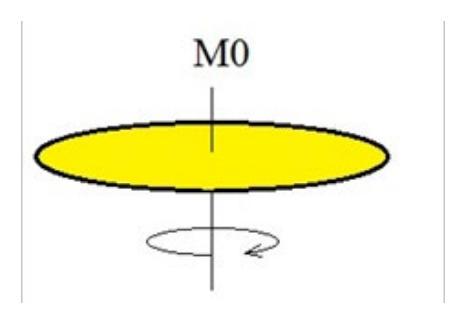
Figure 1: Galaxy Grain M0
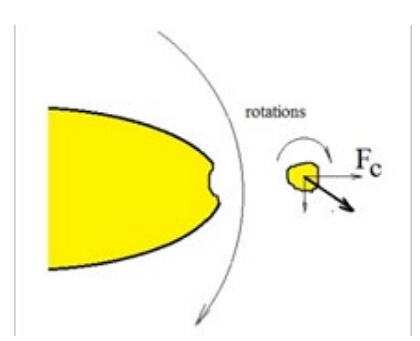
Figure 2: Separation of Part of the Grain from its Surface by Centrifugal Forces
The masses of protostars are torn away from the surface by centrifugal forces in two opposite directions, taking away part of the mass and torque (Fig.3). This does not prevent the emission of smaller structures down to atomic hydrogen (surface evaporation), but on a much smaller scale.
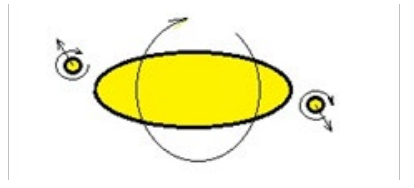
Figure 3: Separation Several of their Proto-Stars are Located on Two Opposite Sides of the Grain
Due to the rotation of the Grain, the direction of ejection of the following pieces - protostars - changes, forming the arms of the Galaxy (Figure. 4) and reducing the mass of the Galaxy Grain (Figure.5; Figure.6).
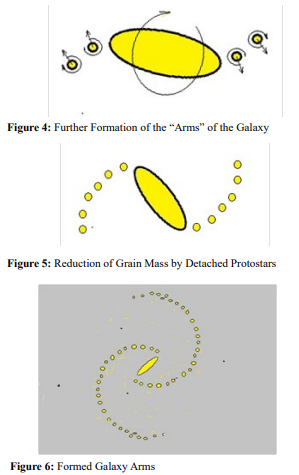
At the same time, by the end of the process, the intensity of the emergence of matter inside the Grain decreased, the rotation speed and mass of the grain decreased to certain values at whichprotostars are no longer ejected. And each star, having shed part of the mass that will become a planet, is mainly connected by gravity with neighboring stars and the remaining Zern. The structure of a typical spiral galaxy is shown in Figure.7.
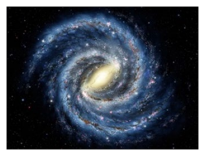
Figure 7: Galaxy
It is likely that the processes of transition of the singularity into the grain phase of the Galaxy were uneven both in space and time. Unevenness in space led to different shapes of grains (sphere, ellipsoid...), different speed and direction of rotation.
The rotation of the galactic grain in one plane formed spiral galaxies. Precession and nutation, what happens in grain when pieces are torn off, shifted the vector of the centrifugal force of the ejection of protostars, which led to different thicknesses of spiral galaxies. Rotation in two and even three planes formed elliptical (spherical) and irregular galaxies. The large size of the broken pieces of grain could form "daughter" galaxies inside the main one (Figure.8). It is logical to assume that, depending on the mass, precession and nutation of the rotating fragments, not only spiral but also spherical galaxies can be daughter galaxies. This should also be reflected in the structure of the arms of the emerging galaxy in the form of wave motion of stars in a direction perpendicular to the plane of the galaxy. It will be shown below that the rotation of the galaxy as a whole is explained by the fact that the static gravitational forces are very strong. And small wave oscillations of the stars occur, returning them to the plane of the arm by gravity. Such wave motion was recently discovered as the "Redcliffe Wave"[19].
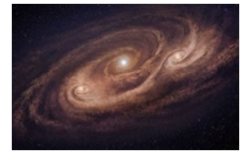
Figure 8: Main Galaxy with Daughter Galaxies
Astronomical observations in recent decades have made it possible to assert that about half of the stars in our Galaxy are double star systems. In light of the stated hypothesis of star formation, it is quite possible that a fragment of the grain of a galaxy - a protostar after the ejection split into two (possibly more) massive parts. This could be due to the fact that even after separation from the grain of the galaxy, intensive formation of matter continued in the fragment of the protostar, its mass and rotational moment increased, which led to an increase in asymmetry, a transition to an elongated shape and separation.
The unevenness of the star formation process over time could cause a different intensity of the process of their separation, and cause "waves of star formation", as a result of which ring galaxies appeared (Figure.9).
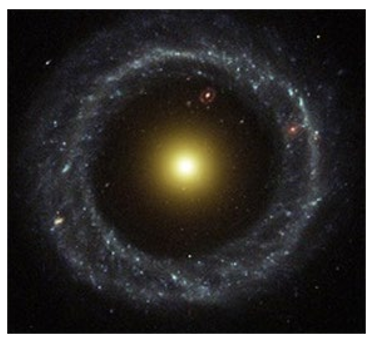
Figure 9: Ring Galaxy (Hoag's Object)
Let's return to the experiments conducted by Richard Hill and Lawrence Eaves in 2008 to study the effect of the rotation speed of a liquid drop in weightlessness on its shape. It turns out that with a further increase in the rotation speed, a drop from a bilobed (highly elongated oval) can transform into a shape close to triangular, or even quadrangular and pentagonal. This allows us to explain the existence of galaxies with more than two "arms".
The author believes that perhaps the processes of star formation did not stop in the distant past, but are still happening now. Thus, stars formed at the initial time of the formation of the universe are now at the edges of galaxies, and later stars form their arms, as in Figure.10
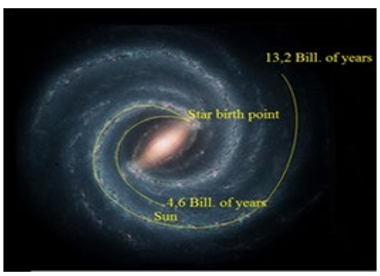
Figure 10: Structure of the Milky Way Galaxy
Analysis of the latest data on the structure and location of galaxies in the form of "threads"and "mesh" structures suggests that the formation of our Universe began with the emergence and spread of massless five-dimensional space, in the form three - dimensional and connected with it two-dimensional space.
The unequal rate of formation of two spaces led to their uneven conjugation, the appearance of excess energy and the formation of points of origin of features, which, formed by the mass of matter, eliminated the uneven conjugation. Similarly, craquelure cracks form on the surface of two paints applied one on top of the other and having different drying rates (Figure.11).
That is why we see the location of galaxies in the form of a kind of "three-dimensional craquelure" in the Universe.
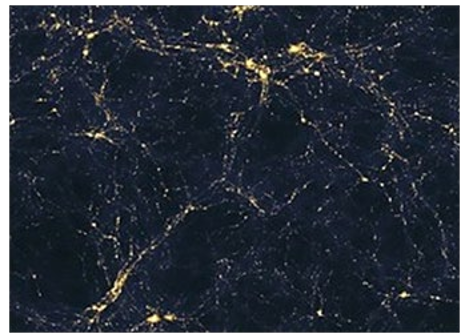
Figure 11: Computer Model of Large-Scale Distribution of Light Sources (Galaxies and Quasars) in the Universe (Open Source)
Then the process of creating the Universe is presented as follows: The Big Bang created massless two-dimensional space at tremendous speed. Which unfolded into a conjugate three - dimensional space. The unevenness of the processes of creation and conjugation of spaces generated energy, which resulted in the formation of mass in the form of irregularities - grains of galaxies.
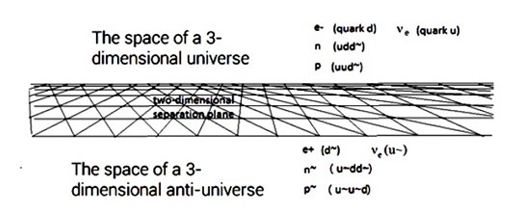
The author considers it possible to assume the presence on the other side of two-dimensional space, a conjugate mirror antiuniverse, which is filled with antimatter (Figure.12).
Figure 12: Two Three-Dimensional Universes Separated by Two- Dimensional Space
Turning to the essence of space as a philosophical concept, it is necessary to recall Zeno's aporia about Achilles and the tortoise [20]. The only possible explanation for why Ahilles will not catch up with the turtle is the falsity of the idea of the infinite divisibility of distance and time [21,22]. Which automatically leads to a model of discrete-continuous space [23;24;25]. In such a space, the dimensions of its structural components are limited to the minimum possible size.
The movement of a material particle in this space must be considered taking into account " kekinema " and " isotachy ", in the form of a "renovation" process, i.e. "disappearance"of a material formation (elementary particle) in one discrete and "appearance" in the next one after a certain period of time.
The proposed model of two three-dimensional universes conjugate to a plane provides an answer to the question that arises - Where was the particle during the disappearances in our space. The model of two universes gives the answer - at that time it, as an antiparticle, was in a conjugate mirror antispace. This explains the absence of baryonic antimatter in our space. In our space, elementary particles are also antiparticles in antispace.
Conclusion
The proposed model of a polysingular universe shows a possible mechanism for the formation of galaxies almost immediately after the Big Bang, through the formation of the most dense rotating matter in a set of singularities formed by the uneven conjugation of spaces.
References
- Fridman, A. A. (1922). Über die krümmung des raumes.Zeitschrift für Physik, 10, 377-386.
- Friedmann, A. (1924). Über die Möglichkeit einer Welt mit konstanter negativer Krümmung des Raumes. Zeitschrift für Physik, 21(1), 326-332.
- Wollack, E. J. Cosmology: The Study of the Universe. Universe Big Bang Theory. NASA (December 10, 2010). Access date: April 27, 2011. Archived May 27, 2012.
- Hawking, S. W., & Mlodinow, L. (2010). The grand design.fBantam Books.
- Krauss, L. M. (2012). A universe from nothing: Why there is something rather than nothing. Simon and Schuster.
- Gliner, E. B. (1970). Vacuum-like state of a medium and Friedmann cosmology. In Doklady Akademii Nauk (Vol. 192, No. 4, pp. 771-774). Russian Academy of Sciences.
- Baade, W. (1979). The resolution of Messier 32, NGC 205, and the central region of the Andromeda Nebula. In A Source Book in Astronomy and Astrophysics, 1900–1975 (pp. 744- 749). Harvard University Press.
- Puget, J. L., & Heyvaerts, J. (1980). Population III stars and the shape of the cosmological black body radiation. Astronomy and Astrophysics, vol. 83, no. 3, Mar. 1980, p. L10-L12., 83, L10-L12.
- Ambartsumian, V. A. (1961). Instability phenomena in systems of galaxies. Astronomical Journal, Vol. 66, p. 536- 540 (1961), 66, 536-540.
- Ambartsumian, V. A. (1965). The structure and evolution ofgalaxies. In Proc. 13th Solvay Conf. on Physics, University of Brussels.
- Furtak, L. J., Labbé, I., Zitrin, A., Greene, J. E., Dayal, P., Chemerynska, I., ... & Williams, C. C. (2024). A high black- hole-to-host mass ratio in a lensed AGN in the early Universe. Nature, 628(8006), 57-61.
- NASA's Webb Draws Back Curtain on Universe's Early Galaxies
- Silk, J., Begelman, M. C., Norman, C., Nusser, A., & Wyse,R. F. (2024). Which came first: supermassive black holes or galaxies? Insights from JWST. The Astrophysical journal letters, 961(2), L39.
- Wang, B., Fujimoto, S., Labbé, I., Furtak, L. J., Miller, T.B., Setton, D. J., ... & Williams, C. C. (2023). UNCOVER:Illuminating the Early Universe—JWST/NIRSpec Confirmation of z> 12 Galaxies. The Astrophysical Journal Letters, 957(2), L34.
- Boldov, I. A. (2022). Mass as Geometry of Space Mathematical Structures and Modeling. - Omsk: Om. State University, No. 3 (63).
- Loytsyansky, L. G. (2003). Mechanics of liquid and gas.Drofa, Moscow.
- Binney, J., Tremaine, S., (1987). Galactic Dynamics. (Chapter 5, Stability of Collisionless Systems) Princeton University Press, 733 p.
- Hill, R. J. A., & Eaves, L. (2008). Nonaxisymmetric shapes of a magnetically levitated and spinning water droplet. Physical review letters, 101(23), 234501.
- Goodman, A. (2020). Astronomers discover huge gaseous wave holding Milky Way's newest stars. The Guardian.
- Makovelsky, A. O. (1999). part 15.
- Yanovskaya, S. A. (1962). The Aporias of Zeno of Elea and Modern Science. Philosophical Encyclopedia. – Vol. 2.
- Courant, R., Robbins, G. (2001). What is Mathematics. P.35- 568 p.
- Vyaltsev, A. N. Discrete Space and Time. Third edition, stereotypical.
- Sharypov, O.V. (1998). The Problem of the Structure of Space in Modern Physics Dissertation of the Institute of Physics and Physics OIIFF SB RAS.
- Korukhov, V. V. (2003). Fundamental Constants in Modern Knowledge: Theoretical and Methodological Aspects Dissertation of the Institute of Physics and Psychology OIIFF SB RAS.