

International Journal of Forensic Research(IJFR)
ISSN: 2767-2972 | DOI: 10.33140/IJFR
Impact Factor: 1.9

Research Article - (2024) Volume 5, Issue 1
Forensic Entomology: Insects as a Toxicological Indicator and Impact of Drugs and Toxins on Insect Development
Received Date: Nov 30, 2023 / Accepted Date: Dec 22, 2023 / Published Date: Jan 08, 2024
Copyright: ©Â©2024 Anjali Sanjay Bhujbal, et al. This is an open-access article distributed under the terms of the Creative Commons Attribution License, which permits unrestricted use, distribution, and reproduction in any medium, provided the original author and source are credited.
Citation: Bhujbal, A, S., Elda, Raju., Thakar. S. R . Rasherao, A. S. (2024). Forensic Entomology: Insects as a Toxicological Indicator and Impact of Drugs and Toxins on Insect Development. In J Fore Res, 5(1), 203-207.
Abstract
Entomotoxicology is a modern branch of forensic entomology. The use of insects to determine the possible presence of drugs, toxins or any other pollutants in the corpse. It moreover studies the effects of drugs or toxins on the development of arthropods and thereby to estimate the post mortem interval. Post mortem interval determination is one of the most important aspects in legal medicine. Use of insects as an alternative matrix for drug detection is well documented and recommended when conventional matrices such as blood, urine or internal organs are no longer available. Drugs within a corpse may affect the development rate of insects that feed on them. Carrion flies feed on dead bodies and may consume the toxic substances found within them. The toxic substances can further be extracted from those insects and can be analysed by gas chromatography /mass spectrometry.
Keywords
Forensic Entomotoxicology; Post Mortem Interval; Drugs; Toxic Substances; Arthropods; Accumulated Degree Days (ADD); Accumulated Degree Hours (ADH).
Introduction
Forensic entomotoxicology is a branch of medicine, which ap- plies entomology, toxicology and other related studies to solve the poisoning cases [1]. The consequences due to pills and pollutants on arthopods development is also studied under it. The cause and manner of death of the victim can be determinedby the application of entomotoxicology in forensics [2]. Insect specimens collected from dead bodies by the entomologists can also be used to estimate the minimum post-mortem interval (PMI) of the corpse. There will be variation in the developmental stages of the insects feeding on the corpse depending on the type of poison or toxic present within them. These variations makes it easier for the entomologists to find the cause and time of death of the victim [3].
Beetles (Order: Coleoptera) and beetle feces are often hired in entomotoxicology, but the presence of pollution is commonly the consequences of the beetles feeding on the fly larvae which might be feeding at the carrion containing toxious materials. This overview is aimed towards presenting a top level view to forensic odontologists about the benefits of the usage of the entomological evidences in estimating the time, cause and manner of death [4].
Material and Method
Accumulated degree days or hours (ADD/ADH) can be of use when it comes to estimating the post mortem interval of any corpse. The ADH value represents the number of “energy hours” needed for the insect larvae to develop. The concept of degrees of days or hours suggests that the rate of development is proportional to the temperature within the temperature range of a particular species. Forensic entomologists making use of forensic entomology to of- fer data for death investigation. The following steps are followed while applying entomology in forensic investigations.
1. Identification of insect's developmental cycle i.e. eggs, larva and adult.
2. Storage (collection and preservation) of entomological evidenc- es.
3. Estimation of post mortem interval by calculating ADH/ ADD.
4. Testifying in courtroom to give an explanation for insect associ- ated proof observed at the crime scene [5]. Insects are attracted to a dead body immediately after death. The insect’s colonization pattern occurs in a predictable manner [6]. A corpse,i.e human or animal is a food resource for insects, so they usually initiates the decomposition of the dead body. Physical, chemical and biological changes are observed in a corpse during their decomposition [7].
Collection and preservation of Entomological evidences:
Materials required:
Cadaver, sampling jars or vials, forceps, fine brushes, entomologi- cal nets, thermo- hygrometer, gloves, mask, labels [8].
Chemicals required:
• Preservative made from Kerosene: Acetic acid: Alcohol in the 7:2:1 [8].
• Cannon Insecticide (Toxin):-
Chemical Composition: Chlorpyriphos50% w/wcypermethrin 5% w/w Observation table: A. Specimen without toxin/ control.
Procedure:
1. The face mask and gloves were worn prior to the collection of entomological evidences.
2. The temperature and humidity of the cadaver were noted.
3. With the help of forceps, the openings of the cadaver like eyes, mouth, wounds, and other traumas were carefully observed for eggs, larvae, pupa and insects periodically.
4. For collecting eggs and larvae, fine brushes were used and they were stored in vials containing the preservative. Half of the eggs and larvae are kept as it is to observe their growth cycle.
5. Entomological nets were used to catch the insects found on the dead remains and they were later stored in containers with small openings.
6. All the collected entomological evidences were properly packed and labelled. 7. Photos were taken to document the entire procedure.
Observation table:
A. Specimen without toxin/ control.
|
Sr. No |
Developmental stages of the insects |
Date of collection |
Time of collection |
Average Tempera- ture (°C) |
Average Humidity (%) |
|
1 |
Insects |
4/5/22 |
4:00pm |
39.5 |
17.6 |
|
2 |
Eggs |
5/5/22 |
10:00am |
40.3 |
14.3 |
|
3 |
First instar |
6/5/22 |
1:00pm |
38.3 |
16 |
|
4 |
Second instar |
7/5/22 |
10:00am |
39.8 |
16 |
|
5 |
Third instar |
8/5/22 |
10:00am |
36 |
18.7 |
|
6 |
Pupa |
13/5/22 |
1:00pm |
37.1 |
17.7 |
Table 1: Collection Details of Insects with Respect to Their Developmental Stage from the Cadaver without Toxin
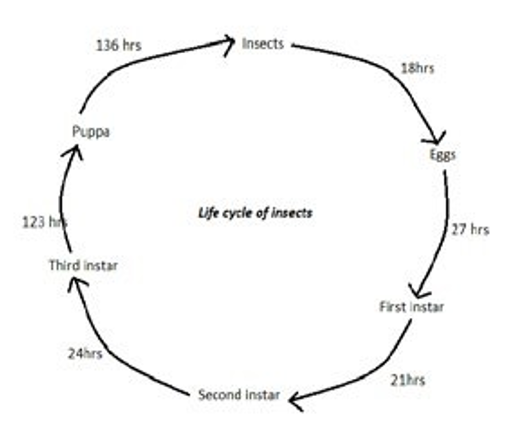
Figure 1: Life Cycle of Insects from Cadaver without Toxin

Figure 2: Stages of Larvae from Cadaver without Toxin Sample
B. Specimen with toxin:-
|
Sr. No |
Developmental stages of the insects |
Date of collection |
Time of collection |
Average Temperature (°C) |
Average Humidity (%) |
|
1 |
Insects |
18/4/22 |
1:00pm |
38.8 |
15 |
|
2 |
Eggs |
18/4/22 |
4:00pm |
38.8 |
15 |
|
3 |
First instar |
19/4/22 |
1:00pm |
37.3 |
16.7 |
|
4 |
Second instar |
20/4/22 |
10:00am |
36.3 |
17.6 |
|
5 |
Third instar |
21/4/22 |
10:00am |
34.5 |
21.3 |
|
6 |
Pupa |
25/4/22 |
10:00am |
37 |
20.3 |
Table 2: Collection details of insects with respect to their developmental stage from the cadaver with toxin:-
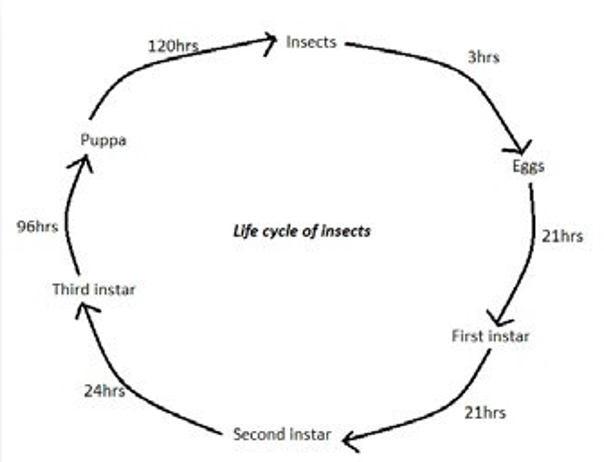
Figure 3: Life Cycle of Insects from Cadaver with Toxin
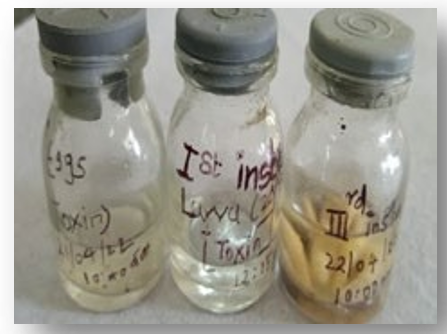
Figure 4: Stages of Larvae from Cadaver with Toxin
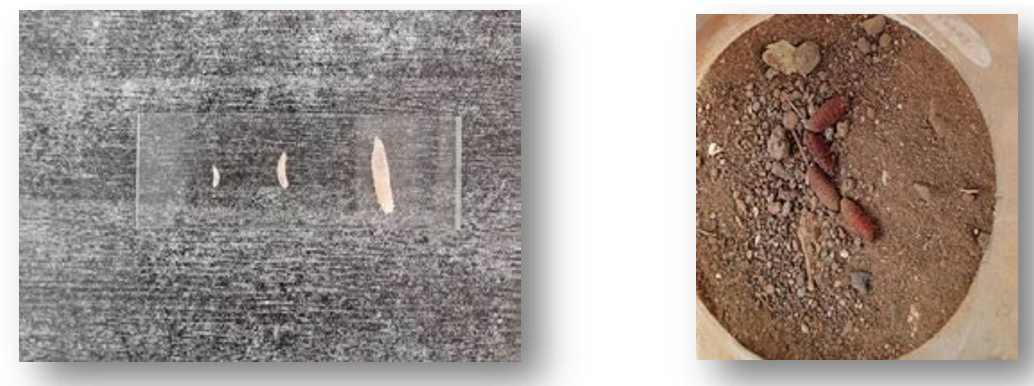
Figure 5: 1st,2nd,3rd Instar Figure 6: Pupa
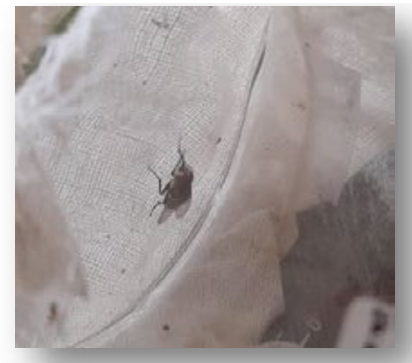
Figure 7: Adult Fly
Observation
The toxin in the cadaver was found to be enhancing the develop- ment of the insects till a certain level of their growth cycle. (i.e. pupal stage). Afterwards their growth was inhibited by the action of the toxin present on the cadaver.
|
Developmental stages Of the insects |
Specimen without toxin ADH Accumulated degree days/hours (ADD/ ADH): |
ADD |
Specimen with toxin ADH |
ADD |
|
Insects |
- |
- |
_ |
- |
|
Eggs |
18hrs |
Half day |
3hrs |
Half day |
|
First instar |
27hrs |
1 day |
21hrs |
1 day |
|
Second instar |
21hrs |
1day |
21hrs |
1 day |
|
Third instar |
24hrs |
1 day |
24hrs |
1 day |
|
Pupa |
123hrs |
5 days |
96hrs |
4 days |
|
Insect |
136hrs |
5 and half days |
120hrs |
5 days |
Table 5: Comparison Between with Toxin and Without Toxin Sample
Conclusion
The insect succession pattern can vary with the chemical charac- teristics of the toxin or the poison present in the cadaver.The de- velopmental stages of the insects in and around the dead body can be closely examined for determining their post-mortem interval. The possible intake of any toxic substance prior to the death of the victim can also be determined based on the variation in the developmental cycle of the flies or insects feeding on those corpse. Further those substances can also be extracted from them. So to conclude, entomological evidences play a crucial role in finding the time, cause and manner of death in criminal investigations.
References
- Jason H.Byrd and James L.Castner. (2009). Forensic Ento- mology : The Utility of Arthropods in Legal Investigations.
- Gosselin, M., Wille, S. M. R., Fernandez, M. del M. R., DiFazio, V., Samyn, N., De Boeck, G., & Bourel, B. (2011).
- Introna, F., Campobasso, C. Pietro, & Goff, M. L. (2001). Entomotoxicology. Forensic Science International, 120(1–2), 42–47. https://doi.org/10.1016/S0379-0738(01)00418-2
- Isaac Joseph, Deepu G Mathew, Pradeesh Sathyan, and G. V. (2011). entomology. Journal of Forensic Dental Sciences.
- Gujar, G., Chouhan, A. K., & Sodha, D. B. (2020). Forensic entomology : Insects as evidence. 8(6), 2059–2061
- abdulmani H.Al. (2019). Forensic insects attracted to human cadavers in a vehicular environment in Riyadh,Saudi Arabia. ScienceDirect, 26(7), 1499–1502. https://doi.org/https://doi. org/10.1016/jsbs.2019.04.011
- j amendt. (2004). forensic entomology. http://pubmed.ncbi. nlm.nih.gov
- Collecting and preserving insects and mites: techniques and tools. (2001). Systematic entomolgy laboratory,USDA.