

Journal of Emergency Medicine: Open Access(JEMOA)
ISSN: 2994-6875 | DOI: 10.33140/JEMOA
Impact Factor: 0.98

Review Article - (2026) Volume 4, Issue 1
Falls Among Community Dwelling Elders: Evidence Based Emergency Room Actions and Multi-Factorial Falls-Prevention and Control Programs and Recommendations for Osteoarthritis Fallers [1976-2026]
Received Date: Dec 22, 2025 / Accepted Date: Jan 16, 2026 / Published Date: Jan 23, 2026
Copyright: ©2026 Ray Marks. This is an open-access article distributed under the terms of the Creative Commons Attribution License, which permits unrestricted use, distribution, and reproduction in any medium, provided the original author and source are credited.
Citation: Marks, R. (2026). Falls Among Community Dwelling Elders: Evidence Based Emergency Room Actions and Multi-Factorial Falls-Prevention and Control Programs and Recommendations for Osteoarthritis Fallers [1976-2026]. J Emerg Med OA, 4(1), 01-09.
Abstract
Aging is often accompanied by an increased tendency to fall and sustain various degrees of injury, a high subsequent or recurrent falls risk, and a forthcoming or heightened functional decline especially in the event of any ensuing disabling painful lower limb osteoarthritis onset or exacerbation. This work describes what is reported about falls in the older population in general, and more specifically in the context of the emergency room and related measures to assess, und recommend strategies to avert future falls in those discharged to the community. Using the PUBMED data base and others, studies sought were those likely to inform or advance secondary prevention themes that could be applied to avert any recurrent falls risk, as well as those that may minimize pain and disability. The search results revealed it may be possible to lower the chances of incurring one or more falls in the future and their impact on further health and disability challenges via a combination of sound and comprehensive emergency falls response procedures. In addition to standard program efforts, we review a possible role for advancing vitamin C testing and supplementation as indicated as a means of fostering speedy full recovery from any ensuing internal soft tissue and adverse joint structural falls trauma responses.
Keywords
Emergency Room, Falls, Fall Injuries, Older Adults, Osteoarthritis, PreventionIntroduction
Injuries including violent injuries remain extremely serious public health issues because although health in general has improved immeasurably over the last 60 years or more, injuries alone continue to threaten the daily lives of people of all ages, in all countries, including the United States.
• This threat comes in the form of:
• Premature death
• Disability
• An immense financial burden [1]
Indeed, over time data show almost 80 million people are disabled each year because of injuries, both intentional and unintentional and that both fatal and non fatal injuries contribute a significant health, economic and social burden among people of all ages, ethnicities, races, and regardless of health status, income level or gender. In this regard:
• Injuries or events are a persistent public health concern implicating and characterized by a disproportionate energy transfer between the ‘victim’ and a stationary object (e.g. the ground) or a moving object (e.g. another vehicle) that can lead to trauma and even possible death or both. Falls, often classed as an unintentional form of possible injury, or injury event, are highly prevalent and costly and a realm of injury deemed increasingly salient to prevent. In this regard, and according to Bonner et al. around 10-25% of hospital or community originating emergency calls are those stemming from adults aged over 65 years or older who report or incur a fall, a costly situation that is increasing, rather than decreasing, but often undermined despite its immense national impact [2,3]. Indeed, regardless of the extent of any falls injury, even if the faller does not require hospitalization these largely unanticipated events are consistently found to lower life quality, engender a disabling fear of falling and reduced confidence, and predict a life changing loss of independence. Most commonly, activities of daily living may be negatively impacted as well as mobility and following this the risk of reactive depression and isolation remains high. Recurrent falls that exacerbate overall quality of life declines are common as well.
While ambulance service staff personnel are commonly well placed to identify falls risk factors so patients and the uninjured can be directed appropriately, they may not have the means to reach all older fallers, and even if they do, the problem of future falls risk remains substantive especially in the case of prevailing knee osteoarthritis, a known falls predictor [4-6]. Preventing this detrimental health cycle is especially important for mitigating associated healthcare expenditures during the acute as well as post-acute period, and occurs more readily in those with comorbidities as well as those cases who are not treated optimally [7]. However, despite the above facts and an immense increase in the numbers of adults living to higher ages, a group that is most vulnerable to falls and the presence of comorbid health issues such as osteoarthritis, frailty, bone fragility, and weak lower leg muscles, programs and current efforts to avert future falls events and emergency room visits are often found suboptimal at best [8,9].
Previously, as many as 1 in 3 rather than the current estimated 1 in 4 older adults were found to fall each year according to best current estimates, however, these data may yet be underestimates because they may not include those adults who fall but do not report this [8-10]. Moreover, of the 36 million older adults who may report a fall each year, even if 32,000 were found to be projected to die as a result in previous analyses, not only has this rate soared to 36, 408 as of 2020, but about a third of those who survive will still however, most likely suffer injuries that reduce mobility and independence [10,11]. As well, it is still probable that about 42% of cases will warrant hospital admissions, and approximately 50% of home-based fall injuries will result in a hospital discharge to a nursing home [9]. Additional falls-related complications that can contribute alone or in tandem to high disability levels include hip fractures, joint dislocations, joint soft tissue injuries other than dislocations, brain injuries, lacerations, internal injuries, dehydration, muscle wasting, pain and pressure sores due to "long lie times." Other complications include the onset or perpetuation of the ‘fear of falling, more emergency room visits than desirable, feelings of isolation, and dependence, all of which can result in enormous physical, social, and morbidity costs [12,13].
Approach
In this overview and commentary paper we aimed to:
• Explore the impact of falls on the public’s health in 2026.
• Examine what can be done to prevent falls among the elderly.
• Discuss some important strategic concepts in the realm of emergency medicine and falls management, prevention and control.
The focus was on obtaining knowledge and the application of this knowledge, rather than only conducting a critical review and one that extended beyond the role of the emergency department and paramedic personnel, health educators, health professionals, researchers, and health policy makers in that venue in the context of falls among community dwelling older adults who are discharged without hospitalization.
Rationale
The hospital-based emergency room and its role as first responders with the ability and know how to assess and develop messages that can be readily conveyed to those community dwelling elders who incur a single acute fall is of great import in our view due to its high public health salience and goals of healthy living for all including those in pain and with poor walking endurance and who appear frail [5,14]. As well, we believe emergency room personnel are well situated and tentatively well schooled and sufficiently competent at understanding the need to address many levels of influence in order to prevent future falls. This can extend to addressing any obvious falls determinants such as visual impairment, inappropriate eyewear usage, alcohol usage, psychoactive medication overuse signs, and/or signs of drug abuse [15-19]. Prevailing difficulties with gait, postural control, and balance, comorbid health conditions and body mass presentation and pain can also be assessed readily by a team of workers in the emergency setting in efforts to limit or mitigate poor emergent health, recurrent falls, or any exacerbation of the degree of prevailing chronic pain, and declining functional status [20-25].
Since falling is the leading cause of emergency department visits, and emergency medical services and high rate of readmissions, and increased mortality, both in-hospital and after discharge with only one third of patients discharged home to independent living more attention is indicated in this realm [25]. These future efforts should examine whether improvements in the quality of post hospital care can affect both mortality and functional outcomes [26]. Moreover, establishing what is efficacious and plausible for averting multiple forms of excess disability and adverse falls ramifications in high age adults who want to remain independent is a topic of high current interest to many [27]. The added complexity of osteoarthritis disability is a related topic that is very poorly explored in this regard but highly relevant even if a fall appears to be non-injurious [28]. This is especially so given its oftentimes hard to discern multi mobility impacts, neuropathic pain presence, and the use of narcotic based medications [28,29]. Alternately, based on what we know, it may be impossible to uniformly avert the high chances of incurring a potentially more severe future fall, prolonged pain, the spread of pain, and excess disability [6,30]. Those direct care providers and personnel who can thus act promptly and insightfully may prove invaluable in terms of conducting careful initial assessments and tailored recommendations based on their findings. Unfortunately, existing falls preventive approaches that have some efficacy may be necessary, but not sufficient to drive desirable outcomes following an acute falls episode [31-33].
Methods
All relevant data located in PubMed from January 1 1976 â?? January 15, 2026 using the key terms older adults, falls, emergency medicine and osteoarthritis - the mobility disease deemed key in the falls events processes were reviewed for their relevance. Accepted were articles published in the English language as full reports and pertinent to the current theme, with the exception of falls relative to older adults in general, those with specific health challenges other than osteoarthritis, laboratory studies, and/or studies on total joint replacement surgery, intervention studies and articles that did not discuss osteoarthritis per se, for example those that discussed the perception of possible falls, the fear of falling, or falls self-efficacy, but not emergency department related data or osteoarthritis. Data were carefully reviewed by the author-a falls injury and osteoarthritis expert- for relevance and those articles deemed potentially informative in the authorâ??s view were downloaded and analyzed. PUBMED was selected as the key electronic data source of information given its widespread data repository and effective method of organizing recent as well as relevant data. Accepted were articles published in the English language as full reports and pertinent to the current theme, with the exception of falls relative to young adults, those with specific health challenges other than osteoarthritis, laboratory studies, and/ or studies on total joint replacement surgery, intervention studies and articles that did not discuss falls per se, for example those that discussed the perception of possible falls, the fear of falling, or falls self-efficacy, but not osteoarthritis. All years were searched to cover the best sources of basic insightsResults
General Observations
Among the modest number of articles on the present themes, a quantitative, cross-sectional study performed at a hospital emergency room in 2017 that examined the medical records of 1.460 elderly patients, with a registry related to fall as the main complaint showed most were female (66.92%), older than 80 years old (27.27%), single (41.37%), and hypertensive (78.79%). Falls from ground level comprised 88.56% of the admissions and their main consequence was trauma (55.65%) and 66.30% were discharged after consultation, suggesting emergency departments may need to explore if this group can be targeted to avert future similar events [34].
This argument seems reasonable, given that past data reveal the specific continuing importance of efforts towards understanding the risk factors for falling in general as well as in the individual case, followed by carefully documented evidence-based strategies to reduce potentially modifiable risk factors including physical activity programs to improve strength, balance and coordination after discharge to the community [30,31]. One realm mentioned is a role for supervision to minimize the use of psychoactive medications, along with interventions that maximize control of comorbid conditions [35]. Others include a role for recommending environmental assessments and modifications [36]. Others not often alluded to are the use of hip protectors, specific shoe types and dietary factors [37]. Another possible approach may entail adopting or ensuring the faller is physically prevented from further injury.
In cases suffering from osteoarthritis of a lower limb joint or those adults at risk for this disabling condition that often evokes a fall, Sharma et al. showed vitamin C presence can possibly secure, or improve more optimal cellular health and functioning of articular cartilage, than not [38]. Likewise, Koike et al. found a vitamin C derivative to effectively delay cartilage degeneration that can provoke pain and a cycle of falls related vulnerability [39]. It also appears vitamin C, a mediator of wound healing with anti-inflammatory properties, among other functions could be relevant to an older faller who has pain or an active osteoarthritis diagnosis [40-42]. Cubitt et al. support this view as a whole and conclude that given the change in the epidemiology of injury that is one trending rapidly upwards among many older adults with low muscle force mechanisms, great care is needed to foster desirable patient-centered outcomes relevant to an injured older adult with joint dysfunction at high risk for independence losses, recurrent more severe and extensive injurious recurrent falls and especially to allay possible unnecessary usage of health resources plus emergency personnel time, transport and hospital costs, in the face of preventable fractures alone [2,13,43-45].
For example, in the case of first-time faller, timely assessments of the home environment may help abate the incidence and magnitude of some falls injuries among those who are highly vulnerable, such as those with extensive osteoarthritis pain and post falls inflammation, muscle weakness, and gait disabilities [46]. Long term therapy will likely be more efficacious than short lived efforts when considering the need to curb a high percentage of falls incurred in and outside the home. Safety education appears highly relevant here [47]. Fallers experiencing multiple falls might be screened for anxiety and depression, as well as the fear of falling plus osteoarthritis progression [48].
In this regard, it appears bedside screening to identify and categorize falls frequency as rare versus frequent, and whether osteoarthritis disability prevails or nor can possibly advance what is needed post discharge and why. To this end, partnerships between different players in the healthcare arena appear desirable as do policy efforts towards making investments in training emergency responders and related community-based personnel as well as emergency medicine personnel using best practice methods for implementing and recommending proven practical screening approaches at intake. These approaches can be used to help clinicians to plan for meaningful tailored falls-related health education, counseling, physical activity strategies, and other forms of intervention that have the potential to reduce individual-level falls risks, their extent and adverse impact on health and life quality, and disability severity. In addition, the necessary equipment if required as well as environmental modifications both in and outside of the home and that constitute system-level changes must be identified and rectified in a timely way if deemed suboptimal.
Emergency Medicine Related Observations
Among recent reports involving the role and efficacy of emergency department efforts to mitigate falls in older adults, it appears falls are the most common injury requiring attention in this regard, as well as management and control among the older community dwelling population, Stoeckle et al. who set out to identify best practices for falls prevention in the emergency department found some benefits of a specific emergency department falls assessment and educational strategy [25,49]. In the immediate post intervention period, they reported zero falls occurred, although the rate subsequently rose to 5.2 falls per month. However, whether the strategy was the active beneficial preventive ingredient is uncertain. It was also unclear if the educational materials extended to community related environmental hazards and whether the falls were related to and predicted by the original case by case assessments of vulnerability or not, such as age [50]. However, successful, it is clear these potentially efficacious multicomponent change strategies must be researched more intently to foster sustainable leadership support for such efforts [49].
Another article describing the design and evaluation of a promising interactive inter professional educational session that embraced training emergency department teams on falls issues among older adults showed this too to have some utility. As opposed to patient education, it specifically provided a space where physicians, nurses, physical therapists, social workers and pharmacists could interface and learn about the ways in which each discipline could contribute to improved older adult care. Geriatric Emergency Medicine (GEM) guidelines were also noted as having merit [51]. An evidence-based fall-risk assessment tool for use in emergency departments has also been described as useful for engaging nurses in the process of implementing evidence-based practice changes in emergency department and is one approach that could result in fewer future falls incidents [52].
Barker et al. who conducted a randomized controlled trial investigating whether a 6-month telephone-based patient-centered program-RESPOND-would have an effect on falls and fall injuries in older people presenting to the emergency department after a fall and post discharge home found this approach beneficial [53]. The intervention included assessment, six months of telephone-based education, coaching, goal setting, and support. Primary outcomes were falls and fall injuries in the 12-month follow-up. Secondary outcomes included emergency department presentations, hospital admissions, fractures, death, falls risk, falls efficacy, and quality of life. Assessors blind to group allocation collected outcome data via postal calendars, telephone follow-up, and hospital records. There were 430 people in the primary outcome analysis-217 randomized to RESPOND and 213 to control. Reported falls per person-year were 1.15 in the RESPOND group and 1.83 in the control group. This does not appear robust and fall injuries were said to occur at similar rates. While the rate of fractures was significantly lower in the RESPOND group compared with the controls, no significant group differences in other secondary outcomes were evidenced: Limitations of this study were however, the high number of dropouts (n = 93); possible underreporting or misleading characterization of falls, fall injuries, and hospitalizations across both groups; and the relatively small number of fracture events. It was still concluded that adopting a routinely applied patient-centered falls prevention program could improve outcomes in general as well as reducing recurrent falls but more should be done to study this. The subjects studied should also resemble those in the population, but in this study all could walk and had no discernable mental health deficit. Moreover, whether older adults joining such as program would success if they had painful unstable lower limb osteoarthritis and gait abnormalities was unclear.
In this regard, Morello et al. who strove to determine whether multifactorial falls prevention interventions are effective in preventing falls, fall injuries, emergency department re-presentations and hospital admissions in older adults found non-conclusive effects [54]. This group who examined the efficacy of preventive interventions targeting community-dwelling older adults post falling analyzed studies aggregated despite their variable methodological attributes and quality. Most however included education, referral to healthcare services, home modifications, exercise and medication changes as their interventions, and these continue to be employed in most centers today. However, given that individuals in poor health are at a higher risk for falling than those in good health, assessing their responses without efforts to identify vulnerability issues may prove confusing at best. Moreover, in what respect this basic five-dimensional intervention approach is likely to have differential impacts on functional and recovery speed and degree in the event of a secondary fall is unclear.
Carpenter et al. argue that to reduce falls injury rates, more research to overcome the absence of a compelling emergency medicine evidence base and validation of pragmatic screening instruments is essential [55]. Given that individuals in poor health are at higher risk for falling than those in good health, assessing the older faller’s vulnerability to future extrinsic as well as intrinsic falls risk factors may also prove paramount in efforts to allay the older person’s susceptibility to falls in the face of progressive osteoarthritis. Moreover, this approach is likely to have the added benefit of improved functional and recovery speed and degree in the event of a secondary fall and/hip fracture as well as a joint damage flare ups. To offer best outcomes among the most vulnerable older age fallers, individualized intervention strategies that include nutritional, physical, environmental safety, vision, and mental health strategies may be helpful. In addition, the importance of adequate indoor and outdoor lighting, appropriate footwear or stability devices, supplemented by education that reduces fear of falling and risky behaviors may minimize any future falls risk, while promoting safer more life affirming function and mobility attributes [56].
In sum, although the topic of falls prevention warrants more rather than less close attention in multiple spheres, many meta-analyses specifically related to primary falls-related prevention programs remain insufficiently sound or informative to be institutionalized in any sphere in 2026 [57,58]. As well as immense alterations in the context in which falls may differ in 2026 compared to those before COVID unfolded, those cases studied previously may not represent current high age population trends, assessment tools may be insensitive, and some fallers may be overlooked due to health insurance gaps or falls occurring within the context of a hospital stay. Miro et al. noted only a third of elderly patients attended to in an emergency department after a fall tended to receive recommendations targeting the prevention of further falls [59]. Certain patient and fall characteristics were associated with a greater likelihood of receiving such recommendations that may well prove costly. However, rather than awaiting for more insights, and well designed and controlled contemporary falls related epidemiologic and intervention studies to emerge Young et al. suggest a machine learning algorithm can possibly offer more accurate immediate predictions of outcomes after a fall and can probably predict who should be discharged home and with what management recommendations [60].
This argument appears reasonable given the mounting evidence that suggests a growing proportion of older and adults worldwide will continue to fall annually, and that will require skilled health promotion providers, therapists, and psychologists to work in tandem with emergency medicine personnel to uncover, identify and intervene preemptively among community-dwelling individuals at high risk for future falls [45]. Davenport et al. specifically argues that while emergency department providers commonly excel at assessing and ruling out injury, they may miss the opportunity to identify a large portion of the modifiable risk factors that have contributed to a patient's fall and that may arise again to provoke a second or third fall, for example pain, joint erosion and instability, and joint inflammation [56]. Of increasing import as well are data highlighting the serious implications of a fall and often its additional or emergent chronic care needs that far exceed the injuries acute care needs [61]. Other data show adoption and implementation of older adult-specific clinical practice guidelines can improve outcomes for many and should be encouraged [50].
Discussion
context of falls prevention and intervention is a topic not discussed to a high degree in medical training realms and others, despite its high societal relevance. It also rarely discusses some relevant falls related literature that relate to community-dwelling adults over 65 years of age with an osteoarthritis diagnosis who may be referred to the emergency department after a fall alongside those who are disease free. The goal was to examine the success of current and past secondary falls prevention efforts and whether more can be done in efforts to reduce or avert multiple mobility problems and others that can arise due to incident as well as recurrent falls in the able bodied, as well as a possible disabled subgroup of older adults. Since many falls occurrences that lead to injury occur in the community, this review specifically examined some secondary prevention strategies that have been implemented to prevent or reduce the impact of emergency department-based falls interventions and the known reasons for this, so as to be in a better position to offset future injuries or falls reoccurrences among those older adults who wish to live within the community, rather than the nursing home or assisted living settings.
In this respect Solie et al. argue in favor of the Tiedemann rule that can be used to differentiate older adults at high risk for future falls from low risk individuals [62]. This premise should be examined in our view given the fact more than a million people suffer from a slip, trip, or falling injury each year and are seen in the emergency department, of which many may already be recurrent fallers. As the world populations age, and live to higher ages, it appears all modes of effort to broaden and screen for and address the presence and extent of remediable falls risk factors and who is at high risk can markedly impact falls injury events and lives and should be a high priority for hospitals and health policy makers as well as clinicians and the elders themselves. Given all we do know, it seems safe to say that efficacious timely personalized evidence-based efforts now appear necessary to potentially yield more efficient use of limited societal resources, reduce morbidity and mortality rates attributable to falls among community-dwelling high age adults at high risk for falling rather than assuming ‘a one size fits all’ paradigm of intervention’ or a fatalistic set of beliefs about falls in the aging context. Also required to improve outcomes are extensive interdisciplinary collaborations, the dedication of skilled emergency medicine practitioners and administrators, salient assessment tools and follow up processes that extend beyond the hospital into the community and that may confidently include the following evidence based strategies:
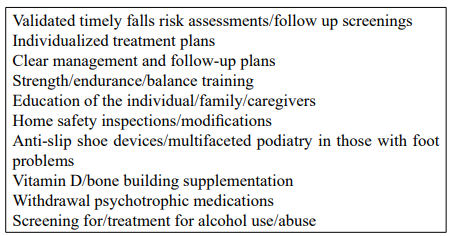
Note: Drawn from references: [12,16,17,22,63-69]
The hypothetical importance of vitamin C as an antidote to pain and inflammation post injury may be worth exploring as well in terms of body healing in an age group where this may be slowing down as well as reducing post fall adverse manifestations of fatigue, joint swelling, muscle aches and pains, sleep challenges, and emotional changes that cannot be discounted as future disabling falls predictors. Conversely, coupled with appropriate doses of targeted mechanical stimulation, improving the mechanical properties of bone as well as joint cartilage and other shock absorbing tissues including muscle can potentially diminish harmful energy transfer to the skeleton during an unexpected fall.
In addition to improving surveillance of communities, individuals who might be specifically targeted are those with painful mobility problems such as osteoarthritis as well as:
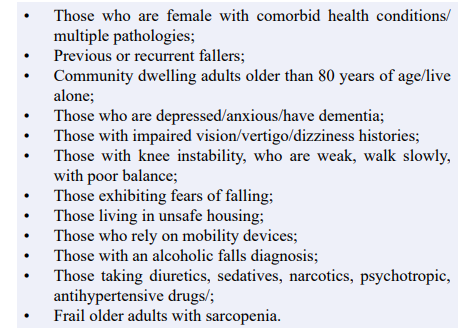
Adopted from: [4,9,12,16-18,27]
As well, those with likely deficits in nutrition, food security or meal preparation issues should be screened.
In sum, due to the devastating impact of both single as well as multiple falls injuries, even if considered low key and non-injurious as outlined by Schneider et al. who noted falls injury events and their prevention have appeared highly underfunded and unrecognized for years, emergency medicine personnel in 2026 and beyond appear to be in a prime position to guide interventions that can prevent a high number of future community based falls events and their immense costs [3,9]. Additionally, they may garner increased policy support if their future research is well designed and the documented outcomes are sufficiently compelling. They can educate, as well as advocate for more support and resources as well as time to conduct meaningful valid assessments and access to AI inputs as well as team-based inputs, and possibly for early warning devices or wearables for the falls case that lives alone. The nature of falls may also change as older adults live to higher ages, retire later, and may have limited social or family assistance, for example they may fall from a height clearing snow [4].
Conclusions
Based on the above sources and ideas and until more success at preventing falls in the older population is manifest we conclude:
• Older adults who fallwill commonly require emergency services [7].
• Older poorly assessed and treated falls cases will continue to place significant demands on emergency medicine resources and personnel even after an apparent non-injurious fall.
• Not all falls cases will receive adequate education especially if they are repeat fallers.
• Access to personalized care pathways including GP referral, allied and community health services, and home health care and safety and improving tolerance for absorbing impact may benefit this high-risk patient group.
• Insightfully developed programs may improve falls rates and outcomes immensely and can be achieved by dedicated efforts of emergency medicine personnel towards ensuring rapid responses and intake when summoned, and thereafter, carefully identifying and recommending strategies to combat’ falls risk factors in and out of the home accordingly and especially among osteoarthritis cases [70,71].
In short, the scientific study of falls injuries has clearly demonstrated that these do not occur at random-
• Like any disease, they tend to follow a distinct understandable and measureable array of underpinning risk factors and associated patterns of adverse outcomes if overlooked or undertreated.
• Studying these patterns has made it possible to isolate and predict many etiological falls predictors and thereby to prevent many falls injuries from occurring.
• It also involves understanding the behavioral, economic, environmental, social, health and cultural causes that are involved in producing injuries.
In turn, as the focus has become a largely scientific one, this non-fatalistic approach is likely to yield more benefits than not and that may include physical, mental, social, societal, and financial dimensions that could all be greatly enhanced in multiple ways through dedication and insightful epidemiological, efficacious therapeutic, and public health efforts.
Closing Remarks
In the current realm of concern for easing health care costs, combating injurious falls is an important economic, humane, and social issue. Emergency medicine responders and entities are encouraged to continue their efforts to reduce associated ramifications of grief, depression, pain, premature mortality and morbidity rates.
• Focusing on older at-risk adults plus osteoarthritis cases in particular through more expansive emergency room triaging and post injury follow ups can potentially reduce any inevitable future downward health spirals, plus the magnitude and intensity of acute and chronic care needs, surgery needs and poor outcomes including falling, and overall rehabilitation costs.
• Altering the biomechanical/environmental/and nutritional parameters known to impact falls’ risk, as well as fostering salient understandings and actionable educational and possible technical safety interventions will likewise prove favorable as well in our view [72].
References
- National Research Council, Division on Earth, Life Studies, Commission on Life Sciences, & Committee on Trauma Research. (1985). Injury in America: A continuing public health problem. National Academies Press.
- Bonner, M., Capsey, M., & Batey, J. (2021). A paramedic’s role in reducing number of falls and fall-related emergencyservice use by over 65s: a systematic review. British paramedic journal, 6(1), 46-52.
- Schneider, E. C., & Beattie, B. L. (2015). Building the older adult fall prevention movement–steps and lessons learned. Frontiers in Public Health, 2, 194.
- Ikutomo, H., Nagai, K., Tagomori, K., Miura, N., Nakagawa, N., & Masuhara, K. (2019). Incidence and risk factors for falls in women with end-stage hip osteoarthritis. Journal of geriatric physical therapy, 42(3), 161-166.
- Aljehani, M. S., Crenshaw, J. R., Rubano, J. J., Dellose, S. M., & Zeni Jr, J. A. (2021). Falling risk in patients with end-stage knee osteoarthritis. Clinical rheumatology, 40(1), 3-9.
- Deng, Z. H., Xu, J., Long, L. J., Chen, F., Chen, K., Lu, W.,... & Peng, L. Q. (2021). Association between hip and knee osteoarthritis with falls: A systematic review and meta-analysis. International journal of clinical practice, 75(10), e14537.
- Newgard, C. D., Lin, A., Caughey, A. B., McConnell, K. J., Bulger, E., Malveau, S., ... & Eckstrom, E. (2022). Falls in older adults requiring emergency services: Mortality, use of healthcare resources, and prognostication to one year. Western journal of emergency medicine, 23(3), 375.
- Boltz, M. M., Podany, A. B., Hollenbeak, C. S., & Armen,S. B. (2015). Injuries and outcomes associated with traumatic falls in the elderly population on oral anticoagulant therapy. Injury, 46(9), 1765-1771.
- Sattin, R. W., LAMBERT HUBER, D. A., Devito, C. A.,Rodriguez, J. G., Ros, A., Bacchelli, S., ... & Waxweiler,R. J. (1990). The incidence of fall injury events among the elderly in a defined population. American journal of epidemiology, 131(6), 1028-1037.
- Shankar, K. N., & Li, A. (2023). Older adult falls in emergency medicine, 2023 update. Clinics in geriatric medicine, 39(4), 503-518.
- Santos-Lozada, A. R. (2023). Trends in deaths from falls among adults aged 65 years or older in the US, 1999-2020. Jama, 329(18), 1605-1607.
- Howland, J., Lachman, M. E., Peterson, E. W., Cote, J., Kasten, L., & Jette, A. (1998). Covariates of fear of falling and associated activity curtailment. The Gerontologist, 38(5), 549-555.
- Heinrich, S., Rapp, K., Rissmann, U., Becker, C., & König, H. H. (2010). Cost of falls in old age: a systematic review. Osteoporosis international, 21(6), 891-902.
- Hollinghurst, R., Williams, N., Pedrick-Case, R., North, L., Long, S., Fry, R., & Hollinghurst, J. (2022). Annual risk of falls resulting in emergency department and hospital attendances for older people: an observational study of 781,081 individuals living in Wales (United Kingdom) including deprivation, frailty and dementia diagnoses between 2010 and 2020. Age and ageing, 51(8), afac176.
- Lord, S. R., Dayhew, J., Sc, B. A., & Howland, A. (2002). Multifocal glasses impair edge-contrast sensitivity and depth perception and increase the risk of falls in older people. Journal of the American Geriatrics Society, 50(11), 1760-1766.
- Yuan, K., Haddad, Y., Law, R., Shakya, I., Haileyesus, T.,Navon, L., ... & Bergen, G. (2023). Emergency department visits for alcohol-associated falls among older adults in the United States, 2011 to 2020. Annals of emergency medicine, 82(6), 666-677.
- Lau, G., Ang, J. Y., Kim, N., Gabbe, B. J., Mitra, B., Dietze, P. M., ... & Beck, B. (2022). Prevalence of alcohol and other drug use in patients presenting to hospital for fall-related injuries: a systematic review. Injury prevention, 28(4), 381-393.
- Seppala, L. J., Wermelink AMAT, de Vries M., et al. (2018). EUGMS task and Finish group on fall-risk-increasing drugs. Fall-risk-increasing drugs: a systematic review and meta-analysis: II. Psychotropics. J Am Med Dir Assoc, 19(4), 371. e11-371.e17.
- Moncada, L. V. V., & Mire, L. G. (2017). Preventing falls in older persons. American family physician, 96(4), 240-247.
- Overstall, P. W., Exton-Smith, A. N., Imms, F. J., & Johnson, A.L. (1977). Falls in the elderly related to postural imbalance. Br Med J, 1(6056), 261-264.
- Honeycutt, P. H., & Ramsey, P. (2002). Factors contributing to falls in elderly men living in the community. Geriatric nursing, 23(5), 250-257.
- Moreland, B. (2020). Trends in nonfatal falls and fall-related injuries among adults aged≥ 65 years—United States, 2012–2018. MMWR. Morbidity and mortality weekly report, 69.
- Northridge, M. E., Nevitt, M. C., Kelsey, J. L., & Link, B. (1995). Home hazards and falls in the elderly: the role of health and functional status. American journal of public health, 85(4), 509-515.
- Stubbs, B., Binnekade, T., Eggermont, L., Sepehry, A. A., Patchay, S., & Schofield, P. (2014). Pain and the risk for falls in community-dwelling older adults: systematic review and meta-analysis. Archives of physical medicine and rehabilitation, 95(1), 175-187.
- Gettel, C. J., Hayes, K., Shield, R. R., Guthrie, K. M., & Goldberg, E. M. (2020). Care transition decisions after a fall-related emergency department visit: a qualitative study of patients’ and caregivers’ experiences. Academic Emergency Medicine, 27(9), 876-886.
- Ayoung-Chee, P., McIntyre, L., Ebel, B. E., Mack, C. D., McCormick, W., & Maier, R. V. (2014). Long-term outcomes of ground-level falls in the elderly. Journal of trauma and acute care surgery, 76(2), 498-503.
- Faul, M., Stevens, J. A., Sasser, S. M., Alee, L., Deokar, A. J., Kuhls, D. A., & Burke, P. A. (2016). Older adult falls seen by emergency medical service providers: a prevention opportunity. American journal of preventive medicine, 50(6), 719-726.
- Huang, J., Hu, X., Wang, T., Zhang, Y., & Wang, L. (2025). The causal link between osteoarthritis and falls: the mediating role of paracetamol. Aging Clinical and Experimental Research, 37(1), 232.
- Lo-Ciganic, W. H., Floden, L., Lee, J. K., Ashbeck, E.L., Zhou, L., Chinthammit, C., ... & Kwoh, C. K. (2017). Analgesic use and risk of recurrent falls in participants with or at risk of knee osteoarthritis: data from the Osteoarthritis Initiative. Osteoarthritis and cartilage, 25(9), 1390-1398.
- Ming, Y., Zecevic, A. A., Hunter, S. W., Miao, W., & Tirona, R.G. (2021). Medication review in preventing older adults’ fall-related injury: a systematic review & meta-analysis. Canadian geriatrics journal, 24(3), 237.
- Gillespie, L. D., Robertson, M. C., Gillespie, W. J., Sherrington, C., Gates, S., Clemson, L., & Lamb, S. E. (2012). Interventions for preventing falls in older people living in the community. Cochrane database of systematic reviews, (9).
- Gillespie, L. D., Gillespie, W. J., Robertson, M. C., et al. (2001). Interventions for preventing falls in the elderly. Cochrane Data Base Syst Rev, 3, CD000340.
- Cornillon, E., Blanchon, M. A., Ramboatsisetraina, P., Braize, C., Beauchet, O., Dubost, V., ... & Gonthier, R. (2002, November). Effectiveness of falls prevention strategies for elderly subjects who live in the community with performance assessment of physical activities (before-after). In Annales de readaptation et de medecine physique: revue scientifique de la Societe francaise de reeducation fonctionnelle de readaptation et de medecine physique (Vol. 45, No. 9, pp. 493-504).
- Tiensoli, S. D., Santos, M. L. D., Moreira, A. D., Corrêa, A.D. R., & Gomes, F. S. L. (2019). Characteristics of elderly patients attended in an emergency room due to falls. Revista gauÌcha de enfermagem, 40, e20180285.
- Ray, W. A., & Griffin, M. R. (1990). Prescribed medications and the risk of falling. Topics in Geriatric Rehabilitation, 5(2), 12-20.
- Tideiksaar, R. (1986). Preventing falls: Home hazard checklist to help older patients protect themselves. Geriatrics, 41(5), 26-28.
- Richter, M., Becker, C., Seifert, J., Gebhard, F., Pieske, O., Holch, M., & Lob, G. (2002). Injury prevention in the elderly population. Der Unfallchirurg, 105(12), 1076-1087.
- Sharma, G., Saxena, R. K., & Mishra, P. (2008). Regeneration of static-load-degenerated articular cartilage extracellular matrix by vitamin C supplementation. Cell and Tissue Research, 334(1), 111-120.
- Koike, M., Nojiri, H., Ozawa, Y., Watanabe, K., Muramatsu, Y., Kaneko, H., ... & Shimizu, T. (2015). Mechanical overloading causes mitochondrial superoxide and SOD2 imbalance in chondrocytes resulting in cartilage degeneration. Scientific reports, 5(1), 11722.
- Chiu, P. R., Hu, Y. C., Huang, T. C., Hsieh, B. S., Yeh, J. P.,Cheng, H. L., ... & Chang, K. L. (2016). Vitamin C protects chondrocytes against monosodium iodoacetate-induced osteoarthritis by multiple pathways. International journal of molecular sciences, 18(1), 38.
- Ranjbar_moghaddam, M., Nasiri-Formi, E., & Merajikhah, A. (2024). Efficacy of vitamin C supplementation in preventing and treating complex regional pain syndrome type I (CRPS-I) in Orthopedic patients: A systematic review and meta-analysis. International Journal of Orthopaedic and Trauma Nursing, 55, 101140.
- Giustra, F., Bosco, F., Aprato, A., Artiaco, S., Bistolfi, A., & Masse, A. (2021). Vitamin C could prevent complex regional pain syndrome type I in trauma and orthopedic care? A systematic review of the literature and current findings. SisliEtfal Hastan Tip Bul, 55(2), 139-145.
- Cubitt, M., Braitberg, G., Curtis, K., & Maier, A. B. (2023). Models of acute care for injured older patients—Australia and New Zealand practice. Injury, 54(1), 223-231.
- Knox, P. J., Coyle, P. C., Pugliese, J. M., Pohlig, R. T., Sions,J. M., & Hicks, G. E. (2021). Hip osteoarthritis signs and symptoms are associated with increased fall risk among community-dwelling older adults with chronic low back pain: a prospective study. Arthritis research & therapy, 23(1), 71.
- Sarmiento, K., & Lee, R. (2017). STEADI: CDC's approach to make older adult fall prevention part of every primary care practice. Journal of Safety Research, 63, 105-109.
- Day, L., Fildes, B., Gordon, I., Fitzharris, M., Flamer, H., & Lord, S. (2002). Randomised factorial trial of falls prevention among older people living in their own homes. Bmj, 325(7356), 128.
- Speechley, M., & Tinetti, M. (1990). Assessment of risk and prevention of falls among elderly persons: role of the physiotherapist. Physiother Can, 42(2), 75-79.
- Mossey, J. M. (1985). Social and psychologic factors related to falls among the elderly. Clinics in Geriatric Medicine, 1(3), 541-553.
- Stoeckle, A., Iseler, J. I., Havey, R., & Aebersold, C. (2019). Catching quality before it falls: preventing falls and injuries in the adult emergency department. Journal of emergency nursing, 45(3), 257-264.
- Shewiyo, E. J., Njau, R., de Oliveira, N. N., Sumbai, F. G.,O’Leary, P., Shayo, F., ... & Staton, C. A. (2025). The older the injured, the worse the outcomes: A comparison of injury patterns and in-hospital outcomes between younger and older adult trauma patients at a tertiary hospital in Northern Tanzania. PLOS Global Public Health, 5(6), e0004547.
- DeDonato, E., Hall, S. E., Hogan, T. M., & Gleason, L. J. (2020). Interprofessional education of emergency department team on falls in older adults. J Am Geriatr Soc, 68(3), E7-E9.
- McCarty, C. A., Woehrle, T. A., Waring, S. C., Taran, A. M., & Kitch, L. A. (2018). Implementation of the MEDFRAT to promote quality care and decrease falls in community hospital emergency rooms. Journal of emergency nursing, 44(3), 280-284.
- Barker, A., Cameron, P., Flicker, L., Arendts, G., Brand, C., Etherton-Beer, C., ... & Hill, K. (2019). Evaluation of RESPOND, a patient-centred program to prevent falls in older people presenting to the emergency department with a fall: A randomised controlled trial. PLoS medicine, 16(5), e1002807.
- Morello, R. T., Soh, S. E., Behm, K., Egan, A., Ayton, D., Hill, K., ... & Barker, A. L. (2019). Multifactorial falls prevention programmes for older adults presenting to the emergency department with a fall: systematic review and meta-analysis. Injury prevention, 25(6), 557-564.
- Carpenter, C. R., Cameron, A., Ganz, D. A., & Liu, S. (2019). Older adult falls in emergency medicine: 2019 update. Clinics in geriatric medicine, 35(2), 205-219.
- Davenport, K., Alazemi, M., Sri-On, J., & Liu, S. (2020). Missed opportunities to diagnose and intervene in modifiable risk factors for older emergency department patients presenting after a fall. Annals of Emergency Medicine, 76(6), 730-738.
- Dautzenberg, L., Beglinger, S., Tsokani, S., Zevgiti, S., Raijmann, R. C., Rodondi, N., ... & Koek, H. L. (2021). Interventions for preventing falls and fall-related fractures in community-dwelling older adults: a systematic review and network meta-analysis. Journal of the American Geriatrics Society, 69(10), 2973-2984.
- Harper, K. J., Arendts, G., Barton, A. D., & Celenza, A. (2021). Providing fall prevention services in the emergency department: is it effective? A systematic review and meta-analysis. Australasian journal on ageing, 40(2), 116-128.
- Miró, O., Nayla Brizzi, B., Aguiló, S., Alemany, X., Jacob, J., Llorens, P., ... & Martín-Sánchez, F. J. (2018). Profile of older patients attended in the emergency department after falls: a FALL-ER registry study of the magnitude of the problem and opportunities for improving hospital emergency care. Emergencias, 30(4), 231-240.
- Young, A. J., Hare, A., Subramanian, M., Weaver, J. L., Kaufman, E., & Sims, C. (2021). Using machine learning to make predictions in patients who fall. Journal of surgical research, 257, 118-127.
- GBD 2019 Acute and Chronic Care Collaborators. (2025). Characterising acute and chronic care needs: insights from the Global Burden of Disease Study 2019. Nat Commun, 16(1), 4235.
- Solie, C. J., Swanson, M. B., Harland, K., Blum, C., Kin, K., & Mohr, N. (2020). Two-item fall screening tool identifies older adults at increased risk of falling after emergency department visit. Western journal of emergency medicine, 21(5), 1275.
- Dasgupta, P., Frisch, A., Huber, J., Sejdic, E., & Suffoletto,B. (2022). Predicting falls within 3 months of emergency department discharge among community-dwelling older adults using self-report tools versus a brief functional assessment. The American journal of emergency medicine, 53, 245-249.
- Heng, H., Kiegaldie, D., Shaw, L., Jazayeri, D., Hill, A. M., & Morris, M. E. (2022, July). Implementing patient falls education in hospitals: a mixed-methods trial. In Healthcare (Vol. 10, No. 7, p. 1298). MDPI.
- Patel, H., & Hullick, C. (2024). Older Adult Falls inthe Emergency Department: Keeping Everyone Safe: Target Learner Group: Emergency Department and Other Hospital Teams. In Comprehensive Healthcare Simulation: Geriatric Simulation: A Focus on Older Adults as Simulated Participants (pp. 201-205). Cham: Springer Nature Switzerland.
- Conroy, S., Kendrick, D., Harwood, R., Gladman, J., Coupland, C., Sach, T., ... & Masud, T. (2010). A multicentre randomised controlled trial of day hospital-based falls prevention programme for a screened population of community-dwelling older people at high risk of falls. Age and Ageing, 39(6), 704-710.
- Lee, H. C., Chang, K. C., Tsauo, J. Y., Hung, J. W., Huang,Y. C., & Lin, S. I. (2013). Fall Prevention Initiatives in Taiwan (FPIT) Investigators. Effects of a multifactorial fall prevention program on fall incidence and physical function in community-dwelling older adults with risk of falls. Arch Phys Med Rehabil, 94(4), 606-615.
- Montero-Odasso, M., Van Der Velde, N., Alexander, N. B., Becker, C., Blain, H., Camicioli, R., ... & Task Force on Global Guidelines for Falls in Older Adults. (2021). New horizons in falls prevention and management for older adults: a global initiative. Age and ageing, 50(5), 1499-1507.
- McCrum, C. (2020). Fall prevention in community-dwelling older adults. New England Journal of Medicine, 382(26), 2579-2580.
- Cox, S., Roggenkamp, R., Bernard, S., & Smith, K. (2018). The epidemiology of elderly falls attended by emergency medical services in Victoria, Australia. Injury, 49(9), 1712-1719.
- Smith, T. O., Higson, E., Pearson, M., & Mansfield, M. (2018). Is there an increased risk of falls and fractures in people with early diagnosed hip and knee osteoarthritis? Data from the Osteoarthritis Initiative. International journal of rheumatic diseases, 21(6), 1193-1201.
- Yardley, L., & Smith, H. (2002). A prospective study of the relationship between feared consequences of falling and avoidance of activity in community-living older people. The Gerontologist, 42(1), 17-23.