

Hypertension: Open Access(HOA)
ISSN: 3143-0740 | DOI: 10.33140/HOA

Research Article - (2026) Volume 2, Issue 2
Factors Associated with An Increase in Substance-Induced Psychosis Among Young Male Adults Aged 15-30 Years: A Qualitative Case Study at Ndola Teaching Hospital Psychiatric Unit, Zambia
 and Kudzai Thelma Munyoro
Received Date: Sep 10, 2026 / Accepted Date: Oct 13, 2026 / Published Date: Oct 22, 2026
Copyright: ©2026 Thamary Karonga, et al. This is an open-access article distributed under the terms of the Creative Commons Attribution License, which permits unrestricted use, distribution, and reproduction in any medium, provided the original author and source are credited.
Citation: Mulenga, K. K., Karonga, T., Munyoro, K. T. (2026). Factors Associated with An Increase in Substance-Induced Psychosis Among Young Male Adults Aged 15-30 Years: A Qualitative Case Study at Ndola Teaching Hospital Psychiatric Unit, Zambia. Hypertens OA, 2(2), 01-09.
Abstract
Background: Substance-induced psychosis (SIP) has become a growing public health concern in Zambia. Ndola Teaching Hospital Psychiatric Unit reported 535 admissions of young males aged 15-30 years with SIP in 2022-2023, reflecting a significant upward trend.
Aim: To explore factors associated with the increase in SIP among young male adults aged 15-30 years at Ndola Teaching Hospital Psychiatric Unit.
Methods: An exploratory-descriptive qualitative study was conducted from June to August 2023. Twenty young males diagnosed with SIP were purposively sampled. Semi-structured interviews were conducted and data were ehaviou thematically using Caulfield’s framework. The Health Belief Model guided interpretation.
Results: Three themes emerged: 1) Knowledge: 80% had poor understanding of SIP and its link to substance use. 2) Attitudes: Normalization of substance use, peer pressure, and use for stress relief were common. 3) Practices: Unemployment, poverty, early onset, easy access to cannabis and alcohol, and lack of recreational opportunities were key drivers.
Conclusion: The rise in SIP is driven by knowledge gaps and socio-economic vulnerabilities. Recommendations include school-based mental health education, youth livelihood and recreation programs, and strengthening Community Health Assistants to provide early screening and intervention.
Keywords
Substance-Induced Psychosis, Young Males, Risk Factors, Mental Health, Zambia, QualitativeAbbreviations
CHA: Community Health Assistance
IRB: Institutional Research Board
NTH: Ndola Teaching Hospital
SIP: Substance Induced Psychosis
TDRC: Tropical Research Centre
WMA: World Medical Association
HBM: Health Belief Model
Introduction
Substance-induced psychosis (SIP) is defined as the development of prominent hallucinations or delusions during or soon after substance intoxication or withdrawal. The psychotic symptoms must be judged a direct physiological consequence of the substance and must not be better explained by a primary psychotic disorder. SIP is a major public health concern worldwide because of its association with increased hospital admissions, poor treatment outcomes, and long-term risk of developing schizophrenia and other psychotic disorders [1,2].
Globally, substance use continues to rise. According to the World Health Organization [WHO], an estimated 275 million people aged 15-64 years used drugs at least once in 2019, and 36.3 million people suffered from drug use disorders. The United Nations Office on Drugs and Crime in its 2024 World Drug Report noted that the use of cannabis, synthetic drugs, and new psychoactive substances is increasing most rapidly among young people aged 15-30 years, particularly in low- and middle-income countries [2,3].
In Africa, the burden of SIP is compounded by several factors including poverty, unemployment, limited mental health services, and the availability of cheap, potent substances. Studies in Nigeria and South Africa have reported SIP prevalence rates of 14.7% and 12.5% respectively among psychiatric admissions. In West Africa, the emergence of “street drugs” such as tramadol and codeine cough syrups has been linked to rising psychosis rates among youth [4,5]. Fiorentini et al, further propose that Cannabis use is associated with psychosis development and symptom relapse in persons with schizophrenia spectrum disorders [6].
FIn Zambia, alcohol, cannabis, and opioids remain the most commonly abused substances. A study by Siziya et al. reported that 11.4% of adolescents aged 13-17 years had used drugs in their lifetime, with alcohol at 6.9% and cannabis at 4.0%. At Ndola Teaching Hospital, the main referral psychiatric facility on the Copperbelt, 535 young males aged 15-30 years were admitted with SIP in the first quarters of 2022 and 2023. This figure signals a drastic increase and raises concern about underlying drivers [7,8].
Despite these statistics, there is limited qualitative evidence on why SIP is increasing specifically among young males in Ndola. Understanding their knowledge, attitudes, and practices is critical for designing targeted prevention and intervention programs.
The Health Belief Model guided this study. The model proposes that perceived susceptibility, perceived severity, perceived benefits, perceived barriers, cues to action, and self-efficacy determine an individual’s likelihood of engaging in health ehaviour. Applying the HBM to SIP helps explain why young males continue substance use despite knowledge of risks, and what factors might motivate ehaviour change [9].
Aim: To explore factors associated with the increase in substance-induced psychosis among young male adults aged 15-30 years at Ndola Teaching Hospital Psychiatric Unit.
Objectives
i. To assess knowledge levels of young males regarding SIP
ii. To explore attitudes toward substance use and mental health
iii. To identify socio-environmental practices and factors contributing to SIP
Literature Review
Global and Regional Burden of SIP
SIP is increasingly recognized as a precursor to primary psychotic disorders. A systematic review by Turner et al. concluded that cannabis use, especially high-potency and early onset use, is strongly associated with increased risk of SIP. Similarly, Lee et al. found that heavy and chronic alcohol use significantly increases risk of alcohol-induced psychosis. [10,11].
In Africa, the context is different. A study in Nigeria by Onifade et al. found that polydrug use involving cannabis, cocaine, and opioids was common among patients with SIP. In South Africa, Breet et al. reported that 55% of patients admitted with psychosis had a history of substance abuse, with cannabis and methamphetamine being most common [5,6].
SIP in Zambia and Copperbelt
In Zambia, substance use begins early. The 2016 Global School Health Survey showed alcohol and cannabis as the main drugs among school-going adolescents. Kaulule et al. in Lusaka found that 42% of patients admitted with psychosis had a history of substance abuse, with cannabis at 54% and alcohol at 42%. The Copperbelt, being an industrial hub with high unemployment among youth, presents unique risk factors such as idleness and easy access to illicit substances like jenkem and artane [8,12].
Risk Factors for SIP
i. Several factors have been identified in literature:
ii. Vulnerability: Male gender, age 18-25, genetic predisposition, and childhood trauma increase susceptibility.
iii. Substance use patterns: Duration, intensity, and polydrug use are strongly linked to SIP onset and severity.
iv. Co-occurring mental health conditions: Depression, anxiety, PTSD, and personality disorders increase risk and worsen outcomes.
v. Environmental factors: Limited social support, peer influence, unemployment, and exposure to trauma are significant [13-20].
Theoretical Framework: Health Belief Model
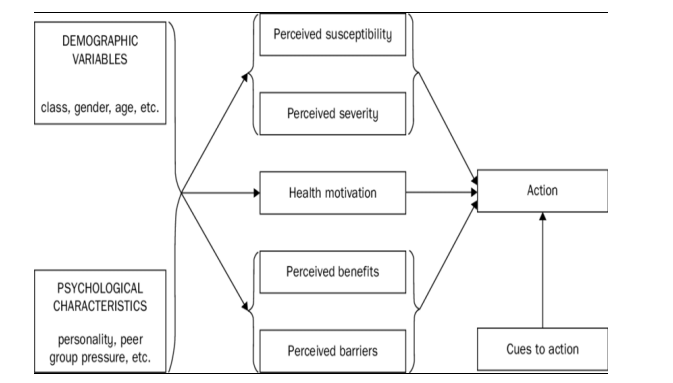
The Health Belief Model guided this study. The model proposes that perceived susceptibility, perceived severity, perceived benefits, perceived barriers, cues to action, and self-efficacy determine an individual’s likelihood of engaging in health behavior. Below is Fig 1 illustrating the model.
(Adopted from World Health Organization, 2018)
Figure 1: The Health Belief Model
The HBM provides a useful lens. If young males perceive themselves as susceptible to SIP and perceive it as severe, they are more likely to avoid substances. However, if they perceive benefits such as peer acceptance and stress relief, and face barriers such as unemployment and stigma, they may continue use. Cues to action such as awareness campaigns and self-efficacy can shift behavior [9].
Methods
Study Design
An exploratory-descriptive qualitative design was used. This design was appropriate because the study sought to explore feelings, opinions, and lived experiences of young males with SIP [21].
Study Setting
The study was conducted at Ndola Teaching Hospital [NTH] Psychiatric Unit, Copperbelt Province, Zambia. NTH is a tertiary hospital serving the Copperbelt and surrounding provinces.
Study Population
The population was young males aged 15-30 years admitted with a diagnosis of SIP who were clinically stable.
Sampling and Sample Size
Purposive sampling was used and a total of n=20 participants were interviewed. Sample size was determined by data saturation.
Data Collection
Data were collected from June to August 2023 using semi-structured interview guides. Interviews lasted 30-45 minutes and were audio-recorded. Secondary data from patient files were reviewed to verify substance use history. A pilot was done with five participants.
Data Analysis
Audio data were transcribed verbatim. Thematic analysis was conducted using Caulfield’s 6-step framework: familiarization, coding, theme searching, reviewing themes, defining themes, and writing up. Data were interpreted using HBM constructs [21].
Rigor and Trustworthiness
Credibility was ensured through member checking. Dependability through audit trail. Confirmability through reflexivity. Transferability through thick description.
Ethical Considerations
Ethical approval was obtained from Northrise University [IRB] and Tropical Disease Research Centre [TDRC]. Participants who had agreed to take part in the study received an information sheet describing the purpose of the study, risks and benefits of taking part. They had an opportunity to ask questions prior to participating. Furthermore, the participants signed an informed consent form indicating their willingness to participate in the interviews. Confidentiality was also maintained. Transcriptions and analysis notes were stored in a computer with encrypted password and all the data were anonymised to conceal identification of the research participants.
Results
This section presents the findings from the in-depths interviews with 20 young adults aged 15-30 years who were experiencing SIP and were receiving care at Ndola Teaching Hospital Psychiatric unit in Zambia. Analysis of the narratives revealed key patterns in how participants described the onset, progression and impact of psychosis in relation with substance use. The results are presented thematically below, supported by verbatim quotes to capture participants’ perspectives in their own words. No names were used to ensure confidentiality.
Three main themes guided the study and several sub-themes emerged from these themes. Table 1 below shows the themes and the sub-themes.
|
Themes |
N |
% |
|
|
Theme 1: Knowledge Levels |
|
||
|
Subtheme 1: Lack of knowledge |
4 |
80 |
|
|
Subtheme 2: Substances Associated with Psychosis in Young Males |
5 |
100 |
|
|
Subtheme 3: Prevalence Among Young Males (15-30 years) |
5 |
100 |
|
|
Subtheme 4: Learning about the Link |
4 |
80 |
|
|
Subtheme 5: Information Sources on Substance Abuse and Mental Health |
5 |
100 |
|
|
Subtheme 6: Increasing Awareness Among Young Males |
4 |
80 |
|
|
Theme 2: Attitudes |
|
||
|
Subtheme 1: Awareness and Perception in the Community |
4 |
80 |
|
|
Subtheme 2: Beliefs on Causes |
4 |
80 |
|
|
Subtheme 3: Impact on Mental Health and Psychosis |
3 |
60 |
|
|
Subtheme 4: Significance in Your Age Group |
2 |
40 |
|
|
Subtheme 5: Views on Seeking Help |
4 |
80 |
|
|
Theme 3: Practices |
|
||
|
Subtheme 1: Personal Substance Use History |
5 |
100 |
|
|
Subtheme 2: Motivations and Effects |
3 |
60 |
|
|
Subtheme 3: Triggers and Circumstances |
5 |
100 |
|
|
Subtheme 4: Negative Consequences |
5 |
100 |
|
|
Subtheme 5: Preventive Measures |
4 |
80 |
|
Table 1: Themes and Sub-themes
Lack of Knowledge
Majority of the young male adults who took part in the study expressed deep lack of knowledge about substance-induced psychosis and had this to say;
“I do not know anything about it” An 18-year-old young male adult.
“I did not know much about it because I thought alcohol does not lead to substance Induced psychosis except for cannabis” A 30-year-old young male adult.
“When a person smokes they tend to have an illness maybe in the chest that is a Cough” A 25-year-old young male adult.
Substances Associated with Psychosis in Young Males
All young male adults who took part in this research knew the substances that are commonly abused by young male adults aged 15 - 30 years. They reported cannabis, cocaine, heroin, alcohol and other cigarettes to be the most abused substances.
“In my community, males are exposed to substances such as marijuana, jenkem and Alcohol from as young as 15 years” A 30-year-old young male adult.
“One out of three young male adults at least smokes weed and drinks alcohol from where I come from” A 25-year-old young male adult.
“Weed, Artanes and Alcohol are substances that are commonly abused by my fellow Young male adults” An 18-year-old young male adult.
Prevalence among Young Males (15-30 years)
All young male adults who took part in this research study attested to the fact that substance abuse is very common and prevalent among young male adults aged 15 - 30 years.
“Because young men are always experimenting, lack proper things to do and Ignorance, they tend to engage in substance abuse” A 30-year-old young male adult.
“Every young man in my community does what their peers are doing” A 25-year-old young male adult.
“We find peace in substances and it is what everyone does” An 18-year-old young male adult.
“The age from 15 - 30 years is when people start to get depression” A 29-year-old young male adult.
“Young people lack jobs, they do not have money, some have lost their parents and think their lives have just ended” A 23-year-old young male adult.
Learning about the Link
80 % of the participants in this research study claimed that they recently learnt about the link between substance abuse and psychosis.
“I came to learn about the link when I was admitted to the psychiatric unit” A 30-year-old young male adult.
“I learnt about the link when I was in school in 2020, Zambezi Boarding School” An 18-year-old young male adult.
“I found out about the link the time I was at NORTEC because I started experiencing Illusions in 2022” A 25-year-old young male adult.
Information Sources on Substance Abuse and Mental Health
Every young male adult who took part in this research study reported to have come across information sources on substance abuse and mental health.
“The ministry of Health was announcing through mass announcement” A 29-year-old young male adult.
“Information sources were available to us in 2019 in School” An 18-year-old +young male adult.
“My father had undergone an operation and medical practitioners said it was because of the abuse of substances” A 25-year-old young male adult.
“I encountered the information about substance abuse through reading in a Civic Education Book” A 23-year-old young male adult.
“I came to know about the information sources at home and here in the unit because every health personnel are talking about it” A 30-year-old young male adult.
Increasing Awareness among Young Males
80% of all the young male adults that participated in this research study suggested ways to implore in order to increase awareness about substance-induced psychosis in young male adults.
“The way we can best use is reduction in the sale of drugs and other substances” A 25-year-old young male adult.
“Educating the youths about substance abuse and teaching through various media platforms can bring about awareness” A 29-year-old young male adult.
“Gathering the young people in Schools and educating them about substance abuse and also teaching them how to be productive in life” A 30-year-old young male adult.
Awareness and Perception in the Community
Most of the participants who took part in this research study portrayed a negative attitude toward substance abuse.
“Substance abuse among young people in the community impedes productivity and hinders peace and harmony” A 30-year-old young male adult.
“Substance abuse in the community is perceived as a sign of indiscipline” A 25-year-old young male adult.
“Substance abuse is detrimental to the community because it is an enemy of Community wellness” A 23-year-old young male adult.
Beliefs on Causes
Every young male adult that took part in this research study pointed out at least one similar thing that is believed to be amongst the causes of substance abuse.
“Some of my beliefs about the causes are that some have lost their parents so they try to cope with depression by abusing drugs, some it is out of curiosity and some it is as a result of peer pressure” A 30 year young male adult“Lack of social support and something productive to do” A 25 year old young male Adult.
“If I had someone to talk to, I can completely stop abusing substances” A 29-year-old young male adult.
Impact on Mental Health and Psychosis
Only 60% of the overall percentage of young male adults that took part in this research study had an idea about the severe impact of substance abuse on mental health and psychosis.
“Substance abuse distorts the mental state of an individual and they tend to start hallucinating” A 30-year-old young male adult.
Significance in Your Age Group
Only 40% of the entire population in this research study expressed and knew about the importance and gravity of this issue of substance abuse in their age group.
“Majority of the young people are victims which is quite alarming because it is destroying their potential” A 29-year-old young male adult.
Views on Seeking Help
80% of the overall population that took part in this research study reported that seeking help and treatment was the best approach one can take.
“Seeking help is important because you can be given medication that can reduce the problem” A 25-year-old young male adult.
“It is good to get help because anybody needs help” A 23-year-old young male adult.
“Seeking help and treatment for substance abuse helps an individual to regain their focus and helps them recover and discover their potential” A 30-year-old young male adult.
Personal Substance Use History
Every participant that played a role in this research study testified that they had a history of substance use.
“I have been and used drugs indiscriminately since 2022” An 18-year-old young male adult.
“When I was in School with my friends I used to smoke cannabis more than 3 times a day” A 23-year-old young male adult. “I used to drink heavily for the past 6 years” A 30-year-old young male adult.
Motivations and Effects
60% of the young male adults that took part in this research study reported to have had something like some sort of drive that pushed them to the use of substances.
“My peers, I do not know how it affects one’s mental health” An 18-year-old young male adult.
“When I want to find goodness and sleep I tend to smoke weed” A 23-year-old young male adult.
Triggers and Circumstances
All the young male adults that participated in this research study reported that they had triggers and circumstances that led them to substance abuse.
“I was thinking too much about life, I have never seen my parents and most of the time it is just about life” A 25-year-old young male adult.
“My uncle introduced me to substances, since then I have been abusing substances” A 23-year-old young male adult.
“When I am depressed and stressed I tend to start abusing substances because I feel they provide relief and comfort for me” A 29-year-old young male adult.
Negative Consequences
Every participant in this research study shared their negative experiences that they encountered after abusing substances.
“I become suicidal; I start thinking about killing myself” A 25-year-old young male adult.
“I tend to become hostile, violent and start insulting” A 30-year-old young male adult.
“You start hallucinating and hearing things and voices” A 23-year-old young male adult.
Preventive Measures
80 % of the whole population of participants that took part in this research study suggested preventive measures that they thought could largely help curb the scourge of substance abuse that lead to substance induced psychosis among young male adults aged 15 - 30 years.
“Counselling, training of more community health assistants and also engaging the former drug abusers in raising awareness can greatly help because they would be serving as an example to their peers in the community” A 30-year-old young male adult.
“Informing the young people in the community about the effects of substance abuse and coming up with mentorship programmes” A 29-year-old young male adult.
“Through the word of GOD and stopping those cultivating marijuana from doing so or strengthening the legal regulations that govern the farming of cannabis” A 25-year-old young male adult.
Discussion
This study explored the experiences of young adults with Substance-Induced Psychosis [SIP] attending psychiatric inpatient services at Ndola Teaching Hospital, Zambia. The findings highlight four key areas that contribute to the burden of SIP among young adults in the Copperbelt: knowledge gaps, socioeconomic and environmental factors, early onset and intensity of use, and attitudes and practices. This study provides insight into why SIP is increasing among young males in Ndola. The findings are discussed in relation to existing literature and the Health Belief Model.
Knowledge Gap as a Driver
The findings reveal a significant knowledge gap regarding SIP among young adults seeking care at Ndola Teaching Hospital. This is consistent with WHO [2024] that reports that mental health literacy among African youth remains below 30%. Many participants did not associate their psychotic symptoms with substance use until after hospitalization. Substances such as cannabis, "bronco" - codeine mixtures, and "boom" - crystal methamphetamine were commonly described as "just for fun" or "to stay awake for work”. This mirrors findings from other Zambian and SADC studies where mental health literacy is low and substance use is normalized among youth. The absence of targeted SIP education in schools and community health programs in Ndola means young people rely on peers and social media for information. According to the Health Belief Model, low perceived susceptibility delays help seeking. There is therefore need for the Ministry of Health and Ndola District Health Office to integrate SIP education into youth-friendly services and school health programs on the Copperbelt. [16]. this concurs with the Zambia’s National Mental Health Policy [2023-2027], which calls for integration of mental health education in schools [11].
Socio-Economic and Environmental Factors
Socio-economic hardship and environmental exposure were central to SIP in this study. Most participants were unemployed or engaged in informal "piece work" in mining, markets, and transport. Participants described using substances to cope with idleness, poverty, and stress related to Zambia’s economic challenges. The United Nations Office on Drugs and Crime [UNODC], (2024) report links economic hardship to increased drug use in Sub-Saharan Africa as youth seek coping mechanisms. This aligns with findings from Nigeria and South Africa [2,15,18].
Ndola’s urban setting, with easy access to drugs at bus stations, bars, and mining townships, further increased exposure. Peer networks in compounds such as Ndeke, Twapia, Kansenshi, and Mushili normalized daily use. This aligns with the Social Determinants of Health framework, which links unemployment and urban deprivation to increased substance use and mental illness. The findings suggest that clinical interventions at NTH alone will not be enough. There is need for collaboration between the hospital, Ministry of Youth, and NGOs to provide livelihood and recreation opportunities for young adults in Ndola [22].
Peer influence and normalization reflect perceived benefits in HBM. The Copperbelt context adds complexity with substances like jenkem and artane, which are cheap and accessible. This mirrors Colizzi and Murray’s findings on disadvantaged neighbourhoods and substance use [5].
Early Onset and Intensity
Early onset between 15-18 years is a critical risk factor. The average age of substance initiation was 15-19 years, with rapid escalation to daily use within 1-2 years. Participants reported using high-potency cannabis and "boom" multiple times a day, often in combination with alcohol and energy drinks.
Adolescent exposure is particularly concerning given neurodevelopmental vulnerability. The pattern of "binge and daily" use observed at NTH likely contributed to earlier and more severe psychotic episodes compared to adult-onset cases. This dose-response relationship is supported by international literature linking high-potency cannabis and methamphetamine to increased psychosis risk. These findings call for early screening in schools, colleges, and primary health clinics in Ndola to identify and intervene before use becomes dependent [4,23]
Smith et al. found that early cannabis use is associated with psychosis-related outcomes in young adults. Intensity and duration of use also increased severity, supporting findings by Thompson on the other hand [17,19].
Attitudes and Practices
Attitudes toward substance use and mental health treatment shaped care pathways. Initially, many participants viewed substance use as a sign of "being strong" or "coping like men". Mental illness was highly stigmatized, with terms like "kuluwe" used to describe those with psychosis.
As a result, help seeking was delayed. Many first consulted traditional healers, churches, or bought over-the-counter sedatives before presenting to NTH, often in crisis. Family members also hid the problem due to shame. This is consistent with studies in Zambia showing pluralistic help seeking for mental health. To improve outcomes, there is need for community anti-stigma campaigns in Ndola and training of primary health workers to screen for substance use and provide brief interventions before referral to NTH [12].
Implications for Practice and Policy in Zambia
The findings from Ndola Teaching Hospital suggest that addressing SIP requires a public health approach:
a. Health Education: Targeted campaigns in Copperbelt schools and on radio about the link between "boom", "bronco" and psychosis.
b. Socio-economic interventions: Youth skills and employment programs should be initiated by the central government through ministry of youth in Ndola to address idle time.
c. Early Detection: Integrate Screening, Brief Intervention, and Referral to Treatment [SBIRT] into primary care in Ndola District.
d. Stigma Reduction: Work with traditional and faith leaders to create referral pathways to NTH psychiatric services.
From a HBM perspective, interventions should increase perceived severity through education, reduce perceived barriers by providing jobs and recreation, and provide cues to action through Community Health Assistants [CHA] and peer educators. Training CHAs in screening and brief intervention, as per MOH strategy, could shift help-seeking behaviour [11].
Limitations
This was a single-site study with n=20, limiting generalizability. Self-report may have bias. However, the in-depth qualitative data provided rich understanding of lived experiences
Conclusion and Recommendations
The increase in substance-induced psychosis among young males aged 15-30 years at Ndola Teaching Hospital is driven by poor knowledge, unemployment, peer influence, early onset, and easy access to substances.
Recommendations
i. Policy level: Ministry of Health should fully implement the National Mental Health Policy 2023-2027 with focus on school-based prevention.
ii. Community level: Local authorities and NGOs should create youth livelihood and recreation programs to address idleness.
iii. Health system: Train and equip Community Health Assistants to screen for substance use and provide psychoeducation.
iv. Community: Use recovered users as peer educators to provide relatable cues to action.
Future research should explore the role of new psychoactive substances and conduct longitudinal studies to track progression from SIP to primary psychosis.
Availability of Data and Materials
The datasets generated during and/or analysed during the current study are available from the corresponding author on reasonable request.Acknowledgements
We would like to thank the informants who participated in this study for sharing their thoughts and experiencesClinical Trial Number
not applicable.Human Ethics Declarations
This research study titled, “Factors associated with an increase in Substance Induced Psychosis among young male adults aged 15-30 years: A qualitative case study of Ndola Teaching Hospital Psychiatric Unit, Zambia”. Was approved by Northrise University Institutional Research Board NUIRB and Tropical Disease Research Centre [TDRC]. This study followed the ethical principles of Helsinki [World Medical Association, 2013].
Informed Consent Declaration [Participants above 16years]
This study was conducted in accordance with ethical principles governing research involving human participants and received approval from the Tropical Diseases Research Centre Ethics Committee [TDRC REC], Ndola, Zambia. Participation in the study was voluntary. All eligible participants above 16 years were provided with detailed participant information sheets explaining the purpose, procedures, potential risks and benefits of the study. Written informed consent was obtained from participants prior to their inclusion in the study. All participants were assured of confidentiality; anonymity and the protection of personal information. They were informed of their right to decline participation or to withdraw from the study at any stage without any penalty or loss of benefits.
Informed Consent Declaration [Participants below 16years]
For participants aged below 16years, written informed consent was obtained from a parent or legally authorized guardian after providing them with detailed participant information sheets explaining the purpose, procedures, potential risks and benefits of the study. Written informed consent was obtained from participants prior to their inclusion in the study. In addition, assent was obtained from the participants themselves after providing age-appropriate information about the study. All participants were assured of confidentiality; anonymity and the protection of personal information. They were informed of their right to decline participation or to withdraw from the study at any stage without any penalty or loss of benefits.
Informed Consent for Publication
Informed consent for publication was obtained from the participants at the point of recruitment to the study.
Conflict of interest
The authors declare no conflicts of interest regarding the publication of this paper.Funding
No funding was granted for this paper.Author Contributions
K.M.M and T.K wrote the main manuscript text and K.T.M. prepared figures 1-2 and proofread the manuscript. All authors reviewed the manuscript.References
- Amminger, G.P., Schäfer, M.R., Papageorgiou, K., Klier, C.M., Schlögelhofer, M., Mossaheb, N., Werneck-Rohrer, S., Nelson, B. and McGorry, P.D. [2018]. Comorbid mental disorders and substance-induced psychosis. British Journal of Psychiatry, 212(1), pp.34-40.
- American Psychological Association (Ed.). (2013). Diagnostic and statistical manual of mental disorders: DSM-5. American Psychiatric Association.
- Kaulule, R., Mbowe, E., Menon, J. and Siziya, S. [2019]. Substance use among psychotic patients in Lusaka. Medical Journal of Zambia, 46(1), pp.23-30.
- Caulfield, J. [2022]. How to do thematic analysis. Scribbr.Available [Accessed: 05-08-2023].
- Colizzi, M. and Murray, R.M. [2021]. Urbanicity and psychosis risk. Schizophrenia Bulletin, 47(1), pp.12-19.
- Breet, E., Stein, D.J. and Lochner, C. [2017]. Substance use and psychosis in South Africa. South African Medical Journal, 107(8), pp.654-657.
- Crebbin, K., Felmingham, K.L., O’Donnell, M. and Forbes,D. [2023]. PTSD and substance-induced psychosis. Journal of Traumatic Stress, 36(1), pp.112-120.
- Di Forti, M., Quattrone, D., Freeman, T. P., Tripoli, G., Gayer-Anderson, C., Quigley, H., ... & Van Der Ven, E. (2019). The contribution of cannabis use to variation in the incidence of psychotic disorder across Europe (EU-GEI): a multicentre case-control study. The Lancet Psychiatry, 6(5), 427-436.
- Fiorentini, A., Volonteri, L.S., Dragogna, F., Rovera, C., Maffei, C., Mauri, M.C. and Altamura, A.C. [2011]. Cannabis-induced psychosis and schizophrenia. Journal of Psychopharmacology, 25(5), pp.579-586.
- Lee, J., Kearns, N., O’Brien, C.P. and McLellan, A.T. [2019].Alcohol use and psychosis risk. Alcoholism: Clinical and Experimental Research, 43(5), pp.789-796.
- Ministry of Health Zambia. [2023]. National Mental Health Policy 2023-2027. Lusaka: MoH.
- Mwape, L., Gorman, D., Clarke, D., Jack-Ide, I.O. and Coventry, P. [2010]. Pathways to psychiatric care in Zambia. International Journal of Mental Health Systems, 4, p.11.
- Onifade, P.O., Somoye, O. and Ogunwale, A. [2021]. Prevalence of substance-induced psychosis in a Nigerian psychiatric hospital. African Journal of Psychiatry, 24(3), pp.112-118.
- Plummer, K., Iverson, G.L., Terryberry-Spohr, L. and Marsh,N.V. [2020]. TBI and secondary psychosis. Neuropsychiatry, 10(2), pp.112-118.
- Sichimba, S., Mwaba, S.O.C. and Matanda, R. [2021]. Substance use and mental health among youth in Zambia. Medical Journal of Zambia, 48(2), pp.89-95.
- Siziya, S., Rudatsikira, E. and Muula, A.S. [2016]. Prevalence of substance use among adolescents in Zambia. BMC Public Health, 16, p.1-8.
- Smith, G., Watson, M., Prisciandaro, J.J. and Becker, J.B. [2018]. Early cannabis uses and psychosis outcomes. _Lancet Psychiatry_, 5(3), pp.233-240.
- Worl Health Organization (WHO). (2022). United Nations Office on Drugs and Crime (UNODC). (2020). International standards for the treatment of drug use disorders: Revised edition incorporating results of field-testing. Geneva: World Health Organization and United Nations Office on Drugs and Crime.
- Thompson, A., Sullivan, S., Lewis, G., Zammit, S., Heron, J., Horwood, J., Gunnell, D. and Harrison, G. [2019]. Intensity of use and substance-induced psychosis severity. Psychiatry Research, 276, pp.45-52.
- Turner, S., Mota, N., Bolton, J. and Sareen, J. [2018]. Cannabis and psychosis: a systematic review. Addiction, 113(7), pp.1234-1245.
- González-Pinto, A., Van Os, J., Enjuto, S., Alberich, S., Iruarrizaga, I., Gutiérrez, M., Ezcurra, J. and Castro, P. [2018]. Gender and age in substance-induced psychosis. Schizophrenia Research, 195, pp.45-51.
- WHO Commission on Social Determinants of Health, & World Health Organization. (2008). Closing the gap in a generation: health equity through action on the social determinants of health: Commission on Social Determinants of Health final report. World Health Organization.
- Volkow, N.D., Swanson, J.M., Evins, A.E., DeLisi, L.E., Meier, M.H., Gonzalez, R., Hurd, Y.L., Brody, A.L. and Stein,E.A. [2016]. Effects of cannabis on adolescent brain. New England Journal of Medicine, 374(11), pp.1038-1049.
- Veling, W., Selten, J.P., Susser, E., Laan, W., Mackenbach, J.P. and Hoek, H.W. [2019]. Social support and psychosis. Social Psychiatry and Psychiatric Epidemiology, 54(8), pp.1023-1030.
- World Health Organization. (2025). Mental health atlas 2024. World Health Organization.