

International Journal of Health Policy Planning(IJHPP)
ISSN: 2833-9320 | DOI: 10.33140/IJHPP
Impact Factor: 1.08

Research Article - (2026) Volume 5, Issue 1
Factors Affecting Proper Medical Waste Management (A Case Study of Mnazi Mmoja Hospital, Zanzibar-Tanzania)
2Faculty of Science, Zanzibar University (ZU), P. O. Box 2440, Tunguu, Zanzibar, Tanzania
Received Date: Dec 01, 2025 / Accepted Date: Jan 02, 2026 / Published Date: Jan 19, 2026
Copyright: ©2026 Said Suleiman Bakari. This is an open-access article distributed under the terms of the Creative Commons Attribution License, which permits unrestricted use, distribution, and reproduction in any medium, provided the original author and source are credited.
Citation: Bakari, S. S., Abassi, R. A., Ally, R. A., Ali, H. R., Rashid, R. J. (2026). Factors Affecting Proper Medical Waste Management. Int J Health Policy Plann, 5(1), 01-10.
Abstract
The Mnazi Mmoja Hospital (MMH) was selected as it is the central hospital found in Zanzibar Islands. The study was conducted to examine factors affecting proper medical waste management at (MMH) in Zanzibar. It assesses the storage, separation, collection methods, transportation and evaluates modes of medical waste disposal to the final disposal point. A sample of 50 MMH staffs including doctors, nurses, infection prevention control staffs, and wastes handlers were considered for the study using case study design. The questionnaire survey includes demographic profile; storage, separation and collection methods; transportation methods; treatment and disposal methods, and basic questions that have effect on proper medical wastes management was designed in a closed-ended format as well as direct observation was also included. The data shows that proper medical wastes management at MMH is now in midway condition in which awareness and knowledge has been improved among the staffs. It was revealed that there is clear improvement in awareness and knowledge regarding proper medical wastes management among the staffs. This is probably due to efforts made by hospital management to enhance the staff’s capacity building through different training for the hospital staffs, such as seminars, guidelines provision and updated policies reviews. The study recommends that the imposed laws and rules that governing proper handling of medical wastes should be maintained for proper medical wastes management at MMH.
Keywords
Medical Waste Management, Mnazi Mmoja Hospital, Health Care, Toxic Chemicals
Introduction
In Africa healthcare is growing rapidly leading to tremendous increase in the quantity of medical waste generation from hospitals, clinics, pharmacies and other establishments. Pollution problems associated with medical wastes and its management has attracted significant attention and a great deal of research has been conducted on these topics. Medical wastes have been defined as any solid waste generated in the diagnosis, treatment, or immunization of human beings or animals, in related research, production or testing biological from all types of health care institutions, including hospital, clinics, doctors, dental and veterinary offices and medical laboratories [1]. These wastes contain highly toxic metals, toxic chemicals, pathogenic viruses and bacteria [2]. In Tanzania, the situation appears to be more critical as reported from around the continent indicate poor medical waste management practice [1]. Furthermore, Manyele describes medical waste management in Tanzania as being poor, further he posited that the general awareness on issues related to medical waste management was generally lacking among generators and handlers. For example, about 50% of these wastes are disposed through open pit burning and 30% through burying. In addition, about 71% of hospitals use dust bins to carry the wastes during transportation to incineration points without plastic bags. However, some hospitals lack the incineration of if they have they are in a very low capacity eg fire brick incinerators. Most of the respondents preferred on-site versus off-site waste incineration. Some hospitals were using untrained casual labourers in medical waste management and general cleanliness. Great attention, proper handling and disposal must be taken into consideration to insure proper collection, transportation, treatment, destruction and the final disposal. The current efforts for attaining proper medical waste management in Tanzania have been outlined, including training for the hospital staffs and construction of small-scale incinerators in all regional and district hospitals [1].
Mnazimmoja hospital is the greatest referral hospital in Zanzibar, but yet like other hospitals little emphasis has been placed on proper handling and disposal of medical waste. Though medical waste constitutes small fraction of municipal solid waste, the potential environment and health hazards could be deleterious if not properly handled. The awareness related to medical waste management is generally low among generators and waste handlers, as a consequence a source of failure for effective medical waste management. Poor medical waste management exposes medical staffs, waste handlers, and the surrounding communities to infectious, toxic effects and injuries, a situation that possess a serious health problem in most of developing countries particularly Zanzibar. Despite all the problems, little is known about proper handling of medical waste in Zanzibar and its associated impacts to human and ecosystem health. Only few studies focused on community waste management, this might be the reason of improper medical waste management in Zanzibar particularly Mnazi Mmoja hospital. Therefore, the current study aims to determine factors affecting proper medical waste management at Mnazi Mmoja hospital, Zanzibar-Tanzania.
Materials and Methods
The study population consisted of all staffs of Mnazi Mmoja hospital (1144) since, they all have impacts on clinical wastes managements. The sample size of 50 different respondents; including doctors, nurses, nursing assistances, wastes handlers, laboratory technicians, and Infection Prevention Control staffs. The sample chosen through convenience sampling because it was the plausible option in the case-study at Mnazi Mmoja hospital since it was easy to negotiate access through existing contacts [3]. The study employed a descriptive, cross-sectional research design. Cross-sectional design allows researchers to collect data at a single point in time where multiple outcomes can be studied [4]. The data were collected from November 2015 to March, 2016. Data were collected through questionnaires and observation. Through questionnaires, it gave out the chance for the respondents to feel free in answering questions about the subject matter. The detailed questions asked in questionnaire are displayed in Appendix A. Direct observation was used in data collection as it allows to directly observe the situation under the study in natural setting and able to get real and quality data.
Study Area
The case study design was used to examine factors affecting proper medical wastes management at MMH since the study was conducted in only one setting. The study was conducted in Zanzibar, urban district at MMH. This is because MMH is the only large and referral hospital on the archipelago of Zanzibar which receives many patients from different areas of Zanzibar and therefore, generate a huge volume of health care waste compared to other hospitals.

Figure 1: Map showing the location Mnazi Mmoja Hospital (MMH) in Unguja
This hospital is located at the Mnazi Mmoja area at the heart of Stone Town, the historic centre of Zanzibar Town. Stone Town is a city of prominent historical and artistic importance in East Africa. Its architecture, mostly dating back to the 19th century, reflects the diverse influences underlying the Swahili culture, with the East African culture being preeminent, there is a unique mixture of Arab, Persian, Indian and European elements. For this reason, the town was designated as a UNESCO World Heritage Site in 2000 (HRC, 2016)
Stakeholders Analysis
Stakeholders that were involved in the study includes Ministry of health, Infection-Prevention Control in-charge of MMH, Officer in-charge medical waste management of MMH, Health care manager of MMH, Medical officer in-charge of MMH, Health care wastes management officer of MMH. Since these stakeholders were responsible for day to day implementation of the activities, therefore they had insight on the most effective and appropriate ways to collect data from the respondents. Also, they were involved by prioritizing them in insuring that the right questions are identified and the results will be used to make differences. Moreover, they were involved in the study critics during the evaluation and analysis which can help in identifying issues that will strengthen analysis and evaluation process.
Ethical Issues
The highest ethical standards were considered during the data collection process; several measures were taken to protect the participants involved. The participants were required to sign and declare on the consent form that they agree to participate and provide depth information concerning the topic matter. The objectives of the study were clearly described to the participants before signing the consent form. The information provided by the participants was treated as confidential and used for study purposes only; also no identifiers of the participants were recorded. Also, participants had the right not only to agree to participate in research during the time of data collection, but also to withdraw from the research at any time.
Study Variables
The study involved the collection of qualitative(categorical) data in which several (qualitative) variables associated with medical wastes at MMH were used. The variables used in the study were; storage, separation, collection, transportation, treatment, and disposal of medical waste (at MMH).
Data Analysis
The data collected were analysed using descriptive analysis. Descriptive analysis are quantitatively describe or summarize features of a collection of information [5]. Notes from interview were transcribed and the coding for each transcript were done accordingly. The categories (levels) were then tabulated based on number of response observed from each item. The R statistical software 3.2.2 and SAS 9.4 were used to perform the descriptive statistical analysis. The descriptive measures like frequencies, percentages, cumulative frequencies, and cumulative percentages were also computed.
Results and Discussion
Table 1: Practice of MWM as reported through 50 respondents at MMH
|
Variable |
Frequency |
Percent |
Cumulative Frequency |
Cumulative Percent |
|
1. Storage Yes No Non-response = 0 |
50 0 |
100 0 |
50 0 |
100.00 0 |
|
2. Separation Yes No Non-response = 2 |
43 5 |
89.58 10.42 |
43 48 |
89.58 100.00 |
|
3. Protection Salary Health education Protective gears Non-response = 1 |
1 7 41 |
2.04 14.29 83.67 |
1 8 49 |
2.04 16.33 100.00 |
|
4. Transportation Leak proof Non-leak proof No idea Non-response = 1 |
39 9 1 |
79.59 18.37 2.04 |
39 48 49 |
79.59 97.96 100.00 |
|
5. Treatment Thermal Steaming Thermal & steaming No idea Non-response = 1 |
19 10 18 2 |
38.78 20.41 36.73 4.08 |
19 29 47 49 |
38.78 59.18 95.92 100.00 |
|
6. Disposal medical After treating No treating No idea Non-response = 3 |
43 3 1 |
91.49 6.38 2.13 |
43 46 47 |
91.49 97.87 100.00 |
|
7. Disposal method Incinerating Burying Non-response = 1 |
44 5 |
89.80 10.20 |
44 49 |
89.80 100.00 |
|
8. Disposal liquid Sanitary sewer Non-sanitary sewer No idea Non-response = 1 |
43 3 3 |
87.76 6.12 6.12 |
43 46 49 |
87.76 93.88 100.00 |
In addition, the results in table 1 indicates that the awareness and knowledge that has been improved among the staffs regarding the separation of medical wastes. This is due to fact that about 90% (Figure 3; Separation) of the respondents suggesting the separation of medical wastes at the point of generation that contributes to proper management of medical wastes while the about 10% of the staffs opposed the separation at generation point.
Transportation of Medical Waste
Equipment are very important in transportation of medical wastes. Track, push carts, and wheel burrows have been suggested by about 80% of respondents to be used in transportation of medical wastes since they are said to be leak proof and puncture resistant, 18% of respondents suggested non-leak proof and non-puncture resistant (plastic bags), and only about 2% of respondent had no idea about using leak and non-leak proof plastic bags (Figure 3; Transportation).
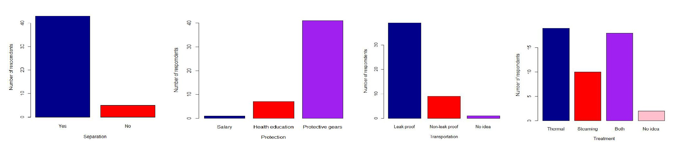
Figure 2: Distributions of Separation, protection, transportation, and treatment of MWM at MMH
Regarding the proper handling of medical wastes, plastic bags are not advised to be used because they are not puncture resistant and may leak. Therefore, they may be scattering the facility hence, results bad appearance of the facility and cause injuries, toxic effects and infectious diseases when become contact with the body.
Furthermore, the results presented in Table 1 reflects that the awareness and knowledge have been improved among the staffs regarding the separation of medical wastes. This is due to fact that about 90% (Figure 3; Separation) of the respondents suggesting the separation of medical wastes at the point of generation that contributes to proper management of medical wastes while the about 10% of the staffs opposed the separation at generation point.
Transportation of Medical Waste
Equipment are very important in transportation of medical wastes. Track, push carts, and wheel burrows have been suggested by about 80% of respondents to be used in transportation of medical wastes since they are said to be leak proof and puncture resistant, 18% of respondents suggested non-leak proof and non-puncture resistant (plastic bags), and only about 2% of respondent had no idea about using leak and non-leak proof plastic bags (Figure 3; Transportation). Regarding the proper handling of medical wastes, plastic bags are not advised to be used because they are not puncture resistant and may leak the contents whenever get puncture since the bag used are not leak-proof. Therefore, they may scatter the facility hence, results bad appearance of the facility and cause injuries, toxic effects and infectious diseases when become contact with the body.
Health and Safety for Medical Waste Handlers
The results in Table 1 show that about 84% of respondents suggested the provision of protective gears (personal protective equipment), 14% of respondents suggested the provision of health education, while only 2% of respondents suggested the provision of good salary so as to protect the health of health-care workers and waste handlers. This indicates that 84% of respondents are aware and care about their health, as they agreed that the health of all hospital workers including waste handlers can be protected through the provision of protective gears as to the large extent, the equipment such as mask, eye goggles, gloves, aprons, and gumboots prevent direct contact of medical wastes against their bodies as they are the cause for infectious diseases. Medical wastes contains highly toxic metals, toxic chemicals, pathogenic viruses and bacteria [2]. This can lead to pathogenic dysfunctions of the human body.
Disposal of medical waste
About 39% of respondents suggested that only thermal treatment can be used as an alternative to incineration for treating and disposing of solid medical wastes. However, 20% of respondents proposed steam sterilization as the only alternative to incineration, while about 37% of respondents agreed that both steam sterilization and thermal treatment are the alternatives used to incineration for treating and disposing of medical wastes. Four (4%) of respondents knew nothing on the alternatives used to incineration. In order to ensure that proper medical wastes management are taking place in any health care facility, therefore both thermal and steam sterilization have to be used as the alternative to incineration in treating and disposing medical wastes, since they are non-toxic and capable of reducing infectious effects to the medical wastes by quickly killing the germs.
Figure 3: Distribution of disposal of MWM at MMH
Figure 4 (Disposal medical) shows that about 92% of respondents suggest that medical wastes can be properly disposed only after being treated, while 6% of the respondents suggest the disposal of medical wastes even when no treated and 2% of respondents got no idea about that. This indicates that the knowledge and awareness among the staffs are good, since 92% of the staffs are now understand the importance of treating wastes before disposal since medical wastes possess highly infectious agents that are responsible for transmitting infectious diseases mainly nosocomial infections. Figure 4 (Disposal liquid) shows that about 88% of respondents suggested that liquid infectious waste should be poured down a sanitary sewer, while 6% suggested that liquid infectious wastes should be poured down a non-sanitary sewer, but 6% of them knew nothing concerning liquid infectious wastes disposal.
Based on the fact, 92% seem to have enough knowledge about liquid infectious waste disposal. Liquid wastes disposal should be poured down a sanitary sewer due to the fact that, they possess infectious pathogens hence a well-constructed sanitary sewer would prevent the mixture of liquid infectious wastes from the hospital settings with waste water from households and other sites, that may injure the life of both aquatics and terrestrial organisms if they are also not treated before they are poured down a sewer to the ocean or other water bodies for discharging. Hence training must be provided to the health care workers on how to dispose liquid infectious waste and the importance of disposing liquid infectious wastes down sanitary sewer. This will improve awareness to the health care workers also, it helps to reduce the death of aquatic and terrestrial organisms and water-borne diseases.
Conclusion and Recommendations
Conclusions are drawn based on the findings and recommendations are forwarded for the concerned bodies, agencies and departments for improvement.
Conclusions
The proper medical wastes management at Mnazi Mmoja Hospital is now in midway condition in which awareness and knowledge has been improved among the staffs. It was revealed that there is clear improvement in awareness and knowledge regarding proper medical wastes management among the staffs. This is probably due to efforts made by hospital management to enhance the staff’s capacity building through different training for the hospital staffs, such as seminars, guidelines provision and updated policies reviews [6-14].
Recommendations
Based on findings recommendations are forwarded to: Ministry of health Zanzibar, Curative and preventive departments, and General public particularly health care workers and wastes handlers. Ministry of health, curative and preventive department should:- The study recommends that the imposed laws and rules that governing proper handling of medical wastes should be maintained for proper medical wastes management at MMH
References
- Manyele, S. V., Anicetus, and M.H. Bilia, "Globalization and its Effects on Medical Wastes Management in Tanzania," The Tanzania engeneeres Annual Conference, 2003, AICC Arusha, pp. 76-92.
- Chitnis, V., Chitnis, S., Vaidya, K., Ravikant, S., Patil, S., & Chitnis, D. S. (2004). Bacterial population changes in hospital effluent treatment plant in central India. Water Research, 38(2), 441-447.
- Saunders, M., Lewis, P., & Thornhill, A. (2012). Research methods for business students (6. utg.). Harlow: Pearson,239-262.
- Mann, C. J. (2012). Observational research methods— Cohort studies, cross sectional studies, and case–control studies. African Journal of Emergency Medicine, 2(1), 38-46.
- Mann, Prem S. (1995). Introductory Statistics (2nd ed.). Wiley.ISBN 0-471-31009-3.
- Google Maps. (2017). Royal Roads University. Retrieved from https://www.google.com/maps/d/viewer?
- Jaffal, G. (2013). Biomedical wastes management problems and strategic solutions. Unpublished Report Supervised by Dr.Yaseen Hayajneh, Collage of Medicine, Jordan University of Science and Technology, Jordan.
- Authority, L. W. R. (1989). Guidelines for the Segregation, Handling and Transport of Clinical Waste. LWRA.
- Askarian, M., Vakili, M., & Kabir, G. (2004). Results of a hospital waste survey in private hospitals in Fars province, Iran. Waste management, 24(4), 347-352.
- Stone Town of Zanzibar-UNESCO World Heritage Centre. whc.unesco.org. Retrieved on 01-03-2016.
- WHO, "Fact Sheet: Waste from Health-care Activities" New Delhi,2007
- Prüss, A., Giroult, E., & Rushbrook, P. (Eds.). (1999). Safe management of wastes from health-care activities. World Health Organization.
- World Health Organisation. Safe Management of Wastes from Health-Care Activities 1999 Chapter 3.
- www.zerowastewa.com retrieved December 2009 accessedon 12th January.
APPENDIX “A”: QUESTIONNAIRE
This questionnaire is designed to examine the “FACTORS AFFECTING PROPER MEDICAL WASTES MANAGEMENT AT MNAZI MMOJA HOSPITAL- ZANZIBAR”. The researcher kindly reminds the respondents that the responses given by them will be used only as an input for the research work. Additionally the researcher would like to be grateful to the respondents the sacrifices they made in completing this questionnaire.
NOTE
 No need of writing your name.
QUESTIONS ON GENERATION, COLLECTION, STORAGE, TREATMENT AND DISPOSAL OF MEDICAL WASTES REGARDING MNAZI MMOJA HOSPITAL:
PART 1.
DEMOGRAPHIC INFORMATIONS:
1. Which sex are you?
A. Male. B. Female
2. What is your residential region?
A. North. B. South. C. Urban west.
3. How old are you?
A. Below 20. B. 20-29.
C. 30-39. D. 40 and above.
4. What is your educational level?
A. O _level. B. A-level. C. Certificate. D. Diploma. E. Degrees.
5. What is your occupational status?
A. Doctor. B. Nurse. C. Laboratory technician. D. IPC staff. E. Waste handler.
PART 2.
STORAGE, SEPARATION AND COLLECTION.
6. How medical wastes should be stored?
A. Stored so that, avoid being mixed with other materials. B. Can be stored all together with other types of wastes.
7. Does the separations of medical wastes can be done at the point of generation?
A. Yes. B. No. C. No idea.
8. For how long can a generator keep the infectious wastes prior to disposal?
A. Can be stored at whenever the period. B. Cannot be stored for more than 30 days even if refrigerated. C. No idea.
9. What are the medical wastes requirements are advised to be used?
A. Leak-proof plastic bag and puncture resistant. B. Plastic bag with colour coded. C. All of above. D. None of above.
10. Is there any standard for medical wastes storage bags, pertaining to the thickness of the bag?
A. Yes. B. No. C. No idea.
11. Regarding the sharp disposal, if the container is not full, what is the maximum time that can be kept on shelf, and should always kept closed?
A. Before the contents reach the full line. B. Until the contents is overfilling. C. No idea.
12. Does the medical wastes need to be locked in a storage room, while the staff always present?
A. Yes. B. No. C. No idea.
PART 3:
TRANSPORTATION:
13. May any staff can transport medical wastes?
A. Yes. B. No. C. No idea.
14. If no, because...........................................
A. Only waste handlers are responsible for it. B. They are there for taking care of their patients. C. They can contaminate their bodies and clothes.
15. What are the equipment used during transportation of medical wastes?
A. Track, push carts and wheel burrows. B. Track, push carts and plastic bag. C. No idea.
16. Assume that you are licensed medical wastes transporter, do you need a separate permit to transport medical wastes?
A. Yes. B. No. C. No idea.
17. Is there any significances of transporting medical wastes that are not separated?
A. Yes. B. No. C. No idea.
18. If yes, because....
A. Mixing wastes can cause harm. B. There is different level of infections that can be acquired due to mixing of medical wastes with others. C. The highly infectious wastes present in the mixture may cause harm to transporter. D. No idea. PART 4: TREATMENT AND DISPOSAL.
19. Are there any low and rules that governing the treatment and disposal of medical wastes?
A. Yes. B. No. C. No idea.
20. What are the other alternatives to incineration for treating and disposing of medical wastes?
A. Thermal treatment. B. Steam sterilization. C. All of above. D. None of above. E. No idea. 21. Can latex exam gloves be autoclaved? A. Yes. B. No. C. No idea.
22. How can medical wastes be disposed?
A. After being treated. B. Even when not treated. C. No idea.
23. How can liquid infectious wastes be disposed?
A. Poured down a sanitary sewer. B. Poured down any drainage. C. No idea.
24. What are the methods for disposing sharp object?
A. To be incinerated. B. To be buried. C. To be thrown along the beach.
25. Which method used to dispose maternal placentas?
A. Incineration. B. Placenta's pits. C. No idea.
26. Which method used to dispose human organs after amputation?
A. Buried. B. Thrown away. C. Incinerated. D. No idea.
PART 5.
GENERAL QUESTIONS:
27. How do the health of hospital workers including waste handlers are being protected?
A. Through good salary. B. Through health education provision. C. Provision of Personal Protective Equipment s (PPE). D. No idea.
APPENDIX “B”
The tables bellow show presentation of data based on their frequencies and percentages:
|
DEMOGRAPHIC INFORMATION |
FREQUENCIES |
PERCENTAGE |
|
20 29 |
40.8(40.0)% 59.2(58.0)% |
|
5 4 41 |
10.0% 8.0% 82.0% |
|
14 19 17 |
28.0% 38.0% 34.0% |
|
7 8 30 5 |
14.0%5 16.0% 60.0% 10.0% |
|
2 12 21 15 |
4.0% 24.0% 42.0% 30.0% |
|
STORAGE, SEPARATION AND COLLECTION |
FREQUENCIES |
PERCENTAGE |
|
6. How medical wastes should be stored? Stored so that avoid being mixed with others. |
50 |
100.0% |
|
43 5 |
89.6(86.0)% 10.4(10.0)% |
|
8. For how long can generated infectious wastes stay prior do disposal?
|
18 19 3 |
36.0% 38.0% 26.0% |
|
32 7 10 1 |
64.0% 14.0% 20.0% 2.0% |
|
10. Is there any standard for medical wastes bags, pertaining to the thickness of the bag? Yes No No idea |
46 1 3 |
92.0% 2.0% 6.0% |
|
44 5 |
89.89(88.0)% 10.2(10.0)% |
|
31 9 8 |
64.6(62.0)% 18.8(18.0)% 16.7(16.0)% |
|
TRANSPORTATION |
FREQUENCIES |
PERCENTAGE |
|
9 41 |
18.0% 82.0% |
|
40 2 |
95.2(80.0)% 4.8(4.0)% |
|
38 9 1 |
79.6(78.0)% 18.4(18.0)% 2.0% |
|
46 3 |
93.9(92.0)% 6.1(6.0)% |
|
47 1 |
97.9(94.0)% 2.1(2.0)% |
|
16 11
21 |
33.3(32.0)% 22.9(22.0)%
43.8(42.0)% |
|
TREATMENT AND DISPOSAL |
FREQUENCIES |
PERCENTAGE |
|
48 1 |
98.0(96.0)% 2.0% |
|
19 10 18 2 |
38.8(38.0)% 20.4(20.0)% 36.7(36.0)% 4.1(4.0)% |
|
40 1 6 |
85.1(80.0)% 2.1(2.0)% 12.8(12.0)% |
|
43 3 1 |
91.5(86.0)% 6.4(6.0)% 2.1(2.0)% |
|
43 3 3 |
87.8(86.0)% 6.1(6.0)% 6.1(6.0)% |
|
44 5 |
89.8(88.0)% 10.2(10.0)% |
|
25. What are the methods used for disposing maternal placentas? |
|
|
|
4 |
8.2(8.0)% |
|
44 |
89.8(88.0)% |
|
1 |
2.0% |
|
26. What is the advised option for disposing human organs after amputation? |
|
|
|
45 |
90.0% |
|
2 |
4.0% |
|
3 |
6.0% |
|
27. How do the health of hospital workers |
|
|
|
Including waste handlers is being protected? |
|
|
|
1 |
2.0% |
|
7 |
14.3(14.0)% |
|
41 |
83.7(82.0)% |