

Current Trends in Business Management(CTBM)
ISSN: 2995-4010 | DOI: 10.33140/CTBM



Research Article - (2024) Volume 2, Issue 1
Exploring the Dynamics of Leadership Style, Employee Commitment, Work Motivation, and Work Climate: Implications for Satisfaction and Performance
Received Date: Jan 06, 2024 / Accepted Date: Jan 25, 2024 / Published Date: Feb 09, 2024
Copyright: ©©2024 Hajar Daghmi. This is an open-access article distributed under the terms of the Creative Commons Attribution License, which permits unrestricted use, distribution, and reproduction in any medium, provided the original author and source are credited.
Citation: Daghmi, H. (2024). Exploring the Dynamics of Leadership Style, Employee Commitment, Work Motivation, and Work Climate: Implications for Satisfaction and Performance. Curr Trends Business Mgmt, 2(1), 1-8.
Abstract
This comprehensive thematic analysis dives into the experiences of industry professionals regarding leadership styles, work climate, employee commitment, motivation, satisfaction, and their intricate relationships. Critical topics arose, with transformational and situational leadership standing out as dominating styles, underlining the vital job of versatility. Employee commitment was viewed as affected by different factors, including pay, positive cultural angles, growth opportunities, and recognition. Motivational systems went from compelling communication to recognizing accomplishments and understanding individual motivations. A positive work climate was related to transparency, teamwork, and a friendly environment. Evaluation methods for employee satisfaction and performance uncovered a decent methodology, joining quantitative and qualitative measures. The analysis powerfully upholds the speculation that versatile leadership fundamentally adds to a helpful work climate, cultivating elevated employee motivation, commitment, and satisfaction. The interconnectedness of leadership styles and workplace dynamics highlights the basis of versatile leadership in supporting a flourishing hierarchical milieu. These discoveries give nuanced experiences, accentuating the need to fit leadership ways to deal with changed conditions and individual necessities.
Keywords
Thematic Analysis, Leadership Styles, Employee Commitment, Motivation, Work Climate.
Introduction
Comprehending the complex interactions of leadership dynamics, employee commitment, job motivation, and work atmosphere has become crucial in organizational management [1]. This study aims to examine the complex interactions between these variables and how they affect overall performance and employee happiness. Organizations rely significantly on their workforce's performance, dedication, and engagement in today's dynamic and quickly changing business environment to succeed and stay competitive [2]. Acknowledging this fundamental dependency, scientists have worked for a long time to disentangle the complex network of variables affecting these vital components. To better understand how leadership styles, employee commitment, job motivation, and work atmosphere interact, this article will look at how these factors affect employee happiness and performance [3]. Numerous studies have been conducted on leadership style as a fundamental aspect of organizational behavior. The work atmosphere and employee behavior are shaped by several leadership styles, including transformational, transactional, and servant leadership [4]. The selection of leadership style significantly impacts the company's culture as a whole and sets the standard for worker dedication. Transformational and transactional are the two main categories of leadership styles [5]. The writing study explains the intricate interchange of administration styles, work environment, representative responsibility, and inspiration. Elite execution, characteristic inspiration, and representative commitment may be cultivated in a lovely workplace through compelling administration characterized by a groundbreaking or participatory methodology. Through exhaustive information and the use of these components, organizations might lay out an air that invigorates worker inclusion, impels development, and improves their general accomplishments.
Literature Review
Transformational leaders enthuse and encourage their staff through vision, intellectual stimulation, and personalized concern [6]. According to Judge and Piccolo, this strategy promotes an environment at work that is good and marked by cooperation, trust, and open communication [7]. As a result, workers exhibit more dedication, drive, and output. On the other hand, transactional leadership emphasizes setting clear expectations, enforcing compliance, and offering incentives and sanctions [8]. This approach can sustain performance in the near term through extrinsic motivators, but it cannot promote long¬term dedication and pleasure [6]. More recently, studies have explored other leadership philosophies, such as participatory leadership, which entails actively involving staff members in decision-making and encouraging accountability and ownership [9].
According to Liao and Chuang, this strategy may result in increased commitment, intrinsic motivation, and employee happiness, all of which benefit performance [10]. Employee devotion and emotional attachment are critical components of employee commitment, essential to the organization's success. The reciprocal relationship between an employer and an employee is emphasized by the Social Exchange Theory and the Organisational Support Theory, which also highlights the need for commitment in attaining these advantages [11]. The psychological bond that people have with their company is known as employee commitment [12]. There are three primary categories of commitment identified: Emotional dedication: An emotional connection to the company and its ideals characterizes this kind [12]. Workers who exhibit solid emotional commitment typically report higher levels of motivation and satisfaction, which boosts output Mousa et al [13]. This is when someone feels obligated to remain with the organization because of societal norms or perceived pressure [12]. Although it can lower turnover, other variables, including motivation and the work environment, can also affect performance. Continuance commitment: This kind of commitment is a deliberate choice to remain with the company in light of the estimated expenses associated with departing Afza et al [14]. Although it might not significantly affect performance, this dedication can reduce attrition. Increased job satisfaction and improved performance are primarily the result of motivated workers. The complexity of motivation and its significant influence on both individual and group results may be understood through the frameworks provided by management theories such as the Expectancy Theory, Goal-setting Theory, and Self-determination Theory Wahyudi et al [15]. Work motivation is the motivational factor that propels workers to commence, exert, and continue their employment. According to research, there are two main categories of motivation. This kind is the drive to complete an activity for its own sake, for the pleasure and fulfillment it brings [16]. High intrinsic motivation among employees increases the likelihood of creativity, innovation, and superior performance [17]. This kind is the drive to complete an activity due to incentives or penalties from outside sources [16]. Extrinsic motivation may work well in the short run, but it may not result in long-term high performance and may even have unfavorable effects [16]. Workers' collective opinions about their workplace are referred to as the "work climate" [18]. Trust, respect, cooperation, and open communication are traits of a positive work environment. According to Schneider et al [18]. A workplace of this kind encourages employee commitment, motivation, and contentment, all of which positively affect performance. On the other hand, low performance, demotivation, and job discontent can result from a hostile work environment marked by mistrust, fear, conflict, and a lack of communication [19]. The general environment of an organization, or the work climate, directly impacts the productivity and well-being of its employees. Organizational theories such as the Systems Theory and the Contingency Theory Bhardwaj, accord with open communication, trust, and cooperation fostered by a healthy work atmosphere [20].
A critical result of these interrelated elements is job satisfaction, which directly affects organizational performance. The many-sided organization of factors influencing work environment satisfaction and execution can be better perceived by counseling the Hawthorne Studies, Maslow's Hierarchy of Needs, and Herzberg's Two-Factor Theory Gopal et al [21]. Management organization speculations direct essential activities for staff advancement and organizational viability in the present business climate. Reception of thoughts like Lithe, Lean, and Complete Quality Management (TQM) exhibits a devotion to flexibility and consistent improvement Roth [22]. Organizational Turn of events (OD) speculations direct arranged change systems to develop adequacy further, though Human Asset Management (HRM) hypotheses feature the essential job of HR in planning worker improvement with organizational objectives Roth [22].
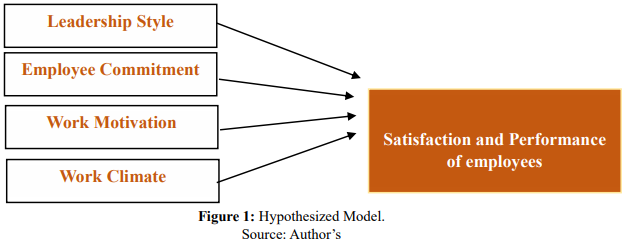
We have prepared Figure 1 based on the above studies.
Research Methodology
This study used a qualitative methodology, interviewing various company managers from various industries in semi-structured interviews. The purpose of the interviews was to get their opinions and experiences about the following essential parts in methodology: H1= Leadership style has a significant effect on satisfaction and performance of employees.
Hypotheses of the study
H2= Employee commitment has a significant effect on the satisfaction and performance of employees.
H3= Work motivation has a significant effect on satisfaction and performance of employees.
H4= Work climate has a significant effect on satisfaction and performance of employees.
Data Analysis
Thematic analysis of the meeting records uncovered repetitive subjects and examples in the chiefs' responses. The examination aimed to distinguish their changed and standard conclusions on the multifaceted communications between the recently recorded parts.
Findings and Discussion
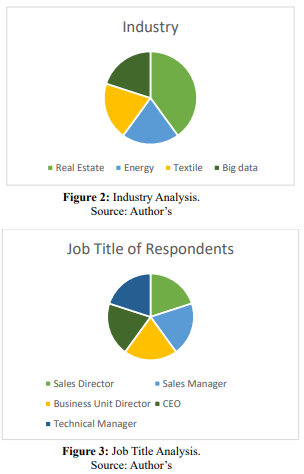
The following is a breakdown of the five respondents: two works in the real estate business, one is an energy expert, one is a big data specialist, and one is a textile industry professional (Figure 2). Figure 3, on the other hand, displays the respondents' official titles. It reveals that one is the chief executive officer, another is the director of sales, a third is the manager of sales, yet another is the head of a business unit, and a fourth is the technical manager.
Thematic Analysis
Given the responses from industry experts about our investigation point, “Exploring the Dynamics of Leadership Style, Employee Commitment, Work Motivation, and Work Climate: Implications for Satisfaction and Performance," we ought to guide a practical assessment to perceive key subjects and revelations associated with the initiative styles, work environment, representative responsibility, inspiration, and fulfillment.
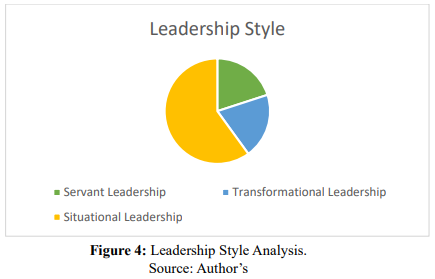
Figure 4 shows that out of five respondents, three support the situational leadership style. One Tran transformational one supports servant leadership. Transformational and Situational Leadership are unmistakable styles among respondents. Flexibility and situational mindfulness are esteemed. Transformational and Situational Leadership are prevalent, demonstrating an acknowledgment of the requirement for adaptability in leadership draws near. A consistent idea is the significance of adjusting leadership styles to various circumstances.
Respondent 1 (Business Unit Director): Embraces Transformational Leadership, zeroing in on rousing and persuading employees to reach their maximum capacity. Respondent 2 (Technical et al.): Takes on Situational Leadership, adjusting leadership style given the circumstance within reach. Respondent 3 (Director of Sales and Marketing, Real Estate): Practices servant leadership, focusing on supporting and strengthening the group. Respondent 4 (Sales Manager, Real Estate Marketing): Favors Situational Leadership, adjusting leadership style to changing circumstances. Respondent 5 (CEO, Big Data): Lines with Situational Leadership, underscoring flexibility to various conditions. Transformational Leadership (Respondent 1) The inclination for transformational leadership emphasizes moving and inspiring employees to reach their maximum capacity. This leadership style might add to a positive work climate by cultivating a feeling of direction and shared vision.
Situational Leadership (Respondents 2, 4, 5). The reception of situational leadership demonstrates a versatile way to deal with driving groups given the novel requests of every circumstance. This adaptability aligns with the speculation, underlining the significance of changing leadership styles to differing conditions. Based on this we accept the H1 hypothesis that leadership style has a significant effect on satisfaction and performance.
Employee Commitment
• Pay and working circumstances (Respondent 2)
• Adaptability, regarding employees as pioneers, establishing a family climate (Respondent 3)
• Opportunities for growth, communication, and a feeling of having a place (Respondent 4)
• Positive workplace culture, acknowledgment, and professional growth (Respondent 5).
Respondent 2 Features excellent pay and working circumstances as fundamental for employee commitment. Respondent 3 Burdens adaptability, regarding employees as pioneers and making a family-like environment. Respondent 4 Focuses on opportunities for growth, communication, and a feeling of having a place as devotion drivers. Respondent 5: Underlines positive workplace culture, acknowledgment, and professional growth to encourage commitment. Financial Prizes (Respondent 2): The affirmation of good pay and working circumstances as fundamental components for commitment features the meaning of substantial awards in encouraging employee devotion.
Cultural and Environmental Elements (Respondents 3, 4) Establishing a family-like climate, regarding employees as pioneers, and giving a feeling of having a place add to commitment by tending to inherent inspirations past financial motivators. Acknowledgment and Growth Opportunities (Respondents 4, 5) Acknowledgment of accomplishments, positive workplace culture, and professional growth are distinguished as variables encouraging commitment. These line up with the versatile leadership speculation by accentuating the significance of perceiving individual commitments and giving opportunities for advancement. Commitment is impacted by factors like pay, positive culture, growth opportunities, and acknowledgment. They approach employees with deference and cultivate a feeling of having a place that adds to commitment. A mix of financial prizes, positive culture, growth opportunities, and acknowledgment impacts employee commitment. Approaching employees with deference and the feeling of having a place are typical topics in cultivating commitment. We may conclude that employee commitment does, in fact, affect satisfaction and performance, confirming our H2.
Work Motivation
Outstanding communication (Respondent 2) Acknowledgment of accomplishments, opportunities for expertise advancement (Respondent 5) Understanding individual motivations (Respondent 3) Respondent 2 Focuses on excellent communication and positive pre-instructions before work. Respondent 5 Purposes clear communication, acknowledgment of accomplishments, and expertise advancement to move motivation. Respondent 3 Energizes backhanded investigation into employee motivations and supports training as an inspiration. Compelling communication, acknowledgment, and ability advancement are vital inspirations. It is urgent to Recognize individual motivations. Viable Communication (Respondents 2, 5) The emphasis on excellent communication and positive pre-instructions recommends that establishing a robust and straightforward communication climate inspires employees. Acknowledgment and Expertise Improvement (Respondents 5) Clear communication, acknowledgment of accomplishments, and ability advancement are featured as inspirations, demonstrating that an extensive way to deal with motivation includes both characteristic and extraneous variables. Understanding Individual Motivations (Respondent 3) by implication, asking about employee motivations and supporting instruction exhibits a versatile and customized way to deal with motivation. So, we accept H3 and say that work motivation significantly affects satisfaction and performance on the job.
Work Climate
• Positive Climate and teamwork (Respondent 5)
• Straightforward Climate (Respondent 3)
• Distressing however pleasant work, teamwork, trust (Respondent 4)
Open communication, teamwork, and a positive environment create a decent work climate. Transparency and trust are accentuated. Respondent 5 Features a positive environment and teamwork. Respondent 3 describes the environment as straightforward. Respondent 4 notices an upsetting yet charming work climate emphasizing teamwork. Subjects of positive air, transparency, and teamwork add to a great work climate. Respondents perceive the significance of balancing difficulties with a pleasant work climate. Successful communication, recognition, and skill advancement arise as key inspirations. It is viewed as critical to Recognize and tend to individual motivations. Positive Air and Teamwork (Respondents 4, 5) The predictable accentuation of positive air and teamwork as parts of a good work climate highlights the interconnectedness of leadership styles and the general workplace climate. Transparency (Respondent 3) Perceiving transparency as a piece of a positive work climate lines up with versatile leadership speculation, stressing the significance of clear communication and receptiveness. We accept H4 work climate has a significant effect on satisfaction and performance.
Employee Satisfaction and Performance Evaluation Methods
• Targets and yearly audits (Respondent 1)
• Balancing internal and extrinsic motivation (Respondent 4)
• Quantitative and qualitative measures, criticism meetings, and audits (Respondent 5)]
Respondent 1Utilizes targets and yearly audits. Respondent 4 Has confidence in a customized approach, considering individual contrasts. Respondent 5 Consolidates quantitative measures with qualitative appraisals, integrating input and open communication. Performance is assessed through a blend of quantitative and qualitative measures. Satisfaction is measured through open communication, input, and a customized comprehension of individual requirements.
Performance is assessed through a blend of quantitative measures and qualitative evaluations. Satisfaction is estimated through reviews, criticism meetings, and open communication. Objective Evaluation (Respondent 1) Using targets and yearly surveys for performance evaluation demonstrates an organized and objective situated approach, lining up with the versatile leadership style that tailors’ evaluations given explicit goals. Customized Approach (Respondent 4) Considering individual contrasts and adjusting leadership styles to changing circumstances mirrors a fitted way to deal with employee satisfaction and performance. It aligns with the speculation that recognizes the requirement for adaptability in leadership rehearsals.
Quantitative and Qualitative Measures (Respondent 5) The blend of quantitative measures with qualitative appraisals, criticism meetings, and open communication mirrors a complete way to assess employee satisfaction and performance. This approach is reliable with the versatile leadership speculation that supports a comprehensive comprehension of employee needs.
Hypothesis Testing
Hypothesis: The applicable approach of leadership, which adapts styles to the requirements of employees and creates supportive and transformative settings, contributes to a favorable work climate that increases employee motivation and commitment, boosting output and job satisfaction.
Supporting Evidence
The respondents habitually notice the significance of versatile leadership (Situational Leadership and Transformational Leadership).
Subjects like positive work climate, commitment, motivation, and satisfaction are consistent across reactions.
Leadership styles impact work climate, employee commitment, motivation, and satisfaction.Versatile Leadership Styles The pervasiveness of Transformational and Situational Leadership styles upholds the speculation, demonstrating a recognition of the requirement for flexibility in leadership draws near. Positive work climate the thematic analysis uncovers normal subjects of positive air, transparency, and teamwork, adding to a great work climate. Employee Commitment and Motivation The recognized leadership styles and motivational procedures align with the speculation, stressing the significance of flexibility in cultivating commitment and motivation. Employee Satisfaction and Performance: Evaluation methods incorporate a mix of quantitative and qualitative measures, featuring a versatile way to deal with understanding and improving employee satisfaction and performance. The discoveries from the thematic analysis unequivocally support the speculation that versatile leadership styles add to a positive work climate, cultivating expanded employee motivation, commitment, and satisfaction. The arrangement between leadership approaches and positive workplace dynamics builds up the interconnectedness of leadership styles and employee results, underlining the significance of versatility in leadership for developing a flourishing work climate. The point-by-point discoveries give nuanced experiences into how explicit leadership styles and practices add to a positive work climate, employee commitment, motivation, and satisfaction. The verification strongly supports the theory that adaptable management styles are crucial in shaping an ideal work environment and enhancing employee outcomes and organizational success. Flexible Management Approaches Respondents exhibit both groundbreaking and situational initiative styles, supporting the notion that flexible authority positively impacts both the work environment and employee outcomes. Optimal Work Environment: The emphasis on collaboration, transparency, and a cheerful demeanor in conjunction with theory demonstrates that adaptable leadership fosters a conducive work atmosphere. Workplace Accountability and Motivation the structured disclosures provide detailed insights into the factors impacting accountability and motivation, confirming that flexible leadership styles cater to diverse employee needs. Employee Satisfaction and Implementation: The combination of verifiable evaluation, customized strategies, and a blend of quantitative and subjective indicators supports the idea that adaptable leadership positively influences employee satisfaction and performance [23, 24].
Conclusion
The findings from the thematic analysis corroborate the idea. Adopting adaptable leadership styles that consider employees' requirements positively contributes to the workplace, employee engagement, motivation, and satisfaction. The correlation between leadership styles and positive components in the working environment demonstrates a strong connection between leadership methods and employee outcomes.
Theme 1: Adaptive Leadership
All participants saw their leadership style as situational or innovative, emphasizing their ability to adapt or strengthen their team. This aligns with the conjecture, advocating for a focus on developing a robust and flexible environment.
Theme 2: Positive Work Climate
The respondents described the work climate as exceptional, optimistic, uncomplicated, and enjoyable, suggesting a stable and engaging environment.
Essentials include open communication, trust, teamwork, equity, recognition, and steady leadership. This further fortifies the connection between adaptive leadership and a positive work climate.
Theme 3: Increased Employee Commitment and Motivation
Respondents featured "magnificent," "invigorated," and "assuming liability" employee commitment, showing a positive effect of the leadership styles.
Motivational procedures referenced incorporate standard communication, independence, shared vision, clear objectives, input, recognition, and prizes. This contradicts the speculation, recommending that adaptive leadership cultivates motivation and commitment.
Theme 4: Improved Performance and Satisfaction
Respondents connected leadership styles, work climate, and employee results through phrases like "an extremely impressive association" and "leadership styles shape the work climate, affecting employee commitment and motivation, subsequently influencingbyand large performanceand satisfaction." Evaluation methods incorporate KPIs, input meetings, performance audits, reviews, and open communication channels, recommending a comprehensive way to deal with surveying results. After directing an intensive thematic analysis of the reactions from industry professionals regarding leadership styles, work climate, employee commitment, motivation, and satisfaction, a few fundamental discoveries have arisen. Transformational and Situational Leadership were distinguished as common styles among respondents, stressing the significance of versatility and situational mindfulness. Normal components cultivating employee commitment included factors such for example serious pay, positive workplace culture, growth opportunities, and recognition. Methods for persuading staff incorporated successful communication, affirmation of accomplishments, and individualized approaches. A positive work climate was related to straightforward communication, teamwork, and a pleasant air. Quantitative measures, qualitative evaluations, and open communication were standard practices in assessing employee satisfaction and performance. The thematic analysis confirms that versatile leadership styles add to a great work climate, improving employee motivation, commitment, and satisfaction. The arrangement between leadership approaches and positive workplace dynamics highlights the interconnectedness of leadership styles and employee results, supporting the significance of versatile and employee-driven leadership in encouraging a flourishing work climate. The inside and out analysis uncovers that the respondents' leadership styles and practices align with the versatile leadership speculation. The discoveries highlight the meaning of fitting leadership ways to deal with explicit circumstances, cultivating a positive work climate, and tending to individual motivations for improved employee commitment, motivation, satisfaction, and performance.
The interconnectedness of leadership styles and workplace dynamics is apparent, supporting the thought that a versatile leadership style adds to an all-encompassing and flourishing hierarchical climate. Leadership Styles Transformational Leadership (Respondent 1) The accentuation on moving and propelling for maximum capacity demonstrates a commitment to hoisting employees and cultivating a positive work climate. Situational Leadership (Respondents 2, 4, 5): The versatility featured by these respondents highlights the recognition of the powerful idea of leadership, adjusting styles in light of the novel requirements of every circumstance. Servant Leadership (Respondent 3) Focusing on help and establishing a family climate recommends a leadership style zeroed in on supporting and enabling the group. Employee Commitment Financial Prizes (Respondent 2) Great pay and working circumstances are perceived as pivotal components impacting employee devotion. Cultural and Environmental Factors (Respondents 3, 4) Establishing a family-like climate, regarding employees as pioneers, and giving a feeling of having a place add to commitment. Recognition and Growth Opportunities (Respondents 4, 5) Recognition of accomplishments, positive workplace culture, and professional growth are distinguished as factors cultivating commitment. Work Motivation Compelling Communication (Respondents 2, 5) Great communication and positive pre-instructions are recognized as motivational procedures. Recognition and Skill Improvement (Respondent 5) Clear communication, recognition of accomplishments, and skill advancement are featured as inspirations. Grasping Individual Motivations (Respondent 3) In a roundabout way, asking about employee motivations and supporting training shows a customized way to deal with motivation. Positive Air and Teamwork (Respondents 4, 5): The significance of positive air and teamwork is consistently underlined, adding to a good work climate. Transparency (Respondent 3) A straightforward air is perceived as a part of a positive work climate. Employee Satisfaction and Performance Objective Evaluation (Respondent Using goals and yearly surveys for evaluation shows an organized way to evaluate performance. Customized Approach (Respondent 4) Considering individual contrasts and adjusting leadership styles to fluctuating circumstances mirrors a fitted way to deal with employee satisfaction and performance. Quantitative and Qualitative Measures (Respondent 5): Consolidating quantitative measures with qualitative appraisals, input meetings, and open communication features a thorough way to assess employee satisfaction and performance.
Limitations and Future Exploration
This analysis depends on a restricted example size and self-detailed data. Future examination with more extensive and assorted examples, utilizing quantitative and qualitative methods, could reinforce the discoveries and investigate the subtleties of various leadership styles and their effect on employee results in different authoritative settings. Also, the limitation of time leaded to choosing the managers of the sample from different sectors, future examinations with more time should focus on one sector.
References
- Persada, I. N., & Nabella, S. D. (2023). The influence of leadership, motivation and incentives on the performance of personnel of the operations section of Polda Kepri. International Journal of Accounting, Management, Economics and Social Sciences (IJAMESC), 1(4), 403-416.
- Bourne, M., Pavlov, A., Franco-Santos, M., Lucianetti, L., & Mura, M. (2013). Generating organisational performance: The contributing effects of performance measurement and human resource management practices. International journal of operations & production management, 33(11/12), 1599-1622.
- Ficarra, L., Rubino, M. J., & Morote, E. S. (2020). Does Organizational Culture Affect Employee Happiness? Journal for Leadership and Instruction, 19(2), 38-47.
- Gemeda, H. K., & Lee, J. (2020). Leadership styles, work engagement and outcomes among information and communications technology professionals: A cross-national study. Heliyon, 6(4).
- Bass, B. M., & Avolio, B. J. (1990). Developing transformational leadership: 1992 and beyond. Journal of European industrial training, 14(5).
- Allen, S. J., Rosch, D. M., & Riggio, R. E. (2022). Advancing leadership education and development: Integrating adult learning theory. Journal of Management Education, 46(2), 252-283.
- Judge, T. A., & Piccolo, R. F. (2004). Transformational and transactional leadership: a meta-analytic test of their relative validity. Journal of applied psychology, 89(5), 755.
- Khanin, D. (2007). Contrasting Burns and Bass: Does the transactional-transformational paradigm live up to Burns' philosophy of transforming leadership? Journal of Leadership Studies, 1(3), 7-25.
- Hassan, S., Mahsud, R., Yukl, G., & Prussia, G. E. (2013). Ethical and empowering leadership and leader effectiveness. Journal of Managerial Psychology, 28(2), 133-146.
- Bonsignori, M., Zhou, T., Sheng, Z., Chen, L., Gao, F., et al. (2016). Maturation pathway from germline to broad HIV-1 neutralizer of a CD4-mimic antibody. Cell, 165(2), 449-463.
- Rifa'i, A. A. (2023). The Effect of Organizational Commitment on Employee Performance. JURNAL EMA, 1(2), 41-48.
- Meyer, J. P., & Allen, N. J. (1991). A three-component conceptualization of organizational commitment. Human resource management review, 1(1), 61-89.
- Mousa, M., & Chaouali, W. (2023). Job crafting, meaningfulness and affective commitment by gig workers towards crowdsourcing platforms. Personnel Review, 52(8), 2070-2084.
- Afzal, J., Munir, M., Naz, S., Qayum, M., & Noman, M. (2023). Relationship between organizational silence and commitment of employees at university level. Siazga Research Journal, 2(1), 58-65.
- Wahyudi, W. (2022). Five components of work motivation in the achievement of lecturer performance. Scientific Journal of Reflection: Economic, Accounting, Management and Business, 5(2), 466-473.
- Ryan, R. M., & Deci, E. L. (2020). Intrinsic and extrinsic motivation from a self-determination theory perspective: Definitions, theory, practices, and future directions. Contemporary educational psychology, 61, 101860.
- Amabile, T. M., Conti, R., Coon, H., Lazenby, J., & Herron,M. (1996). Assessing the work environment for creativity. Academy of management journal, 39(5), 1154-1184.
- Fischbach, A., & Schneider, B. (2022). Emotional labor work attributes and emotional labor climate: Toward contextualizing the study of emotional labor. In Emotions and Negativity (Vol. 17, pp. 141-160). Emerald Publishing Limited.
- Cole, M. A. (2004). Trade, the pollution haven hypothesis and the environmental Kuznets curve: examining the linkages. Ecological economics, 48(1), 71-81.
- Bhardwaj, M. (2001). The Impact of Organisation Environment on Effectiveness. Journal of Management Research (09725814), 1(2).
- Gopal, R., Singh, V., & Aggarwal, A. (2021). Impact of online classes on the satisfaction and performance of students during the pandemic period of COVID 19. Education and Information Technologies, 26(6), 6923-6947.
- Roth, S. (2021). The great reset of management and organization theory. A European perspective. European Management Journal, 39(5), 538-544.
- Daft, R. L., & Armstrong, A. (2021). Organization theory and design. Cengage Canada.
- Zambrano, L. D., Newhams, M. M., Olson, S. M., Halasa,N. B., Price, A. M., et al. & Overcoming COVID-19 Investigators. (2022). Effectiveness of BNT162b2 (Pfizer-BioNTech) mRNA vaccination against multisystem inflammatory syndrome in children among persons aged 12–18 years—United States, July–December 2021. Morbidity and Mortality Weekly Report, 71(2), 52.