

Journal of Clinical & Experimental Immunology(JCEI)
ISSN: 2475-6296 | DOI: 10.33140/JCEI

Impact Factor: 1.9

Research Article - (2025) Volume 10, Issue 2
Exploration of the Mechanism and Treatment Methods of Lisfranc Injury
Received Date: Jul 07, 2025 / Accepted Date: Aug 04, 2025 / Published Date: Aug 13, 2025
Copyright: ©©2025 Yong Yuan, et al. This is an open-access article distributed under the terms of the Creative Commons Attribution License, which permits unrestricted use, distribution, and reproduction in any medium, provided the original author and source are credited.
Citation: Dong, S., He, X., Gong, X., Zhou, F., Yuan, Y. (2025). Exploration of the Mechanism and Treatment Methods of Lisfranc Injury. J Clin Exp Immunol, 10(2), 01-05.
Abstract
Lisfranc injury, also known as the tarsometatarsal joint complex injury, refers to the bone or ligament damage of the tarsometatarsal joint and the intercuneiform joint, including stable injury, partial sprain, severe midfoot displacement unstable fracture or fracture dislocation. It is a trauma involving the key stabilizing structures of the midfoot. It is characterized by difficult diagnosis and complex treatment [1]. If not handled properly, it can lead to serious sequelae such as chronic pain, post-traumatic arthritis and functional disorders. This article aims to systematically elaborate on the anatomical basis, injury mechanism, classification system, diagnostic methods, treatment strategies (conservative and surgical), prognostic factors and current research hotspots of Lisfranc injury by reviewing existing literature, providing a theoretical basis for clinical decision-making [2].
Keywords
Lisfranc Injury, Diagnosis, Treatment Methods.Introduction
The Lisfranc joint is named after Jacques Lisfranc, a surgeon during the Napoleonic era in France. It refers to a complex joint formed by the bases of the first to fifth metatarsals and the corresponding cuneiform and cuboid bones. This area is a crucial biomechanical hub of the foot, responsible for transmitting body weight to the forefoot, maintaining the shape of the arch, and providing rigidity during the propulsion phase of gait [3]. Lisfranc injuries, in a broad sense, refer to fractures, dislocations, and ligamentous damage involving this joint. Although relatively rare (accounting for approximately 0.2% of all fractures and 0.4-1% of foot fractures), their significance lies in their high rate of missed diagnosis (up to 20% at the initial visit) and potential for disability. Early identification and appropriate treatment are crucial for restoring foot function [4].
Anatomical Basis
Understanding the pathological mechanism of Lisfranc injury depends on the recognition of its complex anatomical structure: the skeletal structure is divided into three columns: the medial column - the first metatarsal and the medial cuneiform; the middle column - the second and third metatarsals and the middle/external cuneiforms; the lateral column - the fourth and fifth metatarsals and the talus. The first metatarsal forms a joint with the medial cuneiform, the second/third metatarsals with the middle/external cuneiforms, and the fourth/fifth metatarsals with the talus. The base of the second metatarsal deeply fits into the "mortise" formed by the three cuneiforms, which is the cornerstone of joint stability [5].
The ligament structure: Stability mainly relies on ligaments rather than bony structures. The Lisfranc ligament: The most crucial stabilizing structure, connecting the lateral edge of the medial cuneiform with the medial edge of the base of the second metatarsal. Its direction of travel (from inner upper to outer lower) enables it to effectively resist pronation/eversion stress; the intertalar ligament: Connects the bases of the second to fifth metatarsals, but there is no direct ligament connecting the first and second metatarsals, which is a weak point of the Lisfranc joint; the dorsal ligament: This ligament is relatively weak and mainly limits plantar flexion; the plantar ligament: Stronger than the dorsal ligament, it is the main stabilizing structure, especially the plantar Lisfranc ligament (i.e., the Lisfranc ligament itself); nerves and blood vessels: The sural artery and the deep peroneal nerve run along the dorsal side of the joint, and may be affected when injured [6].
Damage Mechanism
Lisfranc injuries are usually caused by either high-energy or low-energy trauma: Direct injury: Less common, such as when a heavy object crushes the back of the foot, resulting in local fracture and dislocation, often accompanied by severe soft tissue damage; Indirect injury: The most common. Axial loading/overflexion: When the foot is plantar-flexed (such as in ballet dancers or football players), the forefoot is fixed to the ground, and the body weight is transmitted along the longitudinal axis of the foot, causing the base of the metatarsal to dislocate dorsally; Forefoot abduction/ rotation: When the foot is fixed in a plantar-flexed position, the forefoot is subjected to abduction/rotation violence (such as when a horseback rider falls and their foot gets stuck in the stirrup, or in a car accident where the driver's foot gets stuck in the brake pedal) [7].
This mechanism often leads to a fracture of the base of the second metatarsal (the "fleck sign") and a tear of the Lisfranc ligament; Compression/rotation: Such as in industrial accidents; Low-energy sports injuries: These are becoming increasingly common among athletes, often presenting as ligament injuries (the "Lisfranc sprain") without obvious dislocation, and diagnosis is more challenging [8].
Classification
Various classification systems are used to describe injury patterns and guide treatment:
(1). Quenu & Kuss (1909): Based on X-ray manifestations, it is classified as: ipsilateral type (all metatarsals displaced to the same side), isolated type (single or partial metatarsal displacement), and divergent type (the 1st metatarsal displaced inwardly, and the 2nd to 5th metatarsals displaced outwardly). It is intuitive but does not take into account ligament injuries and subtle instabilities; Myerson (1986): Improved the Quenu & Kuss system, emphasizing the injury pattern more:
Type A: Symmetrical displacement (all metatarsals shift towards the same side).
Type B: Partial displacement (B1: Inner partial displacement; B2: Outer partial displacement).
Type C: Divergent shift (C1: Partial; C2: Complete).
(2). Nunley & Vertullo (2002): Regarding the ligament injuries of athletes, it is proposed that based on weight-bearing X-rays and bone scans:
Stage I: Ligament sprain, no instability, normal X-ray, positive bone scan.
Stage II: Lisfranc ligament tear, widening of the 1st-2nd metatarsal space (< 2mm), no loss of the medial column height.
Stage III: On the basis of Stage II, the height of the medial column is lost (the talonavicular joint sinks) [9].
(3). Based on CT-based Morphological Classification: With the widespread application of CT, more detailed fracture types and joint involvement patterns have been described, which is helpful for formulating individualized surgical plans.
Diagnosis
Early accurate diagnosis is the key to a good prognosis.
Clinical Manifestations:
Swelling and tenderness in the midfoot (especially on the dorsal side of the Lisfranc joint and between the bases of the first and second metatarsals); difficulty or inability to bear weight; "plantar ecchymosis sign" (bruising on the sole of the foot) is an important clue; inversion/eversion stress test of the forefoot or pressure test on the metatarsal head can trigger pain and instability [9].
Imageological Examination
X-ray plain film (standard position + stress position / weight-bearing position): Anteroposterior view: Observe whether the medial edge of the base of the 2nd metatarsal and the medial edge of the 1st-2nd metatarsal bone are continuous (the "line sign"); the gap between the bases of the 1st and 2nd metatarsals (normal < 2mm); the gap between the medialæ¥?bone and the base of the 2nd metatarsal (normal < 2mm). Lateral view: Observe the dorsal displacement of the metatarsals and the sinking of the cuboid-wedge joint (loss of the height of the medial column). 30° oblique view: Observe the alignment of the 3rd metatarsal with the lateral bone, and the 4th/5th metatarsal with the talus. Stress position / weight-bearing position: Crucial for suspected ligament injuries, it can reveal the subluxation or widening of the gap that is not obvious in the resting position [10].
Computed Tomography (CT): The gold standard, especially useful for assessing complex fractures, tiny fractures (such as the "fleck sign"), the extent of joint surface involvement, occult dislocations, and preoperative planning. Three-dimensional reconstruction is more intuitive.
Magnetic Resonance Imaging (MRI): This is the best non-invasive method for assessing ligament injuries (Lisfranc ligament, inter-talar ligament, dorsal/ plantar ligament), cartilage injuries, bone marrow edema, and ruling out stress fractures. It is particularly sensitive for diagnosing low-energy "sprains" [11].
Ultrasound: It can dynamically assess the integrity of ligaments, but the operator's reliance is high, and its application is not as widespread as MRI.
Treatment
The treatment goal is to achieve anatomical reduction, stable fixation to promote ligament healing, restore joint alignment, and minimize the risk of post-traumatic arthritis.
(1) Conservative Treatment:
Indications: Limited to injuries with no displacement at all (confirmed as stable by X-ray and weight-bearing position), or for patients whose overall condition does not allow for surgery. For Nunley-Vertullo type I injuries, strict non-weight-bearing plaster fixation for 6-8 weeks can sometimes be attempted, but close follow-up is necessary to be vigilant for delayed instability.
Method: Strictly immobilize with non-weight-bearing plaster or brace for 6-8 weeks, then gradually resume weight-bearing and functional exercises [12].
(2) Surgical Treatment: For the majority of Lisfranc injuries that are displaced or unstable, surgery is necessary.
Surgical indications: Any displacement visible on imaging (>2mm), joint surface step >1mm, instability shown in weight-bearing position, or those with a high clinical suspicion of instability but unclear on imaging (especially for athletes); Surgical timing: Emergency surgical indications include open fractures, irreducible dislocation, vascular injury, or compartment syndrome. Closed fractures should be treated before the peak of swelling (usually within 7-14 days after injury) or after swelling subsides (when the "wrinkle sign" appears); Surgical principles: Anatomical reduction is key. Primarily reduce and fix the second 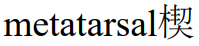 joint (the "key" of the joint). Usually, internal fixation devices are required to cross the joint to provide temporary stability until ligaments heal (approximately 8-12 weeks) [13].
Surgical Technic :Open reduction and internal fixation (ORIF): The most commonly used method. A dorsal longitudinal incision (one or two). The joint is reduced under direct vision, and Kirschner wires are temporarily fixed; Fixation method: Screw fixation: Especially suitable for the medial column (the first metatarsophalangeal joint) and the middle column (the second/third metatarsophalangeal joints). Cortical bone screws (3.5mm or 4.0mm) are commonly used for cross-joint fixation. Lisfranc screws are the core fixation. Attention should be paid to avoiding iatrogenic fractures. Usually, the screws need to be removed for a second operation 3-4 months after the surgery to reduce the risk of screw fracture and restore joint mobility; Backside plate fixation: Its application has increased in recent years, especially for comminuted fractures or osteoporotic patients. It provides multi-point stability and allows early partial weight-bearing. Bridge plates do not cross the joint surface and may avoid the need for secondary removal; Kirschner wire fixation: Often used for the lateral column (the fourth/fifth metatarsophalangeal joints), as it has greater mobility, allowing elastic fixation to promote functional recovery. Usually, they are removed 6-8 weeks after the surgery. The current fixation principle for ORIF is strong fixation of the medial and middle columns, and elastic fixation of the lateral column with Kirschner wires. Screw fixation has a definite fixation effect and appropriate compression can also increase joint stability, facilitate the repair of the Lisfranc ligament, but its directionality is poor, and the requirements for the surgeon's surgical skills are relatively high. Multiple checks and screw placement are prone to cause new damage to the joint cartilage. Hollow nails have good guiding performance and cause less damage to the joint cartilage.
The "Lisfranc channel" proposed is conducive to guiding the needle insertion direction and reducing joint cartilage damage [14]. Moreover, it has been confirmed that the strength of the hollow nail is sufficient to withstand local stress and no cases of nail fracture have been found. Compared with ordinary screws, headless compression hollow nails avoid interference with tendons and do not apply pressure to the cortical bone, avoiding iatrogenic fractures. Removing the screws will also cause significant cartilage damage. Absorbing the screws can avoid the need for secondary screw removal, but it has disadvantages such as poor fixation reliability and joint degeneration after screw absorption. Plate fixation for Lisfranc injuries has many advantages over screw fixation.
The plate can provide stable reduction and maintain strength, and studies have shown that the strength of backside plate fixation is similar to that of screw fixation, and can reduce joint cartilage damage. Through clinical comparison, it has been found that backside plate internal fixation for Lisfranc injuries has achieved good results, but the injury is relatively large, and the requirements for the soft tissue conditions around the incision are also higher [15].
Primary Arthrodesis: Indications:
Main points of controversy. Increasing evidence supports its use for severe comminuted fractures (unable to achieve anatomical reduction), significant joint cartilage damage, extensive ligament destruction, chronic joint arthritis secondary to old injuries, or certain high-demand patients (such as obese individuals, patients with diabetic neuropathy) to achieve immediate stability, avoid failure of internal fixation and secondary surgeries. For simple ligament injuries (without fractures), ORIF remains the preferred option.
Method:
Clean the damaged joint surfaces, perform bone grafting (autologous or allogeneic), and use screws, plates, or a combination of both to fix the medial and/or intermediate columns and/or preserve the lateral column with active non-fusion [16]. The lateral column is usually left with active non-fusion. Advantages: Good stability, no need for secondary removal surgery, allows earlier weight-bearing, and in some studies shows comparable or even better functional results compared to ORIF (especially in long-term follow-up with a low incidence of arthritis). Disadvantages: Sacrifices joint mobility. Although joint fusion achieves the corresponding stability, it does not conform to the biomechanical characteristics of the Lisfranc joint, and after fusion, there may still be pain or transfer pain in the foot . Therefore, Mulier et al. believe that plantar-hallux arthrodesis should be regarded as a more appropriate option for open reduction and internal fixation after surgery, as a remedial measure for severe chronic pain [17].
Postoperative Management:
Non-weight-bearing plaster or brace fixation for 6-8 weeks. Subsequently, progressive weight-bearing (usually up to 12 weeks) is achieved under protection. Active range-of-motion training for the toes and ankle joints is carried out. The lateral column Kirschner wires are removed 6-8 weeks after surgery. The inter-articular screws are typically removed 3-4 months after surgery (after radiographic evidence of ligament healing) and then full weight-bearing and comprehensive rehabilitation can begin. The time for weight-bearing after fusion is determined based on the healing condition.
Prognosis and Complications:
Even with the best treatment, the prognosis of Lisfranc injuries remains challenging. The key factors for a good prognosis: early diagnosis, anatomical reduction, stable fixation, and appropriate postoperative rehabilitation. Common complications: post-traumatic arthritis: the most common (up to 40-60%), related to the severity of the initial injury and the quality of reduction.
It can lead to chronic pain and stiffness [18]. Those who do not respond to conservative treatment need salvage joint fusion surgery. Chronic pain and functional impairment: causes include arthritis, nerve injury, complex regional pain syndrome, soft tissue problems. Malunion: caused by poor reduction [19]. Internal fixation-related complications: screw loosening, fracture (especially if not removed in time), infection. Soft tissue problems: poor wound healing, infection, scar pain. Compartment syndrome: needs to be vigilant in high-energy injuries.
Vascular and nerve injury: during the acute phase or during surgery. Overall, a considerable number of patients (especially those with severe injuries or delayed treatment) will have some degree of functional limitation, such as shorter walking distance, difficulty climbing stairs, inability to run or jump, and discomfort when wearing shoes. The time and level of an athlete's return to the field depend on the type of injury, treatment method, and rehabilitation status [20].
Current Controversies and Research Hotspots :
(1). ORIF vs. Primary fusion: For moderate to severe ligament injuries (without fractures or mild fractures), the optimal surgical approach remains a subject of debate. Multicenter randomized controlled trials (such as the Lisfranc Trialists) are currently underway, aiming to provide higher-level evidence.
(2). Fixed technique optimization: Topics of interest include elastic fixation, new steel plate design (with low notches, locking, bridging), bioabsorbable materials, and arthroscopic-assisted fixation, aiming to enhance stability, reduce complications, and avoid secondary surgeries.
(3). Joint preservation technique: For injuries with relatively intact joint cartilage, explore ligament repair/reconstruction techniques (such as using autologous tendon transplantation to reconstruct the Lisfranc ligament) to preserve joint mobility.
(4). The refinement of diagnostic criteria: Utilizing MRI and weight-bearing CT
Conclusion
In conclusion, the Lisfranc joint complex, as a crucial anatomical structure and mechanical hub of the midfoot, is prone to severe damage (Lisfranc injury). The literature review clearly indicates that early and accurate diagnosis is the cornerstone for achieving a favorable prognosis. Imaging examinations, particularly weight-bearing X-rays, CT, and MRI, play an indispensable role in identifying fracture-dislocation patterns, the degree of ligament injury, and assessing stability. However, vigilance against missed diagnoses and misdiagnoses is still necessary. In terms of treatment strategies, anatomical reduction and stable fixation have been widely proven to be the core goals. For non-displaced or stable injuries, non-surgical treatment may be effective, but close follow¬up is required. For the vast majority of displaced or unstable injuries, surgical treatment is the gold standard. Internal fixation (especially inter-articular screws and/or dorsal plates) and staged partial joint fusion are currently the mainstream surgical approaches, each with its indications and advantages and disadvantages.
The choice should be made based on individualized decisions considering factors such as the specific type of injury (ligamentous vs. bony), degree of comminution, joint surface destruction, and patient needs. Minimally invasive techniques show potential, but their long-term effects and indications still require more high-quality research to verify. However, the management of Lisfranc injury still faces significant challenges. Even with the best treatment, patients still have a high risk of developing long-term sequelae such as post-traumatic arthritis, chronic pain, stiffness, functional limitations, and foot arch collapse. The key factors for poor prognosis include: delayed diagnosis, initial severity of the injury, insufficient reduction, failure of fixation, articular cartilage injury, and associated soft tissue problems. This highlights the importance of precise surgical techniques, strict adherence to the principle of anatomical reduction, and individualized, progressive rehabilitation plans.
References
- Grewal, U. S., Onubogu, K., Southgate, C., & Dhinsa, B. S. (2020). Lisfranc injury: a review and simplified treatment algorithm. The Foot, 45, 101719.
- Moracia-Ochagavía, I., & Rodríguez-Merchán, E. C. (2019). Lisfranc fracture-dislocations: current management. EFORT Open Reviews, 4(7), 430-444.
- Sain, A., Prendergast, E., Wattage, K., Elkilany, A., & Metry, A. (2023). Lisfranc injury: recent trends in management. Cureus, 15(8).
- Hofbauer, M. H., Babu, S. S., & Vonasek, A. (2024). Lisfranc Injuries. Clinics in podiatric medicine and surgery, 41(3), 407-423.
- Clare, M. P. (2017). Lisfranc injuries. Current reviews in musculoskeletal medicine, 10(1), 81-85.
- Wunder, J., Schirdewahn, C., Griger, D., Schnabl, M., & von Rüden, C. (2024). Verletzungen des Lisfranc-Gelenks. Die Unfallchirurgie, 127(9), 665-676.
- Bowlby, M. A. (2025). Subtle Lisfranc Injuries. Clinics in podiatric medicine and surgery.
- Oak, N. R., Manoli 2nd, A., & Holmes, J. R. (2014). Longitudinal Lisfranc injury. Journal of Surgical Orthopaedic Advances, 23(4), 233-236.
- Mulcahy, H. (2018). Lisfranc injury: current concepts. Radiologic Clinics, 56(6), 859-876.
- Zwipp, H., Rammelt, S., Dahlen, C., & Reichmann, H. (1999). Charcot foot. Der Orthopäde, 28(6), 550-558.
- Welck, M. J., Zinchenko, R., & Rudge, B. (2015). Lisfranc injuries. Injury, 46(4), 536-541.
- Llopis, E., Carrascoso, J., Iriarte, I., de Prado Serrano, M., & Cerezal, L. (2016, April). Lisfranc injury imaging and surgical management. In Seminars in Musculoskeletal Radiology (Vol. 20, No. 02, pp. 139-153). Thieme Medical Publishers.
- Van Der Wal, G. E., Dijkstra, P. U., & Geertzen, J. H. (2023). Lisfranc and Chopart amputation: a systematic review. Medicine, 102(10), e33188.
- Perez, M. T., Owen, J. R., Adelaar, R. S., & Wayne, J. S. (2022). Computational analysis of Lisfranc surgical repairs. Journal of Orthopaedic Research®, 40(12), 2856-2864.
- Hajjioui, M., & Hajjioui, N. (2023). Total Lisfranc dislocation without associated fracture. Pan African MedicalJournal, 45(1).
- Sandlin, M. I., Taghavi, C. E., Charlton, T. P., & Anderson, R.B. (2017). Lisfranc Injuries in the Elite Athlete. InstructionalCourse Lectures, 66, 275-280.
- Weatherford, B. M., Bohay, D. R., & Anderson, J. G. (2017). Open reduction and internal fixation versus primary arthrodesis for Lisfranc injuries. Foot and ankle clinics, 22(1), 1-14.
- Guerreiro, F., Abdelaziz, A., Ponugoti, N., & Marsland, D. (2023). Nonoperative Management of Lisfranc injuries–A systematic Review of outcomes. The Foot, 54, 101977.
- Kalia, V., Fishman, E. K., Carrino, J. A., & Fayad, L. M. (2012). Epidemiology, imaging, and treatment of Lisfranc fracture-dislocations revisited. Skeletal radiology, 41(2), 129-136.
- Sripanich, Y., Steadman, J., Kraehenbuehl, N., Rungprai, C., Saltzman, C. L., Lenz, A. L., & Barg, A. (2021). Anatomy and biomechanics of the Lisfranc ligamentous complex: a systematic literature review. Journal of biomechanics, 119, 110287.