

Archivos de Ciencia e Investigación(ADCI)
ISSN: 3068-014X | DOI: 10.33140/ADCI


Research Article - (2026) Volume 2, Issue 1
Explanation of Social Support for Labor Children in Tehran: A Qualitative Study
Received Date: Nov 16, 2025 / Accepted Date: Jan 27, 2026 / Published Date: Jan 30, 2026
Copyright: ©2026 Sahbaeiroy Faezeh, et al. This is an open-access article distributed under the terms of the Creative Commons Attribution License, which permits unrestricted use, distribution, and reproduction in any medium, provided the original author and source are credited.
Citation: Faezeh, S., Ali, K. (2026). Explanation of Social Support for Labor Children in Tehran: A Qualitative Study. Arch Cienc Investig, 2(1), 01-07.
Abstract
Introduction: Social support understanding can prevent the occurrence of adverse social effects, increase people progress, leave a positive impact on the physical, mental and social condition of people and ultimately lead to an increase in their performance.
Research Method: The present study was a qualitative type, with a content analysis approach; this research was conducted in the workplace and where the participants felt comfortable. To this end, semi-structured interviews were conducted with 8 experts in the issue of labor children, the collection tool was an interview guide, and the participants were selected based on purposeful sampling among experts and decision makers in the matter of labor children. The process of selecting participants continued until no new information was obtained in the interviews and the data reached saturation. Then the interviews along with the desired codes were entered into MAXQDA version 10 software and data analysis was done.
Findings: From the total interviews, 10386 initial codes, 265 overlapped initial codes and 67 classes and 19 merging data and five axial codes including lack of responsibility, unfair distribution of the country's wealth, lack of social support, increasing unemployment in the country and also Non-application of child rights laws were found. "Lack of responsibility of an individual or organization" was identified as the selective code of the participants in the research and the main variable of the research, which connected all the variables or classes with this concern.
Conclusion: Managers and brokers responsibility is to protect people and defend their rights. Accountability and transparency are one of the main tools against corruption and achieving an accountable system is one of the main goals of any country. The existence of an efficient and accountable system helps maintain the acceptability of the political system and on the other hand, it can prevent the corruption's growth.
Keywords
Explanation, Social Support, Labor Children
Introduction
One of the ways of evaluating the societies' health is the social health of its people [1]. Social support emphasizes the level of people's perception of affection, family support, friends and others against psychological pressures [2]. Social support is one of the emotional coping mechanisms; it has a potential effect on the quality of life, which is defined as a subjective feeling of belonging, acceptance, being liked and receiving help in the needed conditions, and it can be presented in the form of Psychological and emotional, informative, tangible and social support. People's understanding of the provided support is very important [3]. Research results show that there is a difference between the quality of support received and the provision of social support. Most studies emphasize the measurement of received support, but there is a difference between received support and expectations at the time of need and between specific support and general support [4,5].
The results of the studies show that factors such as failure in social institutions such as family and school, economic poverty of the society and the inability of people to adapt to the lifestyle, lack of sufficient supervision by responsible organizations, the existence of incorrect patterns in citizens are very effective in people's social support [6]. Social support understanding can prevent the occurrence of adverse social effects, increase people progress, leave a positive impact on the physical, mental and social condition of people, and ultimately lead to an increase in their performance and help to promote specific adaptive behaviors and provide suitable environmental supports for them [7]. Many researchers admit that not only social support for needy people is not done properly, but sometimes it also causes conflict among people in the society. Social support is not essentially a static concept, but includes a vital and dynamic process [8]. According to the statistics of the International Labor Organization, every year about 300 million children aged 5 to 18 in the world are deprived of education and work to help their families or to make a living [9]. Research findings show that there is a direct relationship between perceived social support and anger [10]. Calvin concluded in a research entitled "Compulsion, social support and crime" that coercion causes crime and social support prevents it [11].
Child labor causes serious harm so that its effects will remain forever. The phenomenon of child labor is one of the widespread problems of the world, especially in third world countries. The results of the International Labor Organization researches show that in 2018, about 800 million children were working, of which about 200 million were less than 10 years old [12]. In a research titled "investigating the relationship between family social capital and students' delinquency", social support as a component of social capital was investigated and the findings showed that there is a significant relationship between social support in different informational, instrumental and emotional dimensions with delinquency [13]. In Iran, there are no accurate statistics about labor children and their number is increasing due to many reasons. More than 20,000 labor children have been confirmed in Tehran, and according to the statistics of the International Labor Organization, more than 71.5% of children between the ages of 10 and 14 are economically active in Iran [14]. The results of some research show that in 1375, about 380,000 children between the ages of 10 and 14 had permanent jobs in Iran [15]. In 1385, Iran's Statistics Center announced their number as 1,700,000 children, and some unofficial sources have announced 4 million working and street children [16]. According to the studies, labor children have less physical, mental and social health than other children and a high level of emotional, behavioral, social and economic problems has been reported among them. Research results show that 85% of labor children have emotional and behavioral problems such as low self-confidence, depression and poor social communication [17]. According to the statistics of the Welfare Organization, 75% of the labor children had a parent, 30% of them do not go to school, 31% are six to eleven years old, 9% are under the age of six, and 60% of these children are the breadwinners of the family [18]. The main reason for child labor in Iran is poverty. The majority of labor children with poor economic status does not have the necessary life skills and has low social health. In addition, they are weak in cognitive, emotional, motivational and behavioral skills, and if they are studying, they get negative feedback from their peers, teachers and classmates, and academic problems such as dropping out of school are observed in abundance. The destructive effects of working in children continue until adulthood and as a result, the society will be deprived of a large number of efficient and competent people [19].
According to the World Health Organization and UNICEF, one of the indicators of development is the situation of children in countries, in addition, one of the most important tasks of any government is to create an identity for children, issue identification cards and birth certificates, and allow them to study in schools and provide insurance coverage for them [20]. Governments have a significant impact on the welfare of labor children, instead of military and security budgets; they can help the health, education and welfare facilities of low-income children and their families. In some countries, by impoverishing the people, the government has created a kind of tyranny based on poverty and social and economic inequality, and causes the children of slum families to suffer the most as the lowest class [18]. In Iran, the welfare organization, education and training, the Ministry of Health, the Attorney General of the country, the relief committee, the welfare and social services organization of the municipality, the municipality, the office of the socially disadvantaged, daily child and family educational support centers, etc., are among the executive institutions of support for labor children [21]. So far, there have been no systematic studies on social support for labor children in Iran. Therefore, according to the mentioned issues, the present research is looking for an answer to the question; do labor children receive social support from their community?
Method
The present study is a qualitative research, of the content analysis type, with the aim of explaining the social support of labor children in Tehran. This research was conducted in the workplace and where the participants felt comfortable in Tehran. The number of samples was 8 people through the purposeful sampling method.
Inclusion Criteria
1. The participants included people who had specific opinions about labor children.
2. The participants were satisfied to participate in the research.
Exclusion Criteria
1.Unwillingness to continue cooperation and withdrawing from the research during the study was one of the exclusion criteria, and one of the participants withdrew from the research.
Data Collection Method
A semi-structured interview form was used to collect information. The interviews lasted from 45 to 60 minutes during one to two sessions. Before starting the interview, the researcher created a sense of trust in the participants by establishing proper communication. Also, before starting the interview and audio recording, he re¬introduced himself according to the previous coordination and stated his research goals and ensured the confidentiality of the information for interview recording. Then the researcher asked information such as name, age, occupation and contact number of the participants for possible future appointments, and as soon as the research participants felt tired, he stopped the interview and continued the interview with their coordination. In addition, during and at the end of the interview, by returning the salient points of the interview, the researcher tried to confirm the accuracy of the data and clarify the topic of the research.
Accuracy criteria included credibility, dependability, confirmability, and transferability, which were observed in the present research. In this research, in order to increase the credibility of the data, different methods were used, such as re-reviewing the data repeatedly by the research team. In cases where the statements of the participants were incomprehensible, the clarification method was used by referring to the participants again. In addition, after transcribing and typing of the interviews, their codes and classes were presented to the professors and their additional comments were used along with fixing the problems. Also, in this research, the feedback of the materials to the research participants, review by the research team and approval by two experts showed the stability of the research findings.
The interview started with a general and open question about the explanation of social support for labor children in Iran and was followed by questions such as what do you know about labor children in Tehran? What is the social condition of labor children in Tehran? How much social support do the labor children of Tehran receive? In addition, the participants were asked to allow their voices to be recorded. After the interview, the recorded text was listened to and transcribed and typed. In addition, the memo notes and non-verbal communication that the researcher had observed, were considered, too. The text was analyzed simultaneously with transcribing and the participants' sentences, in the form of semantic phrase, which is like a semantic unit, was extracted from the text of the interviews, and the expressions related to each semantic unit, which represents an aspect of the existing conditions in the field of social support for labor children, appeared in the form of themes and main variables.
Data Analysis Method
Content analysis method was used to analyze the data. For this purpose, MAXQDA10 software was used simultaneously with data collection. In order to access detailed information from the stages of data preparation, deciding on the unit of analysis, classification, coding a sample of the text, coding the texts, and drawing conclusions from the coded data were used. After the agreement among the members of the research team about the coding of part of the text, the mentioned method was done in the whole text. After coding all the text, it was re-examined in terms of data stability and errors such as misunderstanding of classes, coding method and also bias were minimized.
Then a conclusion was made from the coded data and the conclusion led to the creation of classes, then the relationship between the classes was identified and the meanings within them were determined, and finally the main theme and variable were revealed.
Findings
The research community included participants who were all decision-makers in their workplace organizations in the field of labor children and street children and were selected based on targeted sampling. Their age range was 45 to 60 years, one participant was female and the rest were male, all of them were married, 6 had a doctorate degree and the remaining two had a master's degree. The process of selecting participants continued until no new data was obtained during the interviews, and in other words, the data reached saturation. To analyze the data of this research, the content analysis method was used and three stages of open, axial and selective coding were done to develop the content analysis.
Open Coding Stage
The initial classification of the codes started from the first interview, in the subsequent interviews, the codes of each interview were compared with each other and with the codes of the previous interviews to determine the similarities and differences between them. Then the codes were placed in a specific class based on their similarities. 10386 initial codes were extracted from the total of interviews conducted. In the next step, the codes became more abstract and initial classification of codes was done and similar codes were overlapped. At the end of this step, 265 overlapping initial codes were obtained. Then the initial overlapped codes were placed into 67 classes. These classes were more abstract than the initial codes and were arranged by the researcher, and then the initial data were broken and linked again in a new format [22].
The classification of initial codes started from the very first interview, after the subsequent interviews were conducted, the codes of each interview were compared with each other and with the initial classes to determine their similarities and differences, and the codes that were similar to each other were placed in one class. How to form the category of "problems of labor children" is shown in diagram and figure number one. Then, the researcher reviewed the initial classes with successive analysis and compared the classes, and therefore the codes were placed in their appropriate classes based on the difference and appropriateness. With the continued collection of data and their analysis, some classes were merged with other classes and new classes were created and as a result saturation of one class was created. This led to initial classifications of the data, so that at the end of this stage, 67 initial classes were integrated into 19 classes based on overlapping codes.
Axial Coding Stage
At this stage, the data was re-examined and the relationship between the classes was determined and the axial idea was determined in the classes. In this section, an inductive thinking has occurred and classes with the same characteristics are placed in a specific class, and the continuous comparison of data continues. The initial codes and categories obtained in open coding are compared, and the codes that are similar are merged and create newer classes [23]. In the present study, similar sub-classes formed sub-classes and similar sub-classes formed axial classes, thus similar categories formed a cluster. According to this process, 19 classes integrated in the previous stage were placed in five axial classes [Table No. 1]. For example, the non-responsibility class [with inappropriate cooperation of relevant organizations, inconsistency in presenting tasks, lack of sense of responsibility], unfair distribution of the country's wealth [with the accumulation of capital for exploiters, lack of financial resources for the low-income group, lack of resourcefulness in solving economic problems, sanctions], lack of social support [by neglecting the social rights of labor children, weakness of support and service programs, children's vulnerability to work, discrimination and increasing poverty] increasing unemployment in the country [with lack of educational skills due to poverty, finding problems livelihood among the unemployed, high rate of unemployment among low-income people, low production capacity] non-application of laws related to children's rights [with existing laws not being child-centered, shortcomings of children's rights in Iran, lack of protection of children by labor laws, lack of attention to child abuse in child labor] were shown.
Selective Coding
This coding is a process in which the findings are combined and then redefined at this stage, and finding the axial variable is the main goal of this coding [3]. In this study, due to nature and similarities of subclasses, they were placed around a common and coordinated class called "Irresponsibility". In content analysis, it is necessary to determine the main concern of the participants in the research based on the obtained data, and then determine the main variable because it connects all the variables or classes with this concern. In this research, the main and common concern of the participants was the lack of responsibility of a specific person or organization to solve the problems of labor children, because if there is a specific person or organization, other problems of labor children will be solved automatically.
Social issues have a wide range and solving them depends on knowing their subtle, deep and seemingly invisible roots [24]. Responsibility is an internal requirement and commitment from people to perform the activities assigned to them. The word responsibility originates from within the individual. A person who takes responsibility for a job agrees to perform a series of activities or supervise the performance of these activities by others [25]. Managers and brokers have a serious responsibility in protecting people and defending their rights. In fact, responsibility means the ability to accept, answer and undertake the work that is requested from someone and the person has the right to accept or reject it [26]. Accountability and transparency are considered as the main tools against corruption, and achieving a proper accountability system is one of the main goals of most public sector reforms. An efficient system, on the one hand, preserves legitimacy and acceptability and deals with corruption, and on the other hand, it can prevent government corruption [27].
Organizations' managers must be accountable to citizens and must adhere to public and legal accountability [28]. Social responsibility of governments explains the policies of organizations for accepting government regulations, because social responsibility schemes are often understood as voluntary rather than legal obligations, and in less developed countries, there are relatively fewer laws and regulations based on social responsibility [29].
It seems that the phenomenon of labor children requires a single consensus and all-round interaction from government agencies and social and non-governmental institutions, an interaction that can result in identifying labor children, creating stable jobs for their families, expanding supervision scope of government organizations such as welfare and Introducing labor children to private sectors to support them [30].
In terms of the formation of the phenomenon of labor children, economic poverty has played the most prominent role, but other factors such as divorce, marginalization, parent's addiction, immigration, maladaptive parenting or orphaned children, as well as cultural poverty play a role, and this phenomenon will not be eradicated, unless the coverage of comprehensive social security for labor children is achieved [31].
Solving child labor problem requires comprehensive support. In Iran, this problem is ignored by the authorities, and sometimes instead of solving the problem, the child is seen as a problem. For this reason, if the authorities believe that child labor is a serious social harm, it is necessary to make more efforts to introduce it to the people. Iran and non-governmental organizations have the knowledge to solve this problem, but in practice no effort is made. In families where the head of the household is unemployed and has no skills to earn money, they can be economically empowered by skill training. Also, a serious focus on not missing out on free education, vocational training at the appropriate age, and finding talent for this group of children is low-cost and feasible [32].
By educating and informing the members of the society, it is possible to reduce labor children problems and prevent harm to them. For example, spiritual and financial assistance through non-governmental organizations can give spiritual and financial potential to children, and on the other hand, the authorities should act to improve the conditions and allow better use of government capacities and facilities [33].
Children should be considered regardless of gender, nationality, religion, ethnicity and race. Children are the future adults and future builders of society, and we should try to raise healthy, mature, well-functioning adults free from injury. Otherwise, the damages will be transmitted to the rest of the society and the society will also suffer from this incident [30].
Conclusion
According to the existing laws, it can be said that child protection organizations can defend children's rights. Unfortunately, the problem with child laborers is holding meetings and not having results. These meetings should have a suitable output so that the efforts of the organizations regarding children are effective. Every person, both in real and legal position, has a social responsibility towards labor children and should feel responsible [34]. In the basic laws of the country, the value of human beings, especially children, has been discussed a lot, and this category has been considered as a basic element in the country's laws. Attention to the family and children, who are the main part of the family, has been specially considered in the laws [33]. In Article 10 and 21 of the Constitution, the issue of family and protection of family members is mentioned, and in Article 21, the government is generally obliged to protect children, and in the laws of the Islamic Republic, there are many references to orphaned children. Working and street children are clear examples of orphaned children, and it is government's duty to support these people. There are very good laws in the country's laws that are not properly implemented [35[.
According to Article 156 of the Constitution, in addition to legislation, the judiciary has social duties, on this basis, social assistance and prevention of crime has been established. When public rights are considered as a serious indicator, the judiciary is obliged to protect and support it. If protecting children is a right and a duty, then the judiciary is obliged to do it [36]. According to international reports, the main challenge facing the human society is to exceed the rate of child labor, which shows that children are exposed to the most harm. Therefore, any action taken by the government and non-governmental organizations to support this vulnerable group should pay special attention to children [37].
The two basic strategies in the social sector are people's participation and the sense of responsibility in the country's decision makers, therefore, measures should be taken to increase the responsibility of the people who are responsible for labor children, and in addition, the protection of children becomes a major social concern. The officials should be informed about it and the sense of responsibility should be promoted among them, in addition, this capacity should be properly managed so that the best conditions for labor children and street children occur [35].
Some of the problems of labor children are related to the absence of laws or deficiencies in laws. Another thing that should be paid attention to is inter-departmental coordination between organizations and parts within the department. This coordination makes movement happen in the right direction [37]. And finally, the prevention of abnormality is a scientific issue and without scientific work, improvement in this direction is not possible, therefore, issues must be looked at scientifically and expertly in order to reach acceptable results, in other words, identification and target selection must be scientific and consciously [36[.
Research Limitations
Fatigue of the participants in long-term interviews was one of the limitations of this study that the researcher tried to interview the participants in one round and in some cases finally in two stages. Also, the psychological state of the participants and the possibility of their dishonesty in answering the questions were limitations that the researcher was unable to control.
Acknowledgments
The present article is taken from the thesis of Islamic Azad University, Tehran Medical Sciences Unit, with code of ethics IR.IAU.TMU.REC.1398.224. Here, it is necessary to express our gratitude to the research units and all those who helped us in conducting the research.
Funds
The Vice-Chancellor of Teaching, Tehran Islamic Azad University of Medical Sciences, provided financial resources for this research.
Conflict of interest
The authors declare that they have no conflict of interest.
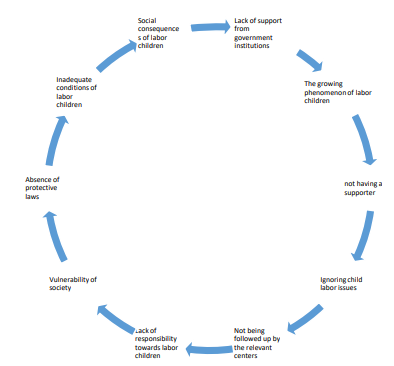
Chart No. 1: Formation of the first class of problems caused by the existence of labor children
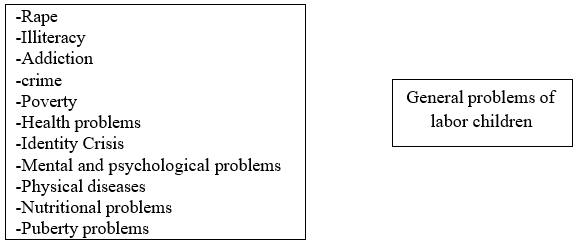
Figure 1: Formation of the initial class of general problems of labor children, from initial codes
|
Axial class |
Sub-class |
|
Lack of responsibility |
Inappropriate cooperation of relevant organizations Inconsistency in providing tasks Lack of sense of responsibility |
|
Unfair distribution of the country's wealth |
Accumulation of capital for exploiters Lack of financial resources for the low income group Carelessness in solving economic problems Boycott |
|
Lack of social support |
Ignoring the social rights of labor children Weakness of support and service programs Vulnerability of children to work Discrimination and increasing poverty |
|
Increasing unemployment in the country |
Lack of learning skills due to poverty Finding livelihood problems in the unemployed High unemployment rate among low income people Low production capacity |
|
Failure to apply laws related to children's rights |
The existing laws are not child-centered Shortcomings of children's rights in Iran Lack of protection of labor laws for children Lack of attention to child abuse in child labor |
Table No. 1: Axial Classes And Sub-Classes Of "Social Support For Labor Children
References
- ILO good practice guide for addressing child labour in fisheries and aquaculture: Policy and practice preliminary version international labour organization. 2017.
- Catani, C., Gewirtz, A. H., Wieling, E., Schauer, E., Elbert, T., & Neuner, F. (2010). Tsunami, war, and cumulative risk in the lives of Sri Lankan schoolchildren. Child development, 81(4), 1176-1191.
- Cooke, E., Hague, S., & McKay, A. (2016). The Ghana poverty and inequality report: Using the 6th Ghana living standards survey. University of Sussex, 1-43.
- Dubow, E. F., Boxer, P., Huesmann, L. R., Landau, S., Dvir, S., Shikaki, K., & Ginges, J. (2012). Cumulative effects of exposure to violence on posttraumatic stress in Palestinian and Israeli youth. Journal of Clinical Child & Adolescent Psychology, 41(6), 837-844.
- Amuzu, C., Jones, N., & Pereznieto, P. (2010). Gendered risks, poverty and vulnerability in Ghana: To what extent is the LEAP cash transfer programme making a difference. London: ODI.
- Alam, S. (2014). Refining the street children with education. IOSR Journal of Research & Method in Education (IOSRJRME).
- Berg, R. C., & Denison, E. (2013). A tradition in transition: factors perpetuating and hindering the continuance of female genital mutilation/cutting (FGM/C) summarized in a systematic review. Health care for women international, 34(10), 837-859.
- Brown, G., Reeders, D., Dowsett, G. W., Ellard, J., Carman, M., Hendry, N., & Wallace, J. (2015). Investigating combination HIV prevention: isolated interventions or complex system. Journal of the International AIDS Society, 18(1), 20499.
- Das, S. (2012). Incidence of child labour and child schooling in India: pattern and determinants. International Scholarly Research Notices, 2012(1), 429506.
- Kisirkoi, F. K., & Mse, G. S. (2016). Education Access and Retention for Street Children: Perspectives from Kenya. Journal of Education and Practice, 7(2), 88-94.
- Geere, J. A. L., Hunter, P. R., & Jagals, P. (2010). Domestic water carrying and its implications for health: a review and mixed methods pilot study in Limpopo Province, South Africa. Environmental Health, 9(1), 52.
- Sanghera, G. S. (2016). Child labour in India: globalization, power, and the politics of international children's rights. Oxford University Press.
- Shaheen, A. (2022). Factors Associated with Child Labour and its Relationship with Educational Attainment. Apex Journal of Social Sciences, 1(1), 16-27.
- Sahbaeiroy, F., & Koshanfar, A. (2023). Explanation of social support for labor children in Tehran: a qualitative study.
- Imani, Nafiseh. Nersesiaians, Emelia.Anthropological study of the phenomenon of street children's work in Karaj city. Iran's social issues. 2016; 3[1]:7-32.
- Islam, A., & Choe, C. (2013). Child labor and schooling responses to access to microcredit in rural Bangladesh. Economic Inquiry, 51(1), 46-61.
- Sahbaeiroy, F., & Koshanfar, A. (2023). Explanation of social support for labor children in Tehran: a qualitative study.
- Kidman, R., & Palermo, T. (2016). The relationship between parental presence and child sexual violence: evidence from thirteen countries in sub-Saharan Africa. Child abuse & neglect, 51, 172-180.
- De Benítez, S. T. (2011). State of the world's street children. London: Consortium for Street Children.
- Baah-Ennumh, T. Y., & Adoma, M. O. (2012). The living conditions of female head porters in the Kumasi metropolis, Ghana. Journal of Social and Development Sciences, 3(7), 229-244.
- Silverman, D. (2021). Doing qualitative research.
- Boréus, K., & Bergström, G. (2017). Analyzing text and discourse: Eight approaches for the social sciences. Sage.
- Snelson, C. L. (2016). Qualitative and mixed methods social media research: A review of the literature. International journal of qualitative methods, 15(1), 1609406915624574.
- Pérez, A., & del Bosque, I. R. (2015). How customers construct corporate social responsibility images: Testing the moderating role of demographic characteristics. BRQ Business Research Quarterly, 18(2), 127-141.
- Jyoti, J., & Dev, M. (2015). The impact of transformational leadership on employee creativity: the role of learning orientation. Journal of Asia Business Studies, 9(1), 78-98.
- Shafi, Reza. Ahmadi, Kiyomarth. Organizational social responsibility: definitions, concepts and models. Samt Publications.2017.
- Sahbaeiroy, F., & Koshanfar, A. (2023). Explanation of social support for labor children in Tehran: a qualitative study.
- Shen, J., & Jiuhua Zhu, C. (2011). Effects of socially responsible human resource management on employee organizational commitment. The International Journal of Human Resource Management, 22(15), 3020-3035.
- Sahbaeiroy, F., & Koshanfar, A. (2023). Explanation of social support for labor children in Tehran: a qualitative study.
- Child Labor Coalition.Raise the bar, Hershey! Campaign welcomes Hershey’s announcement to source 100% certified cocoa by 2020. Accessed in 2013. from the Child Labor Coalition: http://stopchildlabor.org/?2013;p=3294.
- Delpasand, K., Ayar, A., Khani, S., & Mohammadi, P. (2012). Social support and crime; the comparative study of criminal and non-criminal youth in Ilam. Quarterly of Social Studies and Research in Iran, 1(2), 89-120.
- Moradi, Akram. Sajjadi, Hamira. Mohagheghi, Kamal. et al. Survey of the social health of labor children referring to non-governmental centers supporting children's rights in Tehran in 2013. Journal of Rafsanjan University of Medical Sciences. 2017;14: 977-988.
- Türkmen, M., Okyay, P., Ata, O., & OkuyanoÃÂ??lu, S. (2004). A descriptive study on street children living in a southern city of Turkey. The Turkish Journal of Pediatrics, 46(2), 131-136.
- Afshani, A., Asgari Nodoushan, A., & Heydari, M. (2012). Nouri najafabadi M. Analysis of the situation of street children and working in the city. Pplied Sociology, 4, 85-102.
- Dammert, A. C., De Hoop, J., Mvukiyehe, E., & Rosati, F.C. (2018). Effects of public policy on child labor: Current knowledge, gaps, and implications for program design. World development, 110, 104-123.
- Pérez, A., & del Bosque, I. R. (2015). How customers construct corporate social responsibility images: Testing the moderating role of demographic characteristics. BRQ Business Research Quarterly, 18(2), 127-141.