

Advances in Bioengineering and Biomedical Science Research(ABBSR)
ISSN: 2640-4133 | DOI: 10.33140/ABBSR
Impact Factor: 1.7

Research Article - (2022) Volume 5, Issue 1
Experiencing Forest Therapy in the Italian Landscape: Bathing in the Selva of Castelfidardo
2Department of Movement, Human and Health Science, University of Rome “Foro Italico”, Piazza Lauro De, Italy
3A.I.Me.F. Associazione Italiana di Medicina Forestale Via G.de Vecchi Pieralice 21, 00167, Italy
4ASOMI College of Sciences, Block D G. Mitrovich Street, Pembroke, PBK 1014, Malta
5EDUCAM Institute - Education in Complementary and Alternative Medicine, Via G.de Vecchi Pieralice 21, Italy
Received Date: Mar 02, 2022 / Accepted Date: Mar 07, 2022 / Published Date: Mar 16, 2022
Copyright: ©Copyright: ©2022 Giovanna Borriello, et al. This is an openaccess article distributed under the terms of the Creative Commons Attribution License, which permits unrestricted use, distribution, and reproduction in any medium, provided the original author and source are credited.
Citation: Giovanna Borriello, Elisa Grazioli, Paolo Zavarella, Roberto Paolini, Antonio Ianniello, Dario Silvestri, Claudia Cerulli, Eliana Tranchita and Attilio Parisi (2022) Experiencing Forest Therapy in the Italian Landscape: Bathing in the Selva of Castelfidardo. Adv Bioeng Biomed Sci Res 5(1): 39- 48.
Abstract
Background: according to several evidence, forest environmental seems able to provide beneficial effects on functional and psychological parameters, related to cardiovascular, metabolic, respiratory functions as well depression and anxiety. Methods: the aim of this study is to investigate the effect of a one-day forest walking in the Selva of Castelfidardo (AN, Italy) on 37 participants aged 21-68, most of them living in either urban or suburban areas of large cities.
Results: we observed a statistically significant effect on sympathicovagal balance by the means of heart rate, systolic and diastolic blood pressure, body temperature, skin temperature, skin conductance, heart rate variability parameters (AVNN, SDNN, rMSSD, pNN50, LF, HF, LF/HF ratio), oxygen oximetry, PEF, FEV1. A significant difference was also detected on the Perceived Stress Scale responses (19.27 pre vs 13.81 post-immersion, p=<0,05; -28,3% variation).
Conclusion: our data contribute to increase the body of literature about the effect of forest walking, adding data on an Italian area assigned to forest bathing
Keywords
Forest Bathing; Forest Medicine; Human Health
Introduction
In the last decades, several evidences suggest that being exposed to nature, such as walking in the forest or near waterfall, visiting or just looking at natural environments seems able to provide beneficial effects on human health [1]. According to the latest studies, functional and psychological parameters, such as car-diovascular, metabolic, respiratory functions and depression, stress, anxiety seems to improve after natural exposure, known as “forest bathing” [2-4]. This expression originates in Japan, and it was called ‘‘Shinrin-yoku’’ in Japanese. A forest bathing trip involves a short and leisurely visit to forest for relaxation and recreation while breathing in volatile substances, mostly wood essential oils called phytoncides, which are organic compounds obtained from trees, such as a pinene and limonene [5]. It seems that the positive effects revealed after this trip could be attribut¬ed to the indirect effects of the organic compound, combined with an increased physical activity level, social interactions and exposure to sunlight [6]. More in deep, after the growing interest in ecology and health worldwide, a few studies have reported that natural and green spaces promote modern human health, increasing people quality of life [7-9]. The term “forest thera-py,” or better “forest medicine”, describes the medically proven health effects resulting from exposure to forests. Latest studies evidenced that the direct contact with nature, such as viewing natural landscapes or walking in the forest, seem to increase parasympathetic nervous activity and suppresses sympathetic nervous activity [10, 11]. The Heart Rate Variability (HRV) is the non-invasive index of autonomic controls of the heart [12]. This parameter can provide objective evaluation about stress of¬fering some advantages over alternative physiological measure¬ments. In fact, HRV can be recorded continuously in a non-inva¬sive manner [13]. The positive effect of nature exposure on this parameter is supported by studies that evidenced how negative emotions such as anxiety, depression, and tension are reduced, while positive emotions increase, as well as the psychological relaxation enhanced [14]. It seems that these relaxing effects of forest, and natural landscape, are produced by gaining informa¬tion about the physical environment, such as air temperature, humidity, illuminance, sounds, etc., as well as about chemical environments such as phytoncides of forest through our five senses [15]. As far as we know, most of the studies that evi¬dence the positive effect of forest-bathing on people quality of life have been performed in Asia, mostly Japan, and north Eu¬rope. Research on human health benefits associated with the immersion in nature needs to be implemented in south Europe. A specific field of research, conducted worldwide, is needed to produce evidence of the relationships between Shinrin-Yoku and clinical therapeutic effects. Nature therapy as a health promotion method and potential universal health model is implicated for the reduction of then modern stressful lifestyle. The aim of this study is to investigate the effect on physiological and psycho¬logical parameters and ability to decrease undue stress of a one-day forest walking in the Selva of Castelfidardo (AN, Italy) on a non-selected, mixed group of 37 people habitually living in big cities, exposed to high level of urban traffic and fast pace of life and work. This pilot study will contribute to increase the body of literature about the effect of forest walking, adding data on an Italian area qualified for forest bathing.
Materials and Methods
This prospective, single-group, single-centre pilot study was approved by the University of Rome “Foro Italico” Committee (n. CAR 83/2021) and by Scientific Committee of ACS ASOMI College of Sciences Higher Education Institution, Malta. Thir-ty-seven participants, both male and female, members of the as¬sociation, were invited to participate to the bathing with their friends or relatives by mail and by poster on the official site of the Associazione Italiana di Medicina Forestale (A.I.Me.F.) on Facebook. Written informed consent was prepared and drafted encompassing the proposal of the data collection and signed by participants. The experience was free and open to all without any criteria of selection except for the adulthood and coming from an urban setting.
Demographic Data
The demographics of the 37 participants are reported in Table 1. Overall, 15 men (40.5%) and 22 women (59.4%) participated, with 6 of them aged 21–30 years (16.2%), 7 aged 31–50 years (18.9%), 18 aged 51–65 years (48.6%), and 6 aged 66 years and older (16.2%). The mean age was 54,8 years, with a standard deviation of 12.7 years. Nearly 83% of participants had a college degree and are busy and currently employed for more than 8 hours/day . Most of the participants lived in either urban areas of large cities.
Table 1. Demographics of participants (n=37). Values are reported as mean ± standard deviation (SD).
|
Age |
54,8 ± 12,7 |
|
Weight (kg) |
66,1 ± 10,6 |
|
Height (cm) |
166,1 ± 6,9 |
|
Gender |
22 F; 15 M |
|
Smokers |
49% |
Study Site
The Selva of Castelfidardo is a prehistoric forest, geographically known as Montoro Selva, covering the north side of the Monte Oro hill rising from an altitude of 15 meters above sea level to the summit, up to an altitude of 118 m. This mesophilic oak forest site of 36 hectares of sub-Mediterranean deciduous forests extend over the hills of the Conero Riviera, in the province of Ancona. The site is under the landscape restrictions of the Legislative Decree n.1497/1939, recognized since 1981 from the Marche Region as “Floristic protected Area” since 1974 and proposed as Site of Community Interest (S.I.C.) sine year 2000 [16]. Approximately 400 plants and herbal can be found, 37 most representative because endemic, rare, in danger of ex¬tinction, of great phytogeographical significance and peculiar expression of the habitat. The forest is not uniform, either pte-ridophita than gymnospermae and angiospermae are present [17]: in the upper part we can find thermophilic and heliophilous species (Quercus pubescens, Fraxinus ornus, Acer campestre), a shrubby layer (Carpinus orientalis, Ligustrum vulgaris, Sorbus domestica, Sorbus torminalis, Prunus spinosa), an herbaceous layer (Buglossoides purpurocoerulea, Rubia peregria, Aspara¬gus acutifolius, Smilax aspera). In the lower part of the forest different kinds of species are predominant (Quercus petraea, Quercus robur, carpinus betulus), in the shrubby layer we can find Ilex aquifolium, Corylus avellana and Iris foetidissima, hy-pericum androsaemum, Vinca minor, Campanula trachelium as predominant herbal. Homogeneous distribution of others spe-cies is visible over the entire area, in particular Quercus cerris, Laurus nobilis, Ostrya carpinifolia, Malus sylvestris, Ulmus minor, Cornus mas, Cornus sanguinea, Crataegus oxyachanta, Coronilla emerus, Erica arborea, Ruscus acukeatus, Daphne laureola, Lonicera etrusca, Robinia pseudoacacia. Among the climbing vines, we appoint Hedera helix, Tamus communis and Clematis vitalba, several herbal and flower species as Cyclamen repandum, cyclamen neapolitanum, Viola alba, Primula vulgar¬is, Alllium pendulinum, Melittis melissophyllum, Solidago vir-gaurea, Ranunculus lanuginosus. In the clearings, bushes of Ru-bus caesiu, Prunella vulgaris, Inula conyza are present. Over 35 variety of mosses are present, the most widespread are Brachy-tecium rutabulum, Rhynchostegium confertum, Eurhynchium stokesii, Mnium rostratum, Mnium undulatum, Eurhychium striatum [18-19]. The microclimate has allowed the development of a biodiversity which supported the choice from A.I.Me.F. to qualify it as a “Forest Bathing Center”. The qualification procedure allows to demonstrate how spending time in a wooded area with extreme biodiversity produces beneficial effects that can behighlighted through biological and biopsychosocial investiga-tions and tests. There are two steps (Phases) to qualify a site as a “Forest Bathing Center”.
Phase 1. Site Quality Analysis
It is the evaluation of the places (built and natural) of the loca-tion, using 10 indicators, each of which is as signed a variable index from 0 to 5 based on the presence or absence of quali-ty characteristics for each indicator: air quality, water quality, quality of the earth, presence of trees / woods, presence of paths (easy to walk), gps and telephone network coverage, overnight ac¬cessibility, possibility of eating meals, area dedicated to for estry medicine, presence of paths. The site was found to be suitable for the assessments carried out in Phase 1, so it was subjected to the more specific assessments of Phase 2.
Phase 2. Forest Immersion
The Forest Bathing was carried out on Sunday 12 July, from 10:00 to 18:00, all specific steps were reported in Table 2.
Table 2: Forest Immersion Schedule in Selva of Castelfidardo.
|
Phase |
Activity |
Duration |
|
Participants Arrival |
Registration and signature of the informed consent form; ID code assignment; PSS completion |
30 minutes |
|
Data Collection |
At the beginning: Vital signs, HRV, PEF, FEV1, autonomous nervous system testing and oximetry |
1 hour |
|
Greeting to the Dojo of Nature |
People are guided to the entrance to the Selva, where the “Greeting to the Dojo” is read and commented on |
15 minutes |
|
First Bath |
First slow walk inside the Selva (500-600m). People are invited to observe nature |
30 minutes |
|
First Stop |
First stop with a simple guided meditation paying attention to breathing. People find a place lying or sitting next to the trees |
10 minutes |
|
Second Bath |
Second slow walk inside the Selva (500-600m). People are invited to observe nature and are provided more detailed information on plant recognition, plant neuro-biology and phytosociology of the forest |
30 minutes |
|
Second Stop |
Read of the “Eulogy of Silence”. |
10 minutes |
|
Third Bath |
Participants are invited by the Tutors to take a walk slowly and silently in the Selva, without distraction (500-600m) |
30 minutes |
|
Third Stop |
Description of the “Meditation of the 5 Senses” |
10 minutes |
|
Fourth Bath |
Participants are invited by the Tutors to take a walk slowly and silently in the Selva, without distraction (500-600m) |
10 minutes |
|
Fourth Stop |
Short briefing and description of the emotions / sensations experienced. Then the participants are invited to look for a Tree and get in direct contact: reading the “Meditation on the Trees” |
15 minutes |
|
Lunch break |
Lunch break inside the Selva. Smoking (including e-cigarettes), coffee and alcohol are not allowed. Listening to the “Music of the Plants” with practice of the techniques of the “Plantfullness®” method and briefing |
1 hour |
|
Fifth Bath |
Participants walking, heading towards the starting point but following another path (500-660m) |
30 minutes |
|
Fifth Stop |
Historical and botanical description of the forest and its seasonal biodiversity |
15 minutes |
|
Sixth Bath |
The participants walk always guided by the Tutors to notice the rich biodiversity |
30 minutes |
|
Sixth Stop |
Guided practice of Yoga exercises, Barefooting, Grounding, Mindfulness etc. |
30 minutes |
|
Seventh Bath |
participants walk to the exit of the Selva (500-600m) |
|
|
Seventh Stop |
Outside the Selva participants read and comment on “Thanksgiving to Pachamama” |
10 minutes |
|
Post-bathing collection |
At the end: Vital signs, HRV, PEF, FE1, autonomous nervous system testing and oximetry; PSS completion |
1 hour |
At the entrance and leaving from the forest we propose a brief thanksgiving to the Forest to acknowledge your presence and respectfully greet other practitioners. The 5 senses meditation helps people to connect to the present moment using sense of sight, hearing, touch, taste and smell. We opted for use this med-itation to ground participants in the here and now to avoid and to distance unwanted thoughts, feeling physical discomfort or un-comfortable emotions. Walking in silence, people are invited to focusing attention to the micro-cosmos all the way around, en-hancing the contact with nature. Sharing emotional experiences with others is encouraged from the tutors to reactivate the emo¬tion at a more symbolic level, all taking place as part of ensuing interpersonal interactions in the group, implementing bonding, to become closer to others and reduce feelings of loneliness, empathy and receiving attention from others, possibly also to entertain engaging others and facilitate social interactions in¬side the group. At the same way, we propose activities, games or exercises to carry out in group. Insights on biodiversity, herbal curiosities and other advices on plant, trees and biological com¬pounds are provided from the experts in forest therapy. Barefoot¬ing or walking in minimalist shoes without risk of injury is rec¬ommended during immersion due to several benefits of walking barefoot, including a better control of foot position when it strikes the ground, an improvement in balance, proprioception, and body awareness, which can help with pain relief and to stronger leg muscles. The participants can experience other emotional activities: a special electronic music machine call “music of the plants” it’s played for the audience: this machine, that can detect and translate in sounds the difference in the electrical flow of plants with its two electrodes placed on leaves and roots, it’s a powerful instrument to communicate and show to everyone how alive and aware are plants towards their own environment. Participants can interact with the plant connected to this musical instrument and hear a difference in the musical output. After this experience all participants are invited to hug one of the trees they choose: this practice, as well as helping release negative feelings, allows them to breathe close next to the bark of the tree where some of the heaviest BVOC are likely to be found and collected. If it meets the feeling of the group, tutor can finally act a greeting to Pachamama, a personification of the Mother Earth in Inca mythology, to underline prosperity, fertility and wondering Nature. To get an instant and warm feedback from the group, tutor can invite all the participants to take each other by the hands to create a circle where the tutor invites to imaging to through inside some of the feelings and the words that have remained etched in their memory regarding the experience of the forest therapy they just lived together. This practice called “wishing well” helps to consolidate the positive memories about nature and shows different perspectives about the experiences of all participants and lead the groups to a collective and sincere warm group hug.
Measurements During Phase 2
Before and after the one-day walking in Selva of Castelfidardo, all participants performed the following physiological mea¬surements to evaluate sympathetic and parasympathetic nervous system activity, and sympathicovagal balance: heart rate (HR), systolic and diastolic blood pressure, body temperature, skin temperature, skin conductance, HRV parameters (AVNN, SDNN, rMSSD, pNN50, LF, HF, LF/HF ratio), oxygen oxim¬etry, PEF, FEV1, catching data in a few minutes by portable and easy to use instruments. We used Mir Smart one (portable spirometer, individually set with single-use tube for expiratory act); Hylogy – digital upper arm blood pressure monitor; Lovia digital portable oximeter; Mindfield e-Sense Pulse to measure HRV parameters; Mindfield eSense Skin Response to measure skin conductance and Mindfield eSense Temperature Biofeed¬back for cutaneous temperature variations. In the pre-test phase, all participants filled out a questionnaire, which included demo¬graphic information and questions regarding emotional status by the means of Perceived Stress Scale (PSS) from Sheldon Cohen, the most widely used psychological instrument for measuring the perception of stress. It is a measure of the degree to which situations in one’s life are appraised as stressful. Items were de¬signed to tap how unpredictable, uncontrollable, and overloaded respondents find their lives. The scale also includes a number of direct queries about current levels of experienced stress. The PSS was designed for use in community samples with at least a junior high school education. The items are easy to understand, and the response alternatives are simple to grasp. Moreover, the questions are of a general nature and hence are relatively free of content specific to any subpopulation group. The questions in the PSS ask about feelings and thoughts during the last month. PSS scores are obtained by reversing responses (e.g., 0 = 4, 1 = 3, 2 = 2, 3 = 1 & 4 = 0) to the four positively stated items (items 4, 5, 7, & 8) and then summing across all scale items. A short 4 item scale can be made from questions 2, 4, 5 and 10 of the PSS 10 items.
Statistical Analysis
The SPSS® version 23.0 for Windows (IBM Corp., released 2015) was used to analyse the data. The Kolmogorov-Smirnov test was applied, before analysis, to test the normal distribution of data. Due to the normal distribution, parametric paired t-tests were performed to all variables, whilst mean and standard deviation scores were chosen as appropriate descriptors of measures of central tenden¬cy.
Results
The pre- and post-immersion measures of physiological responses are reported in Table 3 and displayed in figures.
Table 3: Pre- and post-immersion measures of physiological responses (Values are reported as mean, ± SD and % of variation between pre and post data).
|
Parameters |
Before (T0) |
After (T1) |
Var % |
p-value |
|
HR |
71,03 ± 11,39 |
75,51 ± 13,05 |
6,3% |
0,001 |
|
SBP |
112,16 ± 18,53 |
112,03 ± 15,97 |
-0,1% |
0,954 |
|
DBP |
65,73 ± 11,67 |
65,95 ± 10,35 |
0,3% |
0,883 |
|
Temperature min |
30,04 ± 1,18 |
29,44 ± 0,91 |
-2,0% |
0,002 |
|
LF/HF |
1,08 ± 0,89 |
0,73 ± 0,33 |
-32,2% |
<0,05 |
|
rMSSD/AVNN |
0,04 ± 0,018 |
0,04 ± 0,017 |
-0,6% |
<0,05 |
|
PEF |
385,56 ± 129,7 |
429,67 ± 121,18 |
11,4% |
0,000 |
|
FEV1 |
3,11 ± 0,80 |
3,39 ± 0,61 |
8,9% |
0,000 |
|
Oximetry |
95,76 ± 1,44 |
97,14 ± 1,03 |
1,4% |
0,000 |
|
PSS |
19,27 ± 5,87 |
13,81 ± 5,42 |
-28,3% |
<0,05 |
In particular, regarding the HR of participants (Figure 1), they exhibited significantly higher post-test HRs than pre-test HRs medi-an value (71.03 vs 75.51, p = 0.001).
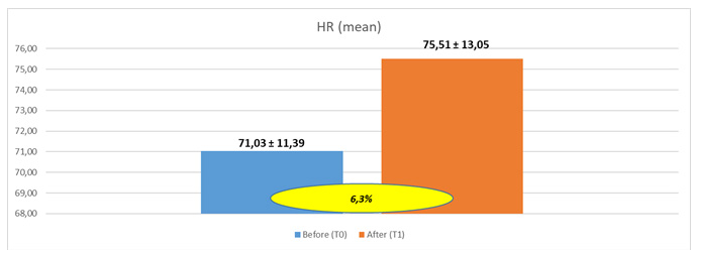
Figure 1: Results for Heart Rate before (T0) and after (T1) the test.
Despite the changes in blood pressure were not significant (112,16 vs 112.03 for SBP, p=0.954; 65.73 vs 65.93 for DBP, p=0.883), we observed a trend to normalize values (highest values versus normal range in particular) (Figures 2 and 3).
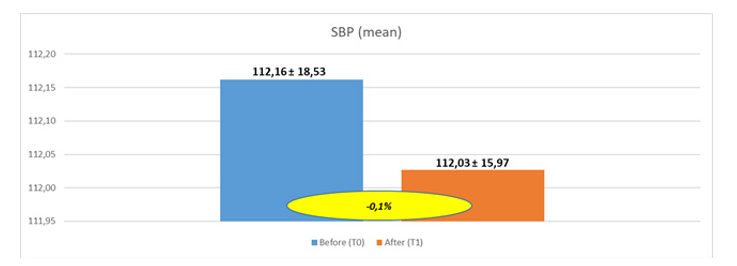
Figure 2: Results for Systolic Blood Pressure before (T0) and after (T1) the test.
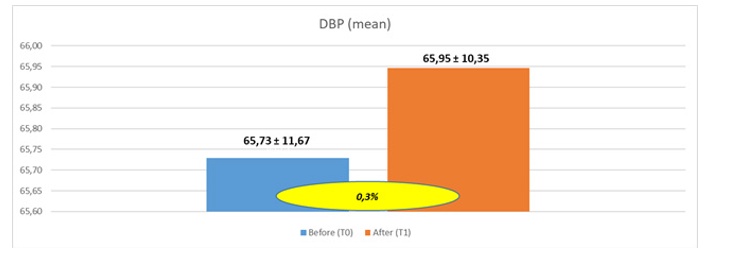
Figure 3: Results for Diastolic Blood Pressure before (T0) and after (T1) the test.
Regarding body temperature (Figure 4), we found significance only for Tmin (30.04 vs 29.44, p=0.002). The group showed signifi-cant pre-post-test difference in autonomic balance (LF/HF 1.08 vs 0.73, -32,2%, p<0,05) (Figure 5).
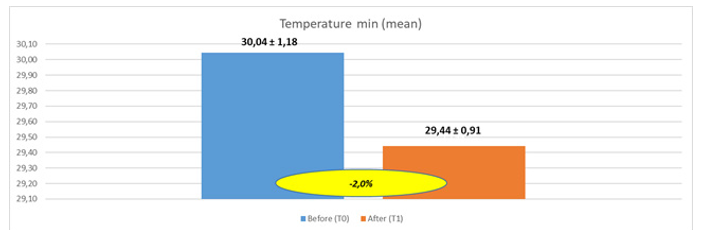
Figure 4: Results for minimum Temperature before (T0) and after (T1) the test.
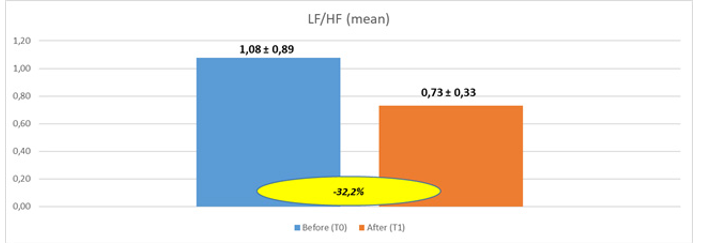
Figure 5: Results for Low Frequency to High Frequency ratio before (T0) and after (T1) the test.
Considering the HR analysis, rMSSD/AVNN ratio showed a variation (-0,6%) with p < 0,05 (Figure 6).
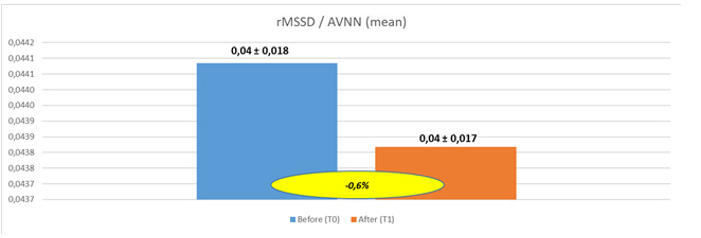
Figure 6: Results for rMSSD to AVN ratio before (T0) and after (T1) the test.
Ventilatory parameters showed an improvement in PEF (385.56 vs 429.67, +11.4%) and FEV1 (3.11 vs 3.39, +8.9%), both statisti- cally significant (Figures 7 and 8).
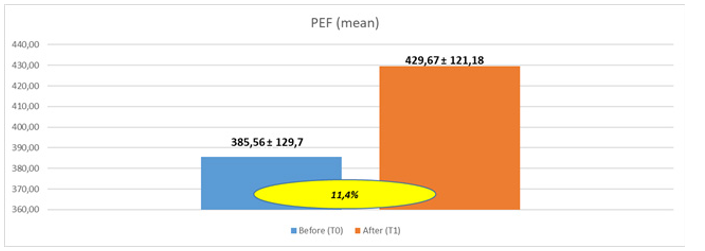
Figure 7: Results for Peak Expiratory Flow before (T0) and after (T1) the test.
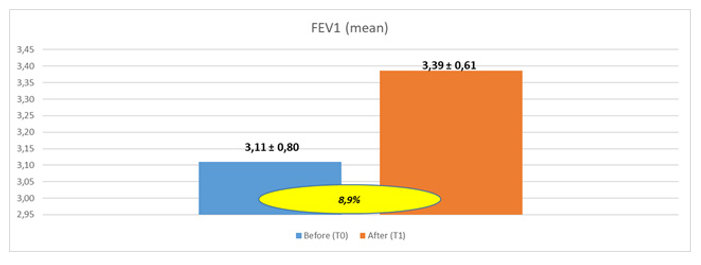
Figure 8: Results for Forced Expiratory Volume in 1 second (T0) and after (T1) the test.
The same observation arises for oximetry (95.76 vs 97.14, +1.4%) (Figure 9).
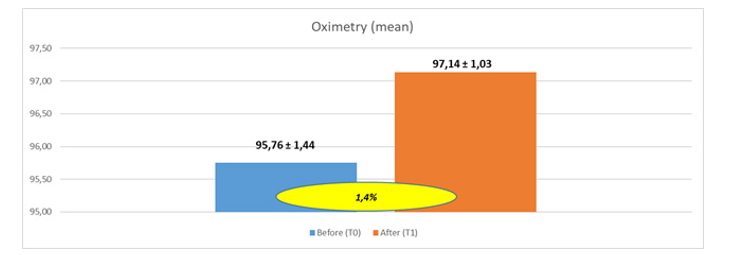
Figure 9: Results for Oximetry before (T0) and after (T1) the test.
Finally, a significant difference on PSS responses median value during the post-immersion phase was detected (19.27 vs 13.81, -28,3% variation) (Figure 10).
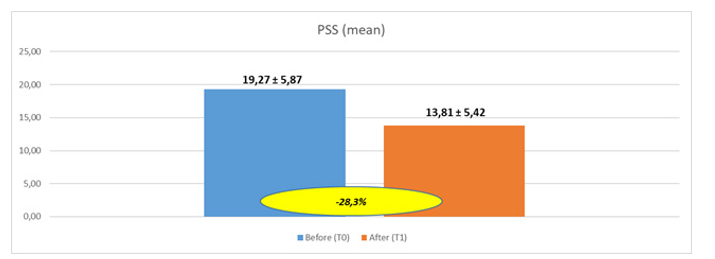
Figure 10: Results for the Perceived Stress Scale before (T0) and after (T1) the test.
Discussion
Data from this single-day, accessible to everyone bathing in the Selva of Castelfidardo confirmed the beneficial effect immediately perceived of Shinrin-Yoku on human health. Results from previ¬ous studies show convincing data explaining the relationship be¬tween the natural environment and the relaxation effects on hu¬mans (e.g., decrease in blood pressure and pulse rates, inhibition of sympathetic nervous activity, enhancement of parasympathet¬ic nervous activity, and decrease in cortisol concentration levels) [3,4,5]. Our observations confirmed that walking in a nature re¬serve fosters biological changes, indicating stress reduction in¬volving fundamentally two physiological axes: the sympathetic adrenal-medullary and the hypothalamic-pituitary-adrenal one, as previously argued [5,20], with positive impact on potential¬ly disabling chronic medical conditions [3]. In fact, results of previous studies performed on the physiological effects of the traditional Shinrin-Yoku show how forest environments can lower concentrations of cortisol, lower pulse rate, lower blood pressure, increase parasympathetic nerve activity, and lower sympathetic nerve activity, in particular whereas citizens are involved in occasional or continuing forest bathing approach¬es with the aim of reducing stress [4,21,22]. In our study, the PSS Scores was significantly lower after walking in the forest, demonstrating the psychological benefits of forests, consistently with previous findings of the effects of viewing forest scenery or walking in forests [23,24,25]. A previous study, in agreement with our observation, finds that participants with initially high blood pressure show a decrease in blood pressure after walking in a forest, whereas those with initially low blood pressure show an increase, suggesting that a forest environment can be used to help achieve an appropriate blood pressure, showing a truly person-oriented intervention [26]. Further studies, performed on Italian sites, are needed to better understand the positive impact of forest bathing on these parameters.
Despite the heterogeneity of the sample and the small number of participants, our study contributed to underline the importance and beneficial effect of the forest medicine, which may be used to develop new strategies in particular regarding primary and secondary level strategies in the field of preventive medicine. Promoting a usual and consistent approach to forest therapy may implement institutional and local resources to avoid or reduce an incorrect lifestyle encouraging health promotion and chronic disease prevention, as interestingly demonstrated in a program involving a young population affected by cancer complicated by a syndrome called by the authors “connection deficit disorder” due to the actual COVID-19 pandemic [27]. Another point that we consider valuable to underline is the significance that studies, such as the one presented in this article, may have in contributing to the dissemination of awareness among citizens of the preventive and therapeutic values of woods and national parks in Italy.
In future research, we might compare forest immersion to alter-native models of activity, to be carried out in different contexts at the same time. This would allow us to better highlight the restorative and rebalancing effect of forest immersion on human health.
Author Contributions
Conceptualization, GB, EG and PZ; methodology, EG and RP.; software, RP, AI; validation, PZ, DS and AP; formal analysis, RP; investigation, GB, PZ, CC.; resources, PZ, AI, CC.; data curation, RP, DS.; writing original draft preparation, GB, EG.; writing review and editing, GB, AI, EG, PZ, ET; visualization, CC, ET; supervision, CC, AP, DS. All authors have read and agreed to the published version of the manuscript.
Funding
This research received no external fundingInstitutional Review Board Statement
The study was conducted in accordance with the Declaration of Helsinki and approved by the Ethics Committee of The Univer¬sity of Rome “Foro Italico” (protocol code CAR 83/2021).
Informed Consent Statement
this study was approved by the University of Rome “Foro Itali-co” Committee (n. CAR 83/2021). Written informed consent has been obtained from the patients to publish this paper.
Data Availability Statement
The data presented in this study are available on request from the corresponding author.
Acknowledgement
The Authors acknowledge Dr. Gigliola Sigismundi, Dr. Carlo Giordano, Dr. Lorina Metaj, Dr. Anna Grazia Lentini, Dr. Chi-ara Maracci, Cristina Pietrolucci and Manuela Anzini for the fun-damental support given in all the phases of the Qualification. A.I.Me.F. acknowledge the Fondazione Duca Roberto Ferretti di Castelferretto, Castelfidardo (AN) and the President Eugen-io Paoloni for the technical and organizational support given during the Qualification and beyond.
Conflicts of Interest
All the authors declare no conflict of interest.References
- Thompson, C. W., Aspinall, P., & Roe, J. (2014). Access to green space in disadvantaged urban communities: evidence of salutogenic effects based on biomarker and self-report measures of wellbeing. Procedia-Social and Behavioral Sciences, 153, 10-22.
- Margaret, M., Jones, R., & Tocchini, K. (2017). Shin-rin-Yoku (Forest Bathing) and Nature Therapy: A State-of-the-Art Review.
- Chun, M. H., Chang, M. C., & Lee, S. J. (2017). The effects of forest therapy on depression and anxiety in patients with chronic stroke. International Journal of Neuroscience, 127(3), 199-203.
- Han, J. W., Choi, H., Jeon, Y. H., Yoon, C. H., Woo, J. M.,& Kim, W. (2016). The effects of forest therapy on coping with chronic widespread pain: Physiological and psychological differences between participants in a forest therapy program and a control group. International journal of environmental research and public health, 13(3), 255.
- Li, Q. (2010). Effect of forest bathing trips on human immune function. Environmental health and preventive medicine, 15(1), 9-17.
- Antonelli, M., Donelli, D., Carlone, L., Maggini, V., Firen-zuoli, F., & Bedeschi, E. (2021). Effects of forest bathing (shinrin-yoku) on individual well-being: An umbrella review. International Journal of Environmental Health Research, 1-26.
- Braubach, M., Egorov, A., Mudu, P., Wolf, T., Ward Thompson, C., & Martuzzi, M. (2017). Effects of urban green space on environmental health, equity and resilience. In Na-ture-based solutions to climate change adaptation in urban areas (pp. 187-205). Springer, Cham.
- Gascon, M., Zijlema, W., Vert, C., White, M. P., & Nieu-wenhuijsen, M. J. (2017). Outdoor blue spaces, human health and well-being: A systematic review of quantitative studies. International journal of hygiene and environmental health, 220(8), 1207-1221.
- Karjalainen, E., Sarjala, T., & Raitio, H. (2010). Promoting human health through forests: overview and major challenges. Environmental health and preventive medicine, 15(1), 1-8.
- Song, C., Ikei, H., Kobayashi, M., Miura, T., Li, Q., Kagawa, T., ... & Miyazaki, Y. (2017). Effects of viewing forest landscape on middle-aged hypertensive men. Urban Forestry & Urban Greening, 21, 247-252.
- Song, C., Ikei, H., & Miyazaki, Y. (2016). Physiological effects of nature therapy: A review of the research in Japan. International journal of environmental research and public health, 13(8), 781.
- Kobayashi, H., Ishibashi, K., & Noguchi, H. (1999). Heart rate variability; an index for monitoring and analyzing human autonomic activities. Applied Human Science, 18(2), 53-59.
- Kobayashi, H., Song, C., Ikei, H., Kagawa, T., & Miyazaki,Y. (2015). Analysis of individual variations in autonomic re-sponses to urban and forest environments. Evidence-Based Complementary and Alternative Medicine, 2015.
- Jo, H., Song, C., & Miyazaki, Y. (2019). Physiological benefits of viewing nature: A systematic review of indoor experiments. International Journal of Environmental Research and Public Health, 16(23), 4739.
- Ohe, Y., Ikei, H., Song, C., & Miyazaki, Y. (2017). Evaluating the relaxation effects of emerging forest-therapy tourism: A multidisciplinary approach. Tourism Management, 62, 322-334.
- Introduction to the Selva of Castelfidardo. Fondazione Ferretti. Online site www.fondazioneferretti.org
- Ballelli S, Lucarini D, Orsomando E .(2001). Flora vasco-lare della Selva di Castelfidardo e del territorio circostante. Università di Camerino. Stampato presso Tipografia S. Giuseppe Pollenza Febbraio.
- Orsomando, E., Ballelli, S., Catorci, A., & Formica, E. (1992). Atlante iconografico di piante rare o significative della Selva di Castelfidardo. Area Floristica delle Marche. Ecologia-Università di Camerino. Italia Nostra-Sezione di Castelfidardo. Comune di Castelfidardo. Recanati: Tecno-stampa.
- Allegrini, M. C., Fuffa, X., Muccichini, S., & Tacchi, R. (2005). Briofite e Licheni della Selva di Castelfidardo (Marche). Quad. Selva Castelfidardo, 1, 1-95.
- Ideno, Y., Hayashi, K., Abe, Y., Ueda, K., Iso, H., Noda, M., ... & Suzuki, S. (2017). Blood pressure-lowering effect of Shinrin-yoku (Forest bathing): A systematic review and meta-analysis. BMC complementary and alternative medicine, 17(1), 1-12.
- Laumann, K., Gärling, T., & Stormark, K. M. (2003). Selective attention and heart rate responses to natural and urban environments. Journal of environmental psychology, 23(2), 125-134.
- Victorson, D., Doninger, G., Victorson, S., Victorson, G., Hall, L., Maletich, C., ... & Salsman, J. M. (2021). Psychosocial and Biological Outcomes of Immersive, Mindful-ness-Based Treks in Nature for Groups of Young Adults and Caregivers Affected by Cancer: Results from a Single Arm Program Evaluation from 2016–2021. International journal of environmental research and public health, 18(23), 12622.
- Park, B. J., Tsunetsugu, Y., Kasetani, T., Kagawa, T., & Miyazaki, Y. (2010). The physiological effects of Shinrin-yoku (taking in the forest atmosphere or forest bathing): evidence from field experiments in 24 forests across Japan. Environmental health and preventive medicine, 15(1), 18-26.
- Tsunetsugu, Y., Lee, J., Park, B. J., Tyrväinen, L., Kagawa, T., & Miyazaki, Y. (2013). Physiological and psychological effects of viewing urban forest landscapes assessed by multiple measurements. Landscape and Urban Planning, 113, 90-93.
- Morita, E., Fukuda, S., Nagano, J., Hamajima, N., Yama-moto, H., Iwai, Y., ... & Shirakawa, T. J. P. H. (2007). Psychological effects of forest environments on healthy adults: Shinrin-yoku (forest-air bathing, walking) as a possible method of stress reduction. Public health, 121(1), 54-63.
- Song, C., Ikei, H., & Miyazaki, Y. (2015). Elucidation of a physiological adjustment effect in a forest environment: A pilot study. International journal of environmental research and public health, 12(4), 4247-425
- Victorson, D., Doninger, G., Victorson, S., Victorson, G., Hall, L., Maletich, C., ... & Salsman, J. M. (2021). Psychosocial and Biological Outcomes of Immersive, Mindful-ness-Based Treks in Nature for Groups of Young Adults and Caregivers Affected by Cancer: Results from a Single Arm Program Evaluation from 2016–2021. International journal of environmental research and public health, 18(23), 12622.