

Journal of Clinical Review & Case Reports(JCRC)
ISSN: 2573-9565 | DOI: 10.33140/JCRC
Impact Factor: 1.823


Research Article - (2026) Volume 11, Issue 8
Evidence Based Physiotherapy Management for the Patient with Alzheimer Disease: A Case-Based Study
 , Asma Islam , Md. Rifatur Rahman , Saleha Fazal , Md. Asadul Islam and Rawnak Jahan
Received Date: Jun 20, 2026 / Accepted Date: Aug 13, 2026 / Published Date: Aug 27, 2026
Copyright: ©Copyright: ©2026 Md. Emran Hossain, et al. This is an open-access article distributed under the terms of the Creative Commons Attribution License, which permits unrestricted use, distribution, and reproduction in any medium, provided the original author and source are credited
Citation: Alam, M. J., Hossain, M. E., Islam, M. W., Islam, A., & Rahman, M. R., et al. (2026). Evidence Based Physiotherapy Management for the Patient with Alzheimer Disease: A Case-Based Study. J Clin Rev Case Rep, 11(8), 01-09.
Abstract
Background: Dementia in a neurological condition significantly caused by Alzheimer disease. Which is associated with cognitive and functional impairment. There is no curative treatment till now but only symptomatic treatment in available.
Objectives: To descried evidence-based physiotherapy management of a case with Alzheimer’s disease.
Intervention: The physiotherapy evidence-based fall management program included exercise of lower limbs and core exercise, balance, gait, and assistive device training, and functional task-oriented training with focus on activities that activated the implicit memory system while emphasizing aspects of communication that are typically preserved in patients with Alzheimer’s.
Outcomes: After 4 weeks of twelve 30-minute sessions, the patient’s Tinetti Patient oriented mobility assessment (POMA) Tool score increased from 8/28 to 19/28 and Berg Balance Scale score from 10/56 to 21/56.
Conclusion: evidence-based physiotherapy program can reduce the burden of Alzheimer disease and can reduce cost of management. Physical exercise on regular basis can delay the functional decline and improve functional outcome.
Keywords
Alzheimer Disease, Evidence-Based Treatment, Physiotherapy, Physical Exercise
Introduction
More than five million people in the United States and about fifty million people globally are suffering from Alzheimer’s dementialike dementia. It is estimated that the number will be two times more after twenty years to thirty years. According to a crosssectional study in rural Bangladesh the prevalence rate is more than three percent with definite case but rate goes higher up to eleven percent with questionable cases. For healthcare system it will be a huge burden as the people with AD requires multidimensional service that contain not only general medical attention but also community facility, physical therapy plus psychological treatment and emotional support. Currently no disease-modifying intervention is established despite a huge amount of expenditure. Neurodegenerative characteristics like deterioration in cognitive function, behavioral function and memory are the characteristics of this disease. It is also characterized by tolerant reduction of functional capacity of an affected person. Currently there is growing attention for finding the link between cognition and physical activity. Recent evidence suggesting there is possible role of physical exercise is reducing or slowing down process of dementia and dementia like symptom. It is also suggested that improving behavioral functioning and cognition, physical exercise can be beneficial for people with dementia. Therefore, the study was conducted aiming to find out the evidence-based physiotherapy programs and exercise to reduce the worsening of condition.
Literature Review
Alzheimer’s disease
At the very beginning of Nineteenth century the Alzheimer’s was first described but it took seventy years to acknowledge as common reason for dementia and a leading cause of mortality. Decline in memory, language, planning, problem solving and other cognitive skills are features of Alzheimer’s disease. According literature difficulties occurs due to damage of neurons of the brain involving cognitive activites. It is fatal and life threatening in later stage.
Dementia is a set of symptoms like inability or difficulty in learning new information and poor memory eventually which leads to reduce functional independency but not technically a disease. Some sort of insult to brain cells can lead to dementia, which can result from various diseases. Alzheimer’s disease, currently termed as Alzheimer disease found to be the most common cause of dementia.
Alzheimer disease is categorized as a neurological degenerative disease. As a neurodegenerative disease, it causes degeneration or loss of neurons and its function in the human brain specifically in the cortex. As the cortex of the brain plays a vital role in function like memory, learning information, planning. Degenerative changes
in the cortex eventually develop the symptoms characteristic of dement.
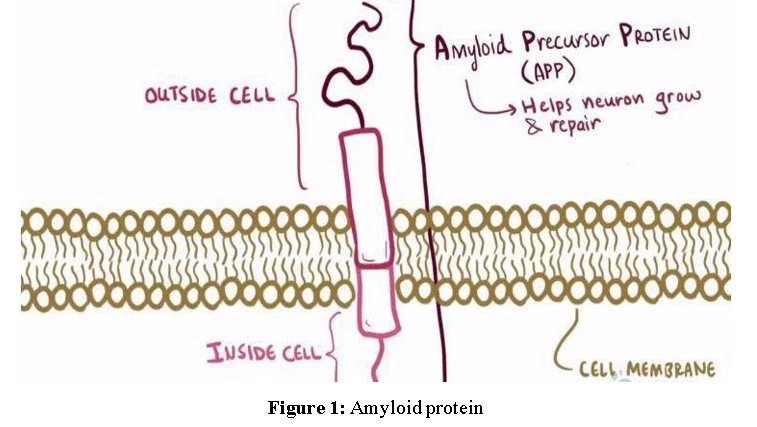
While the basis of Alzheimer disease isn’t completely assumed, two major thespians that are often cited in its progression are plaques and tangles. In the cell membrane of a neuron, there is a protein molecule called amyloid precursor protein or APP. One end APP is in the cell membrane another end is outside the cell. It is thought that amyloid precursor protein helps the brain cell grow and repair itself after an insult or injury.
Like other proteins, amyloid precursor protein gets used and broken down and reproduces cyclically. Normally, it gets to break down by enzyme termed alpha-secretase and gamma-secretase. So, it washed away in circulation. But on the other hand, if an enzyme called beta-secretase act with gamma-secretase instead than that effect normality. The byproduct is no more decipherable and produces a monomer termed amyloid-beta (Figure 1).
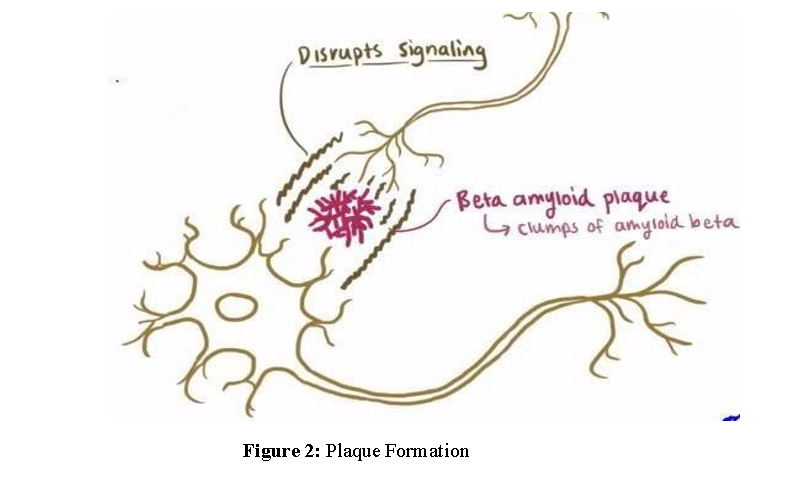
As the monomers are chemically sticky, these tend to stacked or link together external to the neuron and form plaques. Those plagues are called plaques of beta-amyloid. Gradually they increase in number (Figure 2).
These beta-amyloid plaques have the potentiality to get between two neurons. Which can create blockage between neural signaling. If there is a blockage between neuron-to-neuron connections the brain cells cannot transmit info, then brain functions like memory can be impaired extremely.
Literature also suggested that plaques can trigger an immune response and can cause an inflammatory response that might cause insult to surrounding neurons.
It can be deposit in the blood termed amyloid angiopathy, by which risk of hemorrhage rises as walls of blood vessels weakens.
Just opposite to the beta-amyloid plaques tangles (inside cell). It also plays a vital role for developing Alzheimer’s disease. So, its beta-amyloid build plaque outside the cell and another protein called tau.
As apoptosis takes place in the brain enormously in the brain causes atrophy. The characteristic rides of the brain gyri get narrower. As well as sulci the grooves between the gyri became wider. The ventricle fluid-filled cavities of the brain became larger due to atrophy.
Case Description
History
This study was about 69 years old retired school teacher. Previously he diagnosed as Alzheimer’s disease, with CDR (Clinical Dementia Rating) score 2 out of 3. In this scale most severity is scored as 3. He was also suffering from hypertension, hyperlipidemia, recurrent urinary tract infection and anxiety. His Hight is 165 cm. weight is 80 kg and body mass index are 27.1.
On examination
During physical assessment he was alert and responsive to therapist question. He has no verbal complain of pain. When asking his perception about health he was positive in response. He replied “fine”. Active and passive ROM (Rang of Motion) of extremities are well with in functional limit [1]. Upper and lower limb muscle power was grossly 4 and 3+ out of 5 and core strength was rated as 3 out of 5 [2]. His body alignment is kyphotic in nature. Sitting balance is rated as good but static standing balance was fair and dynamic standing balance is poor. Sensation was tested with light touch and pin prick and was normal in all extremity. Coordination is checked with figure-nose and heel slide test was smooth but slow. Proprioception was intact. Rolling in the bed he was able to perform. Transitional movement such as sitting to standing, bed to chair and toiled transferring require supervision and sometime minimal assistance. During gait he required assistance due to his poor balance and fatigue.
Intervention
Initially a fall prevention management program was initiated to improve lower extremity muscle condition and core stability. It was combined with both hospital and home-based program. Another aim of that protocol was improved awareness to fatigue. The protocol was combined with four component such as, standing balance activity, gait training, functional training and exercise therapy.
Therapeutic exercise consists of both open and close chain exercise of upper limb and lower limb. Trunk strength training on supine, sitting and standing. The activity where selected based on evidence [3]. The strength, endurance and functional training was demonstrated by another study [4]. A 4 weeks program is enlisted on table 1. Manual and visual cues are provided during exercise to ensure safety.
|
Points |
1st week |
2nd and 3rd |
4th week |
|
Exercise |
Supine: pelvic tilting exercise, bridging, trunk rotation exercise, straight leg raises, hip abduction and adduction, hip internal and external rotation, heel slides, quadriceps setting, ankle pumps. Sitting: trunk flexion, hip flexion, hip abduction, knee extension, and toe and heel raises. Standing: hip extension, hip abduction, hip adduction, hip flexion, squat, knee flexion and heel raises. |
Same as before |
Same as before |
|
Intensity |
250 gm ankle cuff resistance (weight) |
500 gm |
750 gm |
|
Set |
1 |
1 |
1 |
|
Repetition |
15 |
15 |
15 |
Table 1: Intervention (FITT).
The therapist always makes eye contact with patient during session. Standing balance practice mainly involve spot marching, balancing on one leg with open and close eyes, reaching practice side to side stepping practice, toes and heel walking and completing functional task. Simultaneously cues are given to patient either verbal or visual (Figure 3).
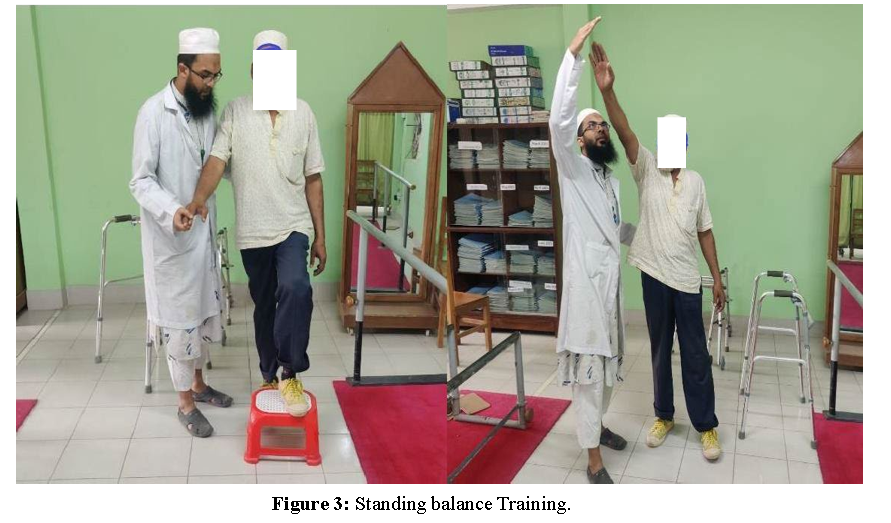
Various assistive device as used during gait training to improve gait. Initially he was trained in parallel bar to make his gait safe and secure. On latter session he was introduced with walker (Figure 4). The patient was unreliable in positioning the walker,allowing it to roll too far forward, increasing her tendency to assume a forward flexed posture, and leading to loss of balance in an anterior direction, and assistance from the therapist to prevent a fall.
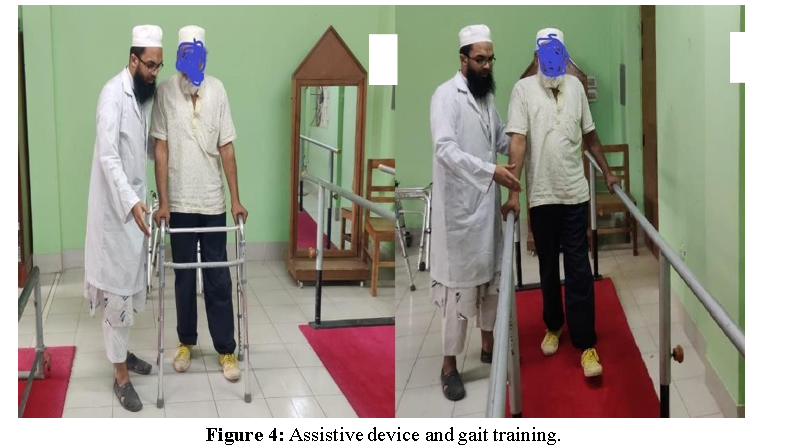
Functional task-oriented program was carried out on gymnastic matt such as get up from floor, transferring object, hold object on standing position. Transferring from bed to chair, Door pulling, climbing on a high object.
Outcomes
Total 4 weeks program was consisting of 3 hospital-based session per week and 3 home base session per day therefore, there 12 physiotherapy session of 30 minute in a month. During discharge his muscle power was 4 for maximum muscle in both lower and upper extremities. Core strength was 3+ on time of discharge.
Static standing balance improved from grade fair to good and dynamic standing balance from grade poor to fair. Improve to fatigue management also noticeable as there was decrees in flex posture.
His initial berg balance score was 10 and during discharge the score increased to 21 out of possible maximum 56 [5]. He demonstrates great improvement in sitting to standing activity. Beside that marked improvement in standing balance. A comparison of the initial and discharge scores for each task assessed is in Table 2.
|
Items |
Initial score |
Discharge score |
|
1. Sitting unsupported |
3 |
4 |
|
2. Transfers |
1 |
2 |
|
3. Sitting to standing |
2 |
4 |
|
4. Standing to sitting |
1 |
3 |
|
5. Standing unsupported |
2 |
3 |
|
6. Standing with eyes closed |
0 |
0 |
|
7. Standing with feet together |
1 |
2 |
|
8. Standing with one foot in front |
0 |
1 |
|
9. Standing on one foot |
0 |
0 |
|
10. Placing alternate foot on stool |
0 |
0 |
|
11. Turning to look behind |
0 |
0 |
|
12. Turning 360 degrees |
0 |
1 |
|
13. Reaching forward with outstretched arm |
0 |
0 |
|
14. Retrieving object from floor |
0 |
1 |
|
Total |
10 |
21 |
Table 2: Brag balance scale score comparison.
As this table shows initially it was severe balance problem but during discharge moderate balance problem. The initial Patient oriented mobility assessment (POMA) score was 8 but after intervention the score improved to 19 [6]. According the scale 8 means high risk of fall and 19 is moderate risk of fall. The scale is consisting of score for both balance and gait as maximum possible score is 28. He showed greatest while turning 360. The assessment paper is attached to the appendix.
Article Synopsis
Evidence based physiotherapy management (Article synopsis)
1st article: The aim of that randomized control trial was to find out the effectiveness of exercise programs (therapeutic) for improving physical function and gaining independence for the person with AD. Forty diagnosed case was included as sample in that study in two groups. At initial baseline assessment no significant difference between groups. The experimental group participate in 10 simple exercises designed by Canadian center for activity and aging. Each exercise has 3 progression level focusing on improvement of balance and strength. Prior to program both patient and caregiver were trained by physiotherapist with an illustrated instruction manual. All patient from both groups receives usual medical attention. They phone call in every 2 weeks and 2 months for updating progression. But after 4 months follow up exercise plus treatment group showed significant improvement in cognition, better mobility and instrumental activity of daily living. The primary outcome was measured with balance, mobility and lower body strength. Finally, they concluded that participation in evidence-based exercise and treatment program can improve the physical status and increase independence for the people with Alzheimer disease [7].
2nd article: Another RCT was done on 2013 with aim to find out the effect of exercise programs on physical status and mobility in daily living. 210 patients with Alzheimer were included to investigate the effectiveness. In that 3-arm trial one group received group-based exercise program.
Where second group receive tailored exercise and finally control group. The home base exercise group exercise twice a week for 1-hour par season for 1-year duration from 2008-2009 to 2009-2010. Physiotherapist who is specialist in Alzheimer disease management trained the patient. Group based exercise group was attended by two dementia specialist physiotherapists in a day care center. A group of 10 parturient were attend the session twice a week. The control group receive only usual care. Outcome was measured my functional independence measured, cost of social and health care service. Physical performance also measured as outcome. Alter one year all groups were deteriorated but significantly faster in control group. Finally, they concluded that all type of programmed exercise is beneficial for the patient with Alzheimer disease [8].
3rd article: A randomized control trial was performed with 153 sample. The study was conducted for five years. The aim of that study was to find out the significance of exercise program over the only medical management. The outcome measurement was physical health and function and sickness impact (SF-36, physical functioning and role functioning). The treatment group receive treatment from established protocol which include 12 hours-long station of 2 session per week for 1st three week, followed by weekly session for 4 week and then biweekly session for next 4 week. The caregiver was trained by qualified physical therapist. The control group receive only usual medical care including prescribed medicine and crisis interventions by health care provider center. The treatment was supervised by physical therapist in experimental group. Which also include nonspecific advice and support by nurse. At follow up exercised group showed significant improvement in physical functioning and less hospitalized due to sickness. Finally, the reported that physical exercised programs with care giver training can improve the physical health and reduce depression [9].
|
Study SL no |
3 |
2 |
1 |
|
Author |
McCurry et al., |
Ohman et al., |
Vreugdenhil et al. |
|
Journal |
Scandinavian Journal of Caring Sciences |
American medical association |
European Review of Aging and Physical activity |
|
Date of publication |
2011 |
2016 |
2012 |
|
Experiential group exercise/ intervention with dose/time |
Aerobic and endurance activity, strength training, balance and flexibility training. 3-month intervention |
Home based exercise with 4 hours session and approximately 1-hour training. Twice a week for 1 year |
Exercise program with daily exercise and walking under supervision of career and usual treatment |
|
Control group exercise/ intervention with dose/time |
|
Receive usual community care |
Usual treatment only. |
|
Outcome measure tool |
Physical health and function survey, (SF-36), sickness mobility subscale, Hamilton depression rating scale |
The functional independence measure (FIM) |
Alzheimer disease assessment scale, the bethel index of AD, function al reach test |
|
Design and no of participants |
RCT,153 |
RCT, 210 |
RCT,40 |
|
Result |
Teaching care giver behavioral management with exercise improve physical condition in patient with Alzheimer. |
Exercise group decorate slower than the control group. |
At 4-month flow up experimental group showed better functional and cognitive ability than control group. |
Table 1: Article finding.
Discussion
Reflection of current study shows that an integrated clinical management program designed to train patient with Alzheimer disease including exercise and behavioral modification technique can be effective to slow the onset and reduce the symptom. More over amount of time for care giving increase as dementia progressed to its severe stage [10]. So, by slowing the onset it is possible to reduce management duration and the person himself and care giver can be benefited.
The recent study also suggested improvement in ADL of people with AD who exercised regularly [11,12]. Suggested better functioning with exercise.
Studies have shown reduction of dementia and Alzheimer disease can be archive with physical activity. Exercise proved to be a life style intervention that could help to diminish the occurrence of Alzheimer disease. Current study also found that exercise is beneficial to delaying the decline of physical functioning and maintaining active status. Continuing exercise also helpful to avoid medical emergency. In a systemic review more than one and a half million participant were included and they found that lack of physical activity was highest attributable out of 7 risk factor (adjustable risk factor). Current study also suggested that patient with Alzheimer disease is decline faster who are not attending exercise program than who are attending exercise program.
In current case study Positive functional outcomes were achieved through an evidence-based practice of typical fall prevention interventions that took into consideration the patient’s decreased cognition, communication deficits, and behavioral problems. As there is pre and post outcome score.
Conclusion
There are several studies is conducted to find out the effectiveness of physiotherapeutic exercise to limit the progress of Alzheimer disease. As there is not current curative management of Alzheimer’s disease so therefore symptomatic management is very important in this regard. In the current study the patient was able to active the positive outcome with evidence-based intervention.
Funding Declaration
The authors declare that no specific funding was received for this research, authorship, and/or publication of this article.
Human Ethics and Consent to Participate Declarations
Written informed consent was obtained from the patient and the caregiver for participation and publication of this case-based study.
All procedures performed were in accordance with institutional ethical standard.
References
- Keogh, J. W., Cox, A., Anderson, S., Liew, B., Olsen, A., Schram, B., & Furness, J. (2019). Reliability and validity of clinically accessible smartphone applications to measure joint range of motion: A systematic review. PloS one, 14(5), e0215806.
- Ferreira, C. H. J., Barbosa, P. B., de Oliveira Souza, F., Antônio, F. I., Franco, M. M., & Bø, K. (2011). Inter-rater reliability study of the modified Oxford Grading Scale and the Peritron manometer. Physiotherapy, 97(2), 132-138.
- Liu, Y., Chu, J. M. T., Yan, T., Zhang, Y., Chen, Y., Chang, R.C. C., & Wong, G. T. C. (2020). Short-term resistance exercise inhibits neuroinflammation and attenuates neuropathological changes in 3xTg Alzheimer’s disease mice. Journal of neuroinflammation, 17(1), 1-16.
- Galvao, D. A., & Taaffe, D. R. (2005). Resistance exercise dosage in older adults: single-versus multiset effects on physical performance and body composition. Journal of the American Geriatrics Society, 53(12), 2090-2097.
- Viveiro, L. A. P., Gomes, G. C. V., Bacha, J. M. R., Junior, N. C., Kallas, M. E., Reis, M., & Pompeu, J. E. (2019). Reliability, validity, and ability to identity fall status of the Berg Balance Scale, Balance Evaluation Systems Test (BESTest), Mini-BESTest, and Brief-BESTest in older adults who live in nursing homes. Journal of geriatric physical therapy, 42(4), E45-E54.
- Kitsiou, S., Gerber, B. S., Kansal, M. M., Buchholz, S. W., Chen, J., Ruppar, T., & Pressler, S. J. (2021). Patient-centered mobile health technology intervention to improve self-care in patients with chronic heart failure: Protocol for a feasibility randomized controlled trial. Contemporary Clinical Trials, 106, 106433.
- Vreugdenhil, A., Lecturer, S., Cannell, J., Physiotherapy, B., Lecturer, D., & Associate, G. R. (2012). A community-based exercise programme to improve functional ability in people with Alzheimer ’ s disease : a randomized controlled trial. 12–19.
- Öhman, H., Savikko, N., Strandberg, T. E., Kautiainen, H., Raivio, M. M., Laakkonen, M. L., Tilvis, R., & Pitkälä, K.
H. (2016). Effects of Exercise on Cognition: The Finnish Alzheimer Disease Exercise Trial: A Randomized, Controlled Trial. Journal of the American Geriatrics Society, 64(4), 731–738.
- McCurry, S. M., Pike, K. C., Vitiello, M. V., Logsdon, R. G., Larson, E. B., & Teri, L. (2011). Increasing walking and bright light exposure to improve sleep in community-dwelling persons with Alzheimer’s disease: Results of a randomized, controlled trial. Journal of the American Geriatrics Society, 59(8), 1393–1402.
- Langa, K. M., Chernew, M. E., Kabeto, M. U., Herzog, A. R.,Ofstedal, M. B., Willis, R. J., Wallace, R. B., Mucha, L. M., Straus, W. L., & Fendrick, A. M. (2001). National estimates of the quantity and cost of informal caregiving for the elderly with dementia. Journal of General Internal Medicine, 16(11), 770–778.
- Toots, A., Lindelöf, N., Littbrand, H., Wiklund, R., Holmberg,H., Nordström, P., Lundin-Olsson, L., Gustafson, Y., & Rosendahl, E. (2016). Effects of a High-Intensity Functional Exercise Program on Dependence in Activities of Daily Living and Balance in Older Adults with Dementia. Journal of the American Geriatrics Society, 64(1), 55–64
Appendix
ATINETTI BALANCE & GAIT ASSESSMENT
For both assessments, enter the date of each exam and circle your rating for each item. Indicate totals at the bottom of each section.
BALANCE ASSESSMENT GAIT ASSESSMENT
To perform this assessment, seat the patient in a hard, armless chair.
Stand with the patient. Walk across the room (+/- aids) at a usual pace, then rapidly.
|
Evaluated Function |
Description of Behavior |
Date: |
Date: |
|
Sitting Balance |
Leans or slides in chair Steady, safe |
0 1* |
0 1* |
|
Rises From |
Unable to rise without help |
0 |
0 |
|
Chair |
Able to rise using arms to help |
1* |
1 |
|
Able to rise without using arms to help |
2 |
2 |
|
|
Attempts To |
Unable to rise without help |
0 |
0 |
|
Rise |
Able to rise, requires more than one attempt Able to rise, requires one attempt |
1* 2 |
1 2* |
|
Standing |
Unsteady (staggers, moves feet, trunk sways) |
0 |
0 |
|
Balance |
Steady, but uses walker or other support |
1 |
1 |
|
(1st 5 Seconds) |
Steady without walker or other support |
2 |
2 |
|
Standing |
Unsteady |
0 |
0 |
|
Balance |
Steady, but with wide stance and uses support |
1 |
1 |
|
Narrow stance without support |
2 |
2 |
|
|
Nudged |
Begins to fall |
0 |
0 |
|
Staggers, grabs, catches self |
1 |
1 |
|
|
Steady |
2 |
2 |
|
|
Eyes Closed |
Unsteady Steady |
0* 1 |
0* 1 |
|
Turning 360 |
Discontinuous steps |
0* |
0* |
|
Degrees |
Continuous steps |
1 |
1 |
|
Unsteady (grabs, staggers) |
0* |
0 |
|
|
Steady |
1 |
(1) |
|
|
Sitting Down |
Unsafe (misjudged distance, falls into chair) |
0 |
0 |
|
(Getting |
Uses arms or not a smooth motion |
1* |
1* |
|
Seated) |
Safe, smooth motion |
2 |
2 |
|
Balance Score |
5 |
10 |
|
|
Potential Points: 16 |
16 |
16 |
|
|
Evaluated Function |
Description of Behavior |
Date: |
Date: |
|
Indication of Gait |
Any hesitancy or multiple attempts No hesitancy |
0* 1 |
0 1* |
|
Step Length & Height |
Step to Step through right Step through left |
0* 1 1 |
0 1* 1* |
|
Foot Clearance |
Foot drop Left foot clears the floor Right foot clears the floor |
0* 1 1 |
0 1* 1 |
|
Step Symmetry |
Right and left step length are not equal Right and left step length appear equal |
0* 1 |
0 1* |
|
Step Continuity |
Stopping of discontinuity between steps Steps appear continuous |
0* 1 |
0 1* |
|
Path |
Marked deviation Mild/ moderate deviation or uses a walking aid Straight without a walking aid |
0 1* 2 |
0 1* 2 |
|
Trunk |
Marked sway or uses a walking aid No sway, flexes knees/back/uses arms to balance No sway, no flexion of knees or back use of arms, or walking aid |
0 1* 2 |
0 1* 2 |
|
Walking Time |
Heels apart Heels almost touching while walking |
0 1* |
0 1* |
|
Gait Score |
3 |
9 |
|
|
Potential Points: 12 |
12 |
12 |
|
|
8 |
|
19 |
|
|
|
28 |
|
28 |
Combined Score
Potential Points For Balance & Gait
Risk of Falls: 18 Points or Less = High Risk, 19-23 Points = Moderate Risk, 24 or More Points = Low Risk