

Journal of Veterinary Health Science(JVHS)
ISSN: 2831-3887 | DOI: 10.33140/JVHS
Impact Factor: 0.762

Research Article - (2024) Volume 5, Issue 2
Evaluation of A Fish Hydrolysate Protein-Superoxide Dismutase Combination (Anxivet®) For Cat Behaviour: A Pet Owners' Perspective
2Scientific Affairs, MP Labo, 06130 Grasse, France
3Pharmaceutical Affairs, Destaing, 06130 Grasse, France
Received Date: Aug 31, 2024 / Accepted Date: Sep 11, 2024 / Published Date: Oct 01, 2024
Copyright: ©Â©2024 Christelle Navarro, et al. This is an open-access article distributed under the terms of the Creative Commons Attribution License, which permits unrestricted use, distribution, and reproduction in any medium, provided the original author and source are credited.
Citation: Lacreusette, M., Muller, S., Jahier, B., Gard, C., Navarro, C. (2024). Evaluation of A Fish Hydrolysate Protein-Super-oxide Dismutase Combination (Anxivet®) For Cat Behaviour: A Pet Owners' Perspective. J Vet Heal Sci, 5(2), 01-07.
Abstract
This survey assessed the effectiveness of a combination of hydrolysed fish proteins and melon superoxide dismutase in reducing inappropriate behaviours in cats. Forty-eight privately-owned cats with abnormal emotional behaviour, as reported by their owners, were administered a complementary feed (Anxivet®, MP Labo, France) once daily for 28 days. Owners completed questionnaires before (D0) and after (D2, D7, D14, and D28) initiating the product, assessing animal behaviour, interaction with surroundings, and discomfort levels. They also evaluated product ef- fectiveness, satisfaction, and ease of administration. By D28, 12 out of 24 behavioural signs showed improvement, with a significant decrease in excessive mewing (p = 0.0485). Enhanced interaction with surroundings was observed in 19%, 29%, and 34% of cats on D2, D7, and D14, respectively, with significant improvement from D2 to D14 (p < 0.025). Discomfort decreased in 23%, 30%, and 34% of cats on D2, D7, and D14, respectively, with a significant difference between D2 and D14 (p < 0.01). Owners rated product efficacy as 7.7/10 at D28, with satisfaction scores increasing from 6.4 at D2 to 7.4 at D14 (p < 0.0339). This survey suggests the tested combination reduces cats' dis- comfort levels, though further confirmation via controlled randomised studies is warranted.
Introduction
Cats are prone to emotional reactions because of their high sensitivity to environmental changes and interactions with other cats and owners [1,2]. Stressful situations can bring on adaptative responses ranging from mild fear to anxiety associated with autonomic activation helping the individual to protect itself from harm [3,4]. In cats, these emotional states can be triggered by a current situation, fear of the unknown, or memory of an event [3,4]. When these emotions are excessive, they can result in feline behavioural disorders with a negative impact on the animal’s quality of life and the pet-owner relationship [2,4]. Typical signs of inappropriate behaviours in cats include inappropriate urination, compulsive licking, aggression, escape or avoidance, hiding, freezing, circling, hypervigilance, restlessness, and distress vocalisation [1-4].
Some authors underline the importance of owners being able to recognise behavioural signs of discomfort in their pets in order to handle them correctly [2,5]. In fact, negative interactions between the owners and their animals can lead to and perpetuate unwanted signs [2]. Conversely, owners can reduce their animal’s inappropriate behaviours by adapting their own behaviour, or modifying their cat’s environment, thus entering a virtuous circle, and improving their cat’s well-being [2]. Therefore, management of emotional behavioural disorders is primarily based on behavioural therapy, which nevertheless often needs to be complemented by other solutions such as pheromones, complementary feed, or psychoactive drugs [1,2,4]. However, the use of anxiolytic or anti¬depressant drugs is not without risks and requires close monitoring [6]. Furthermore, to date, no pharmacologic therapeutics have been approved for the treatment of chronic inappropriate behaviours in cats [3]. On the other hand, the efficacy of numerous other products available on the market has not yet been comprehensively assessed [3,7,8].
The literature reports a correlation between perceived stress and oxidative stress [9]. Oxidative stress, involved in many diseases, is an imbalance between free radical production resulting from respiration and antioxidant defences [10]. The antioxidant enzyme superoxide dismutase (SOD) is a primary enzyme in the defensive system against oxidative stress by reducing the effects of reactive oxygen species (ROS) including superoxide radicals [10-12]. Consequently, it seems reasonable to think that exogenous SOD could be effective for the management of inappropriate behaviours [10]. This assumption was confirmed by Vouldoukis et al. These authors showed that functional enzymes used in dietary supplementation were effective in protecting mice against oxidative stress [11].
Cat owners were reported to be very sensitive to their pet’s behavioural disorders and prefer non pharmaceutical compounds devoid of toxicity to manage inappropriate behaviours in their animals [1]. Research in the field of natural alternative solutions to the management of inappropriate behaviours has been going on for a long time and has made many advances in recent years. Amongst the latter, a melon SOD extract has been shown to be effective in reducing oxidative stress in mice and symptoms of stress in healthy people [9,11,13]. Other studies have described the anxiolytic properties of fish protein hydrolysates in rodents [14] and in cats [15]. The objective of the present survey was threefold: i) to assess the cats owners’ ability to recognise the signs of inappropriate behaviours in their pets, ii) to determine the most valuable and recognisable behaviours for the owners to identify fear and discomfort in their pets, iii) to assess the onset of activity of a combination of melon SOD extract and fish protein hydrolysate in cats with inappropriate behaviours.
Materials and Methods
Animals
The owners of 50 household adult cats were consulted via a questionnaire database prepared by an independent company specialising in customer surveys. The enrolled cats exhibited moderate to severe inappropriate behaviours in response to environmental stimuli for at least 3 months, according to their owner. They were not currently undergoing any medication regimen. No pain was induced to the animals throughout the duration of the trial, and all procedures were conducted in accordance with ethical guidelines to ensure the welfare and well-being of the animals. Owners provided informed consent prior to enrolment of their animals, acknowledging their understanding of the trial’s objectives, procedures, potential risks, and benefits.
Tested Product
Anxivet® capsules (MP Labo, France) containing each 250 mg of hydrolysed fish proteins and 28 IU of melon SOD, were administered to the cats by their owner at the dose of one capsule per 5 kg body weight once daily for 28 days from D0 to D28. The capsules of the complementary feed (CF) were swallowed whole during a meal or opened, and their contents mixed with the animal’s food.
Survey Design
Cats were monitored for 28 days. For assessments, pet owners had to fill in online multiple-choice questionnaires at D0 (before CF initiation), and then at D2, D7, D14, and D28 (during the supplementation period). They were asked to evaluate their animal’s behaviour on D0 and D28 by scoring the 24 behavioural signs described in Table 1 on a scale of 0 (normal) to 10 (extremely pronounced signs) (adapted from Hammerle et al., 2015).
|
Behavioural Signs |
||
|
|
Seeking for attention |
|
|
|
Decreased closeness to preferred associates |
|
|
|
Scanning the environment |
|
|
|
Ritualis |
zed/Repeated activities |
|
|
Excessive mewing |
|
|
|
Hyperactivity |
|
|
|
Whining |
|
|
|
Excessive shaking |
|
|
|
Trying to escape |
|
|
|
Excessive grooming |
|
|
|
Decreased grooming |
|
|
|
Inappropriate urination |
|
|
|
Lowering of the head |
|
|
|
Hiding or trying to hide |
|
|
|
Inappropriate defecation |
|
|
|
Panting |
|
|
|
Immobility |
|
|
|
Nose licking |
|
|
|
Inability to meet a direct gaze |
|
|
|
Mydriasis even in the light |
|
|
|
Smacking jaws together |
|
|
|
Hypersalivation |
|
|
|
Anal sac expression |
|
|
|
Excessive scratching |
|
Table 1. Behavioural signs assessed by the cats’ owners at D0 and D28.
Animals’ interaction with their environment and behavioural evolution were categorised as “Strongly deteriorated”, “Slightly deteriorated”, “No change”, “Slightly improved”, or “Strongly improved” by the owners on D2, D7, and D14. At D2, D7 and D14, the owners’ satisfaction was rated on a scale of 0 to 10. At D28, the owners scored the CF efficacy on behaviour and its ease of administration between 0 and 10. The evaluation of the ease of administration was done on 4 criteria: intake, acceptance, smell, dosage.
Data Analysis
A total behavioural score was calculated by adding up the 24 individual behavioural scores. The comparisons were performed in animals with complete data sets. The mean behavioural scores were compared between D0 and D28 using a Sign test. The owners’ satisfaction levels were compared between D2, D7, and D14 thanks to a Friedman test, and a Sign test was used for post-hoc analysis when significant differences were found over time. A McNemar test was used to compare the interaction with the environment and the stress evolution between time points. Analyses were performed using the Statgraphics® Centurion XVI software. The significance level was set at 0.05.
Results and Discussion
Animals
Out of the 50 included cats, 2 owners didn’t fill the questionnaire in correctly on D0 and were excluded. Therefore, 48 cats were considered in the study. At the end of the study period, 42 cats had complete data and one cat had incomplete data on D28. Seventy-one percents of the cats were non purebred, nine purebreds were represented, Norwegian Forest, Siamese and Maine Coon were the most represented ones, but numbers were low (6% for each of these breeds). The sex ratio was 52%:48% in favour of females with 88% of neutered animals. The mean age was 6.5 (± 4.0) years with a minimum of 1.5 year and a maximum of 20.0 years. The enrolled cats had been experiencing discomfort on a regular basis for at least 3 months and were not treated. On D0, 36% of the owners stated that their cat had very inappropriate behaviours and 64% moderate inappropriate behaviours.
Behavioural Scores
Out of the 24 behavioural sign sub-scores, 12 including Seeking for attention, Decreased closeness to preferred associates, Ritualised/ repeated activities, Excessive mewing, Hyperactivity, Whining, Excessive grooming, Hiding or trying to hide, Panting, Mydriasis even in the light, Anal sac expression, and Excessive scratching, were improved on D28 with a significant decrease compared to D0 for “Excessive mewing” (p = 0.0485) (Figure 1).
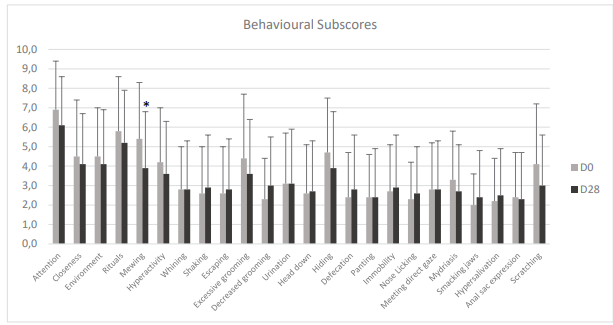
Figure 1: Evolution over time of the behavioural subscores (mean ± SD) in cats after 28-days daily oral administration of CF. *denotes significant difference from baseline value (p < 0.05).
The percentage decrease of the total behavioural score between D0 and D28 of 7.6% was not significant.
Owners Evaluations During the Course of The Study
Interaction with the environment Forty-five percent, 69%, and 81% of the cats experienced an improvement of their interaction with their surroundings at D2, D7, and D14, respectively, with significant differences between D2 and D7 (p < 0.025) and D2 and D14 (p < 0.005) (Figure 2).
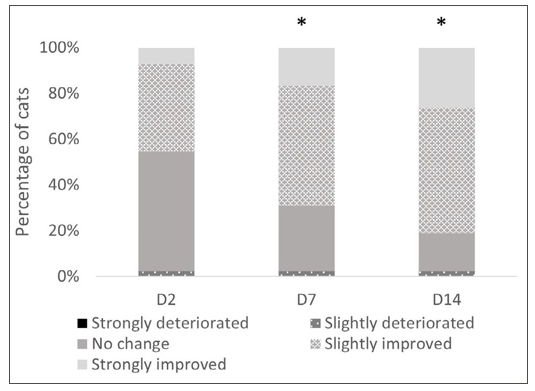
Figure 2: Evolution over time of the cats’ interaction with their environment after 14-days daily oral administration of CF. *denotes significant difference with D2 (p < 0.05).
Inappropriate Behaviour Evolution
The cats had less and less inappropriate behaviours from D2 to D14 with significant differences on D14 compared to D2 (Figure 3) (p < 0.010). A slight or strong improvement was reported by the owners in 55% of the animals on D2, 71% on D7, 81% on D14.
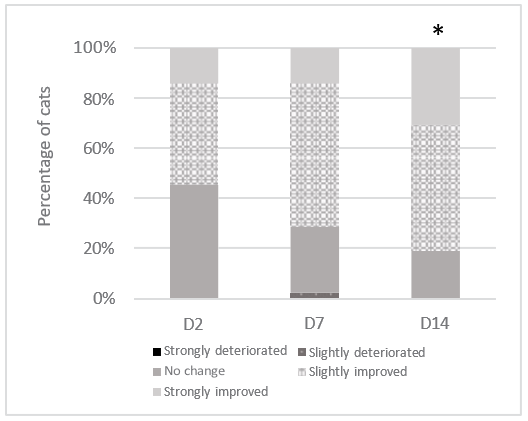
Figure 3: Evolution over time of the cats’ inappropriate behaviours after 14-days daily oral administration of CF.*denotes significant difference with D2 (p < 0.05).
Owners Satisfaction Scores
The mean score of owners’ satisfaction reached 6.4/10 (± 2.3) as soon as D2 and continued to increase up to 7.8 (± 2.0) on D28 (Figure 4) with significant differences on D14 and D28 compared to D2 (p < 0.05 and p < 0.001, respectively) and on D14 and D28 compared to D7 (p <0.05).

Figure 4: Evolution over time of the owners’ satisfaction score (mean ± SD) after 28-days daily oral administration of CF. *denotes significant difference with D2 (p < 0.05). ** denotes significant difference with D2 (p < 0.001). ! denotes significant difference with D7 (p < 0.05).
Evaluation at D28
Forty-three cats were still evaluated on D28, and owners were asked to evaluate the efficacy and the ease of administration of the tested product after this period. On D28, 86% of the owners reported being satisfied with the results obtained after 28 days administration of the CF. Sixty-seven percent of the owners reported that their cats came back to a normal behaviour and 84% recognized that the discomfort of their cat was improved to strongly improved. Eighty-eight percent stated that the tested product answered the need of their cat.
The mean score of CF ease of administration was 8.1/10 (± 1.9) and 70% declared that the tested CF was easy to very easy to give to their cat. Most of the owners gave the CF in food. At the end of the evaluation period, except one owner reporting an exacerbation of the signs, all of the other owners didn’t report unwanted reactions following the daily administration of the CF over a 28-day period.
Discussion
The results of this survey showed a non-significant but positive effect of the 28-days administration on half of the behavioural signs. The cats’ inappropriate behaviour and interaction with their environment were significantly improved as soon as D14 and D7, respectively. The owners’ perceived efficacy and global satisfaction of the tested CF were good, and results were reported as soon as 2 days after initiation of the CF. To our knowledge, no controlled study involving the tested CF has been published up to date in cats. In a double blind, placebo-controlled, randomised study, the same CF reduced mild fear and discomfort in dogs over a 30-day period [15]. However, the fear susceptibility index questionnaire based on twelve behavioural variables used in that study was not comparable to the questionnaire including 24 behavioural signs submitted in the present survey. Nevertheless, the effects of the active ingredients of the tested CF were evaluated separately in other studies involving humans and several animal species including cats. The melon SOD extract was found to promote the circulating antioxidant defences and cell resistance to oxidative stress in mice at the dose of 10 IU/day for 28 days [11]. The supplementation with melon juice concentrate bringing 140 IU SOD/day for 4 weeks significantly improved signs and symptoms of stress and fatigue as well as quality of life in healthy human volunteers compared to a placebo [9]. According to Carillon et al., the dose of 4 IU SOD/day in rats corresponds to approximately 140 IU SOD/day in humans [13]. Therefore, the dose of 28 IU/day proposed in the present survey seems consistent with those tested in previous studies according to the species involved. Other papers describe the relaxing properties of fish hydrolysates in rats [14,16] and in cats [17]. The experimental design used by Landsberg et al. [17] assessing cats’ behaviour in an unfamiliar location or in the presence of an unfamiliar person, did however not allow a comparison with the observations made in our survey in real life. In conclusion, we speculate that the active components in the CF tested in our survey work synergistically to limit the effects of the free radicals involved in the disorders of the emotional balance and to provide relaxing effects.
Interestingly, all parameters were improved in our survey, but behavioural signs did not show significant changes except for excessive mewing. This was partly consistent with the observations made by the task force of experts convened by the American Animal Hospital Association to produce feline behaviour management guidelines [18]. Indeed, these experts reported that the owners easily identify trembling, shaking, and vocalisation as signs of distress but may not recognise less obvious signs [18]. In the present survey, the owners did not significantly associate trembling/shaking with their animal’s inappropriate behaviours. On the other hand, Rivera et al. [4] showed that non-anxious and mildly anxious cats vocalised more frequently than anxious cats. The disparity of these observations may be explained by the fact that cats can exhibit many different signs related to their anxious state. Consequently, it can be speculated that the stress-related behaviour pattern may vary from one animal to the other and depend on the discomfort level. By the way, numerous specific emotional scales have been used in the literature for assessing cats’ inappropriate behaviours [1-3,8,19]. In the present survey we evaluated fear and discomfort through a questionnaire adapted from the AAHA 2015 guidelines based on 24 feline nonspecific anxiety, fear, and distress signs [18]. The use of different tools for assessing cats’ distress makes it difficult to compare the results of efficacy studies. In the survey, there was a discrepancy between the data from the scale and data reported by the owners. The chosen scale may not have been suitable for this kind of evaluation involving only owners and not their veterinarian. It seemed that some inappropriate behaviours signs were more difficult to be recognised as such by owners, which is not surprising in felines compared to canines.
That could partially explain why the survey didn’t succeed to define relevant and recognisable behaviours to evaluate level of discomfort in cats. Complementary feeds provide a safe add-on to pharmaceutical products in the inappropriate behaviours management of companion animals [1]. Thus, they are particularly suitable for reducing fear and discomfort levels and associated behaviours in the long term. Moreover, our results showed that, according to owners, improvement of behaviour disorders occurred rapidly after CF initiation with an owners’ satisfaction rated at 6.4/10 as soon as D2. This point is particularly important as the appearance of behaviour problems is gradual, therefore rapid improvement of the quality of life of both animals and owners is a key factor of treatment success [18]. Finally, quick behaviour changes are of primary importance to keep the owner motivated and involved in long-term treatments. In that sense, the ease of administration of the CF is an interesting asset for the success of discomfort management.
The present survey has several limitations. First, our results are based on the owners’ assessment and no evaluation was made by veterinary practitioners. Secondly, an objective evaluation, such as the measurement of blood cortisol concentrations would have been useful. Thirdly, as no control group was included in the survey design, the owners knew that their animal was administered with a product aimed at managing behavioural troubles. This may have biased their expectations of the effectiveness of the tested CF. Anyway, the purpose of the present survey was to evaluate the owners’ perception of the CF efficacy in the field as a logical follow-up to the encouraging results of the double blind, placebo-controlled, randomised study conducted in dogs by Titeux et al.
Conclusions
The results of this survey show that the owners’ perception of the effectiveness of the tested CF is in accordance with the results in dogs of the double blind, placebo-controlled, randomised study conducted by Titeux et al. The results also highlighted that a global improvement occurred as soon as 2 days after the beginning of the complementary feed intake in more than 50% of the animals. The combination of calming effects of hydrolysed fish proteins with melon SOD which helps limit the effects of free radicals that are involved in emotional disorders seems to be a promising, effective, and safe option for the management of inappropriate behavioural responses to stressors in cats in the short- and long-term [15].
References
- Beata, C., Beaumont-Graff, E., Coll, V., Cordel, J., Marion, M., Massal, N., ... & Tauzin, J. (2007). Effect of alpha-casozepine (Zylkene) on anxiety in cats. Journal of Veterinary Behavior, 2(2), 40-46.
- Dramard, V., Kern, L., Hofmans, J., Rème, C. A., Nicolas,C. S., Chala, V., & Navarro, C. (2018). Effect of l-theanine tablets in reducing stress-related emotional signs in cats: an open-label field study. Irish veterinary journal, 71, 1-7.
- Landsberg, G., Milgram, B., Mougeot, I., Kelly, S., & de Rivera, C. (2017). Therapeutic effects of an alpha-casozepine and L-tryptophan supplemented diet on fear and anxiety in the cat. Journal of Feline Medicine and Surgery, 19(6), 594-602.
- de Rivera, C., Ley, J., Milgram, B., & Landsberg, G. (2017). Development of a laboratory model to assess fear and anxiety in cats. Journal of feline medicine and surgery, 19(6), 586-593.
- Mariti, C., Gazzano, A., Moore, J. L., Baragli, P., Chelli, L., & Sighieri, C. (2012). Perception of dogs’ stress by their owners. Journal of Veterinary Behavior, 7(4), 213-219.
- Freret, T., Largilliere, S., Nee, G., Coolzaet, M., Corvaisier, S., & Boulouard, M. (2021). Fast Anxiolytic-Like Effect Observed in the Rat Conditioned Defensive Burying Test, after a Single Oral Dose of Natural Protein Extract Products. Nutrients, 13(7), 2445.
- Frank, D., Beauchamp, G., & Palestrini, C. (2010). Systematic review of the use of pheromones for treatment of undesirable behavior in cats and dogs. Journal of the American Veterinary Medical Association, 236(12), 1308-1316.
- Chadwin, R. M., Bain, M. J., & Kass, P. H. (2017). Effect of a synthetic feline facial pheromone product on stress scores and incidence of upper respiratory tract infection in shelter cats. Journal of the American Veterinary Medical Association, 251(4), 413-420.
- Milesi, M. A., Lacan, D., Brosse, H., Desor, D., & Notin, C. (2009). Effect of an oral supplementation with a proprietary melon juice concentrate (Extramel®) on stress and fatigue in healthy people: a pilot, double-blind, placebo-controlled clinical trial. Nutrition Journal, 8, 1-7.
- Carillon, J., Rouanet, J. M., Cristol, J. P., & Brion, R. (2013). Superoxide dismutase administration, a potential therapy against oxidative stress related diseases: several routes of supplementation and proposal of an original mechanism of action. Pharmaceutical research, 30, 2718-2728.
- Vouldoukis, I., Conti, M., Krauss, P., Kamaté, C., Blazquez, S., Tefit, M., ... & Dugas, B. (2004). Supplementation with gliadinâ?combined plant superoxide dismutase extract promotes antioxidant defences and protects against oxidative stress. Phytotherapy Research, 18(12), 957-962.
- Ighodaro, O. M., & Akinloye, O. A. (2018). First line defence antioxidants-superoxide dismutase (SOD), catalase (CAT) and glutathione peroxidase (GPX): Their fundamental role in the entire antioxidant defence grid. Alexandria journal of medicine, 54(4), 287-293.
- Carillon, J., Notin, C., Schmitt, K., Simoneau, G., & Lacan,D. (2014). Dietary supplementation with a superoxide dismutase-melon concentrate reduces stress, physical and mental fatigue in healthy people: A randomised, double-blind, placebo-controlled trial. Nutrients, 6(6), 2348-2359.
- Messaoudi, M., Nejdi, A., Bisson, J. F., Rozan, P., Javelot, H., & Lalonde, R. (2008). Anxiolytic and antidepressant-like effects of Garum Armoricum®(GA), a blue ling fish protein autolysate in male wistar rats. Curr. Top. Nutraceutical Res, 6, 115-123.
- Titeux, E., Padilla, S., Paragon, B. M., & Gilbert, C. (2021). Effects of a new dietary supplement on behavioural responses of dogs exposed to mild stressors. Veterinary Medicine and Science, 7(5), 1469-1482.
- Bernet, F., Montel, V., Noël, B., & Dupouy, J. P. (2000). Diazepam-like effects of a fish protein hydrolysate (Gabolysat PC60) on stress responsiveness of the rat pituitary-adrenal system and sympathoadrenal activity. Psychopharmacology, 149, 34-40.
- Landsberg, G. M., Mougeot, I., Kelly, S., & Milgram, N. W. (2015). Assessment of noise-induced fear and anxiety in dogs: Modification by a novel fish hydrolysate supplemented diet. Journal of Veterinary Behavior, 10(5), 391-398.
- Hammerle, M., Horst, C., Levine, E., Overall, K., Radosta, L., Rafter-Ritchie, M., & Yin, S. (2015). J. Am. Anim. Hosp. Assoc. 51(4), 205-221.
- Duffy, D. L., de Moura, R. T. D., & Serpell, J. A. (2017). Development and evaluation of the Fe-BARQ: A new survey instrument for measuring behavior in domestic cats (Felis s. catus). Behavioural processes, 141, 329-341.