

International Journal of Health Policy Planning(IJHPP)
ISSN: 2833-9320 | DOI: 10.33140/IJHPP
Impact Factor: 1.08


Research Article - (2026) Volume 5, Issue 1
Evaluating the Effects of Hostel Accommodation on Students’ Health and Academic Performance at Bayero University, Kano, Kano State, Nigeria
2Department of Pharmaceutical Science, Bayero University Kano, Nigeria
Received Date: Feb 16, 2026 / Accepted Date: Mar 06, 2026 / Published Date: Mar 13, 2026
Copyright: ©2026 Abdullahi A Bello, et al. This is an open-access article distributed under the terms of the Creative Commons Attribution License, which permits unrestricted use, distribution, and reproduction in any medium, provided the original author and source are credited.
Citation: Citation: Bello, A. A., Abdulwasiu, A. O. (2026). Evaluating the Effects of Hostel Accommodation on Students
Abstract
Background: Accommodation in hostels plays a vital role in the well-being of university students. This research assessed the hostel amenities and environment at Bayero University, Kano, and their impact on students’ health and academic achievement.
Methods: A cross-sectional survey was carried out involving 100 students chosen through simple random sampling from different hostels across the University’s campuses. Data were gathered using a structured questionnaire and analyzed through descriptive statistics (Frequencies and Percentages).
Results: The findings highlighted significant issues regarding security, with 35% of participants rating it as Poor, and 30% rating water supply similarly. Students expressed considerable dissatisfaction with cleanliness (34% Poor), electricity supply (47% Poor), internet connectivity (55% Poor), and the state of toilet and bathroom facilities (68% Poor).
Conclusion: These problems were associated with health issues such as typhoid, skin infections, and malaria, and were found to significantly hinder students’ ability to access academic resources and maintain their study habits. The study concludes that the inadequate conditions of hostel facilities at Bayero University, Kano, negatively affect students’ health and academic performance. University officials are encouraged to prioritize enhancements in these facilities to improve student welfare and academic results.
Keywords
Hostel, Student, Health, Academic Performance, Accommodation
Introduction
Housing as a fundamental component of the human environment, significantly influences community’s health, social interactions, level of satisfaction, and overall well-being [1]. According to Duyile, he stressed that a hostel provides residential accommodation for students within educational institutions, supporting both their academic and social development. However, accommodating and maintaining the hostel facility at Nigeria institutions remain a persistent challenge due to increasing student enrolment. Abramson, each year, the higher education industry sees a substantial growth in the number of students enrolled. Therefore, the significance of hostel amenities for university fresh men and women have expanded dramatically. Since it is considered that the amenities supplied to students in their dormitories have an effect on their academic performance. There are several expectations from hostel accommodation in tertiary institutions which is supposed enhance students’ life. This include promoting social communication, prospect for communal living and enhance their level of comfort [2].
Student academic performance capacity has acknowledged extensive attention in preceding study, it is challenging facets of academic writings, student performance is pretentious due to societal, mental, monetary, ecological and personal features. These features strongly impress the student performance, but these features vary from separate to individual and state to state. For instance, students’ satisfaction and academic performance can be tangled to delivery of socio-economic features like presence in the class, household income, mommy’s and daddy’s schooling, teacher-student proportion, company of qualified lecturer in school, masculinity of student and remoteness of school also affected the performance of the students [3].
Literature Review
Research shown that housing satisfaction is influenced by the level of maintenance in such student housing. In 2017, study reveals how satisfied students are with the facilities at Kano University of Science and Technology in Wudil. The findings suggest that students were satisfied with waste collection, internet services, fence, kitchenette, recreation areas, toilets, laundry, and drainage systems among others. While the students were dissatisfied with electricity supply, water supply, standby generator, security services, bathrooms, firefighting equipment, and cost of bed space in the hostel. In Ghana, many literatures and studies have looked at user satisfaction in other buildings but not university owned halls. Tannor made a study on end user satisfaction with facility in office buildings and shopping malls in Accra [4]. Subsequently, Tannor, Attakora-Amaniampong and Appau also made a study on user satisfaction with outsourced facility management service in multi-tenanted shopping malls in Ghana [4]. Human health and the environment impact one another; thus, they must be addressed simultaneously. A clean and well-maintained environment can have a positive impact on mental health. Studies have shown that living or working in a clean and organized environment can reduce stress, anxiety, and depression, and promote a sense of calmness and well-being.
A growing body of research supports the notion that walkable environments contribute to an increase in the number of people who engage in active modes of transport and lifestyles, with consequential benefits including reduced NCDs and related health costs. Along with morbidity and premature mortality, the economic burden of PA is substantial .31,69 The significant health cost associated with physical inactivity is projected to account for 1.5–3.0% of total direct healthcare costs in high-income [5]. Poor sanitation reduces human well-being, social and economic development due to impacts such as anxiety, risk of sexual assault, and lost opportunities for education and work. Poor sanitation is linked to transmission of diarrheal diseases such as cholera and dysentery, as well as typhoid, intestinal worm infections and polio. It exacerbates stunting and contributes to the spread of antimicrobial resistance [6]. UN Habitat and WHO, 2021. Progress on wastewater treatment – Global status and acceleration needs for SDG indicator 6.3.1. United Nations Human Settlements Program (UN-Habitat) and World Health Organization (WHO), Geneva. Contaminated water and poor sanitation are linked to transmission of diseases such as cholera, diarrhea, dysentery, hepatitis A, typhoid and polio. Absent, inadequate, or inappropriately managed water and sanitation services expose individuals to preventable health risks. This is particularly the case in health care facilities where both patients and staff are placed at additional risk of infection and disease when water, sanitation and hygiene services are lacking [7].
Methodology
The impact of living conditions and hostel amenities on the academic performance and health of Bayero University, Kano students were examined in this study using a quantitative research approach. A simple random of sampling technique was used to 100 students living in university hostels across the Old Site, New Site, School of Continuing Education (SCE) and College of Health (AKTH) campuses. A standardized questionnaire was used to gather information about how students felt about the academic experiences, environmental circumstances, health issues, and hostel amenities. Descriptive Statistics, Tables, frequencies, and percentages were used to examine the collected data. This approach enabled the identification of patterns and the prevalence of specific issues such as water scarcity, insecurity, environmental cleanliness, internet access, and availability of hostel amenities.
Results
The findings of the survey on student satisfaction with hostel facilities are presented below. The students’ level of satisfaction with various hostel facilities is summarized in Table 1.
|
Facilities |
Frequency (%) |
|
|
|
|
|
|
Poor |
Fair |
Good |
Very Good |
Excellent |
|
Security |
35 |
40 |
15 |
8 |
2 |
|
Cleanliness |
34 |
37 |
23 |
5 |
1 |
|
Electricity |
47 |
40 |
12 |
1 |
0 |
|
Water Supply |
30 |
41 |
25 |
2 |
2 |
|
Internet Facilities |
55 |
25 |
18 |
2 |
0 |
|
Toilet and Bathroom |
68 |
24 |
3 |
1 |
0 |
Source: Authors’ work (2025)
Table 1: Level of Satisfaction of Students with Hostel Facilities
A graphical representation of the satisfaction levels for individual facilities is shown in Figure 1.
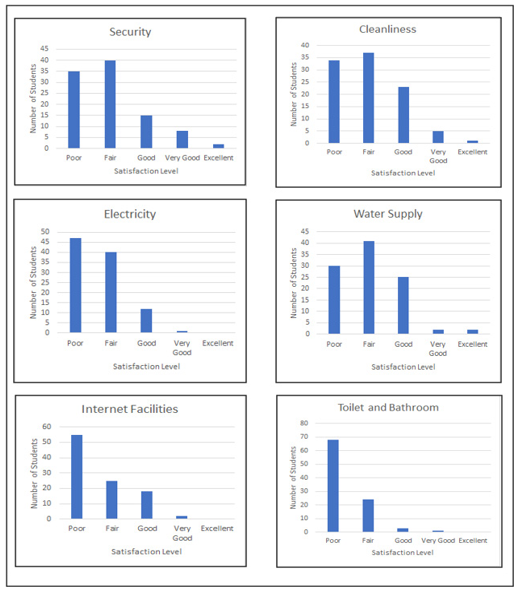
Figure 1: Overall Satisfaction of the Students with Hostel Facilities
From the result in table 1, there is high level of insecurity within the hostel and entire school environment. Students expressed concerns about theft, lack of visible security personnel around the school hostel and poor lighting in and around the hostel vicinity. The rate of stealing of students’ gadgets, household tools, textbooks and other essential material is alarming. These safety issues contribute to disrupted study routines and general discomfort which may impair academic performance. The overall satisfaction level of students with the available facilities is presented in Table 2.
|
Facilities |
Poor (%) |
Fair (%) |
Good (%) |
Very Good (%) |
Excellent (%) |
|
Rating |
17 |
26 |
13 |
2 |
1 |
Source: Authors’ work (2025)
Table 2. Overall Satisfaction of Students with the Available Facilities
The overall satisfaction is visualized in Figure 2.
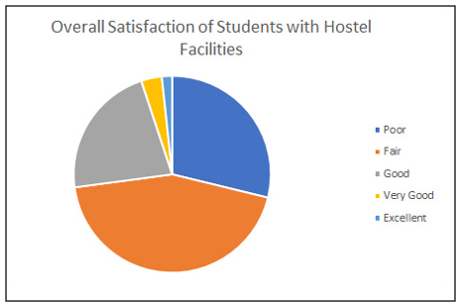
Figure 2: Overall Satisfaction of the Students with Hostel Facilities
Discussion
This study aimed to evaluate the effects of hostel accommodation on students’ health and academic performance at Bayero University, Kano. The findings indicate that the poor state of facilities has a profound negative impact. The study found that students were extremely unsatisfied with hostel environment which was linked to several health problems including typhoid, skin infection, malaria among other diseases related to untidy environment. Poor waste management, Insufficient cleaning practice, crowded rooms, poorly maintained bathroom were frequently mentioned. According to WHO, unsanitary environments lead to increased vulnerability to both physical and psychological stressors [6]. Furthermore, this result reveals the low of level at which students can access Internet facilities within the hostel and on campus. In this 21st century where much of the students learning require timely access to internet, this gap severely limits students’ ability to access resources, conduct research and learn widely other than what’s been taught at their lecture room. Tannor et al., emphasized that modern facilities (including digital connectivity) are central to user satisfaction in institutional housing. Collectively, the issues raise (insecurity, poor hygiene, and lack of internet access) have a direct bearing on academic achievement. When students face daily challenges in satisfying their basic needs and ensuring a safe environment, their mental and physical energy is diverted from academic pursuits. This finding aligns with the premise that living conditions are a key predictor of academic achievement, as shown in previous research on student housing satisfaction [2].
Conclusion and Recommendation
This study contains review of students of Bayero University Kano on the hostel facilities and its effect on their health and academic performance. The high demanding facilities by the students are inadequate in most of the hostels. Due to the poor service of these facilities, students decide to reside off campus. The results of the survey carried out shows that students were totally dissatisfied with poor level of hostel facilities range from unstable electricity, inadequate water supply, significant insecurity, unhygienic environment amongst other. The school management should be urged to equip the hostel with necessary facilities needed by the students to improve the mental wellbeing and to enhance the academic performance of the students. Finally, the managements should provide a means of having feedback from the student on the state of the available facilities, so as to keep high level of satisfaction of the facilities by the students.
Declaration
Ethics Approval and Consent to Participate: Ethical approval was not required for this study as per the guidelines of Bayero University, Kano. Informed consent was obtained from all individual participants included in the study. Availability of Data and Materials: The datasets used during the current study are available from the corresponding author on reasonable request.
Authors’ Contributions: Abdullahi A Bello conceived the study, designed the methodology, and wrote the main manuscript. Abdulmalik O Abdulwasiu contributed to data collection, analysis, and manuscript preparation. All authors reviewed and approved the final manuscript.
Acknowledgements: The authors thank the students of Bayero University, Kano, who participated in this study.
Authors’ Information: Abdullahi A Bello is a student of the Department of Medical Laboratory Science, Faculty of Allied Health Science and Abdulmalik O Abdulwasiu is a student of the Department of Pharmaceutical Science, Faculty of Pharmaceutical Science.
References
- Aluko, O. E. (2010). The Impact of Urbanization on Housing Development: The Lagos Experience, Nigeria. Ethiopian journal of environmental studies and management, 3(3).
- Osei-Poku, G., Braimah, A., & Clegg, R. (2020). Comparative assessment of user-satisfaction with on-campus residential accommodation at Takoradi Technical University, Ghana. Journal of Building Performance ISSN, 11(1), 2020.
- Reda, H., & Mulugeta, G. (2018). Investigating the causes of students’ less academic performance in engineering college of debre Berhan University. American Journal of Theoretical and Applied Statistics, 7(3), 126-131.
- Tannor, O., Attakora-Amaniampong, E., & Appau, W. M. (2022). User satisfaction with outsourced facility management (FM) services in multi-tenanted shopping malls in Ghana. Facilities, 40(3-4), 198-213.
- Hills, A. P., Farpour-Lambert, N. J., & Byrne, N. M. (2019). Precision medicine and healthy living: The importance of the built environment. Progress in cardiovascular diseases, 62(1), 34-38.
- World Health Organization. (2024). Sanitation: Key facts.
- World Health Organization. (2023). Drinking-water: Key facts.