

Archives of Epidemiology & Public Health Research(AEPHR)
ISSN: 2833-4353 | DOI: 10.33140/AEPHR

Impact Factor: 1.98


Research Article - (2026) Volume 5, Issue 1
Epidemiological Study of Joint Pathologies in Certain Health Facilities in The City of Yaounde-Cameroon (General Hospital, Biyem-Assi District and Cite-Verte Hospital) From 2012 To 2022
2Research Unit of Animal Physiology and Phytopharmacology, Faculty of Science, University of Dschang, Dschang, Cameroon
3Public Health Department, University of Dschang, Dschang, Cameroon
4Laboratory of Biology and Physiology of Animal Organisms, Department of Biology of Animal Organisms, Faculty of Science, The University of Douala Cameroon, P.O. Box 24157, Douala, Cameroon
Received Date: Dec 19, 2025 / Accepted Date: Jan 22, 2026 / Published Date: Feb 20, 2026
Copyright: ©2026 Marius Mbiantcha, et al. This is an open-access article distributed under the terms of the Creative Commons Attribution License, which permits unrestricted use, distribution, and reproduction in any medium, provided the original author and source are credited.
Citation: Djami, B. M., Bilanda, D. C., Wami, B., Ndjie, D. L., Atsamo, A. D., et al. (2026). Epidemiological Study of Joint Pathologies in Certain Health Facilities in The City of Yaounde-Cameroon (General Hospital, Biyem-Assi District and Cite-Verte Hospital) From 2012 To 2022, Arch Epidemiol Pub Health Res, 5(1), 01-13.
Abstract
The aim of this study was to determine the prevalence of joint pathologies in the city of Yaounde-Cameroon. Only hospitals with technical platform for the management of joint pathologies were selected for this study. The cross-sectional analytical study carried out covered 1,305 files of patients who consulted in these centers between 2012 and 2022. The associations between binary qualitative variables were expressed by calculating the Raw Odds Ratio and verified by the Pearson test at p<0.05. Variables significant in bivariate analysis were candidates for multivariate logistic regression and those with a p-value<0.05 in multivariate analysis were considered to be statistically significantly associated with osteoarthritis, arthritis, gout or tendonitis. 867 were women compared to 438 men, nearly 574 patients with sedentary work. Women were more affected than men. 800, 185, 99 and 55 patients suffered from arthritis, osteoarthritis, gout and tendinitis respectively. 773, 748 and 451 patients regularly consumed large amounts of anti-inflammatories, alcohol and meat respectively. Physical inactivity, alcohol and anti-inflammatories would significantly increase the risk of arthritis; while tobacco consumption would significantly increase the risk of tendonitis in patients. The current very poor literature on joint pathologies in Africa and particularly in Cameroon does not allow real conclusions to be drawn regarding the causes and consequences of these pathologies. The results obtained in this study underline the need to carry out further work in different regions of our country in order to find the causes of the increase in joint pathologies.
Keywords
Joint pathologies, Prevalence, Epidemiology.
Introduction
Joint pathologies are diseases that affect the joint, some are inflammatory and others non-inflammatory [1]. These manifest themselves with symptoms such as: joint pain, redness, heat, edema and sometimes fever. Among these pathologies, we can list others gout, osteoarthritis, arthritis and polyarthritis [2]. In developed countries, joint diseases cause higher morbidity than any other group of conditions. Data from many countries show an increase in the number of people affected, regardless of the age of the population. Pain and disability, often accompanied by fatigue, depression and job loss, are associated with the major groups of joint diseases, affecting the lives of many people [3]. Joint diseases have significant consequences on the work and personal lives of individuals, and the extent of these consequences seems linked to the level of industrial development of the country. Healthcare costs for joint diseases have also increased in recent years and will continue to do so as life expectancy increases and treatments, particularly surgical ones, become more expensive [4]. The risk factors can be modified by preventive measures. For example, in postmenopausal women, estrogens help prevent osteoporosis, but this protection only lasts as long as hormone administration continues. However, falls in older adults can be prevented by advice on home safety, wearing appropriate footwear and paying attention to other factors. There are now, for feasibility studies, methods of measuring the effectiveness of health care for rheumatological and orthopedic [5]. Such studies would help to explain the increased mortality observed in some countries for rheumatoid arthritis, systemic lupus erythematosus, generalized scleroderma and other related diseases [6].
In lower social classes, there is a higher percentage of more serious conditions, and many joint diseases, with a few exceptions such as ankylosing spondylitis and gout, have a higher prevalence. The higher prevalence of certain joint diseases in rural areas can be explained, to some extent, by differences in social class. There is evidence that rheumatoid arthritis and gout have a higher prevalence in urban populations than in comparable to rural populations [7]. Differences in incidence and prevalence between sexes have been observed for most joint diseases, but hormonal variations do not appear to provide a sufficient explanation. Reliable data on the role of diet, stress and climate on the incidence of joint diseases are relatively scarce and difficult to interpret. This lack of data reflects how complex the evaluation of these three variables is and also the high cost that appropriate studies would represent [8]. If the global demographic trend towards urbanization continues, there will be an unprecedented increase in morbidity from articular diseases, with serious socio-economic consequences. This can be avoid if the actions are taken at the national and international levels to disseminate information and have sufficient skills to fight against these diseases. Such information should be made available to all those engaged in medical and health education at all levels, and should be communicated to the general public and patients, as well as to rheumatologists and orthopedic surgeons [9].
Joint diseases are responsible for a significant number of work days lost for the patient. The economic consequences of these diseases are therefore considerable, but their causes and the factors by which they could be prevented are poorly understood. There is a need for population projections regarding the planning and use of health services, taking into account the morbidity caused by joint diseases. Despite these major consequences, epidemiological data are still insufficient and, above all, the consideration of these diseases in public health priorities is still derisory [10]. It is fundamental to better understand the impact and weight of these non-lethal diseases in order to support the development of prevention and treatment strategies and policies. Providing descriptive, analytical and prognostic epidemiology data is essential to understand the burden of joint diseases (prevalence) and their evolution over time (incidence), as well as their determinants and prognostic factors. Much research is devoted to the causes and treatment of joint diseases. Significant advances, which will lead to more effective prevention and treatments, have been made in the fields of genetics, immunology, pharmacology and connective tissue biochemistry [11]. In other areas, however, such as epidemiology, rehabilitation, identification of risk factors, education and social consequences of joint diseases, there is an urgent need to increase the amount of research [12]. This need is all the greater as morbidity and mortality patterns change in both developed and developing countries, due to an increase in life expectancy, the rapid growth of urban populations, has lifestyle changes and other factors. To address these new problems, effective community-based joint disease control programs are needed [13].
The few studies from developing countries on joint diseases have yielded strikingly similar results, but for most countries there is little reliable data on joint diseases. It is known that the lack of usable data on the prevalence of joint pathologies in Cameroon, the lack of awareness campaigns on the complications linked to the disease and the lack of knowledge of populations on joint pathologies could lead to an increase in these pathologies. Thus, the presence of reference hospitals (General Hospital, Biyem-assi district and Cite-Verte hospitals) in the city of Yaounde-Cameroon was decisive in its choice as a study site in order to verify the prevalence as well as some risk factors of joint pathologies in this large city known as the political capital of Cameroon. This work was carried out with the aim of evaluating the prevalence of joint diseases in the city of Yaoundé as well as the factors associated with the development of these pathologies.
Methods
Study Design, Area and Period
The Center region is one of the ten regions of Cameroon, located in the center of the country (Figure 1). Its capital is Yaoundé, which is also the capital of the country [14]. The region is located in the center of the country, with an average altitude of 200 to 600 meters, it borders five Cameroonian regions [14]. The Center region is made up of 10 departments. The second largest region in the country, it covers an area of 68,926 km2 or 14.5% of the national territory. In 2015, the region had 5,000,000 residents and had, on the scale of Cameroon, an average density of 44.9 residents/km2 [14,15].
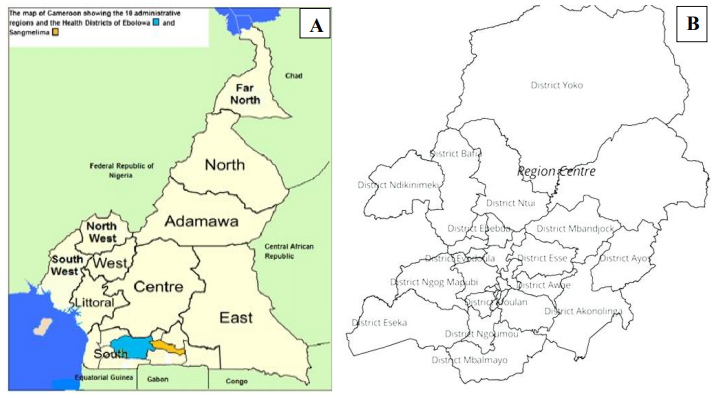
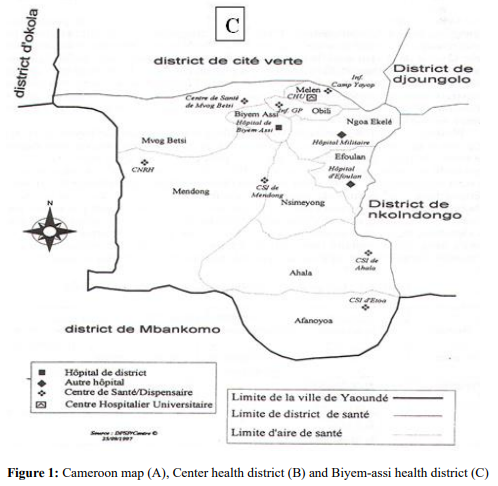
The study was analytical cross-sectional; it was carried out in three health facilities, namely General Hospital, Biyem-Assi District and Cite-Verte Hospital, all located in the city of Yaounde, the political capital of Cameroon but also the capital of the central region and the Mfoundi department. This study took place from August 1 to December 31, 2022. It should be noted that in Cameroon, there is a programmatic health map aimed at identifying the health coverage needs of the national territory based on the current and projected population in addition to taking into account the territorial area (Figure 1). Thus, taking into account theoretical ratios makes it possible to determine the sites available for the creation and possible transformations of public or private health facilities [14].
The Yaoundé General Hospital covers an area of 20,301 m2, with geographical coordinates such as 3°90' North longitude and 11°54' East latitude; it has a capacity of 450 beds, and offers services such as general medicine, surgery, obstetrics, pediatrics, rheumatology, oncology and gynecology. The Biyem-Assi district hospital covers an area of 2,220 hectares with geographic coordinates of 3°50'25'' North longitude and 11°29'12'' East latitude, it offers services such as medicine, surgery, obstetrics, pediatrics, rheumatology, oncology and gynecology [16] (Figure 1). The Cite-Verte District Hospital has an area of 19.1 km2, with geographical coordinates of 3°52’31’’ North longitude and 11°29’20’’ East latitude; with a capacity of 150 beds, and offers services such as medicine, surgery, obstetrics, pediatrics, rheumatology, ophthalmology, cardiology, endocrinology and gynecology. This establishment occupies a central place in the curative and preventive care system for a large part of the population of Yaounde by offering a complementary package of activities [16,17].
Inclusion and Exclusion Criteria
The medical records of elderly patients who came to consult the rheumatology department of the Yaoundé general hospital, Biyem-Assi district and Cite-verte hospital from January 1, 2012 to December 31, 2022 were used in our study. Patients (children and adults) whose data were incomplete were excluded (consultation diagnosis, examination results).
Sample Size Calculation and Sampling Technique
Sample Size Calculation
The sample size for our study was determined using the single population proportion formula. The following assumption were made that the marginal error on either side of the true proportion was 5% the 95% confidence level was used.
n = z² x p (1 – p)/m²
n = sample size
z = confidence level according to the reduced centered normal distribution (for a confidence level of 95%, z = 1.96)
p = estimated proportion of the population which presents the characteristic (when unknown, we use p = 0.5 which corresponds to the most unfavorable case, i.e. the greatest dispersion)
m = tolerated margin of error (for example we want to know the real proportion to within 5%)
N = [(1.96)2 X 0.5 (1 – 0.5)]/(0.05)2 = 384.16
Once the data was collected, it was entered into a known input data mask and the prevalence of different joint pathologies (osteoarthritis, arthritis, gout and tendonitis) was estimated according to the formula:

Sampling Technique
Study Variable
Dependent variable: consultation diagnosis (osteoarthritis, arthritis, gout and tendonitis)
Independent variables: sociodemographic characteristics, type of consultation
Data Collection
Data collection was performed using a structural data extraction format conducted by reviewing patient medical records. After carefully reviewing the patients' medical records, an appropriate checklist for data extraction was established. Sociodemographic characteristics, medical and therapeutic comorbidities are given, followed by the characteristics of the study subject during the treatment of osteoarthritis, arthritis, gout and tendinitis. The data collection tools were adapted from several different studies related to osteoarthritis, arthritis, gout and tendonitis.
Data Analysis Technique
Data were checked for completeness and consistency and then entered into SPSS statistical software which was used for cleaning, coding and analysis. Descriptive statistics were calculated for the categorical variable. The primary outcome variable was categories 0 for people without joint pathology and 1 for people with joint pathology. The goodness of fit of the model was checked by the Pearson test. After checking multi-collinearity and interaction terms, each independent variable has a p-value<0.5. In the bivariate analysis binary and multivariate logistic regression was included to control for confounding factors. Finally, adjusted odds ratios with a p-value<0.05 were used to determine statistical significance and measure the strength of the association. Then the result was presented in the form of table text, figures and graphs.
Results
Socio-Demographic Characteristics
The mean age of the patients was 54.69 ± 5.44 years with a minimum age of 5 years versus a maximum of 100 years. Patients aged 60 to 70 years were the most represented while those aged 0 to 10 years were the least represented. 867 were women (66.44%) compared to 438 men (33.56%), all married and 128 were single. In addition, 793 (69.14%) patients suffered from hypertension. The informal sector and the unemployed occupied the first rank or 66.51% (822) followed by civil servants or 30.42% (331). The secondary education level (59.40%) was the most represented compared to 135 (15.48%) who had reached the higher level (Table 1).
|
|
Variables |
ARTHRITIS |
Odds Ratio Gross (Confidence interval à 95%) |
P–value of Pearson test |
Odds Ratio ajusted (Confidence interval à 95%) |
P-valeur |
|
|
Yes |
No |
||||||
|
AGE |
[0-10 years [ |
2(0.15 %) |
750(57.56 %) |
0.487 |
0.42 |
0.494 (0.080- 3.032) |
0.44 |
|
|
[10-20 years [ |
26(2.00 %) |
726(57.72 %) |
3.253 |
0.01 |
3.226 (1.263- 8.240) |
0.01 |
|
|
[20-30 years [ |
46(3.53 %) |
706(54.18 %) |
1.173 |
0.51 |
1.218 (0.707- 2.099) |
0.47 |
|
|
[30-40 years [ |
75(5.75 %) |
677(51.96 %) |
1.454 |
0.06 |
1.551 (0.971- 2.478) |
0.06 |
|
|
[40-50 years [ |
124(9.52 %) |
628(48.20 %) |
1.253 |
0.15 |
1.337 (0.906- 1.973) |
0.14 |
|
|
[50-60 years [ |
167(12.82 %) |
585(44.90 %) |
0.863 |
0.26 |
1.004 (0.711- 1.418) |
0.98 |
|
|
[60-70 years [ |
187(14.35 %) |
565(43.36 %) |
0.823 |
0.12 |
0.968 (0.691- 1.355) |
0.85 |
|
|
70 years and over |
125(9.59 %) |
627(48.12 %) |
0.857 |
0.29 |
0.857 (0.643- 1.142) |
0.29 |
|
SEXE |
Female |
503(66.7) |
364(655) |
1.057(0.839- 1.332) |
0.63 |
2.696(0.161- 45.229) |
0.49 |
|
|
Male |
249(33.0) |
189(34.0) |
0.957(0.759- 1.207) |
0.71 |
1.746(0.103- 29.692) |
0.70 |
|
SEDENTARY FONCTION |
Yes |
350(46.4) |
404(53.6) |
1.284 (1.029- 1.603) |
0.02 |
1.722 (1.128- 2.630) |
0.01 |
|
MARITAL STATUS |
Single |
95(12.6) |
33(5.9) |
2.285(1.513- 3.451) |
0.01 |
3.398 (1.342- 8.606) |
0.01 |
|
|
Maried |
576(76.4) |
183(32.9) |
6.596 (5.168- 8.418) |
0.01 |
1.822 (1.206- 2.753) |
0.01 |
|
|
Divorced |
2(0.3) |
2(0.4) |
0.737(0.103- 5.246) |
0.75 |
1.110(0.085- 14.488) |
0.93 |
|
RELIGION |
Christian |
658(97.2) |
223(94.9) |
1.864 (0.890- 3.900) |
0.09 |
1.864 (0.890- 3.900) |
0.09 |
|
|
Muslim |
19(2.8) |
12(5.1) |
0.537(0.256- 1.123) |
0.09 |
0.881(0.368- 2.110) |
0.77 |
|
EDUCATIONAL LEVEL |
Uneducated |
13(1.7) |
1(0.2) |
9.737(1.270- 74.652) |
0.01 |
24.718(2.945- 207.44) |
0.01 |
|
|
Primary |
147(19.5) |
58(10.4) |
2.079 (1.501- 2.881) |
0.01 |
5.010 (2.528- 9.931) |
0.01 |
|
|
Secondary |
411(54.5) |
107(19.2) |
5.028 (3.897- 6.488) |
0.01 |
7.055 (3.721- 13.377) |
0.01 |
|
|
Higher |
97(12.9) |
38(6.8) |
2.013 (1.359- 2.980) |
0.01 |
2.243(1.511- 6.960) |
0.01 |
|
CONSUMPTION |
Alcohol |
571(26.69 %) |
183(8.56 %) |
6.681 |
0.01 |
2.191 (1.544- 3.108) |
0.01 |
|
|
Tabacco |
47(2.20 %) |
707(33.05 %) |
0.704 |
0.09 |
0.337 (0.203- 0.562) |
0.01 |
|
|
Spices |
50(2.34 %) |
704(33.05 %) |
1.724 |
0.03 |
0.618 (0.348- 1.099) |
0.10 |
|
|
Meat |
340(15.90 %) |
414(19.35 %) |
3.292 |
0.01 |
0.820 (0.583- 1.154) |
0.25 |
|
|
Anti- inflammatory |
634(29.64 %) |
120(5.61 %) |
15.850 |
0.01 |
11.997 (8.391- 17.154) |
0.01 |
Table 1: Factors associated with arthritis
Distribution According to Type of Profession, Consultation Diagnostics and Different Consumptions
574 patients or 43.82% had sedentary job against 736 or 56.18% who had a non-sedentary job. 800 (73.13%), 185 (15.23%), 99 (8.83%) and 55 (2.81%) patients suffered from arthritis, osteoarthritis, gout and tendinitis, respectively. 36.14% (773), 34.97% (748), 4.44% (95), 3.37% (72) and 21.08 % (451) patients were respectively consumed anti-inflammatories, alcohol, tobacco, spices and meat (Figure 2).
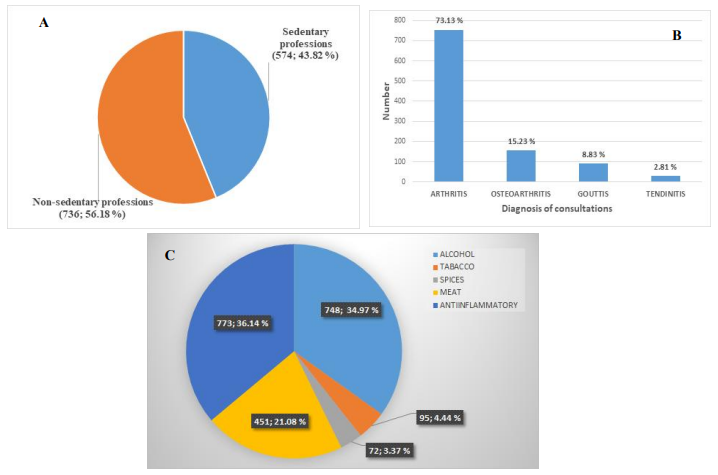
Figure 2: Distribution of patients by type of profession (A), consultation diagnostics (B) and different consumptions (C)
Distribution of Consultation Diagnoses According to Age, Sex, Religion, Marital Status and Level of Study
Middle age of patients with joint pathologies is almost similar to that the population. It appears that the age group most affected by arthritis, osteoarthritis and gout was 60-70 years old followed by tendinitis which was 50-60 years old. Out of 1303 patients consulted, it appears that the female sex was the most affected by the disease, 503 females/249 males’ patients suffered from arthritis, 123 females/33 males suffered from osteoarthritis and 22 females/7 males suffered from tendinitis (Figure 3).
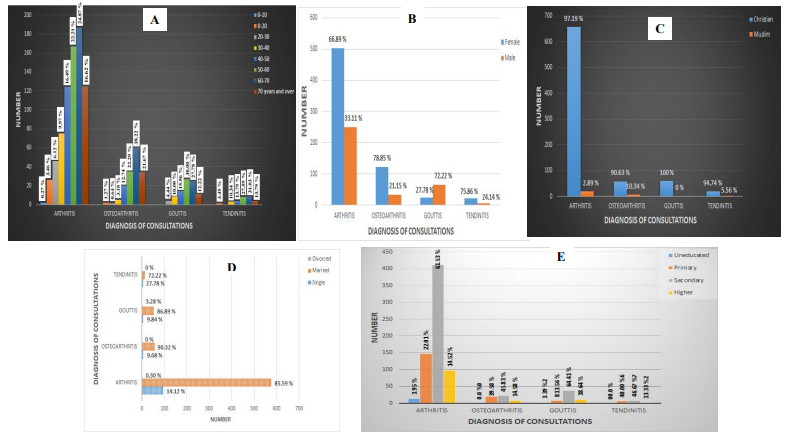
Figure 3: Distribution of diagnosis of consultations according to age (A), sex (B), religion (C), marital status (D) and level of study (E)
Christians were more representative with 658 who suffered from arthritis, 56 suffered from osteoarthritis, 60 from gout and18 suffered from tendinitis against 19 Muslims who suffered from arthritis, 6 suffered from osteoarthritis, 60 from gout and 18 suffered from tendonitis. It appears that married patients are most representative of the disease with 567 who suffered from arthritis, 56 from osteoarthritis while the single and divorced were less representative with 95 and 2 who suffered from arthritis, 6 from osteoarthritis and 6 who suffered from gout (figure 3).
Depending on the level of education, the consultation diagnosis showed that the most represented patients (478) had a secondary level while the uneducated (13) and those with higher education (117) were less represented (figure 3).
Factors Associated with Diagnoses
- Factors Associated with Arthritis
It should be noted that physical inactivity (ORa = 1.722 [1.128-2.630], p<0.05), alcohol consumption (ORa = 2.191 [1.544- 3.108], p<0.01) and anti-inflammatories (aOR = 11.997 [8.391-17.154], p<0.01) would significantly increase the risk of arthritis in patients (table 2).
|
|
Variables |
ARTHRITIS |
|
Odds Ratio Gross (Confidence interval à 95%) |
P–value of Pearson test |
Odds Ratio ajusted (Confidence interval à 95%) |
P-valeur |
|
Yes |
No |
||||||
|
AGE |
[0-10 years [ |
2(0.15 %) |
750(57.56 %) |
0.487 |
0.42 |
0.494 (0.080- 3.032) |
0.44 |
|
|
[10-20 years [ |
26(2.00 %) |
726(57.72 %) |
3.253 |
0.01 |
3.226 (1.263- 8.240) |
0.01 |
|
|
[20-30 years [ |
46(3.53 %) |
706(54.18 %) |
1.173 |
0.51 |
1.218 (0.707- 2.099) |
0.47 |
|
|
[30-40 years [ |
75(5.75 %) |
677(51.96 %) |
1.454 |
0.06 |
1.551 (0.971- 2.478) |
0.06 |
|
|
[40-50 years [ |
124(9.52 %) |
628(48.20 %) |
1.253 |
0.15 |
1.337 (0.906- 1.973) |
0.14 |
|
|
[50-60 years [ |
167(12.82 %) |
585(44.90 %) |
0.863 |
0.26 |
1.004 (0.711- 1.418) |
0.98 |
|
|
[60-70 years [ |
187(14.35 %) |
565(43.36 %) |
0.823 |
0.12 |
0.968 (0.691- 1.355) |
0.85 |
|
|
70 years and over |
125(9.59 %) |
627(48.12 %) |
0.857 |
0.29 |
0.857 (0.643- 1.142) |
0.29 |
|
SEXE |
Female |
503(66.7) |
364(655) |
1.057(0.839- 1.332) |
0.63 |
2.696(0.161- 45.229) |
0.49 |
|
|
Male |
249(33.0) |
189(34.0) |
0.957(0.759- 1.207) |
0.71 |
1.746(0.103- 29.692) |
0.70 |
|
SEDENTARY FONCTION |
Yes |
350(46.4) |
404(53.6) |
1.284 (1.029- 1.603) |
0.02 |
1.722 (1.128- 2.630) |
0.01 |
|
MARITAL STATUS |
Single |
95(12.6) |
33(5.9) |
2.285(1.513- 3.451) |
0.01 |
3.398 (1.342- 8.606) |
0.01 |
|
|
Maried |
576(76.4) |
183(32.9) |
6.596 (5.168- 8.418) |
0.01 |
1.822 (1.206- 2.753) |
0.01 |
|
|
Divorced |
2(0.3) |
2(0.4) |
0.737(0.103- 5.246) |
0.75 |
1.110(0.085- 14.488) |
0.93 |
|
RELIGION |
Christian |
658(97.2) |
223(94.9) |
1.864 (0.890- 3.900) |
0.09 |
1.864 (0.890- 3.900) |
0.09 |
|
|
Muslim |
19(2.8) |
12(5.1) |
0.537(0.256- 1.123) |
0.09 |
0.881(0.368- 2.110) |
0.77 |
|
EDUCATIONAL LEVEL |
Uneducated |
13(1.7) |
1(0.2) |
9.737(1.270- 74.652) |
0.01 |
24.718(2.945- 207.44) |
0.01 |
|
|
Primary |
147(19.5) |
58(10.4) |
2.079 (1.501- 2.881) |
0.01 |
5.010 (2.528- 9.931) |
0.01 |
|
|
Secondary |
411(54.5) |
107(19.2) |
5.028 (3.897- 6.488) |
0.01 |
7.055 (3.721- 13.377) |
0.01 |
|
|
Higher |
97(12.9) |
38(6.8) |
2.013 (1.359- 2.980) |
0.01 |
2.243(1.511- 6.960) |
0.01 |
|
CONSUMPTION |
Alcohol |
571(26.69 %) |
183(8.56 %) |
6.681 |
0.01 |
2.191 (1.544- 3.108) |
0.01 |
|
|
Tabacco |
47(2.20 %) |
707(33.05 %) |
0.704 |
0.09 |
0.337 (0.203- 0.562) |
0.01 |
|
|
Spices |
50(2.34 %) |
704(33.05 %) |
1.724 |
0.03 |
0.618 (0.348- 1.099) |
0.10 |
|
|
Meat |
340(15.90 %) |
414(19.35 %) |
3.292 |
0.01 |
0.820 (0.583- 1.154) |
0.25 |
|
|
Anti- inflammatory |
634(29.64 %) |
120(5.61 %) |
15.850 |
0.01 |
11.997 (8.391- 17.154) |
0.01 |
Table 2: Factors associated with arthritis
- Factors Associated with Osteoarthritis
It should be noted that marital status (married) (aOR = 2,469[1,115-5,469], p<0.05), consumption of tobacco and spices (aOR = 2 828 [1,201-6,707], p<0.05) would significantly increase the risk of osteoarthritis in patients (table 3).
|
|
Variables |
OSTEOARTHRITIS |
Odds Ratio Gross (Confidence interval à 95%) |
P – value of Pearson test |
Odds Ratio ajusted (Confidence interval à 95%) |
P-valeur |
|
|
Yes |
No |
||||||
|
AGE |
[0-10 years [ |
0(0) |
157(100) |
0.879 |
0.40 |
/ |
/ |
|
|
[10-20 years [ |
2(1.3) |
155(98.7) |
0.480 |
0.30 |
0.382 (0.087-1.675) |
0.20 |
|
|
[20-30 years [ |
1(0.6) |
156(99.4) |
0.093 |
0.01 |
0.078 (0.010-0.576) |
0.01 |
|
|
[30-40 years [ |
5(3.2) |
152(96.8) |
0.313 |
0.01 |
0.263 (0.100-0.692) |
0.01 |
|
|
[40-50 years [ |
20(12.7) |
137(87.3) |
0.789 |
0.34 |
0.641 (0.356-1.154) |
0.13 |
|
|
[50-60 years [ |
35(22.3) |
122(77.7) |
0.743 |
0.93 |
0.746 (0.450-1.239) |
0.25 |
|
|
[60-70 years [ |
60(38.2) |
97(61.8) |
1.869 |
0.01 |
1.207 (0.763-1.910) |
0.42 |
|
|
70 years and over |
34(21.7) |
123(78.3) |
1.348 |
0.15 |
1.348 (0.895-2.031) |
0.15 |
|
SEXE |
Female |
123(78.3) |
744(64.5) |
1.989 (1.335-2.962) |
0.01 |
0.156(0.009-2.864) |
0.21 |
|
|
Male |
33(21.0) |
405(35.1) |
0.492(0.329-0.735) |
0.01 |
0.144(0.008-2.755) |
0.19 |
|
SEDENTARY FONCTION |
Yes |
52(33.1) |
522(45.3) |
0.599(0.421-0.851) |
0.01 |
0.699(0.333-1.468) |
0.34 |
|
M A R I T A L STATUS |
Single |
6(3.8) |
122(10.6) |
0.336(0.145-0.776) |
0.01 |
4.076 (0.684- 24.287) |
0.12 |
|
|
Maried |
56(35.7) |
703(61.0) |
0.355(0.251-0.502) |
0.01 |
2.469 (1.115-5.469) |
0.02 |
|
|
Divorced |
0(0.0) |
4(0.3) |
1 |
0.01 |
1 |
0.01 |
|
RELIGION |
Christian |
58(90.6) |
823(97.1) |
0.294(0.116-0.744) |
0.01 |
0.294(0.116-0.744) |
0.01 |
|
|
Muslim |
6(9.4) |
25(2.9) |
3.406 (1.344-8.631) |
0.01 |
2.257(0.781-6.519) |
0.13 |
|
EDUCATIONAL LEVEL |
Uneducated |
0(0.0) |
14(1.2) |
1 |
0.01 |
1 |
0.01 |
|
|
Primary |
19(12.1) |
186(16.1) |
0.716(0.432-1.186) |
0.19 |
0.178(0.078-0.408) |
0.01 |
|
|
Secondary |
22(14.0) |
496(43.0) |
0.216(0.136-0.344) |
0.01 |
0.098(0.044-0.216) |
0.01 |
|
|
Higher |
7(4.5) |
128(11.1) |
0.374(0.171-0.815) |
0.01 |
0.154(0.050-0.479) |
0.01 |
|
C ONS UMP -TION |
Alcohol |
43(27.4) |
114(72.6) |
0.240 |
0.01 |
0.310 (0.172-0.559) |
0.01 |
|
|
Tabacco |
24(15.3) |
133(84.7) |
2.750 |
0.01 |
7.368 (3.765- 14.420) |
0.01 |
|
|
Spices |
9(5.7) |
148(94.3) |
0.890 |
0.52 |
2.828 (1.201-6.707) |
0.01 |
|
|
Meat |
24(15.3) |
133(84.7) |
0.307 |
0.01 |
1.006 (0.556-1.822) |
0.98 |
|
|
Anti-inflamma-tory |
32(20.4) |
125(79.6) |
0.142 |
0.01 |
0.201 (0.117-0.347) |
0.01 |
Table 3: Factors associated with osteoarthritis
- Factors Associated with Gout
Table 4 presents the association between the socio-demographic factor, consumption habits and the risk of developing gout in the patients in our sample. According to the results obtained, it should be noted that no factor studied has a significant effect on the risk of having gout in patients.
|
|
Variables |
TENDINITIS |
Odds Ratio Gross (Confidence interval à 95%) |
P – value of Pearson test |
Odds Ratio ajusted (Confidence interval à 95%) |
P-valeur |
|
|
Yes |
No |
||||||
|
AGE |
[0-10 years [ |
0(0) |
90(100) |
0.931 |
0.54 |
/ |
/ |
|
|
[10-20 years [ |
0(0) |
90(100) |
0.929 |
0.11 |
/ |
/ |
|
|
[20-30 years [ |
4(4.4) |
86(95.6) |
0.748 |
0.58 |
1.117 (0.345-3.617) |
0.85 |
|
|
[30-40 years [ |
9(10.0) |
81(90.0) |
1.172 |
0.66 |
1.500 (0.665-3.384) |
0.25 |
|
|
[40-50 years [ |
14(15.6) |
76(84.4) |
1.024 |
0.93 |
1.520 (0.334-6.910) |
0.32 |
|
|
[50-60 years [ |
27(30.0) |
63(70.0) |
1.448 |
0.12 |
1.932 (0.937-3.981) |
0.07 |
|
|
[60-70 years [ |
25(27.8) |
65(72.2) |
1.073 |
0.77 |
1.548 (0.746-3.212) |
0.24 |
|
|
70 years and over |
11(12.2) |
79(87.8) |
0.636 |
0.16 |
0.636 (0.333-1.214) |
0.16 |
|
SEXE |
Female |
25(27.5) |
842(69.1) |
0.170(0.105-0.273) |
0.01 |
1 |
0.01 |
|
|
Male |
65(71.4) |
373(30.6) |
5.670 (3.541- 9.080) |
0.01 |
1 |
0.01 |
|
SEDENTARY FONCTION |
Yes |
54(59.3) |
520(42.7) |
1.962 (1.272- 3.026) |
0.01 |
1.460(0.741-2.878) |
0.27 |
|
MARITAL STATUS |
Single |
6(6.6) |
122(10.0) |
0.635(0.272-1.483) |
0.29 |
1 |
0.01 |
|
|
Maried |
53(58.2) |
706(57.9) |
1.013(0.658-1.561) |
0.95 |
1 |
0.01 |
|
|
Divorced |
2(2.2) |
2(0.2) |
13.674 (1.904- 98.224) |
0.01 |
1 |
0.01 |
|
RELIGION |
Christian |
60(100) |
821(96.6) |
1.073 (1.054- 1.092) |
0.13 |
1 |
0.01 |
|
|
Muslim |
0(0.0) |
31(3.6) |
1 |
0.01 |
1 |
0.01 |
|
EDUCATIONAL LEVEL |
Uneducated |
2(1.0) |
12(2.2) |
2.260(0.498- 10.256) |
0.27 |
6.764(0.758-60.346) |
0.08 |
|
|
Primary |
8(8.8) |
197(16.2) |
0500(0.238-1.050) |
0.06 |
1.242(0.241-6.394) |
0.79 |
|
|
Secondary |
38(41.8) |
480(39.4) |
1.104(0.717-1.701) |
0.65 |
1.285(0.287-5.747) |
0.74 |
|
|
Higher |
11(12.1) |
124(10.2) |
1.214(0.629-2.342) |
0.56 |
1.348(0.269-6.771) |
0.71 |
|
CONSUMPTION |
Alcohol |
57(62.6) |
34(37.4) |
1.281 |
0.26 |
1.365 (0.744-2.505) |
0.31 |
|
|
Tabacco |
12(13.2) |
79(86.8) |
2.079 |
0.02 |
1.829 (0.909-3.679) |
0.09 |
|
|
Spices |
6(6.6) |
85(93.4) |
1.233 |
0.63 |
1.127 (0.456-2.783) |
0.79 |
|
|
Meat |
31(34.1) |
60(65.9) |
0.983 |
0.94 |
0.979 (0.585-1.640) |
0.93 |
|
|
Anti- inflammatory |
53(58.2) |
38(41.8) |
0.967 |
0.87 |
0.780 (0.435-1.399) |
0.40 |
Table 4: Factors associated with gout
- Factors Associated with Tendinitis Table 5 presents the association between sociodemographic factor, consumption habits and risk of developing tendinitis in the patients in our sample. According to the results obtained, it should be noted that tobacco consumption ((aOR = 5.619 [1.768-17.860], p<0.01)) would significantly increase the risk of tendonitis in patients.
|
|
Variables |
TENDINITIS |
Odds Ratio Gross (Confidence interval à 95%) |
P – value of Pearson test |
Odds Ratio ajusted (Confidence interval à 95%) |
P-valeur |
|
|
Yes |
No |
||||||
|
AGE |
[0-10 years [ |
0(0) |
29(100) |
0.735 |
0,97 |
/ |
/ |
|
|
[10-20 years [ |
1(3.4) |
28(96.6) |
1.432 |
0.78 |
1.815 (0.196- 16.761) |
0.59 |
|
|
[20-30 years [ |
0(0) |
29(100) |
0.976 |
0.17 |
/ |
/ |
|
|
[30-40 years [ |
3(10.3) |
26(89.7) |
1.209 |
0.75 |
1.699 (0.683- 4.225) |
0.58 |
|
|
[40-50 years [ |
4(13.8) |
25(86.2) |
0.885 |
0.82 |
1.154 (0.285- 4.675) |
0.28 |
|
|
[50-60 years [ |
8(27.6) |
21(72.4) |
1.259 |
0.58 |
1.520 (0.452-5.112) |
0.49 |
|
|
[60-70 years [ |
9(31.0) |
20(69.0) |
1.256 |
0.57 |
1.507 (0.458- 4.952) |
0.50 |
|
|
70 years and over |
4(13.8) |
25(86.2) |
0.746 |
0.58 |
0.746 (0.257- 2.164) |
0.58 |
|
SEXE |
Female |
22(75.9) |
845(66.0) |
1.622 (0.687- 3.826) |
0.26 |
1 |
0.01 |
|
|
Male |
7(24.1) |
431(33.6) |
0.628(0.266- 1.481) |
0.28 |
1 |
0.01 |
|
SEDENTARY FONCTION |
Yes |
12(41.4) |
562(43.9) |
0.903(0.428- 1.906) |
0.78 |
0.622(0.172-2.254) |
0.47 |
|
MARITAL STATUS |
Single |
5(17.2) |
123(9.6) |
1.961(0.735- 5.233) |
0.17 |
4.387(0.399- 48.275) |
0.22 |
|
|
Maried |
13(44.8) |
746(58.2) |
0.583(0.278- 1.222) |
0.14 |
1.254(0.408-3.854) |
0.69 |
|
|
Divorced |
0(0.0) |
4(0.3) |
1 |
0.01 |
1 |
0.01 |
|
RELIGION |
Christian |
18(94.7) |
863(96.6) |
0.626(0.081- 4.843) |
0.65 |
0.626(0.081-4.843) |
0.65 |
|
|
Muslim |
1(5.3) |
30(3.4) |
1.598(0.206- 12.368) |
0.65 |
1.259(0.153- 10.389) |
0.83 |
|
EDUCATIONAL LEVEL |
Uneducated |
0(0.0) |
14(1.1) |
1 |
0.01 |
1 |
0.01 |
|
|
Primary |
6(20.7) |
199(15.5) |
1.418(0.570- 3.528) |
0.45 |
0.364(0.087-1.522) |
0.16 |
|
|
Secondary |
7(24.1) |
511(39.9) |
0.479(0.203- 1.131) |
0.08 |
0.200(0.050-0.794) |
0.02 |
|
|
Higher |
2(6.9) |
133(10.4) |
0.639(0.150- 2.719) |
0.54 |
0.233(0.031-1.753) |
0.15 |
|
CONSUMPTION |
Alcohol |
13(44.8) |
16(55.2) |
0.604 |
0.17 |
0.514 (0.174- 1.520) |
0.22 |
|
|
Tabacco |
6(20.7) |
23(79.3) |
3.494 |
0.01 |
5.619 (1.768- 17.860) |
0.01 |
|
|
Spices |
2(6.9) |
27(93.1) |
1.281 |
0.73 |
1.254 (0.251- 6.257) |
0.78 |
|
|
Meat |
9(31.0) |
20(69.0) |
0.854 |
0.69 |
1.811 (0.652-5.030) |
0.25 |
|
|
Anti- inflammatory |
11(37.9) |
18(621) |
0.416 |
0.02 |
0.404 (0.149- 1.092) |
0.07 |
Table 5: Factors associated with tendonitis
Discussion
Joint pathologies (osteoarthritis, arthritis, gouty tendinitis and lupus erythematosus) in Cameroon, as in several countries around the world, are rheumatological conditions, which are increasingly considered given their disabling nature and their sociodemographic impact. The present work was carried out to establish the prevalence of joint pathologies between 2012 and 2022 in some health facilities in the city of Yaoundé, namely the Yaoundé general hospital, Biyem-Assi District and Cite-verte hospital. The statistic may highlight seriounness of the problem and stimulated search of solutions.
Diseases of the articular system form a relatively heterogeneous group. Some are linked to physiological aging, which results in wear and tear on the body, while others are inflammatory in nature and can occur after weakening of the bone or joint system. These pathologies are most often difficult to identify, but can have repercussions on the psychological state of people affected by the chronic pain they cause, and in the more or less long term on professional life. In 2010 year, there were more than 31.700 short-term hospital stays (medicine, surgery and obstetrics) motivated by a condition of the osteoarticular system (7% of all stays) [18]. Over the past few decades, there have been significant advances in our understanding of the epidemiology of joint diseases. The role of comorbidities has in particular been highlighted and is better appreciated. Thus, there is geographic and temporal variability in incidence and prevalence estimates, highlighting the dynamic nature of the impact of genetic and environmental factors but also of the study methods used [19].
Numerous epidemiological studies intended to study the role of race, climate, diet, economic factors and environment in joint diseases have already been carried out particularly for osteoarthritis and low back pain, which are cause significant morbidity. Particularly among the elderly, the identification and correction of risk factors such as obesity, hypertension, physical inactivity, stress and smoking, makes it possible to consider the prevention of these diseases [20]. The results of the present study showed that the hospital prevalence of arthritis was 73.13%, osteoarthritis was 15.23%, gout 8.83% and 2.81% for tendinitis. This result is different from the observations of Singwe et al. [21] who reported that the hospital prevalence of arthritis was 30.93%, osteoarthritis 20.84%, gout 5.88%. On the other hand, 7 years earlier, Ngomba et al. [16] reported that 45% of the sub-Saharan population suffered from osteoarthritis, 8% from osteoarthritis. This increase in 7 years would be due to changes in lifestyle and also to increasing attendance at hospital. The average age of the patients was 54.96 ± 5 years with extremes of 40 and 60 years and the majority (26.43) of the patients were between 60 and 70 years old. This age group corresponds to the interval of predisposition to the disease and this result is almost similar to that reported by Guensi et al. [22]. In present survey, 66.4% of women were more affected by arthritis, osteoarthritis and tendinitis. This result corroborates the results of Abderrahim et al. [12] who showed that women are more affected by osteoarthritis than men. This result is easily explained by the influence of female sex hormones on autoimmune processes, hormones having a certain role in the appearance and/or aggravation of the disease, as evidenced by the risk induced by estrogen-progestin during pregnancy. Additionally, 88% of patients were married and 59.4% of patients had secondary education suggesting that educated patients would be better informed and more willing to pay for a diagnosis. This result is in agreement with that of Aly et al. [23] in Guinea Conakry and Cameroon which reported that 56% of patients diagnosed with arthritis had attended high school. This could also be explained by the high number of civil servants in this survey.
In this investigation, physical inactivity and alcohol consumption were found to be risk factors associated with arthritis. Additionally, marital status (married) and smoking were risk factors associated with osteoarthritis and tendinitis. This result is similar to that of Krishnan et al. [24], as well as that of Pedersen et al. [25] who reported that smoking, physical inactivity and alcohol are positive risk factors for arthritis. This could be explained by the fact that tobacco is composed of toxic constituents such as arsenal, formaldehyde. They can constitute a source of free radicals capable of inducing oxidative stress in the individual. In addition, the immunological reaction cascade triggered by smoking leads to the production of immunoglobulin M. And also excessive alcohol consumption disrupts the immune system, this disruption can cause or worsen arthritis [26]. The importance of genetic factors in the pathogenesis of joint diseases is well known. The non-random distribution of genetic markers, in particular of the antigenic systems carried by human leukocytes in patients suffering from certain rheumatic conditions, as well as the grouping of cases within families, constitute strong evidence of the existence of a genetic predisposition to joint diseases [27]. It is important to identify risk factors, so that those who are affected have the opportunity to protect themselves, for example by changing their lifestyle and behavior.
Globally, perhaps what is most needed in the area of joint disease is adequate education of the public and professionals. The general public needs to know about joint diseases, their treatment and prognosis, the role of rehabilitation and the importance of family support. Physicians and healthcare personnel need to gain greater experience in differential diagnosis and become familiar with new treatments. They must also understand the importance of socio¬economic and psychological factors on the development of these diseases [28]. You should also know that this evolution and the clinical picture of the disease can be modified by other conditions.
From our results it appears that the age group most affected by arthritis, osteoarthritis and gout was 60-70 years old followed by tendinitis which was 50-60 years old. It appears that the female was the most affected by the disease, i.e. 503 female patients suffered from arthritis, 123 female suffered from osteoarthritis and 22 female suffered from tendinitis. On the other hand, the male were less affected with 249 who suffered from arthritis, 33 suffered from osteoarthritis 7 from tendinitis but 65 suffered from taste against 25 of female sex. It is known that risk factors for joint diseases can be divided into intrinsic factors, such as age, gender and race, and extrinsic or environmental factors, such as trauma and use of the joint [29,30]. Certain facts indicate that the onset and progression of these pathologies could be controlled by different factors, depending on the different associated risks. Other important risk factors are obesity and high blood pressure.
Conclusions
At the end of this study carried out in three reference hospitals in the city of Yaoundé-Cameroon in order to determine the prevalence of joint pathologies, it appears that the joint pathologies most present in these hospital structures were arthritis, osteoarthritis, gout and tendinitis. In addition, rheumatoid arthritis was the most common pathology with a prevalence of 73.13%. Physical inactivity and alcohol consumption were risk factors associated with the occurrence of these pathologies.
References
- Bardin, T., & Richette, P. (2011). Épidémiologie et génétiquede la goutte. La Presse Médicale, 40(9), 830-835.
- Sato, V. H., Sungthong, B., Rinthong, P. O., Nuamnaichati, N., Mangmool, S., Chewchida, S., & Sato, H. (2018). Pharmacological effects of Chatuphalatika in hyperuricemia of gout. Pharmaceutical biology, 56(1), 76-85.
- Chen C, Lu¨ JM, & Lu JM. (2022). Maladies liées à l'hyperuricémie et inhibiteurs de la xanthine oxydoréductase (XOR) : un aperçu. Medical Science Monitor, 22, 2501–2512.
- Mancía, G., Grassi, G., & Borghi, C. (2015). Hyperuricémie, dépôt d'urate et association avec l'hypertension. Current Medical Research Opinion, 31,1-19.
- Purushoth Prabhu, T., Panneerselvam, P., Vijaykumar, R., Clement Atlee, W., & Balasubramanian, S. (2012). Anti-inflammatory, anti-arthritis and analgesic effect of ethanolic extract of whole plant of Merremia emarginata Burm. F. Cent Eur J Exp Biol, 1(3), 94-99.
- Asmaa, B. (2018). Polyarthrite rhumatoïde : de la physiopathologie à la thérapie, Thèse pour le diplôme d'État de Docteur en Pharmacie, Université de Limoges, Faculté de Pharmacie, 184p.
- Copstead-Kirkhorn, L. E. C., & Banasik, J. L. (2013). Physiopathologie 5e édition. Amsterdam, Pays-Bas : E. Science, 1216p.
- McCance, K. L., & Huether, S. E. (2014). Pathophysiologie: Les bases biologiques de la maladie chez l'adulte et l'enfant 7e édition. Amsterdam, Londres (Pays-Bas) : Elsevier, 1840p.
- Firestein, G. S., Budd, R., Gabriel, S. E., McInnes, I. B., & O'Dell, J. R. (2017). Manuel de rhumatologie de Kelley et Firestein 10e édition. Amsterdam, Londres (Pays-Bas). E. Science, 2288p.
- Möller, B., & Boller, C. (2012). Nouveaux critères de classification pour le diagnostic et le traitement précoces de la polyarthrite rhumatoïde. In Forum Med Suisse 2012; 12: 558 (Vol. 61).
- Hayder, M. (2011). Utilisation d'un dendrimère phosphoré comme une nouvelle approche thérapeutique de la polyarthrite rhumatoïde Université de Toulouse III - Paul Sabatier, 24-25.
- Abderrahim, M., Hamza, T., Julien, H., Mohamed, E. K., & Abdellah, E. M. (2016). Les traitements de la polyarthrite rhumatoïde et la pneumopathie interstitielle diffuse, 43,5-10.
- Yassir, H. (2017). La polyarthrite rhumatoïde : Actualités, diagnostiques et thérapeutiques, Thèse de Doctorat en Médecine, N°251, Université de Mohammed V-Rabbat, Faculté de Médecine et de Pharmacie, 64p.
- Oyono, R. R. (2015). Communes et Régions du Cameroun. SOPECAM, Yaoundé.[French].
- actualise des villages du Cameroun, R. Bureau Central des Recensements et des Etudes de Population. Volume IV BUCREP, 3eme RGPH 2005.
- Ngomba, A. V., Kollo, B., Bita, A. F., Djouma, F. N., Edengue,J. M., Elongue, M. J., & Adiogo, D. (2016). L’offre des services de vaccination en milieu urbain, au Cameroun: étude de cas du District de Santé de Djoungolo. The Pan African Medical Journal, 25(213).
- Gauvrit, E., & Okalla, R. (2001). La difficile mise en place des districts sanitaires urbains. Bulletin de l'APAD, (21).
- Allonier, C., Dourgnon, P., & Rochereau, T. (2008). Enquête sur la Santé et la Protection Sociale 2006. Institut de recherche et documentation en économie de la santé IRDES.
- Widdifield, J., Bombardier, C., Bernatsky, S., Paterson, J. M., Green, D., Young, J., & Tu, K. (2014). Une étude de validation des données administratives de l'exactitude des algorithmes d'identification de la polyarthrite rhumatoïde : l'influence de la norme de référence sur la performance des algorithmes. BMC Musculo-squelettique Troubles, 16,216.
- Lagorce, T., Buxeraud, J., & Guillot, X. (2016). Comprendre l'arthrose. Actual Pharm, 55(555), 18-22.
- Singwé-Ngandeu, M., Nouédoui, C., Sobngwi, E., Matike, M., & Juimo, G. (2009). La goutte en consultation hospitalière de rhumatologie à l’hôpital central de Yaoundé. Mali Médical, 24(4), 17-20.
- Guensi, Z., Salle, N. S., Beji, I., Amanmi, W., Mhamdi, G., Belaga, N., & Bouzouaya, N. (2020). Arthrite septique à pyrogène : profil clinique et microbiologique. Médecine et maladies infectieuses, 50(6)122.
- Kamissoko, AB, Eloundou, P., Traoré, M., Diallo, ML, Mendo, G., & Diallo, A. (2021). Profile and quality of life of patients with rheumatoid arthritis in Guinea Conakry and Cameroon. Pan African Medical Journal , 38 (1).
- Krishnan, E., Sokka, T., & Hannonen, P. (2003). Interaction tabagisme-genre et risque de polyarthrite rhumatoïde. Recherche et thérapie sur l'arthrite, 5(3),158-162.
- Pedersen, M., Jacobsen, S., Klarlund, M., Pedersen, V. B., Wiik, A., Wohlfahrt, J., & Frisch, M. (2006). Les facteurs de risque environnementaux diffèrent entre la polyarthrite rhumatoïde avec et sans auto-anticorps dirigés contre les peptides citrullinés cycliques. Recherche et thérapie sur l'arthrite, 8(4).
- Lam, N. N., Garg, A. X., Segev, D. L., Schnitzler, M. A., Xiao, H., Axelrod, D., ... & Lentine, K. L. (2015). Gout after living kidney donation: correlations with demographic traits and renal complications. American journal of nephrology, 41(3), 231-240.
- MacKenzie, C. R. (2015). Gout and hyperuricemia: an historical perspective. Current Treatment Options in Rheumatology, 1(2), 119-130.
- Atabonkeng, E. P., Adiogo, D., Emmanuel, E. M., Herve, O. F., Owono, A. M., & Assoumou, M. C. O. (2015). Evaluation of the prevalence of rheumatoid factor in five regions of Cameroon. Archives of Rheumatology, 30(3), 226-230.
- Rat, A. C., & El Adssi, H. (2013). Épidémiologie des maladies rhumatismales. EMC-Appareil locomoteur, 8(2), 1-15.
- Marhadour, T., Guellec, D., Saraux, A., Devauchelle-Pensec, V., Jousse-Joulin, S., & Cornec, D. (2012). Epidemiology and risk factors of osteoarthritis.