

Earth & Environmental Science Research & Reviews(EESRR)
ISSN: 2639-7455 | DOI: 10.33140/EESRR
Impact Factor: 1.6

Review Article - (2025) Volume 8, Issue 3
Ensuring Fairness in Global Energy Transition: The Role of the Eu Carbon Border Adjustment Mechanism
2National Laboratory of Energy and Geology, Portugal
Received Date: Aug 25, 2025 / Accepted Date: Oct 20, 2025 / Published Date: Oct 31, 2025
Copyright: ©2025 Teresa Ponce de LeÃ??Ã?£o, et al. This is an open-access article distributed under the terms of the Creative Commons Attribution License, which permits unrestricted use, distribution, and reproduction in any medium, provided the original author and source are credited.
Citation: Leite, A. B., Leao, T. P. D. (2025). Ensuring Fairness in Global Energy Transition: The Role of the Eu Carbon Border Adjustment Mechanism. Earth Envi Scie Res & Rev, 8(3), 01-06.
Abstract
The European Union’s Carbon Border Adjustment Mechanism (CBAM), as part of the Fit for 55 package, introduces a carbon pricing policy for imports from carbon-intensive sectors to mitigate carbon leakage and level the playing field in global trade. This article analyses the potential of CBAM to promote fairness and transparency in climate policy, both within and beyond the EU. We examine its integration with the EU Emissions Trading System (EU ETS), analyses the complementarity of both systems, evaluate its Monitoring, Reporting and Verification (MRV) system, and present a multi-criteria regional comparison based on environmental, circular, and social standards. The steel sector serves as a case study to illustrate economic implications and the effectiveness of carbon pricing models. Our findings suggest that while CBAM can reduce emissions and encourage innovation, its fairness depends on careful implementation, support mechanisms for developing countries, and continuous alignment with international climate goals.
Keywords
Carbon Border Adjustment Mechanism, EU ETS, Carbon Leakage, Environmental Fairness, Steel Sector, Monitoring and Verification, Climate Policy, Trade, Sustainability
Introduction
The intensifying global climate crisis demands coordinated policies to align environmental integrity with economic equity. The EU’s CBAM aims to prevent carbon leakage by imposing a carbon price on selected imports, thus supporting EU climate objectives while safeguarding industrial competitiveness.

Figure 1: EU ETS Simplified Illustration
However, its global implications raise questions about fairness, effectiveness, and compatibility with WTO norms. Figure 1 illustrates EU ETS and this article critically evaluates CBAM as a mechanism for climate justice and trade fairness, focusing on its impact on emissions, industrial innovation, and global equity.

Figure 2: CBAM Implementation Timeline
Figure 2 illustrates the CBAM timeline and shows that the EU ETS can be more ambitious, which is essential for achieving net- zero targets.
Methodology
This study applies to a multidisciplinary methodology that integrates climate policy analysis, carbon accounting models, and multi-criteria decision analysis to evaluate the fairness and effectiveness of the Carbon Border Adjustment Mechanism (CBAM). The methodology is structured around the following key components:
Regulatory and Policy Review
Starting with a detailed review of the European Union’s Emissions Trading System (EU ETS) and the CBAM regulation as part of the Fit for 55 package. This includes analysis of legal texts, European Commission impact assessments, and academic literature to understand the evolution and intent of both instruments. We did a Carbon Pricing Model Development by adopting a quantitative model to calculate embedded emissions in imported products based on methodologies established by the European Commission. The model distinguishes between direct emissions (e.g., fuel combustion and process emissions) and indirect emissions (e.g., from electricity use).
Direct Emissions
Emissions generated within the boundaries of the production facility, typically from:
Fuel combustion
Chemical processes (e.g., calcination in cement)
Use of process gases
Calculated by:
AttrEmdir=DirEm+EmH,imp−EmH,exp+WGcorr,imp−WGcorr,exp−Emel,produced
Where:
AttrEmdir : Attributed direct emissions
DirEm: On-site process and combustion emissions
EmH,imp : Emissions from imported heat
EmH,exp: Emissions from exported heat
WGcorr,imp: Emissions from imported waste gases
WGcorr,exp: Emissions from exported waste gases
Emel,produced: Emissions from electricity produced on-site (excluded)
This net calculation ensures that only emissions related to the production of the good are included.
Indirect Emissions
Emissions from electricity imported and consumed in the production process. These emissions depend on the carbon intensity of the power mix in the country or region supplying electricity.
AttrEmindr=Eel,cons×EFel (2)
Where:
Eel,consE: Electricity consumed
EFel: Emission factor of electricity (kg COâ??/kWh or t COâ??/MWh)
These emissions depend on the carbon intensity of the power mix in the country or region supplying electricity.
Total Embedded Emissions per Unit of Product
If precursors are involved (like clinker in cement or pig iron in steel), their emissions are also added:
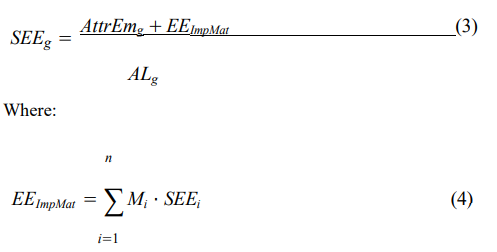
SEEg represents the specific embedded emissions of the final goodg,
AttrEmg corresponds to the total attributed emissions (direct and indirect) of the production process,
ALg is the activity level that is the total quantity of good g produced
EEImpMat accounts for the total embedded emissions of the precursor materials used in production
Mi is the mass of each precursor i consumed
SEEi is the specific embedded emission factor of that precursor
hese are aggregated using formulas aligned with CBAM rules to derive the carbon cost that importers would face under different scenarios.
Monitoring, Reporting, and Verification (MRV) System Assessment
We analyse the CBAM’s MRV framework based on EU guidelines and implementation reports. The structure, data requirements, and reliability of MRV are evaluated in relation to transparency and compliance.
Multi-Criteria Decision Analysis (MCDA)
We apply the Analytic Hierarchy Process (AHP) to evaluate the alignment of five regions—EU, US, China, South America, and Africa—with CBAM principles. The criteria used in the evaluation include environmental performance (GHG intensity, climate targets), circular economy indicators (material reuse, waste policies), and social/labour standards (ILO compliance, just transition policies). Each criterion is weighted and scored based on expert-informed assumptions to derive a regional fairness and vulnerability index.
Synthesis and Policy Implications
The results from these components are integrated into a policy analysis that identifies key gaps, risks, and enabling conditions to ensure CBAM is both environmentally effective and equitable.
Integration of CBAM and EU ETS
The CBAM complements the EU ETS by extending carbon pricing to imported goods from emissions-intensive sectors such as steel, aluminium, cement, fertilisers, electricity, and hydrogen.

Figure 3: EU CBAM Simplified Illustration
While EU ETS covers domestic emissions via a cap-and-trade system, CBAM addresses the risk of carbon leakage by requiring importers to buy CBAM certificates equivalent to the carbon price faced by EU producers. The phasing out of free ETS allowances between 2026 and 2034 marks a transition to a harmonised pricing regime.
The EU Emissions Trading System (EU ETS) and the Carbon Border Adjustment Mechanism (CBAM) are complementary because they work together to strengthen the European Union’s climate policy and protect the integrity of its decarbonization efforts. Here's how and why:
Shared Goal: Carbon Pricing for Emission Reduction
• EU ETS is a cap-and-trade system that puts a price on carbon for domestic industries within the EU.
• CBAM extends equivalent carbon pricing to certain imported goods.
Together, they ensure that all carbon-intensive products—whether made in the EU or imported—face a carbon cost, reinforcing the "polluter pays" principle. CBAM Closes the Carbon Leakage Loophole
• Under the EU ETS, EU industries must buy allowances to emit COâ??, increasing their production costs.
• Without CBAM, imported goods from countries without similar carbon costs would be cheaper, creating a competitive distortion.
• This can cause carbon leakage, where companies relocate production to countries with weaker climate rules.
CBAM corrects this asymmetry by imposing a carbon price on imports from sectors like steel, cement, aluminium, etc., making EU climate policy more globally coherent.
Phasing Out Free Allowances Requires a Border Measure
• In the past, EU ETS granted free allowances to prevent carbon leakage.
• From 2026 onward, the EU is phasing out free allowances for sectors covered by CBAM.
CBAM compensates for this policy shift by creating a border-based carbon pricing tool, maintaining fairness while strengthening decarbonization incentives.
CBAM Supports ETS Market Integrity
• By reducing the risk of leakage, CBAM allows the EU to tighten the EU ETS cap more confidently.
• It stabilizes the ETS market by reducing concerns that stricter ETS rules will simply shift emissions abroad.
Case Study - Carbon Pricing Model and Embedded Emissions
A core strength of CBAM is its methodology for embedded emissions. Direct and indirect emissions are quantified through equations based on raw material inputs, energy use, and precursor material emissions. We illustrate the process through a steel sector example, showing that Chinese steel could face a 49% price increase under CBAM. Such cost adjustments incentivise cleaner production but raise concerns about global supply chain impacts. Numerical Case Study – Steel Sector
A comparative numerical simulation is performed to assess the carbon cost impact on EU versus Chinese steel producers. This includes hypothetical but representative data on emission intensity and carbon prices to evaluate the economic effect of CBAM on international competitiveness.
Case Study: CBAM Application in the Steel Sector – EU vs. China
The steel industry is one of the sectors most affected by the introduction of the Carbon Border Adjustment Mechanism due to its high carbon intensity. To assess the real-world implications of CBAM, this case study compares the cost of producing steel in the European Union under the EU Emissions Trading System (EU ETS) with the cost of imported Chinese steel subject to CBAM fees.
Assume that 1 tonne of EU-produced steel generates 1.85 tCO2 and that the EU ETS allowance price is €80 per tonne of CO2. The embedded carbon cost for domestic steel is then:
1.85 tCO2 × €80/tCO2 = €148 per tonne
For imported Chinese steel, assume a higher emissions intensity of 2.5 tCO2 per tonne of steel, and that China has no effective carbon pricing system in place. Under CBAM, the importer must purchase CBAM certificates equivalent to the EU ETS price:
2.5 tCO2 × €80/tCO2 = €200 per tonne
Thus, Chinese steel becomes €52 more expensive per tonne than EU-produced steel purely due to the carbon content. This price signal is designed to encourage cleaner production practices globally and prevent carbon leakage.
If China introduces an internal carbon price of €30/tCO2, the CBAM charge would be reduced accordingly:
(2.5 tCO2 × €80) - (2.5 tCO2 × €30) = €125 per tonne
This shows that CBAM not only protects EU industries but also incentivizes third countries to adopt their own climate pricing mechanisms to remain competitive.
Monitoring, Reporting and Verification (MRV) System
CBAM's credibility hinges on its MRV framework. From 2023– 2025, importers report emissions data, transitioning in 2026 to mandatory purchase of CBAM certificates. Our evaluation finds that while MRV enables transparency, reliance on default values in the absence of primary data may penalise low-emission producers in less-developed countries. Therefore, a robust verification infrastructure is critical to prevent evasion and ensure fairness. This is a critical component of the CBAM’s effectiveness. The MRV framework is designed to ensure the credibility, comparability, and transparency of embedded emissions data associated with imported products. This system enables the EU to enforce carbon pricing at the border with a level of rigour comparable to that applied under the EU Emissions Trading System (EU ETS).
The MRV system under CBAM is composed of three interdependent pillars.
Monitoring, requires importers to collect detailed data on emissions related to production processes of goods exported to the EU,which includes fuel types, energy usage, raw material inputs, and technology configurations. Monitoring boundaries must be clearly defined to distinguish direct and indirect emissions.
Reporting, importers must submit quarterly and annual reports during the transitional phase (2023-2025) and from 2026 onwards, must also include verified emissions data and CBAM certificate purchases. Reports must comply with formats approved by the European Commission.
Verification, emissions data must be independently verified by accredited third-party verifiers to ensure consistency with EU MRV standards. Verification follows a tiered risk-based approach aligned with ISO 14064 and Accreditation and Verification Regulation (AVR) standards. To these three pillars, transparency and Compliance considerations must be added.The MRV system enhances regulatory transparency by ensuring that carbon content is consistently accounted for across jurisdictions. It also deters evasion and manipulation by requiring detailed data and third- party validation. Penalties for misreporting create additional compliance incentives.
Link to the United Nations Resource Management System (UNRMS) :
The CBAM MRV framework aligns with broader global governance trends reflected in the United Nations Resource Management System (UNRMS), which promotes a structured, transparent, and integrated approach to resource management and sustainability reporting. UNRMS emphasizes:
Lifecycle-based emissions accounting
Cross-border harmonization of reporting systems
Interoperability of MRV infrastructure for traceable supply chains Just transition and responsible resource governance The alignment between CBAM and UNRMS can be observed in the mutual prioritization of data standardization, auditability, and science-based reporting. While CBAM enforces accountability at the border, UNRMS provides a conceptual and operational foundation for resource-producing countries to improve their internal monitoring and contribute to internationally recognized emissions disclosures. This linkage is essential to reduce friction between developed and developing nations and enhance the legitimacy of border carbon adjustments under multilateral frameworks. As CBAM expands, integration with UNRMS- like systems could facilitate harmonized digital MRV platforms, capacity-building in the Global South, and interoperability between carbon markets—key elements to ensure that CBAM does not become a barrier, but rather a catalyst for cooperative decarbonization.
Multi-criteria Regional Comparison
Using Analytic Hierarchy Process (AHP), we assess the alignment of five regions—EU, US, China, South America, and Africa— with CBAM’s core values: environmental performance, circular economy practices, and social standards.
• EU: Highest alignment across all criteria.
• US and China: Moderate environmental alignment but lacking in circularity and labour standards.
• South America and Africa: Most vulnerable to CBAM, with low environmental policy coverage, limited circularity, and fragile social frameworks.
This disparity underscores the need for CBAM to be coupled with supportive measures—such as climate finance, technology transfer, and diplomatic engagement—especially for the Global South.
Policy Implications and Recommendations
• Fairness Mechanisms: Incorporate differentiated responsibilities and recognize existing efforts by developing countries.
• Transparency: Enhance MRV infrastructure and integrate AI- based tracking tools.
• Complementary Instruments: Use the Just Transition Fund and international cooperation (e.g., UNFCCC Article 6) to mitigate social and economic disruption.
• Sectoral Expansion: CBAM’s future should consider more complex products and indirect emissions to avoid loopholes.
Conclusion and Further Work
CBAM represents a transformative shift in global carbon pricing and trade policy. It promotes fairness by ensuring that imported products reflect their true carbon cost, creating a level playing field for EU producers operating under strict climate regulations. By embedding a price signal in international trade, CBAM also incentivizes cleaner industrial practices abroad.
However, significant challenges remain—particularly in ensuring that the mechanism is equitable to developing countries with limited resources to decarbonize. Without complementary support measures, CBAM risks exacerbating global trade imbalances and delaying the just transition in regions that are most vulnerable to climate and economic disruption.
Further work is required to integrate CBAM with global frameworks like the United Nations Resource Management System (UNRMS), which offers structured guidance on sustainable resource governance, standardized emissions accounting, and just transition principles. Linking CBAM with UNRMS can enable greater transparency, promote interoperable digital MRV infrastructures, and support capacity-building in countries affected by border carbon adjustments. Such alignment can also help facilitate trust and cooperation in the evolution of carbon clubs and international emissions trading systems.
Future research should explore the digitalization of CBAM through blockchain or AI-based MRV tools, the legal and WTO dimensions of CBAM-UNRMS interoperability, and empirical evaluations of CBAM’s economic and environmental impacts over time. Ensuring that CBAM becomes a catalyst for inclusive decarbonization, rather than a trade barrier, must remain at the heart of its implementation strategy.
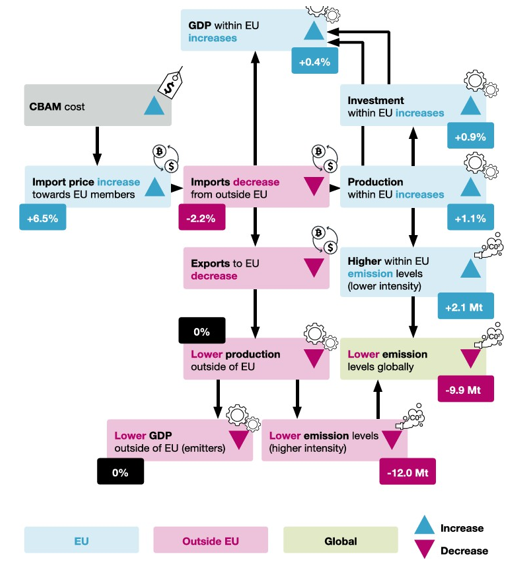
Figure 4: Projected Impacts of CBAM by 2050
The mechanism’s success depends on credible MRV, inclusive policy design, and flexibility in supporting global climate convergence [1-7].
References
- Erbach, G., & Jensen, L. (2022). Fit for 55 package. EPRS,European Parliament.
- Mehling, M. A., Van Asselt, H., Das, K., Droege, S., & Verkuijl, C. (2019). Designing border carbon adjustments for enhanced climate action. American Journal of International Law, 113(3), 433-481.
- Draghi, M. (2024). Report on Competitiveness and Climate Policy.
- World Trade Organization. CBAM compatibility discussions.
- Leite, A. B. G. T. (2025). Master Thesis. FEUP.
- Leite, A. B. G. T. (2025). Carbon Border Adjustment Mechanism as a guarantee of fairness in energy projects.
- United Nations Resource Management System Principles and Requirements, United Nations Publications.