

Plant Biology Soil Health Journal(PBSHJ)
ISSN: 2996-2609 | DOI: 10.33140/PBSHJ


Research Article - (2023) Volume 1, Issue 1
Effects of Malting on Physicochemical Composition of Maize and Sorghum
Received Date: Jul 10, 2023 / Accepted Date: Aug 02, 2023 / Published Date: Aug 17, 2023
Copyright: ©©2023 Otitoju Lawrence Kunle, et al. This is an open-access article distributed under the terms of the Creative Commons Attribution License, which permits unrestricted use, distribution, and reproduction in any medium, provided the original author and source are credited.
Citation: Kunle, O. L., Alamuoye, N. O., Ajatta, M. A., Ogundari, A. A. (2023). Effects of Malting on Physicochemical Composition of Maize and Sorghum. J Plant Biology Soil Health, 1(1), 27-33.
Abstract
Investigations were done into the physicochemical composition of sorghum and maize. Before being dried in an air oven for five days at temperatures ranging from 40 to 500oC for an average of eight hours each day, the cereal grains were germinated for 18 hours. Fine flours were produced from the dried samples. The beverage samples were assessed for pH, total soluble solids, color, specific gravity, and mineral content, while the flours were examined for pH, total soluble solids, color, and titratable acidity. Germination caused the nutritional content to increase. Malted sorghum had the highest fat content (after 72 hours), at 16.45%, whereas malted maize had the lowest, at 7.18%. (48 hours). Malted maize had the maximum value (72 hours) of 300% and the lowest value (72 hours) of 70%. Anti-nutritional components in germinated samples decreased significantly as compared to control samples at (p<0.05). The mineral content of malted samples rose significantly as compared to the control at p<0.05. Calcium levels were highest in malted sorghum (13.68 mg/100g) before being cooked for 50 minutes, the germinated flours were well mixed. Sensory and microbio- logical testing were performed on the beverages. After germination, the samples' acceptability to the senses enhanced. The A0 (88.13g) and A5 (Equal weight blend of cooked maize and sorghum flour) seeds had the highest and lowest total soluble solids, respectively, after 24 hours of germination at Brix level 25. (80.00g).The pH was maximum in the A0 (Equal weight mixture (maize and sorghum flour cooked) of 24 hours germination at Brix level 20 (4.91) and lowest in the C3 (Equal weight mixture (maize and sorghum flour cooked) of 72 hours germination at Brix level 23. (4.13).
Keywords
Physicochemical, Germination, Acceptability, Malted, Anti-Nutritional.
Introduction
Malting is a historic activity in developing countries, and is used to produce both alcoholic and non-alcoholic beverages. In order to increase the production of hydrolytic enzymes that are lacking in raw seeds, it entails germination and drying of grain seeds [1, 2]. Amylase and -amylase activity are created when grains are malted (sprouted) [3]. Observed that the activity of the enzyme amylase significantly increased during the malting of sorghum and maize. The starch granules are destroyed by these enzymes, which reduces their capacity to bind water. The most effective and affordable method for lowering the high viscoelastic prop¬erties of cereal-based gruels appears to be malting [3]. Weaning foods are not frequently made using malting. The effects of cere¬al malting on non-starchy polysaccharides such as phenolics are also discussed [4, 5].
Among the cereals used to produce drinks are sorghum and maize In Africa, Asia, and South America, sorghum is one of the grains that is most commonly consumed. Sorghum can be pre-pared in a number of ways for human consumption and is some¬times referred to as guinea corn in Nigeria. Another well-liked beverage is sorghum beer, which is available in two varieties: burukutu, an alcoholic gruel, and pito, which lacks sediment [6].
In many different ways, maize is a significant supplier of starch. It is broken down or pounded, and the meal or flour that is pro¬duced is combined with water to create a starchy mash. It can be thinned to make a drink or gruel by being diluted. It is anticipat¬ed that malting these grains will enhance their nutritional value and increase the bioavailability and digestibility of their divalent minerals and proteins. As a result, current research focuses on enhancing these grains' malting capabilities.
Materials and Methods
Sourcing of cereals used: The sorghum (Sorghum bicolor) and maize (Zea mays) used in this study were obtained from Oja-Oba market in Ado Ekiti, Ekiti State, and transported in poly-ethylene containers to the Food Science and Technology Depart¬ment's laboratory at Bamidele Olumilua University of Education Science and Technology Ikere Ekiti. All samples were kept in a frigid environment for storage.
Methods
Sorghum and maize seeds were soaked in water for 18 hours each. The sloping water was drained, and the grains were germi-nated in sterile weaved baskets under controlled conditions. The grains were wetted twice daily to keep the jute sack moist and allow for ideal seed germination. The grains were germinated for 24, 48, and 72 hours prior to drying for five days in an air oven (40-50oC). The vegetative portion of the seed was delicate-ly removed by rubbing the dry grains between the palms. After that, the seeds were turned into fine flour.
Determination of moisture content
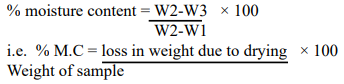
The moisture content was determined as described by [7]. Clean Petri plates were weighed three times using a meter weighing balance and their weights were recorded for each sample (W1). The material, which weighed about 5 grams, was put into the Petri dishes (W2). After being weighed, the samples in the plates were evenly distributed and put in desiccators to prevent envi-ronmental moisture absorption. After that, the plates contain-ing the samples were moved from the desiccators to a forced air oven and dried there for three hours at 105°C. The dishes were then placed back in the desiccators, given time to cool, and weighed once more with the sample. The plates were then put in the oven for 30 minutes at 105°C, reweighed, and then cooled in desiccators before being reweighed. The method was repeat-ed until each sample's weight remained constant. W3). Moisture content was completed on wet weight basis.
Determination of Crude Fibre Content
Crude fibre is the inorganic waste left after regular food pro-cessing. The approach was employed. Each flour sample was weighed at 2g. (W1) [8]. The samples were defatted, transferred to 200ml conical flasks with water, and boiled with 1.25 per-cent H2SO4. Boiling was maintained for 30 minutes, rotating the flask every 5 minutes to mix the contents, remove particles from the flask surface and minimize foaming and spilling. After a minute, the acid mixes were filtered using muslin cloth in a prepared funnel.
The suction was adjusted so that filtration of 200cm3 took 10 minutes. To remove acid, the insoluble materials was rinsed with boiling distilled water. Using 1.25% NAOH, it was rinsed once with 10% HCl, four times with distilled, and finally with etha-nol. The treated sample was then baked for 12 hours at 105°C, cooled, and weighed (W2).
Determination of Fat Content
The soxhlet apparatus was used to measure crude fat content as described by [7]. The material was weighed in a filter paper thimble and placed in a soxhlet extractor with n-Hexane as the extraction solvent. The n-Hexane was poured into a flask on the mantle. The flask was cooled and unplugged after three and a half hours of extraction. The sample thimble was removed and dried to weight in an air oven at 100oC. The difference in weight of the thimble before and after drying was used to remove the fat. The % fat was then computed to get the fat.

Where W1=weight of the thimble
W2=weight of thimble and sample
W3= weight of defatted sample and thimble
The determination was carried out in duplicate.
Determination of Crude Protein
The crude protein content was determined using the mi¬cro-Kjeldah method [7]. Digestion, distillation, and titration were involved. 50ml Kjeldah digestion flask with 0.5g sample 10ml concentrated H2SO4 and a selenium catalyst tablet were added to the flask. The solution was heated to 105oC in a fume cupboard on a block digester. The flask was rotated till the di¬gest was cleared. The digest was cooled before being placed to a 100ml standard flask and delivered to the distillation equipment. Submerged in an alcohol 100ml flask containing 5ml 2% boric acid and 5 drops of mixed indicator (0.16g methyl red + 0.0883g bromo cresol green) was the condenser. 15ml of 40% NaOH was added to the digest in the reaction vessel via the funnel, making it alkaline. All steam generator outlets were closed to prevent suction back into the reaction vessel. The condensing unit's tip was dipped into the receiving flask and distillation continued un¬til 50ml of distillate was recovered. Titrating with 0.01M HCl, the distillate turned pink. To calculate the sample's total nitrogen content,
% crude protein = % N × 6.25(protein factor).
Where N=Nitrogen content (end point).
Determination of Carbohydrate Content
The by difference method was used to determine the carbohy-drate content of the flour samples. This entails calculating the available carbohydrate content after estimating all other frac-tions with a rough analysis. % carbohydrate = 100-(% Ash + % Protein + % Fat + % Fibre).
Determination of Functional Properties
The malted and unmalted maize and sorghum flours were test-ed for water absorption, oil absorption, and emulsion capacity (EC).
Determination of Water Absorption Capacity (WAC)
The procedure of was employed. 10ml water was added to each flour sample and mixed for 5 minutes with a magnetic stirrer. The suspension was centrifuged for 30 minutes at 3,500 rpm. The obtained supernatant was measured in a 10ml cylinder. Wa¬ter density was considered to be 1g/ml. The water absorbed is the difference between the initial water utilized and the centri¬fuged supernatant volume.
Determination of Oil Absorption Capacity (OAC) Technique was employed. Instead of water, executive chef oil was used. We mixed the flour sample (1g mixes in 10ml) at 1,000rpm for 5 minutes, then centrifuged it at 3,500rpm for 30 minutes. The supernatant and separated oil were measured in a 10ml measuring cylinder. The sample absorbed oil based on the volume differential. The oil absorbed was represented as a % /g.
Determination of Microbial Analysis of Beverage
Sensory Evaluation on Beverage: The beverage drink was sub-jected to sensory evaluation as specified by [9]. We employed a nine-point hedonic scale. The germinated grains of 24, 48, and 72-hour beverages were among the samples. The beverage drink samples were judged on their color, appearance, scent, and taste. The sensory evaluation results were analyzed using ANOVA, mean separate and LSD computed using the turkey test [9].
Determination of Anti Nutritional Factors
Determination of Tannin: In a 500ml sample bottle, about 0.2g of finely ground sample was weighed. A total of 10 mL of 70% aqueous acetone was added and properly covered. The bottles were shaken for 2 hours at 300°C in an ice bath shaker. After centrifuging each solution, the supernatant was frozen. Pipette 0.2cm3 of each solution into the test tubes, followed by 0.8cm3 of distilled water. Standard tannic acid solutions were made from a 0.5mg/ml stock and distilled water was used to make the solution up to 1ml.
Both the sample and the standard received 0.5cm3 folic ciocal-teau reagent, followed by 2.5ml of 20% Na2CO3. The solution was vortexed and incubated for 40 minutes at room temperature, with the absorbance measured at 725nm against a reagent blank concentration of the same solution from a standard tannic acid curve.
Determination of Colour
A transparent petri plate was used to hold the beverage sam-ples. The color meter's sensor was directed directly towards the ground nibs, with special attention paid to eliminate interference from ambient light sources. Instrumentally, the color of the sam-ples was determined using an atomic absorption spectrophotom-eter, with measurements performed at 425 wavelength.
Method of Data Analysis
Data collected from the study were subjected to analysis of vari-ance (ANOVA) as prescribed by Snedecor and Cochram,(1976). Difference among means were separated using Duncan,s multi¬ple range test; significances were accepted at 5% level (P≥0.05). The statistical software used was SAS 9.0(2008) for windows.
Results
Proximate Composition: The proximate composition of unma¬lted (control) and malted grains is shown in Table 1. According to the findings of this experiment, the moisture content of maize flour (control) decreases as compared to the malted sample. The moisture content of all of the samples varied significantly (p<0.05). The moisture level of malted maize decreased from 6.22% after 24 hours to 5.53% after 48 hours (72hours). Un¬malted sorghum, as compared to malted sorghum, has a lower moisture level. The product's shelf life will be extended as a re¬sult of the lower water activity. The moisture content of malted sorghum decreased from 5.19 percent (24 hours) to 3.10 percent (72 hours), while the moisture content of malted (control) maize increased. At a significant level of p<0.05
Table 1: Proximate Analysis of Malted and Unmalted Flour Samples
|
SAMPLE TMC( %) |
TAC(%) |
TCF(%) |
TFC(%) |
TCP (%) |
TC (%) |
|
M 24hr 6.22±0.001d |
0.93±0.000f |
1.38±0.003e |
11.38±0.002c |
19.13±0.006b |
60.49±0.005a |
|
M48hr |
5.86±0.001d |
1.50±0.003f |
1.73±0.000e |
7.18±0.001c |
19.31±0.002b |
|
M72hr |
5.48±0.001d |
0.98±0.000f |
1.55±0.002e |
9.34±0.001c |
22.61±0.002b |
|
S24hr |
5.19±0.001d |
0.90±0.002f |
1.00±0.000e |
10.94±0.001c |
14.70±0.002b |
|
S48hr |
3.61±0.008d |
1.69±0.000f |
1.70±0.003e |
11.42±0.001c |
11.77±0.002b |
|
S72hr |
3.10±0.008d |
1.67±0.003e |
1.63±0.003f |
16.45±0.005c |
17.96±0.002b |
|
Control |
|
|
|
|
|
|
MAIZE 3.15±0.003d |
0.84±0.001f |
1.28±0.001e |
3.57±0.003c |
10.26±0.003b |
80.9±0.006a |
|
SORGHUM 3.08±0.008c3.67±0.0 02d2.12±0.002f |
2.75±0.002e |
10.10±0.004b |
72.18 ±0.005a |
16.45±0.005c |
46.45±0.005c |
TMC= Total Moisture Content, TAC= Total Ash Content, TCF= Total Crude Fibre, TFC= Total Fat Content, TCP= total Crude Protein, TC= Total Carbohydrates.
The fat content of unmalted maize flour (Control) is lower than that of malted maize flours. Malted maize fell from 11.38 per¬cent (24 hours) to 9.34 percent (72 hours) when compared to malted flours, but unmalted sorghum (Control) increased. When compared to the malted flour, the germinated sorghum grew from 10.94 percent (24 hours) to 16.45 percent (72 hours)
Table 2: Funtional Properties of Malted and Nmalted FLOUR
|
Sample: |
WAC(%) |
OAC(%g) |
BD(g/ml) |
EP(%) |
LG(%) |
D(%) |
|
S1 |
210.00±0.20a |
200.00±0.20b |
0.81±0.004f |
50.52±0.05d |
6.00±0.001e |
74.50±0.002c |
|
S2 |
310.00±0.30a |
200.00±0.02b |
0.86±0.004f |
50.66±0.05d |
8.00±0.002e |
78.00±0.001c |
|
S3 |
200.00±0.20b |
210.00±0.20a |
0.95±0.004f |
53.20±0.05d |
14.00±0.003e |
75.00±0.004c |
|
Ma1 |
210.00±0.20a |
100.00±0.10b |
0.78±0.005f |
50.26±0.05d |
14.00±0.003e |
72.90±0.003c |
|
Ma2 |
200.00±0.20b |
300.00±0.30a |
0.96±0.006f |
51.49±0.05d |
12.00±0.003e |
71.50±0.003c |
|
Ma3 |
220.00±0.20a |
10.00±0.01e |
0.80±0.006f |
51.20±0.05c |
10.00±0.002d |
70.90±0.005b |
|
Control |
|
|
|
|
|
|
|
Maize |
80.00±0.004b |
90.00±0.004a |
0.70±0.003f |
50.50±0.006d |
6.00±0.001e |
73.20±0.003c |
|
Sorghum |
161.00±0.005b |
200.00±0.006a |
0.80±0.004f |
58.00±0.008d |
8.00±0.001e |
73.00±0.003c |
WAC= Water absorption Capacity, OAC= Oil absorption Capacity, BD= Bulk Density, EP= Emulsifying Property, LG= Least Ge-lation, D= Dispensability.
The malted maize flours have higher dispensability values than the unmalted (control), whereas the unmalted sorghum flours have a higher dispensability value than the malted sorghum flours of 48 and 72 hours.
Microbial Analysis of Beverage
Table 3 shows the results of the microbiological assessment of the beverages. The total viable count of microorganisms in the beverage drink of 24 hours germinated maize and sorghum (all mixed together at the same proportion) was 3.0102 cfu/ml, 2.0102 cfu/ml for beverage drink of 48 hours germination, and 1.0102 cfu/ml for beverage drink of 72 hours germination, ac-cording to the results. The levels of Escherichia coli during those hours are nil, respectively. The total viable count of microor-ganisms was found to be higher in beverage drinks made from germinated cereal after 24 hours than after 48 and 72 hours of germination. This could be due to the shorter germination period compared to the rest of the plants, which have a longer germina¬tion period. The low microbial content in germinated cereals af¬ter 48 and 72 hours may also be due to longer germination times.
Table 3: Microbial Quality of Beverage

• A0 =Equal weight mixture (maize and sorghum flour cooked) of 24 hours germination at Brix level 20.
• B0 = Equal weight mixture (maize and sorghum flour cooked) of 48 hours germination at Brix level 20.
• C0 = Equal weight mixture (maize and sorghum flour cooked) of 72hours germination at Brix level 20.
Sensory Evaluation of Beverage
According to table 4, the sensory evaluation of the beverage revealed that in terms of color, samples A3, A5, B3, B5, and C3 are all significant, but sample A3 has the highest value at p<0.05. Sample C0 has the highest level of significant but A0 has the highest value at p<0.05 in terms of taste. A0, B0, B3, B5, C0, C3, C5 are in the same level of significant but the highest values are A0 and C0 at p<0.05 in terms of aroma. Samples A0 and B0, A5, C0 and C5, A3, B3, B5 are in the same level of sig¬nificant but sample A0 has the highest value at p<0.05 in terms of sweetness. Sample C0 has the highest level of significant but A0 has the highest value at p<0.05 in terms of acceptability.
Table 4: Sensory Evaluation of Beverage
|
Samples |
Brix |
Colour |
Taste |
Aroma |
Sweetness |
Overall Acceptability |
|
A0 |
20 |
6.20±0.11b |
6.33±0.01a |
6.13±0.02e |
6.87±0.03a |
6.27±0.03c |
|
A3 |
23 |
7.07±0.03a |
5.73±0.01C |
5.13±0.02d |
5.73±0.01C |
6.13±0.02b |
|
A5 |
25 |
6.33±0.02b |
5.40±0.01b |
4.53±0.01cd |
5.40±0.02b |
5.33±0.01c |
|
B0 |
20 |
5.27±0.03de |
5.60±0.01b |
4.87±0.01e |
5.67±0.01a |
5.00±0.01d |
|
B3 |
23 |
6.07±0.02bc |
5.73±0.01b |
5.07±0.01e |
5.60±0.02c |
5.53±0.01d |
|
B5 |
25 |
5.87±0.01c |
5.67±0.001c |
5.87±0.001a |
5.67±0.01c |
5.80±0.01b |
|
C0 |
20 |
5.47±0.03d |
6.13±0.001b |
6.13±0.02a |
6.07±0.03b |
6.13±0.02a |
|
C3 |
23 |
7.00±0.03a |
4.87±0.001d |
5.33±0.01c |
4.60±0.01e |
5.40±0.01b |
|
C5 |
25 |
6.07±0.02bc |
5.47±0.001d |
5.53±0.00c |
5.60±0.01b |
5.53±0.01c |
• A0 =Equal weight mixture (maize and sorghum flour cooked) of 24 hours germination at Brix level 20.
• B0 = Equal weight mixture (maize and sorghum flour cooked) of 48 hours germination at Brix level 20.
• C0 = Equal weight mixture (maize and sorghum flour cooked) of 72hours germination at Brix level 20.
• A3 =Equal weight mixture (maize and sorghum flour cooked) of 24 hours germination at Brix level 23.
• B3 = Equal weight mixture (maize and sorghum flour cooked) of 48 hours germination at Brix level 23.
• C3 = Equal weight mixture (maize and sorghum flour cooked) of 72hours germination at Brix level 23.
• A5 =Equal weight mixture (maize and sorghum flour cooked) of 24 hours germination at Brix level 25.
• B5 = Equal weight mixture (maize and sorghum flour cooked) of 48 hours germination at Brix level 25.
• C5 = Equal weight mixture (maize and sorghum flour cooked) of 72hours germination at Brix level 25.
Anti Nutritional Factors
Antinutritional factors are thought to slow growth and reduce the digestion and absorption of key dietary nutrients. The amounts of oxalate, tannin, and phytate in the flour samples were con¬siderably reduced (p<0.05) by the subsequent processing phase. Oxalic acids and their salts are harmful to human nutrition and health, as they reduce calcium absorption and promote the pro¬duction of kidney stones. In some persons, high oxalate diets can raise the risk of renal calcium oxalate development [10]. Calci¬um oxalates stones make up the majority of urinary stones in people [11]. The lowest oxalate concentration (0.09 mg/g) was found in malted sorghum aged 48 and 72 hours, and the highest (6.39 mg/g) in malted flour aged 24 hours.
Table 5: Antinutritional Factors of Malted and Unmalted Samples
• Category 1 = Maize and Sorghum samples at 24hrs
• Category 2 = Maize and Sorghum sample at 48hrs
• Category 3 = Maize and Sorghum sample at 7hrs
• Category 4 = Maize and Sorghum sample as Control.
Mineral Analysis
Malted cereals contain a large number of minerals, according to this study; for example, all minerals of un malted flours, ex¬cept iron, were considerably greater (p>0.05) than the un malted samples. In malted samples, the ca/p ratio was much greater, whereas the Fe/Mn/Na ratios were the lowest. According to the nutritional benefits, the malted samples would be a good supply of calcium and phosphorus for the construction of bone and teeth in children, as well as preventing osteoporosis in adults. Based on these findings, the samples might be integrated into weaning food or utilized as a supplement to adult diets. Malted flours with low Na ratios, especially malted maize flours aged 24 and 72 hours, could be utilized as a supplement to a communal diet to prevent or treat hypertension.
Physicochemical Analysis on Beverage
A 24-hour sample of malted beverage with a Brix level of 20 has a pH of 4.19, which is lower than Brix levels 23 (pH4.76) and 25 Brix (pH4.76) (pH4.49). A 48-hour malted beverage with a Brix level of 23 has a pH of 4.07, which is lower than Brix lev-els of 20 (pH4.71) and 25 (pH4.71) (pH4.91). A 72-hour malted beverage with a Brix level of 23 has a lower pH of 4.13 than a beverage with a Brix level of 25 (PH 4.67) or 20 (PH 4.91). As a result of this finding, beverages with the lowest pH may increase the shelf life of a blend of sorghum, maize, and millet beverages by inhibiting microbial development.
Table 6: PHYSICOCHEMICAL ANALYSIS ON BEVERAGE SAMPLES

• Category 1 = Maize and Sorghum samples at 24hrs
• Category 2 = Maize and Sorghum sample at 48hrs
• Category 3 = Maize and Sorghum sample at 7hrs
• Category 4 = Maize and Sorghum sample as Control.
Discussion
The most significant cereal grain in tropical Africa is maize (Zea mays), which provides around 55% of the energy needed for a big population to survive and have access to food [12]. Many tropical nations depend heavily on the crop rice (Oriza sativa) [13]. Over 80% of people in Sub-Saharan Africa get most of their nourishment from porridges made from these grains (maize and sorghum) [12]. Some of these regional food crops were re-cently included in food composition data for West Africa thanks to several study efforts conducted in Nigeria over the past ten years. Maize and sorghum are common cereal crops that receive little use because of phytate and polyphenolic acids. The nutri-tional value, divalent mineral, and protein bioavailability/digest-ibility of these grains should all be improved by malting.
Malting is a common practice in developing countries that pro-duces both alcoholic and nonalcoholic beverages. To develop hydrolytic enzymes that are lacking in raw seed, it needs germi-nation and drying of cereal seeds [1, 2]. Amylase and -amylase activity is formed during grain malting (sprouting) [3]. Observed that malting sorghum, millet, and maize increased amylase ac-tivity. These enzymes degrade starch granules' capacity to bind water. Malting appears to be the most cost-effective method for lowering the viscosity of cereal-based gruels [3]. Malting is not widely used in weaning foods. There is some data on the effects of cereal malting on non-starchy polysaccharides such phenolics [4, 5].
(p<0.05) in table 1 between malted and unmalted samples. The ash content of all malted samples declined over time (p=0.05). Ashes leaching into soaking water could create this. Similarly, [14] found (reduction in percentage ash). Moreover, soaking sorghum lowered ash content.
Percentage The highest crude fibre content was found in 72-hour malted sorghum. The malted samples and control samples all differed significantly (p<0.05). Unmalted maize (Control) has less crude fiber than malted flour. Malted maize flour grew from 1.38 percent (24 hours) to 1.55 percent (72 hours), whereas un-malted sorghum increased higher. The malted sorghum flours in¬creased from 1.00 percent (24 hours) to 1.63 percent (72 hours), the malted and unmalted samples did not differ (p>0.05). Sor¬ghum has the highest value (27.33%) and the lowest (48 hours) (11.77 percent) Unmalted maize flour (Control) has less crude protein than malted maize flour. Malted maize increased from 19.13 percent to 19.31 percent after 72 hours, but unmalted sor¬ghum flour (Control) decreased. Malted sorghum flour increased from 14.70% to 17.96% in 24 hours.
Non-malted cereal flours were higher in carbs than malted cere-al flours Malted maize carbohydrate content reduces from 60% to 59.99% after 24 hours (72 hours). The malted sorghum flour grew from 67.21 percent to 73.40 percent within 24 hours (72 hours). Malting lowered the carbohydrate content of malted ce¬real flours compared to unmalted grains, possibly because some endosperm starch is eaten to provide energy during germination.
The drop in energy will affect foods manufactured from germi-nated cereal flours. Tannin concentrations in malted cereal flours were found to be between (0.02mg/g-0.04mg/g) lower than in unmalted flours. Antinutritional components in malted flour di¬minish with increasing germination time. The emulsifying prop¬erties of grain protein are also affected by factors like heating temperature and emulsification processes. & McWaters) Unma¬lted maize flour has higher qualities than malted maize flour. Its value is higher than malted sorghum flours. Also, as is widely known, Escherichia coli was not discovered in any of the germi¬nated cereals. The coliform group E. coli suggests faecal contact.
This could be due to processing water and handling. The max-imum microbial load permitted in flour is 106 per gram So, de-pending on the microbiological condition, the shelf life of differ-ent germinated flours used to manufacture beverage drink will be longer.
Phytic acid chelates minerals and proteins, reducing trace min-eral bioavailability and protein digestibility [15]. Because phytic acid hinders iron absorption, it contributes to the high preva-lence of iron insufficiency in babies in developing nations. The decrease in phytate level could be attributed to the rise in miner¬al concentration observed during malting. Soaking and malting reduced the malted flour samples significantly compared to the control. There are 25.54mg per gram and 14.01. Similarly, soak¬ing and malting cereal seeds reduces phytate levels compared to the control.
Conclusion
This study found that malting reduced the anti-nutritional ele-ments in cereal grains, improving the beverage's digestibility when ingested. A sorghum and maize beverage drink's physical, chemical, and sensory characteristics were studied in the lab. Sample A0 was picked over the other beverage drinks because it received the highest overall acceptance rating from the tast-ing panel. Due to their low microbial load, sorghum and maize drinking drinks may be shelf stable.
References
- Dewar, J., Taylor, J. R. N., & Berjak, P. (1997). Determination of improved steeping conditions for sorghum malting. Journal of Cereal Science, 26(1), 129-136.
- Latha, G. M., & Muralikrishna, G. (2009). Effect of finger millet (Eleusine coracana, Indaf-15) malt esterases on the functional characteristics of non-starch polysaccharides. Food hydrocolloids, 23(3), 1007-1014.
- Traoré, T., Mouquet, C., Icard-Vernière, C., Traore, A. S., &Trèche, S. (2004). Changes in nutrient composition, phytate and cyanide contents and α-amylase activity during cereal malting in small production units in Ouagadougou (Burkina Faso). Food chemistry, 88(1), 105-114.
- Rao, R. S. P., & Muralikrishna, G. (2007). Structural characteristics of water-soluble feruloyl arabinoxylans from rice (Oryza sativa) and ragi (finger millet, Eleusine coracana): Variations upon malting. Food chemistry, 104(3), 1160-1170.
- Chung, H. J., Jang, S. H., Cho, H. Y., & Lim, S. T. (2009).Effects of steeping and anaerobic treatment on GABA (γ-aminobutyric acid) content in germinated waxy hull-less barley. LWT-Food Science and Technology, 42(10), 1712-1716.
- Ihekoronye, A. I., & Ngoddy, P. O. (1985). Integrated food science and technology for the tropics. Macmillan.
- AOAC: Washington, DC, 1990. Albert, W.J., Mustaka,G.G. and McGee J. (1996).Utilisation of.sorghum, Cereal chemistry and millet.pp:400-407
- Kirk, S., & Sawyer, R. (1991). Pearson's composition and analysis of foods (No. Ed. 9). Longman Group Ltd.
- Larmond, E. (1977). Laboratory methods for sensory evaluation of food. Research Branch, Canada Dept. of Agriculture.
- Libert, B., & Franceschi, V. R. (1987). Oxalate in crop plants. Journal of Agricultural and Food Chemistry, 35(6), 926-938.
- Hodgkinson, A. (1977). Oxalic acid in biology and medicine. London—New York.
- Nout, M. R. (2009). Rich nutrition from the poorest–Ce-real fermentations in Africa and Asia. Food Microbiology, 26(7), 685-692.
- Ihekoronye, A. I., & Ngoddy, P. O. (1985). Integrated food science and technology for the tropics. Macmillan.
- Enujiugha, V. N. (2006). Supplementation of ogi, a maize-based infant weaning food, with African oil bean seed (Pen-taclethra macrophylla Benth). International Journal of Post-harvest Technology and Innovation, 1(2), 202-211.
- Ryden, P., & Selvendran, R. R. (1993). Phytic acid: properties and determination. Encyclopedia of food science, food technology and nutrition, 3582-3587.
- Fagbemi, T. N. (1999). Effect of blanching and ripening on functional properties of plantain (Musa aab) flour. Plant Foods for Human Nutrition, 54, 261-269.
- Gomez, M. H., & Aguilera, J. M. (1983). Changes in the starch fraction during extrusionâ?cooking of corn. Journal of Food Science, 48(2), 378-381.
- Leonard, L., and Martin (1977). Cereal crops 3-7,740-769.
- Bsc, S. N., & Bsc, G. S. (1999). Oxalate content of foods and its effect on humans. Asia Pacific journal of clinical nutrition, 8(1), 64-74.
- Rao, R. S. P., & Muralikrishna, G. (2006). Water soluble feruloyl arabinoxylans from rice and ragi: Changes upon malting and their consequence on antioxidant activity. Phy-tochemistry, 67(1), 91-99.