

Journal of Novel Physiotherapies Research Reviews(JNP)
ISSN: 2771-7739 | DOI: 10.33140/JNP

Research Article - (2025) Volume 5, Issue 1
Effectiveness of Specific Vs Non-Specific Posture Correction Exercises in The Management of Postural Issues Among School Students
2Professor & HOD, Department of Physiotherapy, Career Point University, Kota, India
3Assistant Professor, Department of Physiotherapy University of Science & Technology, Meghalaya, India
Received Date: Oct 15, 2025 / Accepted Date: Nov 04, 2025 / Published Date: Nov 28, 2025
Copyright: ©©2025 Gauri Khandelwal, et al. This is an open-access article distributed under the terms of the Creative Commons Attribution License which permits unrestricted use, distribution, and reproduction in any medium, provided the original author and source are credited.
Citation: Khandelwal, G., Yaduvanshi, P., Deka, D. (2025). Effectiveness of Specific Vs Non-Specific Posture Correction Exercises in The Management of Postural Issues Among School Students. J Nov Psy, 5(1), 01-05.
Abstract
Introduction: Postural issues among school students are a growing concern due to prolonged sedentary behaviors and poor ergonomics. Addressing these issues through exercise interventions may prevent long-term complications.
Aim and Objective: To compare the effectiveness of specific vs non-specific posture correction exercises in the management of postural issues among school students.
Need of the study: Due to prolonged sitting and poor posture habits among school students, postural issues are becoming increasingly common. There is a need to determine whether specific posture correction exercises are more effective than non-specific ones, especially when combined with NMES, to improve posture and reduce pain efficiently.
Methodology: A total of 70 subjects were screened for eligibility, and 60 were recruited based on inclusion criteria. Participants were divided into two groups: group A (Specific exercises) and group B (Non-specific exercises) both groups follow conventional treatment Neuromuscular Electrical Stimulation (NMES), outcome measures were included the Visual Analogue Scale (VAS) & REEDCO Posture Assessment Tool, assessed pre and post intervention.
Result: Both groups showed significant pain reduction (p < 0.001), with Group A (Specific Exercises + NMES) showing a slightly higher mean difference (2.20) than Group B (Non-Specific Exercises + NMES) at 2.10, indicating slightly better results in Group A. REEDCO scores improved in both groups, with Group A increasing from 31.13 to 36.73 (r = 0.884, p < 0.001), and Group B from 30.63 to 35.60. While both interventions were effective, specific exercises (Group A) demonstrated a more notable improvement in posture and performance outcomes.
Conclusion: Both specific and non-specific posture correction exercises with Neuromuscular Electrical Stimulation (NMES) are effective in managing postural issues, but specific exercises demonstrated marginally superior outcomes, making them a preferable option.
Keywords
SE, NSE, VAS, REEDCO, NMES
Introduction
Posture is the upright alignment of the body maintained against gravity [1]. It is influenced by multiple factors including musculoskeletal alignment, muscle strength, endurance, general health, fatigue, state of mind, and age [2]. Proper coordination among body segments defines good posture, while an imbalance results in poor posture [3-5].
In recent years, prolonged sedentary behaviour due to increased computer and smartphone usage has significantly affected posture among children and adolescents [6]. Continuous sitting during study hours, inappropriate furniture design, and heavy school bags impose mechanical stress on growing spinal structures, often leading to postural deviations and musculoskeletal disorders [7,8]. Persistent poor posture, such as slouched sitting or excessive spinal curvature, increases the risk of back pain, neck strain, and spinal deformities like scoliosis and kyphosis [9-12].
Smartphone overuse has also contributed to “text neck,” caused by repetitive neck flexion and excessive load on cervical muscles and joints. Optimal posture maintains the body’s centre of gravity and base of support efficiently, minimizing strain and energy expenditure [13,14]. Promoting postural awareness and implementing effective posture correction exercises are essential for school students to prevent musculoskeletal discomfort and maintain long-term spinal health.
Methodology
A total of 60 participants were included in the present study according to the inclusion and exclusion criteria. All the subjects were taken from different schools. Recruitment was carried out by sending official letters from the college to nearby schools to obtain permission for conducting the study and to recruit eligible participants.
Study: It is an experimental study.
Inclusion Criteria:
• Students aged group 15-20 years.
• VAS Score > 4
• Both boy’s and girl’s students included.
• Subject with postural issues such as scoliosis, kyphosis, or rounded shoulders.
Exclusion Criteria:
• Subject with any history of cervical spine trauma.
• Positive vertebral artery compression test.
• Students with any severe musculoskeletal disorders & neck surgeries.
Procedure/Outcome Measurement
Preparation phase: The participants were divided into two groups, each consisting of 30 subjects. Group A (Specific Exercises) performed doorway stretch, scapular retractions, wall angels, and cat-cow stretch. Group B (Non-Specific Exercises) performed push-ups, planks, overhead squats, and bird-dog exercises. Both groups received combined treatment with Neuromuscular Electrical Stimulation (NMES) using the following parameters: Frequency – 50 Hz, Intensity – as tolerated by the participant, Pulse Duration – 300–400 microseconds, and Duty Cycle (On: Off ratio) – 2–6 seconds on, 4–12 seconds off. The NMES treatment was administered for 10 minutes per session, along with the assigned exercise protocol. Before data collection, the purpose of the study was clearly explained to all participants. The investigators provided a detailed orientation about the equipment and the various test procedures, including the REEDCO Posture Assessment and the Visual Analog Scale (VAS), which were used to record pre-test and post-test values in order to determine the effectiveness of specific versus non-specific posture correction exercises in managing postural issues among school students. Informed consent and full cooperation were obtained from each participant after a complete explanation of their condition and a demonstration of the procedures involved in the study.
Data Analysis
Statistical analysis was performed using IBM SPSS Statistics software (Version 26.0, IBM Corp., Armonk, NY, USA). For quantitative variables, the mean and standard deviation (SD) were calculated. The normality of data distribution was assessed using the Kolmogorov–Smirnov test for sample size greater than 50, considering data to be normally distributed when p > 0.05. Within-group comparisons were analyzed using the Paired t-test to evaluate pre- and post-intervention differences.
Results
|
GROUP - A (MALE/FEMALE AGE - 15-20) |
MEAN |
STANDARD DEVIATION |
|
AGE |
17.5 |
±1.73 |
|
WEIGHT |
5.29 |
±0.19 |
|
HEIGHT |
51.4 |
±3.87 |
|
GROUP - B (MALE/FEMALE AGE - 15-20) |
MEAN |
STANDARD DEVIATION |
|
AGE |
17.5 |
±1.73 |
|
WEIGHT |
5.35 |
±0.17 |
|
HEIGHT |
52.5 |
±3.65 |
Table 1: Group-A & Group B Demographic Data Characteristic of Participants

Figure 1: The Following Graphical Representation Represents the Respective Parameters of Age, Weight, Height Mean, Sd Values
|
GROUP - A (VAS) |
MEAN |
STANDARD DEVIATION |
|
SE_PRE-SCORE VALUE |
3.2 |
±0.84 |
|
SE_POST SCORE VALUE |
1 |
±0.83 |
|
GROUP - B (VAS) |
MEAN |
STANDARD DEVIATION |
|
N_SE_PRE-SCORE VALUE |
2.8 |
±0.92 |
|
N_SE_POST SCORE VALUE |
0.7 |
±0.74 |
Table 2: Comparison Between Visual Analogue Scale (VAS) Group A & B Pre & Post-Mean & SD Values
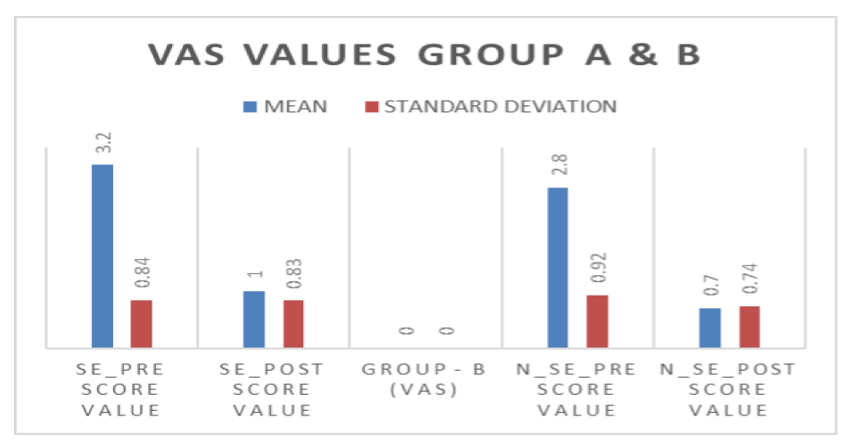
Figure 2: Shows Comparison Between Visual Analogue Scale (VAS) Group A & B Pre & Post-Mean & SD Values
|
GROUP - A (R.P.A) |
MEAN |
STANDARD DEVIATION |
|
SE_PRE-SCORE VALUE |
31.13 |
±3.78 |
|
SE_POST-SCORE VALUE |
36.73 |
±5.11 |
|
GROUP - B (R.P.A) |
MEAN |
STANDARD DEVIATION |
|
N_SE_PRE-SCORE VALUE |
30.63 |
±2.48 |
|
N_SE_POST-SCORE VALUE |
35.6 |
±2.9 |
Table 3: Comparison Between REEDCO Posture Assessment Participants Group A & B Pre & Post-Mean & Sd Values Shows The Correlation Between Pre- And Post-Intervention Score Was Strong (R=0.884, P< 0.001) Indicating That The Intervention Group A Was Highly Effective
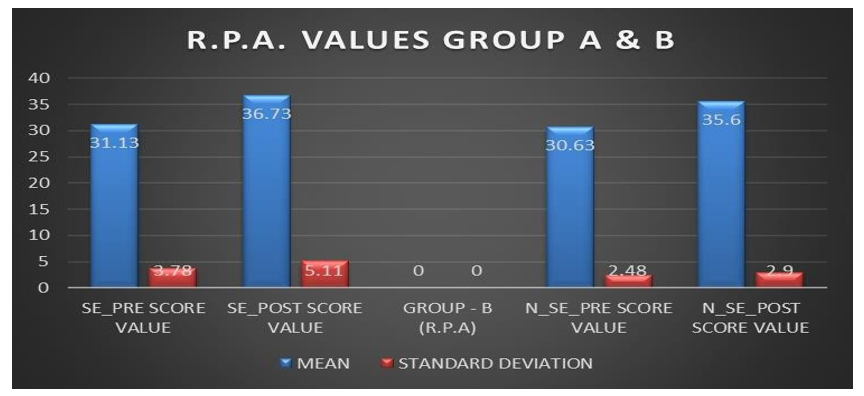
Figure 3: Comparison Between REEDCO Posture Assessment Participants Group A & B Pre & Post-Mean & SD Values
Both groups showed significant improvement in pain and posture following the intervention (p < 0.001). The Specific Exercise group (Group A) combined with Neuromuscular Electrical Stimulation (NMES) demonstrated a slightly higher mean difference in VAS score (2.20) compared to the Non-Specific Exercise group (Group B) with NMES (2.10), indicating marginally better outcomes in Group A. In REEDCO Posture Assessment, Group A showed a significant improvement from 31.13 to 36.73 (r = 0.884, p < 0.001), while Group B improved from 30.63 to 35.60. Although both interventions were effective in reducing pain and improving posture, the Specific Exercise program produced slightly superior results, suggesting it to be a more effective approach for postural correction among school students.
Discussion
The present study compared the effectiveness of specific exercises with Neuromuscular Electrical Stimulation (NMES) and non- specific exercises with NMES in improving posture and reducing pain among school students. Both groups showed significant improvement; however, the specific exercise group demonstrated slightly better results in VAS and REEDCO scores, indicating that targeted exercises are more effective for postural correction. Similar findings were reported in a 2023 study, where combining NMES with exercise improved neuromuscular activation and postural control. Previous research between 2020 and 2023 has shown that prolonged sitting, poor ergonomics, and heavy school bags contribute to postural deviations and musculoskeletal discomfort. A 2021 study also highlighted that forward head posture disturbs body balance by shifting the center of gravity forward. The present findings support these results, showing that specific exercises along with NMES effectively enhance posture and reduce pain. This combined approach is simple, cost-effective, and suitable for both clinical rehabilitation and preventive postural care in students.
Conclusion
This study concludes that specific pain-targeted exercises & neuromuscular electrical stimulation are an effective approach for significantly reducing pain and improving cervical and thoracic posture in individuals with posture-related issues. The four-week intervention program, focused on targeted exercises, proved to be beneficial in addressing the underlying causes of pain and promoting better alignment and posture.
Based on these findings, we strongly recommend implementing this protocol in clinical rehabilitation centers as part of a comprehensive strategy to manage and alleviate cervical pain. Additionally, this intervention can be utilized as a preventive and strengthening measure for individuals prone to posture-related discomfort, ensuring long-term benefits and improved quality of life [15-26].
References
- Kisner, C., Colby, L. A. (2007). Therapeutic Exercise: Foundations and Techniques. United States of America: Margaret Biblis.
- Angyan, L., Barnai M., Domján-Preszner A. (2007). Postural control in elderly subjects participating in balance training. Science.
- Amin, A. (2020). Prevalence of Postural Musculoskeletal Disorders and Associated Risks among School Going Children.
- Sharma A., Kashyap, B.K., Puranik, N. (2023), State-of- the-art of paper-based technology and challenges in its commercialization, IOP Publishing.
- Sharma A., Singh, S., Puranik, N. (2024), Utility of Various kinds of Nanoparticles as a Potential Material for Biosensors, IOP Publishing.
- Carini, F. (2017). Posture and posturology, anatomical and physiological profiles: overview and current state of art. PMID: 28467328.
- Parcells, C., Stommel, M., & Hubbard, R. P. (1999). Mismatch of classroom furniture and student body dimensions: empirical findings and health implications. Journal of adolescent health, 24(4), 265-273.
- Seidi, F. (2020). Comprehensive corrective exercise program improves alignment, muscle activation and movement pattern of men with upper crossed syndrome: randomized controlled trial.
- Meenakshi, K. P., Saxena, J., Puranik, N., et al. (2025). Advantages of nanotechnology-based dosage forms for delivery of herbal drugs in cancer. Springer, Singapore.
- Sharma, A., Rao, V. K. (2020). Synthetic Applications of Gold Nanoparticles in Research Advancement of Electrochemical Immunosensors, Trends in Applied Sciences Research, 15(2), 151-167.
- Sharma, A., Rao, V. K., & Kamboj, D. V. (2020). Electrochemical immunosensor for the detection of staphylococcal enterotoxin B using screen-printed electrodes. Indian J. Chem, 59, 174-180.
- Sharma, A. (2025). Nano-biotechnological Approach forUltrasensitive Electrochemical and Fluorescence Detection ofStaphylococcal Enterotoxin B. Materials Research Express.
- Barassi, G. (2021). Posture and Health: Are the Biomechanical Postural Evaluation and the Postural Evaluation Questionnaire Comparable to and Predictive of the Digitized Biometrics Examination PMID: 33800610.
- Conley, B. J., et al. (2004). Int J Biochem Cell Biol, Derivation, propagation and differentiation of human embryonic stem cells.
- Grimes, P., & Legg, S. (2004). Musculoskeletal disorders (MSD) in school students as a risk factor for adult MSD: a review of the multiple factors affecting posture, comfort and health in classroom environments. Journal of the Human- Environment System, 7(1), 1-9.
- Agha, S. R. (2010). School furniture match to students' anthropometry in the Gaza Strip. Ergonomics, 53(3), 344-354.
- Tariq, H. B. (2021). Comparative Effects of Postural Correction VS Myofascial Release Among E-Sports Players with Neck Pain and Disability.
- Kim, D. (2015). Effect of an exercise program for posturecorrection on musculoskeletal pain.
- Dahare, R. (2023). Assessment of the postural deviations in professional photographers using reedco posture assessment scale.
- Tudini, F. T. (2020). Forward flexed posture: reliability and determinants of tragus-to-wall measurement.
- Dinesh, S. (2023). Evaluating the efficacy of body mechanicsin improving posture in students.
- Jaroenrungsup, Y. (2020). Effects of self-posture correctionexercise in forward head posture of smartphone users.
- Balthillaya, G. M. (2022). Effectiveness of posture-correction interventions for mechanical neck pain and posture among people with forward head posture: protocol for a systematic review.
- Minghelli, B. (2021). Back School Postural Education Program: Comparison of Two Types of Interventions in Improving Ergonomic Knowledge about Postures and Reducing Low Back Pain in Adolescents.
- Robert, F. (2020). A Comparative Study between Stretching with Postural Modification versus Stretching Alone in Smartphone Users with Neck Disability.
- Sharma, A., Kashyap, B.K., Patel, O.P.S., Pareek, A. (2023). Nanotechnology: Opportunity and Challenges in Waste Management. In: Kashyap, B.K., Solanki, M.K. (eds) Current Research Trends and Applications in Waste Management. Springer, Singapore.