


Research Article - (2025) Volume 9, Issue 1
Effective Closure of Midline Diastema Using Clear Aligners: A Case Report
2BDS, DentoCorrect Clinic, Lahore, Pakistan
Received Date: Oct 29, 2024 / Accepted Date: Jan 16, 2025 / Published Date: Jan 23, 2025
Copyright: ©©2025 Dr. Nasreen Nagani, et al. This is an open-access article distributed under the terms of the Creative Commons Attribution License, which permits unrestricted use, distribution, and reproduction in any medium, provided the original author and source are credited.
Citation: Nagani, N., Wahab, W. (2025). Effective Closure of Midline Diastema Using Clear Aligners: A Case Report. J Oral Dent Health, 9(1), 01-07.
Abstract
This case report highlights the successful treatment of a midline diastema using clear aligners in a 22-year-old female patient. The treatment spanned seven months, involving 18 stages of upper aligners and 20 stages of lower aligners, worn for 22 hours daily. A non-extraction approach with interproximal reduction and arch expansion was used to resolve spacing and alignment issues. The treatment achieved proper tooth alignment, closure of the diastema, and maintained periodontal health without complications. The case demonstrates the effectiveness of clear aligners for spacing correction and emphasizes the importance of patient compliance in achieving favorable outcomes
Keywords
Clear Aligners, Midline Diastema, Adult Orthodontics
Introduction
Midline diastema, characterized by a noticeable gap between the upper central incisors, is a prevalent orthodontic issue that not only affects the aesthetics of a smile but can also have functional implications on a patient's oral health. This condition can occur at any age and is influenced by various factors such as genetic predisposition, abnormal frenal attachments, habits like thumb sucking, or discrepancies in tooth size. While midline diastemas may sometimes resolve naturally in younger patients, particularly during the eruption of permanent teeth, persistent cases in adults typically require orthodontic intervention for correction [1,2].The impact of a midline diastema goes beyond just appearance. For many patients, the gap can contribute to self-consciousness and lowered self-esteem, making its closure a primary concern for those seeking orthodontic care. Additionally, in some cases, the presence of a diastema may lead to speech difficulties, gum irritation, or issues with proper dental occlusion. Thus, effective treatment not only aims to enhance the visual appeal of the patient's smile but also to restore optimal oral function and health [3,4].
Traditionally, the management of midline diastema has been achieved through the use of fixed orthodontic appliances such as braces. These devices offer precise control over tooth movement and are particularly effective for complex cases involving multiple tooth malalignments [5]. However, with advancements in dental technology and an increasing desire for aesthetically pleasing treatment options, clear aligners have gained popularityas a modern alternative. Unlike traditional braces, clear aligners are transparent, custom-made trays that apply gentle pressure to gradually reposition teeth. Their removable nature allows patients to maintain better oral hygiene, while their nearly invisible appearance offers a significant aesthetic advantage during treatment [6,7].
Clear aligners have revolutionized the field of orthodontics by providing an effective solution for a range of dental conditions, including midline diastema. The approach involves a series of aligner trays, each designed to make incremental adjustments to the position of the teeth. The trays are worn for a specified period, typically around 22 hours per day, and are changed out every one to two weeks as treatment progresses. This method not only facilitates a predictable closure of the diastema but also ensures that the surrounding teeth are appropriately aligned, leading to a harmonious dental arch and improved bite function [8,9].
In addition to the physical benefits, patient compliance plays a critical role in the success of clear aligner therapy [10]. The ability to remove the aligners for eating, brushing, and flossing makes them a convenient option; however, this flexibility requires a high level of commitment from the patient to wear the aligners as prescribed [11,12]. Proper education and motivation from the orthodontist are essential to ensure adherence to the treatment plan, ultimately influencing the effectiveness of the treatment outcome [13,14].
This case report delves into the treatment of an adult patient presenting with a midline diastema using clear aligners. It will detail the comprehensive treatment plan, from diagnostic evaluations and aligner fabrication to the clinical application of aligner trays and monitoring progress over time. The review will also highlight the advantages and potential limitations of clear aligner therapy in managing midline diastema, including the role of digital treatment planning tools that simulate tooth movement and allow for customization of the aligners to address specific clinical needs.
Case Report
A 22-year-old healthy woman sought dental treatment due to concerns about the spacing between her front teeth. Her medical history was unremarkable, with no known familial or dental issues. Extraoral examination showed a mesocephalic head shape, mesoprosopic facial form, symmetrical frontal appearance, orthognathic profile, medium-sized nose, and competent lips (Figure 1). There were no signs indicating any temporomandibular joint issues.
Smile analysis indicated a sufficient display of the upper incisors, although the teeth were not ideally aligned, while the smile arc appeared harmonious. Intraoral examination revealed fair oral hygiene and a normal periodontal condition. The molars and canines exhibited Class I relationships. The overjet was 3 mm, and the overbite measured 2 mm. The maxillary midline was slightly shifted 0.5 mm to the left, while the mandibular midline was aligned with the facial midline
Mild crowding was observed in both the upper and lower arches. A panoramic radiograph confirmed healthy periodontal status, with no signs of caries, root resorption, or other dental abnormalities. Cephalometric analysis showed a skeletal Class I relationship, a normodivergent facial pattern, and an acute nasolabial angle
Treatment Objectives
The primary objective of the orthodontic treatment was to address the patient's main concerns through the use of clear aligners. Furthermore, the treatment aimed to achieve a stable, functional, and healthy bite, while also improving the overall dental aesthetics.
Treatment Options
We explored different treatment options with the patient, taking thefollowing into account: The first option considered was traditional braces for orthodontic correction; however, the patient opted against this approach, seeking a more aesthetically pleasing alternative.
The second option proposed using clear aligners, aligning well with the patient's preference for a more discreet treatment choice. For both treatment options, the plan included a non-extraction approach with arch expansion and IPR, to address the concerns of the patient.
Treatment Procedure
After reviewing the patient's history and conducting an examination, intraoral and extraoral photographs were taken, along with optical impressions obtained via intraoral scanning. These records were sent to the ClearPath facility to create a customized treatment plan. The panoramic X-ray confirmed sufficient bone support and indicated average oral hygiene, meeting the criteria for orthodontic treatment without any additional dental procedures, making the case appropriate for clear aligner therapy.
Based on the submitted records, a 3D treatment plan was developed, comprising 18 stages for the upper arch and 20 stages for the lower arch. The treatment followed a non-extraction approach, incorporating IPR and arch expansion to address the patient's dental concerns. A treatment simulation (Figure 2) was presented to the patient, who reviewed and approved the plan after expressing her satisfaction.
The proposed treatment plan was discussed with the patient within seven days of submitting the records. She was pleased with the suggested approach, and no modifications were necessary. The total treatment duration was estimated at 7 months, which the patient accepted, allowing for treatment to begin shortly thereafter
IPR Technique
Interproximal reduction (IPR) is a technique used to alleviate dental crowding by carefully removing a thin layer of enamel between adjacent teeth. Various methods can be employed for IPR, including the use of burs, discs, or abrasive strips. In this study, IPR was performed with a thin, diamond-coated, double-sided abrasive strip. The amount of enamel reduction was measured using an IPR gauge, and topical fluoride was applied afterward to help prevent any potential adverse effects [15,16].
Figure 1: Pretreatment; extraoral & intraoral photographs.
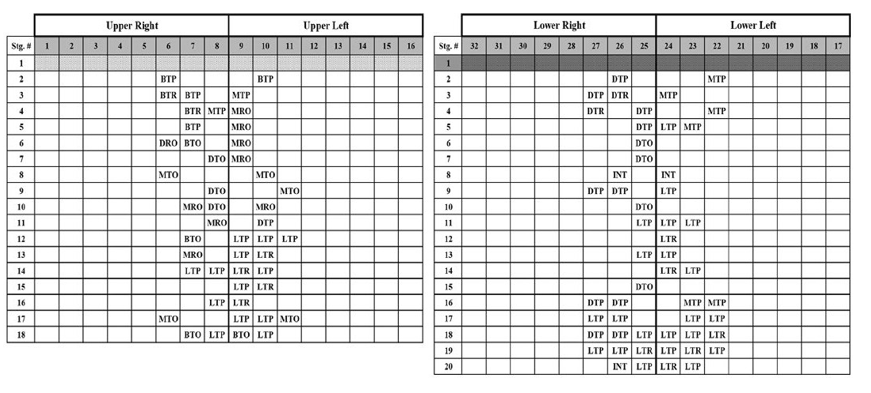
Figure 2: 3D treatment plan (a) Before & After, (b) Superimpositions
Treatment Progress
Once the treatment simulation was approved, we received the instruction forms (Figures 3 and 4) from the aligner provider, along with 18 sets of upper aligners and 20 sets of lower aligners. The prescribed wear time for each set was 22 hours per day for a period of ten days. The patient received detailed instructions on maintaining proper oral hygiene and periodontal health before starting treatment. The first set of aligners was provided, and an appointment for interproximal reduction (IPR) was scheduled before moving on to the second set.
IPR was performed in the lower arch at three sites, with 0.6 mm of enamel reduction carried out bilaterally between the lateral incisors and canines, and 0.7 mm between the lower right canine and first premolar. The patient continued with the subsequent sets of aligners and was evaluated every three months for periodontal health and aligner tracking, which showed satisfactory progress. The patient demonstrated consistent compliance, contributing to the successful completion of the treatment.
Following the conclusion of the treatment, two sets of retainers were provided. The patient was instructed to wear them full-time for the first six months, switch to night-time wear for the next three months, and then alternate nights for the remaining three months.
Figure 3: IPR form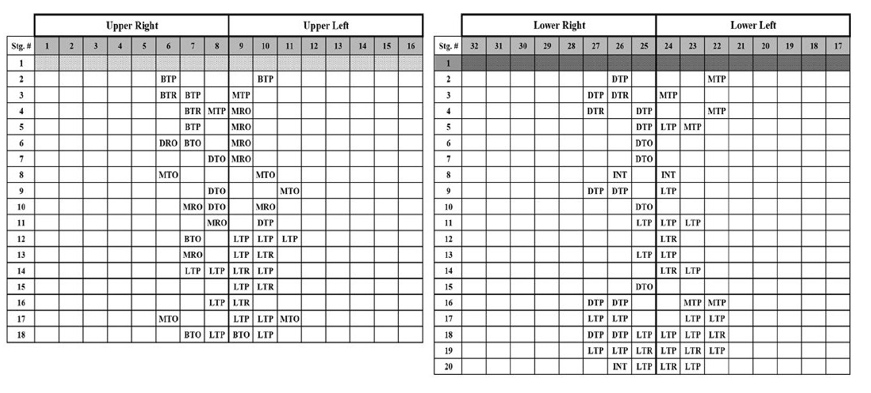
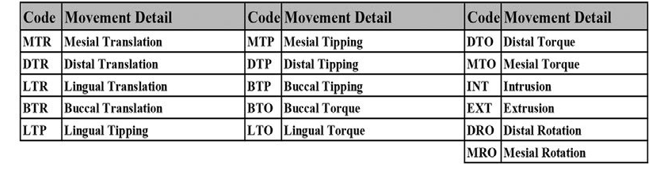
Figure 4: Movement Record Form
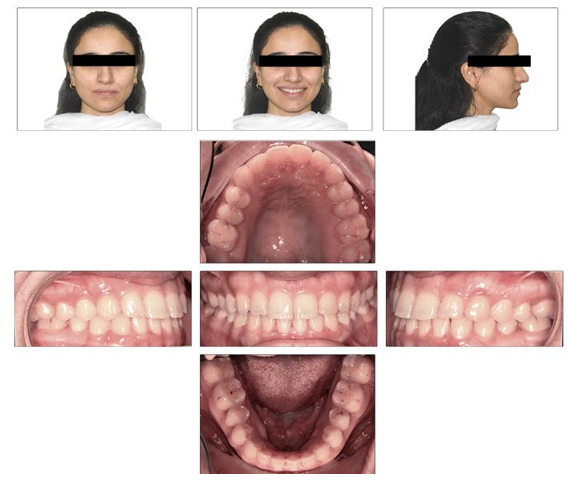
Figure 5: Post treatment records; extra oral and intra oral photographs.
Treatment Result
The treatment spanned a total of 7 months, with each aligner worn for 22 hours per day and changed every 10 days. By the end of this period, the midline diastema and mild crowding had been successfully addressed. The results included achieving an ideal overjet and overbite, along with optimal tooth alignment and functional bite (Figure 5).
Furthermore, the treatment resulted in a well-aligned and centered positioning of both the maxillary and mandibular arches, which significantly enhanced the aesthetic and functional aspects of the patient's smile. Throughout the treatment process, periodontal health was closely monitored and maintained, with no signs of gum recession or the development of periodontal pockets, thus preserving the patient's overall oral health.
Discussion
The present case study evaluates the effectiveness of clear aligners in closing a midline diastema using a non-extraction approach, and the results highlight several important aspects of clear aligner therapy in orthodontic treatment. Clear aligners have gained popularity due to their aesthetic appeal, comfort, and removability, offering an alternative to traditional braces for patients who prioritize appearance during treatment. In this case, clear aligners successfully corrected the midline diastema and mild crowding, while also maintaining periodontal health and achieving a stable occlusal relationship.
Clear aligners have been widely recognized for their ability to correct various orthodontic problems, including spacing issues, crowding, and even some complex cases involving bite misalignment [17]. The ability of aligners to apply precise and gradual forces to theteeth makes them effective for treating spacing problems like midline diastema [18,19]. In this case, the systematic use of 18 stages of upper aligners and 20 stages of lower aligners allowed for gradual closure of the diastema while maintaining proper tooth alignment. The regular intervals of aligner changes and continuous monitoring helped ensure satisfactory progress and compliance.
The non-extraction approach in this case was particularly beneficial, as it preserved the dental arch integrity while achieving the desired tooth movements. Techniques such as interproximal reduction (IPR) and arch expansion played a critical role in resolving the spacing and alignment issues without the need for tooth extraction. This approach not only addressed the patient's chief concern but also minimized the risks associated with more invasive procedures.
Maintaining periodontal health is a crucial aspect of orthodontic treatment, and in this case, careful monitoring ensured that there were no adverse effects such as gum recession or periodontal pocket formation. The success of the treatment can be attributed to both the patient’s compliance with the aligner wear schedule and the meticulous planning of the treatment stages. This reinforces the importance of patient cooperation in clear aligner therapy, as adherence to the prescribed wear time and dental visits directly impacts treatment outcomes [20,21].
Nevertheless, there are limitations to clear aligner therapy that should be considered. While effective for cases with mild to moderate spacing and alignment issues, clear aligners may not be as predictable for more complex movements, such as significant rotations or large extrusions. In such cases, additional techniques or adjunctive treatments may be necessary to achieve optimal results. However, this case demonstrated that with proper planning and execution, clear aligners could successfully manage midline diastema and mild crowding in a relatively short duration of 7 months.
Conclusion
In conclusion, the findings from this case support the use of clear aligners as a reliable treatment option for midline diastema, especially when a non-extraction approach is preferred. The discreet nature of clear aligners, coupled with their ability to maintain periodontal health, makes them an attractive option for adult patients seeking orthodontic treatment. Future studies could further explore the long-term stability of results achieved with clear aligners and compare them with other orthodontic modalities for similar conditions.
Consent & Conflict of Interest
A written consent form was signed from the patient for use of the dental records for publications & social media marketing. Also, there is no conflict of interest with this paper.
References
- Rossini, G., Parrini, S., Castroflorio, T., Deregibus, A., & Debernardi, C. L. (2015). Efficacy of clear aligners in controlling orthodontic tooth movement: a systematic review. The Angle Orthodontist, 85(5), 881-889.
- Phan, X., & Ling, P. H. (2007). Clinical limitations of Invisalign. Journal of the Canadian Dental Association, 73(3).
- Kravitz, N. D., Kusnoto, B., BeGole, E., Obrez, A., & Agran,B. (2009). How well does Invisalign work? A prospective clinical study evaluating the efficacy of tooth movement with Invisalign. American Journal of Orthodontics and Dentofacial Orthopedics, 135(1), 27-35.
- Elton V, Hamid W, Fleming PS. (2020) Retention protocols for clear aligner treatment: A systematic review. J Orthod, 47(3), 149-157.
- Boyd, R. L. (2007). Complex orthodontic treatment using a new protocol for the Invisalign appliance. Journal of clinical orthodontics: JCO, 41(9), 525-523.
- Joffe, L. (2003). Invisalign®: early experiences. Journal of orthodontics, 30(4), 348-352.
- Djeu, G., Shelton, C., & Maganzini, A. (2005). Outcome assessment of Invisalign and traditional orthodontic treatment compared with the American Board of Orthodontics objective grading system. American journal of orthodontics and dentofacial orthopedics, 128(3), 292-298.
- Ke, Y., Zhu, Y., & Zhu, M. (2019). A comparison of treatment effectiveness between clear aligner and fixed appliance therapies. BMC oral health, 19, 1-10.
- Papadimitriou, A., Mousoulea, S., Gkantidis, N., & Kloukos,D. (2018). Clinical effectiveness of Invisalign® orthodontic treatment: a systematic review. Progress in orthodontics, 19, 1-24.
- Khosravi, R., Cohanim, B., Hujoel, P., Daher, S., Neal, M., Liu, W., & Huang, G. (2017). Management of overbite with the Invisalign appliance. American journal of orthodontics and dentofacial orthopedics, 151(4), 691-699.
- Lombardo, L., Arreghini, A., Ramina, F., Huanca Ghislanzoni,L. T., & Siciliani, G. (2017). Predictability of orthodontic movement with orthodontic aligners: a retrospective study. Progress in orthodontics, 18, 1-12.
- Hennessy J, Al-Awadhi EA. (2016). Clear aligner treatment in patients with complex malocclusion: A review. Int J Orthod Milwaukee, 27(1), 47-56.
- Lagravere, M. O., & Flores-Mir, C. (2005).The treatment effects of Invisalign orthodontic aligners: a systematic review. The Journal of the American Dental Association, 136(12), 1724-1729.
- Mehta R, Joshi H, Shenoy N, Doshi J. (2020). Patient compliance in orthodontic treatment using clear aligners: A systematic review. J Orthod Sci, 9, 01-08.
- Kumar S, Sharma R, Gupta DS. (2022). A comparative study on the treatment of Class II division 1 malocclusion using fixed functional appliances versus clear aligners. Int J Orthod Dentofac Orthop, 42(3), 221-231.
- Nimbalkar PM, Chintakananda K, Srirangam V. (2021). Class II division 1 malocclusion correction using non-extraction approach and aligner therapy: A systematic review. J Clin Orthod. 2021;55(5):305–15. Jie RLK: Treating bimaxillary protrusion and crowding with the invisalign G6 first premolarextraction solution and invisalign aligners. APOS Trends in Orthodontics. 2018, 8: 219.
- Kuncio, D., Maganzini, A., Shelton, C., & Freeman, K. (2007). Invisalign and traditional orthodontic treatment postretention outcomes compared using the American Board of Orthodontics objective grading system. The Angle Orthodontist, 77(5), 864-869.
- Robertson, L., Kaur, H., Fagundes, N. C. F., Romanyk, D., Major, P., & Flores Mir, C. (2020). Effectiveness of clear aligner therapy for orthodontic treatment: A systematic review. Orthodontics & craniofacial research, 23(2), 133-142.
- Simon, M., Keilig, L., Schwarze, J., Jung, B. A., & Bourauel,C. (2014). Treatment outcome and efficacy of an aligner technique–regarding incisor torque, premolar derotation and molar distalization. BMC oral health, 14, 1-7.
- Li J, Zhang F, Lai W. (2020). Interproximal reduction in aligner treatment: A systematic review. Prog Orthod, 21(1), 1-8.
- Almyroudi A, Zinelis S, Lambrianidis T, Margelos J. (2014). Invisalign and clear aligners in general orthodontics: An evidence-based approach. J Dent Educ, 78(1), 35-40.