

Archivos de Ciencia e Investigación(ADCI)
ISSN: 3068-014X | DOI: 10.33140/ADCI


Research Article - (2025) Volume 1, Issue 2
Effect of Chronic Exposure to Polluting Gases PM-10, PM-2.5, NO, NO2, NOX, SO2, CO and Lead in the Independencia and Cerrillos Townships
2Biochemistry Licenciature, University of Chile, Chile
Received Date: Sep 02, 2025 / Accepted Date: Oct 08, 2025 / Published Date: Oct 13, 2025
Copyright: ©Â©2025 Gustavo Gomez Barbieri. This is an open-access article distributed under the terms of the Creative Commons Attribution License, which permits unrestricted use, distribution, and reproduction in any medium, provided the original author and source are credited.
Citation: Barbieri, G. G. (2025). Effect of Chronic Exposure to Polluting Gases PM-10, PM-2.5, NO, NO2, NOX, SO2, CO and Lead in the Independencia and Cerrillos Townships. Arch Cienc Investig, 1(2), 01-10.
Abstract
Background: The use of lead is millennial. However, the use of lead prevents the Romans and Etruscans for the design and construction of hydraulics and public works such as aqueducts, construction bases and even to sweeten wines. Understanding how lead production has affected the incidence and mortality of Cardiovascular Diseases is critical in the design of public policies in developing countries. OBJECTIVES: this study is aimed to determine the levels of exposure to Lead and Contaminant Gases of the inhabitants of Cerrillos and Independencia township and Analyze the incidence and deaths due to Cancer and cardiovascular diseases in the period 1997-2017.
Design, Setting, and Participants: Deaths for cancer (1997-2017) and cardiovascular and neurological disease attribuible second (2017) were recorded by WHO database and SINCA levels of polluted gasses. National incidence and mortality data were compared during the overlapping period (1997-2017).
Results: A total of 21518 Deaths calculated were explained by Lead Exposure, from this, by IAM 5514 people died, by stroke ACV died 5458 people, by arterial hipertension died 5316 people and 5230 people died because of other cardiac diseases. From the results, a statistically significant relationship was shown in MP-10, MP-2.5 and Lead in Independencia, while in Cerrillos a statistically significant relationship was observed between MP-10, MP-2.5 and NO2.
Conclusions: This epidemiological analysis of deaths encoded as Cancers and Cardiovascular diseases suggests carefully investigating space-temporal distribution before including them could be neurological diseases. Some new lights have been thrown on the statistical behavior of cancer mortality.
Keywords
Lead, Toxic, Cancer, Cardiovascular Disease, Interrupted Time Series Regression, Prais Weinstein Regression
Introduction
Lead is the most used metal in industrial production, medicine, cos- metics, paint and petroleum. Lead contamination occurs through air, dust, soil and water; therefore, man can inhale con-taminated air, ingest food and water contaminated with Lead or simply, have direct contact with it. Non physiological lead expo-sure is very common. When you ingest or inhale Lead, it enters the blood, travels hidden in the Red Blood Cells, complexes within the He- moglobin group, interacting with the enzymes of the Red Blood Cell, complexing them, this decreases its affinity for O2 and de- fective forms are generated. of Protein. This causes the bone to deform due to the accumulation of dysfunctional red blood cells and Lead has a half-life of 30 years, so its accumulation causes oxidative stress and adverse effects on Human Health such as neu- rological, cardiological and oncological effects [1]. Damage to the Central Nervous System, when lead enters the cell, it enters through a transporter of divalent cations, generating many charges in the astrocyte, this causes it to increase the anionic charge by re-cruiting glycosaminoglycans (this is an anionic polymer that captures a lot of water), in the end you generate more edema and the astrocyte bursts due to the accumulation of fluid, the astrocyte dies and the neuron does not survive because it does not have support from the astrocyte [2].
In addition, lead generates direct cytotoxic damage in the chro- matin repair mechanisms when Lead interacts with histones. high level of Lead in blood means high systolic ventricular dysfunction; therefore it increases arterial hypertension, coronary heart disease, circulatory mortality and cerebrovascular accidents. The kidneys secrete more urea due to the accumulation of lead in the blood, damaging the intercellular junctions and altering the transport mechanisms of the proximal convoluted tubule, causing kidney in- jury (acute kidney damage) and a drop in the Glomerular Filtration rate, then the association between Lead exposure and the devel- opment of kidney disease, it has been discussed, lead can cause infertility and damage to the Hematopoietic System. It has been discussed what the maximum allowed level of Lead in the blood is, based on the data it was concluded that there is no safe level of Lead in the blood, so its presence in the blood will al- ways cause harm. In a 2019 study, the population attributable risk was estimat- ed in 84 countries, calculating a minimum theoretical Blood Lead level of 2 [ug/dL]; which showed an increase in RAP of 37% (0.53 to 0.9) between 1990 and 2019 worldwide [3].

Figure 1 Adaptation of the exposure model and risk factors and sources of exposure to lead proposed by Fewtrell L, Kauffmann R & Prüss-Ustün. WHO. 2023 Fewtrell L, Kaufmann R, Prüss- Ustün A. Lead – Assessing the environmental burden of disease at national and local levels (Environmental Burden of Disease Series, No. 2). Ginebra: Organización Mundial de la Salud; 2003 (https:// apps.who.int/iris/handle/10665/42715, consultado el 31 de agosto de 2021). The countries with the highest mortality (per 100,000 inhabitants) from lead exposure were China, India, Bangladesh, Indonesia and Pakistan, while in the Mesoamerican and South American area, Haiti had the highest number of deaths attributable to lead (41,634 deaths). South American countries have a low level of lead exposure compared to the rest of the world (53.37%). Title table 1.Euro 6 norm
|
Polluted |
Light Vehicle ( < 1250 Kg) |
Light Vehicles (< 1700) |
Light vehicles(> 1700) |
|
HC |
0,1 [g]/[km] |
0,13 a 0,16 [g]/[km] |
0,13 a 0,16 [g]/[km] |
|
MP-2,5 |
0,045 [g]/[km] |
0,045 [g]/[km] |
0,045 [g]/[km] |
|
CO |
0,1 [g]/[km] |
1,81 [g]/[km] |
2,27[g]/[km] |
|
NOx |
0,06 [g]/[km] |
0,075 [g]/[km] |
0,082 [g]/[km] |
|
MP-10 |
0,05 [g]/[km] |
0,05 [g]/[km] |
0,05 [g]/[km] |
Table 1: EURO 6. Emission limits per km traveled according to the type of Vehicle and the use of Gasoline . This standard has had more than 6 revisions, starting in 2012, it has had modifications until January 2020, these acronyms continue to be promoted and used because they have created new emission models and methods, they created a road relief value changing the measurement since 2017.
|
Gas Contaminant |
WHO |
EU |
Chile |
Colombia |
|
MP-10 |
Annual media. 25 ug /m3. Daily media 50 ug /m3 |
Annual media. 40 ug /m3. Daily media 50 ug /m3 |
Annual media. 50 ug /m3. Daily media 50 ug /m3 |
Daily media. 50 ug /m3 1 hour of media. 100ug /m |
|
MP-2.5 |
Annual media. 10 ug /m3. Daily media 25 ug /m3 |
Annual media. 25 ug /m3 Daily media 25 ug /m3 |
Annual media. 25ug /m3 Daily media 50 ug /m3 |
Daily media. 25 ug /m3 1 hour of media. 50ug /m |
|
O3 |
8 hours media 100 ug /m3. |
8 hours media 120 ug /m3. |
8 hours media 120 ug /m3. |
8 hours media 100ug /m3 |
|
NO2 |
Annual media. 40 ug /m3. 1 hour media. 200 ug m3. |
Annual media. 40 ug /m3. 1 hour media. 200 ug /m3 |
Annual media. 100 ug /m3. 1 hour media. 400 ug /m3 |
Daily media. 60 ug /m3 1 hour of media. 200ug /m3 |
|
NOx |
the detail of this norma is explained in Euro 6 norm, measure in scape tube car |
the detail of this norma is explained in Euro 6 norm, measure in scape tube car |
the detail of this norma is explained in Euro 6 norm, measure in scape tube car |
Old industrie 550 New industry 500 0,4g/Km (vehicles 3 wheels or 0,65 g/km ) sum motorcycle. |
|
SO2 |
Annual media. 20 ug /m3. 10 minutes media. 500 ug / m3. |
Daily media. 125 ug /m3. 1 hour media 350 ug /m3. |
Annual media. 80 ug /m3. Daily media. 250 ug /m3 |
Daily media. 50 ug /m3. 1 hour media. 100 ug /m3 |
Table 2: Comparisons Norm Pollutions WHO, European Union, Chilean and Colombian Norm
Table N°2. the WHO and EU norm the cohort values are similar, but exist categorical difference with the chilean norm because ex- ceed ten times the SO2 norm in daily media, 2.5 times NO2 Annual media and hour Media, and the Colombian norm it is validated by our media and daily media with 2 times values in MP-10, more equal in MP-2.5 in Hour Media to EU and WHO norm, are very similar to compares WHO.
Expositional history of medical occupational lead: Why have we used lead for a long time in the history of humanity? [4,5].
In Neolithic times, with the domestication of animals and the development of the plow, chronic diseases such as rheumatoid arthritis, ankylosing spondylitis, osteoarthritis, some types of cancer, traumatological and inflammatory diseases and lumbago were generated (Figure 1). Lead use has its origins During the Copper Age, Egyptians discovered it with the Siver and the Iron, but the Indians and the Chinese know how to melt it [1]. Also legal frameworks were established to protect warriors, embalmers and weapon manufacturers, later in the Iron Age the Hammurabi code or Law of the Talion appeared, which dictated a social-economic pact to form and unify the Babylonians. This code allowed the first application of penalties and punishments in the occupational and labor area.
In Ancient Greece, Herodotus describes lead poisoning, then Aristarchus describes that the Egyptians already used bags to protect themselves from inhalation of silica (avoiding silicosis). In classical Rome, Julius Caesar recognizes the first internists as Roman citizens, then Pliny the Younger (who was the grandson of Pliny the Elder), describes the poisoning by Hydrogen Sulfide Acid resulting from the eruption of the Vesuvius Volcano, thus having the first record of illness due to gas pollution (Figure 2).
Galen, Marcus Aurelius' doctor, describes poisoning with Copper Sulfate. In the Middle Ages there was a setback in Europe in health issues while the Arabs and Byzantines transcribed the first health codes. In the Early Middle Ages, Maimoides and Ibn Sina dictated the treatises on respiratory diseases and in the late Middle Ages, human reality was separated into 4 substances and this led to the development of the Renaissance and humanism and we have a recovery of the knowledge of the Classical Era and then in During the Renaissance, Bernardino Ramazzini created Occupational Medicine and described “De Morbis artificum diatriba” (the First treatise on occupational diseases in the entire history of humanity) (Figure 3).
During the time of the great European revolutions, Lead once again took a leading role in the design and manufacture of weapons in cannon coatings, construction of bridges and viaducts and in public lighting factories. It is at this time that the light bulb factory in the United States had an outbreak of psychotic symptoms with vivid hallucinations, in the Westinghouse light bulb factory and in the 3 factories that had much higher suicide rates than in the rest of the existing companies. in that era. Investigating the causes of these psychiatric conditions, large concentrations of Lead were found in the autopsies in the brains and bones of these workers, classifying this neuropsychiatric condition as Saturnism (in honor of the God Saturn who ate his own children in a psychotic event).
Historically, Independencia and Cerrillos township, located at the North and south west of Santiago de Chile, have presented critical episodes of air quality and environmental emergency associated with Particulate Material, Polluting Gases and Presence of Heavy Metals just like Lead, Copper, Nickel, Cadmium, Cobalt, Manganese, affecting the quality of life and exacerbating emergency care during the periods of the hospital winter campaign. However, this pollution is seen every year with people sicker than they should be, because the city has not been cleaned and therefore the people who live there get sick. These are the critical episodes of Particulate Matter in 1998. Cerrillos and the episodes of Polluting Gas emissions from the Renca Thermoelectric Plant that largely affect the communes of Independencia, Conchalí, Renca, Huechuraba, Quilicura and Colina. It should be noted that the first Asbestos factory in Chile was located in Independencia, behind the Hippodrome, in this same commune the first crematorium in Santiago was located, it is an important center of pollutants and environmental exposure of Polluting Gases such as O3, NOx and the presence of heavy metals from old factories and facilities where lead and asbestos were processed [6].

Figure 2: History of the medicine of occupational diseases. It was in Ancient Greece that Saturnism and occupational diseases associated with Lead were described. It should be noted that it was during the time of the Roman Empire where the greatest exposure to toxic levels greater than 3 ppb occurred in the activities of daily life
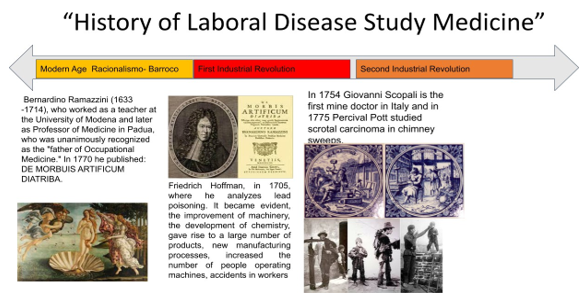
Figure 3: Birth of occupational diseases, Ramazzini's contribution. He was the one who defined and described the concept of occupational disease and how to prevent it, identified the sources of contamination and created therapeutic alternatives and preventive methods to avoid exposure to Lead
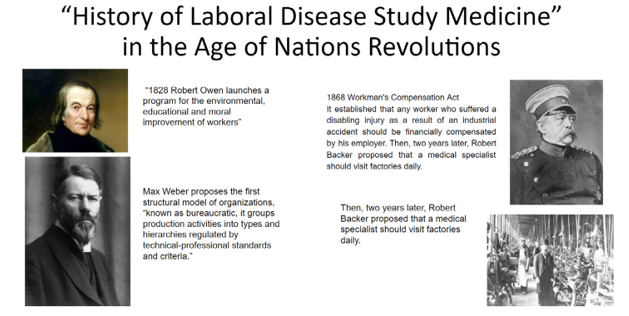
Figure 4: History of the opinion of occupational laws in Europe and the World.
1868 Workman's Compensation Act it established that any worker who suffered a disabling injury as a result of an industrial acci- dent should be financially compensated by his employer. Then, two years later, Robert Backer proposed that a medical specialist should visit factories daily. As the decades passed, new sources of pollution and toxic agents were discovered, with Lead beingfound to be one of the main responsible for the development of mental illnesses and cardiovascular and Central Nervous System problems in the Westing House factories, manufacturers of light bulbs, since one of the main materials with which Ampoule filaments were manufactured was Lead, so it was not strange to ob-serve workers spontaneously jumping from the top floors of the factory as a result of Recurrent Hallucinations [7].
In the 1950s, Clair Patterson was using her knowledge of nuclear chemistry to calculate the age of the Earth and her method was to measure lead concentrations on the planet's surface and compare them with lead levels in the lower layers of the earth. , so as Lead is the last element that is formed after the decay of Uranium (which is a product of nuclear reactions that occur in the Earth's Core), Lead had to be more concentrated in the lower layers of the Earth. Earth but he saw that it was the other way around, that is, in the most superficial layers of the Earth there was a greater concentra- tion of Lead than in the deeper layers, this caught his attention be- cause it went completely against his hypothesis and that was when discovered that there was a lot of lead in the environment as a re- sult of industrial activity and especially due to the use of this metal as a stabilizer for the combustion of gasoline in the engines of land and air vehicles, as tetraethyl lead) for its antiknock capacity and low production cost, the idea of Midgley, an American chemist, who carried out tests and demonstrations throughout the United States demonstrating the harmlessness of this element, which was denied by Clair Patterson, who finally managed to completely re- move the tetraethyl lead in gasoline around the world. Thanks to Clair Patterson's studies, worldwide measures were established to eliminate Lead Tetraethyl from Gasoline and she was awarded the Tyler Award for Environmental Achievement [8].
Actually the discovery of tombs and the analysis of burial and roman cemeteries from Lisieux (Normandy, France), Barcelona and Tarragona (Spain), Alba Julia (Croatia and Bulgaria) and Bei- rut (Lebanese capital), analyzes of Lead levels and changes were carried out. pathological morphology of the bones which presented bone neoformation of the orbital root (criba orbitalis), increase in the porosity of the temporal bone, increase in the length of the porosity of the greater sphenoid wing, bilateral neoformation bone and porosity of the maxilla and increase in the porosity of the su- praspinous fossa and new bone formation of the mandibular ramus. All these findings caused by high concentrations of Lead in the neonatal stage, birth, childhood and adolescence of the bones found, observing a significant correlation between age, the level of industrial activity and development of Lead smelters and the cus- tom of adding Sapa (Lead Acetate) to Wine, these are responsible for the metabolic toxic effects and their effects on the Cardiovas- cular, Central Nervous, Hematological and Neoplastic systems [9].
According to Liao M's study; 2015; In a cohort of workers ex- posed to dust and steam from the boiling of the boilers of steam engines occupied by 73,363 women and 61,379 men, an increase in the rates of female meningiomas was observed between the years 2000 and 2011 with an RR of 2.4, with a confidence interval between 1.1 and 5 with a cumulative exposure level above the av- erage with a RR between 1.3 and 7.4; In the male group, 12 cases were observed that did not have a corresponding excess level, so they were excluded (the RR was not calculated because it was con- sidered that they had not been exposed). A significant association could also be observed in Kidney Cancers (RR = 1.4, CI [0.9,2.3]) and Brain (RR = 1.8, CI [0.7,4.8] from which it can be conclud- ed that Lead is closely associated with the severity of developing Cancers in Men and Women given the sustained exposure since the 1930s to the 2000s. In men, exposure to Lead could not be as- sociated with Lung and Brain Cancer because Men have a greater consumption of Tobacco and Alcohol than Women; Therefore, no correspondence was found with the levels. of inhalation of Lead Dust and Vapors in their work activities (so possible exposure in homes, urban environment and the effective concentration of Lead in Blood was excluded). Based on the aforementioned back- ground, we have proposed to investigate the association between the levels of occupational exposure to lead and particulate matter in the townships of Cerrillos and independence in relation to mor- tality and population attributable risk to developing cardiovascular and neoplastic diseases. of the study population [10].
Materials & Methods
The first thing that was done was to generate the database from the historical records of the use of Lead and polluting gasses from SINCA (National Air Quality Information System dependent on the Ministry of the Environment). The mean, interquartile range and seasonality associated with a univariate analysis were first cal- culated by multivariate regression analysis (ARIMA) called Prais Weinstein. Afterwards, a bivariate analysis was carried out (be- cause the previous one was to describe the trend of the behavior of the gasses over time), the bivariate is to see the distribution of the independent variable according to the Hypothesis 0 (H0), then normality tests were run with Shapiro-Wilk and Kolmogorov to finish with the coefficient of variation and correlation existing between each of the gasses and their exposure and grouped the maximum contaminant levels according to the WHO, EU, Chile and Colombia, then a georeferencing analysis was done and there they were determined the maximum and minimum distances between the most important urban centers and the emission sources, there are 5 zones close to the Independencia monitoring station, in Renca there is a 3.9 km distance through shortcuts between the Cerro Blanco station and the thermoelectric plant (main source of pollution, 13 kilometers by road) With georeferencing, it was discovered that there were many establishments attended by subjects vulnerable to gas pollution near the main source of emission of these gasses.
The ultimate revision of norm EURO 6 for vehicles in NOX and NO2 establishment values emission to 80 mg/km de NOx to diesel vehicles and 60 mg/km de NOx for gasoil motors. In other words a diesel motorization emitted plus 34% more nitrogen oxides than gasoil motorization.
By the study for impact evaluation lead, using the fraction attributable to Lead proposal by WHO [1] exposure according to economic activities, showed that the people exposed to Lead to demonstrate the real exposure causes by IAM and neoplasia disease second the formula:
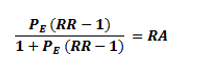
Attribuible risk population or riesgo atribuible poblacional = RAP
To control and estimate the population attributable risk it is necessary:
1. From the ISTAT database, the proportion of the employed workforce was obtained
2. The proportion of workers exposed to Lead in each sector workers replacement
3. levels exposure and compare it with the international norms
4. the proportion of labor force in the population
5. relative risk associated to each labor activity available for different exposure levels (RI is the relative risk to each disease associated with Lead and PI is the proportion of labor force nationally)
What should we do to prevent Lead exposure?
6. Creation of National Institutes for prevention and monitoring of Lead levels
7. Literature analysis by pair reviews
8. Special surface
Results in Independencia
To evaluate the effect between exposure to Polluting Gases and Metals in the commune of Independencia, a multivariate regres- sion analysis (ARIMA) called Prais Weinstein was carried out, which calculates the % change attributable to gas exposure with respect to mortality and the annual incidence, this effect allows corroborating the statistical interactions over time, so here the al- pha is the time and PV is the concentration, but of the significant regression coefficients found, the MP10, NOX and Lead presented a statistically significant interaction between the concentration of the pollutant and mortality, however SO2, NO2, NO, O3 and PM 2.5 did not demonstrate a statistically significant interaction, therefore only PM10 and Lead showed a positive regression coefficient, in- creasing 115.74% and a 44% increase in mortality with a p<0.045 and Lead less than 0.0001, then we can conclude that there are greenhouse gasses such as nitrous oxides that correlate with the WHO exposure levels where they are observed negative correla- tions on the part of Nitrous Oxides, in this study a significant inter- action with O3 was not observed where more measurements will be required and at selected times of high exposure.
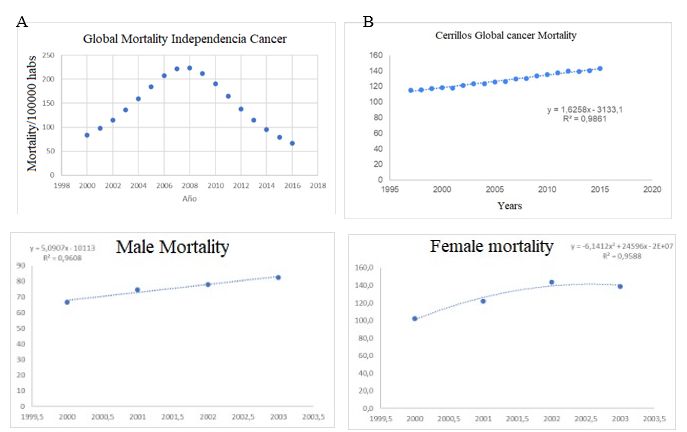
C- Female cancer Mortality i ndependencia D Male cancer Mortality independencia
Figure 5: A corresponds to the Description of the time series of the global mortality rate of Cancers in the commune of Independencia years [2000 - 2016]. It should be noted that the highest mortality rate explained in 2008 was modeled from a regression model negative binomial based on deaths and the cumulative incidence rate of Cancer. B corresponds to male mortality in Independencia between the years 2000 and 2003, C corresponds to female mortality in Independencia between the years 2000 and 2003 while D corresponds to the mortality rate per year in Independencia between the years 2000 and 2003.
When comparing the national trend with the trend for women in Independencia, a sigmoidal increase in deaths is observed, which is consistent with the national reality. The noticeable increase caused by population aging and added to the polluting environmental fac- tors have caused an increase in the speed of both mortality and the incidence of cases. For female mortality, an accumulated increase of 392.1% is expected in baseline mortality from 1997 to 2016 and with a break in the seasonal trend in 2008. In the male curve, the increase in cases is equivalent to what was observed in female mortality with a decrease of -58.1% and a trend with p value = 0.004, the break in trend is also significant in 2008. Regarding global mortality in the commune of Independencia due to Cancer, until 2016 a decrease of -51.34% was observed accumulated with a very significant break in trend in 2008, this can be explained be- cause the increase in survival mediated Due to the increase in cov- erage of oncological pathologies mediated by explicit Health guarantees in this period, survival increased but incidence increased.
Regarding the Poisson model, in relation to mortality from Cancer associated with polluting gasses and Lead. For every ug of Lead that increases in the environment, mortality increases by 3.58% and with SO2 neither increase nor decrease is observed.
Results in Cerrillos
From the total mortality model, it was obtained that with respect to the Cerrillos PM10 level, there has been a significant reduction in the PM10 concentration (monthly average) to values less than 50 ug/m3, generating a negative regression coefficient of -0.24 with test value of 0.016, of the other interactions observed, no polluting gas or Lead showed statistically significant interactions between mortality and gas concentration.
|
Contaminants |
Odds Ratio |
Confidence Interval (95%) |
p Value |
|
MP-10 |
0,9980 |
[0,959 - 1,000] |
0.037 |
|
MP-2.5 |
1,0136 |
[1,021 - 1,059] |
0.001 |
|
O3 |
0,9637 |
[0,936 - .0,992] |
0.013 |
|
NO |
0,9964 |
[0,992 - 0,993] |
0.0033 |
|
NO2 |
1,0986 |
[1,002 - 1,003] |
0.007 |
|
NOx |
0,7334 |
[0,350 - 1,53] |
0.385 |
|
SO2 |
0,9753 |
[0,977 - 1,018] |
0.81 |
|
Pb |
0,9976 |
[0,997 - 1,001] |
0.648 |
Table 3: Odds Ratio, Intervalo de Confianza y p Value Calculated for each Contaminant in Cerrillos Township
Poisson´s regression (Independencia)
In this model exists an increase statistically significative in the lev- els in MP 10 we have an increase of 1.45% of mortality associated with Cancer due to MP 10 exposition with a p value = 0.035, by the way, levels of MP 2.5 presented an odds ratio of 1.14 corre- spondence a un 14.46% mortality associated to MP 2.5 exposition with a p value of 0.002, this evidence obtained is consistent with international results obtained from historical Danish cohort studies, where the MP 2.5 had the higher impact in mortality increase associated to Cancer, because MP 2.5 al ser the fewer Atomic Radio, obstructs easily airway and alveoli.
For every ug of Lead that increases in the environment, mortality increases by 3.58% and with SO2 neither increase nor decrease is observed, and about the other contaminants there is no significant statistical interaction with the time. In other reasons, the levels of O3 and NO did not show any significant statistical interaction with the previous evidence of the historic cohorts danish and WHO be- cause there exists a great variability and temporal space of Nitrous oxides in the townships studied.
|
Contaminants |
Odds Ratio |
Confidence Interval (95%) |
p Value |
|
MP-10 |
1,0145 |
[1,014 - 1,015] |
0.035 |
|
MP-2.5 |
1,1446 |
[1,052 - 1,243] |
0.002 |
|
O3 |
1,1012 |
[1,139 - 1,462] |
0.337 |
|
NO |
0,9723 |
[0,957 - 0,988] |
0.0001 |
|
NO2 |
0,9521 |
[0,926 - 0,979] |
0.921 |
|
NOx |
0,9831 |
[0,932 - 0,973] |
0.001 |
|
SO2 |
1,000 |
[0,999 - 1,000] |
0.133 |
|
Pb |
1,0358 |
[1,002 - 1,006] |
0.001 |
Table 4: Odds Ratio, Intervalo de Confianza y p Value Calculated for each Contaminant in Independencia Township
Poisson´s Regression (Cerrillos)
Here in Cerrillos it is observed that the reduction in mortality based on the reduction of MP 10 is very marginal (0.02% approx.) de- spite having a significant p value, in MP 2.5 an increase of 1.36% is observed, however For NOx, marginal reductions in mortality are observed despite its significant p value. SO2 and Lead, despite the levels being so high, an association could not be observed in the increase in mortality according to the odds ratio for Cancer associated with Lead exposure. This may occur because the model is missing n values. from past years, therefore it loses specificity, in addition there are very dissimilar values in the concentrations of Lead, which affects the sensitivity of the test (since the dispersion is very heterogeneous), therefore a negative Binomial regression model should be used or a generalized linear model. Table 2: Odds Ratio, confidence interval y p value calculated for each contami- nant in Cerrillos township.
In the time series of Cancers in Cerrillos township, an increase in mortality is observed of 65% per year compared to the previous year. The relative risk attributable to cardiovascular diseases and lead exposure was estimated from the historical cohort values pro- vided by the USA in the last 50 years, from which a population attributable fraction of 5914 cases of AMI and a value of 50058 at- tributable cases were obtained. to ACB a value of 5418 cases of se- vere hypertension and 5290 cases of other cardiovascular diseases.
|
Age |
15-29 |
30-44 |
45-59 |
60-69 |
70-79 |
Valor medio |
PAF atribuible a plomo |
|
IHD |
1,041 |
1,041 |
1,032 |
1,018 |
1,014 |
1,0292 |
5514 |
|
CVA |
1,056 |
1,056 |
1,044 |
1 |
1,02 |
1,041 |
5458 |
|
HTA disease |
1,122 |
1,122 |
1,059 |
1,036 |
1,027 |
1,0732 |
5316[5287-5344] |
|
Other cardiac diseases |
1,013 |
1,013 |
1,009 |
1,006 |
1,003 |
1,0088 |
5230 |
Table 5: Population Attributable Risk According to the Age and Cardiovascular Disease and Lead Exposure
The exposure values obtained range between 92 and 96%, this was estimated from the PAF formula population attributable reaction based on the proportion of workers employed in each sector, pro- portion of workers exposed in each sector, occupational turnover, level of exposure and proportion of the population in the work- force, considered relative risk for the disease at different levels of exposure. In this time series, where the global mortality from Cancers in Chile is observed, there is an annual increase of 62.5% in cancers explained by time.
From the standardized WHO tables, the population attributable risk was calculated, that is, the number of deaths explained by the contaminant without its presence, the number of cardiovascular deaths caused by exposure to Lead was calculated, from the sta- tistical annals associated with the cause of death caused by Lead, which was calculated with a total of 10,830 deaths explained by Lead, which showed that 5,514 people died due to Acute Myocar- dial Infarction, 5,458 people died from ACB, due to arterial hyper- tension diseases. 5316 people, and for other cardiac causes 5230 people. On the other hand, la fracción atribuible por Lead exposure according to economic activities, showed that the people exposed to Lead is effectively a 96% presented an IAM.
Discussion
Lead historical extended use has demonstrated nocive and toxic effect in human health. In the particular case of Cerrillos and In- dependencia townships according to studies did by Richter et al, 2010 team, Lead levels in water and soil, reached levels between 10x to 33xs the current regulations The values being collected only in residual sources, so in this analysis exposure to Lead from paints, foods, drugs and cosmetics is not considered; So the actual exposure and concentration is much higher than what has been recorded in previous studies. Between the measures investigated for reducing Lead exposition, taking of reference babies and pregnant Lead levels as strategy of lead preventing and eradicating, it is suggested Taking as reference the levels of Lead in the blood of babies or pregnant women, as a strategy for the prevention or eradication of Lead, a series of measures are suggested that include: the eradication of exposure sources to Lead (removal of pipes, paints, contaminated environ- ments, garbage ) to avoid ingestion through water or foods that contain it or by inhalation of paints with Lead or industrial gases. For the treatment of patients exposed to Lead, it is recommended to provide foods high in Calcium, Iron, Zinc, Selenium, Vitamins D, C and B1 as well as treatments with chelating agents such as DMSA, DMSP or EDTA [11].
In the particular case of Cerrillos and Independencia townships, Lead levels detected in samples correspond to an intermedi- ate-high level of Lead, which is consistent with the high mortality rates from cancers, cardiovascular diseases and neurological dis- eases (particularly cerebrovascular accidents), both in emergen- cy care and deaths in these 2 townships, as previously detailed in the theoretical framework, both townships present environmental emergencies associated with emissions of particulate matter (MP- 10 and MP-2.5), mainly in Cerrillo's township; while Indepen- dencia presented high levels of O3, NOx as main contaminants. This is why the measures to eliminate exposure to these polluting gasses should focus on: surveillance and continuous monitoring programs that define the risk levels of these pollutants (in Chile it is normed by SINCA) and the Environmental minister who gives. The responsibilities decay in the company that exploited these minerals (Lead, and other heavy metals), and the surveillance is supervised by the health system entities and ISP (Health Public Institute) [12].
After surveillance and supervision, the ISP must be in charge of verifying the samples taken at places of exposure to Lead, the SAPU must be in charge of treating patients exposed to Lead (Che- lation for adult individuals whose Lead plasmatic blood sample > 45/ µg/dL and high Calcium diets for them and for children or adults whose Lead plasmatic blood sample < 45/µg/dL). These measures must be supervised by ISP and trace the cases, that is, sources of collection and contact with the contaminant. If Lead exposure were reduced to 0 and all contamination sources were removed, 16,060 cardiovascular deaths, 5,458 stroke deaths, and 353 cancer deaths that are attributable to Lead in Independencia township would be avoided.
When comparing the occupational exposure of the Lead levels ac- cording to the study by (Chang et al, 2023), countries with low and moderate exposure such as South American countries present an attributable risk of 53%, which when compared with what was obtained in Independencia is far from very far from the average obtained; this can be explained by
1) Poor traceability of the real incidence and cases exposed to high Lead levels above the norm
2) Coding problems when filling out the death certificate
3) Little follow-up in cases traced by the ISP
Therefore, the calculated attributable risk is underestimated, which makes us think that screening and active monitoring strategies for populations exposed to sources with high levels of lead should be reinforced. It is the duty of the ISP and MMA to verify the correct execution and compliance with the standards established in decree 374 of the Health Code.
On the other hand, in independencia the pollutants that most ex- plained mortality were Lead, MP-2.5 and MP-10, this is partially consistent with what was expected because the other pollutants have harmful effects on health that have already been previously reported. However, studied in Independencia do not have a signifi- cant impact on the diseases studied, this can be explained because, for example, in the case of NOx, they react quickly with atmo- spheric O2 and can be oxidized to Nitrates and these precipitate in the soil, so the probability of NOx poisoning cannot be deter- mined. Therefore, the EU recommends using the EURO 6 standard to determine how much NOx the vehicle emits. It is suggested to analyze the effect of these polluting gasses on other diseases that can be directly attributed to exposure to them, for example, analyze the relationship between neurological diseases in the commu- nities and the levels of SO2, O3, CO.
In the case of Cerrillos, the study cannot directly associate deaths with pollutant levels because despite the reduction in pollutant lev- els over the years, there is an increase in the incidence and mor- tality rate from cancer and cardiovascular diseases. , which would indicate that new variables should be included in the study that explain the increase in the mortality rate due to these diseases.
Conclusion
Urgent measures must be taken for identifying expositional Lead sources in Chile
1. Creation of National Institutes to prevention and surveillance of Lead
2. Analyze the pair reviewed literature
3. Special Surface
4. Estimate the disease borden: 1- Assessing the disease burden effects of a program to reduce lead in gasoline 2- Adjusting the blood level for the effects of the programme to reduce the lead in gasoline.
In Independencia, urgent measures must be taken to identify exposure sources of Lead, then remove these sources from populated areas and treat the inhabitants so that they do not develop Cancer or cardiovascular diseases in the future. In Cerrillos, gas meters must be changed and measurement stations installed near industri- al zones to obtain accurate, real-time measurements of industrial and automobile emissions in the township.
References
- Larsen, B., & Sánchez-Triana, E. (2023). Global health burden and cost of lead exposure in children and adults: a health impact and economic modelling analysis. The Lancet Planetary Health, 7(10), e831-e840.
- Sanders, T., Liu, Y., Buchner, V., & Tchounwou, P. B. (2009). Neurotoxic effects and biomarkers of lead exposure: a review. Reviews on environmental health, 24(1), 15.
- Bellinger, D. C. (2018). Applying methods of the global burden of diseases, injuries, and risk factors study to developmental neurotoxicants: a commentary. Environmental Health, 17(1), 53.
- Richter, P., Grino, P., Ahumada, I., & Giordano, A. (2007). Total element concentration and chemical fractionation in airborne particulate matter from Santiago, Chile. Atmospheric Environment, 41(32), 6729-6738.
- Needman G. History of Lead in the world [Internet]. Google. com. 2018 [cited 2023 Dec 10].
- Rubio, M. A., Sánchez, K., Richter, P., Pey, J., & Gramsch,E. (2018). Partitioning of the water soluble versus insoluble fraction of trace elements in the city of Santiago, Chile. Atmósfera, 31(4), 373-387.
- National Geographic. The Clean Room: Inside look | Cosmos: A spacetime odyssey [Internet]. Youtube; 2014 [citado el 1 de enero de 2024].
- McCloskey D. A brief history of lead [Internet]. CLEARCorps Detroit. [cited 2023 Dec 10].
- Moore J, Filipek K, Kalenderian V, Gowland R, Hamilton E, Evans J, et al. Death metal: Evidencia del impacto del envenenamiento por plomo en la salud infantil dentro del Imperio Romano. Int J Osteoarchaeol [Internet]. 2021;31(5):846–56.
- Poma, P. A. (2008, June). Intoxicación por plomo en humanos. In Anales de la Facultad de Medicina (Vol. 69, No. 2, pp. 120- 126). UNMSM. Facultad de Medicina.
- Xu, T., Lin, K., Cao, M., Miao, X., Guo, H., Rui, D., ... & Yan,Y. (2023). Patterns of global burden of 13 diseases attributable to lead exposure, 1990–2019. BMC Public Health, 23(1), 1121.
- Lead poisoning prevention [Internet]. Cdc.gov. 2023 [citado el 10 de diciembre de 2023].
- Reservados Conforme A Ley D. Estudio sobre la presencia del plomo en el medio ambiente de Talara en el año 2003. Ubillus Limo, Julio [Internet]. Edu.pe. [citado el 21 de octubre de2023].
- No. R. MINISTERIO DE AMBIENTE Y DESARROLLOSOSTENIBLE [Internet]. Gov.co. [citado el 13 de noviembre de 2023].
- Resolución 2254 [Internet]. Gov.co. 2017 [citado el 13 denoviembre de 2023].
- Lead in history and history of the lead in the world. Springer Nature; 2023 [cited 2023 Dec 10].