

Advances in Bioengineering and Biomedical Science Research(ABBSR)
ISSN: 2640-4133 | DOI: 10.33140/ABBSR
Impact Factor: 1.7

Research Article - (2022) Volume 5, Issue 2
Effect of Balint Group Combined with MBSR on Psychological Crisis of Nurses in Public Health Emergencies: A Randomized Controlled Trial
2Department of gynecological oncology, Affiliated Hospital of Hebei University, Hebei, China
Received Date: Mar 24, 2022 / Accepted Date: Mar 30, 2022 / Published Date: Apr 11, 2022
Copyright: ©Copyright: ©2022 Huijun Zhang. This is an open-access article distributed under the terms of the Creative Commons Attribution License, which permits unrestricted use, distribution, and reproduction in any medium, provided the original author and source are credited.
Citation: Zhaoming Cao, Bei Wang, Huijun Zhang (2022) Effect of Balint Group Combined with MBSR on Psychological Crisis of Nurses in Public Health Emergencies: A Randomized Controlled Trial. Adv Bioeng Biomed Sci Res, 5(2), 65-74.
Abstract
Background: It has been more than three years since the outbreak of COVID-19 pandemic in China in late 2019. During this period, all Chinese nurses who fight the front lines during the pandemic have been subjected to enormous mental and psychological pressure. How to maintain their mental health during the epidemic period and enable them to relax themselves after high intensity work so as to ensure the quality of their work is necessary. The purpose of this study was to evaluate the effects of a training table which combined Balint group and MBSR on maintaining the mental health of nurses during the pandemic.
Methods: This was a prospective, single-blind, randomized, controlled trial. Totally 112 nurses were randomly assigned to the intervention group (n = 56) with an 8-week group training, the control group (n = 56) received routine psychological counselling services. The outcomes were assessed at pre-and post-training intervention with the Five Facet Mindfulness Questionnaire, the Chinese Perceived Stress Scale, the Maslach Burnout Inventory - Human Services Survey, and Ryff’s Scales of Psychological Well-being. Results: At the pre-training intervention, the scores of FFMQ, PSS, MBI and SPWB for both groups suggest the high burnout, pressure and low psychological well-being for participants. At the post-training intervention, the scores of PSS and MBI for the intervention group were significantly lower than the control group.
Conclusions: Using “empathy circle” to vent emotions reasonably and effectively, and then combined with mindfulness decompression to relieve tension can improve nurses’ mindfulness level and work in a stable emotional state. Combination of Balint group and mindfulness decompression also provides a new idea to alleviate the psychological pressure of nurses, The training table can be extended to other regions or countries to relieve the mental and psychological pressure of nurses or the other medical staff in emergency public health events.
Keywords
Psychological Crisis, Nurses, Balint Group, Perceived Pressure, Psychological Well-Being, Burnout
Trial Registration
This study retrospectively registered in Chinese Clinical Trial Registry on January 16, 2022; registration number is ChiCTR2200055731
Introduction
The outbreak of coronavirus disease 2019 (COVID-19) has become a major public health issue worldwide. On March 11, 2020, the World Health Organization officially announced COVID-19 to be a global pandemic [1]. The worldwide pan-demic has been going on for three years. Playing a crucial role in disaster medicine provision and the front-line staff battling against COVID-19, nurses are responsible for emergency relief, epidemic prevention, and health education. During the pandemic, nursing staff must come in close contact with patients because of their engagement in nursing care and sampling. Fear of being infected, intense work schedules, frequent confrontation with deaths, and other negative incidents have concurrently imposed physical and psychological challenges on front line nurses, causing them to develop anxiety, depression, excessive psychological stress, and burnout. These negative emotions can last for a long time, even leading to post-traumatic stress disorder in some nurses [2]. To avoid said problems, effective psychological interventions must be conducted to help maintain the psychological health of font line nurses.
A Balint group, created by the psychiatrist Michael Balint, comprises 8–12 members, of which the group leader is a professional psychotherapist. This method was initially adopted to help general practitioners develop and solve various problems in treatment practices [3]. Research has demonstrated that Balint groups can mitigate anxiety and depression in medical staff, thereby increasing their sense of security [4]. Mindfulness-based stress reduction (MBSR) training has been widely applied to stress manage¬ment, emotion regulation, and physical and psychological health maintenance [5]. Studies have found that MBSR can effectively reduce nurses’ psychological stress and negative emotions as well as increase their well-being [6]. Incorporating MBSR into a Balint group and adopting a randomized controlled design, the present study administered an 8-week intervention to font line nurses combating the COVID-19 pandemic. The purpose was to determine the effects of the proposed Balint–MBSR interven¬tion on the perceived stress, burnout, and well-being of font line nurses. The research results are expected to provide an effective intervention method for enhancing the psychological health of font line nurses handling a major public health incident.
Methods
Design
This was a prospective, single-blind, randomized, controlled trial. Participants were divided into two groups (i.e., the inter-vention group and the control group) with a random number generator. Because of the nature of the intervention, only the statistician who independently performed the data analysis on our team was blinded to the treatment allocation.
Participants and Study Setting
Participants were front line nurses recruited from a Large gen-eral hospital in Liaoning province, China, from June 2021 to August 2021. The inclusion criteria were as follows:(1) Nurses who have obtained the nurse qualification certificate; (2) Direct contact with confirmed, probable, or suspected novel coronavirus (2019-nCoV/SARS-CoV-2) infection patients; (3) Nurses working in isolation ward, intensive medical ward and new fe¬ver clinic of emergency transformation. The exclusion criteria were as follows: (1) Auxiliary nurses who distributed meals, atomized drugs and changed bed sheets for front-line depart¬ments; (2) Nurses with a history of anxiety. Participants were informed about the objective of the study and the option to ter¬minate participation at any time. Informed consent was obtained from all participants before starting the study. This study was approved by the Ethics Committe of Jinzhou Medical University [No.JZMU2020001] ,Trial Registration Number:ChiC-TR2200055731,This work was supported by Education Department of Liaoning Province, China [No. JYTJCZR2020085].
Sample Size
G*Power software (University of Dusselldorf, Germany, version 3.1) was used to calculate the optimal sample size for each of the two groups. The following parameters were entered: alpha error probability= 0.05, power = 0.9, effect size d = 0.8 and allocation ratio (n2/n1) =1, computed for independent sample t-test for two groups. The sample size was estimated as 34 for each group. Ac¬counting for 15% participant dropouts, the optimal sample size for each group was determined to be at least 39.
Interventions
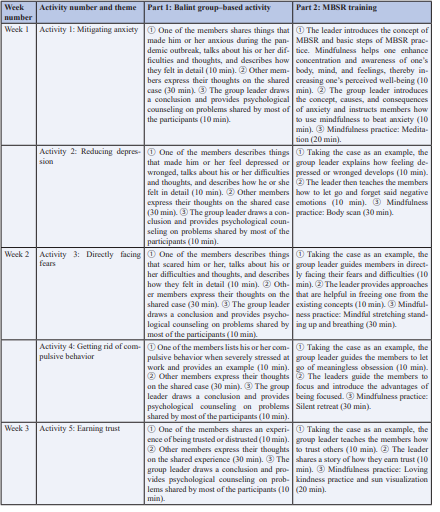
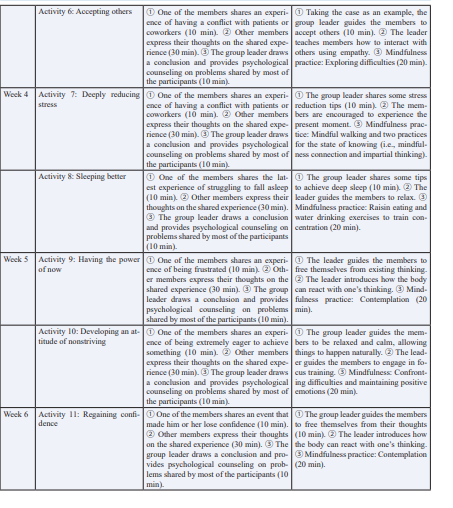
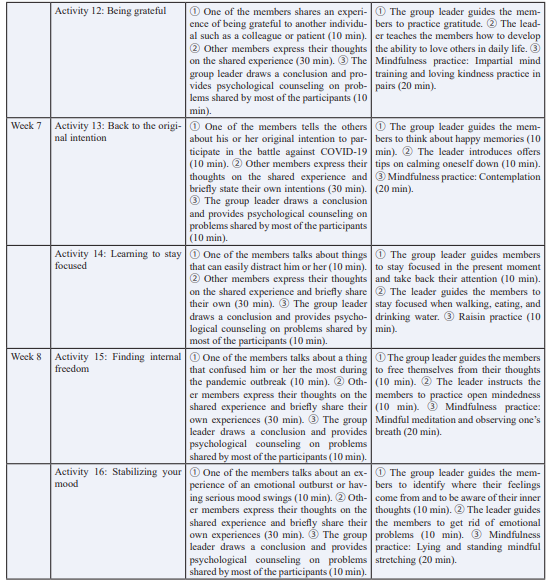
The control group was assigned a psychologist, psychologist provide remote psychological counseling services. Participants in the intervention group further divided into 7 subgroups, each consisting of eight individuals. A registered psychotherapist with more than 5 years of experience was assigned as the group leader to each subgroup received an 8-week group training. By referring to research on Balint group-based activities and MBSR, the present researchers developed an 8-week activity plan table. Before the program began, each group leader introduced the purpose of Balint activities, the concept of MBSR, and the 8-week activity plan to group members, followed by self-introductions of the leader and members [1, 4, 7, 8]. In each activity session, a member shared a case related to the member’s work in combating COVID-19 and the theme set in the session in question; each member had to share two cases when the pre-vention ended. After listening to a case report, other members expressed their thoughts and feelings. During the discussions, the group leaders guided their members and produced a conclusion for each session. The MBSR activities were held according to the proposed activity plan table. At the end of each session, the leader introduced the knowledge, connotations, training methods, experience, and skills associated with MBSR. Additionally, participants in the intervention group were required to engage in mindfulness practice for≥20 min daily and check in with their WeChat group. Table 1 details the themes, contents, and schedules of activity sessions per week. The control group received routine psychological counseling. The training is con¬ducted twice a week, and every session duration≥1.5h. Because social distancing was required due to the pandemic, activities were held through Tencent Meeting (an online meeting appli-cation). All participants in both groups were asked to complete an anonymous online questionnaire at two time points: pre-and post-intervention (8 weeks).
Table 1: Plan of Balint group–based activities combined with MBSR
Outcome Measures
Five Facet Mindfulness Questionnaire (FFMQ), Chinese Per-ceived Stress Scale (CPSS), Maslach Burnout Inventory (MBI) and Ryff’s Psychological Well-Being Scale (SPWB) were used to measure.
Five questionnaires were used for assessing the effectiveness of the method that combined Balint group-based activities and MBSR program on the levels of perceived stress, burnout, and psychological well-being, including general survey for collect¬ing demographic information (sex, age, marital status, seniority, job title, and educational attainment).
Five Facet Mindfulness Questionnaire (FFMQ), the FFMQ developed by Baer, Smith, Hopkins, Krietemeyer, and Toney (2006) was adopted [9]. The FFMQ measures one’s level of mindfulness and comprises five facets, namely observation (eight items), description (eight items), aware actions (eight items), nonjudgmental inner experience (eight items), and non-reactivity (seven items). A high mean score indicates a high level of mindfulness in each facet. With a Cronbach’s α of 0.74, the FFMQ can effectively appraise the mindfulness level of the in¬dividual to be treated.
Chinese Perceived Stress Scale (CPSS), the present researchers CPSS developed by Yang and Huang, who adapted the original Perceived Stress Scale proposed by the American psychologist Cohen (1983) for Chinese participants [10]. The CPSS comprises 14 items reflecting how nervous and uncontrollable one perceives the item to be (seven positive and seven reverse-scored items). Each item is rated on a 5-point Likert scale, from 0 (never), 1 (almost never), 2 (sometimes), 3 (often), to 4 (very often). A high score indicates a high level of perceived stress. The Cron-bach’s α of the CPSS is 0.78.
The Maslach Burnout Inventory (MBI) is a comprehensive, multidimensional questionnaire that was created by Susan Jackson, Michael Leiter and Christina Maslach in 1996 and has been widely used. It is a self-assessed reported questionnaire con¬sisting of 22 items, evaluating the 3 dimensions of burnout: depersonalization (DP, 5 items), personal accomplishment (PA, 8 items) and emotional exhaustion (EE, 9 items) [11].
Ryff’s Psychological Well-Being Scale. This scale was revised by Li and comprises 18 items in six dimensions (i.e., autono-my, environmental mastery, personal growth, positive relations with others, purpose in life, and self-acceptance) [12]. The items are rated on a six-point scale from 1 (strongly disagree), 2 (dis-agree), 3 (somewhat disagree), 4 (somewhat agree), 5 (agree), to 6 (strongly agree). A high score suggests a high level of psycho-logical well-being. The Cronbach’s α of the scale is 0.97.
Statistical Analysis
The collected responses were analyzed using SPSS 26.0, with measurement data denoted as`x±s. The data were subjected to an independent sample t test, paired sample t test, and Pearson’s correlation analysis. Enumerated data were indicated by fre- quency and percentage, and were subjected to an χï¼? test and Fisher’s exact test, in which P < 0.05 and P < 0.01 indicated significance, respectively. Ordinal data were processed using a rank-sum test, with P < 0.01 representing the significance level.
Quality Control
The present researchers had all participated in Balint-based group activities, possessed abundant relevant experience, were familiar with the activity process, and had received training on implementing an MBSR program. Before the experiment began, all researchers jointly received relevant training. Each research¬er was requested to simulate the experimental process, ensuring that the following requirements were met: (1) The participants honestly filled out the questionnaire within a given time period; (2) the participants could ask the researcher if they have any question; and (3) the researcher did not provide any “opin-ion-swaying” explanations to ensure genuine questionnaire answers. Leaders of the intervention group were all state-cer-tified second-grade psychological counselors, had passed the test for Balint-group training, and had hosted Balint groups at least three times before. To ensure effective verification of the activity’s quality, a WeChat group was established for the intervention groups. The group posts comprised an introduction to Balint groups and knowledge of MBSR, to which the action plan table was attached. During the intervention activities, the present researchers switched from one video conference to another one, making sure that the group discussion did not get sidetracked. All activities for each group were recorded.
Results
Sample Characteristics and Baseline Measures
As a result, the total number of the whole participants was 108. The participants included in the analysis should participate in the whole process and complete the questionnaire pre- and post-intervention. In the experimental group, two nurses withdrew from the study in the second week and the fourth week respectively, and one nurse left the study in the third week due to illness. Therefore, 53 people were finally included in the analysis in the experimental group; One participant in the control group fell ill at week 5 and did not complete the second questionnaire, so 55 people in the control group were finally included in the analysis. The CONSORT flow diagram in Fig.1. Baseline characteristics for the two arms were shown in Table 2. No statistically signifi¬cant differences were observed.

Figure 1: The CONSORT flow diagram
Table 2: Comparison of demographic information between the intervention and control groups
|
Characteristics |
Intervention group(n=53) |
Control group(n=55) |
X2 |
P |
|
|
Gender |
Male |
4 |
7 |
0.373 |
0.541 |
|
|
Female |
49 |
48 |
|
|
|
Age(years) |
18-25 |
11 |
13 |
0.805 |
0.669 |
|
|
26-30 |
27 |
30 |
|
|
|
|
≥31 |
15 |
12 |
|
|
|
Seniority(years) |
≤5 |
8 |
7 |
0.164 |
0.921 |
|
|
6-9 |
34 |
37 |
|
|
|
|
≥10 |
11 |
11 |
|
|
|
Marital status |
Married |
41 |
44 |
0.212 |
0.645 |
|
|
Single |
12 |
11 |
|
|
|
Job title |
Primary |
18 |
21 |
0.481 |
0.786 |
|
|
Upper middle |
21 |
23 |
|
|
|
|
Senior |
14 |
11 |
|
|
|
Educational attainment |
Associate’s degree |
9 |
7 |
0.423 |
0.809 |
|
|
Bachelor’s degree |
35 |
40 |
|
|
|
|
Master’s degree |
9 |
8 |
|
|
Table 3: Pretest correlations among all indicators between the two groups of nurses (n = 108, r)
|
Variable |
Mindfulness level (FFMQ) |
Perceived stress (PSS) |
Burnout (MBI) |
Psychological well-being(SPWB) |
|
Mindfulness level(FFMQ) |
1 |
|
|
|
|
Perceived stress(PSS) |
-0.408 |
1 |
|
|
|
Burnout(MBI) |
-0.803 |
0.358 |
1 |
|
|
Psychological well-being(SPWB) |
0.955 |
-0.471 |
-0.810 |
1 |
Table 4 displayed the total scores of FFMQ, PSS, MBI and SPWB Sat baseline. As a result, in this questionnaire survey, both the scores for PSS (67.28±4.43 vs 67.36±1.99) for the in-tervention group and control group were at a very high level, this score (57-70) indicates that our participants really hurting their own mental health with extreme stress response. they need some advice from a professional psychologist to help them reduce their perception of pressure devices and improve the quality of life. The scores for MBI for both groups were showed that, these nurses suffered from obvious burnout (72.62±3.95 vs 71.36±3.69).
Table 4: Comparison between the two groups regarding their pre- and postintervention scores of mindfulness level, perceived stress, burnout, and psychological well-being ( x-±s)
|
Variable |
Preintervention |
|
|
Postintervention |
|
|
||
|
|
Intervention group(n=53) |
Control group(n=55) |
t |
p |
Intervention group(n=53) |
Control group(n=55) |
t |
p |
|
Mindfulness level(FFMQ) |
115.53±5.49 |
115.80±3.52 |
0.354 |
0.724 |
170.83±2.93 |
115.59±3.51 |
-88.977 |
0.000 |
|
Perceived stress(PSS) |
67.28±4.43 |
67.36±1.99 |
0.582 |
0.562 |
31.70±1.55 |
67.55±2.01 |
103.859 |
0.000 |
|
Burnout(MBI) |
72.62±3.95 |
71.36±3.69 |
-2.062 |
0.042 |
35.53±3.34 |
70.64±3.05 |
57.303 |
0.000 |
|
Psychological well-being(SPWB) |
52.30±3.05 |
52.71±2.25 |
0.920 |
0.360 |
87.58±2.06 |
53.75±3.55 |
-60.430 |
0.000 |
There were no significant differences in baseline between the intervention group and control group for FFMQ, PSS, MBI and SPWB. Pre intervention, the intervention and control groups did not exhibit any significant differences in mindfulness lev-el, perceived stress, and psychological well-being scores (P > 0.05). However, the two groups scored significantly differently in burnout (P < 0.05), with the control group (71.36±3.69) scor- ing lower than the intervention group (72.62±3.95).
Post-intervention Changes in the Indicator Correlations between the Control and Intervention Groups
The 55 participants analyzed in the control group showed no significant (P > 0.05) before intervention, while the scores of FFMQ and SPWB for the intervention group at post-interven- tion was significantly higher from those at pre-intervention (i.e.115.53±5.49vs170.83±2.93 for FFMQ and 52.30±3.05 vs 87.58±2.06 for SPWB; Table 4). The result suggested that the intervention could effectively improve nurses' mindfulness level and promote their psychological health. For MBI and PSS, significant decrease in intervention group were observed after 8 weeks training, while control group was also somewhat decrease no statistically significance (P > 0.05; Table 5).
Table 5: Separate comparisons between the two groups regarding their preintervention mindfulness level, perceived stress, burnout, and psychological well-being scores (x-±s)
Correlations Among Mindfulness Level, Perceived Stress, Burnout, and Psychological Well-Being Before the intervention was implemented, the mindfulness lev-el, perceived stress, burnout (i.e., scoring highly in emotional exhaustion and depersonalization with a low sense of achieve-ment), and well-being of the control and intervention groups were compared. Preintervention mindfulness level was nega-tively correlated with perceived stress and burnout (P < 0.01) but positively correlated with well-being (P < 0.01). Perceived stress was positively correlated with burnout (P < 0.01) but neg-atively correlated with well-being (P < 0.01). Table 3 lists the correlations among said four indicators between the two groups prior to the intervention.
|
Variable |
Intervention group(n=53) |
Control group (n=55) |
||||||
|
|
Preintervention |
Postintervention |
t |
p |
Preintervention |
Postintervention |
t |
p |
|
Mindfulness level(FFMQ) |
115.53±5.49 |
170.83±2.93 |
-59.823 |
0.000 |
115.80±3.52 |
115.59±3.51 |
0.303 |
0.763 |
|
Perceived stress(PSS) |
67.28±4.43 |
31.70±1.55 |
53.999 |
0.000 |
67.36±1.99 |
67.55±2.01 |
-0.489 |
0.627 |
|
Burnout(MBI) |
72.62±3.95 |
35.53±3.34 |
54.937 |
0.000 |
71.36±3.69 |
70.64±3.05 |
1.131 |
0.263 |
|
Psychological well-being(SPWB) |
52.30±3.05 |
87.58±2.06 |
-78.927 |
0.000 |
52.71±2.25 |
53.75±3.55 |
-1.567 |
0.123 |
Correlations Among Mindfulness Level, Perceived Stress, Burnout, and Psychological Well-Being
Before the intervention was implemented, the mindfulness lev-el, perceived stress, burnout (i.e., scoring highly in emotional exhaustion and depersonalization with a low sense of achieve-ment), and well-being of the control and intervention groups were compared. Preintervention mindfulness level was nega-tively correlated with perceived stress and burnout (P < 0.01) but positively correlated with well-being (P < 0.01). Perceived stress was positively correlated with burnout (P < 0.01) but neg-atively correlated with well-being (P < 0.01). Table 3 lists the correlations among said four indicators between the two groups prior to the intervention.
Discussion
We consulted all the articles on mental health intervention of nurses since 1999, and found no relevant literature combining Balint group activities with MBSR, that’s mean, our study is the first attempt to combine Balint group activities with other psychological interventions. Through clinical randomized con-trolled trials, this study intervened with nurses in the anti-ep-idemic front line during the pandemic in the form of remote video conference. It was found that this method can effectively reduce nurses' perceived pressure and job burnout, and improve their mindfulness level and happiness. In addition, we conducted a correlation study on the mindfulness level, job burnout, per¬ceived stress and well-being of 108 front-line nurses fighting the pandemic before the intervention. It was found that the mindful¬ness level was negatively correlated with perceived stress and job burnout, and positively correlated with well-being. Among them, the correlation between mindfulness level and well-being was high (r = 0.955; Table 3), There is a strong negative cor¬relation between well-being and job burnout (r = -0.810; Table 3). Therefore, we believe that MBSR can reduce job burnout by improving nurses' mindfulness and well-being. As for psy¬chological stress, it can be alleviated through the discussion among Balint group members and the professional guidance of the group leader (a professional psychological consultant in this study). Before intervention, our research results showed that the level of perceived stress of front-line nurses fighting the pan¬demic was very high, and the results (Table 5) pre-and pro- the intervention result of the control group showed that ordinary psychological intervention (i.e. psychological counseling) could not effectively restore nurses' mental health in a short period of time (8 weeks).
Effects of Public Health Emergencies on the Perceived Stress, Burnout, and Psychological Well-Being of Nurses
Because of its high infectivity and long eclipse period, COVID-19 has caused a public health emergency that has at¬tracted global attention [13]. As one of the core members in the system combating such emergencies, nurses are a crucial human resource. Their physical and mental health must be maintained for the success of pandemic control [14]. The fight between front line nurses and the pandemic could be long because the number of new cases requiring nursing care has been increasing. Long contact with infected patients can pose a high risk to nurses and increase their physical and mental stress [15]. However, these front-line nurses do not have effective emotional regulation skills. Perceived stress refers to one’s psychological reaction to difficulties in life as well as various stimulants and disadvan¬tageous factors that threaten one’s psychological health. Stress manifests externally as nervousness or a lack of control. A high level of perceived stress can cause individuals to experience negative emotions, including disappointment and despair, re¬sulting in emotional disorders and a low sense of achievement. These factors can negatively affect the physical and psycholog¬ical health of nurses and ultimately cause burnout. Well-being refers to a state in which the individual, who is guided by ac¬tive emotional experiences, exhibits continuous and reasonable satisfaction with daily life and his or her performance at work. Nurses with low perceived well-being can be prone to anxiety, irritability, depersonalization, pessimism, and disappointment. Consequently, they may lose passion for their work with inten¬sified burnout. In this study, the preintervention mean score of 108 nurses on perceived stress was positively correlated with that on burnout (r = 0.358) and negatively correlated with that on psychological well-being (r = −0.471); a negative correlation was confirmed between burnout and psychological well-being (r = −0.810).
Effect of the Program on Perceived Stress of Nurses
In the program combining Balint group–based activities with MBSR training, each session featured a specific theme, en-abling the researchers to effectively implement interventions for negative emotion regulation on nurses. The nurses vented their negative emotions in the first part (i.e., the Balint group) of each activity, thereby reducing their psychological stress and weariness [16]. Subsequently, with the assistance of profession-al psychotherapists, the participants engaged in MBSR training to learn to cope with specific negative emotions, allowing them to increase their mindfulness level, relax, and solve problems at work caused by similar negative emotions in the future. The administered 8-week intervention program significantly reduced the nurses’ perceived stress possibly because the participants, through sharing their own experiences and inner thoughts with others in the Balint group, managed to release negative emo-tions. Additionally, the active intervention of MBSR training strengthened the participants’ mindfulness and stress resistance.
Effect of the Program on Burnout of Nurses
The nature of nursing work has caused nurses to be prone to emotional interference regarding their occupational risk and work satisfaction. Because the COVID-19 outbreak has increased nurses’ workload and stress at work, they are subject to emo¬tional exhaustion and burnout. After the intervention program of this study was implemented, burnout scores in the intervention group significantly dropped. This was possibly because the participants found suitable solutions in the Balint group discussion and improved their mindfulness, awareness of their body and mind, and emotional regulation ability through the MBSR training. Therefore, the participating nurses could, when confronting external interference, concentrate on the present moment, maintain calmness, adopt appropriate coping strategies, and reduce negative emotions, allowing them to feel more energetic at work with an enhanced sense of achievement [1, 4]
Effect of the Program on the Psychological Well-Being of Nurses
This study discovered that the posttest mindfulness level and well-being scores (i.e., 8 weeks later) did not significantly differ from the posttest scores in the control group. This indicated that nurses’ mindfulness level and perceived well-being would not improve without any intervention. By contrast, the intervention group scored significantly higher on mindfulness levels and psychological well-being after the intervention. This was possibly because the nurses vented their negative emotions and developed empathy for those with similar experiences in the Balint group discussion; moreover, they learned to intentionally pay attention to and understand their body, thoughts, and emotions, increasing their self-compassion without self-blame and judg-mental thoughts through the MBSR training. Therefore, the participants could enjoy their life and enhance their psychological well-being [17].
Discussion
We consulted all the articles on mental health intervention of nurses since 1999, and found no relevant literature combining Balint group activities with MBSR, that’s mean, our study is the first attempt to combine Balint group activities with other psychological interventions. Through clinical randomized con-trolled trials, this study intervened with nurses in the anti-ep-idemic front line during the pandemic in the form of remote video conference. It was found that this method can effectively reduce nurses' perceived pressure and job burnout, and improve their mindfulness level and happiness. In addition, we conducted a correlation study on the mindfulness level, job burnout, per¬ceived stress and well-being of 108 front-line nurses fighting the pandemic before the intervention. It was found that the mindful¬ness level was negatively correlated with perceived stress and job burnout, and positively correlated with well-being. Among them, the correlation between mindfulness level and well-being was high (r = 0.955; Table 3), There is a strong negative cor¬relation between well-being and job burnout (r = -0.810; Table 3). Therefore, we believe that MBSR can reduce job burnout by improving nurses' mindfulness and well-being. As for psy¬chological stress, it can be alleviated through the discussion among Balint group members and the professional guidance of the group leader (a professional psychological consultant in this study). Before intervention, our research results showed that the level of perceived stress of front-line nurses fighting the pan¬demic was very high, and the results (Table 5) pre-and pro- the intervention result of the control group showed that ordinary psychological intervention (i.e. psychological counseling) could not effectively restore nurses' mental health in a short period of time (8 weeks).
Effects of Public Health Emergencies on the Perceived Stress, Burnout, and Psychological Well-Being of Nurses
Because of its high infectivity and long eclipse period, COVID-19 has caused a public health emergency that has at¬tracted global attention [13]. As one of the core members in the system combating such emergencies, nurses are a crucial human resource. Their physical and mental health must be maintained for the success of pandemic control [14]. The fight between front line nurses and the pandemic could be long because the number of new cases requiring nursing care has been increasing. Long contact with infected patients can pose a high risk to nurses and increase their physical and mental stress [15]. However, these front-line nurses do not have effective emotional regulation skills. Perceived stress refers to one’s psychological reaction to difficulties in life as well as various stimulants and disadvan¬tageous factors that threaten one’s psychological health. Stress manifests externally as nervousness or a lack of control. A high level of perceived stress can cause individuals to experience negative emotions, including disappointment and despair, re¬sulting in emotional disorders and a low sense of achievement. These factors can negatively affect the physical and psycholog¬ical health of nurses and ultimately cause burnout. Well-being refers to a state in which the individual, who is guided by ac¬tive emotional experiences, exhibits continuous and reasonable satisfaction with daily life and his or her performance at work. Nurses with low perceived well-being can be prone to anxiety, irritability, depersonalization, pessimism, and disappointment. Consequently, they may lose passion for their work with inten¬sified burnout. In this study, the preintervention mean score of 108 nurses on perceived stress was positively correlated with that on burnout (r = 0.358) and negatively correlated with that on psychological well-being (r = −0.471); a negative correlation was confirmed between burnout and psychological well-being (r = −0.810).
Effect of the Program on Perceived Stress of Nurses
In the program combining Balint group–based activities with MBSR training, each session featured a specific theme, en-abling the researchers to effectively implement interventions for negative emotion regulation on nurses. The nurses vented their negative emotions in the first part (i.e., the Balint group) of each activity, thereby reducing their psychological stress and weariness [16]. Subsequently, with the assistance of profession-al psychotherapists, the participants engaged in MBSR training to learn to cope with specific negative emotions, allowing them to increase their mindfulness level, relax, and solve problems at work caused by similar negative emotions in the future. The administered 8-week intervention program significantly reduced the nurses’ perceived stress possibly because the participants, through sharing their own experiences and inner thoughts with others in the Balint group, managed to release negative emo-tions. Additionally, the active intervention of MBSR training strengthened the participants’ mindfulness and stress resistance.
Effect of the Program on Burnout of Nurses
The nature of nursing work has caused nurses to be prone to emotional interference regarding their occupational risk and work satisfaction. Because the COVID-19 outbreak has increased nurses’ workload and stress at work, they are subject to emo¬tional exhaustion and burnout. After the intervention program of this study was implemented, burnout scores in the intervention group significantly dropped. This was possibly because the participants found suitable solutions in the Balint group discussion and improved their mindfulness, awareness of their body and mind, and emotional regulation ability through the MBSR training. Therefore, the participating nurses could, when confronting external interference, concentrate on the present moment, maintain calmness, adopt appropriate coping strategies, and reduce negative emotions, allowing them to feel more energetic at work with an enhanced sense of achievement [1, 4]
Effect of the Program on the Psychological Well-Being of Nurses
This study discovered that the posttest mindfulness level and well-being scores (i.e., 8 weeks later) did not significantly differ from the posttest scores in the control group. This indicated that nurses’ mindfulness level and perceived well-being would not improve without any intervention. By contrast, the intervention group scored significantly higher on mindfulness levels and psychological well-being after the intervention. This was possibly because the nurses vented their negative emotions and developed empathy for those with similar experiences in the Balint group discussion; moreover, they learned to intentionally pay attention to and understand their body, thoughts, and emotions, increasing their self-compassion without self-blame and judg-mental thoughts through the MBSR training. Therefore, the participants could enjoy their life and enhance their psychological well-being [17].
Conclusion
The program combining Balint group–based activities with MBSR training effectively improved the mindfulness ability of font line nurses combating COVID-19. It helped them mitigate perceived stress and burnout while enhancing their psychological well-being. The research results suggested that the proposed psychological intervention could also help improve the psychological health and nursing quality of font line nurses fighting against other battles (particularly major public health incidents), thereby meriting extended application.
Limitations
While the results of the current study are informative and valu¬able, there are several limitations. Firstly, the participants of this study were recruited from hospitals in Two northern provinces of China, which may limit the generalization of the findings to other situations and locations (i.e. the south or northwest of China or other countries). Secondly, the current study excluded nurses with illness and those who had left their job due to pressure-related problems. Therefore, the “healthy worker effect” cannot be excluded. Thirdly, the current study did not explore possible negative aspects of the training that may arise with intervention dropouts. Fourthly the results could be somewhat subjective because this study was conducted using self-rated scales. Further research should be conducted to address said limitations [18-20].
Declarations
Ethics Approval and Consent to Participate
This study was approved by the Ethical Review Committee of Jinzhou Medical University (approval number: JZMU2020001). All participants in this study signed informed consent.
Consent for Publication
All authors have approved the manuscript and agree with submission to BMC Nursing.
Competing interests
The authors declare that there is no conflict of interests, we do not have any possible conflicts of interest.
Funding
This work was supported by Education Department of Liaoning Province, China [grant numbers JYTJCZR2020085].
Funding
This work was supported by Education Department of Liaoning Province, China [grant numbers JYTJCZR2020085].
Authors Contributions
CZ: Conceptualization, Methodology, Formal analysis, Writing - Original Draft; WB: Data Curation; ZH: Writing - Review & Editing. All authors reviewed the manuscript.
Acknowledgement
None.
Trial Registration
ChiCTR, ChiCTR2200055731. Registered 16 January 2022 - Retrospectively registered, http://www.chictr.org.cn/edit.aspx- ?pid=148223&htm=4
References
- Huang, L., Su, J., Song, Y., & Ye, R. (2020). Laser-induced graphene: En route to smart sensing. Nano-micro letters, 12(1), 1-17.
- Naushad, V. A., Bierens, J. J., Nishan, K. P., Firjeeth, C. P., Mohammad, O. H., Maliyakkal, A. M., ... & Schreiber, M.D. (2019). A systematic review of the impact of disaster on the mental health of medical responders. Prehospital and disaster medicine, 34(6), 632-643.
- Johnson, A. H., & Milberg, L. C. (2020). A narrative history of the American Balint Society 1990–2020. The International Journal of Psychiatry in Medicine, 55(3), 153-166.
- Huang, H., Zhang, H., Xie, Y., Wang, S. B., Cui, H., Li, L.,... & Geng, Q. (2020). Effect of balint group training on burnout and quality of work life among intensive care nurses: a randomized controlled trial. Neurology, Psychiatry and Brain Research, 35, 16-21.
- Ghawadra, S. F., Abdullah, K. L., Choo, W. Y., & Phang, C.K. (2019). Mindfulness-based stress reduction for psychological distress among nurses: A systematic review. Journal of clinical nursing, 28(21-22), 3747-3758.
- Matchim, Y., Armer, J. M., & Stewart, B. R. (2011, March). Mindfulness-based stress reduction among breast cancer survivors: a literature review and discussion. In Oncology nursing forum (Vol. 38, No. 2).
- Lin, L., He, G., Yan, J., Gu, C., & Xie, J. (2019). The effects of a modified mindfulness-based stress reduction program for nurses: a randomized controlled trial. Workplace health & safety, 67(3), 111-122.
- Williams, H., Simmons, L. A., & Tanabe, P. (2015). Mind-fulness-based stress reduction in advanced nursing practice: a nonpharmacologic approach to health promotion, chronic disease management, and symptom control. Journal of Holistic Nursing, 33(3), 247-259.
- Baer, R. A., Smith, G. T., Hopkins, J., Krietemeyer, J., & Toney, L. (2006). Using self-report assessment methods to explore facets of mindfulness. Assessment, 13(1), 27-45.
- Wong, W. K., & Chien, W. T. (2017). Testing psychometric properties of a Chinese version of perception of aggression scale. Asian journal of psychiatry, 25, 213-217.
- Maslach, C., Schaufeli, W., & Leiter, M. P. (2001). Job burnout. Annual Rewiew of Psychology 52 (1), 397–422.
- Li, R. H. (2014). Reliability and validity of a shorter Chi-nese version for Ryff’s psychological well-being scale.Health Education Journal, 73(4), 446-452
- Shrivastava, S. R., & Shrivastava, P. S. (2020). Minimizing the risk of international spread of coronavirus disease 2019 (COVID-19) outbreak by targeting travelers. Journal of Acute Disease, 9(2), 47.
- Ferrán, B., & Barrientos-Trigo, S. (2020). Caring for the caregiver: The emotional impact of the coronavirus epidemic on nurses and other health professionals. Enfermeria Clinica (English Edition), 31, S35-S39.
- Shen, X., Zou, X., Zhong, X., Yan, J., & Li, L. (2020). Psy-chological stress of ICU nurses in the time of COVID-19.Critical Care, 24(1), 1-3.
- Popa-Velea, O., Trutescu, C. I., & Diaconescu, L. V. (2019). The impact of Balint work on alexithymia, perceived stress, perceived social support and burnout among physicians working in palliative care: a longitudinal study. Int J Occup Med Environ Health, 32(1), 53-63.
- Kuo, M. O., Min, L. I., Yifan, S. H. A. O., Yuan, X. U.Chen, X.U., Song, X. U., & Xiaoxiao, X. U. (2020). Effects of mindfulness-based stress reduction on perceived stress, negative emotion and psychological well-being in nurses. Nursing Journal of Chinese People's Liberation Army, 37, 47-50.
- Yang, C., Zhou, B., Wang, J., & Pan, S. (2021). The effect of a short-term Balint group on the communication ability and self-efficacy of pre-examination and triage nurses during COVID-19. Journal of Clinical Nursing, 30(1-2), 93-100
- Baig, A. M., Ahmad, S., Khaleeq, A., Rafique, H., Rajput, S., Angez, M., ... & Katyara, P. (2021). Ocular COVID-19: eyes as a reservoir to conceal and spread SARSCoV-2. Infectious Disorders-Drug Targets (Formerly Current Drug Targets-Infectious Disorders), 21(4), 480-483.
- Gillet, N., Le Gouge, A., Pierre, R., Bongro, J., Méplaux, V., Brunault, P., ... & Cheyroux, P. (2019). Managerial style and well-being among psychiatric nurses: A prospective study. Journal of psychiatric and mental health nursing, 26(7-8), 265-273.