

International Journal of Media and Networks(IJMN)
ISSN: 2995-3286 | DOI: 10.33140/IJMN
Impact Factor: 1.02



Research Article - (2026) Volume 4, Issue 1
Economic Perspectives on Fluidic Immersion Projectors
Received Date: Dec 21, 2025 / Accepted Date: Jan 19, 2026 / Published Date: Feb 27, 2026
Copyright: © 2026 This is an open-access article distributed under the terms of the Creative Commons Attribution License, which permits unrestricted use, distribution, and reproduction in any medium, provided the original author and source are credited.
Citation: Passmore, G (2026). Economic Perspectives on Fluidic Immersion Projectors. Int J Med Net, 4(1), 01-54.
Abstract
The research paper defines a new class of projection mapping device specifically architected to be immersive, rapidly configurable, media generative, adaptive and venue flexible. Unlike traditional projectors, which are tailored for general market needs, often leading to underutilized features and cumbersome setup processes, this new projector breaks away from the norm. It is engineered to be highly flexible and rapidly reconfigurable, adapting seamlessly to the unique requirements of location-based entertainment, educational settings, and unconventional projection spaces.
Key to this design is its ability to automatically adjust for surface deformations and variations in photometric properties across the projection surface. This capability ensures consistent and high-quality visual outputs, irrespective of the irregularities or complexities of the projection area. The projector's architecture is a paradigm shift from the one- size-fits-all approach typical of conventional projection technology. By focusing on specific use cases, it eliminates the redundancy of unused features and the inefficiencies associated with time-consuming setup procedures.
This innovation addresses a critical gap in the market by offering a tailored solution that excels in environments where customization and adaptability are paramount. Such environments demand a higher degree of precision and flexibility than what standard projectors provide. The new projector's optimized design for these highly specialized applications not only enhances the user experience in such settings but also signifies a significant advancement in projection technology. It presents a differentiated, noncommodity option in the projection selection, aligning more closely with the evolving needs of contemporary visual display environments.
Keywords
Respiratory Therapy, Preceptorship, Preceptor Training, Clinical Education, Medical Education
Premise
In the current digital age, media consumers are facing a unique set of challenges characterized by dwindling engagement, a craving for more dramatic content, reduced patience, and a growing demand for interactivity. This essay delves into these issues, exploring the phenomenon of media fatigue and the increasing difficulty of capturing and retaining audience attention, particularly for venues with captive audiences.
Escalating Need for Dramatic Content and Reduced Patience
Heightened Drama: In an era saturated with media content, consumers are increasingly exposed to dramatic and sensationalized material. This exposure has escalated expectations, leading to a preference for more intense, dramatic content. The psychological aspect, often described in terms of a 'thrill-seeking' behavior, is evident in the growing popularity of genres and themes that push the boundaries of intensity and excitement.
Diminishing Attention Spans: Alongside the craving for more dramatic content, there is a notable reduction in audience patience and attention spans. Studies suggest a significant decrease in the average attention span over the past few decades, influenced largely by the rapid consumption of digital media. This decline affects how consumers engage with content, frequently favoring shorter, more immediate forms of entertainment over longer, more nuanced narratives.
Media Fatigue and Oversaturation
Overwhelming Volume of Content: The digital landscape is flooded with a vast amount of media, making it increasingly challenging for any single piece of content to stand out. This saturation leads to what is termed 'media fatigue,' where consumers feel overwhelmed by the sheer volume and variety of available content.
Quality vs. Quantity: The ease of content creation and distribution in the digital age has led to a flood of low-quality media. This abundance of content, while offering variety, often lacks depth and fails to engage audiences meaningfully, contributing further to media fatigue.
The Challenge for Venues with Captive Audiences
Competing for Attention: For venues with captive audiences, such as theaters, museums, or educational institutions, the challenge is magnified. Competing with the billions of pieces of content available at consumers' fingertips is a daunting task. These venues regularly struggle to engage audiences who are accustomed to on-demand, personalized digital media.
The Lure of Personal Devices: Often, capturing the attention of audiences means competing with their personal devices. Smartphones and tablets offer a gateway to a world of content, making it challenging for physical venues to engage visitors fully.
The Solution: Immersive, Responsive Content
Creating Immersive Experiences: To captivate modern audiences, venues are increasingly turning to immersive content. This involves creating experiences that envelop the audience, offering a level of engagement that is difficult to achieve through traditional, flat media. Immersive content often utilizes technologies like virtual reality (VR), augmented reality (AR), and sophisticated audio-visual setups to create a multi-sensory experience.
Responsiveness and Interactivity: Another key to engaging contemporary audiences is interactivity. Responsive content that changes based on audience input or behavior can significantly enhance engagement. This interactivity can range from simple audience choice mechanisms to complex, AI-driven systems that adapt content in real-time.
The Role of Technology: Implementing immersive and interactive experiences requires advanced technology. This includes not only the hardware, like projectors and VR headsets, but also the software that drives the interactive elements. The integration of these technologies is crucial in creating experiences that can draw audiences away from their personal devices and engage them in the content being presented.
Market Study
The current state of the projector market, as revealed by an extensive analysis of 2,184 projector models, indicates a notable misalignment with the specific needs of location-based entertainment and education sectors. This analysis encompassed various aspects including features, configurability, serviceability, and overall suitability for the intended applications. Additionally, financial metrics such as cost per lumen and cost per megapixel, along with the resolution of these projectors, were scrutinized to assess their value proposition.
A key finding from this comprehensive review is the apparent homogeneity in the projector market, which seems to have evolved into a commodity landscape with minimal differentiation. This lack of distinction is not just evident in the features and technical capabilities of the projectors but also extends to the blurred lines between television and projection technologies. Such a scenario poses significant challenges for specialized applications like location-based entertainment and education, which demand unique capabilities and performance characteristics that go beyond the offerings of standard projectors. One of the other aspects examined was the cost-effectiveness of the projectors, evaluated through metrics like cost per lumen and cost per megapixel.
These financial ratios are essential in understanding the value delivered by a projector in terms of its brightness (lumens) and image resolution (megapixels) relative to its cost. However, the analysis suggests that the majority of the projectors in the market do not offer a favorable balance in these aspects, particularly when considering the specialized requirements of entertainment and educational settings.
Furthermore, the resolution, a key factor in image quality, was found to be an area where many projectors fall short of the needs of modern applications. High-resolution imagery is crucial in educational and entertainment environments for clarity and detail, yet many available projectors do not meet these high standards.
The study also involved a critical evaluation of the advertised lumen output of projectors against laboratory-measured values. This comparison revealed a concerning trend where manufacturers often overstate the capabilities of their products. Such discrepancies between marketing claims and actual performance can lead to significant issues for users who rely on these specifications to make informed purchasing decisions.
In addition to the overstatement of technical capabilities, the analysis noted a tendency among manufacturers to include a plethora of features that, while potentially enhancing the product's appeal in marketing brochures, do not necessarily add value in practical terms. This practice results in projectors that are laden with low-cost, low-value features that have little to no utility in the specialized contexts of location-based entertainment and education.
This situation in the projector market points to a need for a paradigm shift wherein manufacturers focus more on the specific needs of these niche sectors rather than adopting a one-size-fits-all approach. Such a shift would involve the development of projectors with genuinely useful features, higher reliability, and performance metrics that align with the realworld demands of entertainment and educational applications.
Addressing this gap requires a concerted effort from manufacturers to move away from the commodity mindset and instead focus on innovation, truthful marketing, and the development of projectors that truly meet the unique demands of these sectors. One paradox, however, is that as buyers’ distrust grows with projector manufacturers, their sense of awe with technically successful venues using projection will continue to grow.
Projector Basics
A projector is a complex device composed of various subsystems and components, each playing a crucial role in its functionality. These components work in concert to produce the final projected image. The following is an overview of the main components and technologies involved in a classic projection system:
Image Generation is the core of the projector, where the image is initially formed. It involves technologies such as:
Emissive Image Sources
Lasers
Laser technology in display systems emits coherent light to create images, often used in projection systems and high-end displays. They are known for their precision, vibrant color range, and efficiency. The types of lasers used in these systems vary, including:
• Diode Lasers: Commonly used due to their compact size and efficiency. They are suitable for portable projectors and small-scale display systems.
• Solid-State Lasers: Offer higher power and are used in applications requiring intense brightness and long-lasting performance.
• Gas Lasers: Such as helium-neon lasers, are less common but are used for specific applications that require certain wavelengths of light.
• Metal-Halide Lasers: Provide a wide spectrum of colors and are used in applications that require high brightness and color accuracy, such as in large venue projectors.
Light-Emitting Diodes (LEDs)
LEDs are versatile light sources that emit light when an electric current passes through semiconductor material. Their applications in display technology are widespread, used both as individual pixels in LED displays and as a backlight source in LCD screens. They are recognized for their long lifespan, energy efficiency, and excellent color reproduction.
Light Modulating Devices
Liquid Crystal Displays (LCDs): LCDs create images by modulating light using liquid crystal cells sandwiched between polarizing filters. The orientation of these liquid crystals changes with electric current, altering the light passing through to form images. LCDs are known for their slim profile, energy efficiency, and suitability for a range of display sizes, from small devices to large TVs.
Micro-Electromechanical Systems (MEMS): MEMS in display technology, particularly Digital Micromirror Devices (DMDs) used in Digital Light Processing (DLP) projectors, consist of tiny mirrors that reflect light to produce an image. Each mirror corresponds to a pixel and can tilt to control the light's direction, creating a sharp and scalable image. MEMS-based systems are favored for their high image quality, reliability, and versatility in different resolutions.
The diversity of light sources in display technologies, from lasers with various bulbs like metal-halide to energy-efficient LEDs, caters to a wide range of applications and user needs. Lasers provide high brightness and color purity, making them ideal for largescale projections, while LEDs offer versatility and efficiency for both direct display and backlighting purposes. In light modulating devices, LCDs provide a reliable and energy-efficient display solution, and MEMS technology, particularly in DLP projectors, offers precise and high-quality image projection. The ongoing advancements in these technologies continue to expand their applications and improve display performance across various domains.
Optics
The optics system in a projector handles the manipulation and projection of light to form a visible image. It includes:
• Light Collection and Utilization: This aspect focuses on efficiently gathering and using light from the source.
• Light Polarization, Separation, and Recovery: These processes manage the polarization of light, crucial for certain types of projectors like LCDs.
• Spectral Filtration, Separation, and Recombination: These are methods to filter, separate, and recombine light spectrums for color accuracy and image quality.
• Lenses and Screens: Lenses focus and project the image onto a screen, which displays the final image.
• System Design: This encompasses the overall design of the projector, considering:
• Human Factors and Interfaces: Considerations like luminance, colorimetry, and resolution that impact user experience.
• Artifact Minimization: Techniques to reduce unwanted artifacts in the projected image.
Electronics
The electronic components of a projector manage the processing and handling of signals, including:
• Image Processing: This involves preparing and optimizing the image signal for projection.
• Interface Design: These components manage the connection between the image generation system and external video sources.
• Power Supplies: These provide stable power to the projector's components.
Mechanics
The mechanical aspect of a projector is vital for its physical integrity and operation, involving:
• Thermal Architecture: Ensuring the projector dissipates heat effectively to maintain optimal operating temperatures.
• Stable Opto-Mechanical Construction: Designing a structure that supports the optical components securely and aligns them precisely.
• Enclosures: The external housing that protects the internal components and provides a userfriendly interface.
Shifting Projector Needs
Media saturation through handheld devices and nearly two billion televisions has created boredom and reduced consumption of any individual content. With over 10,000 broadcast channels and an enormous amount of free online content, subscribers are cutting their ties with providers, theaters, and museums. Media stakeholders are experiencing dwindling public participation in their products. At the same time, the public is choosing shorter and shorter content.

The Problem of Flat Static Content
In the evolving narrative of media consumption, there is a notable shift in audience preferences, especially visible in the film industry's increasing dependency on extravagant spectacles such as bombastic superhero plots, elaborate explosions, and relentless car chases. This paper aims to highlight the limitations of static media content and explore how embracing both immersive formats and responsive content could serve as a dual solution to this trend of ever-escalating spectacle. Let’s take a singular example of an indicator and then move to the wider issue.
Viewer Boredom and the Search for Novelty: The incorporation of talking animals in films can be considered a response to viewer boredom with traditional storytelling techniques and character archetypes. As audiences become more exposed to a wide array of overly dramatized content, their threshold for engagement and interest rises, leading them to seek novel and unconventional experiences. From a broader perspective, there exists an unsustainable trend of escalating spectacle.
Escalation of Spectacle in Film: The film industry, especially in mainstream Hollywood productions, has witnessed a pronounced trend toward incorporating visually extravagant elements. This includes a heavy emphasis on superhero-centric storylines, elaborate special effects, and adrenaline-fueled action sequences. These components are strategically employed to captivate audiences, often prioritizing spectacle over narrative substance. The success of such elements is reflected in their box office performance, yet they denote a growing pressure to constantly amplify the level of excitement and visual grandeur to maintain audience interest.
Shift in Audience Dynamics: Modern audiences, especially younger viewers who are more digitally inclined, are showing a preference for content that is not just viewed but interacted with. Accustomed to the interactive nature of digital media, these viewers typically find traditional, linear storylines less engaging, leading to a growing appetite for content that offers more than passive observation.
Limitations of Traditional Film Formats: Conventional cinema, with its linear narrative structure, faces challenges in keeping up with these evolving audience preferences. Despite the capability of traditional films to deliver compelling stories and aesthetic visuals, they lack the interactive and immersive elements increasingly sought after by contemporary viewers.
Economic Considerations: The economic model of investing heavily in visually extravagant films carries significant risks. The reliance on blockbuster success for profitability, amidst skyrocketing production costs, poses a financial challenge and underscores the need for a more sustainable approach to content creation.
Shorter Content
The phenomenon of shortening media engagement duration reflects a significant shift in consumer behavior and media consumption patterns. In recent years, there has been a noticeable trend towards shorter, more concise content formats across various media platforms. This shift can be attributed to several interrelated factors:
Digital Revolution and Information Overload: The explosion of digital media and the internet has led to an overwhelming abundance of content. Consumers are bombarded with endless streams of information, leading to shorter attention spans. As a result, media producers are adapting by creating shorter, more digestible content to capture and retain audience attention.
Rise of Social Media and Mobile Consumption: Social media platforms, such as Twitter, TikTok, and Instagram, have popularized micro-content formats. These platforms encourage brief, engaging content that can be consumed quickly, aligning with the onthe-go lifestyle of many users who access media primarily through smartphones.
Changing Consumer Preferences: Modern audiences, particularly younger generations like Millennials and Gen. Z, show a preference for content that is quick and to the point. They tend to favor media that can be consumed in brief intervals, amidst their busy schedules, leading to a growing market for short-form content.
Advancements in Technology: The ease of creating and distributing content has led to a more competitive media landscape. Content creators are leveraging advancements in technology to produce highquality content at a faster rate, which, in turn, feeds into the cycle of shorter engagement times as consumers are presented with more choices.
Economic and Commercial Factors: From an economic perspective, shorter content can translate to more efficient engagement metrics. Advertisers and content creators recognize that capturing audience attention in the first few seconds is crucial. Hence, there is a focus on creating content that is not only brief but also instantly captivating.
Psychological Impact: The instant gratification provided by short-form content aligns well with the dopamine-driven feedback loops encouraged by social media and modern digital interactions. This further reinforces the preference for shorter content, as it satisfies the desire for quick and frequent rewards.
Emergence of New Content Formats: New formats like stories, reels, and short videos have emerged, specifically designed for brief interactions. These formats cater to audiences seeking quick entertainment or information snippets. Impact of Global Events: Events like the COVID-19 pandemic have also influenced media consumption habits. With increased screen time during lockdowns, many consumers gravitated towards shorter content forms to break the monotony of extended periods spent indoors.
Immersive Projection Versus VR/ AR
Immersive projection and virtual reality (VR) headsets represent two distinct approaches to creating immersive experiences, each with its own set of advantages. While VR headsets offer a deeply personal and interactive experience, immersive projection systems have several benefits that make them a compelling alternative or complement to VR technology.
Shared Experience: One of the key advantages of immersive projection is the ability to create a shared experience for multiple people simultaneously. Unlike VR headsets, which are typically designed for individual use, immersive projection can encompass an entire room or space, allowing groups of people to experience and interact with the same environment together. This communal aspect is particularly valuable in settings like classrooms, museums, theaters, or corporate presentations, where group engagement is essential.
No Need for Wearable Equipment: Immersive projection does not require the audience to wear any specialized equipment like headsets or goggles, which can be a barrier for some users due to comfort, hygiene, or accessibility concerns. This barrier-free approach makes immersive projection more inclusive and user¬friendly, especially for longer sessions or for audiences who may feel discomfort or disorientation from wearing VR headsets.
Spatial Awareness and Safety: Immersive projection allows users to maintain their natural spatial awareness and physical orientation in the real world. This can be safer and more comfortable, as it reduces the disorientation and motion sickness that some individuals experience with VR headsets. In an immersive projection environment, users can move freely and interact with both the digital content and the physical space around them.
Scalability and Flexibility: Immersive projection systems can be scaled to fit various sizes and shapes of spaces, from small rooms to large halls. This scalability and flexibility make it suitable for a wide range of applications and environments. Additionally, the content projected can be easily changed or adapted, offering versatility in usage.
Ease of Content Creation and Adaptation: Creating content for immersive projection can be more straightforward compared to developing fully interactive 3D VR environments. Existing 2D and 3D content can often be adapted for projection, making it easier for creators to leverage existing assets and narratives.
Integration with Physical Elements: Immersive projection can seamlessly blend digital content with physical elements of the environment. This integration can create unique and engaging experiences that are not possible with VR headsets, which completely replace the physical environment with a virtual one.
Cost-Effectiveness for Larger Audiences: While the initial setup for an immersive projection system can be significant, it can be more cost-effective for larger audiences compared to providing individual VR headsets for each participant.
Reduced Health Risks: While VR headsets are known for causing certain health issues like motion sickness, eye strain, and disorientation due to prolonged use, immersive projection systems significantly mitigate these risks. Since immersive projection does not require wearing any device on the head or eyes, it reduces the strain on these sensory organs. Users are less likely to experience the vertigo and nausea associated with VR-induced motion sickness, making immersive projection a more comfortable experience, especially for extended periods.
Facilitation of Live Instruction or Coaching: Immersive projection environments are conducive to live instruction or coaching, which is a critical advantage in educational, training, or collaborative work settings. A live instructor, teacher, or coach can be physically present in the same space as the audience, guiding them through the experience, offering realtime feedback, and interacting with both the projected content and the participants. This direct interaction is less feasible with individual VR headsets, where each user is isolated in their own virtual environment.
Greater Accessibility and Inclusivity: Immersive projection does not require users to wear headgear, making it more accessible to people with certain disabilities or those who are uncomfortable with headmounted devices. This inclusivity extends to individuals with vision impairments who may find VR headsets challenging to use. By projecting content into a shared physical space, immersive projection systems can be designed to accommodate a wider range of needs and preferences.
Enhanced Safety and Emergency Responsiveness: In settings where safety and quick response to emergencies are crucial, such as in schools or corporate environments, immersive projection allows for a safer experience. Participants remain aware of their physical surroundings and can quickly respond to external stimuli or emergencies, a significant advantage over the isolation experienced in VR headsets.
Collaborative and Interactive Learning: With the presence of a live instructor and the ability to interact with others in a shared space, immersive projection fosters a collaborative and interactive learning environment. This aspect is particularly beneficial in educational settings where group discussions, interactive sessions, and collaborative projects are integral to the learning experience.
Adaptability to Physical Spaces: Immersive projection can be adapted to the physical layout of a space, allowing for more natural movement and interaction within the environment. This adaptability ensures that the content and experience are harmoniously integrated with the physical setting, enhancing the overall experience.
Of course, the choice between immersive projection and VR technology ultimately depends on the specific needs and context of the intended experience.
Emergency Management
In light of the public safety concerns prevalent in the United States, particularly regarding mass shootings, immersive projection emerges as a preferable alternative to virtual reality (VR) headsets for use in public settings. Immersive projection offers several key advantages that address safety concerns while still providing a rich, engaging experience.
Maintained Situational Awareness: Unlike VR headsets, which isolate users from their physical environment, immersive projection allows individuals to remain aware of their surroundings. This awareness is crucial in public spaces where quick recognition and response to emergencies, such as mass shootings, are vital for safety.
Enhanced Safety in Public Venues: Immersive projection does not require the wearing of headgear that blocks vision and hearing. This means that in public venues, users can immediately notice and respond to emergencies, such as evacuation alarms or public safety announcements, thus ensuring quicker and more effective emergency responses.
No Isolation from the External Environment: Since immersive projection does not involve the use of isolating headgear, it allows users to interact with both the digital content and the people around them. This dual engagement is particularly important in scenarios where collective awareness and group dynamics are essential for safety and response.
Adaptability to Emergency Protocols: Venues using immersive projection can easily integrate their safety protocols into the experience without disrupting the immersive aspect. For instance, visual or auditory cues for emergencies can be seamlessly incorporated into the projected content, ensuring that safety messages are conveyed effectively.
Legal and Ethical Advantages: Given the heightened awareness of safety in public spaces, immersive projection reduces potential legal and ethical concerns associated with using VR headsets. The technology allows for a safer, more controlled environment where the liability concerns, particularly in the event of an emergency, are considerably mitigated.
Community and Social Interaction: Immersive projection fosters a shared experience, promoting community and social interaction.
In public settings, this can translate to a collective vigilance and a unified response in case of an emergency, as opposed to the individual isolation experienced in VR.
problems
Cultural Significance
The trend towards prioritizing absurdity and spectacle in media content has become increasingly prevalent in contemporary entertainment landscapes. This content can, in some instances, demean the audience, focusing on the implications of this trend and its effects on viewer perception and engagement.
Absurd and spectacle-driven content typically refers to media that emphasizes shock value, sensationalism, or over-the-top elements to captivate audience attention. While such content can be initially engaging and entertaining, it often lacks substantive depth, which can lead to several issues concerning audience treatment and perception.
Superficial Engagement
One of the primary issues with absurd and spectaclefocused content is its tendency to engage audiences on a superficial level. The reliance on shock value or sensationalism frequently overshadows more nuanced storytelling or deeper thematic exploration. This type of content tends to prioritize immediate visual or emotional impact over lasting intellectual or emotional engagement, potentially leading audiences to feel underwhelmed or unfulfilled in the long term.
Underestimation of Audience Intelligence
Absurd and spectacle-driven content can inadvertently convey a message that audiences are only interested in or capable of appreciating surface-level entertainment. This underestimation of audience intelligence and sophistication can be demeaning, as it overlooks the viewers' capacity for critical thinking and their desire for content that challenges them intellectually or emotionally. By continuously feeding audiences with content that prioritizes spectacle over substance, there is a risk of perpetuating a cycle of low expectations and simplistic content consumption.
Desensitization to Content
Repeated exposure to over-the-top or absurd content can lead to desensitization. When audiences are constantly bombarded with extreme scenarios, shock tactics, or sensational imagery, their ability to be impacted or moved by such content diminishes over time. This desensitization can make it increasingly difficult for creators to produce content that genuinely resonates with viewers, forcing a continual escalation of spectacle, which can further trivialize the viewer's experience and engagement.
Erosion of Trust
When content creators consistently rely on absurdity and spectacle, it can erode the trust between them and their audience. Viewers may begin to question the authenticity and credibility of the content they are consuming. This skepticism can extend beyond individual pieces of content, affecting the broader perception of media and entertainment sources. A lack of trust can diminish the overall value and impact of media content, as audiences may become cynical or disengaged.
Impact on Cultural and Social Discourse
Media content plays a significant role in shaping cultural and social discourse. When absurdity and spectacle dominate, there is a missed opportunity for media to contribute meaningfully to societal conversations. Instead of provoking thought, inspiring change, or providing insightful commentary, spectacle-driven content often eschews these responsibilities in favor of momentary entertainment, potentially leading to a more superficial and less informed public discourse.
There is a growing need for content creators to strike a balance, recognizing the value of both entertainment and substance, and respecting the audience's capacity for more in-depth engagement and critical thought. This balance is crucial for maintaining the integrity and sustainability of media content and its impact on viewers.
Technical Significance: Lack of Projector Research
The majority of advancements in projection display systems and their components have primarily occurred within industrial research and development facilities, rather than in academic settings. This trend can be attributed to the inherently commercial nature of the projection industry. As a result, individuals in academic settings have encountered limited opportunities to delve deeply into the study of electronic projection technology.
One notable consequence of this industry-driven development has been the scarcity of wide-view or comprehensive texts and published works on various aspects of projector components and subsystems. Two primary factors contribute to this situation.
Firstly, the proprietary nature of these components often restricts information sharing, as companies seek to protect their technological innovations and maintain competitive advantages. This protection of intellectual property and trade secrets inherently limits the availability of detailed information on projector technology in the public domain.
Secondly, the intense commercial pressures faced by companies in the projection industry play a significant role. These pressures often discourage or limit the capacity of industry professionals to publish their findings and research. In a fast-paced, competitive market, the focus is frequently on product development and innovation rather than on the dissemination of knowledge through academic or public channels.
As a result, the academic study of electronic projection technology has faced certain constraints. The lack of readily available, detailed information on the inner workings of projection systems has posed challenges for perspective, as wells as academic research and education in this field. This situation underscores a broader challenge in technology-driven industries, where the pace of commercial innovation and the need to safeguard proprietary information can sometimes impede broader knowledge sharing and academic inquiry.
This Paper
This paper aims to offer a comprehensive analysis of projector technology, with a specific focus on its current stagnation and the increasing disconnection from the rapidly changing cultural landscape. The intent is to explore the broader implications and context of this technology in the modern era, taking shifting trends into account, and evolving consumer expectations.
However, it's important to note that this topic is not widely embraced within the projector manufacturing industry, especially among larger, more established firms. These entities, often characterized by slower adaptability and a tendency towards maintaining the status quo, have a significant stake in moderating the pace of change. The reluctance of these firms to embrace rapid innovation can be attributed to several factors:
• Investment in Legacy Technologies: Larger companies typically have significant investments in existing technologies. Rapid shifts or the adoption of innovations can make these existing investments less relevant or even obsolete, resulting in substantial financial impacts.
• Market Dominance and Conservatism: Firms that command a large share of the market might exhibit conservative tendencies, preferring to stick with proven, traditional methods rather than pursuing aggressive innovation. This conservatism is frequently driven by a desire to safeguard existing market shares and profit margins.
• Organizational Inertia: In many established corporations, there is an inherent inertia that makes them resistant to change. This resistance is often rooted in long-standing practices and a corporate culture that is slow to adapt, which can impede the company's ability to respond effectively to new market trends and consumer demands.
• Regulatory and Bureaucratic Challenges: Larger organizations often face more complex regulatory landscapes and internal bureaucratic hurdles, which can slow down decision-making processes, particularly regarding the adoption of new technologies or shifts in strategic direction.
• Scaling Innovations: Introducing and scaling new technologies across a large organization with entrenched products and services poses a significant logistical and financial challenge.
This paper, therefore, not only aims to analyze the present and future of projector technology, but also to understand the industry's challenges and barriers to innovation. It seeks to elucidate the reasons behind some companies' reluctance to rapidly evolve and assesses how this conservatism affects the technology's relevance in today's digitally driven world. Additionally, the analysis will explore potential strategies that could enable the industry to overcome these barriers and better align with current cultural shifts and consumer preferences.
Proposed System
Short Definition
The Fluidic Immersion Projector is not just a tool for displaying content; it's an advanced system designed to create an interactive, enveloping experience. By combining these sophisticated components, it allows audiences to engage with content in a novel way, making it ideal for applications ranging from entertainment and education to experiential marketing and collaborative workspaces. This technology marks a significant leap in projection capabilities, moving beyond traditional boundaries to offer richer, more dynamic, and engaging experiences.
The Drive to Dynamic Immersion
Combining immersive formats with responsive content presents a compelling alternative to the current spectacle-driven trend. Immersive formats, utilizing technologies like VR, AR, and 360-degree projection, offer a multi-dimensional experience that goes beyond traditional viewing. They allow audiences to feel enveloped and actively engaged in the content.
Responsive content, on the other hand, adapts to viewer interactions, preferences, or behaviors, creating a personalized experience. This could involve branching storylines, interactive narratives, or content that changes based on audience responses. Such a format not only enhances viewer engagement, but also introduces a level of dynamism and personalization that traditional media formats lack.
Long-Term Sustainability and Content Diversity
Adopting immersive and responsive content strategies can lead to a more sustainable model of media production. It shifts the focus from solely visual spectacle to creating engaging, interactive experiences. This approach also allows for a broader diversity of content, including narratives that might not rely on high-intensity action but can still captivate audiences through immersive storytelling and interactivity.
Fluidic immersion represents a dramatic paradigm shift towards a more interactive, personalized, and sustainable model of content creation and consumption, aligning more closely with the evolving preferences of contemporary audiences.
A Fluidic Immersion Projector is an advanced projection system that embodies the forefront of immersive technology, designed to create highly engaging and interactive environments. This sophisticated projector integrates a range of cutting-edge components and features, each contributing to a deeply enveloping and interactive experience. Let us examine these topics more thoroughly.
Overview
Fisheye Optics: Utilizing fisheye lenses, these projectors generate expansive, panoramic images, ideal for creating immersive experiences in domes or large rooms.
Advanced Media Server: Central to the projector is a high-capacity media server that manages complex, high-resolution media streams, ensuring efficient content delivery.
High-Performance GPU Array: An array of Graphics Processing Units (GPUs) enables real-time processing of high-definition images, essential for fluid and detailed visuals.
Sensing Cameras: Integrated cameras detect motion and gestures, allowing the projector to offer responsive and interactive experiences.
Image Synthesis Software: This software generates visual content, from simple imagery to complex animations and 3D visualizations.
Environmentally Responsive Software: Adapting to varying audience behavior and music, the projector synthesizes images to increase viewer engagement and personalization.
Remote Media Access: Rich and diverse media libraries are data intensive and frequently multi-community based. A built-in mechanism to access remote content expands the concept of the projector to an information portal.
Modular Design: Implementing a modular design facilitates rapid adaptation to diverse venue requirements, in contrast to the rigid structure of contemporary projectors.
Conceptional Details
Static Immersive Projection
Although this paper goes beyond simple immersive projection, let us take a moment to discuss its future. With television sets and LED panels replacing standard projectors, the market has shifted to more complex 3D environments. We have seen a rising interest in projecting onto natural surfaces such as canyon walls, architecture, domed surfaces, tunnels, and caves.
Immersive projection technology, which encompasses various methods of projecting images in a way that creates an illusion of depth and space, has gained significant traction in various fields. At its core, immersive projection technology aims to create an environment where projected images envelop the viewer, offering a sense of immersion that traditional flat screens cannot. This is achieved through a combination of advanced projection hardware, software algorithms, and often, specialized surfaces or environments. The technology behind immersive projection typically involves the use of multiple projectors, carefully calibrated and synchronized to create a seamless and cohesive image across irregular or large surfaces.
One key application of immersive projection is in education and training. Here, the value lies in the ability to simulate real-world environments and scenarios. For instance, medical students can practice surgeries in a risk-free, controlled setting, while mechanics can interact with a life-size 3D model of an engine.
The immersive nature of this technology enhances the learning experience by providing a high degree of realism, thus improving knowledge retention and skill acquisition.
In the entertainment industry, immersive projection has revolutionized the way audiences experience media. Theme parks, museums, and art installations utilize this technology to create compelling attractions that offer a level of engagement and interactivity beyond traditional exhibits.
The business and retail sectors also leverage immersive projection to create unique advertising and shopping experiences. For example, stores can use immersive displays to create dynamic, engaging environments that attract customers and enhance the overall shopping experience. In conferences and meetings, immersive projection can facilitate more effective communication and collaboration through interactive and engaging presentations.
Immersive projection technology has also found significant use in architectural visualization and urban planning. Architects and planners can project life-like models of buildings or urban landscapes, allowing for a comprehensive understanding of how a design interacts with its environment. This application is particularly valuable for stakeholder presentations and public consultations, where a clear visual representation can aid in decision-making.
Despite its numerous applications and benefits, immersive projection technology faces challenges such as high costs, the need for specialized equipment and spaces, and technical complexities in setup and calibration. The technology also requires significant processing power to handle the data and graphics-intensive tasks involved in creating high-quality, immersive visual experiences.
Immersive Experiences
Immersive media, encompassing technologies such as virtual reality (VR), augmented reality (AR), and mixed reality (MR), has witnessed a significant surge in popularity in recent times. This growth can be attributed to several factors, ranging from technological advancements to changes in consumer behavior and media consumption patterns.
The core appeal of immersive media lies in its ability to provide an enhanced, interactive experience that goes beyond traditional media. VR, for instance, offers a fully immersive environment where users can interact with a 3D world, often requiring specialized equipment like headsets and motion sensors. AR, on the other hand, overlays digital information onto the real world, accessible through devices like smartphones or AR glasses. MR combines elements of both VR and AR, creating environments where realworld and digital objects coexist and interact in realtime.
Technological advancements have played a pivotal role in the rise of immersive media. The development of more powerful and compact computing hardware has enabled the creation of more sophisticated and user-friendly VR and AR devices. These devices have become more accessible and affordable, expanding their reach beyond niche markets to a broader consumer base. For instance, the processing power required for a seamless VR experience, which was once the domain of high-end computers, can now be found in more compact and affordable devices.
The proliferation of smartphones has also catalyzed the growth of immersive media. Modern smartphones come equipped with advanced sensors, highresolution displays, and powerful processors, making them capable platforms for AR applications. This ubiquity of smartphones means that a vast majority of the population already possesses a device capable of delivering immersive experiences.
From a content perspective, there has been a significant increase in the production of VR and AR content. This ranges from gaming and entertainment to educational and training applications. In gaming, for example, VR offers an unparalleled level of immersion, making games more engaging and interactive. In education and training, VR and AR can simulate real-world scenarios, providing a safe and controlled environment for learning and practice.
Another factor contributing to the popularity of immersive media is its ability to foster social connection in a digital format. VR platforms, for example, allow users to interact in a virtual space, transcending physical distances. This aspect has become particularly relevant in the context of global events such as the COVID-19 pandemic, where the need for remote interaction and digital presence became more pronounced.
The commercial sector has also embraced immersive media as a tool for marketing and customer engagement. AR applications, for instance, enable customers to visualize products in their own space before purchasing, enhancing the shopping experience and aiding in decision-making.Furthermore, the advancement in data bandwidth and internet speed, particularly with the rollout of 5G technology, has enhanced the quality and accessibility of immersive media experiences. High-speed internet reduces latency, a critical factor in the effectiveness of VR and AR applications, ensuring a more seamless and responsive user experience.
Despite its growing popularity, immersive media faces challenges such as the need for continued hardware development, content creation, and addressing issues related to user comfort and safety. However, the trajectory of immersive media indicates a field ripe with potential, continually evolving to offer more refined, accessible, and engaging experiences to a wide range of users.
Responsive Media
Responsive Experiences
In the evolving landscape of media consumption, there is a discernible shift in market demand, particularly among younger audiences, towards responsive content and interactive experiences. The transition from static to interactive media represents a significant change in how content is perceived and consumed. Static content, traditionally consumed passively, is giving way to a more dynamic and engaging form of media. This shift is especially pronounced among younger generations, who have grown up in a digital environment that is inherently more interactive.
Shift in Audience Preferences: Younger audiences, often referred to as digital natives, exhibit a preference for content that is not just consumed but interacted with. This preference stems from early and consistent exposure to interactive digital platforms, such as video games, social media, and mobile applications, which offer a level of engagement and participation that static media cannot match.
Technological Advancements: The proliferation of advanced technologies has played a crucial role in this shift. Developments in virtual and augmented reality, interactive projection, and touch-sensitive interfaces have made it possible to create content that responds to user input in real-time. These technologies allow for a more immersive experience, where the user becomes an active participant rather than a passive observer.
The Role of Social Media: Social media platforms have also contributed to the growing demand for interactive content. Features such as polls, quizzes, and interactive stories encourage user participation and engagement. The success of these features demonstrates a clear preference for content that allows for active involvement.
Educational and Entertainment Shifts: In educational settings, there is a growing emphasis on interactive learning tools, which have been shown to enhance engagement and retention of information.
Similarly, in the entertainment sector, there is an increasing demand for experiences that are personalized and interactive. This is evident in the popularity of interactive films and television shows, where viewers can make choices that influence the narrative.
Economic Implications: The demand for interactive content has significant economic implications. The interactive media market is expanding, with increased investment in the development of interactive technologies and content. This expansion represents a substantial opportunity for content creators and technology providers to innovate and capture new market segments.
Challenges and Opportunities: While the demand for interactive content presents numerous opportunities, it also poses challenges. Creating highquality interactive content can be more complex and costly than producing traditional media. Additionally, there is a need for continuous innovation to keep pace with rapidly changing technologies and consumer expectations. As this trend continues to evolve, it requires a new display model to shape the future of media and entertainment, offering new ways for audiences to engage with and experience content.
Music Responsive Content
The integration of music with responsive digital content in live experiences represents a burgeoning area in the entertainment industry, merging the auditory with the visual and interactive. The essence of content that responds to music in a live setting lies in its ability to create a dynamic and immersive experience that transcends traditional passive listening. This is achieved by utilizing technology that synchronizes visual content — such as lighting, projections, or digital animations — with live music. The result is a multi-sensory experience that amplifies the emotional and aesthetic impact of the performance.
Central to this technology is the analysis of music in real time. This involves breaking down the audio input into various components such as tempo, rhythm, pitch, and volume. Sophisticated algorithms process these elements to trigger and manipulate visual elements in sync with the music. For instance, a sudden increase in volume or a shift in tempo can lead to corresponding changes in the intensity or color of lighting and visuals.
Mathematically, this synchronization involves various computational processes. Fast Fourier Transform (FFT) algorithms, for example, are commonly used to convert the time-based signal of music into a frequency-based signal. This transformation allows the system to analyze different frequencies (notes, chords, beats) and associate specific visual responses to them. The complexity and responsiveness of these algorithms are crucial in ensuring that the visual content accurately mirrors the nuances of the live music.
The attraction of this form of content lies in its ability to create a unique and engaging experience. By combining visual art with music, it adds a new dimension to performances, making them more memorable and impactful. For the audience, this means not just hearing the music but also visually experiencing it, often leading to a deeper emotional and sensory engagement.
Moreover, this approach allows for a high degree of customization and creativity. Artists and performers can tailor the visual elements to match their musical style and thematic elements of their performance, creating a cohesive and integrated experience. This customization extends to various genres and scales of performances, from large concerts to more intimate settings.
However, the execution of such experiences presents its own set of challenges. The technology must be capable of processing the audio input and generating the visual output with minimal latency to maintain synchronization. Any significant delay between the audio and visual elements can disrupt the immersive experience.
Additionally, the creation of responsive visual content requires artistic direction and technical expertise, blending the skills of musicians, visual artists, and technologists. This interdisciplinary collaboration is essential to produce content that is not only technically sound but also aesthetically pleasing and relevant to the music.
Another consideration is the scalability and adaptability of the technology to different venues and settings. The equipment and setup used in large concert halls, for example, differ significantly from those used in smaller venues or outdoor settings. Ensuring that the technology is flexible and portable is key to its successful application across various locations.
It is likely that we will see a broader adoption and further innovation in this field, offering new possibilities for artistic expression and audience engagement.
Audience Responsive Content
In the realm of digital media and entertainment, the development and utilization of content that is generated live and responsive to audience interaction represents a significant and growing trend. Let us examine the current state of this interactive content, focusing on its mechanisms, applications, and the challenges it presents.
Live, audience-responsive content is characterized by its ability to change and adapt in real-time based on audience input or behavior. This type of content is frequently employed in various domains, including live performances, gaming, virtual events, and educational platforms.
The foundational technology behind this trend involves a combination of real-time data processing, machine learning algorithms, and interactive software. In live performances, for example, sensors and software are used to capture audience reactions or movements, which are then processed in real time to alter visual or auditory elements of the performance. This could involve changes in lighting, sound, or visual projections, directly influenced by the audience's actions or reactions.
In the gaming industry, live, responsive content takes the form of games that evolve based on player choices and interactions. These games use complex algorithms to process player data and create a dynamic gaming environment that adapts to individual play styles or decisions. This level of interactivity enhances the gaming experience, making it more engaging and personalized.
Virtual events and webinars also utilize this technology, where audience responses, through chats or polls, can influence the direction of the discussion or the content being presented. This interactive element increases engagement and allows for a more tailored experience for participants.
One of the key mathematical aspects in the development of this content is the algorithmic processing of real-time data. This involves collecting, analyzing, and interpreting large volumes of data at high speeds – a process that requires efficient algorithms and powerful computing resources. Machine learning plays a significant role in this, as it allows for the development of systems that can learn from and adapt to new data dynamically.
However, creating live, audience-responsive content presents several challenges. One of the primary challenges is the need for robust and reliable technology that can process data in real-time without latency. Delays in processing can disrupt the interactive experience, breaking the illusion of real-time responsiveness.
Another challenge is the unpredictability of audience behavior. Designing content that can effectively respond to a wide range of audience interactions requires sophisticated programming and a deep understanding of user behavior. There is also the risk of the system being overwhelmed by too many inputs, leading to technical failures or suboptimal content adjustments.
Furthermore, there are concerns related to privacy and data security. Collecting and processing audience data, especially in large-scale events or platforms, raises questions about how this data is stored, used, and protected. As these issues are addressed, live, audience-responsive content is poised to play an increasingly prominent role in various forms of digital interaction.
Architectural Details
Modular Design
A defining feature of the Fluidic Immersion Projector is its modular design. This design approach allows for the easy addition, removal, or replacement of components based on the specific requirements of different environments. Whether for upgrading luminosity in large venues or adapting to specialized setups, the modular nature ensures flexibility and scalability. It also simplifies maintenance and upgrades, as individual modules can be serviced or replaced without overhauling the entire system. This contrasts with commodity projectors that are fixed configurations.
Obsolescence
The financial and environmental impact of technological obsolescence is a substantial concern in the modern world. Unlike assets such as cars or homes, which typically depreciate over a longer period, technological devices face a rapid decline in relevance and utility, often becoming obsolete within just a few years. This obsolescence not only incurs significant costs for users who need to constantly update their technology but also leads to environmental repercussions. The cycle of discarding outdated technology and acquiring new replacements contributes to electronic waste, a growing ecological issue characterized by the disposal of old devices, which can be harmful to the environment due to their composition and the processes involved in their production and disposal.
To address this issue, an architectural approach has been proposed that focuses on modular design. This design concept involves creating technology with interchangeable parts or 'blocks' that can be easily replaced or upgraded. This modular structure allows for more cost-effective and environmentally friendly management of technological obsolescence. Upgrades and repairs can be made by simply replacing or updating specific modules instead of discarding the entire device. This approach significantly reduces waste, as it minimizes the need to dispose of whole units when only certain components have become outdated or malfunctioned.
Moreover, such an architecture supports future expansion without the necessity of completely overhauling the technology. This ensures a longer lifespan for devices, as they can be adapted and expanded to meet evolving user needs or technological advancements. The modular design thus presents a sustainable solution, both economically and environmentally. It allows users to keep pace with technological advancements without the constant need for purchasing entirely new systems, thereby reducing the financial burden of staying current with technology.
In summary, the modular design architecture offers a promising solution to the challenges of technological obsolescence. By allowing for low-cost upgrades, efficient repairs, and scalable expansion, it provides a sustainable path forward in technology management, aligning economic considerations with environmental responsibility.
The Cost of Obsolescence
To provide a more detailed breakdown of the cost implications of obsolescence using mathematical notation, let's consider a system composed of multiple components and compare the cost of replacing the entire system versus updating individual components in a modular design.
Let's define the following variables:
• Ctotal: The total cost of replacing an entire system.
• n: The number of components in the system.
• Ci : The cost of replacing the ith component in the system.
• Cmodular: The total cost of replacing individual components in a modular system.
In a non-modular (monolithic) system, if any component becomes obsolete or fails, the entire system often needs to be replaced. Therefore, the cost of obsolescence for a non-modular system is simply Ctotal.
In a modular system, individual components can be replaced independently. If we assume that over the system's lifetime, a fraction f of the components become obsolete and need replacement, the cost of obsolescence for a modular system can be calculated as follows:
<img src="https://www.opastpublishers.com/scholarly-images/10374-69c35d38806bf-economic-perspectives-on-fluidic-immersion-projectors.png" width="200" height="80">
Where (fn) represents the number of components that need replacement.
To illustrate this with a hypothetical example, suppose we have a system with 10 components (i. e. ,n =10), and the cost of replacing the entire system is $1000 (i.e., Ctotal =1000 . If each component costs $120 to replace individually, then Ci =120 for all i. If 30% of the components become obsolete (i.e.,), then in a modular system, we would only need to replace 3 components (i.e., fn =3).
The cost of obsolescence in the modular system would be:
<img src="https://www.opastpublishers.com/scholarly-images/10374-69c35da415286-economic-perspectives-on-fluidic-immersion-projectors.png" width="200" height="80">
So, the cost of updating the modular system is $360, compared to the $1,000 cost of replacing a non-modular system entirely. This simplified example demonstrates how modular designs can significantly reduce the costs associated with obsolescence. The savings become more pronounced in systems with numerous components, or where the cost difference between individual component replacement and total system replacement is substantial.
Obsolescence Prevention
Modular design, a concept prevalent in various industries ranging from software development to manufacturing, is increasingly recognized for its ability to mitigate the challenges of obsolescence. At its core, modular design involves creating systems that are composed of separate, interchangeable units or modules. Each module is designed to perform a specific function and can be combined with other modules to form a complete system. This approach contrasts with traditional, monolithic designs where systems are constructed as a single, unified entity.
The primary mechanism through which modular designs prevent obsolescence lies in their inherent flexibility and adaptability. In a modular system, individual modules can be updated, replaced, or augmented without necessitating a complete overhaul of the entire system. This feature is particularly significant in technology and manufacturing, where the pace of innovation and change is rapid.
In the context of technology, consider software applications. A modular software architecture allows developers to update or improve individual components of the application (such as a specific feature or service) independently of the rest. This approach not only facilitates maintenance, but also ensures that the software can evolve continuously, adapting to new technologies or changing user requirements without becoming obsolete.
Similarly, in hardware design, modular concepts are applied in consumer electronics, automotive, and aerospace industries. For example, in smartphone manufacturing, a modular phone design would allow users to upgrade certain components like the camera or battery while retaining the rest of the device. This modularity significantly extends the lifespan of the product, as the need to replace the entire device due to the obsolescence of a single component is reduced.
From a mathematical perspective, consider the cost implications of modular designs in preventing obsolescence. If the cost of replacing an entire system is C and the system has n components, in a monolithic design, any significant upgrade or change might require replacing the whole system, incurring a cost of C. However, in a modular design, if only one component needs upgrading at a cost of c (where c < C), and this component can be independently replaced or upgraded, the cost is substantially reduced. Over time, this modular approach results in considerable cost savings and reduces waste.
Moreover, modular designs have environmental implications. By reducing the need for complete system replacements, the amount of waste generated is significantly decreased. This aspect is particularly crucial in the context of electronic waste, which is a growing environmental concern.
In industrial applications, modular design facilitates the customization of products to meet specific customer needs without incurring the high costs and time delays associated with bespoke manufacturing. Modules can be designed to fit a range of products, allowing for a degree of customization while still benefiting from the economies of scale.
Hardware Details: Immersive Sound Integration
Immersive Sound Integration plays a pivotal role in enhancing the overall experience of an immersive projection system. An integrated dimensional sound system, specifically designed to synchronize with the visual content, significantly elevates the sensory impact of the projection.
Role in Immersive Projection: The integration of immersive sound involves creating a multi-dimensional audio environment that complements and interacts with the visual elements. Unlike traditional stereo sound, immersive audio can emanate from multiple directions, including above and below the listener, creating a three-dimensional soundscape. This spatial audio technique is essential in immersive projection systems, as it adds depth and realism to the visual experience, enveloping the viewer in a more holistic manner.
Technical Aspects: To achieve this, the sound system often utilizes advanced technologies such as surround sound speakers, sound bars, and sometimes even individual headsets, depending on the application and setting. The system is calibrated to ensure that the audio precisely matches the movement and location of objects within the visual content, thereby enhancing the viewer's sense of presence and immersion.
Synchronization with Visual Content: The synchronization of sound with visual content is a complex process that requires careful planning and execution. It involves timing the audio cues with visual events, adjusting the sound intensity and direction to match the on-screen action, and sometimes even modifying the audio in real-time in response to interactive elements or viewer movements.
Enhancing Emotional Engagement: Immersive sound plays a crucial role in heightening emotional engagement. The auditory cues provided by the dimensional sound system can evoke emotions, accentuate dramatic moments, and contribute to the storytelling aspect of the visual content. The impact of sound on emotional and psychological engagement is well-documented, making its integration a critical component of the immersive experience.
Software Details: Remote Media Access and Control
Remote media access and control is an integral feature of modern projection systems, designed to provide flexibility and convenience in managing diverse content. In the context of advanced projection setups like immersive domes or theaters, this aspect becomes especially crucial. The projector includes a remote media access layer, a sophisticated system enabling operators to retrieve and manage content from centralized repositories, often located remotely or in the cloud.
Centralized Content Management: This feature allows for the centralized storage and management of a wide range of media content. It simplifies the process of updating, organizing, and selecting content for projection, enabling operators to access a vast library of visuals, videos, and interactive elements from a single, remote location.
Ease of Access and Efficiency: Remote media access streamlines the workflow by eliminating the need for physical media storage or manual updates. Content can be updated, added, or removed remotely, ensuring that the projection system always has access to the latest media without requiring on-site intervention. This efficiency is particularly beneficial for venues that frequently change their visual content or have multiple locations sharing the same content repository.
Control and Customization: The remote access layer typically includes a user interface, which can be accessed via a computer, tablet, or smartphone. This interface allows operators to easily control which content is displayed, adjust playback settings, and customize various aspects of the projection according to specific requirements of an event or presentation.
Integration with Other Systems: Often, this remote media access layer is designed to be compatible with other digital systems, such as sound systems or lighting controls, allowing for a synchronized and cohesive multimedia experience. This integration is crucial in environments where timing and coordination between different sensory elements are key to the immersive experience.
Security and Reliability: Implementing remote media access also involves ensuring the security and reliability of the content. This includes secure login protocols, encrypted data transfer, and regular backups to protect against data loss or unauthorized access.
Scalability and Flexibility: As the needs of the venue or the nature of the events change, the remote media access system can be scaled up or adapted. This scalability ensures that the projection system remains a versatile tool capable of handling various types of events, from small gatherings to large-scale productions.
Warping and Photometric Correction
Warping and photometric correction technologies play a critical role in modern projection systems, particularly in the context of immersive projection. Their primary function is to maintain the integrity of the projected image in terms of its geometry and color accuracy, regardless of the surface onto which it is projected.
Warping Correction:
• In immersive projection, where images are often projected onto non-flat, irregular, or curved surfaces, warping correction is essential. Without it, images can appear distorted, stretched, or skewed, detracting from the immersive experience.
• Warping correction technology involves software algorithms and processing techniques that adjust the geometry of the projected image in real-time. This adjustment compensates for the surface irregularities and ensures that the image conforms accurately to the intended shape and size.
• The complexity of warping correction increases with the complexity of the projection surface. For example, projecting onto a dome or a spherical surface requires more intricate correction than a slightly curved screen.
Photometric Correction:
• Photometric correction is concerned with the color and brightness uniformity of the projected image. It is crucial in environments where consistent and accurate color representation is needed.
• This technology adjusts the intensity and hue of the projected light across different parts of the image. It compensates for factors like varying surface colors, ambient light conditions, and the inherent color properties of the projector itself.
• The goal is to achieve a projection where colors are uniformly accurate and vibrant across the entire image, enhancing the visual quality and realism of the projection.
Responsive Content
Immersive media technologies like virtual reality (VR), augmented reality (AR), and mixed reality (MR) have seen a significant rise in popularity due to advancements in technology and changes in consumer behavior. These technologies offer enhanced, interactive experiences that extend beyond traditional media, with VR providing a fully immersive environment, AR overlaying digital information onto the real world, and MR combining elements of both. The development of more sophisticated VR and AR devices, now more accessible and affordable, has been a key factor in this growth. Smartphones with advanced features also contribute, making immersive experiences widely available. The production of VR and AR content has increased, finding applications in gaming, education, and training, and proving particularly useful for remote interaction and digital presence, as highlighted during the COVID-19 pandemic. The commercial sector has also adopted these technologies for marketing and customer engagement. However, immersive media faces challenges like the need for ongoing hardware development and content creation, and issues related to user comfort and safety.
The demand for responsive and interactive media content, especially among younger audiences, marks a shift from static to dynamic forms of media. This shift is driven by the preferences of digital natives for interactive content, advancements in technology like VR and AR, and the role of social media in promoting user engagement. The educational and entertainment sectors are increasingly emphasizing interactive content for enhanced engagement and retention. This trend presents economic opportunities and challenges, necessitating continuous innovation and higher production costs.
Comparing immersive projection with VR/AR headsets, each has distinct advantages. Immersive projection allows for shared experiences without the need for wearable equipment, maintaining spatial awareness and safety, and is scalable and flexible. It can be more cost-effective for larger audiences, poses fewer health risks, and facilitates live instruction or coaching. Immersive projection systems are more adaptable to physical spaces and inclusive, enhancing collaborative and interactive learning. In emergency management, particularly in public safety scenarios like mass shootings, immersive projection is preferable to VR. It maintains situational awareness, enhances safety in public venues, allows for interaction with the external environment, adapts to emergency protocols, reduces legal and ethical concerns, and fosters community and social interaction. To dive deeper into these aspects, the following sections provide a more comprehensive analysis.
Current Problems with Immersive Projection
Immersive projection technology, while transformative in its capabilities, is confronted with several challenges in its current state. These challenges range from technical complexities to practical limitations, affecting its broader adoption and application. One of the primary technical challenges lies in the area of image distortion and calibration. Immersive projection often involves projecting images onto non-flat surfaces or across multiple surfaces at different angles. This necessitates complex geometric calculations to ensure that the image appears undistorted from the viewer's perspective. The mathematical process involves adjusting for keystone effects, edge blending, and warping, which can be computationally intensive. Ensuring seamless image stitching in multiprojector setups is also a significant challenge, requiring precise alignment and synchronization.
Another issue pertains to the hardware requirements and cost. High-quality projectors with the capability to render images accurately in an immersive environment are often expensive. This is compounded by the need for additional equipment such as screens, tracking systems, and computers with high processing power. The cost and complexity of the hardware make immersive projection technology less accessible, particularly for smaller organizations or individuals.
The limited resolution and brightness of projectors also pose a challenge. In immersive environments, especially those covering a large area or requiring detailed imagery, the resolution of the projection may not be sufficient, leading to pixelated or blurred images. Similarly, in well-lit environments, the brightness of the projectors may not be adequate to produce clear and vivid images,impacting the immersive experience.
In terms of content creation, developing material for immersive projection requires specialized skills and tools. Content needs to be tailored to fit the specific dimensions and characteristics of the projection space, which can be resource-intensive. Additionally, there is a relative scarcity of content specifically designed for immersive environments, limiting the variety and scope of applications.
Physiological issues are another concern. Just as in virtual reality, immersive projection can sometimes cause discomfort or disorientation for the viewer, known as simulator sickness. This arises when there is a mismatch between the visual stimuli and the body's sensory perceptions, leading to symptoms like nausea, dizziness, or headaches. Ensuring viewer comfort is crucial, particularly in applications where users are exposed to immersive environments for extended periods.
From a practical standpoint, setting up immersive projection systems can be challenging and time-consuming. It requires a thorough understanding of the technology and precise adjustments to achieve the desired effect. The space requirements for immersive projection are also significant, as it often requires large, unobstructed areas to create a truly immersive experience.
Finally, there are concerns related to maintenance and durability. Projection equipment, particularly in an immersive setup, can be prone to wear and tear due to continuous usage. Regular maintenance and calibration are required to ensure optimal performance, which can be a logistical and financial burden.
Theme Park Paradigm
The concept of moving theme park projection to adhoc locations represents an evolving trend in the entertainment industry, offering a unique fusion of mobility and immersive experience. Let us look at the technical, logistical, and practical aspects involved in implementing projection-based attractions outside the traditional theme park setting.
At the core of this concept is the use of projection technology to create immersive experiences in various temporary locations. This approach diverges from the conventional theme park model, where attractions are fixed and permanently installed. Moving theme park projections to ad-hoc locations involves a set of unique challenges and considerations.
One of the primary challenges is the technical aspect of setting up projection systems in temporary locations. Unlike permanent installations where the environment can be controlled and tailored to suit the projection needs, ad-hoc locations require a flexible and adaptable setup. This includes the use of portable, high-lumen projectors capable of producing clear and vivid images in various lighting conditions and on different types of surfaces. The technology must also be robust enough to withstand variable environmental factors such as weather, light pollution, and physical space constraints.
The logistics of transportation and setup are significant considerations. Moving large-scale projection equipment, screens, and associated technology requires careful planning and execution. Each location presents unique spatial and environmental characteristics, requiring customized setup plans. The process involves not only the physical transportation of equipment, but also the calibration and alignment of projectors to ensure seamless and distortion-free imagery. This might involve complex geometric calculations to adjust for varying surface angles and dimensions, ensuring the integrity of the projected images. Another crucial aspect is content adaptability. Projection content for ad-hoc locations needs to be versatile and easily modifiable to suit different environments and themes. This requires a creative approach to content development, with a focus on modular and scalable designs that can be adjusted or expanded based on the specific requirements of each location.
The economic model for moving theme park projections to ad-hoc locations also differs from traditional theme parks. The costs associated with transportation, setup, and customization of content must be balanced against the potential revenue generated from ticket sales, sponsorships, and merchandising. This model may offer opportunities for reaching new audiences and markets, but it also entails a careful assessment of feasibility and return on investment.
From a user experience perspective, creating immersive and engaging experiences in ad-hoc locations presents both opportunities and challenges. On one hand, it allows for a unique and novel experience that can be tailored to different audiences and settings. On the other hand, maintaining a high standard of experience quality, comparable to that of permanent theme park attractions, can be challenging in temporary setups.
Furthermore, there are regulatory and safety considerations to address. Each location may have different regulations regarding public gatherings, noise levels, and safety standards. Ensuring compliance with these regulations while maintaining the quality and integrity of the projection experience is crucial.
As this trend continues to evolve, it holds the potential to reshape the landscape of themed entertainment, offering new possibilities for audience engagement and immersive storytelling.
Upcoming Fluidic Immersion Projectors
Fluidic immersion projectors represent a significant advancement in the field of projection technology, combining several innovative features to create immersive visual experiences in a variety of settings.
A key feature of fluidic immersion projectors is the incorporation of a specialized lens. This lens is designed to maximize the projector's capability to create immersive visual experiences. It typically has a wider aperture and a sophisticated lens system that allows for broader and more even projection coverage. This feature is crucial in ensuring that images are not only large but also clear and distortion-free, even when projected over vast areas or on curved surfaces.
Adaptability to different projection surfaces is another hallmark of these projectors. They are designed to quickly adjust to varying geometries and color profiles of surfaces. This adaptability is achieved through advanced software algorithms that map the geometry of the projection surface. The projector can automatically calibrate its output to fit surfaces of different shapes and sizes, be it a flat wall, a curved dome, or irregularly shaped objects. This feature allows for versatile application in various environments, from standard projection settings to more unconventional surfaces like building facades or interior structures.
Audience and music responsiveness is an innovative aspect of fluidic immersion projectors. These projectors are equipped with sensors and software that enable them to respond to audience movements or music rhythms. In settings such as concerts or interactive installations, the projector can alter its visual output in real-time, syncing with the music's tempo or changing visuals based on audience interaction. This capability not only enhances the audience's engagement, but also creates a dynamic and responsive visual experience.
The modular design of fluidic immersion projectors is a critical feature, particularly for use in specialized or ad-hoc venues. Modular design means that the projector's components, such as light sources, image processors, and cooling systems, are constructed as independent units that can be easily added, removed, or replaced. This modularity allows for quick configuration and reconfiguration, enabling the projector to be tailored for specific events or environments rapidly. For instance, additional modules can be incorporated for higher luminosity in large venues or specific modules can be selected for compact setups in smaller spaces. From a cost perspective, the modular design also offers economic benefits. In traditional projectors, a failure in one component often necessitates the replacement of the entire system. In contrast, with modular projectors, only the faulty module needs to be replaced or upgraded, leading to potentially lower maintenance and upgrade costs.
These projectors signify a step forward in projection technology, offering flexibility, interactivity, and enhanced visual engagement. As technology continues to evolve, it is likely that these systems will find even broader applications and further integration into various fields, from entertainment to education and well beyond.
Solving Immersion
There are practical aspects to solving immersion. Among these are how many projectors to use, mounting locations, masking, image brightness, audio immersion, and shadows.
Cost of Projectors
To compare the costs associated with using multiple projectors versus a single projector for immersive projection, we need to consider various factors including the cost of the projectors themselves, lens costs, luminosity requirements, maintenance, and installation. Let's define some variables to represent these costs, and then formulate the equations to compare the two scenarios.
Let's define the following variables:
For a Single Projector Setup:
• C proj−single: Cost of the single projector.
• C lens−single: Cost of the lens for the single projector.
• L single: Luminosity (lumens) of the single projector.
• M single: Maintenance cost per year for the single projector.
• I single: Installation cost for the single projector.
For a Multiple Projector Setup:
• n : Number of projectors used in the setup.
• C proj−multi: Cost of each projector in the multiple setup.
• C lens−multi: Cost of the lens for each projector in the multiple setup.
• L multi: Luminosity (lumens) per projector in the multiple setup.
• M multi: Maintenance cost per year for each projector in the multiple setup.
• I multi: Installation cost for the multiple projector setup.
The total cost for each setup can be represented as follows:
Total Cost for a Single Projector Setup:
Totalsingle = Cproj−single + Clens−single + Msingle × Y ears + Isingle
Total Cost for a Multiple Projector Setup:
Totalmulti = (Cproj−multi + Clens−multi + Mmulti × Y ears) × n + Imulti
Here, "Years" represents the number of years over which the maintenance costs are calculated.
For a comprehensive comparison, you also need to consider the total luminosity required for the immersive projection. Ideally, the combined luminosity of multiple projectors in the multiple setup should be comparable to or exceed that of the single projector to achieve a similar level of immersion and image quality. This can be represented as:
Ltotal−multi = Lmulti × n
Ltotal−single = Lsingle
For an effective comparison, one would typically ensure L total−multi ≥ L total−single.
This mathematical representation allows for a detailed cost comparison between using multiple projectors, versus a single projector, for immersive projection, considering the initial investment, ongoing maintenance, installation costs, and luminosity requirements. Decision-making would then involve analyzing these costs in the context of the specific requirements of the projection environment, such as the size of the space, desired image quality, and level of immersion.
Multiprojector Problems
The use of multiple projectors to create immersive environments is a technique widely employed in various fields, from entertainment to education. While this approach holds the potential for crafting captivating and engaging experiences, it also comes with a set of inherent challenges.
Blending
One of the primary challenges in multiprojector setups for immersion is achieving seamless image blending. When multiple projectors are used to cover a large area or to project onto curved surfaces, the edges of each projector's image often overlap. The goal is to blend these overlapping areas seamlessly to create a uniform, uninterrupted image. Achieving this requires precise calibration and synchronization of the projectors. The blending process often involves complex algorithms to adjust the brightness and color at the edges of each projector's output to match adjoining projections. This process, while mathematically intricate, is crucial for maintaining the illusion of a single, cohesive image.
Alignment
Another significant issue is geometric alignment. In an immersive environment, projectors are often aimed at angled or curved surfaces, which can distort the projected image. Correcting this distortion requires warping the image to match the surface geometry. This process involves detailed mapping of the projection surface and sophisticated software that can calculate and apply the necessary warping transformations to each projector’s output. The mathematical basis for this involves understanding the surface geometry and applying transformations to the image to counteract the distortions caused by nonflat projection surfaces.
Uniformity
Color and brightness uniformity is also a challenge. Different projectors, even of the same make and model, can have slight variations in color output and brightness levels. In an immersive environment, these differences can be noticeable and disruptive. Uniformity across multiple projectors is achieved through careful calibration, which can be a time-consuming and exacting process. This involves adjusting the color settings and brightness levels of each projector so that they match as closely as possible.
Latency
Latency and synchronization are critical in multiprojector systems, especially when the content involves motion or interactive elements. All projectors need to display their respective parts of the image simultaneously to maintain the illusion of a single, coherent scene. Delays in processing or transmission can result in a disjointed or laggy visual experience. This synchronization often requires high-speed data connections and processing hardware capable of handling large amounts of image data with minimal delay.
Maintenance
The cost and complexity of setting up and maintaining multiprojector systems are also considerable. Such setups require not only the projectors themselves but also additional equipment like blend processors, warping tools, and calibration systems. Furthermore, the setup process is often labor-intensive, requiring skilled technicians to install, calibrate, and maintain the equipment.
Mounting Locations
Floor-Mounted 360 Projectors
Mounting a 360 projector on the ceiling offers several advantages for specific projection needs, particularly for creating immersive environments on ceiling surfaces. However, this setup comes with distinct limitations, especially in projecting onto the floor and dealing with shadows. Here's an overview of the benefits and challenges:
Advantages
• Effective Ceiling Projection: When a 360 projector is installed on the floor, it is ideally positioned to project images directly onto the ceiling. This setup can create immersive visual experiences, particularly suitable for environments like galleries, planetariums, or event spaces, where ceiling projection can enhance the overall ambiance.
• Reduced Distortion: Projecting from the floor to the ceiling can minimize image distortion, as the projector can easily cover the ceiling area without the angular distortions that might occur when projecting across a horizontal distance.
• Ease of Maintenance and Adjustment: Floor-mounted projectors are generally more accessible for maintenance, repairs, and adjustments compared to ceiling-mounted projectors. This accessibility can be advantageous in dynamic environments where frequent changes to the projection might be necessary.
Limitations
• Challenges with Floor Projection Angles: The main limitation of a floor-mounted 360 projector is its inability to effectively project onto the floor due to the steep projection angles required. Unlike projecting onto the ceiling, where the projector can project images directly above, projecting onto the floor on which it is positioned often results in distorted or unclear images, unless additional tools like mirrors are used to redirect and focus the projection.
• Use of Mirrors for Floor Projection: To overcome this limitation, mirrors can be strategically placed to reflect the images downwards onto the floor. However, this setup requires precise alignment and can be more complex to implement and maintain.
• Shadow Interference: When the projector is mounted on the floor and directed towards the stage or floor, there is an increased likelihood of shadows being cast by objects or people in the projection area. This can be particularly problematic in smaller spaces or interactive environments where people are moving within the space, as their movement can interrupt and distort the projected images. To mitigate the issue of shadows, careful planning of the stage or event layout is necessary. This might involve strategic placement of audience members, or using additional lighting to minimize shadow effects.
Ceiling-Mounted 360 Projectors
Mounting a 360 projector on the ceiling presents a unique set of advantages, particularly in settings where immersive projection is required, such as in theaters, museums, or event spaces. However, this setup also comes with certain limitations, especially regarding projecting images onto the ceiling itself. Here’s a detailed look at the advantages and the inherent limitation:
Advantages
• Optimal Floor Projection: When mounted on the ceiling, a 360 projector is ideally positioned to project images onto the floor. This placement allows for the creation of vivid, engaging floor displays that can enhance the visual experience of the space.
• Minimized Shadow Interference: One of the significant benefits of a ceiling mount is the reduction of shadows cast by objects or people on stage or in the projection area. Since the projector is located above, any object or person on the floor typically casts a smaller shadow, minimizing interference with the projected images. This is particularly advantageous in interactive environments or performances where people are moving within the projection space.
• Maximized Coverage: A high vantage point allows the projector to cover a larger floor area. This is especially useful in creating immersive environments where you want the projection to span a wide area without the need for multiple projectors.
• Safety and Accessibility: Ceiling-mounted projectors are less likely to be obstructed or tampered with, ensuring both the safety of the equipment and the uninterrupted delivery of content. This placement also keeps valuable floor space free and reduces the risk of damage from foot traffic or physical impacts.
Limitations
• Challenging Angles for Ceiling Projection: The very positioning that makes ceiling-mounted projectors ideal for floor projection becomes a limitation when it comes to projecting onto the ceiling itself. The angles required for effective ceiling projection are difficult to achieve from a ceiling-mounted position. The projector would need to cast images almost directly upwards, which is not feasible for most mounted projectors designed for 360-degree projection.
• Design Consideration: This limitation necessitates careful consideration during the design phase of the installation. For environments where ceiling projection is also desired, alternative solutions or additional projectors may be required to achieve comprehensive coverage of all desired surfaces.
Pedestal-Mounted 360 Projectors
Mounting a 360 projector on a pedestal positioned halfway between the ceiling and floor presents a unique set of advantages and disadvantages, offering a compromise between ceiling and floor mounting. Here’s an analysis of this setup:
Advantages
• Balanced Projection Capability: A mid-height pedestal mount allows for effective projection onto both the ceiling and floor. This placement provides a more favorable angle for projecting images, potentially reducing distortion seen in extreme ceiling or floor-mounted setups.
• Reduced Shadow Interference: By positioning the projector at an intermediate height, the shadows cast by objects or people on the floor are less likely to obstruct the ceiling projection. This projector position also reduces the shadow interference that can disrupt the visual experience in interactive or performance environments.
• Flexibility in Content Display: The central positioning offers more flexibility in terms of the type of content that can be displayed. It can accommodate a wider range of visual effects and interactive displays that utilize both the ceiling and floor.
• Accessibility for Maintenance: Compared to ceiling-mounts, a pedestal-mounted projector is generally more accessible for maintenance, setup adjustments, and troubleshooting, without the need for ladders or lifts.
Limitations
• Potential Obstruction of View: The pedestal itself can become an obstruction, especially in environments where clear sight-lines are crucial. This can be a particular issue in crowded spaces or where the audience requires an unobstructed view of the floor or ceiling.
• Vulnerability to Interference: Being at an intermediate height, the projector may be more susceptible to accidental bumps or interference from people moving around, compared to ceiling-mounted setups.
• Partial Shadow Issues: While significantly reduced, shadows can still be a problem, especially for projections on the floor. People or objects near the projector can cast shadows that might interfere with the clarity or continuity of the projection.
• Space Utilization: The pedestal takes up floor space, which might be a constraint in areas where every square foot counts. It also requires careful placement to ensure it doesn't interfere with the room's functionality or aesthetics.
Masking
In the realm of projection technology, masking is a crucial technique employed to enhance the viewing experience by controlling and directing the projection light. This method is integral in ensuring that the light is confined to the desired areas, thereby preventing it from spilling into regions where it is not intended, such as audience spaces or other parts of a venue. The relevance of masking is particularly pronounced in settings like theaters, museums, galleries, and various event spaces where projection is used for artistic, entertainment, or informational purposes.
Physical Masking
The principle behind masking in projection is to shape the path of the projected light, allowing only the necessary portion of the light to reach the projection surface. This is achieved through physical barriers or the use of specialized software controls within the projection system. Physical barriers, often known as masks or gobos, are placed in the light path to block or obscure certain parts of the light. These masks can be made of various materials, including metal or glass, and can be custom-designed to fit the specific requirements of the projection.
Software Masking
Software-based masking, on the other hand, utilizes digital technology to control light distribution. This method involves programming the projector’s software to selectively dim or turn off pixels in areas where light spillage is to be avoided. This form of masking is particularly advantageous as it offers a high degree of precision and can be easily modified or adjusted as per the changing requirements of the projection content or environment.
Eye Safety
One of the primary objectives of masking in projection is to ensure audience comfort and safety. Uncontrolled spillage of projection light, especially in darker environments, can be a source of distraction or discomfort for the audience. It can lead to glare, which not only detracts from the viewing experience but can also cause discomfort or temporary visual impairment, impacting the overall safety of the environment. Masking effectively mitigates this risk by confining the light to the designated projection area, thus preserving the integrity of the visual presentation while ensuring audience comfort.
Aesthetics
In addition to enhancing viewer experience and safety, masking contributes significantly to the aesthetic quality of the projection. By preventing light from illuminating unintended areas, it helps maintain the intended contrast and color saturation of the projected images, a factor that is critical in artistic and thematic projections. In a theater setting, for instance, masking can be used to create dramatic effects by focusing the audience's attention solely on the stage, thereby intensifying the impact of the performance.
Storytelling
Furthermore, masking in projection is not only about subtracting light, but also about contributing to the overall design and storytelling. In artistic installations or themed environments, the shape and extent of the projected light can be as crucial as the content of the projection itself. Masking enables designers and technicians to sculpt the light in ways that complement the narrative or thematic elements of the space.
Image Brightness and Quality Lenses
The phenomenon of light absorption by lenses in projection systems is a critical aspect of the projector's optical design and performance. It plays a significant role in determining the brightness and quality of the image projected. Understanding the principles of light absorption in lenses involves an exploration of optical physics and the material properties of the lenses used in projection systems.
Optical Transmission and Absorption: Lenses in projection systems are designed to transmit light from the projector's light source to the projection surface. However, no lens is perfectly transparent; some amount of light is inevitably absorbed by the lens material. The extent of light absorption depends on factors such as the lens material, thickness, and the wavelength of the light.
Lens Material: Common materials used for lenses in projection systems include glass and various types of optical plastics. Each material has a specific light absorption spectrum, which defines how much light is absorbed at different wavelengths.
Mathematical Representation: The absorption of light by a lens can be quantified using the BeerLambert Law, a fundamental principle in optics. According to this law, the intensity of light transmitted through a medium is exponentially proportional to the thickness of the medium and the absorption coefficient of the material. Mathematically, it can be expressed as:
I = I0 ⋅ e−α⋅d
Where
• I is the intensity of transmitted light,
• I0 is the initial light intensity,
• A is the absorption coefficient of the lens material, and
• d is the thickness of the lens.
Absorption Coefficient: The absorption coefficient (a) is a measure of how strongly a material absorbs light at a given wavelength. It varies with the type of material and the wavelength of light. A higher absorption coefficient means more light is absorbed, reducing the brightness of the projected image.
Impact on Projection Systems
Brightness Reduction: Light absorption in lenses leads to a reduction in the brightness of the projected image. This is particularly crucial in projection systems where maintaining high brightness is essential, such as in large venues or outdoor projections.
Heat Generation: Absorbed light is converted into heat. This can cause lenses to heat during operation, potentially affecting the performance and lifespan of the projection system. Effective thermal management becomes necessary to dissipate this heat.
Color Fidelity: Differential absorption of various wavelengths can affect the color balance of the projected image. Some lenses might absorb more of certain colors, leading to a shift in color fidelity.
Mirrors
Lenses and mirrors are integral components of these systems, but they interact with light differently, particularly in terms of absorption. Understanding these differences requires an exploration of the basic optical properties of each and how they influence the behavior of light in projection environments.
Absorption in Lenses — Material and Transmission: Lenses are typically made from materials like glass or optical-grade plastics. These materials are chosen for their transparency, but are not perfectly so. A fraction of the light passing through a lens is absorbed, leading to a slight reduction in brightness. The Beer-Lambert Law can be applied to quantify the absorption, where the intensity of transmitted light decreases exponentially with the thickness of the material and its absorption coefficient.
Impact of Absorption: The absorbed light in lenses is converted into heat, which can lead to thermal issues in the projector if not managed properly. Color distortion can also occur if the lens material absorbs different wavelengths of light unevenly.
Reflective Surface and Absorption: Mirrors in projection systems are designed to reflect light rather than transmit it. They typically have a glass substrate coated with a reflective material like aluminum or silver. While mirrors are highly reflective, they are not perfect and do absorb a small fraction of light. The level of absorption is generally less than that in lenses, primarily because the light does not pass through the substrate material but is instead reflected off the coating.
Efficiency and Heat Generation: The efficiency of a mirror in a projection system is characterized by its reflectivity. High-quality mirrors can reflect over 95% of incident light, making them more efficient than lenses in terms of light absorption. The absorbed light in mirrors also generates heat, but typically to a lesser extent than in lenses due to the lower absorption rate.
Comparative Analysis
Brightness and Image Quality: Mirrors tend to preserve brightness better than lenses due to their higher reflectivity and lower absorption rates. This makes them especially useful in systems where maintaining high light output is crucial. Lenses, while causing a slight reduction in brightness, are essential for focusing and directing the light path in projection systems.
Color Fidelity: Mirrors generally do not cause color distortion as lenses might, due to differential wavelength absorption. However, the quality of the mirror coating can affect the color of the reflected light slightly.
Thermal Considerations: Both mirrors and lenses require considerations for heat management, but the challenge is typically greater with lenses due to higher absorption levels.
Screen Gain: Screen gain is a critical factor in projection systems, influencing the brightness and overall visibility of the projected image. It refers to the reflective capacity of the projection screen, essentially measuring how much light a screen reflects compared to a standard reference screen, usually a piece of magnesium carbonate board that uniformly diffuses light. Understanding screen gain involves not only recognizing how it impacts image brightness, but also contrasting different screen types, such as high gain screens and those coated with white paint.
Screen Gain Definition and Measurement
Screen gain is defined as the ratio of the light reflected from the screen to the light reflected by a standard reference white surface. A gain of 1.0 means the screen reflects the same amount of light as the reference, while a gain higher than 1.0 indicates more reflection, and less than 1.0 indicates less.
Mathematically, if Ir is the intensity of light reflected from the screen, and Is is the intensity from the standard surface, then gain G is given by:
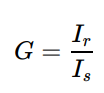
Factors Influencing Screen Gain
The material and construction of the screen significantly influence its gain. Characteristics such as color, texture, and coating determine how much light is reflected and in which direction.
High Gain Projection Screens:
• Characteristics: High gain screens are designed to reflect more light than a standard white screen. They are often surfaced with materials that enhance reflectivity, such as metallic compounds or special reflective coatings.
• Advantages: In environments with ambient light, high gain screens are beneficial, as they can make the image appear brighter and more visible. Ideal for situations where projector brightness is limited, as they can effectively amplify the perceived brightness.
• Drawbacks: These screens often have a narrower viewing angle, meaning the brightness and clarity drop when viewed from the side. They can also lead to hot-spotting, where the center of the image appears much brighter than the edges.
White Paint Screens:
• Characteristics: White paint screens are a simpler, more traditional option. They typically have a gain close to 1.0, meaning they reflect light uniformly without amplifying or diminishing it.
• Advantages: They offer a wide viewing angle, providing consistent brightness and color accuracy from different viewing positions. Uniform reflection reduces hot-spotting, making them suitable for a broad range of viewing situations.
• Limitations: In brightly lit environments, these screens might not provide sufficient reflectivity to produce a vivid image,especially if the projector’s brightness is limited.
Mathematical Consideration
The effectiveness of a screen in a given environment can be estimated by considering the projector’s luminous flux (lumens), the screen size, and the gain. If a projector emits L lumens, and the screen has an area A and gain G, the luminance B (brightness per unit area) can be approximated as:
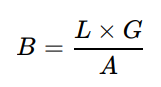
Audio Immersion: Speaker Placement
Speaker placement in an immersive projection venue presents a unique set of challenges that are critical to the overall sensory experience of the audience. The goal of such venues, which may include theaters, planetariums, museums, or exhibition spaces, is to create a fully immersive environment where audio and visual elements are in harmony. The placement of speakers plays a pivotal role in achieving this immersive audio experience, but it comes with several challenges that need to be meticulously addressed.
Acoustic Considerations
Sound Localization and Immersion: In an immersive projection venue, speakers must be placed to ensure sound localization aligns with the visual elements. This means audio should seem to emanate from the direction of the corresponding visual cue. Achieving this requires careful calibration of speaker positions relative to the projected imagery.
Room Acoustics: The architecture and design of the venue significantly influence sound propagation. Hard surfaces can cause sound reflection and reverberation, while soft materials can absorb sound. Speaker placement must consider these acoustic characteristics to avoid issues like echo and to ensure sound clarity. We will not go into depth here, but let’s get a flavor of the math.
Sound Wave as a Sine Wave: Sound waves can be modeled as sine waves, characterized by their frequency (f), wavelength (λ), amplitude (a), and speed of travel (v). The relationship between frequency and wavelength is given by:
v = f × λ
Reflection of Sound Waves: When a sound wave strikes a surface, it reflects. The angle of incidence is equal to the angle of reflection. This reflection can cause the sound wave to travel a longer path before reaching a listener or another point.
Interference Patterns
Constructive and Destructive Interference: When two sound waves intersect, they superimpose. If their crests and troughs align (in phase), they create constructive interference, amplifying the sound. If a crest meets a trough (out of phase), they create destructive interference, reducing the sound. The interference pattern can be described by the formula:
Resultant Amplitude (AR) = A1 + A2 for constructive interference, where A1 and A2 are the amplitudes of the two waves.
Resultant Amplitude (AR) = |A1 − A2| for destructive interference.
Path Difference and Phase Difference: The path difference between two waves from the source and its reflection to a point affects their phase relationship. Path difference (Δd) can be calculated using geometry, considering the dimensions of the room and the position of the source and the listener. Phase differenceΔ  is related to path difference and wavelength:
When Δd is a multiple of the wavelength λ, it results in constructive interference, and when it is a multiple of λ/2, it leads to destructive interference.
Example Calculation: Suppose a sound wave with a frequency of 440 Hz (middle A on a piano) is reflecting in a room. The speed of sound is approximately 343 meters per second (m/s) at room temperature.
Calculate Wavelength:
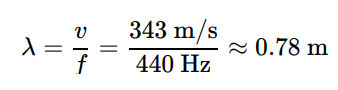
Estimate Path Difference for a Reflection: If the direct path from the source to the listener is 5 meters and the reflected path is 6 meters, the path difference Δd is I meter.
Determine Phase Difference:
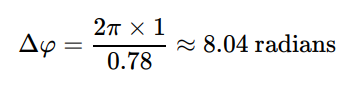
From this, one can conclude that, given the phase difference, the two sound waves (direct and reflected) will likely create a complex interference pattern, affecting the perceived sound at that specific location. Modeling the space for sound makes an enormous difference in perceived quality, especially when audience position is carefully considered in the modeling process.
Technical Challenges
Surround Sound Configuration: Immersive venues often employ surround sound systems (like 5.1, 7.1, or more advanced configurations). The challenge lies in placing these multiple speakers in a way that they produce a cohesive sound field without being visually obtrusive or interfering with the projected content.
Balancing Sound Levels: Achieving a balanced sound level across the entire venue is challenging. Speakers need to be positioned and tuned to ensure that all audience members, regardless of their seating, experience consistent audio quality.
Integrating with Projection Equipment: Speakers must be placed without casting shadows or obstructing the projector’s light path. In venues where projectors are ceiling-mounted, this becomes particularly challenging, as speakers need to be strategically positioned to avoid interference.
Audience Considerations
Viewing Angles and Sound Direction: The placement of speakers should complement the viewing angles. Sound directionality must be consistent with the audience’s perspective and the flow of the visual narrative.
Accessibility and Safety: Speaker placement must adhere to safety standards and not impede audience movement or accessibility. This includes considering cable management and the physical footprint of the speakers.
Mathematical Aspects
Speaker Coverage Calculations: Simplifying from above, without consideration of interference, the coverage area of each speaker can be calculated using its dispersion pattern and distance from the audience. By applying the inverse square law (sound intensity diminishes with the square of the distance), technicians can estimate the required power output and positioning to achieve uniform sound distribution.
Acoustic Modeling: As stated above, it is recommended to use acoustic modeling software to simulate speaker placements and Estimate Path Difference for a Reflection: If the direct path from the source to the listener is 5 meters and the reflected path is 6 meters, the path difference Δd is I meter. Determine Phase Difference: Δφ = 2π × 1 ≈ 8.04 radians 0.78 From this, one can conclude that, given the phase difference, the two sound waves (direct and reflected) will likely create a complex interference pattern, affecting the perceived sound at that specific location. Modeling the space for sound makes an enormous difference in perceived quality, especially when audience position is carefully considered in the modeling process.
Speaker Connections
The debate between using Bluetooth versus wired connections for speakers hinges on several factors, including reliability, sound quality, and ease of connection. Both methods have their distinct advantages and limitations, influenced by the underlying technology and application contexts.
Bluetooth Connections
• Technology Overview: Bluetooth is a wireless technology standard for exchanging data over short distances. It uses short-wavelength UHF radio waves in the ISM band from 2.402 GHz to 2.48 GHz.
• Sound Quality: Early versions of Bluetooth faced challenges in transmitting high-quality audio without compression that could degrade the sound. However, recent advancements like Bluetooth 5.0 and audio codecs such as aptX, AAC, and LDAC have significantly improved audio quality, offering near CD-like quality. Bluetooth inherently involves some compression and decompression of audio data. This can potentially lead to a slight loss in sound fidelity, especially when compared to highresolution wired connections.
• Reliability and Connection: Bluetooth connections can be susceptible to interference from other wireless devices and physical barriers, potentially leading to signal dropouts or reduced audio quality. The range of Bluetooth is typically about 30 feet (ca. 9 meters), which is sufficient for most personal or household use but may be limiting in larger spaces.
• Ease of Use: One of the primary advantages of Bluetooth is convenience. Pairing devices is relatively straightforward, and the absence of wires offers greater flexibility in speaker placement.
Wired Connections
• Technology Overview: Wired connections for speakers primarily use analog signals through cables like 3.5 mm aux, RCA, or XLR, or digital signals through interfaces like HDMI or optical cables.
• Sound Quality: Wired connections are known for their ability to deliver high-fidelity sound without the need for compression. This is particularly true for digital wired connections, which can transmit high-resolution audio without any degradation. The quality of the cable and connectors, as well as the length of the cable run, can affect the sound quality. In analog cables, longer runs can lead to signal degradation.
• Reliability and Connection: Wired connections are generally more reliable than wireless ones, as they are less prone to interference and do not depend on radio frequencies. They provide a consistent signal that is not subject to the same range limitations as Bluetooth.
• Ease of Use and Flexibility: While wired connections are more reliable, they offer less flexibility in terms of speaker placement and can lead to cluttered setups, especially in multi-speaker arrangements. Installation of wired systems, angle and immersive visual experiences. Both methods have their specific applications, advantages, and limitations, and are used in various settings, including planetariums, immersive theaters, and simulation environments.
Technical Challenges
Surround Sound Configuration: Immersive venues often employ surround sound systems (like 5.1, 7.1, or more advanced configurations). The challenge lies in placing these multiple speakers in a way that they produce a cohesive sound field without being visually obtrusive or interfering with the projected content.
Balancing Sound Levels: Achieving a balanced sound level across the entire venue is challenging. Speakers need to be positioned and tuned to ensure that all audience members, regardless of their seating, experience consistent audio quality. their effects within a virtual representation of the space. This helps in making informed decisions about speaker positioning based on mathematical predictions.
Comparative Analysis
In Terms of Sound Quality: For audiophiles and professional settings, wired connections are often preferred for their superior sound quality and fidelity. Bluetooth has made significant strides in sound quality, making it a viable option for casual listening and convenience.
In Terms of Reliability: Wired connections win in terms of reliability, especially in environments where wireless interference is a concern. Bluetooth's susceptibility to interference can be a drawback, though this is less of an issue with the latest technology and within the typical range of use.
In Terms of Ease of Use: Bluetooth’s wireless nature offers ease of use and flexibility, ideal for portable speakers and consumer home audio systems. Wired systems, while requiring more effort in setup, provide a stable and consistent connection
Fluidic Features in Detail
Immersive Lensing
The use of fisheye lenses and hemispheric mirrors in projection systems represents two distinct approaches to creating wide angle and immersive visual experiences. Both methods have their specific applications, advantages, and limitations, and are used in various settings, including planetariums, immersive theaters, and simulation environments.
Fisheye Lenses in Projection
Operational Principle: Fisheye lenses are designed to capture and project ultra-wide-angle images, typically achieving a 180-degree field of view. These lenses use a special mapping, which produces a circular image and captures a wide field of view.
Image Quality and Clarity: Fisheye lenses generally provide high image resolution and clarity. They are capable of projecting detailed images, making them suitable for applications where image quality is paramount.
Flexibility in Content Creation: Creating content for fisheye projection allows for standard video production techniques, albeit with a consideration for the fisheye distortion. This can be advantageous in environments where content needs to be dynamically created or updated.
Limitations: The primary limitation of fisheye lenses is the inherent distortion that comes with the ultra-wide-angle projection. While this distortion is ideal for dome-like environments, it can be less suitable for flat or slightly curved surfaces.
Fisheye Lens Optics: Fisheye lenses follow a distinct mapping function that defines how light rays are bent and projected. The most common mapping function used in fisheye lenses is the equisolid angle projection, represented mathematically as:
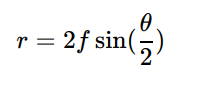
Where:
• r is the radius from the center of the image,
• f is the focal length of the lens,
• θ is the incident angle of the light ray.
This equation shows how the incident angle θ of a light ray is related to its position r on the image sensor. Fisheye lenses have a wide field of view, typically up to 180 degrees, which is captured within a circular image.
Hemispheric Mirrors in Projection
Operational Principle: Hemispheric mirror projection involves projecting an image onto a specially designed mirror, which then reflects and spreads the image onto a surface, usually a dome or curved screen. The mirror's shape is critical in determining the spread and uniformity of the reflected image.
Wide Field of View with Minimal Equipment: Hemispheric mirrors enable a wide field of view using a standard projector, which can be more cost-effective than specialized fisheye lens projectors. This makes it a viable option for smaller installations or setups with budget constraints.
Challenges with Image Quality: One of the challenges with hemispheric mirrors is maintaining image quality. The reflected image can sometimes suffer from brightness loss or distortion, particularly at the edges. This can affect the overall visual experience.
Installation and Alignment: Precise installation and alignment of the projector and mirror are crucial for achieving the desired projection quality. Incorrect alignment can lead to uneven image spread and focus issues.
Hemispheric Mirror Optics: Hemispheric mirror projection utilizes reflection to project images onto a curved surface. The geometry of the mirror determines the spread and distortion of the image. The mathematical relationship in a hemispheric mirror projection can be described by the mirror equation:
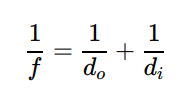
Where:
• f is the focal length of the mirror,
• do is the distance from the object (projector) to the mirror,
• di is the distance from the mirror to the image (projection surface).
The shape and curvature of the mirror influence how light rays are reflected and spread onto the projection surface. The hemispheric shape of the mirror creates a wide field of view, but with different distortion characteristics compared to fisheye lenses.
Comparative Analysis
Application Suitability: Fisheye lenses are generally preferred in high-end installations, such as advanced planetariums or simulation environments, where image clarity and detail are crucial. Hemispheric mirrors, on the other hand, are often used in educational settings, small-scale theaters, or installations where budget and space constraints are a consideration.
Cost Considerations: Fisheye lens projectors are typically more expensive than standard projectors used with hemispheric mirrors. The choice between the two often depends on the available budget and the level of image quality required.
Ease of Setup and Maintenance: Setting up a fisheye lens projection system can be relatively straightforward compared to a hemispheric mirror setup, which requires careful alignment. Maintenance considerations also favor fisheye lenses, as they have fewer components that can be misaligned or require adjustment.
Media Server
The functionality of a media server in the current digital era is multifaceted, catering to the complex requirements of modern media environments. A media server is not just a storage device but a comprehen- sive system that manages, organizes, and broadcasts various types of media content. Its capabilities extend to providing user interfaces, accessing remote content, caching content for efficient usage, and communicating with Syphon servers for image broadcasting.
Organizing Multiple Types of Content
Versatility in Content Management: A media server is designed to handle a diverse range of content types, including videos, images, audio files, and live streams. It organizes this content in a structured manner, allowing for easy navigation and retrieval. The organization often involves categorizing content into libraries or playlists, tagging for quick search, and providing metadata management.
Content Synchronization: The server ensures that content is synchronized across various platforms and devices. This is particularly important in environments where content needs to be consistently displayed across multiple screens or locations.
User Interface Provision
Intuitive and Accessible UI: Media servers are equipped with user interfaces that are designed to be intuitive and user-friendly.These interfaces allow users to easily upload, organize, and manage content. The UI design typically emphasizes simplicity and ease of navigation, catering to users with varying levels of technical expertise.
Customization and Control: Advanced media servers offer customizable UI options, enabling users to tailor the interface according to their specific needs and preferences. This includes control over layout, content display options, and user access levels.
Accessing Remote Content
Integration with Cloud Services: Modern media servers can access content stored remotely, such as on cloud platforms. This allows for the integration of a wider range of media sources and facilitates the use of content that is not stored locally.
Streaming Capabilities: The server can stream content from remote locations, providing access to live feeds or content hosted on external servers. This functionality is essential for applications like live event broadcasting or real-time news feeds.
Caching Content
Efficient Content Retrieval: Caching is a crucial feature of media servers, where frequently accessed content is stored temporarily for quick retrieval. This reduces loading times and ensures smoother playback, especially for high-definition or large files.
Bandwidth Optimization: Caching also helps in optimizing bandwidth usage, as it minimizes the need for repeated downloading of the same content. This is particularly beneficial in settings with limited or variable internet connectivity.
Communication with Syphon Server for Image Broadcast
Real-Time Video Sharing: Syphon is a framework for sharing video between applications in real-time. A media server that communicates with a Syphon server can broadcast images and videos to other Syphon-enabled applications without the need for complex configurations or the loss of quality.
Application in Live Productions: This functionality is invaluable in live production environments, where content needs to be seamlessly integrated and broadcast across different applications and platforms. It allows for dynamic content manipulation and distribution, enhancing the capabilities of live performances, installations, and broadcasts.
Image Processor
An image processor is integral in contemporary digital media environments, especially for tasks that require advanced video processing. Its functionalities span from video warping and photometric correction to global image enhancement, integrating multiple video sources, and effective video decoding. Moreover, the optimization of code to run efficiently on Graphics Processing Units (GPUs) for real-time performance is a critical aspect of modern image processor operation.
Functionalities of an Image Processor
Video Warping: A key function of an image processor is to perform video warping. This process involves modifying the video image's geometry to align precisely on non-standard projection surfaces, such as curved or irregular shapes. Essential in projection mapping applications, warping necessitates intricate geometrical computations to ensure each video frame conforms to specific surface contours.
Photometric Correction: Image processors handle photometric correction, adjusting an image's brightness and color to ensure consistency across various display areas. This function is particularly vital in setups using multiple projectors, as it harmonizes the overall visual output, preventing disparities in color and luminance.
Global Image Processing for Enhancement: Image processors also engage in global image processing to boost the overall quality of the video. This encompasses tuning contrast, brightness, saturation, and sharpness, alongside advanced techniques like noise reduction and color correction, ensuring the projected image meets high-quality standards. Integration of Multiple Video Sources: Capable of managing several video sources concurrently, image processors are adept at mixing and transitioning between diverse video feeds. This is a crucial feature for live events and installations where content from various inputs must be seamlessly integrated.
Efficient Video Decoding: Decoding compressed video files into a format ready for display or additional processing is another critical function. High-quality video decoding is essential to preserve the fidelity of high-resolution or high-frame-rate video content.
Importance of GPU-Optimized Code for Real-Time Performance
Demands for Real-Time Processing: In live environments, image processors must offer real-time processing capabilities, as delays in video processing can significantly detract from the viewer experience.
GPU Utilization: Utilizing GPUs, known for their capacity to handle intricate graphical tasks and process multiple operations in parallel, is key to realtime performance. This makes them well-suited for demanding video processing tasks.
Code Optimization: To fully harness GPU capabilities, it's imperative to optimize code. This involves developing algorithms that efficiently distribute tasks across the GPU's multiple cores, ensuring the image processor can manage intensive video processing tasks effectively.
Scalability and Adaptability: Image processors optimized for GPU processing provide scalability and versatility. They can handle a range of tasks from straightforward video playback to complex projection mappings, adaptable to various project requirements and settings.
Media Types
Traditional Flat Content
The integration of traditional flat content into various viewing geometries, especially in immersive environments, necessitates the use of warping techniques. Flat content, commonly found in formats such as standard videos and images, is designed for conventional flat screens. This includes content created for television, cinema, computer monitors, and standard projection screens. The inherent characteristic of this content is its rectilinear nature, where it is displayed on flat surfaces without any curvature or angular distortion.
Need for Warping
Adapting to Non-Flat Surfaces: The challenge arises when this content is projected or displayed on non-flat surfaces, such as curved screens, domes, or irregularly shaped structures. These surfaces can distort the flat content, leading to a skewed or warped image that detracts from the viewer's experience.
Immersive Environments: In immersive environments like planetariums, dome theaters, or custom installations, the projection surface is often spherical or hemispherical. Presenting traditional flat content in such spaces requires significant alteration to maintain the intended visual integrity of the content.
Warping Techniques
Geometric Correction: Warping involves geometrically transforming the content to align with the curvature and angles of the projection surface. This process, known as geometric correction, ensures that lines and proportions in the content are represented accurately on the curved surface.
Mathematical Calculations: The warping process involves complex mathematical calculations. These calculations consider the angle, curvature, and dimensions of the projection surface to accurately map the flat content onto it. The goal is to ensure that the content appears natural and undistorted to the viewer, regardless of their position.
Software and Tools: Several specialized software tools are available for warping flat content to fit various geometries. These tools allow for manual adjustments and can also automate the process using predefined templates or algorithms that understand common projection surfaces.
Applications and Importance
Enhancing Viewer Experience: Properly warped content can significantly enhance the viewer's experience, especially in educational, entertainment, and artistic settings. It allows for the use of existing content in novel and engaging ways, expanding the utility and reach of the material.
Cost-Effectiveness: Using warping techniques to adapt existing flat content for immersive environments can be more cost-effective than creating new content specifically designed for these unique spaces. It allows venues to repurpose their existing media libraries, making the technology more accessible and versatile.
Challenges
Quality Preservation: One of the challenges in warping flat content is preserving the quality of the image. Warping can sometimes lead to pixelation or blurring, especially in areas with high curvature. Balancing the warping process with quality preservation is key.
Technical Expertise: Effective warping requires technical expertise in both the software used and the understanding of projection geometries. This can be a barrier for venues without access to skilled technicians.
Hardware Requirements: The hardware used for projection needs to be capable of handling the additional processing requirements of warped content. This can include high-performance projectors and computers.

Hemispheric content
360-degree video content has emerged as a standard in crafting immersive environments, offering viewers an all-encompassing visual experience. Below is a review of 360-degree video content, its application in immersive environments, and the significance of warping techniques in aligning this content with the specific geometry of viewing spaces.
360-Degree Video Content
Technology and Creation: 360-degree videos are created using cameras that capture a full 360-degree field of view, offering a panoramic visual experience. This technology typically involves either a single, specially designed 360-degree camera or an array of cameras arranged to capture every angle. The captured footage from each camera is then stitched together to form a cohesive spherical video.
Viewer Interaction and Immersion: Unlike traditional flat videos, 360-degree content allows viewers to look around in all directions, providing a more immersive experience. This can be achieved through various devices, including smartphones, VR headsets, or specially designed 360-degree video players, where the viewer's orientation determines the portion of the video being displayed.
Applications: The applications of 360-degree video content are diverse, ranging from virtual tours and real estate previews to immersive journalism, live events, and education. This format is particularly effective in situations where capturing the essence of a physical space or environment is crucial.
Importance of Warping in 360-Degree Videos
Matching Video to Viewing Environment: While 360-degree videos offer an immersive experience, the full potential of this immersion is realized when the video content is accurately aligned with the room's geometry where it is being viewed. This is particularly relevant in environments like planetariums, dome theaters, or custom-designed immersive rooms.
Projection Warping for Hemispherical Surfaces: Many immersive environments feature hemispherical or curved projection surfaces. Displaying 360-degree content in such spaces requires warping the video to match the curvature of the surface. This warping ensures that the video properly aligns with the physical characteristics of the room, maintaining the illusion of a seamless, encompassing environment.
Technical Considerations: The process of warping 360-degree video content involves complex mathematical calculations. These calculations consider the curvature of the projection surface and the viewer's perspective to adjust the video projection accordingly. The goal is to eliminate any distortion that would break the immersive experience, ensuring that straight lines in the video appear straight, and proportions are maintained throughout the viewing space.
Software and Hardware Requirements: Executing this level of video warping requires sophisticated software capable of rendering the video in real-time according to the specific parameters of the projection surface. Additionally, the hardware used for projection must be powerful enough to handle the computational load, ensuring smooth and uninterrupted playback.
Challenges and Future Directions
High-Quality Content Creation: Producing highquality 360-degree video content requires specialized equipment and expertise, particularly in the areas of filming and video stitching. The process can be resource-intensive, both in terms of time and cost.
Accessibility and Viewing Platforms: While 360-degree videos offer unparalleled immersion, the need for specific viewing platforms or devices can limit accessibility. Efforts are ongoing to make this content more widely accessible across various devices without compromising the immersive experience.
Advancements in Warping Techniques: As the demand for immersive environments grows, so too does the need for advanced warping techniques that can adapt to a variety of room geometries and projection surfaces. Ongoing research and development in this area aim to enhance the flexibility and accuracy of video warping.

3D Mesh used in Hemispheric Projection
Depth Mapped Content
The application of depth maps in image processing has become increasingly important in the fields of interactive picking, stereoptic projection, and the interactive compositing of multiple images. This technology involves creating a depth map, which is essentially a grayscale image that contains information relating to the distance of the surfaces of scene objects from a viewpoint.
A depth map is a 2D representation where each pixel's value indicates the distance between the object in the scene and a specific point, typically the camera. This value is often represented in grayscale, where white indicates closeness and black signifies distance. The accuracy of depth maps is crucial as they are used to interpret and manipulate 3D structures within 2D images.
Interactive Picking
Use in Interactive Environments: In interactive environments, such as virtual reality (VR) or augmented reality (AR), depth maps are used for accurate interactive picking. This technique allows users to select or interact with objects within a 3D space using a 2D interface.
Enhanced Accuracy: Depth maps provide precise information about the spatial arrangement of objects, enabling more accurate detection of the user's intention when interacting with 3D elements in a virtual environment.
Stereoptic Projection
Creating 3D Visuals from 2D Images: Stereoptic projection uses depth maps to create 3D visuals from 2D images. By applying different depth values to different parts of the image, a sense of three-dimensionality is achieved.
Application in 3D Films and Graphics: This technique is widely used in 3D films and graphics, where two slightly different images are projected, simulating the left and right eyes' perspectives. The depth map ensures that objects in the image are properly aligned and appear at the correct relative distances, enhancing the 3D effect.
Interactive Compositing of Multiple Images
Managing Occlusions: When combining multiple images, depth maps are crucial for managing occlusions effectively. An occlusion occurs when one object in a 3D space blocks another object from view. Depth maps allow for the accurate placement of objects in a scene, ensuring that they interact realistically with one another in terms of visibility and overlap.
Real-Time Adjustment: In interactive applications, such as in video game development or interactive media, depth maps enable real-time adjustment of images. This dynamic compositing can create more immersive and responsive environments.
Technical Considerations and Challenges
Accuracy of Depth Information: The effectiveness of these applications depends on the accuracy of the depth information in the depth maps. Errors or imprecisions can lead to incorrect object placement or interaction, reducing the realism and effectiveness of the technology.
Computational Requirements: Generating and processing depth maps, especially in real-time applications, requires significant computational power. This can be a limiting factor in terms of the technology's accessibility and cost.
Integration with Other Technologies: The integration of depth maps with other imaging and interactive technologies requires careful calibration and synchronization. This is particularly important in applications like VR and AR, where real-time user interaction and response are key.

Depth Mapped Media
3D Meshes
The utilization of interactive viewing of 3D models has become a significant tool in both artistic expression and educational contexts.
Interactive 3D Models in Artistic Expression
Enhanced Creativity and Visualization: In the field of art, interactive 3D models have revolutionized the way artists create and display their work. This technology allows artists to construct detailed, three-dimensional representations of their ideas, offering viewers a more immersive and engaging experience. Artists can manipulate various elements like texture, light, and space, providing a new depth to artistic expression.
Virtual Exhibitions and Accessibility: The use of 3D models enables the creation of virtual exhibitions, where viewers can interact with artworks in a digital space. This not only broadens the reach of the artwork to a global audience but also enhances accessibility for those unable to visit physical galleries.
Real-time Interaction and Feedback: Interactive 3D models in art allow for real-time interaction, where viewers can manipulate the viewpoint, zoom in on details, and sometimes even alter the artwork itself. This level of engagement offers a unique experience and can provide artists with immediate feedback on their work.
Interactive 3D Models in Education
Visualization of Complex Concepts: In educational contexts, especially in subjects like human anatomy, interactive 3D models serve as powerful tools for visualization and learning. They allow students to explore complex structures in a more intuitive and engaging way than traditional two-dimensional images or textbooks.
Example of Human Anatomy: For instance, a 3D model of the human body can be used to teach anatomy. Students can interact with the model to explore different layers of the body, from the skin down to the internal organs and skeletal system. This interactive exploration aids in a more profound understanding of human anatomy, as students can rotate the model, dissect layers, and study individual systems in detail.
Enhanced Engagement and Retention: Interactive 3D models in education have been shown to enhance student engagement and retention of information. The ability to interact with the model actively involves students in the learning process, making it more effective than passive learning methods.
Accessibility and Customization: 3D models are also valuable for their adaptability to different learning styles and needs. They can be accessed on various devices, including computers, tablets, and VR headsets, making learning more accessible. Additionally, educators can customize models to focus on specific aspects relevant to their teaching objectives.
Challenges and Considerations
Technological Requirements: The implementation of interactive 3D models requires adequate technological infrastructure, including software, hardware, and potentially VR equipment. This can be a barrier in terms of cost and accessibility in some settings.
Skill and Training: Both creators and users of interactive 3D models may require specific skills and training. Artists need to be proficient in 3D modeling software, while educators and students may need guidance on how to use these models effectively for learning.
Quality and Accuracy: In educational contexts, particularly in fields like anatomy, the accuracy of 3D models is crucial. Ensuring the scientific accuracy and quality of these models is essential for their effectiveness as educational tools.
Warping
The practice of projection warping, both manual and automated, has become an essential technique in the realm of projection technology, especially when dealing with complex or irregular surfaces. Projection warping refers to the process of manipulating the projected image so that it fits accurately and seamlessly onto a surface, whether it be curved, uneven, or traditionally flat.

Manual Warp Correction
Manual Projection Warping
Process and Application: Manual projection warping involves the physical adjustment of the projector and the use of software to fine-tune the image output to fit the projection surface. This method is particularly useful for simple adjustments or in situations where automated systems may not be feasible or cost-effective.
Precision and Control: Manual warping allows for precise control over the image. Operators can adjust the warp to compensate for specific distortions, ensuring that the image aligns perfectly with the projection surface. This level of control is particularly valuable in artistic installations or in scenarios where detailed image manipulation is required.
Limitations: The primary limitation of manual warping is the time and expertise required. It demands a significant amount of skill and effort, especially when dealing with complex surfaces or largescale projections.
Automated Projection Warping (CameraBased)
Technology and Efficiency: Automated projection warping systems use cameras and specialized software to map the projection surface and automatically adjust the image. These systems can quickly analyze the surface geometry and calculate the necessary adjustments, significantly reducing setup time and effort.
Applications for Complex Surfaces: Automated warping is particularly valuable for projecting onto curved surfaces, outdoor natural features, and other complex structures. It allows for a high degree of accuracy and can adapt to irregularities that would be challenging and time-consuming to address manually.
Consistency and Scalability: Automated systems offer consistent results and are scalable to larger projects. They are ideal for applications like architectural projection mapping, where consistency across multiple projectors and complex surfaces is crucial.
Cost and Accessibility: The cost of automated warping systems can be a limiting factor, particularly for smaller projects or organizations. However, as the technology becomes more widespread, it is becoming more accessible.
Applications and Value
Curved and Complex Surfaces: Both manual and automated warping are invaluable for projecting onto curved and irregular surfaces. This capability has opened up new possibilities in areas like immersive theater, museum displays, and interactive installations, where non-traditional projection surfaces are often used.
Outdoor and Natural Features: Automated warping technology has made it feasible to project onto outdoor and natural features, such as buildings, landscapes, and even trees. This application has been particularly impactful in the field of event production and public art installations.
Refining Displays on Simpler Surfaces: Even on less complex surfaces, warping technology can enhance the quality of the projection. It ensures that the image is not distorted by minor surface irregularities, leading to a more polished and professional presentation.
Educational and Commercial Use: In educational and commercial settings, projection warping technology allows for the use of creative and engaging displays, even in spaces with unconventional projection surfaces.

Warped Image to Conform to Surface
Key Image Processing Features Warp Photometry
The utilization of a camera to automatically calculate a flat plate for color corrections against a projection screen is a key process that addresses the challenges posed by luminance and color variation in projection environments. This method, often employed in fluidic systems, seeks to enhance the visual quality of the projected image by ensuring uniform color and brightness across the screen.
The Problem of Luminance and Color Variation
Inherent Screen Variations: Projection screens, depending on their material and surface texture, can exhibit variations in luminance (brightness) and color response. These variations might be due to uneven screen gain, aging of the screen material, or ambient lighting conditions.
Impact on Projected Image: When an image is projected onto a screen with such inconsistencies, it can result in a non-uniform appearance. Areas of the screen might appear brighter or darker, and colors might be inconsistently represented, detracting from the intended visual experience.
Camera-Based Automatic Calibration
Role of the Camera: A high-resolution camera is used to capture the characteristics of the projection screen. The camera is positioned to capture the entire screen or significant portions of it in detail.
Capturing Screen Characteristics: A test pattern or a series of patterns are projected onto the screen. These patterns typically include various shades of gray (to assess luminance variation) and a color spectrum (to evaluate color response).
Analysis of Captured Data: The captured images of these patterns are then analyzed using specialized software. This analysis includes measuring the luminance and color at various points on the screen.
Calculating the Flat Plate: Based on this analysis, the software calculates a correction matrix or a flat plate. This involves determining the necessary adjustments in projector output to compensate for screen variations. The correction matrix adjusts the intensity and color of each pixel or group of pixels to achieve uniformity across the screen.
Mathematical Aspects
Luminance Correction: If a particular screen region is measured to be dimmer (lower luminance), the corresponding projector output is increased for that region. This can be quantified using a correction factor, C, for each pixel or region, calculated as:
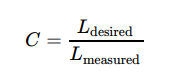
Where L desired is the target luminance, and is the actual measured luminance.
Summation for Total Correction: The total correction for each color component across the screen can be represented as:
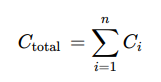
Color Correction: Color correction involves adjusting the RGB (Red, Green, Blue) values of the projection. If the screen has a color bias (e.g., it reflects more red), the projector’s output is adjusted to reduce the red component proportionally. This adjustment can be expressed as a set of multipliers for the RGB values, tailored for each region of the screen
Practical Application
Automated Calibration Process: Fluidic projection systems can To apply both scaling and translation to an image, we multiply the coordinates of each pixel by the combined transformation matrix. automate this calibration process. The projector can project test patterns, capture them with an integrated or external camera, and apply the necessary corrections automatically.
Dynamic Adjustments: In advanced fluid systems, this process can be dynamic, with periodic recalibrations to account for changes in ambient light or screen properties over time. Note that this is computationally expensive, but where justified, useful.
As in the equations for luminance, we have measured versus desired, but in this case, in RGB space. The correction factors then for each segment I is:
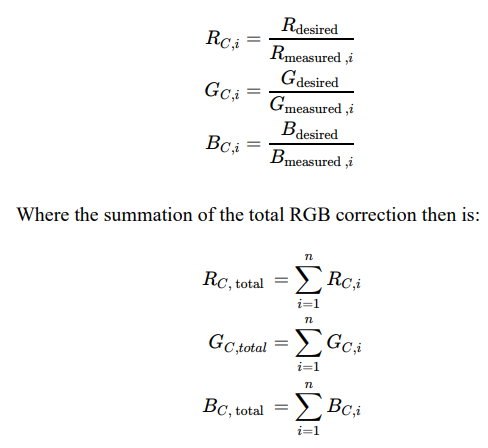
Positioning
For positioning, we scale and translate the image. We use matrix operations, and although this is pretty basic stuff, let’s call it out here for completeness. The scaling transformation can be represented by a scaling matrix. If we want to scale an image by factors and Sy along the x-axis and y-axis respectively, the scaling matrix M scale is:
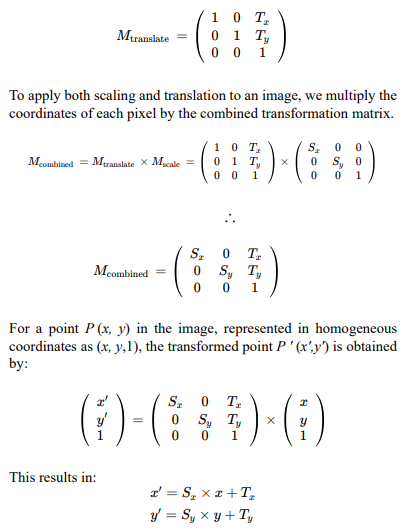
Even though matrix notation is more standardized, this author prefers summation notation due to its focus on individual elements, and it is how many program. It is odd that we see the same operations expressed both ways, depending on the author. Let’s take a short side track before we look at the math notation and review notation styles that will be used in this paper. It is also a reasonable place to discuss a small topic, hidden inside a description of how we perform our image processing operations.
Summation Notation
Element-Wise Operations: Summation notation is preferred when dealing with element-wise operations or when the focus is on individual elements of a set or sequence. For example, when calculating the sum of individual elements of a sequence or applying a function to each element individually, summation notation is more intuitive and direct.
Detailed Analysis: In cases where a detailed, stepby-step breakdown of a process is required, summation notation can be more illustrative. It allows for the explicit representation of how each element is being processed or combined, which can be crucial in theoretical analysis or educational contexts.
Non-Linear Operations: For operations that aren’t linear or don’t involve vector spaces, summation notation can be more appropriate. This includes situations where elements are processed in a non-linear manner, or when the operation does not naturally lend itself to a matrix format.
Statistical Calculations: In statistics, summation notation is often used for calculations such as the mean, variance, or standard deviation, where each data point is individually considered in the computation.
Matrix Notation
Linear Algebra Operations: Matrix notation is ideal for linear transformations and operations that involve vectors and matrices, such as matrix multiplication, finding determinants, and solving systems of linear equations. It simplifies and streamlines the representation of these operations.
Compact Representation: Matrix notation allows for the concise representation of complex operations, especially when dealing with large datasets or higher-dimensional data. It can significantly reduce the complexity and length of mathematical expressions.
Computational Efficiency: In computational contexts, such as in programming and numerical analysis, matrix notation is often more efficient. Many programming languages and software libraries are optimized for matrix operations, offering faster computation and easier implementation.
Graphical Transformations: In computer graphics and image processing, matrix notation is the standard for representing transformations like translation, scaling, rotation, and perspective projection.
So, it may be a mere preference. Let’s look at the same math in summation form:
Scaling Transformation: If we're scaling the image by factors Sx and Sy along the x-axis and y-axis, respectively, the new coordinates after scaling are given by:
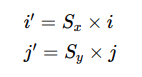
Translation Transformation: For translation by distances Tx and Ty along the x-axis and y-axis, the final transformed coordinates
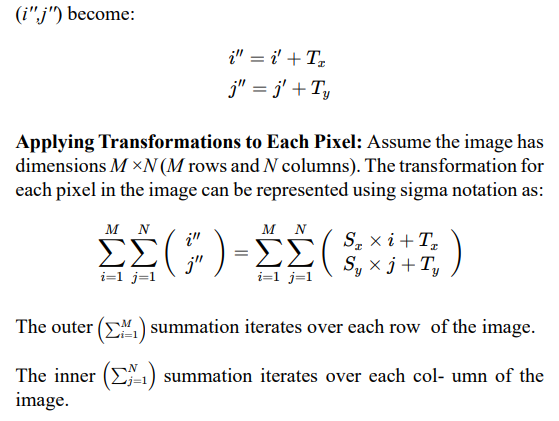
For each pixel located at (i, j), we apply the scaling transformation followed by the translation transformation.
The result is a summation over all transformed pixel locations in the new image.
Control Point Warping
The process of setting up a warp for a projection system, which is an essential aspect of aligning the projected image with irregular or complex surfaces, can be approached in two distinct methods: manual control points and automatically derived control points. Both methods serve the same fundamental purpose of mapping coordinates from one space to another, specifically from the x,y coordinate space (which represents the physical location in the projection space) to the u,v coordinate space (which corresponds to the texture or image space in the projector).
Manual Control Points
Definition and Process:
• Manual control points setup involves the physical selection and adjustment of specific points on the projection surface. These points, known as control points, are chosen by the operator based on the requirements of the projection mapping.
• The operator manually manipulates these points to align the projected image with the desired area of the surface, ensuring that the image contours and dimensions match the physical layout.
Precision and Customization: This method allows for high precision and customization, as the operator can make fine adjustments to each control point. It is particularly useful in scenarios where the projection surface has unique features or complex geometries that automated systems might not accurately account for.
Time and Skill Requirements: The manual setup of control points is often time-consuming and requires a skilled operator familiar with the intricacies of projection mapping and the specific characteristics of both the projector and the projection surface.
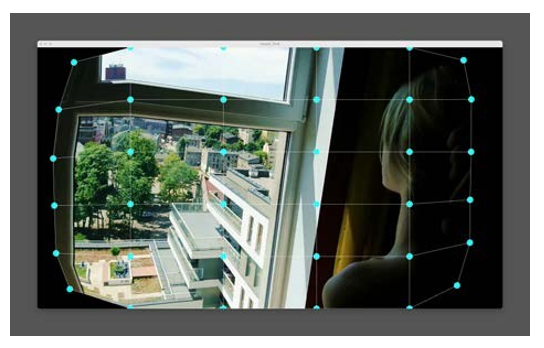
Automatically Derived Control Points
Definition and Process:
• Automatically derived control points are generated by specialized software that analyzes the projection surface and determines the optimal placement of control points. This process often involves using a camera or sensors to capture the geometry of the projection surface.
• The software then processes this data and automatically maps the x,y coordinates to the corresponding u,v coordinates in the projector's output.
Efficiency and Ease of Use: This method is generally more efficient than manual setup, as it can quickly generate and adjust control points. It is particularly advantageous in situations where time is a constraint or where the surface does not have excessively complex features.
Limitations in Complex Environments: While the automatic method is effective in many scenarios, it may not always capture the nuances of highly intricate or irregular surfaces. In such cases, a combination of automatic setup followed by manual fine-tuning might be necessary.
Control Point Assignments
For each normalized adjustment node (ui,j, vi,j) and input pixel (xi,j, yi,j) , we compute the control point F (i, j) composed of the quadruple as:
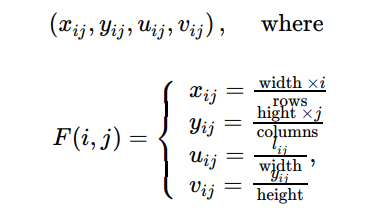
Which creates the vertices for a quadrilateral from function F to create the vertex parameters Quad Vertices (a, b, c, d), with vertices (a, b, c, d).
Back-project Spherical Pixels:
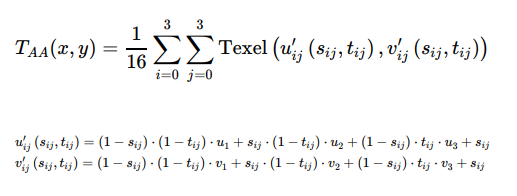
Transform to Equirectangular Projection:

Transform to the Display
This equirectangular image is then prepared for display and rotation. We want to display a viewport of the spherical image onto a flat screen. We also want to rotate the spherical image to choose the projection view pan. We use quaternions to prevent gimbal lock and dimensional axis crosstalk. We transform the adjustment nodes, but let us will break out the math explicitly for the pixel (x, y).
First, we form a 3D texture-mapped sphere. This is done as a center ring and as caps. These are separated due to the differences in edge connectors. A spherical cap is rendered using a triangle strip. This cap forms the top part of the textured sphere and is rendered using vertex data that is passed to OpenGL (or a similar rendering framework).
The variable sDetail determines the granularity of the mesh used to approximate the sphere. The higher the sDetail the finer the mesh and the more accurate the approximation.
Top Cap: To mathematically represent the formation of this spherical cap, we can formulate the equation as follows:
Let r be the radius of the sphere, and sDetail be the number of segments in the spherical cap. The texture coordinates are computed as:
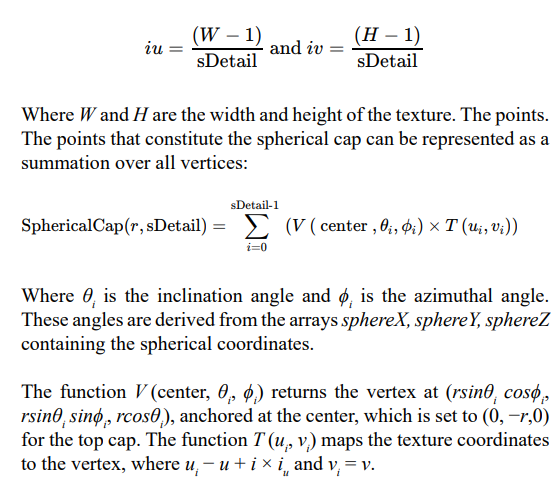
Bottom Cap:
Essentially, the same as the top cap. Both are represented as triangle strips, and let’s take this opportunity to express the math in a non-sigma notation form. We need to calculate the geometric coordinates (x, y, z) and calculate the texture u and v coordinates.
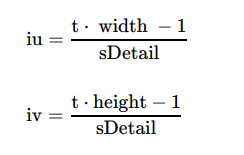
Given i as the iteration variable, r as the radius of the sphere, and voff as the index offset, the coordinates for the bottom cap points
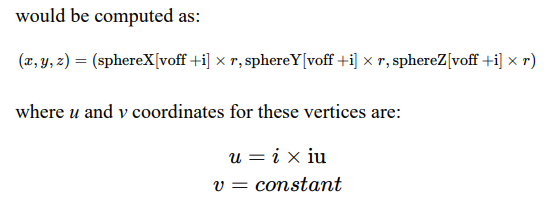
Where v does not change in this operation, the central point of the bottom cap, which is the entire reason we break out the top and bottom caps in the first place, is (0, r, 0), as opposed to (0, −r, 0) for the top. It also shares the same u and v + iv texture coordinates.
So then when coding, the equation represents a loop iterating over the discrete values
i = 0, 1, 2, ...sDetail – 1
With each iteration adding two vertices.
Enhancement:
The key components are exposure, gamma and color cast. Using the same nomenclature as in the above sections, we have compressed this, in GLSL, to a single equation as:
Let's denote gamma as γ. The corrected color channels for red, green, and blue after gamma correction can be represented as color r, γ , color g, γ, color b, γ. The gamma correction is applied as follows:
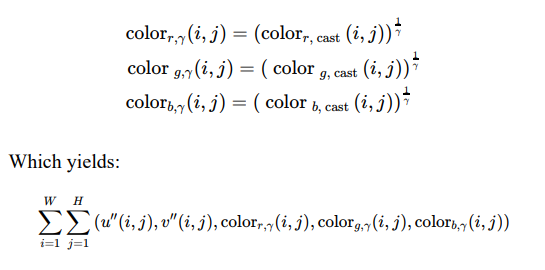
For our purposes, we use a Novation button and dial box to control these, and many other parameters, to simplify user operation.

Button and Dial UI
3D Model Viewing
This paper does not deal with the details of 3D rendering, but we can take a few minutes to give the flavor of what is required. Scaling is fundamentally the same, plus z, so let's very briefly touch on the other operations.
Rotations
A need exists to rotate the model interactively and to incorporate pre-selected views from each side, including isometric, pan, and autorotation options. To achieve this, and to avoid axis lock at the poles, orientation dependencies, and axis crosstalk, it's necessary to employ quaternions3. The basic form is below, where we compute target XYZ from the starting position of x y z.
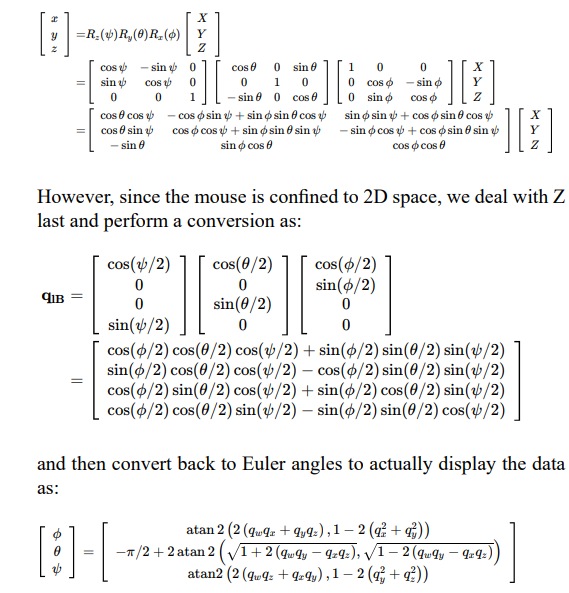

Which we perform in GLSL.
If we want a flying camera model, we have to consider roll, pitch and yaw, and their relationship to the Euler angles. The RPY rotation angles are formally called Tait-Bryan angles, and are illustrated below as related to the pivot point denoted by the three theta angles. This takes the form of:
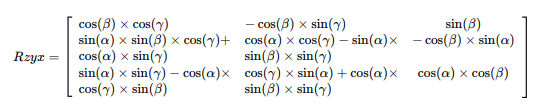
Background Color Selection
For this, let's use a color selector, but changing color is frequently easier in HLS color space. To do this, we need to convert to HLS as:
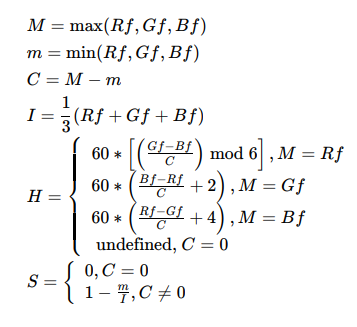
And then we need to convert back to RGB to set the values. This transform is a bit awkward, where 0< H < 360, 0 < S < 1 and 0 < L < 1, which has to be handled before the transform, which is only then expressed as
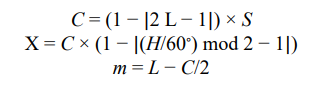
Change Texture Maps
Assuming we are discussing projective textures and not solid procedural textures. The primary issue here is that models frequently come with fixed mappings (via uv coordinates). Changing the image file is not problematic, but frequently new image files do not match the intended mapping. Fixing this can get complicated fast, especially on models like the human body and skin. At its most fundamental, we can perspective map the image directly onto the uv coordinates, but edge anomalies occur. One of the primary challenges in UV mapping is minimizing distortion. Incorrect unwrapping can lead to textures being stretched or compressed in an unrealistic manner. Distortion is particularly problematic in areas where the model's geometry changes abruptly, such as sharp corners or creases. Creating a UV map often involves cutting the model into several pieces, much like a pattern for clothing. These cuts create seams in the texture, which can be visible if not managed correctly. Strategic placement of seams in less noticeable areas is crucial for maintaining the visual integrity of the model. Even if we simply want to map an image onto a deformed surface, eliminating abrupt distortions requires some mathematical acrobatics. One method is using a splined version of 3D interpolation as:
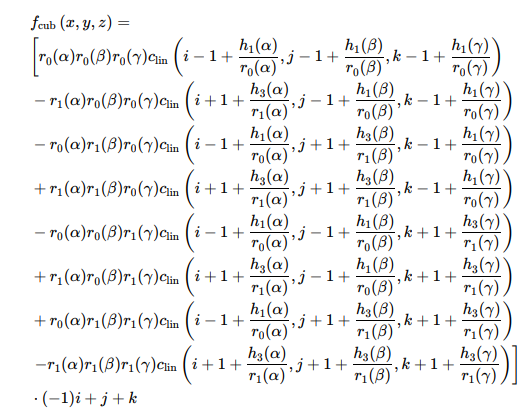
Where clin(x, y, z) is a trilinear interpolation between the modulated samples ci,j,k at x, y, z. At times, it gets so complicated that it is just easier to paint the texture on.
Materials Designer (and Renderer)
The suggestion to implement a full materials designer like substance would require the use of more sophisticated rendering. If we want to include reflections, transparency, and BDR, it turns
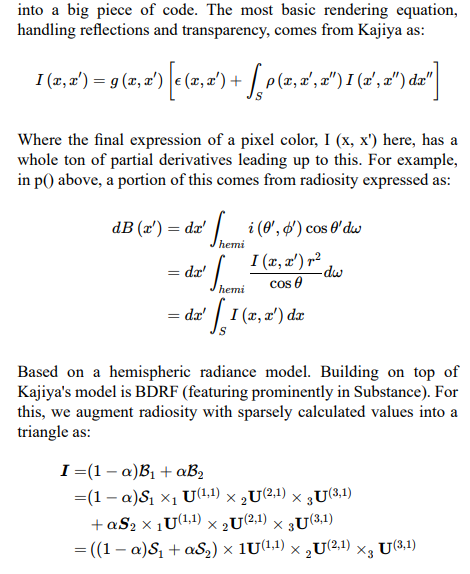
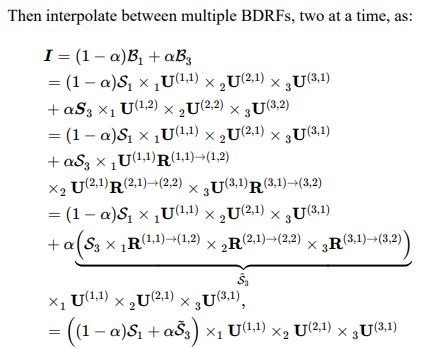
We combine this with real-time ray tracing to solve intersection and occlusion problems. Ray tracing by itself does not perform pixel color calculations, it only determines what contributes to the color. As such, it is fairly simple, although optimizations can become complex. Accumulated, non-intersecting boundaries) can also add to the math. In this case, for accumulated atmospherics:
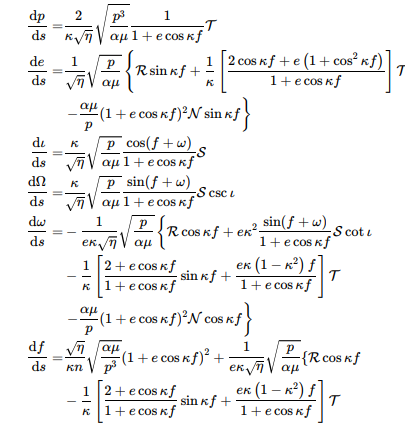
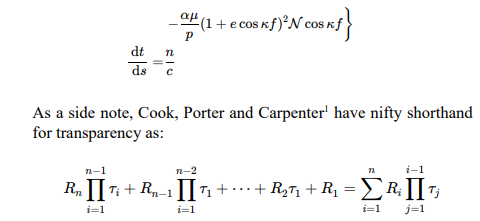
User Interface
The design and functionality of media selection user interfaces (UIs) have evolved significantly in the digital era, becoming a crucial aspect of user experience in various platforms, including streaming services, digital libraries, and content management systems.
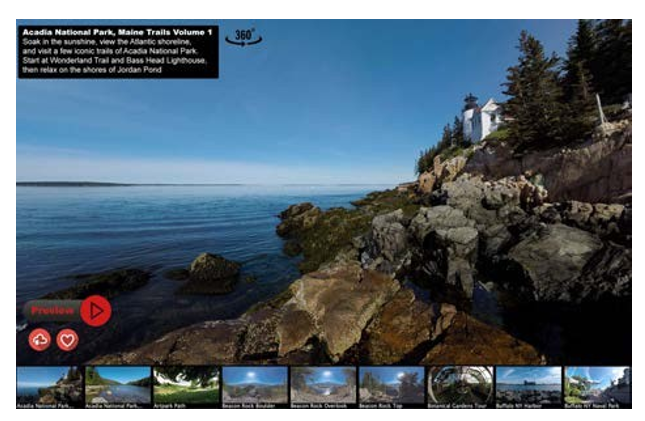
A File Selector
Design Principles
Intuitiveness and Ease of Use: Modern media selection interfaces prioritize user-friendliness. This involves clear and logical organization of content, minimalistic design elements, and intuitive navigation paths. The goal is to enable users to find and access desired content with minimal effort and learning curve.
Personalization: Personalization has become a key feature in media selection UIs. Algorithms analyze user preferences, viewing history, and interaction data to tailor content recommendations and display options. This approach enhances user engagement by presenting relevant and customized content choices.
Responsiveness and Accessibility: With the diversity of devices used for media consumption, including smartphones, tablets, laptops, and smart TVs, responsiveness in UI design is essential. UIs must adapt seamlessly to different screen sizes and resolutions. Additionally, accessibility features such as voice commands, screen readers, and adjustable text sizes are incorporated to cater to users with disabilities.
Visual Hierarchy and Aesthetics: A well-structured visual hierarchy helps users navigate the interface efficiently. This includes the strategic use of colors, fonts, and imagery to draw attention to key elements. Aesthetically pleasing designs enhance user engagement and overall experience.
Technological Advancements
Machine Learning and AI: The integration of machine learning and AI in media selection UIs has revolutionized content discovery.
These technologies enable sophisticated recommendation engines that predict user preferences with increasing accuracy.
Voice and Gesture Controls: Advancements in voice recognition and gesture control technologies have been integrated into media selection UIs, allowing for hands-free and remote control, which is particularly beneficial in shared or family settings.
Data Analytics: Extensive data analytics are employed to understand user behavior, enabling continuous improvement of the UI based on user interaction patterns and feedback.
Challenges Addressed
Content Overload: With the vast amount of available media content, users often face the paradox of choice. Effective UI design helps mitigate this by organizing content into manageable categories and providing effective search and filter tools.
Diverse User Demographics: Media selection UIs cater to a wide range of users with different preferences and technological competencies. UIs must be versatile enough to be easily navigable by both techsavvy users and those with limited digital literacy.
Cross-Platform Consistency: Maintaining a consistent user experience across various platforms and devices is a challenge. UIs need to provide a familiar and coherent experience whether accessed on a mobile app, web browser, or smart TV.
Software Architecture of the UI
We incorporate an architecture of UI abstraction, utilizing Java for cross-platform compatibility and sockets for distributed processing. This approach enables UIs to run in separate threads, on different platforms, or even different operating systems, further extending their flexibility and adaptability. Let’s explore the integration of socket programming and Java in the development of abstracted UIs, examining its benefits, technical considerations, and practical applications.
Integration of Socket Programming
Separate Threads and Platforms: Socket programming allows for the creation of network sockets, which enable UI components to communicate over a network. This means that the UI can run on a separate thread or even on a completely different physical platform from the core application. For instance, a UI designed for a media system in a theater could run on a tablet or smartphone, interacting with the server application running on a central computer.
Also, heavy computation can be distributed where the increase in performance is computed with Gustafson's Law as:
Speedup = (1 − P) + P × N
Where:
P is the proportion of a program that can be made parallel (parallelizable fraction) and N is the number of processors. Alternative we can use Amdahl’s Law where:
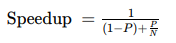
Real-Time Communication: Utilizing sockets facilitates real-time communication between the UI and the application. This is crucial for media systems where immediate response and interaction are necessary, such as adjusting sound or lighting in a live performance.
Challenges and Security: Implementing socket communication requires careful consideration of network security and data privacy. Secure socket layers (SSL) and robust authentication mechanisms are essential to protect data transmitted between the UI and the application.
Utilizing Java for Cross-Platform Compatibility
Portability Across Platforms: Java is renowned for its 'write once, run anywhere' capability, making it an ideal choice for developing portable UIs. Java applications can run on various platforms without modification, as long as the Java Virtual Machine (JVM) is available. This allows for the same UI to be deployed across different hardware and operating systems, which is particularly beneficial for venues with diverse technology ecosystems.
Consistent User Experience: Java's platform in- dependence ensures a consistent user experience across different devices and platforms. Whether the UI is running on a Windows PC, a Linux server, or a Mac, it will function and appear the same, providing users with a familiar interface regardless of the underlying platform.
Java's Rich Libraries and Frameworks: Java offers a vast ecosystem of libraries and frameworks that can be leveraged to build sophisticated and responsive UIs. These resources facilitate the development of visually appealing and highly functional interfaces, which can be easily integrated with the backend application via sockets.
Applications and Benefits
Versatility in Venue Management: The combination of socket programming and Java's cross-platform capabilities allows for versatile media system management in various venues. A theater's media system, for instance, can be controlled from different devices located anywhere within the venue, offering flexibility and ease of operation.
Enhanced Interactivity and Control: For live events or interactive exhibits, the ability to run the UI on separate devices enables more dynamic control and interaction. Operators or visitors can interact with the system in real-time from different locations, enhancing the overall experience.
Scalability and Maintenance: The modular nature of this approach, combined with the ease of updating Java applications, makes maintaining and scaling the system more manageable. Updates or modifications to the UI can be rolled out across all platforms simultaneously, ensuring consistency and reducing maintenance overheads.
Flexible Installation Venues
Projector characteristics varysignificantlybasedonthe requirements of different types of venues, including outdoor settings like parks. The distinct environmental and usage conditions of each venue necessitate specific features and capabilities in projectors to ensure optimal performance.
Indoor Venues
Brightness and Resolution: In indoor venues such as theaters, conference rooms, or museums, the control over ambient light allows for a range of brightness levels in projectors. However, higher resolution is often prioritized to ensure clarity and detail in these controlled lighting conditions. The brightness in indoor projectors typically ranges from 2,000 to 4,000 lumens, with resolutions extending up to 4K for high-end models.
Contrast Ratio: The contrast ratio, which defines the difference between the darkest and brightest parts of the image, is crucial in indoor settings for depth and detail. A higher contrast ratio is preferred to achieve deeper blacks and more vibrant colors.
Connectivity and Integration: In indoor venues, projectors often need to integrate with existing audio-visual systems. This requires diverse connectivity options, including HDMI, VGA, USB, and sometimes wireless connectivity, to accommodate various input sources.
Noise Level: The operating noise of projectors is a critical consideration in indoor environments, where excessive fan noise can be disruptive. Projectors designed for indoor use often emphasize quieter operation.

Example Modular Theaters
Outdoor Venues
High Brightness Levels: Outdoor environments, particularly in parks or open spaces, present the challenge of uncontrolled ambient light. To compete with daylight and ensure visibility, outdoor projectors require significantly higher brightness levels, often exceeding 5,000 lumens.
Durability and Weather Resistance: Outdoor projectors need to be robust and weather-resistant to withstand varying environmental conditions such as rain, dust, and temperature fluctuations. This necessitates durable construction and specialized housing to protect against these elements.
Portability: For outdoor venues, especially temporary setups in parks or event spaces, portability becomes a key feature. Projectors used in these settings are often designed to be more compact and easy to transport.
Longer Throw Distance: Outdoor venues typically require projectors with longer throw distances to cover larger areas. This involves different lens specifications compared to indoor projectors, which are usually designed for shorter throw distances.
Audio Capability: Since outdoor venues may not always have separate audio systems, projectors used in these settings might need built-in speakers with higher audio output.

Subtle Ambient Projection into Tree lines
Specialized Venues
Interactive Features: In educational venues or interactive exhibits, projectors may incorporate interactive features such as touch or pen input, allowing direct interaction with the projected content.
3D Projection: In complex venues, the projectors must be capable of multi surface awareness and complex masking to prevent spill onto undesirable areas.
Wide Aspect Ratio: In panoramic or wide-format displays, such as in certain art installations or advertising displays, projectors with wider aspect ratios are necessary to achieve the desired visual impact.

Enclosure
Projector enclosure designs play a pivotal role in the effective integration of projection technology within various environments. The design of these enclosures not only has to ensure the functional performance of the projectors but also needs to balance aesthetic considerations and minimize distractions. Let us review the current state of projector enclosure designs, with a focus on the integration of artistic design elements and the practicalities based on different mounting locations such as the ceiling, pedestal, or floor.
Artistic Design and Minimizing Distraction
The primary objective of a projector enclosure is to house and protect the projector. However, in settings where aesthetics are crucial, such as in theaters, museums, or high-end retail environments, the design of the enclosure becomes equally important. Designers aim to create enclosures that complement the interior design and ambiance of the space. This involves selecting materials, shapes, and colors that align with the overall aesthetic theme. The challenge lies in making the projector enclosure visually appealing without drawing undue attention to it, thereby ensuring it does not become a distraction from the projected content or the surrounding environment.
Design Variations Based on Mount Location
Ceiling Mounts: Ceiling-mounted projector enclosures are common in various settings, from classrooms to conference rooms. The design for ceiling mounts often prioritizes compactness and unobtrusiveness. A key consideration is the weight of the enclosure and the projector, as it must be safely supported by the ceiling structure. Aesthetically, ceiling mounts are typically designed to blend with the ceiling, often using neutral colors and sleek lines to minimize visual impact.

Ceiling Dropdown
Pedestal Mounts: Pedestal-mounted projector enclosures offer a more flexible option, especially in spaces where ceiling mounting is not feasible. These enclosures can be designed as standalone pieces that can also serve as artistic elements within the space. The design of pedestal mounts can range from minimalist to elaborate, depending on the desired visual impact. However, the challenge lies in concealing cables and ensuring stability and security, particularly in public spaces.
Floor Mounts: Floor-mounted projector enclosures are less common but are used in specific applications where ceiling or pedestal mounting is not suitable. The design for floor mounts requires careful consideration of foot traffic, accessibility, and potential obstructions. These enclosures are often designed to be robust and tamper-proof, with a low-profile appearance to prevent tripping hazards and to blend with the floor design.

Rolling Enclosure
Technical Considerations in Design
In all these designs, technical considerations are paramount. This includes ensuring adequate ventilation to prevent overheating, accessibility for maintenance and repairs, cable management, and security features to prevent unauthorized access or theft. The enclosure design must also accommodate the specific requirements of the projector, such as lens throw distance, angle adjustments, and connectivity options.
Modular Design
Modular Hardware Design
In the domain of projector technology, the implementation of a modular hardware design using a 19inch rack presents a systematic and organized approach to creating highly adaptable and scalable projector systems. There are advantages to using a 19inch rack for modular hardware design in projectors. Let’s quickly focus on the practicalities, advantages, and considerations involved in this methodology.
The 19-inch rack, a standardized frame or enclosure for mounting multiple electronic equipment modules, has been a mainstay in various technological fields, particularly in telecommunications and computing. Each module has a front panel that is 19 inches (48.26 cm) wide, including edges or ears that protrude on each side, which allow the module to be fastened to the rack frame with screws. The key advantage of this standardization is the ease of configuring and reconfiguring components according to evolving needs, a feature particularly beneficial for projector systems.
In the context of projectors, a modular hardware design using a 19-inch rack involves the assembly of various components such as power supplies, light sources, cooling systems, and image processing units into discrete modules. These modules can then be mounted onto the rack, creating a cohesive yet flexible system. The adaptability inherent in this design allows for easy upgrades, maintenance, and customization.
The primary benefit of using a 19-inch rack in projector design is the facilitation of scalability and customization. For instance, in environments where projection requirements change frequently — such as in theaters, conference centers, or educational institutions — the ability to quickly swap out a light source or upgrade a processing unit without replacing the entire projector is economically advantageous. This scalability is not just limited to physical components but extends to the system’s power and cooling requirements. As different modules are added or removed, the overall power distribution and thermal management can be adjusted accordingly.
From a technical perspective, the standardization of rack units (RU or U) is a critical aspect. One U is equivalent to 1.75 inches (44.45 mm) in height, which dictates the size of each module. The height of the projector system is then a multiple of this unit, providing a clear and quantifiable method to gauge the space requirement and compatibility of different modules. For example, a projector system occupying 10U of rack space would require a vertical space of 17.5 inches (10 × 1.75 inches).
Another consideration in this design approach is the efficiency of cable management. With multiple modules, the potential for cable clutter is significant. The 19-inch rack design typically incorporates features for effective cable management, ensuring that interconnections between modules do not become a hindrance to maintenance or a risk for malfunctions.
Cooling is an additional critical factor. Projector modules, particularly those related to light generation and processing, generate considerable heat. The rack design must account for this by integrating efficient cooling mechanisms. This is often achieved through forced air cooling, with fans positioned to create optimal airflow paths across the modules. The modular nature allows for targeted cooling solutions, where high-heat-generating components receive more focused cooling efforts.
This design strategy addresses the dynamic needs of projection environments, offering economic benefits in terms of maintenance and upgrades. The standardized sizing and the potential for efficient cable management and cooling solutions further enhance the viability of this approach in the current projector market landscape. As technology continues to evolve, this modular framework is well-positioned to quickly adapt and incorporate future advancements in projector technology.
Modular Software Design
The current landscape of software development increasingly emphasizes the importance of modular design, particularly for applications requiring rapid configurability, enhanced performance through multithreading, and stability across various hardware platforms.
Modular software design fundamentally involves structuring a software system as a collection of distinct modules, each encapsulating a specific subset of functionality. This approach allows each module to be developed, tested, and maintained independently, which significantly enhances the configurability of the software. In a modular system, new features or updates can be rolled out by modifying or replacing individual modules, without the need for altering the entire system. This configurability is crucial in environments where software needs to adapt quickly to changing requirements or where continuous delivery and integration are paramount.
One of the critical aspects of modern software performance is multi-threading. In a multi-threaded application, different threads run concurrently, leading to more efficient utilization of computing resources.
For instance, in a processor with multiple cores, multi-threading enables different threads to be executed simultaneously on different cores, thereby enhancing the performance. This is particularly important in applications that require high responsiveness or need to handle multiple tasks or processes at the same time. The modular design facilitates multi-threading by allowing different modules to run independent threads, reducing the risk of thread contention and improving the overall efficiency of the application.
Socket programming plays a pivotal role in enabling modular applications to run multiple processes or applications concurrently.
Sockets provide a way to establish communication between different processes, either within the same machine or across different machines in a network. This capability is essential for applications that require real-time data exchange or need to integrate and function with other applications or services. By using socket programming, modular software can maintain stable and efficient communication channels, ensuring that the concurrent running of multiple applications does not compromise the software's performance or stability.
Hardware abstraction is another cornerstone of modular software design. With the rapid evolution of hardware technologies, software systems need to be adaptable to various hardware platforms without requiring extensive reconfiguration or redevelopment. Hardware abstraction layers (HAL) in modular software design serve this purpose. They provide a uniform interface to the software modules above, regardless of the underlying hardware. This abstraction allows software modules to interact with the hardware through a consistent interface, making it easier to port the software to different hardware platforms. Furthermore, it insulates the higher-level software modules from complex hardware-specific details, thus simplifying the development and maintenance process.
This combination of features positions modular software design as a pivotal approach in addressing the dynamic and complex requirements of contemporary software development.
Content
Linear
Linear 360-degree video content represents a significant advancement in the field of digital media, offering an immersive experience that surpasses traditional narrow or flat content.

Definition and Characteristics of Linear 360-Degree Video Content
Linear 360-degree video content offers a unique and immersive viewing experience that extends beyond the capabilities of traditional narrow content. Its ability to engage viewers more deeply, provide enriched storytelling, and offer realistic representations of environments makes it a valuable tool in various fields. However, the complexities of production, data demands, and potential viewer disorientation are challenges that need to be addressed.
Immersive Experience: The primary characteristic of 360-degree video is its ability to immerse viewers in the video environment. Viewers can explore the scene actively, choosing their perspective. This immersion creates a more engaging and interactive experience.
Linear Narrative: Despite the immersive and exploratory nature, linear 360-degree videos maintain a linear narrative structure. The storyline progresses in a set manner, regardless of where the viewer looks. This differs from interactive 360-degree videos, where the viewer’s actions can influence the narrative.
Value of 360-Degree Video over Narrow Content
Enhanced Viewer Engagement: The immersive nature of 360-degree videos results in higher viewer engagement. Viewers are not just passive recipients of information but active explorers of content. This engagement is particularly valuable in applications like tourism, real estate, and education, where experiencing the environment is crucial.
Storytelling Depth: Filmmakers and content creators can craft more nuanced and layered storytelling experiences with 360-degree videos. Multiple narratives or details can exist simultaneously within the 360-degree space, allowing viewers to discover new layers upon repeated viewing.
Application in Training and Education: In educational contexts, 360-degree videos offer a realistic representation of environments. For example, in medical training, they can provide immersive experiences of surgical procedures or medical environments, enhancing the learning experience beyond what traditional videos can offer.
Marketing and Advertising: For marketing and advertising, 360-degree videos provide a novel way to showcase products and services. They allow potential customers to experience a product or location in a more comprehensive and engaging manner than traditional narrow content.
Challenges and Limitations
Production Complexity: Producing 360-degree content is more complex and costly than traditional video. It requires specialized equipment and expertise in filming and editing to ensure seamless stitching of the footage from multiple cameras.
Higher Data Demands: 360-degree videos require more data storage and higher bandwidth for streaming compared to standard videos. This can be a limitation in areas with poor internet connectivity or on platforms with data usage restrictions.
Viewer Disorientation: Some viewers may experience disorientation or motion sickness when viewing 360-degree content, particularly when using VR headsets. Content creators must consider these factors to ensure a comfortable viewing experience. Responsive 360 Content This type of content is at the forefront of interactive media, merging the immersive qualities of 360-degree environments with dynamic responsiveness to external stimuli.
Fundamentals of 360 Responsive Content
Interactive 360-Degree Environments: 360 responsive content involves creating digital environments that encompass the viewer’s entire field of vision, typically achieved through 360-degree video or virtual reality (VR) technology. These environments respond to stimuli such as music rhythms, sound frequencies, or audience movements and interactions.
Real-Time Adaptation: The core feature of this content is its ability to modify in real-time. Using various sensors and software algorithms, the content changes based on predefined triggers or live input. For instance, visual elements within a 360-degree video may shift in color, form, or motion in response to changes in the music or audience interaction.
Responsive Mechanisms
Integration with Music: In response to music, the content may employ algorithms that analyze aspects like tempo, pitch, and rhythm. The video elements then change accordingly – for example, visual patterns might pulsate in sync with the beat, or the color palette might shift with changes in the music’s mood.
Audience Interaction: Advanced motion tracking and audience analysis technologies allow the content to respond to audience movements or actions. In a VR setting, this might mean that the virtual environment changes as the viewer looks in different directions or interacts with virtual objects.
Technological Considerations
Software Algorithms: Developing responsive 360 content requires sophisticated software capable of real-time data processing and rendering. This includes audio analysis algorithms for music responsiveness and motion tracking algorithms for audience interaction.
Hardware Requirements: High-performance computing hardware is necessary to handle the processing demands of real¬time responsiveness. This is especially true for VR-based content, which requires powerful graphics processing units (GPUs) to render immersive environments smoothly.
Sensor Technology: Implementing audience-responsive features involves various sensors – from basic cameras to advanced motion detectors and haptic feedback devices. These sensors gather data on audience behavior, which is then processed to trigger changes in the content.
Applications and Value
Enhanced Engagement in Entertainment: In entertainment, especially in concerts or immersive exhibitions, 360 responsive content offers a heightened level of audience engagement, creating a unique and dynamic experience that goes beyond traditional passive viewing.
Interactive Learning and Training: In educational contexts, this technology can provide interactive learning experiences. For instance, a medical VR training program could change scenarios based on the learner’s actions, providing a more effective educational tool.
Artistic Expression: Artists are using 360 responsive content to push the boundaries of digital art, creating pieces that interact with viewers and their environment, offering a more personalized and engaging experience.
Challenges
Content Creation Complexity: Creating 360 responsive content is a complex task that requires expertise in both digital content creation and software development, making it resource-intensive.
Accessibility and Inclusivity: Ensuring that such content is accessible to a diverse audience, including those with disabilities, poses a challenge, particularly in making the interactive elements universally accessible.
Viewer Comfort: In VR-based 360 environments, issues like motion sickness and viewer comfort must be carefully managed to ensure a pleasant experience.
Generative Interactive
Generative content using heuristics, driven entirely by sensors and cameras, represents a cutting-edge development in interactive digital media. This type of content creation is geared towards generating a customized and dynamic user experience based on realtime input from the environment.

Generated Content
Generative Content and Heuristics
Definition and Principles: Generative content refers to media that is algorithmically generated in real-time, often based on a set of rules or heuristics. Heuristics, in this context, are practical methods applied to quickly achieve goals or make decisions and are instrumental in creating dynamic and responsive content.
Role of Algorithms: The algorithms used in generative content analyze input data to produce outputs that are not explicitly pre-programmed. These algorithms can create patterns, shapes, colors, or even sounds, depending on the rules set and the data received.
Sensor and Camera-Driven Input
Data Acquisition: In these systems, sensors, and cameras serve as the primary means of data acquisition. They capture various environmental factors such as motion, light, sound, temperature, or even user interactions.
Real-Time Processing: The captured data is processed in real-time, providing the system with continuous input. This allows the generative content to adapt and change instantaneously, reflecting changes in the environment or user behavior.
Customized and Interactive Experiences
Fully Interactive Environments: The direct outcome of this technology is the creation of fully interactive environments where the user’s actions directly influence the content. For instance, in an interactive installation, the movements of visitors could change the visual and auditory elements of the space, creating a unique experience for each visitor.
Subtle and Ambient Changes: On a more subtle level, this technology can be used to alter environmental elements such as lighting, background music, or visual displays in response to user presence or actions. For instance, the ambiance of a room could change based on the number of people present or their movement patterns.
Applications
Interactive Rides and Exhibitions: In theme parks or exhibitions, such technology can create rides or displays that respond dynamically to the actions of the riders or audience, enhancing the thrill and novelty of the experience.
Adaptive Public Spaces: In public spaces like malls or airports, generative content can be used to create adaptive environments that change based on crowd density, time of day, or even weather conditions.
Personalized User Experiences: In consumer products, such technology can lead to highly personalized user experiences, where the product interface or functionality adapts to individual user preferences and habits.
Technical Considerations
Complexity of Algorithm Design: The design of algorithms for generative content is complex, as it must account for a wide range of inputs and produce coherent and aesthetically pleasing outputs.
Hardware Requirements: Robust and sensitive sensors and high¬quality cameras are required to capture nuanced data. Additionally, powerful processing capabilities are needed to handle real-time data analysis and content generation.
User Comfort and Privacy: In systems that rely heavily on cameras and sensors, issues of user comfort and privacy are paramount. It’s essential to design these systems with privacy safeguards and to be transparent about data usage.
Procedural Generation: Control is from sensors and typically control the geometry, pattern (texture) and occasionally the camera. In the example above, the pattern is produced over a set of iterations, generally in the form of:

While the geometry takes a general form of displacement, rotation and magnitude, where p is the original point, disp (p.z) a 2D vector and rot a 2D rotation against p. x, y, as shown below in respective order:
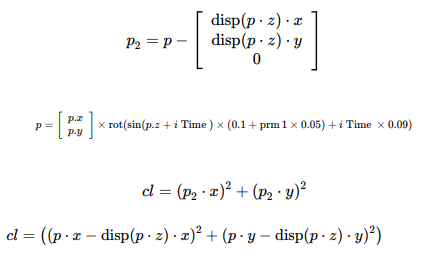
The mathematics behind this code involves a combination of linear algebra, trigonometry, and algorithmic techniques specific to computer graphics. It is simplified here and is only intended as a representation of the type of thinking that goes into creating a procedural interactive shader.
Let us better define what a procedural shader is.
Procedural Shaders
Procedural shaders are a type of computer graphics shader that dynamically generate textures and shapes at runtime, rather than relying on pre-created images or models, and may be sensor-driven. These shaders use mathematical algorithms to create complex visual effects and patterns, allowing for a high degree of detail and variation with relatively low memory usage. They are commonly written in shading languages like GLSL (OpenGL Shading Language) or HLSL (HighLevel Shading Language)s. They excel in rendering natural phenomena like clouds, water, fire, and terrain, as well as synthetic patterns like noise, marbling, or fractals. The flexibility and efficiency of procedural shaders make them a powerful component for the creation of dynamic, responsive, and highly detailed visual environments.
3D Exploratory Media

The incorporation of 3D media with interactive viewers in educational contexts marks a significant advancement in pedagogical methods, particularly in enhancing spatial awareness and understanding complex mechanisms. This essay explores the current state and advantages of using 3D interactive media in education.
Enhanced Spatial Awareness and Visualization
One of the primary benefits of 3D media in education is the enhancement of spatial awareness. Traditional 2D representations, while useful, often fall short in conveying the true spatial relationships inherent in complex structures. 3D media overcomes this limitation by providing a realistic, three-dimensional representation of objects, which can be crucial in fields such as architecture, engineering, and biology.
For instance, in anatomy education, a 3D model of the human body allows students to visualize and understand the spatial arrangement of organs and systems in a way that flat images cannot. Similarly, in architecture and engineering, 3D models enable students to grasp the dimensions and physical relationships of structures and components more intuitively.
Interactive Learning Experience
Interactive 3D viewers take the educational experience a step further by allowing students to manipulate the 3D models. This interaction can range from rotating and zooming to disassembling and reassembling components. Such interactive capabilities cater to various learning styles, particularly kinesthetic learning, where students learn by doing.
The ability to interact with 3D models aids in developing a more profound understanding of the subject matter. For example, engineering students can explore the mechanics of a machine by interacting with its 3D model, disassembling its parts, and studying its working principles. This hands-on approach promotes active learning and engagement, which is often more effective than passive learning methods.
Understanding Complex Mechanisms
Complex mechanisms, which are often difficult to represent and understand through traditional media, can be effectively demonstrated with 3D models. In fields like mechanical engineering, molecular biology, or physics, understanding the intricacies of movements and interactions is crucial.
A 3D interactive model allows students to see how components move and interact in real-time. For example, a 3D model of an engine can show how pistons move within cylinders or how gears interact in a gearbox. In molecular biology, 3D models can illustrate the complex structures of proteins and the dynamics of molecular interactions.
Accessibility and Flexibility
The advent of advanced software and hardware has made 3D modeling more accessible than ever. Educational institutions can now incorporate these models into their curriculum without requiring prohibitively expensive equipment. Furthermore, with the rise of virtual and augmented reality technologies, these 3D educational experiences can be further enhanced to create immersive learning environments.
Market Research
We studied 2,184 projector offerings and tested approximately 50 units in a laboratory. There are currently no off-the-shelf offerings of immersive projectors, so this study is limited to flat projection. However, this data is instructive regarding the projector market in general and highlights the culture of competition and information available to the consumer.
Here's an overview of the data structure and the type of information it includes:
Brand: The brand name of the projector manufacturer (e.g., NEC Projectors, Dukane Projectors).
Model: Specific model name or number of the projector (e.g., NEC PH3501QL Projector, Dukane ImagePro 9135-4K Projector).
Street Price: The retail price of the projector as it might be found in stores or online retailers.
MSRP: The manufacturer's suggested retail price for the projector.
Lumens: The luminous flux of the projector in lumens, which indicates the brightness of the projector.
Resolution: The native resolution of the projector (e.g., 4096×2160).
$/ Lumen: The cost per lumen, calculated as the MSRP divided by the lumens. This provides a sense of the cost efficiency regarding the brightness of the projector.
X-Res and Y-Res: The horizontal (X-Res) and vertical (Y-Res) pixel counts of the projector's resolution.
Pixels: The total number of pixels, calculated from the resolution (X-Res multiplied by Y-Res).
$ / Mpixel: The cost per million pixels, calculated as the MSRP divided by the number of millions of pixels. This metric provides an insight into the cost relative to the resolution of the projector.
Value Factor: A calculated factor that likely represents an overall value assessment of the projector, based on its price, brightness, and resolution.
The analysis included projectors with a lumens range of 34,990 lumens and a price range of $80 to a maximum of $299,000. The most outstanding results were in lower cost projectors related to value, which pointed to misleading claims.
As part of film production activities, and over the course of 20 years, we also studied approximately 100 venues for appropriateness of fluidic projection and spoke extensively with stakeholders about their potential audiences. We also wanted to know about their fears in moving to fluidic projection and any business challenges they may see.
Let’s start by looking at the current projector market as it relates to being a component in a fluidic projection pipeline.
First Impressions
An analysis of 2,184 projector offerings and laboratory tests on approximately 50 units, provides a comprehensive overview of the current state of the projector market, with a specific focus on traditional flat projection systems. Notably, the absence of off-theshelf offerings in the realm of immersive projectors narrowed the scope of our study to flat projection. However, the insights gleaned are significant, particularly in understanding the market dynamics and consumer information landscape.
A critical aspect of our study involved examining the 'Value Factor' of projectors – a metric intended to encapsulate the overall value of a projector, taking into account its brightness, resolution, cost, and other features. Our analysis of this factor across a wide range of models highlighted an interesting and concerning trend in the market: the culture of misleading claims.
The projector market is intensely competitive, with manufacturers vying to capture consumer attention through various marketing strategies. One such strategy is the embellishment of product specifications, particularly in terms of luminance (lumens) and projector capabilities for large screen sizes. Our study found considerable variance in the Value Factor, suggesting that the performance and cost-effectiveness of projectors as advertised do not always align with their actual capabilities.

This discrepancy is particularly evident in the context of lumens, where some manufacturers report inflated figures that do not realistically represent the effective brightness of the projected image. Similarly, claims regarding the suitability of projectors for very large screen sizes often do not consider the crucial aspect of maintaining adequate screen brightness over larger areas. Such practices can lead to consumer misconceptions about projector performance, thereby impacting purchasing decisions.
The analysis of the projector market, particularly at the lower end, reveals a notable trend where misleading information is more prevalent. This tendency largely manifests in the form of exaggerated specifications or overpromised features, with the apparent aim of appealing to consumers who may have limited knowledge about projector technology. Expanding on this observation, several key aspects contribute to this phenomenon:
Overstated Specifications: In the budget projector segment, it's not uncommon to find products with specifications that seem too good to be true at their price point. This includes claims of extremely high lumens, resolutions, or other performance metrics that, upon closer examination, do not hold up. These overstated claims are often designed to make these products stand out in a crowded market and attract buyers looking for a bargain.
Target Consumer Demographics: The lower end of the market typically attracts first-time buyers or consumers with a limited budget, who may not have the experience or knowledge to critically assess technical specifications. This demographic is more susceptible to marketing claims, as they may not be aware of what constitutes realistic specifications for projectors in this price range.
Marketing Tactics and Language: The way information is presented plays a significant role in this misleading trend. Technical jargon, ambiguous language, or the selective presentation of data can obscure the actual performance of a projector. For instance, highlighting 'raw lumens' instead of the more realistic 'ANSI lumens' can significantly skew a consumer's perception of the projector's brightness.
Lack of Standardization in Reporting: While there are industry standards like ANSI lumens for measuring brightness, not all manufacturers adhere to these standards, especially in the lower-priced segments. The absence of a universally enforced standard allows for more leeway in how product specifications are reported.
Online Retail Environment: The rise of online shopping has contributed to this trend. Consumers shopping online have limited means to verify claims made on product listings, unlike in a physical store where a demonstration might be possible. Additionally, the sheer volume of options available online can overwhelm consumers, making it harder to discern accurate information.
Implications for Consumer Trust: This practice of misleading consumers in the lower end of the market not only affects individual purchasing decisions but can also have broader implications for consumer trust in the industry. Over time, these practices can lead to general skepticism and apprehension towards budget projectors, which can be detrimental to reputable manufacturers in this segment.
The prevalence of misleading information at the lower end of the projector market is a significant issue, primarily driven by competitive pressures and the targeting of less knowledgeable consumers. It underscores the need for more consumer education, better regulation, and standardization in the industry to ensure that consumers can make informed decisions and trust the products they purchase.
Moreover, the absence of a standardized approach in reporting these specifications further complicates the issue, making it challenging for consumers to compare products accurately. While the ANSI standard for measuring lumens does provide a more uniform methodology, not all manufacturers adhere to this standard in their marketing materials.
The insights from our study underscore the need for greater transparency in the projector market. Consumers require clear,accurate information to make informed decisions. The tendency of some manufacturers to use misleading claims not only affects consumer trust, but also hampers the ability to choose the most suitable projector for individual needs.

Misleading Marketing
Misleading Lumen Ratings
In the realm of online retail, particularly on platforms like Amazon, it has become increasingly common to encounter projector listings where manufacturers claim high luminance levels, such as 10,000 lumens, for products priced under $100. This trend, notable for its apparent disparity between high technical specifications and low pricing, merits a closer examination to understand the nuances and potential implications for consumers navigating the projector market.
ANSI Lumens
In the display industry, there has historically been a practice among some manufacturers to highlight the higher luminance at the center of an image as a means of suggesting superior performance. This approach often involved quoting the luminance of only the central part of the display, without adequately addressing the uniformity across the entire image. This led to inconsistencies and potential misunderstandings in the specifications of image luminance among different products.
To address these discrepancies and provide a standardized method for measuring projector output, an ANSI (American National Standards Institute) standard was established in 1992. This standard introduced a more comprehensive approach to measuring luminance. The current version of this specification adheres to the IEC (International Electrotechnical Commission) standard established in 2002, yet the measurement is still widely referred to as 'ANSI lumens'.
The methodology specified by this standard involves taking luminance measurements at nine different points on the screen, as depicted in Figure 13.11. These points are strategically chosen to represent different areas across the image, including the center and corners. The average of these nine measurements is then calculated to determine the ANSI luminance value. The term 'ANSI lumens', therefore, encompasses two distinct components. The 'ANSI' part of the phrase denotes the testing method employed, which is the standardized approach as per the ANSI and later IEC specifications. On the other hand, the 'lumens' component of the phrase refers to the unit of luminous flux as defined by the CIE (International Commission on Illumination). This definition of lumens is a universally recognized unit for measuring the perceived power of light as seen by the human eye.
In this way, the use of 'ANSI lumens' as a metric provides a more reliable and uniform standard for comparing the luminance of projectors. It ensures that the luminance values provided by manufacturers reflect a more accurate representation of the projector's performance across the entire display, rather than just at the center. This standardization is crucial for consumers and professionals in the display industry to make informed decisions based on consistent and comparable data.
Raw Lumens
The core of the issue lies in differentiating between 'raw lumens' and 'ANSI lumens.' Raw lumens refer to the measure of brightness at the light source (such as an LED or lamp) before it passes through any optical components of the projector. This figure does not account for the losses that occur as light travels through the projector's optics and imaging panels.
The Marketing Misdirection
The discrepancy observed in low-cost projector listings can be attributed to manufacturers reporting the raw lumens of the light engine, rather than the ANSI lumens. While this practice is not technically incorrect, it can be misleading. The raw lumens figure significantly overstates what the projector can achieve in practical terms. Optical losses within the projector, including absorption and reflection, as well as inefficiencies in the light valve (such as LCD or DLP panels), substantially reduce the actual light output.
Implications for Consumers
This marketing approach exploits a gap in general consumer knowledge. Without a clear understanding of lumens and how they are measured, consumers may be misled into expecting a level of performance that these projectors cannot deliver. The result is a discrepancy between expectations based on advertised specifications and the actual performance of the projector.
Misleading Screen Size
In the projector market, alongside claims of high luminance, another common assertion made by some manufacturers is the suitability of their projectors for very large screen sizes. This claim, like the one regarding lumens, needs scrutiny, especially when considering the relationship between projector output and screen brightness.
The assertion that a projector is suitable for large screen sizes implies that it can maintain a clear, bright, and sharp image even when projected over a vast area. This capability is critical for environments such as theaters, lecture halls, and outdoor venues where large screens are commonplace. However, the challenge lies in maintaining adequate screen brightness, which is crucial for image quality, particularly in these larger formats. The key factors contributing to this issue include:
Brightness Dilution Over Larger Areas
As the size of the projection screen increases, the same amount of light from the projector is spread over a larger area. This dilution effect means that the perceived brightness of the image decreases as the screen size increases. A projector that might appear sufficiently bright on a smaller screen may not provide the same level of brightness on a larger screen.
Lumen Output and Screen Gain
The lumen output of a projector and the gain of the screen are crucial in determining the actual brightness of the projected image. Screen gain refers to the reflectivity of the screen surface – a higher gain means more light is reflected back to the audience. However, a higher gain can also lead to issues like hot spotting (where the center of the image is much brighter than the edges). Projectors that are advertised for large screens must have a lumen output high enough to compensate for the increased screen area and any potential loss in brightness due to the screen's characteristics.
Ambient Light Considerations
The ambient light in the environment also plays a significant role in determining the effectiveness of a projector on a large screen. In well-lit rooms or outdoor settings, a projector needs significantly more brightness to produce a clear and visible image.
Resolution and Image Quality
Besides brightness, the resolution and overall image quality are also impacted when projecting onto larger screens. A projector that may deliver sharp and highquality images on a smaller screen might struggle to maintain the same clarity and detail on a larger screen, especially if it doesn’t have a high enough native resolution.
Marketing and Consumer Expectations
As with luminance claims, the assertion of suitability for large screen sizes is often used as a marketing tool. It appeals to consumers seeking versatility and value. However, without a clear understanding of the technical requirements for effectively projecting onto large screens, consumers may end up with a projector that fails to meet their expectations in real-world applications.
A comprehensive understanding of these factors will lead to more informed purchasing decisions, ensuring the projector meets the desired performance standards for large screen applications.
History of Misleading Claims
Before the adoption of the ANSI (American National Standards Institute) test method for measuring projector brightness and resolution, there were prevalent practices in the industry, particularly among CRT (Cathode Ray Tube) projector manufacturers, that could potentially mislead end-users. This historical context is critical for understanding the evolution of projector testing standards and their impact on user expectations and product evaluations.
In the era preceding the ANSI standards, it was a common practice for CRT projector manufacturers to measure the lumen output of their devices under conditions optimized for maximum brightness. This involved using very high beam currents, which, indeed, resulted in the highest possible lumen output. However, a significant technical compromise occurred at these elevated beam currents – electron spot blooming. This phenomenon led to a degradation in image resolution, as the increased current caused the electron beam to spread out or 'bloom,' thereby losing its sharp focus.
Consequently, manufacturers would then measure the projector's resolution at a lower beam current, where the electron beam was more focused, and the resolution was optimal. The inherent problem with this approach was the substantial difference in luminance levels between the maximum luminance and the luminance at which the maximum resolution was achievable. This difference could be as drastic as a factor of 10 or more.
For the end-user, this discrepancy posed a misleading scenario. When purchasing a projector, customers would often base their decisions on the specified luminance and resolution. However, due to the disparate conditions under which each of these specifications was measured, the projector's actual performance could fall short of expectations.
The introduction of the ANSI test method brought about a significant change in how projectors were evaluated. This standardized method does not prohibit the assessment of a projector under both high and low drive conditions. However, it mandates that both the resolution and luminance be reported for the high drive condition, and likewise, both parameters be reported for the low drive condition. This approach ensures a more accurate and comprehensive representation of the projector's capabilities.
For measuring ANSI lumens, a solid white video image is utilized. The screen luminance is then measured at the center of each rectangle, as illustrated in a reference figure (e.g., Figure 13.11 in a specific technical document). A typical method for front projection systems involves using a plaque of white, gain 1.0 reflecting material along with a luminance meter. The plaque is positioned at the center of each rectangle, and the reflected light is measured.
Direct measurements off the projection screen are often inadequate, primarily because most professional screens have a gain greater than 1.0. This higher gain complicates accurate measurements, as the exact gain of the screen is seldom known. Moreover, even if the screen gain were known, it depends on the angles between the normal to the screen, the projector, and the luminance meter. Consequently, using a standard plaque of known reflectivity provides a more reliable and standardized method for measuring luminance.
Market Gap
In the conducted research, both the available projector products and the evolving market dynamics were meticulously studied, along with an exploration into the underlying reasons for the changing state of market demand for projectors. This comprehensive approach allowed for a multifaceted understanding of the projector industry and the forces shaping it.
The focus initially was on analyzing the current offerings in the projector market. This involved examining a range of products, assessing their features, pricing, and performance. The objective was to understand what manufacturers were offering and to pinpoint any gaps or opportunities for innovation within the market. This aspect of the research was crucial in identifying the competitive landscape and the standard against which new products could be measured.
Simultaneously, the changing market demands were explored. This required a more consumer-centric approach, seeking to understand the needs, preferences, and pain points of potential projector users. This part of the research involved techniques such as consumer surveys, interviews, and trend analysis. By focusing on the consumer perspective, the research aimed to uncover latent needs – those demands that consumers themselves might not have explicitly recognized.
A key realization from this dual-pronged research approach was the distinction between incremental and revolutionary innovation. While analyzing available products often leads to incremental improvements – refining and enhancing existing models –understanding changing market demands can pave the way for more groundbreaking innovations. This insight was particularly enlightening in the context of immersive projector technology, a field where traditional market analysis based on existing products might not fully capture the potential consumer interest or the scope of technological advancement.
The role of digital technology and data analytics also played a significant part in the research. The advent of big data, social media analytics, and advanced predictive models offered a wealth of information and insights into consumer behavior and emerging market trends. These tools enabled a more accurate analysis of consumer data and the anticipation of market shifts, adding a layer of precision to the research findings.
Antidotal Testing
The application of our projector technology has been subjected to antidotal testing, yielding enthusiastic responses from diverse sectors, each recognizing unique benefits tailored to their specific needs. This testing has involved practical demonstrations and trial runs in various fields, from medical training to entertainment. The following elaborates on the sectors where our projector has been tested and the specific applications within these fields:
Medical Staffing, Particularly in Neonatal Intensive Care Units (NICU): In the medical sector, our projector technology has shown significant promise, especially in NICU nurse training. It has been used to simulate scenarios like infant cardiac arrest. The projector effectively illustrates the positions and locations of instruments, creating a realistic and immersive training environment. This visual aid is particularly beneficial in high-stress situations, where quick, accurate responses are crucial. The technology's ability to recreate intricate medical scenarios helps in enhancing the preparedness and skillset of medical staff.

Military Applications for Training Purposes: The military has explored the use of our projector for various training purposes, including aircraft repair and military operations in urban terrain. The immersive projection allows for a realistic representation of complex repair procedures and urban landscapes, providing personnel with a hands-on experience in a controlled environment. This application not only aids in skill development but also enhances strategic planning and operational readiness without the risks associated with real-life training.
Educational Sector for Enhancing Student Engagement: In the field of education, the projector has been utilized to increase student engagement.
The technology offers a dynamic and interactive learning experience, transforming traditional classroom settings into immersive educational environments. By visually representing complex concepts and bringing subjects to life, the projector fosters a more engaging and effective learning experience for students.
Hospitality Industry for Creating Ambience: The hospitality industry has found our projector technology valuable for ambience creation. Hotels, restaurants, and event spaces have used it to enhance their environments, tailoring atmospheres to specific themes or events. This ability to dynamically alter the ambience can significantly enhance the customer experience, contributing to a memorable visit.

Location-Based Entertainment for Experiential Storytelling: In location-based entertainment venues, such as theme parks and exhibition spaces, the projector has been instrumental in experiential storytelling. It leverages existing physical assets, transforming them into dynamic storytelling mediums. This application not only enriches the visitor experience, but also adds a new dimension to storytelling by integrating visual narratives with physical spaces.
Parks for Natural Surface Projection: Parks have utilized the projector to cast images onto natural surfaces like rocks, waterfalls, and foliage. This application harmoniously blends technology with nature, creating captivating displays that enhance the natural beauty of the park while providing an educational or entertaining experience for visitors.
Museums for Outdoor Public Space Projections: Museums have employed our projector technology to extend their exhibits into outdoor public spaces. This approach not only creates public engagement through visually striking displays but also serves as a tool for drawing in a wider audience. It allows museums to showcase their collections in a new light and reach people who might not typically visit a museum.
Long-Term Care for Patient Management: In long-term care facilities, particularly for patients with memory impairments such as dementia, our projector technology has shown potential in reducing agitation and managing patient care. By projecting calming imagery or familiar scenes, it can create a soothing environment for patients, thereby reducing stress and agitation. This not only improves the quality of life for patients but also assists in managing nurse capacity demands by potentially reducing the need for constant direct supervision.
Music Venues for Enhancing Musical Experiences: At music venues, the projector has been used to augment musical performances, creating immersive visual experiences that complement the auditory elements. This integration of visual and musical elements can intensify the audience's experience, leaving lasting memories and potentially elevating the perceived value of the event.
Exhibitions for Product Demonstrations: In the context of trade shows and exhibitions, our projector has been effectively used for product demonstrations. By focusing the audience's attention on the product while minimizing distractions from neighboring booths, the technology enhances the impact of the presentation and aids in communicating product features more effectively.
Diverse Applications in Explaining Complex Concepts: The projector has found utility in a variety of fields requiring an understanding of complex spatial relationships. This includes urban management, where it helps in visualizing city layouts and infrastructure projects; construction and ranch management, for planning and visualizing large-scale projects; and subway tunnel and rail management, where it aids in operational planning and safety training.
Additionally, it has been tested in environmental science, such as for illustrating greenhouse gas propagations; in oceanography for visualizing ocean currents and ecosystems; and in industrial settings like refinery design. Its applications in subsurface geology are particularly noteworthy for oil exploration and aquifer modeling, helping in understanding geological formations and resource distributions.
In the field of science and engineering, the projector has been used for mapping underground tunnels, providing a visual aid in complex spatial environments. It also serves as an effective training tool in spatially complex industries such as nuclear reactors, where understanding the spatial layout is crucial for safety and efficiency.
For pilot training and wargaming, the projector offers a realistic simulation environment, enhancing the training experience. In weather prediction, it assists in visualizing and interpreting complex meteorological data. In the pharmaceutical industry, it aids in the design process, including molecular modeling and protein folding, by providing a three-dimensional visual representation of molecular structures.
The breadth of applications for immersive projection is expansive, covering a wide range of industries and sectors. Its ability to adapt to various needs—from healthcare to entertainment, education to complex industrial training—demonstrates its versatility and effectiveness. As the technology continues to evolve, it is expected to find even more innovative applications, enhancing understanding and engagement across diverse fields.
Conclusion
In examining the current state of media consumption, it becomes evident that the economic rewards for traditional content production, particularly in the realm of flat content, are diminishing. This trend is partly due to the enormous amount of content readily available for free or at a very low cost. Platforms like YouTube, offering over 800 million pieces of content, and the proliferation of over 1 billion television sets worldwide with tens of thousands of channels, many of which are free or inexpensive, contribute significantly to this landscape.
The sheer volume and accessibility of content in today’s digital age have led to a saturated market. Consumers, equipped with a myriad of choices ranging from online streaming platforms to traditional TV channels, find themselves inundated with options. This abundance of content, while providing variety, also leads to a certain degree of media fatigue. Audiences are increasingly seeking experiences that differentiate from the standard fare available through these channels [1-17].
This changing consumer preference is further evidenced by trends in theater attendance. The decline in movie theater attendance over recent years can be interpreted as an indicator of this media fatigue with flat, static, two-dimensional content. While there are multiple factors contributing to this decline, including the convenience of home streaming and the quality of home entertainment systems, it appears a significant aspect is the desire for more engaging, unique experiences that go beyond traditional moviewatching.
In response to this landscape, there is a growing market for immersive, interactive, and responsive media experiences. As the profitability of producing conventional flat content wanes, content creators and technology providers are exploring new frontiers. Consumers are showing a willingness to invest in experiences that provide something more than what is ubiquitously available. This includes experiences that are not just visually or audibly appealing, but are also engaging and interactive, offering a break from the passive consumption model.
For projector technology, this shift presents a significant opportunity. To meet the emerging demand, projectors need to evolve from being mere display devices, big TVs, to becoming integral components of immersive experiences. This evolution entails not just enhancements in image and sound quality, but also capabilities like motion tracking, spatial awareness, and integration with augmented and virtual reality. The aim is to create environments where the audience is not just a spectator but an active participant. The architecture we propose in this article includes cameras and thermal imaging piped into responsive software for flexible content modification in real-time.
Moving Forward
In the evolving media landscape, advanced projector technologies are emerging as the key enablers for a new era of content creation and consumption. These technologies are poised to play a critical role in transforming the way content is experienced, moving away from the traditional paradigm of static, flat content towards more dynamic, engaging, and interactive formats. This shift not only empowers content creators to craft more immersive and memorable experiences but also allows audiences to actively participate in uniquely tailored experiences, transcending the passive consumption model.
As the market reacts to the saturation of flat content and the growing appetite for interactive media, projector technologies are adapting to meet these new demands. The future of projectors lies in their ability to facilitate environments where audiences are not mere observers but integral parts of the experience. This involves a departure from conventional projection to more advanced systems capable of creating immersive, three-dimensional spaces, integrating with interactive technologies, and responding in realtime to audience inputs.
Such advancements in projector technology are crucial in catering to the evolving preferences of consumers, who increasingly seek experiences that engage them on multiple levels. The aim is to shift from the 'mind-numbing' effect of passively consuming flat content to a more stimulating and participatory form of media engagement. In this context, projectors become more than just display devices; they transform into portals to vivid, interactive worlds where the boundaries between the viewer and the content blur, creating deeply engaging experiences.
As the media landscape continues to evolve, advanced projector technologies are at the forefront of this change, enabling the creation of content that is not only visually and audibly appealing but also engaging and interactive. These technologies are paving the way for a future where audiences are active participants in their media experiences, enjoying content that is far removed from the static and flat formats of the past. This paradigm shift represents a significant opportunity for venues, content creators and technology providers alike to redefine the standards of media consumption.
The objective of this article was to examine and delineate the trajectory towards our collective future in media. This exploration aimed at understanding the evolving trends, technologies, and consumer preferences that are shaping the landscape of media consumption and production. By analyzing these elements, the article sought to provide insights into the direction in which our media experiences are headed and the potential transformations that lie ahead.
References
- Baumgartner, S. E., & Kühne, R. (2024). Why do users stop pleasurable media experiences? The dynamics of media experiences and their impact on media disengagement. Communication Research, 00936502241233017.
- Brennesholtz, M., and Stupp, E. (2008). “Projection Displays, Second Edition,” Projection Displays, Second Edition, pp. 1–432.
- Bernardes, E., & Viollet, S. (2022). Quaternion to Euler angles conversion: A direct, general and computationally efficient method. Plos one, 17(11), e0276302.
- Balbinot, A., de Freitas, J. C. R., & Côrrea, D. S. (2015). Use of inertial sensors as devices for upper limb motor monitoring exercises for motor rehabilitation. Health and Technology, 5(2), 91-102.
- Laihanen, P. (1993, August). New approach to the manipulation of color display images. In Device-Independent Color Imaging and Imaging Systems Integration (Vol. 1909, pp. 31-43). SPIE.
- Wang, L., Zhou, K., Yu, Y., & Guo, B. (2010). Vector solidtextures. ACM Transactions on Graphics (TOG), 29(4), 1-8.
- Xu, H., Badawi, R., Fan, X., Ren, J., & Zhang, Z. (2009, October). Research for 3D visualization of Digital City basedon SketchUp and ArcGIS. In International Symposium on Spatial Analysis, Spatial-Temporal Data Modeling, and Data Mining (Vol. 7492, pp. 290-295). SPIE.
- Jafarian, Y., Wang, T. Y., Ceylan, D., Yang, J., Carr, N., Zhou, Y., & Park, H. S. (2023). Normal-guided garment UV prediction for human re-texturing. In Proceedings of the IEEE/CVF Conference on Computer Vision and Pattern Recognition (pp. 4627-4636).
- Aliaga, C., Xia, M., Xie, X., Jarabo, A., Braun, G., & Hery,C. (2023, July). A hyperspectral space of skin tones for inverse rendering of biophysical skin properties. In Computer Graphics Forum (Vol. 42, No. 4, p. e14887).
- Kavan, L., Bargteil, A. W., & Sloan, P. P. (2011, June). Least squares vertex baking. In Computer Graphics Forum (Vol. 30, No. 4, pp. 1319-1326). Oxford, UK: Blackwell Publishing Ltd.
- Csébfalvi, B. (2018, May). Fast catmull-rom spline interpolation for high-quality texture sampling. In Computer Graphics Forum (Vol. 37, No. 2, pp. 455-462).
- Kajiya, J. T. (1986, August). The rendering equation. In Proceedings of the 13th annual conference on Computer graphics and interactive techniques (pp. 143-150).
- Tongbuasirilai, T., Unger, J., Guillemot, C., & Miandji,E. (2022). A sparse non-parametric BRDF model. ACMTransactions on Graphics, 41(5), 1-18.
- Bourgoin, A., Zannoni, M., & Tortora, P. (2019). Analytical ray-tracing in planetary atmospheres. Astronomy & Astrophysics, 624, A41.
- Cook, R. L., Porter, T., & Carpenter, L. (1984, January). Distributed ray tracing. In Proceedings of the 11th annual conference on Computer graphics and interactive techniques (pp. 137-145).
- Blattner, T., Keyrouz, W., Bhattacharyya, S. S., Halem, M., & Brady, M. (2017). A hybrid task graph scheduler for high performance image processing workflows. Journal of signal processing systems, 89(3), 457-467.
- Gueld, M. O., Thies, C. J., Fischer, B., Keysers, D., Wein,B. B., & Lehmann, T. M. (2003, June). A platform for distributed image processing and image retrieval. In Visual Communications and Image Processing 2003 (Vol. 5150, pp. 1109-1120). SPIE.