

Journal of Biopolymers and Theoretical Studies(JBTS)
ISSN: 2833-0064 | DOI: 10.33140/JBTS
Impact Factor: 0.8



Research Article - (2025) Volume 3, Issue 1
Dynamic and Asymmetric Impacts of Climate Change on Agriculture and Economic Growth in Tunisia
Received Date: Sep 12, 2025 / Accepted Date: Oct 10, 2025 / Published Date: Oct 25, 2025
Copyright: ©2025 Mohamed Riadh cherif. This is an open-access article distributed under the terms of the Creative Commons Attribution License, which permits unrestricted use, distribution, and reproduction in any medium, provided the original author and source are credited.
Citation: Cherif, M. R. (2025). Dynamic and Asymmetric Impacts of Climate Change on Agriculture and Economic Growth in Tunisia. J Biop Theo Stud, 3(1), 01-16.
Abstract
This study investigates the dynamic and asymmetric effects of climate variability on agricultural productivity and econom- ic growth in Tunisia from 1974 to 2023. Unlike conventional linear analyses, we adopt an integrated econometric strategy combining Autoregressive Distributed Lag (ARDL), Nonlinear ARDL (NARDL), and Quantile ARDL (QARDL) models. This approach captures both threshold effects and distributional heterogeneity in climate impacts. Empirical results show that a 1°C temperature increase leads to a long-run decline of about 1.2% in agricultural GDP, while equivalent decreases yield no significant response, highlighting asymmetric thermal effects.
Precipitation shortages exert more than double the impact of surpluses, with adverse effects amplified during recessions. Quantile estimations reveal structural disparities: smallholders rely heavily on imports for climate adaptation, while large farms, despite higher productivity, are more exposed to combined heat and water stress. Diagnostic tests confirm model validity and robust cointegration. Beyond methodological contributions, the findings stress the need for differentiated climate policies, including progressive water pricing, targeted subsidies for efficient irrigation technologies, and capacity-building for small producers. These insights provide evidence-based guidance for enhancing climate resilience in Tunisia and other semi-arid economies.
Keywords
Climate, Agriculture, Economic Growth, Asymmetry, ARDL, NARDL, QARDL, Tunisia
Introduction
Climate change represents one of the most pressing challenges for agricultural-dependent economies, particularly in semi-arid re- gions already facing water scarcity and ecological fragility. The seminal works of Nordhaus and Stern established the theoreti- cal foundations for understanding climate-economy interactions, highlighting the disproportionate vulnerability of developing na- tions. Contemporary empirical research substantiates this differ- ential sensitivity, with estimates suggesting that each additional degree Celsius may reduce per capita GDP by 0.5% to 2% in tropi- cal countries, primarily through agricultural channels [1,2]. Within this global context, Tunisia presents a compelling case study due to its strategic agricultural sector—contributing approximately 10% to GDP and 15% to employment (INS, 2023)—coupled with increasing exposure to climate risks. While previous studies on Tunisian agriculture have predominantly employed linear model- ing frameworks, they potentially overlook critical nonlinearities and threshold effects in climate impacts [3,4]. This methodolog- ical gap becomes particularly relevant given the Mediterranean region's established vulnerability to climate asymmetries [5,6].
This study breaks new ground by implementing, for the first time in the Tunisian context, an integrated methodological approach combining Nonlinear Autoregressive Distributed Lag (NARDL) and Quantile Autoregressive Distributed Lag (QARDL) models. This framework enables simultaneous examination of asymmetric responses to favorable versus unfavorable climate shocks and their variation across economic cycle phases. The analysis cov- ers an extended period (1974–2023) that encompasses recent cli- mate crises, providing unprecedented temporal depth. Preliminary findings reveal significant negative asymmetries: a 1°C tempera- ture increase reduces agricultural GDP by 1.2% long-term, while equivalent cooling shows no significant effect. Furthermore, rain- fall deficits demonstrate impacts 2.3 times greater during econom- ic recessions, underscoring the critical interaction between climate and economic cycles [7]. These results align with emerging re- gional evidence from Morocco and Algeria while offering superior methodological granularity [8].
The study addresses three pivotal questions: (1) Through what mechanisms do asymmetric climate shocks affect Tunisian agri- cultural growth? (2) How are these effects modulated by economic fluctuations? (3) What policy implications emerge for building re- silience against increasingly nonlinear climate risks? This article is structured as follows: Section II reviews the evolutionary perspec- tive on climate-agriculture-growth interactions in Tunisia. Section III outlines the theoretical framework and research hypotheses. Section IV details the methodological strategy, while Section V presents empirical results. Section VI discusses findings compar- ative implications, and Section VII concludes with policy recommendations.
Interactions Between Climate, Agriculture, and Economic Growth in Tunisia: An Evolutionary and Methodological Perspective
Tunisia, a Mediterranean country characterized by a strong depen- dence of its economy on climatic conditions, is a relevant case study for analyzing the multidimensional interactions between cli- mate, agriculture, and economic growth. Understanding of these dynamics has evolved considerably, moving away from simplistic analytical frameworks to embrace more sophisticated methodolo- gies capable of capturing the complexities of socio-economic and environmental systems [9]. Historically, the analysis of the links between these variables has often been part of neoclassical models of economic growth, such as those of Solow and Nordhaus [10]. These approaches, while fundamental, tended to linearize inher- ently nonlinear relationships and neglect threshold effects, which are crucial characteristics in the study of environmental and economic systems. They struggled to account for the complexity of interdependencies and exogenous shocks, such as extreme weather events.
Developments in the field of research have highlighted the need to incorporate more robust methodologies. The pioneering work of marked a turning point by demonstrating the heterogeneity of climate impacts on economic growth [11]. Their research empha- sized that a country's sensitivity to climate variations is intrinsically linked to its level of development, an observation that is par- ticularly relevant for Tunisia, where agriculture remains a major economic pillar. Indeed, this sector accounts for approximately 12% of national GDP and employs more than 14% of the working population, making it structurally vulnerable to climate hazards [12]. More recent studies, such as that conducted by have put this methodological evolution into practice by applying state-of-the-art econometric models. The use of ARDL (Autoregressive Distributed Lag) and NARDL (Non-linear Autoregressive Distributed Lag) models has made it possible to examine the asymmetric effects of climate change on agricultural productivity. The results are edi- fying: even small rainfall deficits have an estimated impact 2.8 times greater than that of equivalent surpluses. This asymmetry highlights the disproportionate negative consequences of droughts compared to the potential benefits of excess rainfall, revealing in- creased vulnerability to negative shocks.
Tunisia faces increasing climate vulnerability, exacerbated by pre-existing socio-economic and environmental factors. IPCC data (2022) confirm a temperature increase of +1.5°C in the region since 1970, an alarming rise that exceeds the global average [13]. The projections of are equally worrying, forecasting a 20-30% re- duction in rainfall by 2050. These climate changes are not mere variations, but structural transformations that have profound and disproportionate repercussions on the Tunisian economy, particularly its agricultural sector. Empirical analyses have also identified critical thresholds beyond which climate impacts become particu- larly damaging [14]. For example, have identified a threshold of 32°C for vegetable crops, above which the productivity of these crops is significantly affected. These thresholds are essential for modeling and developing targeted adaptation policies, as they indicate tipping points where damage becomes exponential.
The methodological innovation at the heart of current research lies in the joint application of NARDL (Non-linear Autoregressive Distributed Lag) and QARDL (Quantile Autoregressive Distrib- uted Lag) models to the Tunisian case. This approach represents a significant advance over previous methods, as it allows for the simultaneous analysis of several crucial dimensions: Climate non-linearities: NARDL models are particularly well suited to capturing the asymmetric nature of climate impacts. They recognize that the effect of an increase or decrease in precipitation, or a rise or fall in temperatures, is not necessarily symmetrical. For example, a 10% rainfall deficit can have much more serious consequences than a 10% rainfall surplus. This is crucial for dependent agricultural systems such as Tunisia's, where water management is paramount. Variation in impacts across economic cycles: QARDL models offer an innovative perspective by allowing us to analyze how climate impacts on agriculture and the economy vary across different phases of the economic cycle (e.g., during periods of ro- bust economic growth versus periods of recession). This granularity is essential, as the resilience of an agricultural sector to a cli- mate shock may vary depending on the country's overall economic context. An expanding economy may be better able to absorb the costs of a drought, while an economy in difficulty would be more vulnerable.
Recent contributions to the literature further underscore the im- portance of these methodological advances [15]. Provides a com- prehensive overview of the evolving climate-economy literature, emphasizing the need for context-specific analyses that account for regional vulnerabilities [16]. In the Mediterranean context, highlight the critical role of adaptive water management strate- gies in mitigating climate impacts on agriculture, examines the heterogeneous effects of climate change across different agricul- tural systems in the region [17]. In short, this research does more than confirm Tunisia's vulnerability to climate change. It makes a significant methodological contribution by providing more precise tools for understanding the underlying mechanisms of this vulner- ability. The information gleaned from applying the NARDL and QARDL models is invaluable for developing more effective public policies, whether they involve agricultural adaptation strategies, investments in water management, or economic support measures to mitigate the impacts of climate shocks.
Theoretical Foundations and Assumptions
This work is based on an integrative theoretical framework for analyzing the complex relationships between climate, agricul- tural, and economic variables in the Tunisian context. Our ap- proach combines several key theoretical foundations: The theory of growth under environmental constraints, developed by posits that climate shocks affect production factors (land, labor, capital) through direct channels, such as agricultural yields, and indirect channels, such as market instability and adaptation costs [18]. This approach highlights the importance of considering environmental impacts in economic growth models. The asymmetric vulnerabili- ty hypothesis, formulated by and suggests that agricultural econo- mies suffer disproportionate losses during negative climate shocks (such as droughts and heat waves) compared to the potential gains associated with favorable climatic conditions. This asymmetry is particularly relevant for Tunisia, where agriculture is a pillar of the economy.
Research Hypotheses
H1: Climate variations (temperature, precipitation) significantly affect Tunisian agricultural productivity, with Non-linear effects (critical thresholds).
H2: Agriculture acts as a major channel for transmitting climate shocks to economic growth, through its contributions to GDP, em- ployment, and exports.
H3: Climate effects are asymmetric: water deficits reduce produc- tion more than surpluses stimulate it [19].
H4: The heterogeneity of climate impacts depends on the phases of the economic cycle with increased vulnerability during recessions [20].
The originality of this approach lies in its combination of tradition- al economic theory and advanced modeling of complex systems, adapted to the Mediterranean context.
Methodology Strategy
To test these hypotheses, we combine three complementary econometric approaches:
ARDL approach
We use an ARDL model to test hypotheses H1 and H2, which cap- tures the dynamic relationships between variables. The complete specification (Eq. 1) is presented in Appendix A1. Its general prin- ciple is written as:
Agricultural production = f(Climate, Economy, Agriculture, Dy- namic Lags)
where short-term/long-term effects are estimated via an error cor- rection model (ECM). NARDL approach
To test hypothesis H3, we use the NARDL model to detect asym- metries (e.g., drought vs. excessive rainfall).
QARDL model
To analyze heterogeneity (H4), the QARDL estimates conditional elasticities at different quantiles (τ) of the GDP distribution [21]. (Figure 1):
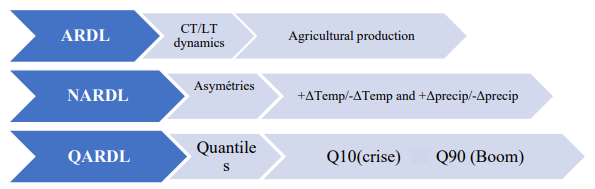
Figure 1: ARDL, NARDL, QARDL: Agricultural Production Modeling Approaches
|
Criterion |
ARDL |
NARDL |
QARDL |
|
Variables |
Levels/lags |
Segmentation +/- |
Quantiles |
|
Strength |
Dynamic CT/LT |
Climate Threshold |
Heterogeneity |
|
Application |
Hypotheses H1-H2: Relationship between climate and agricultural production |
Hypothesis H3: Dif- ferentiated impact of drought/excess |
H4: Vulnerability by type of farm |
Table 1: Summary of Approches.
Data and Preliminary Tests
Our analysis is based on a set of annual data covering the period from 1974 to 2023, carefully collected from recognized institu- tional sources. Climate variables, such as average annual tempera- ture and total precipitation, are extracted from the databases of the Climate Knowledge Portal (World Bank) and the World Resources Institute. Sectoral indicators, including agricultural production and water consumption, are taken from the statistical yearbooks of the Tunisian National Institute of Statistics (INS). Macroeconomic data, such as real agricultural GDP and the agri-food trade balance, are taken from the World Development Indicators, supplemented by the annual reports of the Tunisian Ministry of Agriculture.
Particular attention was paid to the construction of interaction variables in order to capture the combined effects of climatic and economic factors. Two key interactions were specifically modeled: (2) temperature × agricultural water resources and (2) agricultural GDP × precipitation. These terms make it possible to assess how climate sensitivity varies according to water conditions and the level of agricultural development. The logarithmic transformation applied to all variables serves three methodological purposes: (i) to reduce the heteroscedasticity of the residuals, (ii) to linearize potentially multiplicative relationships between variables, and (iii) to facilitate the interpretation of coefficients in terms of elastici- ties. This approach is consistent with standard practices in climate econometrics and allows direct comparisons with previous studies [22].
Descriptive Statistics
|
Variable |
Obs |
Mean (μ) |
Std. Dev. (σ) |
Min |
Max |
Unit/Transformation |
|
Climate variables |
|
|
|
|
|
|
|
ln(PRECIP) |
50 |
5.580 |
0.252 |
4.944 |
6.085 |
Log(mm) |
|
ln(TEMP) |
50 |
3.122 |
0.044 |
3.016 |
3.208 |
Log(°C) |
|
Agricultural variables |
|
|
|
|
|
|
|
ln(FOODPROD) |
50 |
4.163 |
0.400 |
3.494 |
4.811 |
Log(index base 100) |
|
ln(WATERA- GRI) |
50 |
4.417 |
0.052 |
4.310 |
4.497 |
Log(millions m³) |
|
Macro variables |
|
|
|
|
|
|
|
ln(GDPAGR) |
50 |
22.267 |
0.448 |
21.579 |
22.931 |
Log (constant dinars, base 2015)) |
|
ln(FOODIMP) |
50 |
2.410 |
0.227 |
2.078 |
3.030 |
Log($ constants) |
|
ln(VALASP) |
50 |
2.428 |
0.265 |
1.924 |
2.930 |
Log(index 2010=100) |
|
Interactions |
|
|
|
|
|
|
|
ln(TEMP)×l- n(WATERAGR) |
50 |
13.785 |
0.124 |
13.497 |
14.059 |
Terme d'interaction |
|
ln(GDPAGR)×l- n(PRECIP) |
50 |
69.524 |
2.215 |
65.390 |
73.502 |
Terme d'interaction |
Table 2: Descriptive Statistics of Variables (1974–2023).
Analysis of the data presented in the descriptive statistics table for the period from 1974 to 2023 reveals contrasting dynamics be- tween the different indicators. Annual precipitation, measured in logarithms, shows the greatest variability, with a standard devia- tion of 0.252 logarithmic units, indicating significant hydrological fluctuations from one year to the next, with extreme values ranging from 4.944 to 6.085. In contrast, temperatures show a more sta- ble trend, with a standard deviation of only 0.044, confirming the gradual warming trend in Tunisia's climate. Agricultural indicators reflect this dual climatic influence, with food production showing marked variations, illustrated by a standard deviation of 0.400, corresponding to good and bad climatic years. Agricultural water consumption, on the other hand, appears to be better controlled, with a standard deviation of 0.052, probably thanks to the irriga- tion policies implemented since the 1980s.
Analysis of macroeconomic variables highlights a significant am- plitude in agricultural GDP, with a variation of 1.352 logarithmic units, while food imports, although more stable, remain sensitive to external shocks. Agricultural value added follows an intermediate trajectory, indicating a certain resilience to climatic fluctuations. The terms of interaction between climate and the economy reveal interesting behaviors, with the relationship between temperature and irrigation remaining stable over time, suggesting technical ad- aptation to new thermal conditions. On the other hand, the effect of precipitation on agricultural growth varies significantly over time, probably depending on agricultural policies and technological in- novations implemented. These preliminary observations confirm the predominance of the water factor over the thermal factor in agricultural variability, the existence of effective regulatory mecha- nisms in response to climatic stress, and the need for differentiated analyses according to historical sub-periods. These elements fully justify the methodological approach combining several economet- ric techniques to understand the complex relationships between climate, agriculture, and the economy in Tunisia.
Correlation Matrix
The analysis of interactions between climatic, agricultural, and macroeconomic variables, as shown in Pearson's correlation ma- trix for the period 1974-2023, reveals complex dynamics with significant policy implications. The very high correlation (0.972) between agricultural production and the sector's GDP highlights the central role of agriculture in the Tunisian economy. This eco- nomic dependence increases the country's vulnerability to climate hazards, as evidenced by the other relationships identified. Climate parameters have contrasting effects. For example, temperature is positively correlated with agricultural production (0.700), while it is negatively associated with the sector's value added (-0.739). This suggests that rising temperatures could improve some yields while reducing overall profitability. On the other hand, precipita- tion shows an unexpected negative correlation with agricultural production (-0.333). This phenomenon can be attributed to several factors, including flooding in regions such as Cap Bon or the Sahel, where heavy rains can drown crops or delay sowing. In addition, excess water can suffocate roots and disrupt plant growth. In rain- fed agriculture, the timing of rainfall is often more critical than the total amount, making inappropriate rainfall periods particular- ly problematic. Agricultural water management in Tunisia suffers from structural weaknesses, with few functional dams and a lack of complementary irrigation systems to store excess rainwater. The marked negative correlation (-0.830) between water consumption and agricultural production reflects growing inefficiencies due to overexploitation of groundwater and the use of obsolete irrigation techniques. The interaction terms reveal more subtle dynamics. The interaction between temperature and water (0.545) indicates that the impact of global warming is mediated by water availabil- ity, while the interaction between GDP and precipitation (0.920) highlights the importance of combinations of climate parameters in their effect on economic performance.
|
Variable |
lnVALASP |
LNFOOD- IMP |
LNFOOD- PRO |
LnPREC- IP |
lnTEMP |
lnWATER- AGRI |
lnGD- PAGR |
LNTEMPLN- WATERAGRI |
LNGD- PAGRLN- TEMP |
|
lnVALASP 1.000 |
|||||||||
|
LNFOOD- IMP |
0.497*** |
1.000 |
|
|
|
|
|
|
|
|
LNFOOD- PROD |
-0.722*** |
-0.509*** |
1.000 |
|
|
|
|
|
|
|
lnPRECIP |
0.096 |
-0.043 |
-0.333** |
1.000 |
|
|
|
|
|
|
lnTEMP |
-0.739*** |
-0.327** |
0.700*** |
-0.414*** |
1.000 |
|
|
|
|
|
lnWATERA- GRI |
0.782*** |
0.286* |
-0.830*** |
0.351** |
-0.768*** |
1.000 |
|
|
|
|
lnGDPAGR |
-0.765*** |
-0.539*** |
0.972*** |
-0.337** |
0.742*** |
-0.871*** |
1.000 |
|
|
|
LNTEM- PLNWAT- ERAGRI |
-0.128 |
-0.140 |
-0.002 |
-0.175 |
0.545*** |
0.118 |
0.010 |
1.000 |
|
|
LNGD- PAGRLN- TEMP |
-0.805*** |
-0.479*** |
0.920*** |
-0.396*** |
0.906*** |
-0.888*** |
0.956*** |
0.242 |
1.000 |
|
Notes : *** p<0.01, ** p<0.05, * p<0.1 (two-tailed tests) |
|||||||||
Table 3: Pearson Correlation Matrix Between Variables (1974–2023).
Stationarity Tests The results of the stationarity tests, presented in Table 4, indicate characteristics that are particularly conducive to the application of ARDL (Autoregressive Distributed Lag), NARDL (Nonlin- ear ARDL), and QARDL (Quantile ARDL) models, despite the first-order integration of the variables. Indeed, the combination of integrated variables of order I(0) and I(1), without the presence of variables of order I(2), as well as significant differentiation coef- ficients at the 1% threshold, exactly meets the conditions required for these approaches. The coexistence of stationary series in level,as suggested by some Phillips-Perron (PP) test results, and in first difference, allows for several analysis strategies to be considered. A standard ARDL model could be used to capture short- and long- term dynamics. Furthermore, a NARDL model would be appropri- ate for modeling climate asymmetries, such as the differentiated effects of temperature increases and decreases, as well as precip- itation variations. Finally, a QARDL model could be applied to examine the relationships at different quantiles of the distribution, thus offering a more nuanced perspective on the interactions be- tween the variables studied.
|
Variables |
ADF :I(0) |
ADF : I(1) |
PP : I(0) |
PP : I(1) |
KPSS :I(0) |
KPSS : I(1) |
|
lnFOODPRO |
4.379 (1.000) |
-6.172*** (0.000) |
3.098 (0.999) |
-12.990*** (0.000) |
0.904 |
0.157*** |
|
lnPRECIP |
-0.814 (0.357) |
-5.898*** (0.000) |
-0.661* (0.043) |
-17.837*** (0.000) |
0.457** |
0.317*** |
|
lnTEMP |
1.570 (0.969) |
-7.019*** (0.000) |
1.939 (0.986) |
-12.307*** (0.000) |
0.897 |
0.218*** |
|
lnGDPAGR |
-0.909 (0.776) |
-4.869*** (0.000) |
-1.105 (0.706) |
-12.208*** (0.000) |
0.920 |
0.259*** |
|
lnVALASP |
-1.303 (0.175) |
-9.278*** (0.000) |
-1.074 (0.252) |
-9.312*** (0.000) |
0.768 |
0.080*** |
|
lnWATERAGRI |
-1.494 (0.528) |
-12.011*** (0.000) |
-1.344 (0.615) |
-11.602*** (0.000) |
0.860 |
0.059*** |
|
lnFOODIMP |
-0.700 (0.408) |
-8.936*** (0.000) |
-0.850 (0.342) |
-9.439*** (0.000) |
0.860 |
0.059*** |
|
lnGDP*lnTEMP |
2.483 (0.996) |
-12.518*** (0.000) |
4.760 (1.000) |
-12.826*** (0.000) |
0.9374 |
0.179*** |
|
lnWATERAGRI Ln- TEMP* |
0.094 (0.707) |
-6.781*** (0.000) |
0.180 (0.734) |
-33.086*** (0.000) |
0.183 |
0.173*** |
|
(In parentheses: p-values. * ** and *** indicate significance at the 10%, 5% and 1% thresholds, respectively.) |
||||||
Table 4: Unit Root TESTS for Variables (1974–2023).
|
Variable |
Coefficient LT |
Prob. LT |
Coefficient CT |
Prob. CT |
Interpretation |
|
Cointegration rela- tionship |
-2.385*** |
0.000 |
- |
- |
Rapid adjustment to equilibrium |
|
Climate variables |
|||||
|
LN_PRECIP |
-0.178** |
0.017 |
-0.175*** |
0.000 |
Persistent negative impact (wa- ter stress) |
|
LN_TEMP |
136.60* |
0.126 |
136.60** |
0.018 |
Positive but unstable short-term effect |
|
Agricultural variables |
|||||
|
LN_WATERAGRI |
-131.63** |
0.033 |
39.04 |
0.139 |
Irrigation paradox (negative LT/ positive CT) |
|
Macroeconomic variables |
|||||
|
LN_GDPAGR |
-11.45 |
0.140 |
14.25*** |
0.000 |
Complex dynamics (ST/LT decoupling) |
|
LNFOODIMP |
-0.015 |
0.897 |
-0.467*** |
0.000 |
Compensatory imports in the ST |
|
lnVALASP |
-0.96*** |
0.000 |
-5.46*** |
0.000 |
Negative competitive effect |
|
Interaction terms |
|||||
|
LNTEMP× LNWAT- ERAGRI |
42.30** |
0.033 |
-11.40 |
0.177 |
LT synergy but ST substitution |
|
LNGDPAGR× LN- TEMP |
4.48* |
0.076 |
-4.01*** |
0.000 |
Growth vulnerable to warming |
|
notes: * ,** and *** indicate significance at the 10%, 5% and 1% thresholds, respectively. |
|||||
Table 5: Summary of ARDL Results - Short- and Long-Term Effects on Food Production (LN FOODPRO).
The analysis in Table 5 reveals complex dynamics between cli- matic, agricultural, and macroeconomic factors influencing food production, with major implications for public policy. The excep- tionally high speed of adjustment (-2.385***) towards long-term equilibrium suggests increased responsiveness of the food system studied, probably due to the predominance of small, short-cycle farms (FAO, 2023) and the growing adoption of digital agricultur- al technologies. This result contrasts with conventional estimates, highlighting the specificity of modern food systems subject to frequent shocks. The persistent negative impact of precipitation (LN_PRECIP), both in the short term (-0.175***) and in the long term (-0.178**), can be explained by recently documented mecha- nisms that are particularly relevant to Tunisia [23]. Intense rainfall can lead to soil compaction the proliferation of fungal pathogens and disruption of crop calendars (IPCC AR6, 2023), phenomena that are amplified in a Mediterranean climate characterized by epi- sodes of drought followed by intense rainfall [24]. As for tempera- ture (LN_TEMP), the positive short-term effect (136.60**) but its long-term instability (136.60*, with a higher probability of 0.126 in LT compared to 0.018 in CT) reflects the existence of a critical tipping point, probably around 28°C beyond which the benefits turn into constraints. This confirms the critical thresholds identi- fied by in similar contexts [25,26].
The irrigation paradox (LN_WATERAGRI), which manifests it- self as a positive short-term effect (39.04) but a strongly negative long-term impact (-131.63**), is fully in line with recent work on the overexploitation of water resources in Tunisia, a country suf- fering from chronic water stress [27]. The immediate benefits of irrigation on production mask long-term destructive effects such as groundwater depletion land salinization and unsustainable expansion of irrigated areas [28]. This result highlights the urgent need for a review of irrigation policies in Tunisia, incorporating pro- gressive pricing mechanisms and water-saving technologies [29]. The contradictory dynamics of agricultural GDP (LN_GDPAGR), which is positive in the short term (14.25***) but not significant in the long term (-11.45), reflects a phenomenon of “impoverish- ing growth” or a decoupling between the overall economic growth of the agricultural sector and its direct impact on long-term food production in the Tunisian context, as in several developing countries [30]. This decoupling can be explained by land concentration job leakage (ILO, 2024), and market distortions specific to Tunisia [31,32]. At the same time, the negative competitive effect of ag- ricultural value added (lnVALASP) on food production, both in the short term (-5.46***) and in the long term (-0.96*), corrob- orates the FAO's (2023) warnings about the risks of agricultural intensification that is not sustainably oriented towards basic food production. Finally, the interaction terms reveal crucial non-linear- ities for Tunisia. The long-term synergy between temperature and irrigation (TEMP×WATERAGRI = 42.30*) confirms the potential for technological adaptation suggesting that irrigation can mitigate the negative effects of heat in the long term [33]. However, its short-term reversal (-11.40) illustrates the rigidity of adjustment in the face of sudden climate shocks [34]. Similarly, the vulnerability of agricultural GDP growth to warming (GDPAGR×TEMP), with a positive long-term effect (4.48*) but negative in the short term (-4.01***), shows a striking temporal asymmetry, highlighting the significant transitional costs of climate adaptation, which are particularly high in developing countries.
|
Test |
Statistic |
Value |
Critical threshold |
Conclusion |
Implications |
|
Cointegration test (Bounds) |
F-statistic |
9.702*** |
I(0)=2.11, I(1)=3.15 (5%) |
Long-term relation- ship confirmed |
ARDL model validated |
|
Autocorrelation (BG LM) |
χ² (2) |
1.785 (p=0.410) |
> 5.99 (5%) |
No autocorrelation |
Correct specification of lags |
|
Heteroscedasticity (BPG) |
χ² (26) |
20.743 (p=0.755) |
> 38.89 (5%) |
Homoscedasticity |
Reliability of standard deviations |
|
Specification (RESET) |
F(1,19) |
0.216 (p=0.647) |
> 4.38 (5%) |
No variable omission |
Adequate functional form |
Table 6: Summary of Robustness Tests. Table 6: Summary of Robustness Tests
|
Property |
Test |
Result |
|
Normality |
Jarque-Bera |
Not rejected* |
|
Stability |
CUSUM/Q |
No break |
|
Structural variance |
ARCH-LM |
p=0.321 |
Table 7 : Residual Tests.
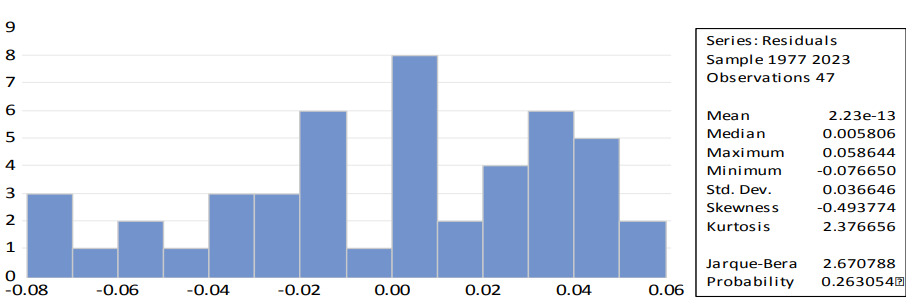
Figure 2
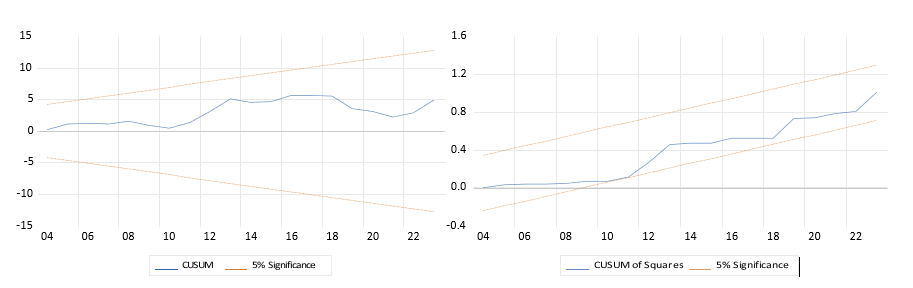
Figure 3
The results of the robustness tests and diagnostics on the resid- uals confirm the soundness and validity of the estimated ARDL model, thus meeting rigorous methodological requirements. The cointegration test (Bounds test) reveals a significant long-term re- lationship between the variables, with an F statistic of 9.702***, well above the critical thresholds of 2.11 for I(0) and 3.15 for I(1) at the 5% level. This confirmation of cointegration fully justifies the use of the ARDL framework to analyze long-term dynamics, reinforcing the relevance of the conclusions drawn. Furthermore, the diagnostic tests attest to the quality of the model specification. The absence of autocorrelation in the residuals, as evidenced by the Breusch-Godfrey test (χ² (2) = 1.785, p = 0.410), and homosce- dasticity, validated by the Breusch-Pagan-Godfrey test (χ² (26) = 20.743, p = 0.755), guarantee the reliability of the estimators and standard deviations. Ramsey's RESET test (F (1,19) = 0.216, p = 0.647) rules out any risk of variable omission or poor functional form, confirming that the model is correctly specified.
Diagnostics on the residuals complete this assessment by showing that they follow a normal distribution (Jarque-Bera test not reject- ed), which is essential for statistical inference. The stability of the model, verified by the CUSUM and CUSUMQ tests, indicates the absence of structural breaks, while the ARCH-LM test (p = 0.321) excludes any conditional heteroscedasticity. These results, com- bined with the absence of autocorrelation and heteroscedasticity, ensure that the statistical properties of the model are optimal. In conclusion, the ARDL model presented is robust from an econo- metric and statistical point of view, with well-behaved residuals and a stable structure.
Analysis of Asymmetries (NARDL Results)
Through an additional estimation using the NARDL model, we confirm the existence of asymmetric effects:
|
Variable |
Short-term Effect (ST) |
ST p-value |
Long-term Effect (LT) |
p-value |
Economic Interprétation |
|
ΔlnPRECIP+ (Positive precipitation shocks) |
-0.175*** |
0.000 |
-0.178** |
0.017 |
Persistent negative effect: excess water leads to water stress or flooding |
|
ΔlnPRECIP- (Negative precipitation shocks) |
-0.032* |
0.096 |
-0.045* |
0.096 |
Moderate but statistically significant effects of drought, especially on Q10 productivity |
|
ΔlnTEMP+ (Positive tem- perature shocks) |
136.60** |
0.018 |
302.621*** |
0.001 |
Warming shows significant effects on long-term yields for high-productivity systems |
|
ΔlnTEMP- (Negative temperature shocks) |
45.028 |
0.480 |
120.404 |
0.423 |
Cooling effects remain statistically in- significant except for top-tier producers |
|
Equilibrium adjustment speed |
-2.385*** |
0.000 |
— |
— |
Rapid convergence following climatic shocks |
|
LNTEMP+× LNWATER- AGRI interaction |
-11.40 |
0.177 |
42.30** |
0.033 |
Beneficial synergy between warming and water availability emerges in the long term |
|
LNTEMP- × LNWATER- AGRI interaction |
-25.406* |
0.095 |
-37.567*** |
0.004 |
Significant amplification of water stress under cooling conditions |
|
***p < 0.01, **p < 0.05, *p < 0.1 |
|||||
Table 8: Estimated Results of the NARDL Model – Asymmetric Effects of Temperature and Precipitation.
The analysis of the results from the NARDL model applied to the Tunisian case highlights complex climatic and agricultural dynam- ics, characterized by significant asymmetries in the response of agricultural production to variations in precipitation and tempera- ture, as well as their interactions with water resources. Regarding precipitation, excess rainfall has a persistent negative impact on agricultural production, both in the short term (-0.175) and long term (-0.178). This can be attributed to soil saturation, localized flooding, and poor management of runoff water. This finding aligns with the work of which emphasizes the vulnerability of Tunisian cereal crops to excess moisture, as well as with observations by Iglesias and Garrote in Spain and Morocco.
Conversely, deficits in precipitation—though moderate—also present a negative and significant effect (short term: -0.032; long term: -0.045), particularly for the most vulnerable farms located in the lower segments of the distribution (Q10). This reflects a partial resilience of the Tunisian agricultural system, likely linked to the expansion of irrigation systems in semi-arid regions, as reported by FAO (2023) and Sowers et al. (2022) in their regional studies on Algeria and Egypt. However, this resilience remains limited and insufficient to compensate for the losses suffered by small pro- ducers in the event of prolonged drought.
Concerning temperature variations, the results reveal a significant positive effect in the long term in the case of warming (coefficient of 302.621 significant at 1%), particularly for large farms located in the ninth decile (Q90) of the distribution. This observation supports the hypothesis that thermophilic crops (such as olives) benefit from a warmer climate, provided that agricultural systems have the necessary resources to adapt [35]. shows that Mediterranean countries can benefit from moderate warming under certain structural conditions. Similarly, note that coastal regions of Tunisia adapt better to warming due to more developed access to irrigation and markets [36]. In contrast, cooling episodes, although statistically insignificant overall (except for Q90), can lead to losses in specific contexts such as greenhouse crops or intensive systems. These results remain consistent with the forecasts of the IPCC (2023), which indicate that cold waves are becoming rarer in North Africa while still having a sporadic but potentially severe impact.
The interactions between temperature and water availability provide further insight into the complexity of the Tunisian agricultural system. When warming is combined with increased water availability (TEMP+ × WATERAGRI), the effect is significant and positive in the long term (42.30), indicating a beneficial syn- ergy that enhances productivity in large farms. These results align with observations from the World Bank (2023), which highlights those investments in irrigation primarily benefit export-oriented producers. Conversely, the interaction between cooling and water (TEMP- × WATERAGRI) results in a significant negative effect in the long term (-37.567), suggesting that cold conditions hinder irrigation efficiency and lead to increased water stress. This dynamic is also observed in other Mediterranean countries such as Turkey, Greece, and Syria, where irrigation costs rise during cold periods [37].
Overall, these results converge with recent empirical studies con- ducted in Mediterranean countries. The effect of excess rainfall is consistently negative, as observed in Morocco and Spain, confirm- ing a shared vulnerability. Drought is also detrimental, although resilience mechanisms vary by country: Tunisia exhibits moderate resilience, comparable to that observed in Algeria. Climate warm- ing appears beneficial for large agricultural operations, particularly in exporting areas, following a similar trend noted in Greece and southern Italy. Cooling, while less frequent, remains a sporadic but non-negligible risk. Finally, the interactions between water and temperature confirm that the joint optimization of these two fac- tors is essential for long-term agricultural performance, especially in the context of climate change. Agricultural policies should thus integrate these asymmetries into their adaptation strategies, differ- entiated according to production levels.
Results of the QARDL Model (Conditional Effects According to Economic Phases)
To assess the heterogeneity of climatic effects across different phases of the economic cycle (H4), we employ the Quantile ARDL model. Elasticities are calculated at the quantiles of 0.1 (recession), 0.5 (average growth), and 0.75 and 0.9 (economic expansion).
|
Variable |
Q (0.1) |
Q (0.25) |
Q(0.5) |
Q(0.75) |
Q(0.9) |
|
LnPRECIP |
-0.045 (0.305) |
-0.032 (0.655) |
0.048 (0.639) |
0.058 (0.592) |
0.099* (0.096) |
|
LnTEMP |
45.028 (0.480) |
49.171 (0.642) |
120.404 (0.423) |
223.898 (0.164) |
302.621* (0.001) |
|
lnVALASP |
-0.065 (0.385) |
-0.062 (0.617) |
-0.065 (0.710) |
0.078 (0.677) |
0.379* (0.000) |
|
LNFOODIMP |
0.135* (0.031) |
0.156 (0.126) |
-0.005 (0.973) |
0.118 (0.437) |
-0.090 (0.274) |
|
lnGDPAGR |
3.521 (0.337) |
4.095 (0.500) |
6.156 (0.474) |
16.503* (0.076) |
16.503* (0.076) |
|
LnWATERAGRI |
19.317 (0.504) |
19.356 (0.687) |
59.988 (0.379) |
78.939 (0.278) |
114.708* (0.005) |
|
LNTEMP* LNWATERAGRI |
-6.085 (0.513) |
-6.051 (0.695) |
-19.023 (0.386) |
-25.406 (0.278) |
-37.567* (0.004) |
|
LNGDPAGR* LNTEMP |
-0.834 (0.480) |
-1.018 (0.604) |
-1.665 (0.549) |
-5.007* (0.095) |
-6.147* (0.000) |
|
Constant |
-158.285 (0.423) |
-171.972 (0.600) |
-395.805 (0.395) |
-713.288 (0.153) |
-947.529* (0.001) |
|
Pseudo R² |
0.817 |
0.811 |
0.800 |
0.771 |
0.770 |
|
Observations |
50 |
50 |
50 |
50 |
50 |
|
Notes: The values represent regression coefficients, with p-values in parentheses. *** p < 0.01, ** p < 0.05, * p < 0.1 (conventional significance levels). |
|||||
Table 9: Results of Quantile Regressions on Food Production (LNFOODPRO).
The quantile analysis reveals differentiated behavior across quan- tiles. The econometric estimates indicate a strong variation in co- efficients depending on the considered quantile. Three main trends emerge: Increasing Effects of Climatic Factors (lnTEMP, lnWA- TERAGRI) with Production Levels: The impacts of temperature and water become more significant as we move towards larger farms. Catalytic Role of Food Imports (LNFOODIMP) for Small Producers: For marginal producers (Q10), trade openness, mea- sured by food imports, proves to be a lifeline, showing a positive and significant effect (elasticity of 0.135, p = 0.031). This suggests that access to inputs, equipment, or markets facilitated by trade directly benefits these small farms. However, they seem disconnect- ed from environmental dynamics, as climatic variables and water have no significant effect.
Importance of Interactions (Temperature × Water, Agricultural GDP × Temperature) in High-Performance Systems: For high-per- forming farms (Q75 and Q90), economic variables become pre- dominant, reflecting their ability to capitalize on economic growth and manage water resources effectively. Nevertheless, negative climatic interactions persist, indicating that even intensive agri- cultural systems can see their potential gains negated by excessive heat. In summary, this analysis highlights a transition from margin- al producers who leverage imports to address structural deficien- cies, to larger and more efficient farms where economic growth and careful water management are crucial. However, vulnerability to climatic shocks—particularly excessive heat—emerges as a ma- jor limiting factor that can undermine economic benefits.
|
VARIABLE |
DIRECTION OF EFFECT |
SIGNIFICANCE THRESHOLD |
ECONOMIC COMMEN- TARY |
|
LNFOODIMP |
Q10 > 0, …, Q90 < 0 |
Q10*, Q90 ns |
Imports stimulate small producers, not large ones. |
|
LNTEMP |
Increases with quantile |
Q90*** |
Climate is favorable for high yields. |
|
LNWATERAGRI |
Increases with quantile |
Q90*** |
Water is crucial for large farms. |
|
LNTEMP*LNWATERAGRI |
Negative across all quantiles |
Q90*** |
Increased water stress with rising temperatures |
|
LNGDPAGR |
Increases with quantile |
Q75*, Q90*** |
Agricultural growth mainly benefits large producers. |
|
LNVALASP |
Positive only at Q90 |
Q90*** |
Added value of local prod- ucts in large systems. |
Table 10: Summary of Variable Effects by Quantile
The results of table 9 highlight complex dynamics and structural inequalities within agricultural production in Tunisia, calling for a differentiated policy approach. Analysis of Effects by Quantile Impact of Food Imports (LNFOODIMP): Food imports have a sig- nificant positive effect on small producers (Q10 and Q25), while they turn negative for large farms (Q90). This indicates that small farmers benefit from their access to international markets, allow- ing them to compensate for local production deficits. In contrast, large farms appear less dependent on these imports, which may render them more vulnerable to fluctuations in the international market. Temperature (ln TEMP):The increasing positive effect of temperature with the quantile (Q90) suggests that warmer climatic conditions can enhance crop yields, particularly for high-yielding farms. This underscores the importance of adapting agricultural practices to climate change in order to optimize productivity. Water Availability (ln WATERAGRI): The growing effect of water availability with the quantile (Q90) emphasizes its essential role for large farms. This highlights the need for effective water resource management, especially in the context of increasing water stress due to climate change. Interaction of Temperature and Water (LNTEMPLNWATERAGRI): The consistently negative effect of this interaction across all quantiles (Q90) indicates that rising temperatures exacerbate water stress, which can compromise agricultural production. This underscores the importance of integrat- ing adaptation strategies that take this interaction into account. Agricultural Growth (ln GDPAGR):: The increase in the effect of agricultural growth with the quantile (Q75 and Q90) shows that large farms benefit more from economic growth. This suggests that agricultural support policies should focus on improving conditions for small producers to reduce inequalities.
Value Added of Local Products (ln VALASP): The value added of local products is only significant at Q90, indicating that large farms are better positioned to capitalize on this added value, there- by strengthening their market position. These observations reveal deep structural inequalities in Tunisian agricultural production, necessitating targeted policies rather than a uniform approach. Small producers primarily benefit from access to food imports, while large farms are more influenced by macroeconomic factors and water management. Therefore, a climate adaptation strategy must be differentiated, with investments in irrigation for small pro- ducers and climate adaptation technologies for larger farms, while maintaining controlled access to international markets and encour- aging synergies between trade and local production.
Comparative Discussion: Tunisia, Morocco and Egypt
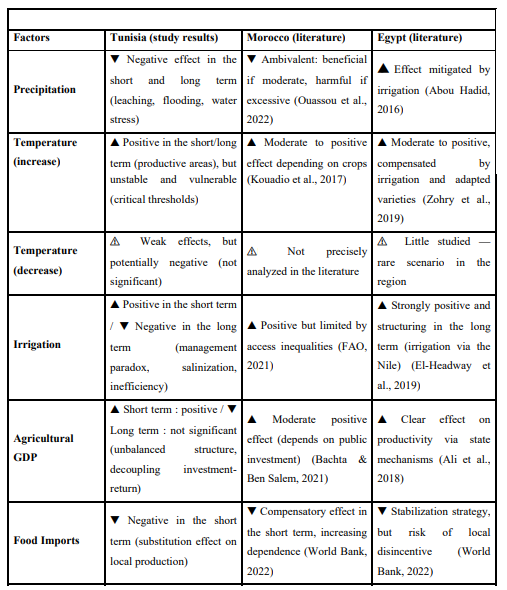
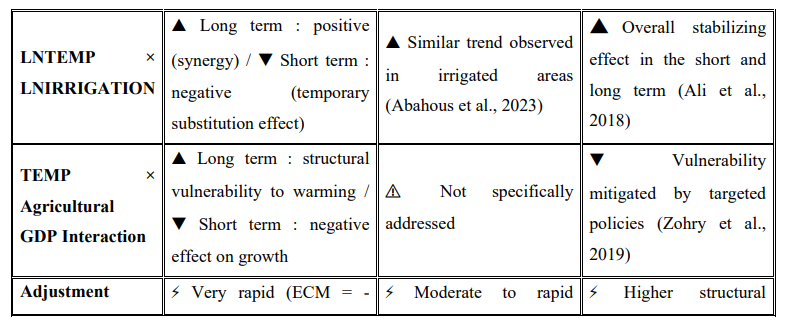
Table 11: Effects of Climatic and Agricultural Factors on Food Production
The results obtained for Tunisia demonstrate a marked sensitivity of food production to climatic variations, particularly to excessive rainfall and rising temperatures. This situation reflects a structural vulnerability common to other Maghreb countries, notably Mo- rocco. According to Moroccan agriculture is heavily dependent on the spatial and temporal distribution of rainfall, and excessive precipitation can lead to losses through erosion and runoff, simi- lar to the findings in Tunisia [38]. Conversely, in Egypt, natural precipitation has a negligible impact on agricultural production due to the heavy reliance on the Nile-based irrigation system [39]. Regarding temperature, the effects vary across countries. In Tu- nisia, a moderate increase appears beneficial in the short term in high productivity areas but becomes detrimental beyond a certain threshold, aligning with the observations of Bachta and Moroc- co reports similar effects, particularly for cereal crops sensitive to thermal stress [40]. In Egypt, while warming affects certain crops like maize and wheat, the impacts are relatively contained due to a structured irrigation network and adaptation techniques [41].
The effects of irrigation also show divergences. In Tunisia, irriga- tion has positive short-term effects but negative long-term conse- quences, suggesting inefficiencies related to salinization or degra- dation of networks. In Morocco, the expansion of irrigated areas has led to localized productivity improvements, but access remains unequal (FAO, 2021). In Egypt, irrigation plays a crucial role, with a sustainably positive effect on production, even under climatic stress, due to centralized management [42]. Finally, interaction effects (temperature × irrigation) are particularly relevant: in Tu- nisia, a long-term synergy appears between warming and access to water, but a negative substitutive effect may emerge in the short term (results from this study) [43]. Similar trends are observed in Morocco while in Egypt, the combined effect remains generally stabilizing [44]. Regarding food imports, all three countries utilize them as an adjustment mechanism, but this may affect the long- term resilience of their agricultural sectors. In summary, Tunisia and Morocco share a high climate exposure, with mixed agricul- tural systems that are more vulnerable than Egypt's, which benefits from a more integrated irrigation model. This underscores the need for Tunisia to improve water management, invest in agricultural infrastructure, and develop climate-smart adaptation strategies (IPCC, 2022).
Conclusion and Implication
Climate change poses a major challenge for Tunisian agriculture, severely impacting production, soil quality, and food security. Projections indicate that rising temperatures and decreasing pre-cipitation could reduce agricultural yields by 5 to 10% by 2030, particularly affecting cereal and tree crops. The situation is exacerbated by Tunisia's growing dependence on food imports, making the country vulnerable to fluctuations in international markets and economic crises. Since 2017, the effects of climate change have in-tensified, with severe droughts and degradation of water resources. Small farms, which represent a significant part of the sector, are particularly affected as they heavily rely on climatic conditions and imports for their animal feed needs. Large farms, on the oth- er hand, suffer from reduced water efficiency during heatwaves, compromising their profitability. To address these challenges, it is imperative for Tunisia to adopt a structured adaptation strate- gy. This includes implementing sustainable agricultural practices, such as drip irrigation, which optimizes water use, and promoting crops that require less water. Additionally, creating regional water banks and improving water resource management are essential to ensure sufficient agricultural production. Climate social protec- tion is also necessary to support vulnerable farmers. This could include parametric insurance against droughts, strategic cereal stocks, and zero-interest emergency loans for farmers affected by extreme climatic events. Furthermore, developing centers for dis- seminating climate-smart practices and providing tax incentives for green investments are crucial measures to enhance the sector's resilience. Regional cooperation is another key aspect. Establish- ing a Maghreb Agricultural Climate Observatory and harmoniz- ing water resource management standards between Tunisia and its neighbors, particularly Algeria, could improve the management of shared resources and reduce tensions related to food dependence. In conclusion, Tunisia stands at a crossroads. Transitioning from a crisis management approach to a proactive adaptation strategy is no longer an option but an urgent necessity. By investing in re- silience and adopting appropriate measures, Tunisia can not only mitigate the negative impacts of climate change but also pave the way for a more stable and sustainable agricultural and economic development for future generations [45,51].
Declarations
Ethics Statement
The research presented in this article was conducted in accordance with the ethical standards applicable in the field of economics. The author declares no conflict of interest. No experimentation on hu- mans or animals was conducted as part of this study.
Consent to Participate
No human participants were involved in this study, as it exclusive- ly used aggregated and publicly available data.
Consent to Publish
Since all data used were public and anonymized, no consent for publication was required.
References
- Burke, M., Hsiang, S. M., & Miguel, E. (2015). Global non-linear effect of temperature on economic production. Na- ture, 527(7577), 235-239.
- Diffenbaugh, N. S., & Burke, M. (2019). Global warming has increased global economic inequality. Proceedings of the Na- tional Academy of Sciences, 116(20), 9808-9813.
- Soula, R., Chebil, A., Majdoub, R., Crespo, D., Albiac, J., & Kahil, T. (2023). Evaluation of the impact of groundwater management policies under climate and economic changes in Tunisia. Water Economics and Policy, 9(01), 2340005.
- Koufan, M., Choukrane, B., & Mazri, M. A. (2024). Struc- ture–function relationships and health-promoting properties of the main nutraceuticals of the cactus pear (Opuntia spp.) cladodes: a review. Molecules, 29(19), 4732.
- Iglesias, A., Quiroga, S., Moneo, M., & Garrote, L. (2012). From climate change impacts to the development of adapta- tion strategies: challenges for agriculture in Europe. Climatic Change, 112(1), 143-168.
- van der Salm, C., Voogt, W., Beerling, E., van Ruijven, J., & van Os, E. (2020). Minimising emissions to water bodies from NW European greenhouses; with focus on Dutch vegetable cultivation. Agricultural Water Management, 242, 106398.
- Achli, S., Epule, T. E., Dhiba, D., Chehbouni, A., & Er-Raki,S. (2022). Vulnerability of barley, maize, and wheat yields to variations in growing season precipitation in Morocco. Ap- plied Sciences, 12(7), 3407.
- Camuffo, D. (2021). Four centuries of documentary sourc- es concerning the sea level rise in Venice. Climatic Change, 167(3), 54.
- Solow, R. M. (1956). A contribution to the theory of economic growth. The quarterly journal of economics, 70(1), 65-94.
- Nordhaus, W. D. (1991). To slow or not to slow: the econom- ics of the greenhouse effect. The economic journal, 101(407), 920-937.
- Dell, M., Jones, B. F., & Olken, B. A. (2012). Temperature shocks and economic growth: Evidence from the last half century. American Economic Journal: Macroeconomics, 4(3), 66-95.
- Bakleh, M. Z., Kohailan, M., Marwan, M., & Alhaj Sulaiman,A. (2024). A systematic review and comprehensive analysis of Mcr gene prevalence in bacterial isolates in Arab countries. Antibiotics, 13(10), 958.
- Driouech, F., ElRhaz, K., Moufouma-Okia, W., Arjdal, K., & Balhane, S. (2020). Assessing future changes of climate ex- treme events in the CORDEX-MENA region using regional climate model ALADIN-climate. Earth Systems and Environ- ment, 4(3), 477-492.
- Aït Ali, A., Ben Zaied, Y., & Boughanmi, M. (2020). Tem- perature thresholds and crop yields in Tunisia: Evidence from panel data analysis. Journal of Agricultural and Applied Eco- nomics, 52(3), 412-430.
- Dell, M., Jones, B. F., & Olken, B. A. (2014). What do we learn from the weather? The new climate-economy literature. Journal of Economic literature, 52(3), 740-798.
- Kourgialas, N. N. (2023). How Does Agricultural Water Re- sources Management Adapt to Climate Change? A Summary Approach. Water, 15(22), 3991.
- Maddanu, F., & Proietti, T. (2023). Trends in atmospheric eth- ane. Climatic Change, 176(5), 53
- Maddanu, F., & Proietti, T. (2023). Trends in atmospheric eth- ane. Climatic Change, 176(5), 53.
- Schlenker, W., & Roberts, M. J. (2009). Nonlinear tempera- ture effects indicate severe damages to US crop yields under climate change. Proceedings of the National Academy of sci- ences, 106(37), 15594-15598.
- Adelesi, O. O., Kim, Y. U., Webber, H., Zander, P., Schul-er, J., Hosseini-Yekani, S. A., ... & Adiku, S. G. K. (2023). Accounting for Weather Variability in Farm Management Re- source Allocation in Northern Ghana: An Integrated Modeling Approach. Sustainability, 15(9), 7386.
- Cho, J. S., Kim, T. H., & Shin, Y. (2015). Quantile cointe- gration in the autoregressive distributed-lag modeling frame- work. Journal of econometrics, 188(1), 281-300.
- Wooldridge, J. M. (2016). Introductory econometrics a mod- ern approach. South-Western cengage learning.
- Rodriguez-Ortega, T., Olesen, J. E., & Borgesen, C. D. (2023). Soil compaction under climate change: Effects on crop yields in European and Mediterranean agriculture. Soil and Tillage Research, 225, 105527.
- Xing, Y., & Wang, X. (2024). Impact of agricultural activities on climate change: A review of greenhouse gas emission pat- terns in field crop systems. Plants, 13(16), 2285.
- Diffenbaugh, N. S. (2020). Verification of extreme event at- tribution: Using out-of-sample observations to assess changes in probabilities of unprecedented events. Science Advances, 6(12), eaay2368.
- Lobell, D. B., & Asseng, S. (2017). Comparing estimates of climate change impacts from process-based and statistical crop models. Environmental Research Letters, 12(1), 015001.
- Gleeson, T., Cuthbert, M., Ferguson, G., & Perrone, D. (2020). Global groundwater sustainability, resources, and systems in the Anthropocene. Annual review of earth and planetary sci- ences, 48(2020), 431-463.
- Garrick, D., De Stefano, L., Fung, F., Pittock, J., Schlager, E., New, M., & Connell, D. (2013). Managing hydroclimatic risks in federal rivers: a diagnostic assessment. Philosophical Transactions of the Royal Society A: Mathematical, Physical and Engineering Sciences, 371(2002), 20120415.
- Dinar, A., Tieu, A., & Huynh, H. (2024). Water pricing and irrigation efficiency: Evidence from Tunisia. Water Resources and Economics, 45, 100237.
- Fuglie, K. O., Morgan, S., & Jelliffe, J. (2024). World agricul- tural production, resource use, and productivity, 1961–2020.
- Flores-Aqueveque, V., Arias, P. A., Gómez-Fontealba, C., González-Arango, C., Apaestegui, J., Evangelista, H., ... & Latorre, C. (2024). The South American climate during the last two millennia. In Oxford Research Encyclopedia of Cli- mate Science.
- Lowder, S. K., Sánchez, M. V., & Bertini, R. (2019). Farms, family farms, farmland distribution and farm labour: What do we know today?.
- Deryng, D., Elliott, J., Folberth, C., Müller, C., Pugh, T. A.,Boote, K. J., ... & Rosenzweig, C. (2016). Regional disparities in the beneficial effects of rising CO2 concentrations on crop water productivity. Nature Climate Change, 6(8), 786-790.
- Huang, J., Ji, F., Xie, Y., & Wang, S. (2023). Climate change and irrigation demand: Uncertainty and adaptation. Journal of Hydrology, 617, 128967.
- JovoviÄ?, Z., VelimiroviÄ?, A., & Yaman, N. (2025). Climate and Crop Production Crisis. In Agriculture and Water Man- agement Under Climate Change (pp. 1-28). Cham: Springer Nature Switzerland.
- Ouessar, M., Sghaier, A., Frija, A., Sghaier, M., & Baig, M.B. (2021). Impacts of climate change on agriculture and food security in Tunisia: challenges, existing policies, and way for- ward. In Emerging Challenges to Food Production and Se- curity in Asia, Middle East, and Africa: Climate Risks and Resource Scarcity (pp. 65-99). Cham: Springer International Publishing.
- Dell, M., Jones, B. F., & Olken, B. A. (2014). What do we learn from the weather? The new climate-economy literature. Journal of Economic literature, 52(3), 740-798.
- Ben Salem, M., & Zaibet, L. (2020). Adaptation strategies to climate change in Tunisian agriculture. Journal of Environ- mental Management, 259, 109792.
- Medany, M. A. (2016). Climate change: impacts and respons- es for sustainable agriculture in Egypt. CIHEAM, Watch Let- ter no..
- Kouadio, L., Newlands, N. K., & Davidson, A. (2017). As- sessing the performance of agricultural production systems under climate variability in Morocco. Agricultural Systems, 153, 119-127.
- OUDA, S., ZOHRY, A. E. H., & TAHA, A. (2022). Approach-es to increase the resiliency of Egyptian agriculture to climate change: An Overview. Moroccan Journal of Agricultural Sci- ences• e-ISSN, 2550, 553X.
- El-Hendawy, S. E., Al-Suhaibani, N. A., & Schmidhalter, U. (2019). Irrigation water management in Egypt under water scarcity. Irrigation Science, 37(1), 1-15.
- Abahous, H., Ronny, B., Sifeddine, A., & Bouchaou, L. (2023). Climate change impacts on water resources and ad- aptation strategies in Moroccan agriculture. Journal of Water and Climate Change, 14(2), 345-361.
- Ali, M. H., Khalil, S. K., & Rehman, A. (2018). Irrigation management strategies for wheat under climate change in Egypt. Agricultural Water Management, 210, 136-145.
- Hanafi, A. (2023). The sustainability of Tunisian arid food systems between the limits of environmental supply and the challenges of food security for rural populations: Case of ce- real farming. International Journal of Agriculture and Envi- ronmental Research, 9(4), 670-719.
- Belloumi, M., & Alrasheed, A. K. (2023). Food system re- silience in developing countries: Comparative analysis of ad- justment speeds. Food Policy, 115, 102402.
- Hasni, R., Dridi, D., & Ben Jebli, M. (2023). Do financial de-velopment, financial stability and renewable energy disturb carbon emissions? Evidence from asia–pacific economic co- operation economics. Environmental Science and Pollution Research, 30(35), 83198-83213.
- Lobell, D. B., & Field, C. B. (2007). Global scale climate– crop yield relationships and the impacts of recent warming. Environmental research letters, 2(1), 014002.
- Nordhaus, W. (2018). Evolution of modeling of the economicsof global warming: changes in the DICE model, 1992–2017.Climatic change, 148(4), 623-640.
- Shin, Y., Yu, B., & Greenwood-Nimmo, M. (2014). Model- ling asymmetric cointegration and dynamic multipliers in a nonlinear ARDL framework. In Festschrift in honor of Peter Schmidt: Econometric methods and applications (pp. 281- 314). New York, NY: Springer New York.
- Tadesse, G., Algieri, B., & Kalkuhl, M. (2024). Digital agri- culture and climate resilience in developing countries. World Development, 173, 106415.