

International Journal of Criminology and Criminal Law(IJCCL)
ISSN: 2996-3397 | DOI: 10.33140/IJCCL


Research Article - (2025) Volume 3, Issue 1
Do The E-Motivational System Correlate with Dream Content?
Received Date: Dec 02, 2024 / Accepted Date: Jan 29, 2025 / Published Date: Feb 13, 2025
Copyright: ©©2025 Frederick Thomas. This is an open-access article distributed under the terms of the Creative Commons Attribution License, which permits unrestricted use, distribution, and reproduction in any medium, provided the original author and source are credited.
Citation: Thomas, F. (2025). Do The E-Motivational System Correlate With Dream Content?. Int J Criminol Criminal Law, 3(1), 01-06.
Abstract
Do the E-Motivational System correlate with dream content?
The e-motivational system framework has generated several empirical findings demonstrating the activation of a motivational system with a set of distinct emotions that guide behavior in conscious social situations [1,2]. This evolutionary view of motivation describes e-motives as social cognition designed to recognize, analyze, and mobilize behavior to manage social threats or opportunities during conscious social situations. This paper revisits the role of e-motives during unconscious (remote) social situations. This paper argues that the premise of e-motives is worth preserving during dreaming. The connections between e-motives and dream content are highlighted. This paper proposes a novice perspective that serves as a generative foundation for future empirical research.
Keywords
Dreaming, Emotions, Evolution, Motivation, Regulatory Focus, Social Cognition
Background and Summary
E-motivational system is a general term to describe social cognition comprised of a set of social motives and distinct emotions that mobilize behaviour to manage adaptive challenges in social situations [1,2]. The social environment offers challenges and opportunities that require different and sometimes incompatible solutions [3]. Evolutionary history shaped a motivational system to recognize relevant threats and opportunities, mobilize relevant resources, analyse trade-offs, and achieve adaptive goals [4]. The fundamental social motive framework By Kenrick (2010) claims a set of social motives including self-protection, disease avoidance, affiliation, status, mate seeking, mate keeping, and kin care are functional shaped to manage the challenges and opportunities of social living [2]. Additionally, a set of distinct emotions evolved in concert with each motive [1]. Theoretically, when a social motive is activated, a distinct emotion such as fear, happiness, pride, lust, romantic love, and tenderness is elicited automatically galvanizing and guiding physiological, cognitive, and behavioural responses to achieve an adaptive outcome (Figure 1).
How Do E-Motives Mobilize Behaviour in Conscious Social Situations?
The e-motives framework has drawn much attention and some debate. Some theorists challenge the notion of e-motivational system [5]. Rather, they argue that e-motivational system does not facilitate collective action to global social issues such as pandemics. Nonetheless, there is robust evidence supporting the idea that a live interactive (i.e., conscious) component of e-motives are high in everyday salience cross-culturally. The live interactive component involves the orchestration of (a) two or more independent agents interacting in conscious social situations, (b) distinct emotions, and (c) responses to achieve adaptive goals. Individuals across 42 countries, for example, reported feelings of companionate love when asked about their behaviours for maintaining relationships with a romantic partner [6]. Moreover, e-motives show relevance in other kinds of human behaviour. For example, the e-motive of esteem/pride and status is positively correlated with risk-taking behaviours such as unsafe sex, substance abuse, illegal activity, and violence [7]. E-motive of esteem/pride and status; affiliation/ happiness; and kin care/tenderness mobilize behaviours concerning purpose in life [8,9]. Kin-care/tenderness e-motive, for instance, increase behaviours such as parents spending time with their kids.
One e-motive does not replace another. Instead, individuals assign e-motives different priority along the lifespan. Life history trajectory such as age and sex contribute to individual differences [10]. For instance, people must continue to contribute to their physical and social needs even after they have started to mate. The activation of e-motives depends on the social goal, which mobilizes individual differences at the affective, cognitive, and behavioural level. Thus, most relevant prior work demonstrates e-motives framework as a powerful means for investigating the live interactive component of a variety of behaviours in conscious social situations [11]. Yet, e-motives framework is understudied regarding unconscious social situations.
How Do E-Motives Mobilize Behaviour in Unconscious Social Situations?
The e-motivational system (see Figure 1.) also involves a remote interactive component [12]. The remote interactive component includes the orchestration of (a) unconscious observation of social situations, (b) distinct emotions, and (c) reflection on self-other behaviours (i.e., associative learning) to achieve adaptive goals. There is robust evidence supporting the idea of a remote interactive component. Programmers for example, provided evidence of a neurobehavioral substrate for reprocessing of emotion or associative learning (i.e., activation across e-motivational systems during sleep) [13]. Participants who trained on a virtual navigation task and dreamed about task-related behaviours improved performance significantly more than when task-related thoughts occurred only during conscious experience.
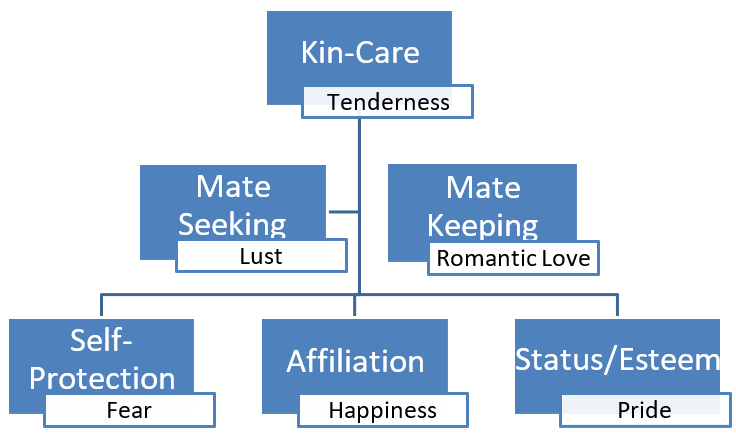
Figure 1: This Paper Posits That the E-Motives Proposed by Beall and Kenrick are Linked to Unconscious Social Situations to Overcome Specific Adaptive Problems Associated with Conscious Social Situations [1,2].
An Adaptive Perspective on Dreaming
Considering the robust evidence supporting live and remote interactive components (i.e., activation of limbic, paralimbic, and reward structures during sleep), this work presumed that e-motives are also linked to unconscious social situations. It is hypothesized that dreaming is a simulation of e-motives about self-protection/disease-avoidance/fear; affiliation/happiness; status/ esteem/pride; mate-seeking/lust; mate-keeping/romantic love; and kin care/tenderness to rehearse behaviour aimed at satisfying these motives. The idea that dreaming simulates e-motives to rehearse functional behaviours is consistent with previous work in cognitive neuroscience and philosophy of mind. The evolution of social cognition strongly influences dream content, which is not limited to a single simulation and rehearsal as some dream theorists suggest [14-16]. In view of the perspective that e-motives comprise live and remote interactive components, a logical assumption is that dreaming is the remote-activation of e-motives simulated repeatedly in a variety of scenarios during sleep to mobilize future behaviour. This perspective serves as a generative foundation for future empirical research on the connection between e-motives, dream content, and behaviour. The connection between e-motives, dream content, and behaviour require investigation of the following: (1) the extent to which dream content relate to motives about self-protection, disease avoidance, mate seeking, mate keeping, affiliation, status, and kin care; and (2) the extent to which dream content relate to behaviour in live social situations.
General Discussion
By integrating recent advances in evolutionary and motivational psychology with contemporary dream research this paper proposed a novel framework for studying the function of dreaming [1,2,15,16]. Specifically, this paper suggested that dreaming is remote-activation of e-motives simulated repeatedly in a variety of scenarios during sleep to mobilize future behavior. This work posits that dreaming simulates e-motives including self-protection/disease-avoidance/fear; affiliation/happiness; status/ esteem/pride; mate-seeking/lust; mate-keeping/romantic love; and kin-care/tenderness to rehearse behaviors aimed at achieving these social motives. In each case, this paper highlighted several lines of empirical evidence supporting the argument that dreaming involves a simulation of e-motives which (a) activates a remote-interactive component when a particular class of relevant environmental threats or opportunities is identified, (b) mobilizes relevant physiological resources to help achieve the adaptive goal associated with the motivational system, (c) associates behavior with cognitive decision rules designed to help achieve the adaptive goal of the motivational system, and (d) promotes a set of behavioral responses oriented toward achieving that adaptive goal.
The current work draws from the set of e-motivational systems identified by Beall et al., (2017) and Kenrick et al. (2010) [1,2]. However, it is not the intent of this work to suggest that the e-motives discussed here are the only e-motives relevant to dreaming. To take just one example, e-motives such as belonging/ uncertainty include worry, surprise, and hope that has received a great deal of research attention, including numerous studies suggesting that belonging/uncertainty may have evolved to facilitate a sense of control, structure, and conformity [5,17,18]. Many similar examples exist, that is, of other e-motives that may impact dreaming, and we hope that future researchers addressing this topic will consider adopting the approach offered here, of mapping distinct e-motives onto dream content and behavior, to provide a useful extension of this model.
The theoretical perspective that undergirds the current work differs importantly from those of previously developed dream theories. Many theories of dreaming describe dreaming as social skill rehearsal for the individual suggestion that dreaming is for people to attain some particular skill (e.g., mental mapping, avoidance skills, and social skills [3,15,16]. These previous approaches are highly informative regarding the subjective phenomenology of dreaming, but this current evolutionary-based and e-motive-centered account has the benefit of being more explanatory than descriptive. Instead of describing sets of ''skills'' from the subjective ''person's perspective'', contemporary evolutionary perspectives on dreaming (such as those that have informed the formulation of the current work) take a ''gene's perspective.'' These theories suggest that dreaming evolved (and exist) not because they serve individuals' phenomenological outcomes but rather because they facilitated the reproduction of genes [16].
By emphasizing the functional role of dreaming across an array of evolutionarily e-motives, the current perspective offers a critical advancement beyond prior work. Several prior theoretical frameworks have not considered the role of motivational systems by sorting dream content into distinct, overarching, motivational categories. Approach-avoidance perspectives on human motivation, for instance, have described the role of certain motives in facilitating well-being, purpose in life, and risk-taking [20,7,9]. These narrow views tend to minimize crucial functional role of e-motives. For example, mate-seeking/lust facilitates approach-oriented behavioral responses toward potential short-term mating opportunities, but kin-care/tenderness also facilitates approach-oriented as well as avoidance-oriented behavioral responses. Thus, both mate-seeking/lust and kin-care/tenderness facilitates approach-oriented behaviors but sorting them under this umbrella category fails to draw an important functional connection between conscious and unconscious social situations that these e-motives were likely to evolved to solve.
The hierarchical organization of distinct e-motives adopted by the current work (see Figure 1.) also differs from that of previous motivational perspectives in potentially useful ways. In their discussion of e-motivational systems, saw merit in preserving the live interactive component of the e-motivational system, suggesting that e-motives are activated in conscious social situations [1,2]. This current perspective suggests that e-motives may also inform the remote-interactive component of e-motivational system testable predictions for future work regarding possible relationships between e-motives, dream content, and behavior.
Another intriguing avenue for future work—inspired by previous perspectives on motivation is the potential mapping of regulatory focus to each e-motive [21]. E-motives regulate self-states into behavioral strategies that promote the desired end-state or prevent the undesired end-state [21]. More generally, these self-regulatory states involve two types of regulatory focus. The regulatory focus is one of promotion (i.e., the e-motive mobilize behavior toward desired end-states) or prevention (i.e., the e-motive mobilizes behavior away from undesired end-states). Claimed there is a strong relationship between the activation of e-motives, regulatory focus (i.e., promotion or prevention focus), and adaptive problems [22].
The mapping of characteristic of e-motions to dream content and behavior provides a useful launching point for future work. However, there may be additional, more nuanced e-motivational systems (or ''subsystems'') with additional evolved characteristics. For example, in the previous discussion of the belonging motivational system, it was suggested that uncertainty may have been a characteristic distinct emotion that coevolved with this system. Finally, acknowledging the role of e-motives in dreaming under the current work also allows for valid, testable predictions regarding distinct emotions experienced in dreams. Dream researchers rely on the so-called, face validity, i.e., one ''sees'' that the scale is measuring for what it has been constructed [23]. The issue of validity must be investigated in a detailed way. For some aspects of the dream like emotions, it is necessary to develop self-rating scales in order to obtain valid findings. The e-motive framework facilitates the development of valid scales for dream content analysis.
In sum, this work presents a novel perspective for studying the relationship between e-motives and dream content, and it is the hope that future researchers addressing these topics will consider adopting the approach offered here as a useful starting point for hypothesis generation and theoretical advancement. We believe that a complete understanding of dreaming requires the acknowledgement of evolved e-motivational systems, just as a complete understanding of human motivation must take into account the role of remote interactive components in unconscious social situations [24-76].
References
- Beall, A. T., & Tracy, J. L. (2017). Emotivational psychology: How distinct emotions facilitate fundamental motives. Social and Personality Psychology Compass, 11(2), e12303.
- Kenrick, D. T., Neuberg, S. L., Griskevicius, V., Becker, D. V., & Schaller, M. (2010). Goal-driven cognition and functional behavior: The fundamental-motives framework. Current Directions in Psychological Science, 19(1), 63-67.
- Neel, R., Kenrick, D. T., White, A. E., & Neuberg, S. L. (2016). Individual differences in fundamental social motives. Journal of personality and social psychology, 110(6), 887.
- SOCIAL, W. I. E. (2010). Evolutionary social psychology.Handbook of social psychology, 2, 761.
- Geiger, N., & Brick, C. (2023). Core social motives explain responses to collective action issues. Social and Personality Psychology Compass, 17(3), e12732.
- Pick, C. M., Ko, A., Kenrick, D. T., Wiezel, A., Wormley, A. S., Awad, E., ... & Varnum, M. E. (2022). Fundamental social motives measured across forty-two cultures in two waves. Scientific Data, 9(1), 499.
- Salas-Rodríguez, J., Gómez-Jacinto, L., Hombrados-Mendieta, I., Del Pino-Brunet, N., & Basto-Pereira, M. (2023). Motivated to compete but not to care: The fundamental social motives of risk-taking behaviors. Personality and Individual Differences, 205, 112093.
- Scheier, M. F., Wrosch, C., Baum, A., Cohen, S., Martire,L. M., Matthews, K. A., ... & Zdaniuk, B. (2006). The life engagement test: Assessing purpose in life. Journal of behavioral medicine, 29, 291-298.
- Scott, M. J., & Cohen, A. B. (2020). Surviving and thriving: fundamental social motives provide purpose in life. Personality and Social Psychology Bulletin, 46(6), 944-960.
- Ko, A., Pick, C. M., Kwon, J. Y., Barlev, M., Krems, J. A., Varnum, M. E., ... & Kenrick, D. T. (2020). Family matters: Rethinking the psychology of human social motivation. Perspectives on Psychological Science, 15(1), 173-201.
- Cook, C. L., Krems, J. A., & Kenrick, D. T. (2021). Fundamental motives illuminate a broad range of individual and cultural variations in thought and behavior. Current Directions in Psychological Science, 30(3), 242-250.
- De Jaegher, H., Di Paolo, E., & Gallagher, S. (2010). Can social interaction constitute social cognition?. Trends in cognitive sciences, 14(10), 441-447.
- Perogamvros, L., Dang-Vu, T. T., Desseilles, M., & Schwartz,S. (2013). Sleep and dreaming are for important matters. Frontiers in psychology, 4, 474.
- Franklin, M. S., & Zyphur, M. J. (2005). The role of dreams in the evolution of the human mind. Evolutionary Psychology, 3(1), 147470490500300106.
- Revonsuo, A. (2000). The reinterpretation of dreams: An evolutionary hypothesis of the function of dreaming. Behavioral and brain sciences, 23(6), 877-901.
- Tuominen, J., Stenberg, T., Revonsuo, A., & Valli, K. (2019). Social contents in dreams: An empirical test of the Social Simulation Theory. Consciousness and cognition, 69, 133-145.
- Hobson, J. A., Hong, C. C. H., & Friston, K. J. (2014). Virtual reality and consciousness inference in dreaming. Frontiers in psychology, 5, 1133.
- Street, C. N., & Richardson, D. C. (2015). Descartes versus Spinoza: Truth, uncertainty, and bias. Social Cognition, 33(3), 227-239.
- Brereton, D. P. (2000). Dreaming, adaptation, and consciousness. The social mapping hypothesis. Ethos, 28(3), 379-409.
- Kenrick, D. T., & Krems, J. A. (2018). Well-being, self-actualization, and fundamental motives: An evolutionary perspective. Handbook of well-being, 1-13.
- Crowe, E., & Higgins, E. T. (1997). Regulatory focus and strategic inclinations: Promotion and prevention in decision-making. Organizational behavior and human decision processes, 69(2), 117-132.
- Sznycer, D., Cosmides, L., & Tooby, J. (2017). Adaptationism carves emotions at their functional joints. Psychological Inquiry, 28(1), 56-62.
- Schredl, M. (2010). Dream content analysis: Basic principles. Universitätsbibliothek der Universität Heidelberg.
- Zilioli, S., Ponzi, D., Henry, A., Kubicki, K., Nickels, N., Wilson, M. C., & Maestripieri, D. (2016). Interest in babies negatively predicts testosterone responses to sexual visual stimuli among heterosexual young men. Psychological Science, 27(1), 114-118.
- Zadra, A., & Stickgold, R. (2021). When brains dream: Understanding the science and mystery of our dreaming minds. WW Norton & Company.
- Watson, D., Clark, L. A., & Tellegen, A. (1988). Development and validation of brief measures of positive and negative affect: the PANAS scales. Journal of personality and social psychology, 54(6), 1063.
- Yu, C. K. C. (2016). A neuroanatomical framework for understanding dream content. Sleep and Hypnosis (Online), 18(4), 82.
- Zadra, A., Desjardins, S., & Marcotte, É. (2006). Evolutionary function of dreams: A test of the threat simulation theory in recurrent dreams. Consciousness and Cognition, 15(2), 450-463.
- Zadra, A. L., O'Brien, S. A., & Donderi, D. C. (1998). Dream content, dream recurrence and well-being: A replication with a younger sample. Imagination, Cognition and Personality, 17(4), 293-311.
- Thelen, E., & Smith, L. B. (2007). Dynamic systems theories. Handbook of child psychology, 1.
- Tooby, J., & Cosmides, L. (1992). The psychological foundations of culture. The adapted mind: Evolutionary psychology and the generation of culture, 19(1), 1-136.
- Tooby, J., & Cosmides, L. (1995). 7 8 Mapping the EvolvedFunctional Organization of Mind and Brain.
- Slevin, E., & Sines, D. (1999). Enhancing the truthfulness, consistency and transferability of a qualitative study: utilising a manifold of approaches. Nurse Researcher (through 2013), 7(2), 79.
- Steger, M. F., Kashdan, T. B., Sullivan, B. A., & Lorentz,D. (2008). Understanding the search for meaning in life: Personality, cognitive style, and the dynamic between seeking and experiencing meaning. Journal of personality, 76(2), 199-228.
- Stickgold, R., & Zadra, A. (2021). Sleep: Opening a portal to the dreaming brain. Current Biology, 31(7), R352-R353.
- Strauch, I., & Meier, B. (1996). In search of dreams: Results of experimental dream research. SUNY Press.
- Schredl, M. (2017). Theorizing about the continuity between waking and dreaming: Comment on Domhoff (2017).
- Schredl, M., & Hofmann, F. (2003). Continuity between waking activities and dream activities. Consciousness and cognition, 12(2), 298-308.
- Sandelowski, M. (1993). Rigor or rigor mortis: The problem of rigor in qualitative research revisited. Advances in nursing science, 16(2), 1-8.
- Revonsuo, A., Tuominen, J., & Valli, K. (2015). The avatars in the machine: Dreaming as a simulation of social reality. In Open mind. Open MIND. Frankfurt am Main: MIND Group.
- Rolfe, G. (2006). Validity, trustworthiness and rigour: quality and the idea of qualitative research. Journal of advanced nursing, 53(3), 304-310.
- Neuberg, S. L., & Schaller, M. (2016). An evolutionary threat-management approach to prejudices. Current Opinion in Psychology, 7, 1-5.
- Nikles II, C. D., Brecht, D. L., Klinger, E., & Bursell, A. L. (1998). The effects of current-concern-and nonconcern-related waking suggestions on nocturnal dream content. Journal of Personality and Social Psychology, 75(1), 242.
- Nesse, R. M. (2004). Natural selection and the elusiveness of happiness. Philosophical Transactions of the Royal Society B: Biological Sciences, 359(1449), 1333.
- Nesse, R. M., & Williams, G. C. (1994). The new science of Darwinian medicine: Why we get sick.
- Krems, J. A., Kenrick, D. T., & Neel, R. (2017). Individual perceptions of self-actualization: What functional motives are linked to fulfilling one’s full potential?. Personality and Social Psychology Bulletin, 43(9), 1337-1352.
- Lincoln, Y. S. (1985). Naturalistic inquiry (Vol. 75). sage.
- Lockwood, P., Jordan, C. H., & Kunda, Z. (2002). Motivation by positive or negative role models: regulatory focus determines who will best inspire us. Journal of personality and social psychology, 83(4), 854.
- Long, T., & Johnson, M. (2000). Rigour, reliability and validity in qualitative research. Clinical effectiveness in nursing, 4(1),30-37.
- Maner, J. K., Miller, S. L., Moss, J. H., Leo, J. L., & Plant,E. A. (2012). Motivated social categorization: fundamental motives enhance people's sensitivity to basic social categories. Journal of personality and social psychology, 103(1), 70.
- Morse, J. M., Barrett, M., Mayan, M., Olson, K., & Spiers,J. (2002). Verification strategies for establishing reliability and validity in qualitative research. International journal of qualitative methods, 1(2), 13-22.
- Hobson, J. A., & McCarley, R. W. (1977). The brain as a dream state generator: an activation-synthesis hypothesis of the dream process. The American journal of psychiatry, 134(12), 1335-1348.
- Hartmann, E. (2000). The waking-to-dreaming continuum and the effects of emotion. Behavioral and Brain Sciences, 23(6), 947-950.
- Higgins, E. T. (1998). Promotion and prevention: Regulatory focus as a motivational principle. Advances in experimental social psychology, 30.
- Hobson, J. A. (2013). Ego ergo sum: Toward a psychodynamic neurology. Contemporary Psychoanalysis, 49(2), 142-164.
- Freud, S. (1900). The interpretation of dreams (Vol. 4,Standard ed., pp. ix–627).
- Freud, S. (1901). On Dreams. S.E., 5. London: Hogarth.
- Güven, E., & Bilim, G. (2018). An integrative model proposal about underlying mechanisms involved in disturbing dream themes: Defense styles, dysfunctional attitudes, interpersonal styles, and dream themes. Dreaming, 28(3), 261.
- Domhoff, G. W. (2000). The repetition principle in dreams: Isit a possible clue to a function of dreams. Dreamresearch. net.
- Domhoff, G. W. (1996). Finding meaning in dreams: A quantitative approach.
- Domhoff, G. W. (1999). New directions in the study of dream content using the Hall and Van de Castle coding system. Dreaming, 9, 115-137.
- Domhoff, G. W. (2000). The problems with activation-synthesis theory. Retrieved November, 22, 2002.
- Domhoff, G. W. (2003). The scientific study of dreams: Neural networks, cognitive development, and content analysis. American Psychological Association.
- Domhoff, G. W., & Schneider, A. (2008). Similarities and differences in dream content at the cross-cultural, gender, and individual levels. Consciousness and cognition, 17(4), 1257-1265.
- Domhoff, G. W., & Schneider, A. (2018). Are dreams social simulations? Or are they enactments of conceptions and personal concerns? An empirical and theoretical comparison of two dream theories. Dreaming, 28(1), 1.
- Kahan, T. L. (2001). Consciousness in Dreaming. Dreams: A Reader on Religious, Cultural and Psychological Dimensions of Dreaming, 333.
- Cummins, D. D., & Cummins, R. (1999). Biological preparedness and evolutionary explanation. Cognition, 73(3), B37-B53.
- Corbin, J., & Strauss, A. (2014). Basics of qualitative research: Techniques and procedures for developing grounded theory. Sage publications.
- Cosmides, L. (1992). Cognitive adaptations for social exchange. The Adapted Mind/Oxford University Press.
- Cosmides, L., & Tooby, J. (1995). From function to structure: The role of evolutionary biology and computational theories in cognitive neuroscience.
- Boyer, P. (2003). Religious thought and behaviour as by-products of brain function. Trends in cognitive sciences, 7(3), 119-124.
- Buss, D. M. (2000). The evolution of happiness. American psychologist, 55(1), 15.
- Calkins, M. W. (1893). Statistics of dreams. The American Journal of Psychology, 5(3), 311-343.
- Charmaz, K. (2006). Constructing grounded theory: A practical guide through qualitative analysis. sage.
- Cohen, J. (1988). Set correlation and contingency tables.Applied psychological measurement, 12(4), 425-434.
- Hall, C. (2017). The Personality of a Child Molester: An Analysis of Dreams. Routledge.