

Journal of Democracy Research(JDR)
ISSN: 3070-4006 | DOI: 10.33140/JDR


Research Article - (2025) Volume 1, Issue 1
Digital Platforms and Targeting Strategies in the Academic Sphere: Conceptual and Data Analysis
Received Date: Aug 29, 2025 / Accepted Date: Sep 25, 2025 / Published Date: Oct 10, 2025
Copyright: ©2025 Ahmed Shaker Alalaq. This is an open-access article distributed under the terms of the Creative Commons Attribution License, which permits unrestricted use, distribution, and reproduction in any medium, provided the original author and source are credited.
Citation: Alalaq, A. S. (2025). Digital Platforms and Targeting Strategies in the Academic Sphere: Conceptual and Data Analysis. J Dem Rec, 1(1). 01-10.
Abstract
Targeting strategies for university professors and students involve the application of innovative digital platforms to enhance interaction and learning within higher education institutions. As these platforms increasingly play a prominent role in academic environments, the need for effective marketing strategies aligned with the interests of faculty and students has become critical. Institutions recognize the dual potential of these platforms—not only to improve the educational experience by fostering collaboration and communication, but also for the unique challenges they present, particularly regarding privacy and security risks associated with digital interactions.
Keywords
Digital Platforms, Targeting, Strategies, University Professors, Students, Artificial Intelligence
Introduction
Amid the rapid technological advancements witnessed globally, digitalization has become a central axis in the transformation of various sectors, including higher education. The digitalization of university professors is one of the most prominent modern trends that universities seek to adopt in order to keep pace with the digital age and enhance the quality of the educational process. This study addresses the topic of professor digitalization in terms of its current reality, the challenges it faces, and the future prospects it may open within the realm of higher education. University teaching and the academic community refer to a group of professors, researchers, and academic professionals who share similar professional backgrounds and research interests.
Within this community, each member can draw inspiration from others, benefit from their research, and share their own findings, with the aim of transmitting and renewing knowledge. Professors and researchers bear a fundamental responsibility in performing teaching and research tasks and actively contributing to the con-struction of the academic community. Through rich and diverse curricula, they guide students toward deep thinking and explora- tion, thereby stimulating their creative capacities. In this context, students should be viewed not merely as recipients of knowledge, but also as active and innovative participants in the learning pro¬cess.
Research Problem: Targeting strategies in digital platforms are vi¬tal tools for achieving effectiveness in higher education. They con¬tribute to accurately directing educational content and resources to target groups. By utilizing user data and analyzing behavioral patterns, universities and professors can enhance their educational experience and better meet academic needs. Moreover, tools such as artificial intelligence help boost productivity and drive improve¬ments in teaching and learning methods. However, technological and ethical challenges demand careful consideration, such as pri¬vacy concerns and potential biases in digital approaches [1].
Therefore, understanding the significance of these strategies and analyzing their impacts can contribute to the development of more effective and sustainable educational models, ultimately leading to greater educational outcomes in the digital environment. Despite the advantages, the integration of digital platforms also raises several concerns, particularly regarding the security of sensitive information and the need to establish robust guidelines for online collaboration. As technology continues to evolve, educational institutions must confront these challenges while maximizing the benefits offered by digital platforms in promoting inclusivity and interactivity within educational practices.
Research Objectives
• Identify and explore strategies used to target university professors and students
• Conduct an applied study on the effectiveness of these strategies across major digital platforms
• Provide recommendations to improve targeting strategies in the context of higher education
Research Significance: This study contributes to enriching knowl-edge about modern trends in digital marketing for higher edu-cation and provides a reference framework for universities and educational institutions to develop their advertising and commu-nication campaigns. Literature Review: Previous studies are con-sidered one of the foundational pillars of any scientific research, as they represent the reference framework upon which the researcher relies to understand the research topic and build the study on sol-id scientific grounds. They offer the researcher a comprehensive knowledge base of efforts made in the field and help identify re-search gaps that can be addressed.
Research Methodology: This study adopts a mixed-methods approach combining quantitative and qualitative methodologies.
• Quantitative Component: Measurement of exposure rates to targeting strategies and interaction patterns with digital content. Analysis includes descriptive statistics (means, percentages) and inferential analysis.
• Qualitative Component: Semi-structured interviews with selected samples from both target groups and digital marketing experts. Aim: to explore the contextual depth of motivations and targeting mechanisms. Analysis: thematic analysis using qualitative analysis software.
• Case Study: Applied analytical comparison of several major digital platforms, focusing on targeting mechanisms, ad accuracy, and audience responsiveness.
Concept of Digital Platforms: Types and Classifications
The concept of digital platforms
Digital platforms have become the cornerstone of the modern dig¬ital economy, enabling interactions, transactions, and value cre¬ation across various sectors. These platforms are complex systems that facilitate exchanges among different stakeholders, leveraging technologies such as data analytics, algorithms, and network ef¬fects. This section provides a comprehensive overview of the defi¬nitions and types of digital platforms, drawing on insights from various research papers.The academic community and university teaching rely on abundant academic resources, well-equipped lab¬oratories, and the latest scientific equipment, providing an ideal educational and research environment for their members.
The maintenance and regular updating of laboratories and re-search equipment must be carried out continuously. Moreover, social partners can support universities by offering training oppor¬tunities, professional guidance, and financial assistance to foster the development of the academic community [2]. Digitalization in the academic field refers to the integration of digital technologies into educational processes, fundamentally transforming teaching, learning, and research. This transformation enhances accessibility, flexibility, and innovation, allowing for personalized learning ex¬periences and improved educational governance [3].
Digital platforms are defined as technological foundations for de¬livering or aggregating services and content from service or con¬tent providers to end users. Examples include Apple, Netflix, Bol. com, Facebook, and Thuisafgehaald. The referenced paper pro¬vides a framework for analyzing policy questions related to these platforms, enabling governments to harness their opportunities while addressing potential risks. Case studies of various platforms are included in the report’s appendices to support the development of this framework [4]. Digital platforms have gained increasing importance in higher education, offering unique opportunities for interaction and learning for both students and faculty members.
A recent study focused on exploring the dual role of these plat¬forms: enhancing educational experiences and presenting certain challenges associated with their use [5]. Some scholars define digital platforms as multifaceted systems that enable interaction among different user groups, such as consumers, businesses, and innovators. They are characterized by their ability to reduce transaction costs, facilitate coordination, and create value through network effects [6,7]. Others describe them as essential technical tools enhanced by peripheral third-party resources that facilitate resource matching and collaboration among diverse actors [8].
Definitions of digital platforms vary depending on the field of study. In research focusing on the technological components of digital platforms, the emphasis is placed on their technological and digital characteristics, such as layered architecture and modularity in information systems. Attention is also given to the socio-technical dimensions of digital platforms, for example, their impact on organizational structures or international standards in the field of economics. The discussion has evolved around supply and demand functions within these platforms and how they differ from other types of market settings. From an industry perspective, digital platforms are presented in terms of characteristics such as market value, ownership, sector or industry classification, governance model, country of origin, geographic scope, and primary purpose [7].
Digital platforms are central to modern digital academic work, serving as the backbone of innovative business models and scientific research. They facilitate a wide range of services and interactions. These platforms—whether hardware or software infrastructures— enable the distribution, management, and creation of digital content and services, often through integrated media. They are essential to the operations of highly profitable companies such as Google and Facebook, which leverage platform capabilities to generate advertising revenue while offering seemingly free services .
The impact of digital platforms extends beyond business, influencing job creation, urban development, and knowledge management.Furthermore, digital platforms drive innovation by enabling knowledge exchange and facilitating internal knowledge management processes. They are essential for the development of smart and sustainable cities. They also support the innovation of business models, capacity building, attraction of human capital, and addressing social needs within urban environments [9].
Types and Classifications of Digital Educational Platforms
School-Based Platforms: Platforms
such as Learn.ru and Yandex.Textbook are designed for K–12 education, providing resources and tools for teachers and students [10].
Self-Directed Learning Platforms: Platforms like Future Learn and European School Net Academy support lifelong learning and help educators adapt to digital pedagogy [11].
General Educational Tools: Google Classroom and Canvas function as comprehensive environments for managing classroom activities and facilitating communication between students and teachers [12].
Classification of Digital Platforms
Academic and University Platforms: Academic and university platforms are among the most prominent types of digital educational platforms. They collaborate with prestigious global universities to offer accredited educational courses. One of the most well-known examples is Coursera, which partners with institutions such as Stanford and MIT to provide globally recognized professional certificates. The platform also offers accredited graduate programs in various fields such as data science, engineering, and business administration, at lower costs and with greater flexibility compared to traditional universities [13]. Another example is edX, an open-source educational platform offering advanced courses in collaboration with universities like Harvard and Berkeley, specializing in science, technology, and engineering. These platforms are distinguished by the quality of their content and the academic recognition of their certificates, making them ideal choices for individuals seeking to advance their academic and professional careers.
Professional Skills and Self-Development Platforms: This category focuses on offering courses and programs in professional skills and personal development. For instance, Coursera provides over 3,900 educational courses across various domains, including technical certifications, university-level courses, self-improvement, and professional development [14]. These platforms are characterized by the diversity of their content and its relevance to labor market needs, helping learners acquire the skills required to enhance their career opportunities.
Open Learning Platforms and Massive Open Online Courses (MOOCs): Massive Open Online Courses (MOOCs) represent a significant type of digital educational platform, allowing a large number of learners to access educational content either for free or at a low cost. Coursera, for example, offers thousands of online courses that anyone can enroll in for free. These platforms contribute to the widespread dissemination of knowledge and provide opportunities for everyone to benefit from high-quality educational content [14].
Digital Targeting: Concept, Importance, and Implementation Strategies
The concept of digital targeting
The concept of digital targeting for university faculty refers to the strategic use of digital marketing technologies to enhance recruit¬ment, retention, and engagement within higher education institu¬tions. As universities increasingly adopt these methods, the focus shifts toward effectively reaching specific audiences at optimal times to maximize communication efficiency and impact. This shift reflects the broader trend of digital transformation in educa¬tion, where technology is employed to achieve academic goals and improve the overall educational experience [15].
Digital targeting involves identifying specific audience segments and reaching them through personalized advertising. This process utilizes data from user interactions, preferences, and demographic characteristics to create educationally relevant advertising expe¬riences [16].To effectively target university faculty and students, marketing strategies must leverage the potential of social media and other digital tools. These strategies include:
• Executing social media marketing campaigns
• Initiating user-generated content initiatives
• Launching referral programs
• Organizing interactive university events aimed at attracting prospective students
It is essential for institutions to create an appealing and welcoming digital presence that encourages student interaction and fosters a sense of belonging, thereby increasing overall engagement [17]. Moreover, faculty members serve as key advocates for their aca¬demic programs, acting as a bridge between institutional offerings and the interests of prospective students. Their involvement in marketing strategies can significantly influence students’ percep¬tions of program quality, given their central role in educational excellence and the student experience.Integrating academic story¬telling into marketing content—such as blog posts, infographics, and videos—allows institutions to present a balanced image that combines academic rigor with campus life, which is crucial for attracting potential students.
Digital targeting has a dual impact on both educational and admin¬istrative practices, influencing how faculty interact with students and manage workloads. Approximately 57.2% of academics re¬ported that digital tools help them meet scholarly expectations (sci-entometrics), indicating a growing reliance on technology within academic environments [18]. As actionable analytics become in- creasingly important, universities are tasked with creating envi-ronments that not only adopt digital tools but also consider ethical concerns such as data privacy and the potential for cyberbullying among faculty members [19]. Overall, digital targeting of faculty members highlights a significant evolution in the educational land¬scape, characterized by both opportunities and challenges.
As higher education continues to adapt to digital advancements, understanding the implications for faculty roles, student engage-ment, and institutional practices remains critical to ensuring a thriving academic environment [20]. Targeting strategies in digital platforms are vital tools for achieving effectiveness in higher edu¬cation. They contribute to accurately directing educational content and resources to target groups. By utilizing user data and analyzing behavioral patterns, universities and faculty can enhance their ed¬ucational experience and better meet academic needs. Therefore, understanding the significance of these strategies and analyzing their impacts can contribute to the development of more effective and sustainable educational models, ultimately leading to greater educational outcomes in the digital environment.
Digital Targeting Strategies for University Faculty:
Digital targeting strategies for university faculty constitute a vital component in understanding how digital platforms can be utilized to enhance academic engagement. These strategies serve as a key tool in providing sustainable educational environments, requiring a balance between legal frameworks, technological tools, and in¬formational data to achieve positive outcomes. For instance, multi¬faceted platforms can function as private regulators by implement¬ing systems that govern access and interaction, thereby facilitating faculty-student engagement and promoting collaborative learning [21].
Moreover, the integration of precise analytics and digital strategies contributes to understanding how these economic models impact higher education, highlighting an urgent need to develop regulatory approaches that foster inclusivity in education and help reduce social disparities [22]. Through these dynamics, targeting strategies become an effective tool for improving the academic experience in the digital age.
Among the most prominent functions of digital targeting for university faculty are:
• Enhancing Research and Collaboration Opportunities: Digi-tal targeting can assist faculty members in disseminating their research and reaching a broader audience of scholars and aca¬demics within their fields of expertise. By utilizing academic platforms and specialized social media networks, faculty can share research findings and discover opportunities for col¬laboration with researchers worldwide. This includes creat¬ing educational advertisements and marketing their research globally, which enhances the visibility of academic work and improves the profiles of faculty, staff, and students alike [23].
• Strengthening Communication with Students: Faculty mem-bers can use digital tools to communicate more effectively with their students, deliver interactive educational materials, and respond to inquiries in a timely manner. These tools may include learning management systems, interactive video plat¬forms, and email, creating a more engaging and supportive learning environment [24].
• Participating in University Marketing Efforts: Universities may invite faculty members to participate in marketing efforts by sharing their expertise and student success stories through digital channels. Such participation may involve video interviews, blog writing, or engagement in virtual events, adding credibility and authenticity to institutional marketing campaigns [25].
• Promoting Academic Conferences and Events: Strategies for promoting academic conferences may include targeting faculty through digital advertisements on platforms such as LinkedIn, Facebook, and X. These platforms allow for precise targeting based on job titles, skills, and research interests, making them ideal for reaching academics in specific disciplines.
• Advertising Research Grants and Funding Opportunities: Dig¬ital platforms can play a vital role in disseminating informa¬tion about research grants and funding opportunities for facul¬ty members through websites and mailing lists. Additionally, collaboration with external funding agencies and research or¬ganizations can expand access to funding opportunities.
Digital Targeting Strategies for University Students
• Facilitating Access to Information: Digital targeting provides prospective students with accurate and timely information about academic programs, university events, admission requirements, and financial aid, helping them make informed decisions about their educational future. Universities can utilize search engines and social media platforms to direct their advertisements and educational content toward students interested in specific fields of study or those who meet the required admission criteria [26]. This can be achieved through an integrated digital strategy that includes: Search engine marketing, Display advertising, Personalized social media ads, Social media retargeting, Website retargeting, Email retargeting, Interactive and video ads, Targeted landing pages [27].
• Personalizing the Student Experience: Digital targeting enables universities to offer personalized experiences to students based on their interests, preferences, and digital behavior. Educational institutions can analyze student data to deliver relevant content, such as articles aligned with their interests or invitations to events that match their profiles. This personalization enhances student engagement with the university and increases the likelihood of enrollment [28].
• Enhancing Communication and Engagement: Universities can use digital targeting to build online communities and interact effectively with current and prospective students. Through social media and online forums, students can ask questions, communicate with faculty and staff, and share experiences with peers. This fosters a sense of belonging to the university community and increases student participation in various activities and events.
• Digital marketing serves as a catalyst for higher education in- stitutions to transcend geographical boundaries. With a simple click, universities can establish connections with prospective students from around the world. By leveraging social media platforms, search engine optimization (SEO), and online ad-vertising, institutions can showcase their programs, faculty members, and campus life to a global audience. This expan¬sive capability not only attracts students from diverse back¬grounds but also helps create a multicultural and inclusive educational environment [28,29].
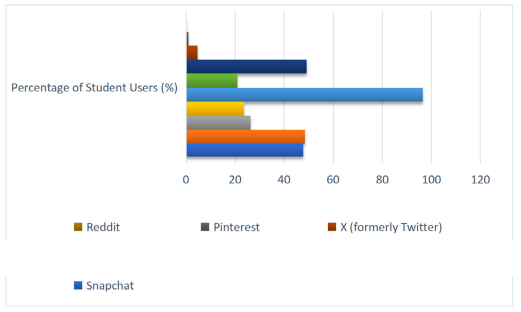
Figure 1: Howing the Percentages of Use of Various Social Media Platforms Among University Students
Types of Digital Targeting Platforms
Digital targeting platforms for university faculty and students en-compass a wide range of tools designed to enhance teaching, learn-ing, and research. These platforms have become integral to higher education, especially in the aftermath of the COVID-19 pandem¬ic, which accelerated the adoption of digital solutions. Platforms serve various purposes—from facilitating online learning to pro¬viding access to digital resources and supporting research activi¬ties. Below are the main types of digital targeting platforms used by university faculty and students:
Learning Management Systems (LMS)
• Platforms such as MOODLE are widely used in universities to manage course content, facilitate communication, and support online learning. They are essential for pedagogical renewal and are promoted by universities for their role in enhancing educational processes [30].
• These systems allow faculty to upload course materials, create assignments, and interact with students through forums and quizzes [30].
Digital Resource Platforms
• University libraries offer digital resource platforms such as in-stitutional repositories, OPAC modules, and library websites. These platforms provide access to e-journals, e-books, and theses, supporting both teaching and research [31].
• The platforms are designed to facilitate the sharing and dis-semination of information, although users often face challeng¬es in navigation and effective usage [31].
Education Resource Platform
• These platforms integrate educational resources, support systems, and learning environments to meet learners’ needs. They are designed with standardized and efficient structures to support educational activities [32].
• The design process includes analyzing learner needs, prepar¬ing educational materials, and testing the system to ensure us¬ability and effectiveness [32].
Platforms for Teaching and Research
• Faculty members in Brazil use digital platforms linked to Big Techs for teaching, research, and advisory activities. These platforms became essential due to the shift to remote learning during the pandemic [33].
• The study highlights the challenges teachers face in implementing these platforms, emphasizing the need for critical engagement with digital tools [33].
While digital platforms offer numerous advantages, such as in-creased accessibility and flexibility, they also present challeng-es. Users often encounter difficulties in navigation and effective usage, which may hinder teaching and research outcomes. Addi¬tionally, there is a pressing need for digital literacy programs to educate both students and faculty on how to use these platforms effectively, ensuring online privacy and data protection [34,31].
Most Used and Influential Platforms: Data Analysis
Specialized Academic Platforms
|
Platform |
Description |
Key Features |
Target Audience |
Significance |
|
Google Scholar |
Academic search platform allowing researchers to create profiles and showcase publications |
Citations, h-index, search alerts, researcher following |
Academics, researchers, graduate students |
Essential for assessing research impact through citation metrics and continuously tracking new literature |
|
ResearchGate |
Academic social network for researchers to share publications |
Direct communication, statistics, Q&A, collaborative projects |
Researchers, professors, PhD students |
Strong catalyst for research collaboration, idea exchange, and finding partners for joint projects and surveys |
|
Academia |
Platform for sharing research and connecting with scholars |
Reader analytics, tracking research interests, communication tools |
Researchers, students, academics |
Enhances research visibility to a broader audience and provides insights into readership and engagement |
|
ORCID |
Permanent digital identifier linking scholarly output |
Identity unification, integration with other databases |
All researchers and academics |
Ensures consistent recognition of researcher contributions across institutions, publishers, and databases |
Table 1: Shows the Specialized Academic Platforms

Figure 2: Target Audience Distribution Across Academic Platforms
Open Access Scientific Publishing Platforms
|
Platform |
Description |
Key Features |
Target Audience |
Significance |
|
arXiv |
Electronic archive for scientific publications prior to formal peer review |
Rapid publishing, open access, specialized classifications |
Researchers in physics, mathematics, computer science |
Provides immediate dissemination of research findings, secures intellectual priority, and encourages idea exchange and early feedback |
|
Zenodo |
Open research repository supported by CERN |
Data storage, DOI for each publication, GitHub integration |
Researchers, developers, institutions |
Permanently preserves data and publications, enhances citation through DOIs, and supports reproducible research via GitHub integration |
|
Preprints.org |
Platform for publishing pre-peer-reviewed drafts |
Rapid publishing, community feedback, multiple classifications |
Researchers in all fields |
Accelerates dissemination of research results and enables community feedback prior to formal publication, improving quality and collaboration |
|
F1000Research |
Open publishing platform with post-publication peer review |
Transparent review, rapid publishing, data sharing |
Researchers in medical and life sciences |
Promotes transparency through open peer review, supports fast publishing, and encourages sharing of data and supplementary materials |
Table 2: Shows Open Access Scientific Publishing Platforms

Figure 3: Visualizing Academic Platform Breadth and Distinction
Academic Social Media Platforms
|
Significance |
Platform |
Description |
Key Features |
Target Audience |
|
Enhancing professional identity and connecting with researchers and professionals in the field |
|
Professional network used to share research achievements |
Professional networking, specialized groups, articles |
Academics, professionals, students |
|
Rapid dissemination of scientific updates, encouraging discussion, and expanding reach |
Twitter/X |
Platform for quick sharing and scientific discussions |
Fast reach, specialized hashtags, direct interaction |
Researchers, students, general interested public |
|
Delivering educational content visually and reaching a broad, diverse audience |
YouTube |
Video platform for publishing educational and research content |
Research explanations, lectures, recorded conferences |
Academics, students, general public |
|
Publishing long-form articles to explain research in simplified language and increase public impact |
Medium |
Publishing platform for writing extended articles |
Simplified research writing, broader audience reach |
Academics targeting non-specialist audiences |
Table 3: Shows Academic Social Media Platforms
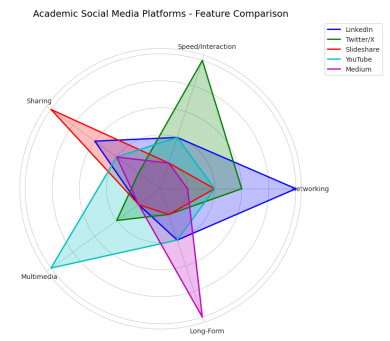
Figure 4: Academic Social Media Platforms - Feature Comparison
Scientific Events & Conference Platforms
|
Significance |
Platform |
Description |
Key Features |
Target Audience |
|
Communicating academic research in an engaging journalistic style to raise public scientific awareness |
The Conversation |
Platform for publishing academic articles in journalistic style |
Broad audience reach, collaboration with professional journalists |
Academics targeting the general public |
|
Enhancing credibility and reaching a wide science-interested audience through a leading science magazine |
Scientific American |
Established science magazine with strong digital presence |
High-quality articles, wide readership, credibility |
Researchers, scientists, science enthusiasts |
|
Offering full freedom to publish and manage blogs with performance tracking via analytics |
Blogger/WordPress |
Blogging platforms for creating scientific blogs |
Full customization, analytics, social media integration |
Researchers, students, research institutions |
|
Reaching podcast listeners and presenting research content in an engaging audio format |
Anchor/Spotify |
Platforms for creating and publishing scientific podcasts |
Audio production, wide distribution, listener statistics |
Researchers aiming for audio-based outreach |
|
Building a specialized interactive community around specific scientific topics and fostering deep discussions |
Science Blogs |
Network of specialized scientific blogs |
Targeted audience, topic categorization, interactive community |
Scientists, researchers, science communicators |
Table 4: Shows Scientific Blogging & Podcast Platforms
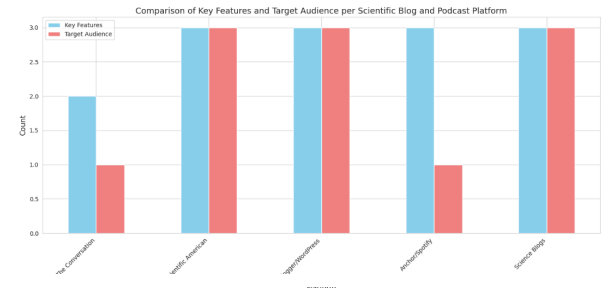
Scientific Blogging & Podcast Platforms
|
Significance |
Platform |
Description |
Key Features |
Target Audience |
|
Simplifying complex data into visual charts and graphics to clarify research results |
Piktochart |
Platform for creating visual representations of data |
Infographic design, visual reports, presentations |
Researchers, research centers, universities |
|
Supporting the publication of research data and graphics with DOI and citation tracking |
Figshare |
Platform for publishing and sharing research visuals and data |
DOI for each post, graphic sharing, usage statistics |
Researchers, students, institutions |
|
Expanding the reach of visual scientific content through organized boards that encourage discovery and community sharing |
|
Visual platform usable for sharing scientific content |
Wide reach, thematic boards, audience interested in visuals |
Science communicators, design enthusiasts |
|
Reaching a large youth audience through short videos and images to enhance engagement with scientific research |
|
Visual social platform for sharing scientific media |
Broad reach, youth targeting, Stories and Reels |
Researchers targeting younger generations |
Table 5: Shows Scientific Events & Conference Platforms
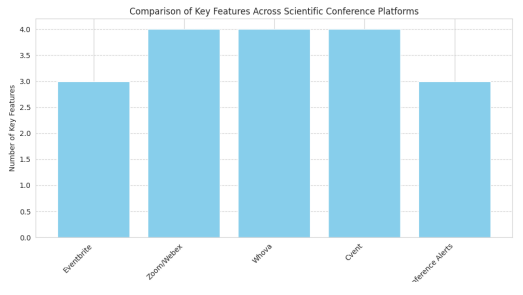
The various digital platforms presented in the previous tables con-stitute an integrated system that supports researchers at different stages of academic work—from publication and documentation to public engagement and visual design. Academic social networking platforms enable the building of professional identity and the ex¬pansion of scientific networks, while databases and search engines provide precise tools for evaluating research and accessing reliable sources.
Blogging and podcast platforms open new horizons for commu-nicating with the general public in a simplified language, thereby enhancing the societal impact of scientific research. Meanwhile, conference and scientific event platforms support the visual and interactive aspects, making it easier to present results in an attrac¬tive and impactful way. Smart use of these platforms is not limited to publication alone; rather, it forms a comprehensive strategy to improve research quality, enhance its dissemination, and expand its influence within the academic community and beyond.
Conclusion
This study clearly demonstrates the pivotal role that digital plat-forms play in reshaping the contemporary academic landscape by enabling advanced targeting strategies tailored to the needs of re¬searchers, students, and faculty members. The conceptual analysis highlighted the theoretical diversity in targeting models, ranging from data-driven personalization to dynamic social interaction, contributing to more precise academic communication and knowl¬edge dissemination. Quantitative analysis confirmed that adopt¬ing well-designed targeting strategies is significantly associated with increased academic engagement rates, improved quality of educational outputs, and greater efficiency in accessing research resources, while also emphasizing the importance of integrating predictive analytics to strengthen these outcomes.
From a practical standpoint, these findings indicate the necessity for academic institutions to re-anchor the culture of digitalization by designing targeted policies that support integration between digital infrastructure and analytical strategies, while strictly adher¬ing to ethical standards regarding data privacy and the protection of digital identity. Nevertheless, these efforts face substantial chal¬lenges, such as the digital divide among institutions, cultural reser¬vations toward technological transformation, and the difficulty of generalizing results due to the varying institutional and geographi¬cal contexts addressed in the study. Therefore, it is recommended to conduct further exploratory studies targeting diverse academic contexts, especially in developing regions, to understand the in¬fluence of cultural and economic factors on the effectiveness of digital platforms.
It is also proposed to develop comprehensive theoretical frame¬works that integrate both the technological and social dimensions in designing targeting strategies, with a focus on artificial intelli¬gence and big data analytics to enhance personalization without compromising core academic values. In conclusion, this study rep¬resents a pioneering intellectual contribution to understanding the complex interaction between technology and academic processes. It opens promising research and practical avenues for building a more inclusive and effective knowledge society in the digital age—provided that these efforts proceed hand in hand with an awareness of their ethical and educational responsibilities toward current and future generations.
References
- Dwivedi, Y. K., Hughes, L., Kar, A. K., Baabdullah, A. M., Grover, P., Abbas, R., ... & Wade, M. (2022). Climate change and COP26: Are digital technologies and information management part of the problem or the solution? An editorial reflection and call to action. International Journal of Information Management, 63, 102456.
- Li, S., Cheng, W., Gao, R., & Wang, Y.-C. (2024). Construction of University Teaching and Academic Community from the Perspective of Digital Transformation. Scientific and Social Research, 6(5), 151–156.
- Prasad, R. S., Sharma, R., Aran, A., & Bhardwaj, V. (2024). Digital transformation in higher education: Analysis of student learning outcomes. ShodhKosh Journal of Visual and Performing Arts, 5(6).
- van Eijk, N., Fahy, R., van Til, H., Nooren, P. A., Stokking,H. M., & Gelevert, H. F. B. F. (2015). Digital platforms: An analytical framework for identifying and evaluating policy options.
- Zhao, Haoyu. (2024). Digital Platforms in Higher Education: Opportunities, Challenges, and Strategies. Advances in Economics, Management and Political Sciences. 116. 118-122.
- Coimbra, G. D. D. (2023). Capitalismo de plataforma e tipologia constitucional das plataformas digitais: entre mercados, praças públicas, anfiteatros e estradas. Revista Fórum de Direito Financeiro e Econômico–RFDFE, 13(23), 259-298.
- Bonina, C., Koskinen, K., Eaton, B., & Gawer, A. (2021). Digital platforms for development: Foundations and research agenda. Information systems journal, 31(6), 869-902.
- Staub, N., Haki, K., Aier, S., & Winter, R. (2021). Taxonomy of digital platforms: A business model perspective.
- Ciacci, A. (2023). Digital Platforms Enabling Long-Distance Knowledge Spillover in Smart Sustainable Cities: A Multilevel Framework. In Smart Sustainable Cities and Knowledge-Based Economy: Policy Implications (pp. 53-77). Cham: Springer International Publishing.
- Azimov, I. A. (2022). Online educational platforms as a means of organizing a digital educational environment in a modern school (pp. 20–25).
- POROMBRICA, M. (2023). Digitization of education: platforms for self-learning and professional development. 61–64
- Perrotta, C., & Pangrazio, L. (2023). The critical study of digital platforms and infrastructures: Current issues and new agendas for education technology research. Education Policy Analysis Archives, 31..
- Cpoint. (2024). The best e-learning platforms for 2025: A comprehensive guide for students and teachers.
- Al-Mansour University College. (n.d.). Online e-learning platforms.
- Wearehudson.(N.D). Targeted Digital Marketing for Student Enrollment and Retention.
- Nelakonda, S., Zinin, A. D., DHORA, A., & LEECE, W. J.(2021). U.S. Patent No. 11,164,212. Washington, DC: U.S. Patent and Trademark Office.
- Nicholas Martino & TeachThought Staff.(N.D). What Are The Best Digital Collaboration Tools For Students?
- Cybersecurity &Privacy &Enterprise IT.(2025). Policies and Practices: How to Improve Data Classification in Higher Education.
- Swaak, T. (2022). How higher ed is trying to improve student performance with data. Pbs. org. Retrieved September, 15, 2022
- Team CSG.(2023). Understanding Advertising in Higher Education.
- Andrei Hagiu, Kevin J. Boudreau (2025). Platform Rules: Multi-Sided Platforms as Regulators.
- Pasquale, F. (2018). New economic analysis of law: Beyond technocracy and market design. Critical Analysis L., 5, 1.
- Maya Demishkevich.(2025). Leveraging College Faculty and Staff to Boost Publicity in the Era of Social Media, Search and AI
- Jimmy Daly.(2013). How Professors Really Feel About Digital Technology.
- Palav, M. R. (2024). Strategic Marketing In Education: Leveraging Branding And Communication For Institutional Success. Multidisciplinary Aspects of Education.
- Anish Vijayan.(2025). Digital Marketing for Educational Institutes: Get Benefit Of More Admissions in 2025.
- Capturehighered.(2025). From Clicks to Campus: Building a Winning Digital Advertising Strategy.
- Purcarea, I. M. (2023). THE IMPORTANCE OF DIGITAL MARKETING FORHIGHER EDUCATION IN IMPROVING THE EDUCATIONAL VALUE CHAIN. Journal of Information Systems & Operations Management, 17(2).
- Joseph Hur.(N.D). 14 Successful Social Media Marketing Strategies for Universities.
- Díaz-González, J. M. A. (2010). El uso de las plataformas de enseñanza virtual para impartir asignaturas jurídicas. REJIE: Revista Jurídica de Investigación e Innovación Educativa, (1), 49-60.
- Tenya, A., Maina, J., & Awuor, F. (2023). Digital resource platforms available for teaching and research in selected public universities in Kenya. Journal of Applied Humanities and Social Sciences-ISSN 2791-1594, 2(1), 46-70.
- Chen, G. (2008). Design of Digital Educational Resource Platforms in University [J]. In International Symposium on Computer Science and Computational Technology (Vol. 1, pp. 142-45).
- Alves, L. R. G., & de Souza Santos, W. (2023). Digital platforms used for teaching: an analysis of professor practices from four university institutions in the northeast of Brazil. Cuadernos de Educación y Desarrollo, 15(2), 1380-1409.
- Serwornoo, M. Y. W., Danso, S., Azanu, B., Semarco, S.K. M., & Aidoo, E. A. K. (2024). Use of Digital Platforms Among University Students: A Systematic Literature Review.