

Archives of Epidemiology & Public Health Research(AEPHR)
ISSN: 2833-4353 | DOI: 10.33140/AEPHR
Impact Factor: 1.98

Perspective Article - (2025) Volume 4, Issue 2
Dietary Deception Unmasked: How Influencers Mislead Millions and What We Can Do About It
2Indonesian College of Lifestyle Medicine, Indonesia
3Department of Cardiology, Faculty of Medicine, Prima University, Medan, Indonesia
Received Date: Jun 03, 2025 / Accepted Date: Jul 18, 2025 / Published Date: Aug 04, 2025
Copyright: ©Â©2025 Dasaad Mulijono. This is an open-access article distributed under the terms of the Creative Commons Attribution License, which permits unrestricted use, distribution, and reproduction in any medium, provided the original author and source are credited.
Citation: Mulijono, D. (2025). Dietary Deception Unmasked: How Influencers Mislead Millions and What We Can Do About It. Arch Epidemiol Pub Health Res, 4(2), 01-04.
Abstract
The explosive growth of social media influencers has dramatically reshaped public perceptions of nutrition and health, frequently leading to the propagation of misleading or outright false dietary information. This comprehensive and provocative analysis explores why influencers widely promote myths surrounding animal-based diets, ketogenic eating patterns, and dangerously misrepresent high LDL cholesterol and unrestricted consumption of whole eggs as beneficial dietary practices. Highlighting the profound negative impacts on individuals with chronic conditions such as coronary artery disease (CAD), type 2 diabetes mellitus (T2DM), obesity, hypertension, and hyperlipidaemia, the article underscores the urgency of addressing these harmful narratives. Drawing from Bethsaida Hospital's pioneering educational initiatives under Prof. Dasaad Mulijono (DM), it illustrates effective methods utilizing diverse media, including podcasts, YouTube, TikTok, pamphlets, WhatsApp groups, and advanced artificial intelligence (AI) platforms like ChatGPT, to validate nutritional information, educate the public on whole-food plant-based diets (WFPBD), and clearly outline the dangers of animal-derived dietary practices. The article concludes by proposing future-oriented solutions involving regulatory oversight, professional medical engagement, enhanced media literacy, and AI-driven content moderation to empower communities against the tide of dietary misinformation.
Keywords
Influencers, Dietary Misinformation, Animal-based Diets, Ketogenic Diet, Cholesterol Myth, Chronic Diseases, Public health, Eggs myth, Bethsaida Hospital, Prof. Dasaad Mulijono, Artificial intelligence, ChatGPT
Introduction
The proliferation of social media has dramatically reshaped the landscape of information dissemination, notably influencing public health perceptions and dietary choices. Influencers who command significant followings on platforms like Instagram, YouTube, TikTok, and Facebook often share personal experiences or promote products without adequate understanding or scientific validation of their health implications. Alarmingly, this trend has facilitated the widespread dissemination of dietary misinformation, notably promoting animal-based diets, ketogenic eating patterns, claims advocating high LDL cholesterol levels as beneficial, and endorsing the unrestricted consumption of whole eggs. Such misleading claims contradict established medical guidelines and extensive scientific literature linking these dietary practices to increased health risks [1-6].
The consequences of these deceptive narratives are particularly severe for vulnerable populations, including individuals with chronic conditions such as heart disease, diabetes, and obesity. Recognizing the magnitude and urgency of this public health challenge, Bethsaida Hospital, under the leadership of Prof. DM, has proactively engaged in extensive public education initiatives. Prof. DM has also actively disseminated his scholarly research among Indonesian medical professionals, encouraging them to adopt his evidence-based methodologies.
Utilizing diverse communication platforms—including podcasts, YouTube, TikTok, printed pamphlets, and community-based WhatsApp groups—and integrating advanced artificial intelligence (AI) tools such as ChatGPT, Bethsaida Hospital provides the community with essential resources for distinguishing credible, scientifically validated health information from harmful misinformation. This AI-driven strategy significantly enhances the accuracy and effectiveness of nutritional education, empowering individuals to make informed dietary choices. The initiative has achieved notable success, reflected by intense community engagement and positive health outcomes.
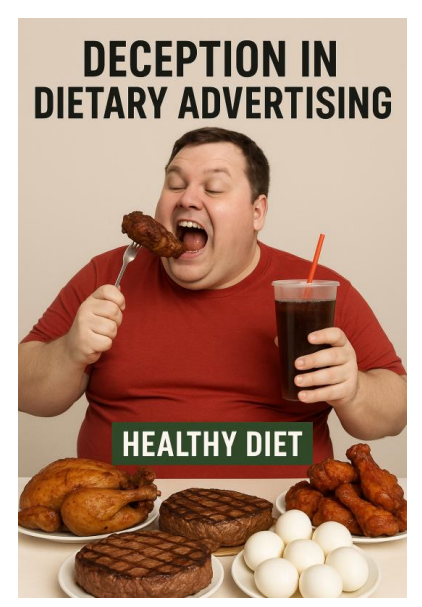
Reasons Influencers Spread Dietary Misinformation
Influencers often disseminate misleading dietary information due to financial incentives, a lack of professional qualifications, and the nature of social media algorithms. Sponsored content from companies selling animal-based or ketogenic diet-related products offers substantial financial rewards. Furthermore, sensationalized claims attract higher viewer engagement, reinforcing misinformation through algorithmic amplification [1,7-10]. Most influencers lack formal nutritional or medical education, rendering them unaware of or indifferent to the consequences of their advice.
Damage to Patients with Chronic Diseases
Misguided dietary recommendations can severely impact patients suffering from chronic conditions. For instance, promoting diets high in saturated fat and cholesterol-rich foods, such as unrestricted whole eggs and red meat, increases cardiovascular risks, exacerbates diabetes complications, and worsens obesity-related health outcomes [11-14]. Patients influenced by misinformation may neglect scientifically proven interventions like WFPBD, leading to preventable deterioration of their health.
Preventing Public Deception
Public awareness and education are crucial in combating misinformation. Individuals should critically evaluate dietary claims by verifying the influencer's qualifications, seeking corroborative evidence from credible scientific sources, and consulting healthcare professionals before adopting significant nutritional changes. Reliable sources include peer-reviewed medical journals, registered dietitians, and reputable healthcare institutions.
At Bethsaida Hospital, under the leadership of Prof. DM, extensive educational initiatives have been successfully implemented using podcasts, YouTube, TikTok, pamphlets, and WhatsApp groups. These initiatives equip the public with skills to differentiate authentic, beneficial health information from hoaxes, scams, or fake news. The program has proven highly effective and received positive feedback from the community [15-17].
AI, particularly tools like ChatGPT, has further enhanced Bethsaida Hospital's educational efforts. AI-driven tools validate medical statements and deliver personalized, accurate information regarding WFPBD, the risks associated with animal-derived diets, and practical guidance for preparing healthy meals. AI significantly boosts public understanding, reduces misinformation, and empowers individuals to make informed nutritional choices [18-22].
Solutions for the Future
Combating dietary misinformation requires collective efforts from regulatory bodies, healthcare professionals, educational institutions, and social media platforms. Stricter regulations and increased transparency regarding sponsored content can help reduce influencer bias [23-26]. Health authorities and medical professionals must proactively engage on social media platforms, delivering scientifically accurate dietary guidance. Educational programs that enhance public media literacy and improved content moderation algorithms, which identify and label misinformation, offer promising avenues for addressing this public health challenge.
Conclusion
The spread of dietary misinformation by social media influencers poses substantial public health risks, notably to individuals managing chronic diseases. Influencers' financially driven agendas, lack of accountability, and social media algorithms significantly contribute to the propagation of harmful dietary myths. However, proactive measures such as those successfully implemented at Bethsaida Hospital by Prof. DM, which include innovative AI-driven educational tools like ChatGPT, demonstrate the effectiveness of comprehensive public education initiatives. Continued efforts in education, professional medical engagement online, stringent regulations, enhanced digital literacy, and AIsupported content validation can significantly mitigate these risks. Society can effectively counteract dietary misinformation and foster healthier communities by empowering the public with accurate, evidence-based information.
References
- Lynn, T., Rosati, P., Leoni Santos, G., & Endo, P. T. (2020). Sorting the healthy diet signal from the social media expert noise: preliminary evidence from the healthy diet discourse on twitter. International Journal of Environmental Research and Public Health, 17(22), 8557.
- Roorda, B. A., & Cassin, S. E. (2025). A Review of Food- Related Social Media and Its Relationship to Body Image and Disordered Eating. Nutrients, 17(2), 342.
- Segado-Fernández, S., Jiménez-Gómez, B., Jesús Jiménez- Hidalg, P., del Carmen Lozano-Estevan, M., & Herrera-Peco,I. (2025). Disinformation about diet and nutrition on social networks: a review of the literature. Nutrición Hospitalaria, 42(2).
- Suarez-Lledo, V., & Alvarez-Galvez, J. (2021). Prevalence of health misinformation on social media: systematic review. Journal of medical Internet research, 23(1), e17187.
- Kanková, J., Binder, A., & Matthes, J. (2024). Helpful or harmful? Navigating the impact of social media influencers’ health advice: insights from health expert content creators. BMC Public Health, 24(1), 3511.
- Mc Carthy, C. M., de Vries, R., & Mackenbach, J. D. (2022). The influence of unhealthy food and beverage marketing through social media and advergaming on dietâ?ÂÃÃÂ??ÂÃÂ?ÂÂrelated outcomes in children—A systematic review. Obesity Reviews, 23(6), e13441.
- Sina, E., Boakye, D., Christianson, L., Ahrens, W., &Hebestreit, A. (2022). Social media and children's and adolescents' diets: A systematic review of the underlying social and physiological mechanisms. Advances in Nutrition, 13(3), 913-937.
- Zeng, M., Grgurevic, J., Diyab, R., & Roy, R. (2025). # WhatIEatinaDay: The Quality, Accuracy, and Engagement of Nutrition Content on TikTok. Nutrients, 17(5), 781.
- Aïmeur, E., Amri, S., & Brassard, G. (2023). Fake news, disinformation and misinformation in social media: a review. Social Network Analysis and Mining, 13(1), 30.
- Caled, D., & Silva, M. J. (2022). Digital media and misinformation: An outlook on multidisciplinary strategies against manipulation. Journal of Computational Social Science, 5(1), 123-159.
- Spence, J. D., Srichaikul, K., & Jenkins, D. J. (2021). Cardiovascular harm from egg yolk and meat: more than just cholesterol and saturated fat. Journal of the American Heart Association, 10(7), e017066.
- Key, T. J., Appleby, P. N., Bradbury, K. E., Sweeting, M., Wood, A., Johansson, I., ... & Danesh, J. (2019). Consumption of meat, fish, dairy products, and eggs and risk of ischemic heart disease: a prospective study of 7198 incident cases among 409 885 participants in the Pan-European EPIC Cohort. Circulation, 139(25), 2835-2845.
- Mohseni, G. K., Mohammadi, S.,Aghakhaninejad, Z., Tajadod, S., Abbasi, K., Askarpour, S. A., ... & Gholamalizadeh, M. (2023). Egg consumption and risk of cardiovascular disease: a PERSIAN cohort-based study. BMC Cardiovascular Disorders, 23(1), 588.
- Krittanawong, C., Narasimhan, B., Wang, Z., Virk, H. U. H., Farrell, A. M., Zhang, H., & Tang, W. W. (2021). Association between egg consumption and risk of cardiovascular outcomes: a systematic review and meta-analysis. The American journal of medicine, 134(1), 76-83.
- Arnold, D. G., & Oakley, J. L. (2013). The politics and strategy of industry self-regulation: the pharmaceutical industry's principles for ethical direct-to-consumer advertising as a deceptive blocking strategy. Journal of Health Politics, Policy and Law, 38(3), 505-544.
- Neylan, J. H., Patel, S. S., & Erickson, T. B. (2022). Strategies to counter disinformation for healthcare practitioners and policymakers. World medical & health policy, 14(2), 428-436.
- Masic, I. (2010). Medicine, media communication and ethical aspects. Materia Socio-medica, 22(1), 6.
- Kassem, H., Beevi, A. A., Basheer, S., Lutfi, G., Cheikh Ismail, L., & Papandreou, D. (2025). Investigation and Assessment of AI’s Role in Nutrition—An Updated Narrative Review of the Evidence. Nutrients, 17(1), 190.
- Atwal, K. (2024). Artificial intelligence in clinical nutrition and dietetics: A brief overview of current evidence. Nutrition in Clinical Practice, 39(4), 736-742.
- Chotwanvirat, P., Prachansuwan, A., Sridonpai, P., & Kriengsinyos, W. (2024). Advancements in Using AI for Dietary Assessment Based on Food Images: Scoping Review. Journal of Medical Internet Research, 26, e51432.
- Zheng, J., Wang, J., Shen, J., & An, R. (2024). ArtificialIntelligence Applications to Measure Food and Nutrient Intakes: Scoping Review. Journal of medical Internet research, 26, e54557.
- Barker, L. A., Moore, J. D., & Cook, H. A. (2024). Generative artificial intelligence as a tool for teaching communication in nutrition and dietetics education—a novel education innovation. Nutrients, 16(7), 914.
- Do Nascimento, I. J. B., Pizarro, A. B., Almeida, J. M., Azzopardi-Muscat, N., Gonçalves, M. A., Björklund, M., & Novillo-Ortiz, D. (2022). Infodemics and health misinformation: a systematic review of reviews. Bulletin of the World Health Organization, 100(9), 544.
- Jeyaraman, M., Ramasubramanian, S., Kumar, S., Jeyaraman, N., Selvaraj, P., Nallakumarasamy, A., ... & Yadav, S. (2023). Multifaceted role of social media in healthcare: opportunities, challenges, and the need for quality control. Cureus, 15(5).
- Muhammed T, S., & Mathew, S. K. (2022). The disaster of misinformation: a review of research in social media. International journal of data science and analytics, 13(4), 271-285.
- Kanková, J., Binder, A., & Matthes, J. (2024). Helpful or harmful? Navigating the impact of social media influencers’ health advice: insights from health expert content creators. BMC Public Health, 24(1), 3511.